
REVIEW · CYCLING TOURS
Tokyo Bike Tour: Shibuya & Hidden Tokyo
Tokyo’s famous districts can feel like a blur of railway stations, giant signs, and packed sidewalks. This three-hour bike ride gives you a better view of the city by slipping through quiet backstreets and local neighborhoods between the headline sights. You cover roughly 9 to 10 miles at a steady pace, with stops for photos, history, and questions.
I like the small maximum group of six, and I like having Taichi, a Shibuya-based cyclist, handle the route through busy streets. The main consideration is that this is real city cycling, not a sightseeing ride on a closed path. You need to ride confidently at about 15 kilometers per hour, manage cross traffic, and pass through tight or crowded areas.
In This Review
- Key points at a glance
- Why a bicycle works so well in Shibuya
- Starting near Yoyogi Station
- Yoyogi Park: a calm opening
- Shibuya Crossing and Hachiko
- Cat Street and the back lanes of Harajuku
- Aoyama Street and Aoyama Cemetery
- Japan National Stadium and Gaien
- What Taichi adds to the ride
- Bike quality, pace, and safety
- Who gets the best value for $64.73
- Weather, age, and practical limits
- My call: book it if you want Tokyo beyond the station map
- FAQ
- How long is the Tokyo Bike Tour: Shibuya & Hidden Tokyo?
- How many people can join the tour?
- Where does the tour start and finish?
- Which places are included on the route?
- How fast do I need to ride?
- What rider sizes can use the bicycles?
- What happens if bad weather cancels the tour?
Key points at a glance
- A local route through four Tokyo districts: Ride across Shibuya, Harajuku, Aoyama, and Gaien rather than seeing only one neighborhood.
- Seven useful landmarks: The route includes Yoyogi Park, Shibuya Crossing, Hachiko, Cat Street, Aoyama Street, Aoyama Cemetery, and Japan National Stadium.
- A guide who rides with you: Taichi leads from the front, signals clearly, chooses practical side streets, and helps you feel secure around traffic.
- A genuinely small group: The tour caps participation at six people, allowing for questions and some route flexibility.
- Good orientation for a first Tokyo visit: You see several districts in one outing and get suggestions for cafes, restaurants, and places to revisit.
- A moderate but real workout: The pace is about 15 kilometers per hour, with slight gradual hills and city riding on non-electric bicycles.
Why a bicycle works so well in Shibuya
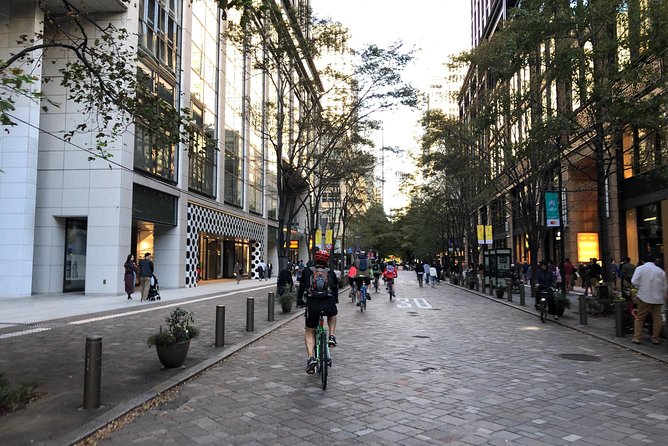
Shibuya is easy to reach by train but surprisingly hard to understand on foot. The big sights are spread across a wide area, and the most interesting streets often sit between them. A bike lets you connect those pieces without spending much of your three hours underground.
You get the scale of Tokyo. You pass from commercial streets to parks, residential lanes, formal avenues, and quiet memorial grounds. That change is the real point of the ride. Shibuya is not just a giant crossing and a statue of Hachiko.
I also like the pace. This is not a race through Tokyo. You ride, stop, listen, ask questions, and continue. Several riders have covered close to 10 miles without feeling hurried, which is a good sign for anyone who wants to see a lot without turning the afternoon into a fitness test.
The guide matters here. Tokyo traffic is orderly, but it is still traffic. Taichi uses smaller roads when possible, gives clear hand signals, and watches the group. He has also adjusted the route when someone had already seen Shibuya Crossing or wanted a particular local interest, such as an old comedy club.
A few more Tokyo trips to weigh up
- Tokyo Guided Small-Group Biking Tour
★ 5.0 · 1,250 reviews - Tokyo Great Cycling Tour
★ 5.0 · 811 reviews - Tokyo Top Highlights 3h Guided E-bike Tour
★ 5.0 · 714 reviews
Starting near Yoyogi Station
The meeting point is Umayamichi Park at 5-chome-24-11 Sendagaya, Shibuya. It is about a one-minute walk from Yoyogi Station and roughly 10 minutes from Shinjuku Station, making the start simple to reach from several parts of Tokyo.
You return to the same place at the end. That is handy because you do not need to figure out a new station while tired or find your way back across an unfamiliar district.
The tour has two daily departures, so you can place it in a morning or afternoon schedule. I would favor doing it early in your Tokyo stay. The ride gives you a useful mental map of Shibuya, Harajuku, Aoyama, and Gaien, and you can return later to the places that catch your interest.
The group limit is six. That is small enough for direct conversation, quick stops, and possible adjustments. If you are booking for four or more people, contact the organizer directly before assuming the regular booking process will work.
Yoyogi Park: a calm opening
Yoyogi Park is a smart first stop because it eases you into Tokyo’s many contrasts. After the noise of the rail stations and main roads, the park gives you open space and a slower start to the ride.
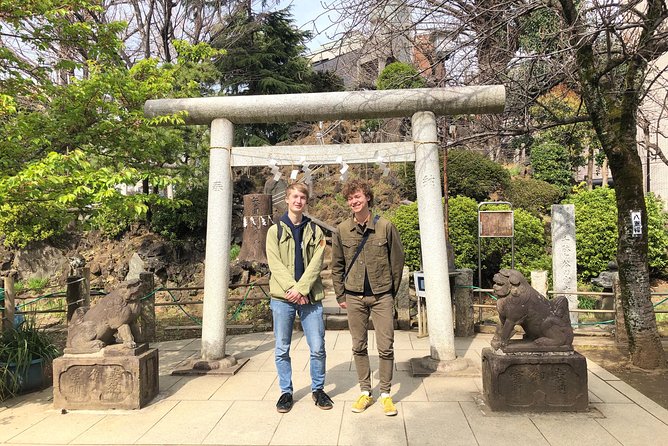
You may see a mix of walkers, cyclists, and people using the park for everyday recreation. The exact feel changes with the season. One ride included cherry blossoms, a small rice field, and a Shinto shrine, showing how much ordinary green space can appear in the middle of the city.
Do not expect a long park tour. This is one part of a broad route, so the stop works mainly as an introduction to Tokyo’s public spaces and local rhythm. It also gives you time to settle onto the bike before reaching the busier streets.
Shibuya Crossing and Hachiko
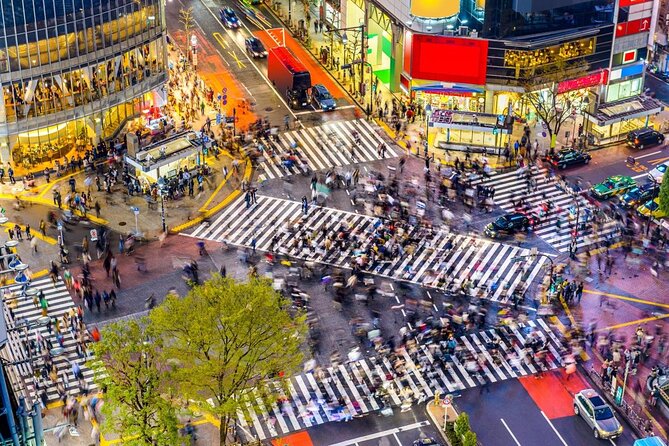
Shibuya Crossing is Tokyo’s most recognizable urban scene. From a bike, you do not simply arrive, take a photograph, and leave. The ride helps place the crossing within the surrounding district, where large shopping streets quickly give way to narrower lanes.
Hachiko, the famous loyal dog statue, is nearby. It is a short stop, but it provides a useful anchor for understanding the area. If you have never been to Tokyo, this is the part that makes the city’s popular image feel real. If you have already visited, the guide may spend less time here and use the saved time elsewhere.
The crossing itself is not a place for casual cycling. You will follow the guide’s instructions and obey Japanese traffic rules. The safety value of a guided ride is clearest around major junctions, where route choice and timing matter more than speed.
Same city, a completely different kind of day:
- Mt Fuji and Hakone 1-Day Bus Tour Return by Bullet Train
★ 5.0 · 26,383 reviews - 1-Day Tokyo Bus Tour
★ 5.0 · 14,250 reviews - Tokyo: TOKYO SKYTREE® Admission ticket
★ 4.5 · 11,192 reviews - Tokyo: teamLab Planets TOKYO Digital Art Museum Entry Ticket
★ 4.6 · 9,779 reviews
Cat Street and the back lanes of Harajuku
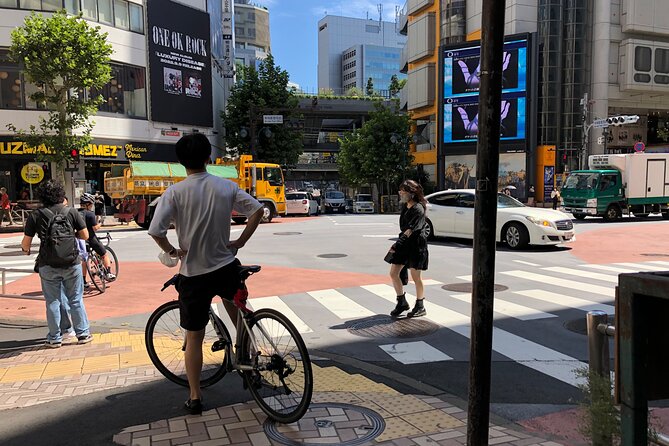
Cat Street offers a different view of the Shibuya and Harajuku area. It is more intimate than the giant commercial roads, with a street-level feel and smaller paths leading into surrounding neighborhoods.
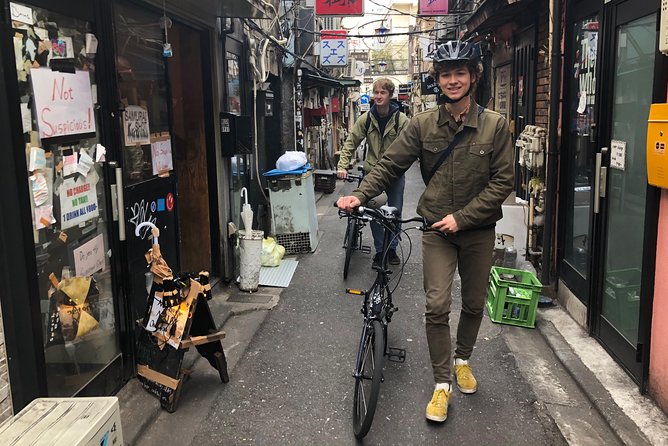
The best part may be the route between named stops. Taichi takes the group through side streets and residential areas that you could easily miss while following a rail map. These passages show daily Tokyo rather than only the polished face presented in major shopping zones.
You should still expect an active urban ride. Narrow spaces, pedestrians, cross traffic, and changing surfaces require attention. Riders who are comfortable only on empty bike paths may find this section more demanding than expected.
Aoyama Street and Aoyama Cemetery
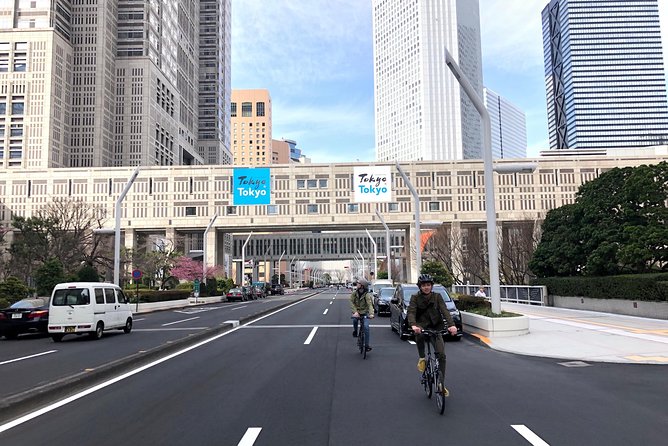
Aoyama Street shifts the mood again. The broad avenue offers a sense of Tokyo’s scale and gives you a chance to observe how the city moves around you. The ride is not just a series of photo stops. You are also learning how different parts of the city connect.
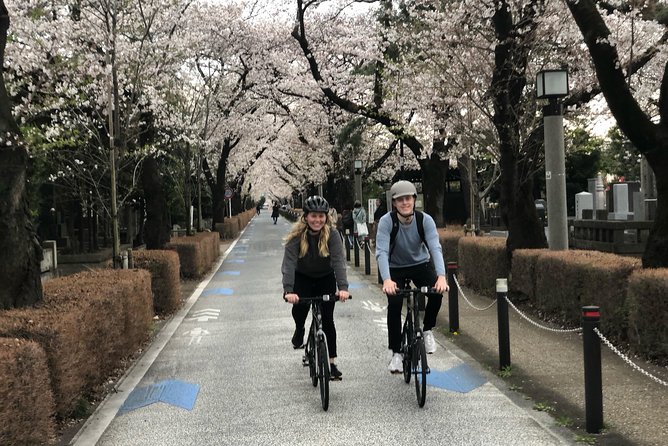
Aoyama Cemetery provides one of the quieter pauses. It is a more reflective setting than Shibuya Crossing, and it adds a historical and local side to the route. This is the kind of stop that makes a bike tour useful: you can move from a global shopping district to a calm, tree-lined area within minutes.
The route can include slight gradual uphill sections. Several riders found the effort mild, but you should not book this expecting an entirely flat, effortless cruise. The bikes are non-electric, and the stated pace is about 15 kilometers per hour.
Japan National Stadium and Gaien
Japan National Stadium gives the final part of the ride a strong architectural and sporting focus. The stadium area in Gaien feels different from the shopping streets and cemetery, so it rounds out the tour with another side of Tokyo.
This broad mix is one of the ride’s better features. In three hours, you see parkland, famous public spaces, fashion-oriented streets, major avenues, a cemetery, and a national sports venue. You do not get an exhaustive tour of any one site, but you do get a useful cross-section of the city.
The route ends back at Umayamichi Park. Because the ride returns to its starting point, you can plan dinner or your next activity without solving a complicated one-way transfer.
What Taichi adds to the ride
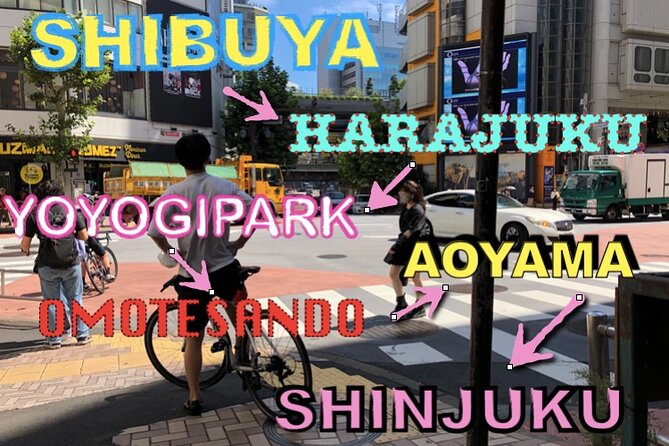
A bike tour can be little more than a guide pointing at buildings. This experience depends on Taichi’s ability to link places together and keep the group comfortable. His background as a Shibuya local and active cyclist is useful when choosing streets and explaining how the districts fit together.
You can ask about history, culture, cycling etiquette, cafes, restaurants, and practical places to return later. Some rides have included help with simple Japanese phrases and advice about riding or renting bikes in Tokyo.
His route leadership is another strong point. Clear directions and hand signals matter when you are following through unfamiliar streets. Riders have also appreciated his calm manner, attention to the group, and willingness to take photographs, including pictures at Shibuya Crossing.
The experience is personal without promising a private tour. With only one booking, the route may be adjusted more freely. With a full group of six, you should expect the planned route and shared stops, while still having room for questions.
Bike quality, pace, and safety
The bicycles are suitable for riders from 155 to 195 centimeters tall, and participants must weigh no more than 120 kilograms. The bikes are described as light and well maintained, with smaller wheels that make them easy to maneuver. One rider felt the bike was functional rather than luxurious, so keep your expectations practical rather than expecting a high-end road machine.
You must be proficient at riding on pavements, crossing traffic lights confidently, and moving through crowded or narrow spaces. The tour is not suitable for someone who has not ridden since childhood unless that person can already control a bicycle comfortably in city conditions.
The stated riding speed is about 15 kilometers per hour. That is moderate, but maintaining it for the full route requires basic fitness and confidence. The route includes slight hills, though it is generally described as manageable.
You must follow Japanese traffic rules and the guide’s directions. Tokyo can feel safe on a bicycle when you use the right streets and ride predictably, but no city ride is risk-free. Wear suitable clothing, stay alert, and do not treat the guide as a substitute for your own attention.
Who gets the best value for $64.73
At $64.73 per person, this is not the cheapest way to see Shibuya. You can walk through some of the same districts for free, and Tokyo’s trains are efficient and inexpensive compared with many large cities.
The price begins to make sense when you count what you are getting in three hours: a bicycle, route planning, a local guide, safety leadership, cultural context, and access to streets you might not think to connect yourself. You also cover much more ground than on foot, without spending the whole outing in train stations.
I see the strongest value for a first-time visitor with limited time. You can get a broad feel for several neighborhoods, note places you want to revisit, and receive direct suggestions for food and cafes.
It also works well for repeat visitors. If you have already done the standard Shibuya Crossing visit, tell Taichi. The route can sometimes shift toward quieter areas or a personal interest. The ride has suited couples, families with teenagers, solo riders, and people who want a more active afternoon.
Group discounts are available, but the supplied information does not give the discount amount. Ask before booking if you are arranging a larger party.
Weather, age, and practical limits
The minimum age is 13. Anyone under that age should not be booked for this activity based on the stated rules.
The tour can proceed in light rain, but sudden weather changes may cause cancellation. The experience requires good weather, and a weather-related cancellation offers either another date or a full refund.
You can cancel for a full refund up to 24 hours before the local start time. Changes or cancellations inside that 24-hour window are not accepted for a refund, so leave room in your schedule if the forecast looks uncertain.
Wear clothes that allow easy movement and shoes suited to pedaling. The provided information does not specify helmets, storage, water, or a dress code, so ask the organizer directly about anything you need to bring or arrange.
My call: book it if you want Tokyo beyond the station map
I would book this tour if you want an active introduction to western-central Tokyo and feel comfortable riding in city traffic. The mix of major sights and small lanes is stronger than a simple landmark circuit, and the six-person limit gives the guide room to keep the ride personal.
I would skip it if you dislike cycling around cars, cannot maintain roughly 15 kilometers per hour, or want a slow walking tour with long visits inside museums and temples. This is a moving overview, not a deep stop-by-stop visit.
For most suitable riders, the decision is easy: schedule it near the beginning of your stay, listen closely to Taichi’s route instructions, and use the ride to decide where you want to spend more time later. At a fair price for a small-group outing, it offers a practical and memorable way to understand how Shibuya connects to the rest of Tokyo.
FAQ
How long is the Tokyo Bike Tour: Shibuya & Hidden Tokyo?
The tour lasts approximately three hours.
How many people can join the tour?
The maximum group size is six participants.
Where does the tour start and finish?
It starts at Umayamichi Park, 5-chome-24-11 Sendagaya, Shibuya, Tokyo 151-0051. The activity ends back at the same meeting point.
Which places are included on the route?
The listed stops are Yoyogi Park, Shibuya Crossing, Hachiko, Shibuya Cat Street, Aoyama Street, Aoyama Cemetery, and Japan National Stadium.
How fast do I need to ride?
The group travels at approximately 15 kilometers per hour. You should be confident riding at that speed through city streets, pavements, traffic lights, and crowded or narrow spaces.
What rider sizes can use the bicycles?
The bicycles suit riders between 155 and 195 centimeters tall. Participants must weigh no more than 120 kilograms.
What happens if bad weather cancels the tour?
If poor weather causes cancellation, you will be offered a different date or a full refund. The tour may proceed in light rain but can be canceled if weather conditions change suddenly.
Just added around Tokyo
- Private Memorable Tokyo Tour with English Speaking Driver★ 5.0 · 30 reviews
- Tokyo Photography Masterclass – Private Photography Lesson★ 5.0 · 25 reviews
- Private Tokyo Custom Full-Day Tour by Chartered Vehicle★ 5.0 · 16 reviews
- Private Sightseeing to Mt Fuji and Hakone with English Driver★ 5.0 · 51 reviews
- Private Mt. Fuji Day Trip from Tokyo with English-Speaking Driver★ 5.0 · 33 reviews
- 4 Day Tour – Mount. Fuji, Tokyo, Hakone, Kamakura and Yokohama★ 5.0 · 19 reviews
- Private Unforgettable Mt Fuji Tour with English Speaking Driver★ 5.0 · 142 reviews
- Private Tokyo Food Tour – A Journey Through Time Through Food★ 5.0 · 36 reviews
Cycling Tours, compared.
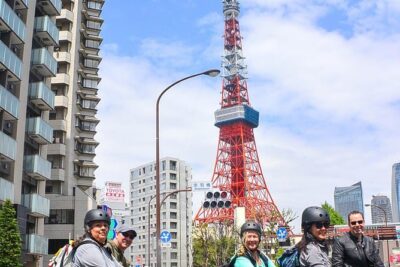
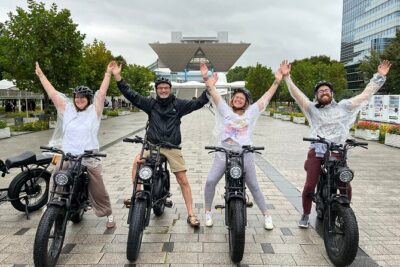

3h Tokyo E-Bike Tour: Hidden Gems, and Local Life with guide
Read our review →
Arashiyama Bamboo Forest & Hidden Gems Bike Tour (Early Bird)
Read our review →
Hiroshima in a Nutshell: Morning Bike Adventure
Read our review →
5 Top Highlights of Kyoto Full Day Bike Tour (E-bike option)
Read our review →Browse the lists this tour appears in