
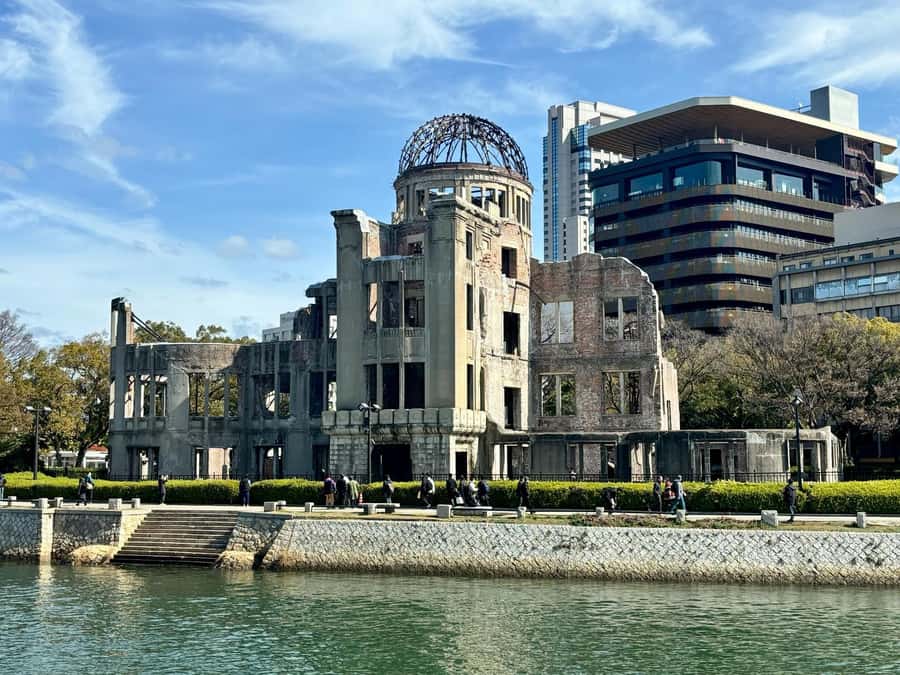
REVIEW · HIROSHIMA TOURS
The Journey of Hiroshima from Tragedy to Peace
Hiroshima Peace Memorial Park is not just a collection of monuments. It is a carefully shaped lesson in how one city remembers mass destruction while calling for a world without nuclear weapons. This walking tour takes you from the Gates of Peace to the Atomic Bomb Dome and finally to the hypocenter, the exact point beneath the explosion.
I like two things especially. First, the route gives proper attention to people and stories, including Dr. Marcel Junod, Sadako Sasaki, Korean victims, and a resident who survived only 170 meters from the hypocenter. Second, guides such as Ali, Wajid, and Zunera bring a strong grasp of Hiroshima’s history and keep the pace comfortable, with time for questions and photographs.
The main consideration is emotional weight. This is not a light sightseeing walk, and some stops call for quiet reflection. You also need to know that the tour is in English, is not suitable for people with mobility impairments, and does not include entry to the Peace Memorial Museum.
In This Review
- Key points at a glance
- Starting at the Gates of Peace
- Mother and Baby in Storm: beginning with compassion
- Dr. Marcel Junod and Norman Cousins
- The Peace Cenotaph and its eternal flame
- Hiroshima National Peace Memorial Hall for Atomic Bomb Victims
- The Rest House and a survival story
- The Children’s Monument and Sadako Sasaki
- The Korean Monument and a wider account of loss
- Ringing the Peace Bell
- The Atomic Bomb Dome and the final approach
- Ending at the hypocenter
- What the $30 price delivers
- Who should book this Hiroshima walk?
- Should you book The Journey of Hiroshima from Tragedy to Peace?
- FAQ
- Where does the tour begin?
- Where does the tour end?
- How much does the tour cost?
- What language is the tour offered in?
- Is the Atomic Bomb Dome included?
- Is the Peace Memorial Museum included?
- Is food included?
- Is the tour suitable for people with mobility impairments?
- Can I cancel for a full refund?
Key points at a glance
- The route reaches the actual hypocenter: The walk ends at the point directly below the atomic blast, giving the tour a powerful sense of place.
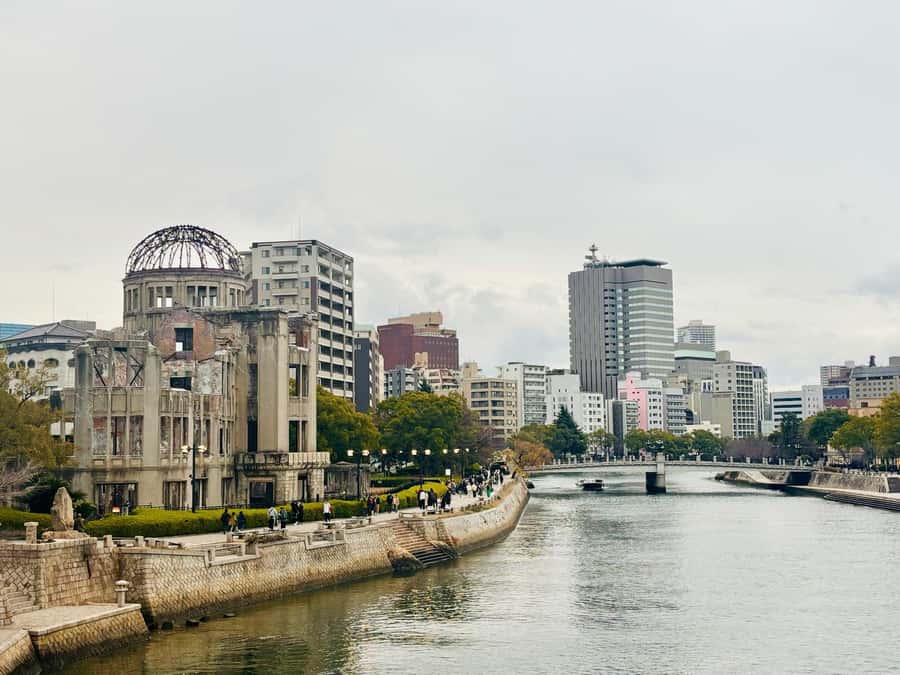
- The Atomic Bomb Dome is more than a photograph: You learn why this damaged building survived and how it became a UNESCO World Heritage Site.
- Human stories shape the tour: The route includes Sadako Sasaki, Dr. Marcel Junod, Norman Cousins, and a remarkable survivor connected with the Rest House.
- The Peace Cenotaph carries a lasting promise: Its eternal flame will remain lit until the last nuclear weapon is removed from the earth.
- The afternoon timing can help in warm weather: One participant particularly liked the 4:30 pm start, which made walking more comfortable.
- The $30 price is reasonable for guided context: You are paying for an English-speaking guide who links many memorials into one clear story, while museum admission remains extra.
Starting at the Gates of Peace
You meet your guide at the Gates of Peace, in front of the Italian restaurant Mario. This is a useful starting point because the park can feel spacious and slightly confusing when you first arrive. Confirm your guide and group before setting off, then expect a walking tour built around explanation rather than speed.
The guide leading your group may be Ali, Wajid, Zunera, or another member of the Peace Walk Hiroshima team. Ali is praised for his passion and personal approach, while Wajid is noted for clear communication before and during the activity. Zunera is described as particularly strong on Hiroshima and its history. The exact guide is not guaranteed, but the experience depends heavily on who leads it, so arriving ready to ask questions will help you get the most from the walk.
The route is designed for discussion. You are not simply moving from one photo stop to the next. Your guide explains what Hiroshima was like before the bombing, what happened during the attack, and how the city rebuilt afterward. That three-part structure matters because it keeps Hiroshima from being reduced to a single tragic morning.
Other Hiroshima days people book alongside this one:
- Peaceful Hiroshima & Miyajima UNESCO 1 Day Bus Tour
★ 5.0 · 5,309 reviews - Hiroshima: Hiroshima and Miyajima UNESCO Sites 1-Day Tour
★ 4.9 · 2,330 reviews - Hiroshima / Miyajima Full-day Private Tour with Government Licensed Guide
★ 5.0 · 1,298 reviews
Mother and Baby in Storm: beginning with compassion
The first monument is the Mother and Baby in Storm statue. Its subject is direct and painful, showing a mother protecting her child amid the chaos left by the bombing.
This is a thoughtful opening stop. Instead of beginning with military facts or a large architectural memorial, the tour starts with a human image of care. You are reminded early that the bombing was experienced by families, children, doctors, workers, and ordinary residents.
Your guide can use the statue to explain the atmosphere of fear and loss after the blast. The sculpture also introduces a theme that returns throughout the walk: compassion appearing in the middle of terrible suffering. If you prefer tours that begin with personal stories, this stop gives the experience the right tone.
Dr. Marcel Junod and Norman Cousins
The next sections focus on people who worked for peace and humanitarian relief. The Dr. Marcel Junod Memorial honors the Swiss physician who became a humanitarian figure after the bombing. His story broadens the tour beyond Hiroshima itself and shows how medical aid and international concern entered the city’s recovery.
You then stop at the Norman Cousins Peace Memorial. Cousins was an American author and peace activist who argued for nuclear disarmament. His inclusion adds another point of view and helps explain why Hiroshima became a global symbol in debates about nuclear weapons.
I like this part of the route because it avoids presenting Hiroshima as an isolated Japanese story. The city’s suffering was local, but its message became international. Your guide connects the memorials to the wider effort to prevent another nuclear attack.
The Peace Cenotaph and its eternal flame
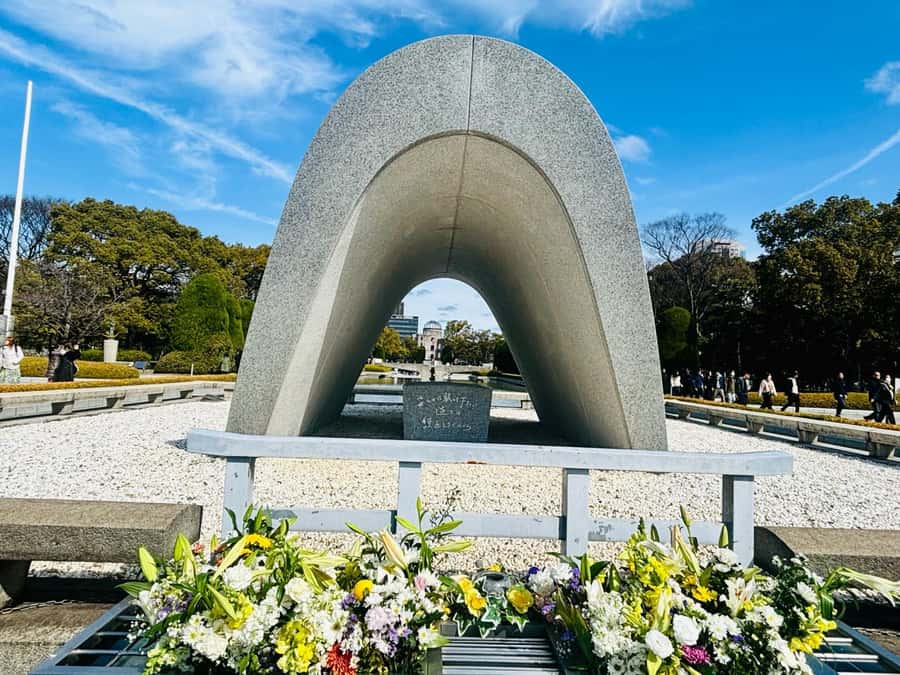
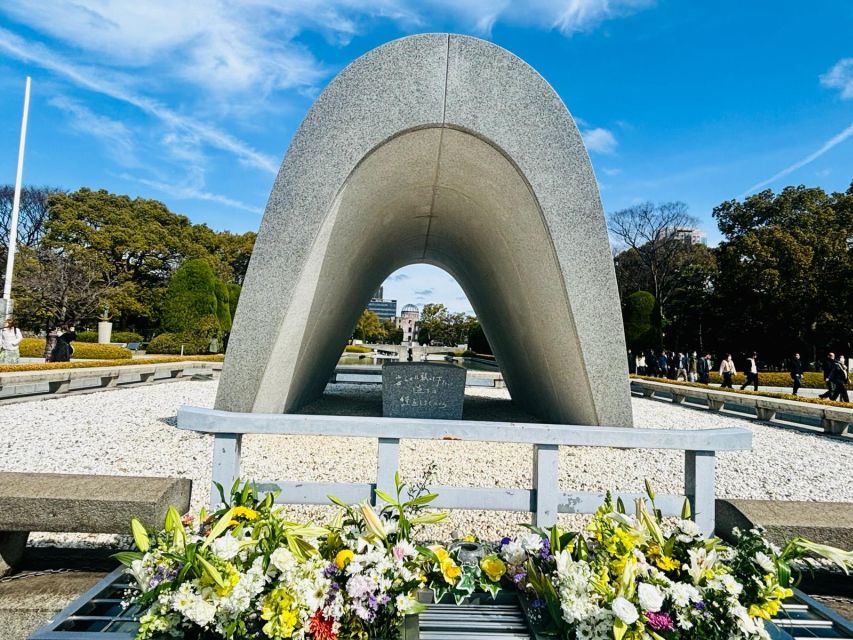
The Peace Cenotaph is one of the park’s most important memorials. Its curved stone form contains the names of atomic bomb victims, while the eternal flame carries a clear promise: it will remain lit until the last nuclear weapon has been eliminated from the earth.
This stop rewards a slower pace. You may want a moment to look at the design, listen to the explanation, and consider the scale of the names held within the memorial. Your guide can explain why the cenotaph is central to the park’s message of remembrance and peace.
The flame also gives the tour a forward-looking purpose. Hiroshima is not asking you only to remember what happened. It is asking you to consider what must change so that no city experiences the same destruction.
Same city, a completely different kind of day:
- Hiroshima Historical Walking Tour – Why A-Bomb was Dropped
★ 4.8 · 893 reviews - Hiroshima Peace (Heiwa) Walking Tour at World Heritage Sites
★ 5.0 · 872 reviews - Hiroshima in a Nutshell: Morning Bike Adventure
★ 5.0 · 524 reviews - Hiroshima City 4hr Private Walking Tour with Licensed Guide
★ 5.0 · 437 reviews
Hiroshima National Peace Memorial Hall for Atomic Bomb Victims
The Hiroshima National Peace Memorial Hall for the Atomic Bomb Victims provides a more personal record of the disaster. It holds an extensive archive and preserves stories about the people who died, including details of their lives before the bombing.
The guided visit helps you understand why personal records matter. Numbers can communicate the scale of destruction, but names, occupations, families, and ordinary routines make the loss easier to grasp. The hall gives space to the people who had lives before they became part of Hiroshima’s wartime story.
The tour includes the hall, but the Peace Memorial Museum is not included. That distinction is important when planning your day. If you want a fuller museum visit, you will need to arrange that separately and allow additional time.
The Rest House and a survival story
At the Hiroshima Peace Park Rest House, the focus turns to survival. Your guide explains the story of a resident who was only 170 meters from the hypocenter when the explosion occurred and survived.
That detail gives the location an unusual force. You are not hearing only about broad destruction. You are considering what it meant for one person to live through the blast at such a short distance, then face the long work of survival and rebuilding.
This stop also adds balance to the tour. Hiroshima is a place of death and mourning, but it is also a place of endurance. The Rest House story helps you see the city as a living community that continued after the bombing.
The Children’s Monument and Sadako Sasaki
The Children’s Monument is dedicated to Sadako Sasaki and other children affected by the atomic bomb. Colorful paper cranes surround the memorial, making it one of the most visually recognizable places in the park.
Sadako’s story has become closely tied to the crane as a symbol of peace and hope. Your guide explains the meaning behind the monument and why children occupy such an important place in Hiroshima’s memory.
This can be one of the most affecting stops for families and younger adults. It also gives the tour a gentler visual moment after the heavier memorials. The bright cranes do not make the history less painful, but they show how remembrance can take the form of an ongoing appeal for peace.
The Korean Monument and a wider account of loss
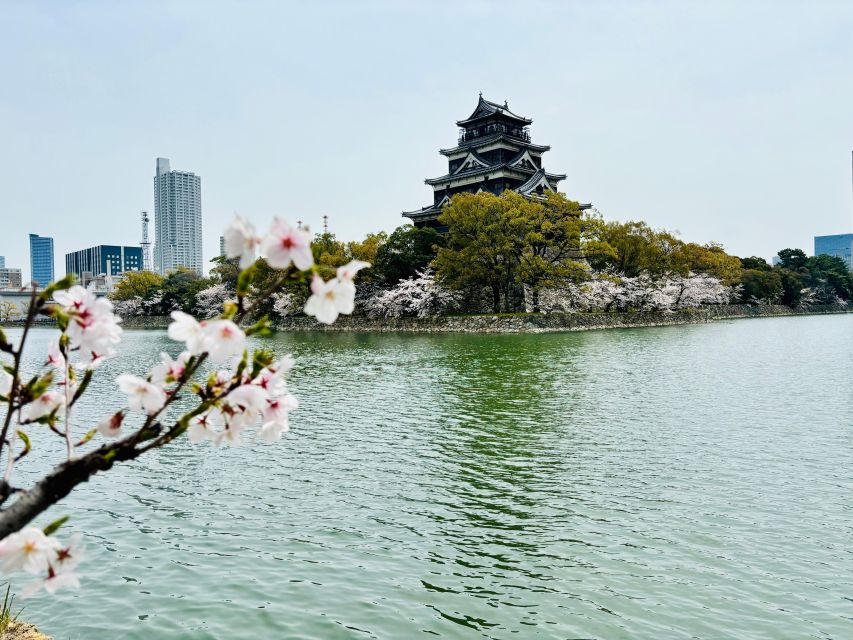
The Korean Monument honors Korean victims of the atomic bombing. Its presence is important because the story of Hiroshima includes people from outside Japan, including Koreans who suffered and died in the attack.
This stop encourages you to think beyond national borders. The bombing happened in Japan, but the victims came from different backgrounds. Remembering them makes the park’s message of peace and reconciliation more complete.
I consider this one of the tour’s most useful details because it prevents a narrow reading of history. Hiroshima’s memorial story includes many communities, and the Korean Monument makes that visible.
Ringing the Peace Bell
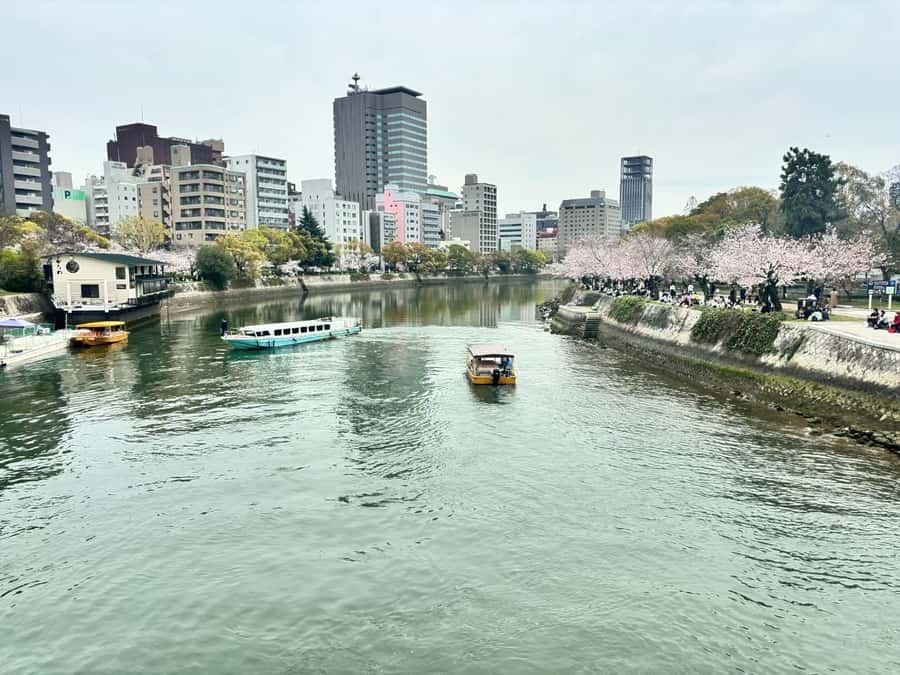
The Peace Bell offers a chance to take part in the park’s message rather than only observe it. You can ring the bell in remembrance, allowing its sound to become a personal gesture for peace.
This is a simple moment, but it gives the walking tour a change of pace. You have listened to stories, examined memorials, and followed a difficult timeline. The bell lets you respond in a direct and quiet way.
Your guide may also explain the bell’s symbolism and its call for a more harmonious future. It is not a substitute for understanding the history, but it gives the visit a clear emotional center.
The Atomic Bomb Dome and the final approach
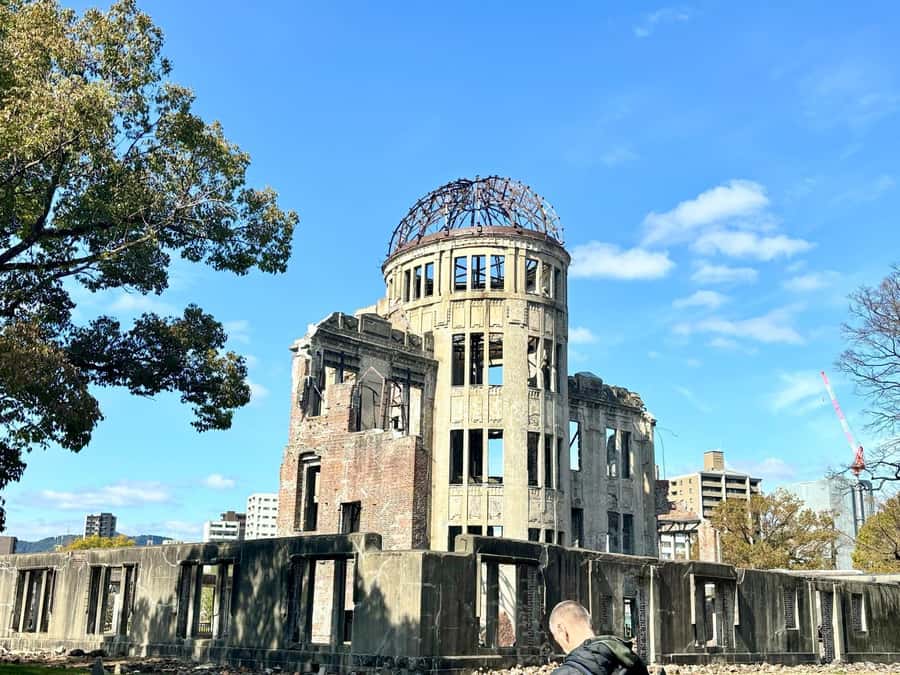
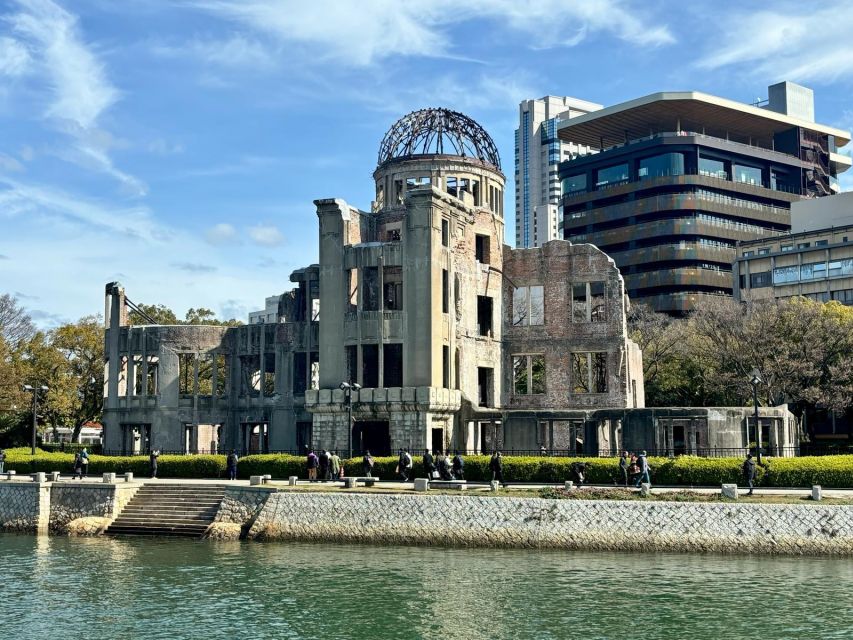
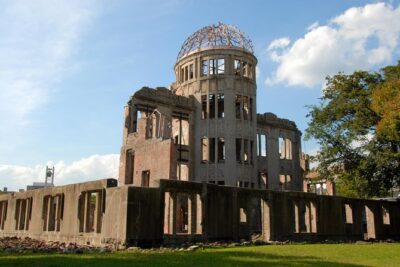
The Atomic Bomb Dome is the tour’s most recognizable sight. This damaged building survived the atomic blast and is now a UNESCO World Heritage Site. Its exposed structure remains a direct reminder of the force of war and the destruction inflicted on Hiroshima.
Your guide explains the building’s history and why it was preserved. That context makes the visit more meaningful than a quick photograph. You learn how a structure associated with devastation became part of Hiroshima’s appeal for peace.
The Dome is also where the past feels most visible. Other memorials use names, sculpture, words, or ceremony. This building shows physical damage in a form you can see from across the river area. Take your time here, but remember that the site is a place of remembrance, not just an architectural attraction.
Ending at the hypocenter
The tour ends at the hypocenter, the point directly under the atomic explosion. This is the final stop for a reason. After visiting memorials, hearing individual stories, and seeing the Dome, you arrive at the exact center of the event.
The ending calls for reflection rather than a busy final explanation. You can connect the personal accounts with the physical location and consider the city’s message of peace. Since the activity ends back at the meeting point, you can leave with your bearings and continue exploring Hiroshima on your own.
This final location also helps explain the value of a guided walk. A map can show you where the explosion occurred, but a guide can connect that point to the surrounding memorials and to the people whose lives were changed.
What the $30 price delivers
At $30 per person, this is a fair price for an English-language walking tour that covers a large number of important memorials. You receive a guide’s structure, historical explanation, and answers to questions rather than simply walking through the park with a printed map.
The value is strongest if you are visiting Hiroshima for the first time. The park’s monuments can be confusing when seen without context, and the guide helps you understand why each one matters. Several people also appreciated the steady pace, with enough time for discussion and photographs.
The price does not include food or admission to the museum. That keeps the basic tour cost down, but you should budget separately if you want to visit the museum. The experience itself is outdoors and walking-based, so comfortable shoes and water are sensible choices, especially in warm weather.
A late afternoon start can be useful. One 4:30 pm tour was praised for avoiding the worst heat, though the exact departure time should be checked when booking.
Who should book this Hiroshima walk?
I would recommend this tour if you want a clear introduction to Hiroshima’s wartime past and peace work, especially if you prefer learning through places and personal stories. It suits couples, families with older children, and small groups who want time for questions rather than a rushed circuit.
It is also a good choice if you are unsure how to approach the park. The guide provides a respectful framework and helps you move from one memorial to the next without losing the larger story.
You may want a different plan if you prefer to explore silently at your own pace, or if you want to spend most of your time inside the Peace Memorial Museum. The museum is not part of this activity, and the tour’s focus is the park’s monuments and outdoor sites.
The walk is not suitable for people with mobility impairments. Since the route includes several stops across the park, check your comfort with walking before reserving.
Should you book The Journey of Hiroshima from Tragedy to Peace?
Book it if you want more than a visit to the Atomic Bomb Dome. The strongest part of the experience is the way it links the Dome, cenotaph, Children’s Monument, Korean Monument, Peace Bell, Rest House, and hypocenter into one thoughtful account.
The guide quality is central, and names such as Ali, Wajid, and Zunera have earned particularly strong praise for clear explanations, friendly communication, and a comfortable pace. At $30, the tour offers good value for a first visit, provided you understand that museum entry costs extra and the subject matter is emotionally heavy.
Reserve this walk when you want history explained with care, human stories placed beside major events, and a direct look at why Hiroshima continues to call for peace.
FAQ
Where does the tour begin?
Meet your guide at the Gates of Peace, in front of the Italian restaurant Mario.
Where does the tour end?
The activity ends back at the meeting point.
How much does the tour cost?
The price is $30 per person.
What language is the tour offered in?
The tour is offered in English.
Is the Atomic Bomb Dome included?
Yes. The route includes the Atomic Bomb Dome, a UNESCO World Heritage Site.
Is the Peace Memorial Museum included?
No. Entrance to the museum is not included in the tour price.
Is food included?
No. Food is not included.
Is the tour suitable for people with mobility impairments?
No. The activity is not suitable for people with mobility impairments.
Can I cancel for a full refund?
Yes. You can cancel up to 24 hours in advance for a full refund. You can also reserve and pay later, with nothing due at the time of booking.
Just added around Hiroshima
- Miyajima: Private Rickshaw Tour to Itsukushima Shrine★ 4.9 · 45 reviews
- Hiroshima: Miyajima Half-day Historical Walking Tour★ 4.7 · 100 reviews
- Hiroshima/Miyajima Private Custom Tour with Local Guide★ 5.0 · 134 reviews
- Hiroshima:Guided Virtual Tour/PEACE PARK TOUR VR★ 5.0 · 29 reviews
- Hiroshima: Saijo Sake Tasting at 7 Breweries Guided Tour★ 4.8 · 29 reviews
- Hiroshima: Tour of Atomic Bomb Dome & Peace Memorial Museum★ 5.0 · 20 reviews
- Hiroshima: Private Walking Tour with a Local★ 4.6 · 70 reviews
- Hiroshima to Miyajima: Private Custom Tour with Ferry Ride★ 4.9 · 77 reviews
Hiroshima Tours, compared.
Peaceful Hiroshima & Miyajima UNESCO 1 Day Bus Tour
Read our review →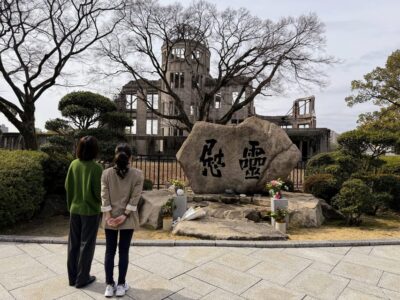
Hiroshima and Miyajima UNESCO Sites 1-Day Tour
Read our review →
Hiroshima / Miyajima Full-day Private Tour with Government Licensed Guide
Read our review →
Hiroshima Historical Walking Tour – Why A-Bomb was Dropped
Read our review →
Hiroshima Peace (Heiwa) Walking Tour at World Heritage Sites
Read our review →
Hiroshima in a Nutshell: Morning Bike Adventure
Read our review →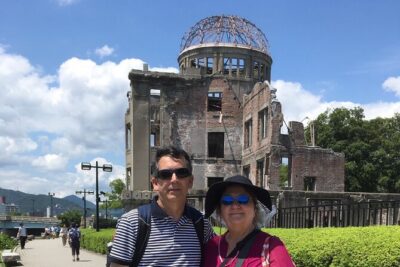
Hiroshima City 4hr Private Walking Tour with Licensed Guide
Read our review →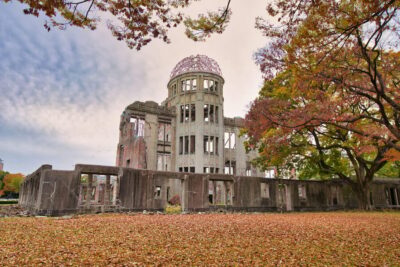
Browse the lists this tour appears in