REVIEW · OSAKA TOURS
Ramen Craftsman Experience in Osaka
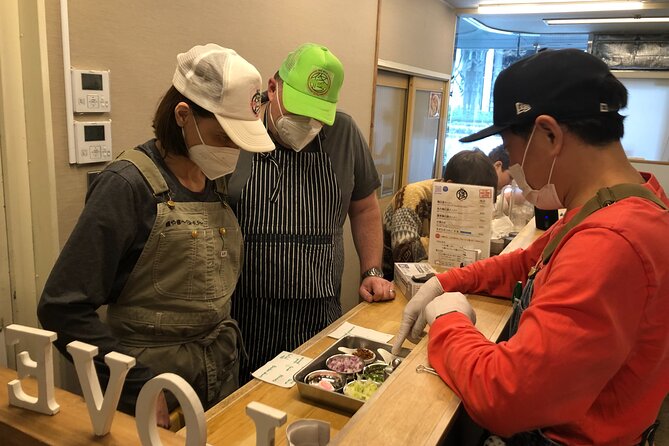
The most appealing part of this Osaka experience is that you step behind the counter of a working ramen shop and finish your own bowl under chef Shu’s direction. You learn why the broth takes days to prepare, then handle the quick, precise steps that turn prepared components into lunch. I especially like the maximum group size of four and the choice of four distinct ramen styles.
I also like that the meal is part of the lesson, not an afterthought. You boil the noodles, prepare the soup, arrange toppings, and eat what you made, with aprons, gloves, and tools supplied. Shu and Amanda are warm hosts, and Shu’s clear English makes the cooking easy to follow.
The main consideration is simple: this is a ramen finishing class, not a full broth-making course. Since soup preparation takes several days, Shu prepares the broth in advance. If you want to learn every stage from raw ingredients, this may feel limited, but it gives you a useful look at the final restaurant process in only about an hour.
In This Review
- Key Points Before You Book
- Why This Ramen Class Feels Different
- Your First Minutes With Chef Shu
- Choosing Your Ramen Style
- The Broth Lesson: What Is Prepared in Advance
- Boiling Noodles Behind the Counter
- Building the Bowl and Adding Toppings
- Sitting Down to a Very Fresh Lunch
- How Much Personal Attention Can You Expect?
- Timing, Location, and Practical Details
- Who Will Get the Most From This Experience?
- Is the $42.94 Price Fair?
- Should You Book the Ramen Craftsman Experience?
- FAQ
- Where does the ramen experience take place?
- How long does the activity last?
- How many people can join the class?
- Which ramen styles can I choose?
- Is lunch included?
- Are cooking tools and clothing provided?
- Can young children or infants participate?
Key Points Before You Book
- A four-person kitchen class: The small group leaves room for personal instruction and hands-on turns behind the counter.
- Four ramen choices: Pick chicken white soup, seafood chicken white soup with clam broth, Chinese soba with soy sauce, or sea bream dashi salt ramen.
- A real ramen-shop setting: You work in the kitchen at Menya SHU rather than in a large, separate cooking studio.
- Chef-led instruction: Shu explains the ingredients, tools, broth, noodles, presentation, and timing in clear, practical steps.
- Lunch is included: You eat the bowl you prepare, with cooking utensils, an apron, and gloves provided.
- Gas stove restrictions apply: Infants cannot participate, and the activity is intended for children from about age seven upward.
Why This Ramen Class Feels Different
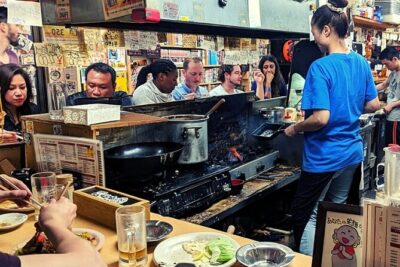
Many food activities give you a demonstration, a tasting, or a recipe to take home. This one puts you in the narrow space where a ramen order is actually finished. You are not simply watching Shu cook. You take part in boiling the noodles, handling the soup, arranging the bowl, and completing the presentation.
That setting matters. Ramen looks simple when it arrives at the table, but the finished bowl depends on timing. Noodles can become too soft, soup temperature matters, and toppings need to be placed with care. The class gives you a better sense of the work behind a fast restaurant lunch without asking you to spend half a day making stock.
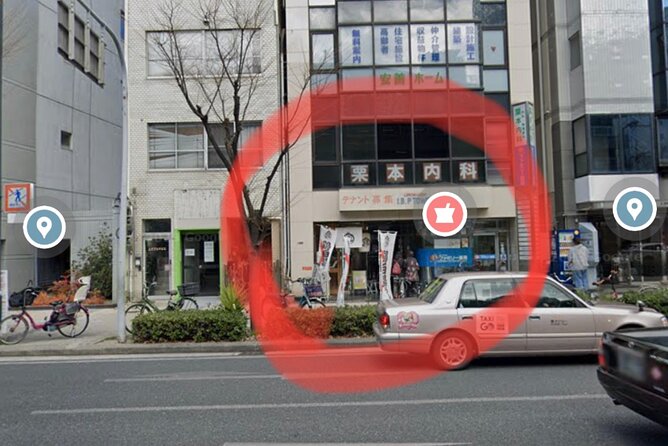
The shop is Menya SHU, at 11-7 Higashikōzu-chō in Osaka’s Tennoji Ward. The activity begins and ends there, and the location is near public transportation. You will need to arrange your own way to the shop, since private transportation is not included.
Other Osaka days people book alongside this one:
- Osaka Go Karting Tour with Funny Costume
★ 5.0 · 2,658 reviews - Osaka Castle: Museum and Tower Entry Ticket
★ 4.5 · 2,380 reviews - Osaka: Shinsekai Food Tour with 13-15 Dishes at 5 Eateries
★ 4.8 · 2,204 reviews
Your First Minutes With Chef Shu
The session begins with an explanation of ramen ingredients and the tools on the counter. This opening is useful because it gives meaning to the steps that follow. Instead of blindly copying movements, you learn how the broth, noodles, toppings, and utensils fit together.
Shu is the main instructor, and Amanda may help with the class. The two are described as friendly, energetic hosts, with Shu offering detailed explanations and good English. That is helpful in a hands-on kitchen, where a small timing mistake can affect the noodles.
The class is private in the practical sense that the kitchen is chartered for the activity, with no more than four participants at one time. That does not mean you receive a separate chef for every person, but it does mean the group stays small enough for each person to take a turn. An alternating system helps keep everyone involved instead of leaving one person to do all the work.
You should arrive on time. If you are more than 15 minutes late, the booking can be canceled because it affects the next scheduled session. That is a strict rule, so build in extra time when making your way across Osaka.
Choosing Your Ramen Style
You choose one ramen style from four options:
- Chicken white soup ramen
- Seafood chicken white soup ramen with clam broth
- Chinese soba, described here as soy sauce ramen
- Sea bream dashi salt ramen
This choice is one of the strongest reasons to book the class with people who have different tastes. One person can choose a creamy chicken base while another selects a soy sauce or fish-based bowl. You also choose your preferred toppings, so the final meal feels personal rather than fixed.
The choices cover several familiar ramen directions. The chicken white soup offers a fuller, pale broth. The seafood chicken version adds clam flavor. Chinese soba brings the salty, savory profile many people associate with soy sauce ramen, while sea bream dashi salt ramen gives you a lighter fish-based option.
The exact topping selection is not listed in the tour details, so you should treat customization as a choice within the shop’s available ingredients, not as an unlimited buffet. The class focuses on making a well-balanced bowl rather than piling on every extra.
The Broth Lesson: What Is Prepared in Advance
Here is the point that needs the clearest explanation. You do not make the ramen soup from the beginning. Shu prepares it before the class because the broth takes several days, and one description notes that preparing a base can require eight to twelve hours of work.
That may sound like a missing part, but it is also what makes a one-hour workshop possible. A true broth lesson would require long cooking time, large pots, and more kitchen space. Instead, Shu explains how the ingredients and soup work, then lets you handle the final stages that happen when a bowl is ordered.
I see this as a strength for most people planning a busy Osaka day. You get the useful parts of the process without committing to a long culinary course. Still, anyone expecting to learn a complete home ramen recipe should adjust expectations. The class teaches the restaurant’s preparation and finishing routine, not a start-to-finish stock formula.
Same city, a completely different kind of day:
- Osaka Food Tour: 13 Dishes at 5 Local Eateries
★ 5.0 · 2,149 reviews - Hungry Osaka Street Food Tour:15 Tastings & 3 Drinks with a Local
★ 5.0 · 1,727 reviews - Osaka: Tea Ceremony Experience
★ 4.9 · 1,426 reviews - Osaka Kickstart: Hotspots & Hidden Gems Tour
★ 5.0 · 1,306 reviews
Boiling Noodles Behind the Counter
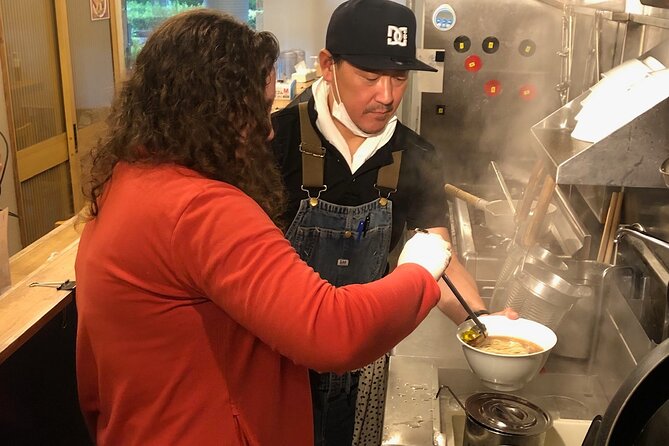
The most hands-on moment comes when you boil the noodles. Gas heat is used, and Shu guides you through the process. You get a feel for the movement and timing needed to cook noodles properly, rather than watching them disappear into a pot while someone else handles the work.
This is also why the experience is not suitable for infants. The activity is intended for small children from about age seven, provided they can follow directions around a gas stove. Families should judge that for themselves, since the information gives an approximate age rather than a strict child policy.
The class keeps the steps manageable. You are not expected to run an entire restaurant service, and Shu is there to direct each stage. That makes the experience friendly for beginners who have never cooked ramen before.
Building the Bowl and Adding Toppings
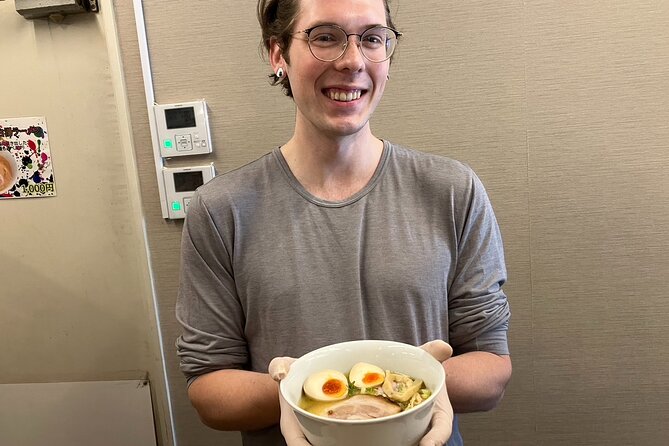
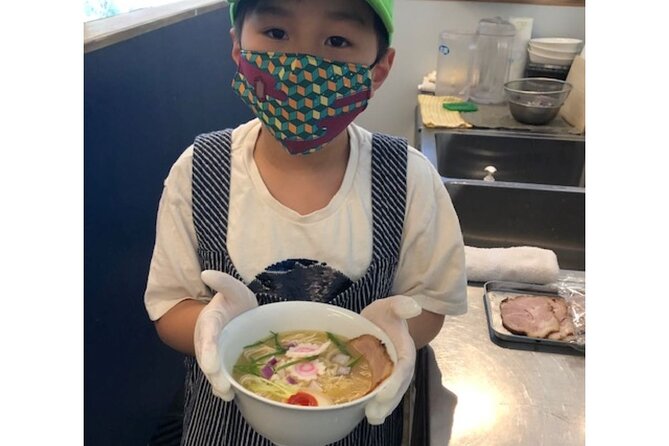
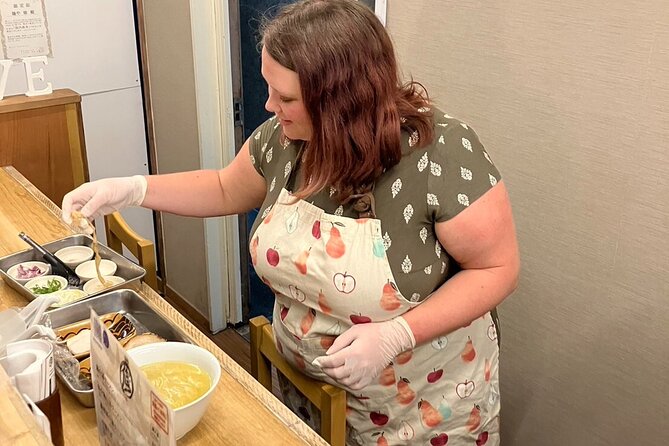
Once the noodles are ready, you prepare the soup and assemble the bowl. This is where the lesson shifts from cooking technique to presentation. You learn that ramen is not just noodles and liquid. The order of assembly affects how the bowl looks and how the ingredients meet your spoon or chopsticks.
Specific hands-on tasks mentioned by participants include cutting an egg in half, shaking the noodles, and torching meat. These details give the class a bit of theater, but they are also real finishing actions in a ramen shop. You can take photographs and video during the process, which is useful because the movements happen quickly.
The kitchen is small, so this is not a spacious classroom with separate workstations. That is part of the appeal for many people, since you work close to the counter and see the shop from the staff’s side. It can feel compact if all four participants are moving at once, but the small group and alternating system help keep the process orderly.
Sitting Down to a Very Fresh Lunch
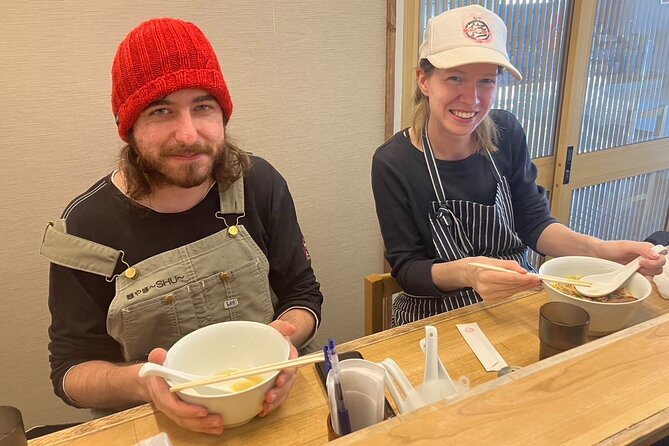
The last step is eating the ramen you have prepared. Lunch is included, and the activity ends back at the shop, so there is no second location to find. The format is efficient: learn, cook, assemble, eat, and finish in about an hour.
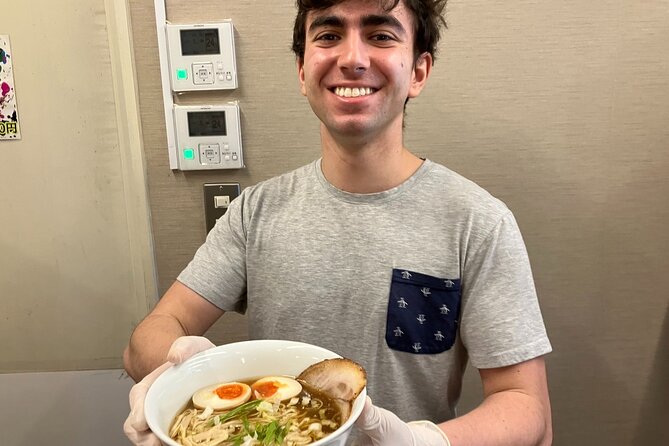
The food receives some of the strongest praise. The ramen is described as very tasty, with fresh ingredients and flavors that differ from ordinary bowls. That makes sense here. You have chosen the soup style, handled the noodles, and built the presentation yourself, so you notice the meal more closely than you might during a quick restaurant stop.
I would not book this solely as a way to get the cheapest lunch in Osaka. At $42.94 per person, the price is higher than a standard bowl of ramen. You are paying for the meal plus instruction, kitchen access, equipment, and a small-group format. For someone who already plans to eat ramen, the added cost buys a story and a skill to take home.
The value is strongest for couples, families, and small groups who want a shared activity. A family of four can fill the entire class, and the setup works particularly well for children old enough to follow kitchen directions. It is less compelling for someone who only wants a fast meal or who prefers a serious, recipe-heavy cooking course.
How Much Personal Attention Can You Expect?
With a limit of four participants, the instructor can see what you are doing and correct you as needed. You are unlikely to spend the whole class standing at the back of a large group. The format also lets you ask questions about broth types, ingredients, and the shop’s methods.
Shu’s personality is a major part of the experience. He is described as funny, welcoming, and easy to talk with, and his English is good enough for detailed instruction. Amanda adds to the friendly family-run feel. Shu’s family may also be present, giving the class a warm, informal tone rather than a polished culinary-school atmosphere.
That informality will suit you if you like conversation and a little personality with your food. If you want a quiet, highly structured lesson with a printed recipe and strict classroom procedure, this may feel more relaxed than expected.
The shop also has a personal connection with its international visitors. A map with pins from different places has been noted in the restaurant, and conversations can extend beyond the ramen itself. One family even found time for a Rubik’s Cube game after the meal. These are small touches, but they show the social side of the activity.
Timing, Location, and Practical Details
The advertised duration is about one hour. That makes it easy to fit between sightseeing stops, though you should not cut your arrival time close. The 15-minute late-arrival rule is firm, and the class takes place at a working shop with a schedule to protect.
The meeting point is:
Menya SHU
11-7 Higashikōzu-chō
Tennoji Ward, Osaka 543-0021, Japan
The activity ends at the same address. Public transportation is nearby, but the details provided do not name a specific station, so check your route before leaving. Private transportation is not included.
You receive confirmation when booking, and the ticket is mobile, so you do not need to print anything. The standard cancellation rule allows a full refund if you cancel at least 24 hours before the start time. Cancellations or changes inside that window are not refunded or accepted.
The experience is commonly booked about 10 days ahead. That is a useful planning clue for a class limited to four people. If your Osaka schedule is fixed, reserving around that point, or earlier during a busy travel period, is sensible.
Who Will Get the Most From This Experience?
I would recommend it most strongly to:
- Ramen fans who want to understand what goes into a bowl
- Families with children around age seven or older
- Couples looking for a social food activity
- First-time visitors who prefer a local shop to a large tourist venue
- Small groups who value direct instruction
- Anyone curious about Japanese cooking but short on time
It may not be right for infants because of the gas stove. It may also disappoint serious home cooks who expect to prepare broth from raw ingredients. The class is about the final restaurant craft: selecting a style, cooking noodles, preparing soup, adding toppings, and eating the result.
The one-hour length is both an advantage and a limit. You can fit it into a crowded Osaka itinerary, but you will not leave with mastery of ramen-making. You will leave with a clearer understanding of the dish and a better sense of how much work sits behind a quick bowl.
Is the $42.94 Price Fair?
For a basic lunch, no. For a four-person cooking session with a chef, equipment, aprons, gloves, and a full ramen meal, the price is reasonable. The small group is important here. You are not paying for a seat in a room of 20 people where the instructor demonstrates everything from a distance.
The strongest value comes from the combination of three things: access to the shop kitchen, hands-on work, and a choice of ramen styles. If you would otherwise pay for lunch and a separate food activity, this gives you both in one compact visit.
The class also avoids the hidden cost of buying supplies or arranging transport within the activity. You simply arrive with your mobile ticket and take part. Just remember that private transportation to the shop is your responsibility.
Should You Book the Ramen Craftsman Experience?
Book it if you want a friendly, hands-on introduction to ramen and like the idea of working behind a real Osaka ramen counter. Chef Shu, Amanda, the four-person limit, and the choice of four soup styles give the session a personal feel. The meal is the payoff, but the better souvenir is knowing how the final stages of a ramen order come together.
Skip it if you want to make broth from scratch, need a completely child-proof activity, or only want the lowest-cost lunch. For everyone else, this is a smart use of an hour, especially for families and small groups who want food, conversation, and a little kitchen action in one stop.
FAQ
Where does the ramen experience take place?
It takes place at Menya SHU, located at 11-7 Higashikōzu-chō, Tennoji Ward, Osaka 543-0021, Japan.
How long does the activity last?
The experience lasts approximately one hour.
How many people can join the class?
The class accepts a maximum of four participants at one time.
Which ramen styles can I choose?
You can choose chicken white soup ramen, seafood chicken white soup ramen with clam broth, Chinese soba with soy sauce, or sea bream dashi salt ramen.
Is lunch included?
Yes. You eat the ramen you prepare, and lunch is included in the price.
Are cooking tools and clothing provided?
Yes. Cooking utensils, aprons, and gloves are provided.
Can young children or infants participate?
Infants cannot participate because the class uses a gas stove. Children from about age seven may take part, provided they can follow the kitchen instructions.
Just added around Osaka
- Samurai dress-up and shows, plus Tea Ceremony & Calligraphy★ 5.0 · 27 reviews
- Kyoto & Nara Private customized tour with English speaking Guide★ 4.5 · 99 reviews
- Well-balanced BENTO (lunch box) Cooking Class★ 5.0 · 35 reviews
- Urban Canvas: Osaka Street Art Bike Tour★ 5.0 · 47 reviews
- OSAKA:Feel the Power! Learn Taiko Drum from Professionals★ 5.0 · 28 reviews
- Volleyball in Osaka & Kyoto with Locals!★ 5.0 · 21 reviews
- 1.5〜2 Hours Traditional Kintsugi Work Shop in Namba Osaka★ 5.0 · 75 reviews
- Umami Town Street Food Tour★ 5.0 · 120 reviews
Osaka Tours, compared.

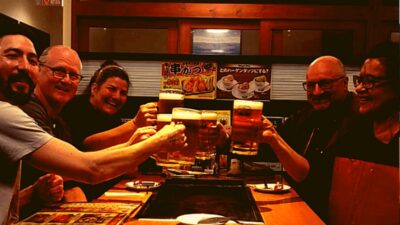
Shinsekai Food Tour with 13-15 Dishes at 5 Eateries
Read our review →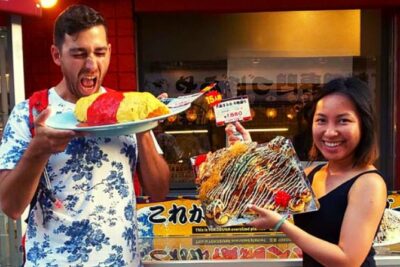
Osaka Food Tour: 13 Dishes at 5 Local Eateries
Read our review →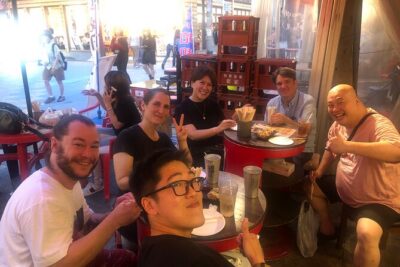
Hungry Osaka Street Food Tour:15 Tastings & 3 Drinks with a Local
Read our review →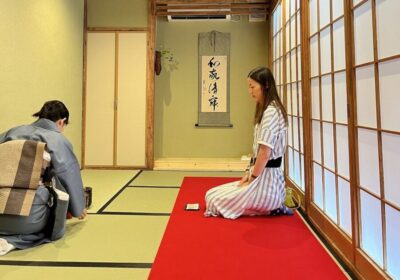

Hotspots & Hidden Gems Walking Tour Private or Group
Read our review →