
REVIEW · SPA & HOT SPRINGS
Osaka: Wakayama Cat Train, Seafood market, Hot Springs Tour
Wakayama’s cat train is the hook, but the day quickly grows into something much bigger: a countryside railway, a giant seafood market, old hot springs, and Pacific cliffs. I especially like the story of Tama, the calico stationmaster who helped save Kishi Station, and the live tuna cutting at ToreTore Market. Both give the trip a strong local flavor.
I also like that transportation, tolls, parking, the driver, and the cat-themed train are covered in the $83 price. The drawback is distance. You spend several hours on the road, and the cat-train ride itself lasts only about 15 minutes, so anyone expecting a full railway adventure may feel shortchanged.
In This Review
- Key points at a glance
- Why this Wakayama day trip works
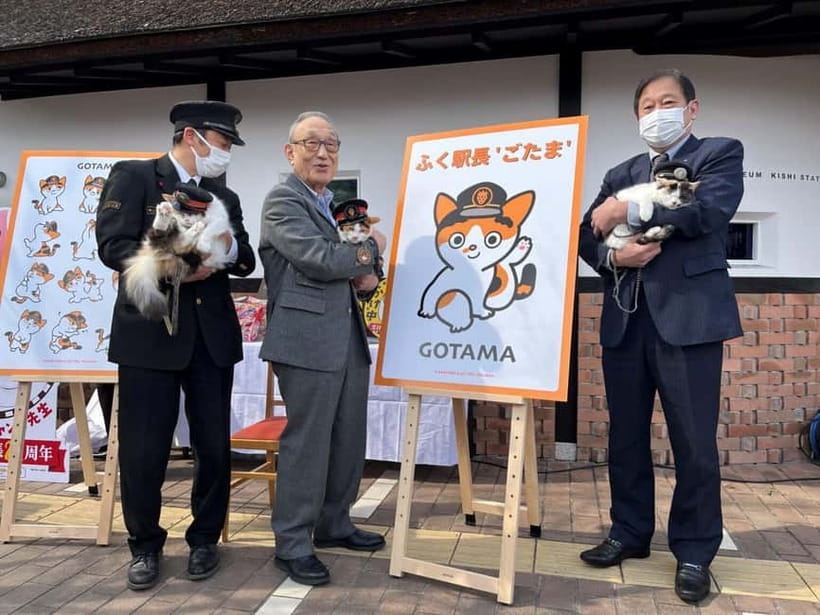
- Kishi Station and the cat who saved a railway
- ToreTore Market and the tuna-cutting show
- Toretore Onsen and the practical bath decision
- Senjojiki’s rock shelves above the Pacific
- Sandanbeki and the sea caves
- What the guide and coach add
- Is $83 a fair price?
- Who should book this day out?
- FAQ
- Where does the tour meet in Osaka?
- How long does the tour last?
- Which cat train will I ride?
- Is lunch included?
- Is the hot spring included?
- Can I enter Sandanbeki Cave?
Key points at a glance
- Kishi Station tells the Tama story: See the cat-faced station and learn how a local feline became a symbol of the Wakayama railway.
- The train design changes daily: You may ride the Tama Train, Strawberry Train, or Toy Train, depending on the operating schedule.
- ToreTore Market is a real lunch stop: Watch a tuna-cutting demonstration, then buy sashimi, grilled seafood, octopus rice, and other local foods.
- Shirahama adds a traditional bath option: Toretore Onsen has more than 1,300 years of history, but entry is extra and tattoos may restrict access.
- The coast supplies the big scenery: Senjojiki’s rock shelves and Sandanbeki’s sea caves give the final sightseeing stops real impact.
- Guide communication is a strength: Guide Tiger has been praised for clear English and Chinese updates, careful organization, and helpful market advice.
Why this Wakayama day trip works
This is a good choice when you want to leave Osaka for a day without planning several separate train connections. Wakayama offers a sharp change of pace: small railway stations, citrus-growing countryside, open sea, and a slower coastal rhythm.
The tour begins at 8:30 a.m. near Nipponbashi Station, close to the Namba and Shinsaibashi area. You meet at Exit 2, at 1-chōme-3-6 Nipponbashi. Arrive at least 15 minutes early. This is a busy pickup point with several groups, and late arrivals or no-shows are not refunded.
You travel in an air-conditioned vehicle. The exact vehicle depends on group size, and the ride to the first stop takes roughly 1.5 hours. The return drive is listed at about 2.5 hours, with an expected arrival around 6:40 p.m., though traffic can change the schedule.
That timing matters. This is not a leisurely, independent day in Wakayama. It is a long but efficient outing that bundles several distant sights into one organized route.
A few more Japan trips to weigh up
- Mt Fuji and Hakone 1-Day Bus Tour Return by Bullet Train
★ 5.0 · 26,383 reviews - Mt Fuji & Hakone Cruise, Drum Show Bullet Train 1 Day from Tokyo
★ 4.0 · 7,413 reviews - Tokyo Mt Fuji 5th St & Hakone Cruise Bus Tour w/Bullet Train
★ 4.4 · 5,024 reviews
Kishi Station and the cat who saved a railway
Kishi Station is small, charming, and deliberately playful. Its entrance is shaped like a cat’s face, and the station is linked to the story of Tama, a calico cat who greeted passengers and became the stationmaster in spirit as well as name.
The railway had faced closure before Tama’s presence brought attention and goodwill to the line. Today, Nitama, or Second Tama, continues the station’s cat theme. The appeal is not just that you get a cute photo. The story shows how a modest local stop became a point of pride and a reason for people to keep using a rural railway.
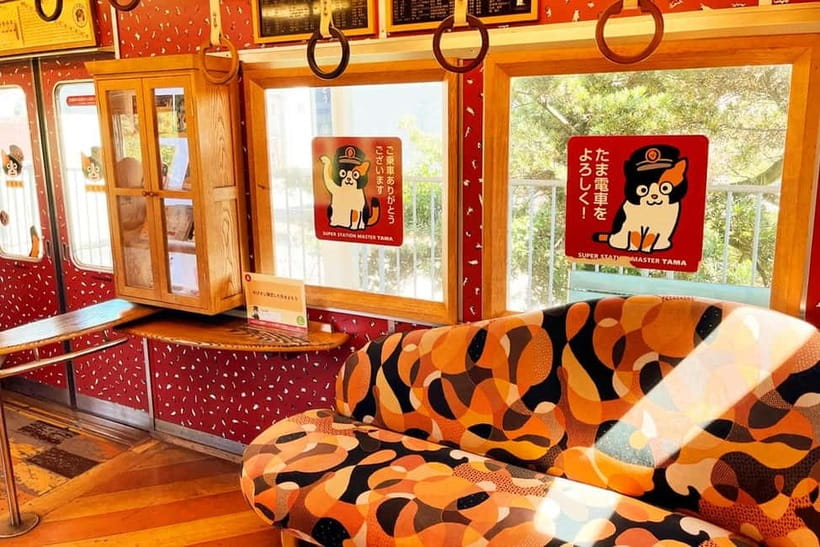
Inside and around the station, you may find a cat-themed café, the Tama Shop, cat stamps, and special souvenirs. Give yourself time to look around rather than treating the station as a quick photo stop. The small details are the point: cat motifs, railway memorabilia, and the sense that this place has built its identity around one very unusual employee.
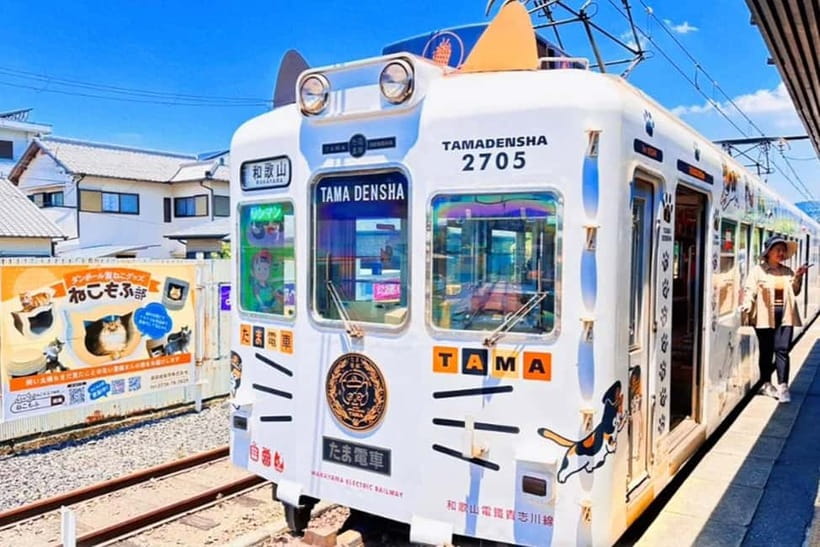
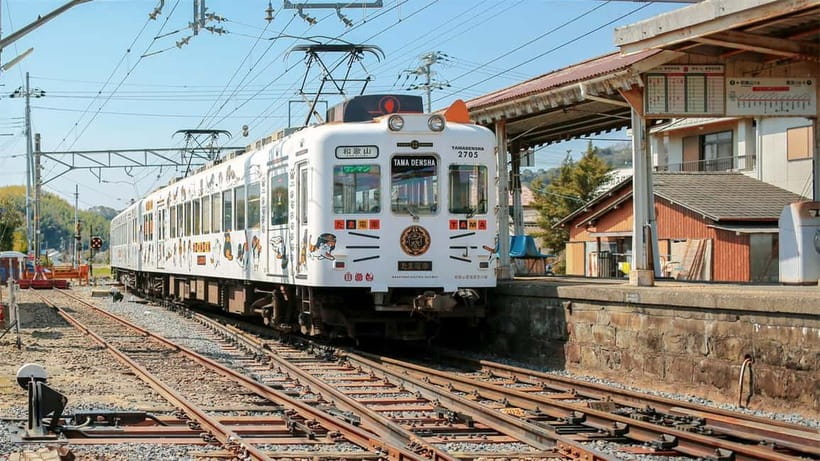
The train ride lasts about 15 minutes, even though the wider railway journey is described as much longer in the schedule. In practical terms, you should expect a short themed ride rather than hours aboard a cat carriage.
The operating design changes by day. You may board the Tama Train, Strawberry Train, or Toy Train. The tour cannot promise a specific one, so book this for the railway story and the cheerful design, not for one exact carriage.
That is the main limitation of this portion. If you are a serious railway enthusiast, the short ride may feel too brief. If you like local stories, unusual transport, and lighthearted design, Kishi Station makes a memorable first stop.
ToreTore Market and the tuna-cutting show
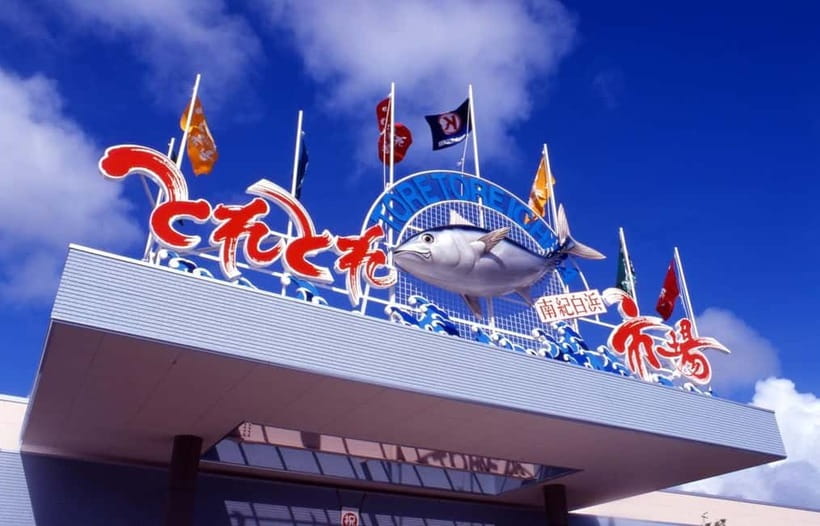
After the railway stop, the tour heads toward ToreTore Ichiba, one of western Japan’s largest seafood markets. This is where the day shifts from cute to delicious.
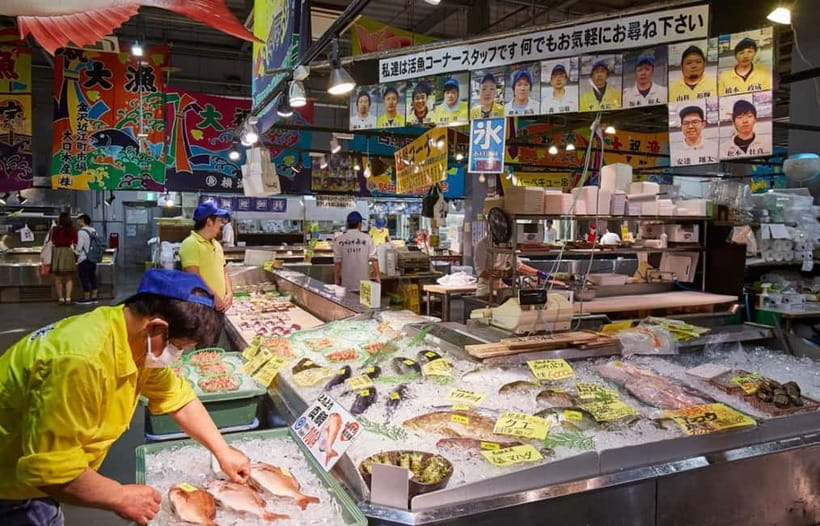
The market is a practical place to eat because you can choose what suits you. Options include tuna sashimi bowls, grilled seafood, octopus rice, and other fresh dishes. Lunch is not included, so bring cash and budget separately for food, drinks, and souvenirs.
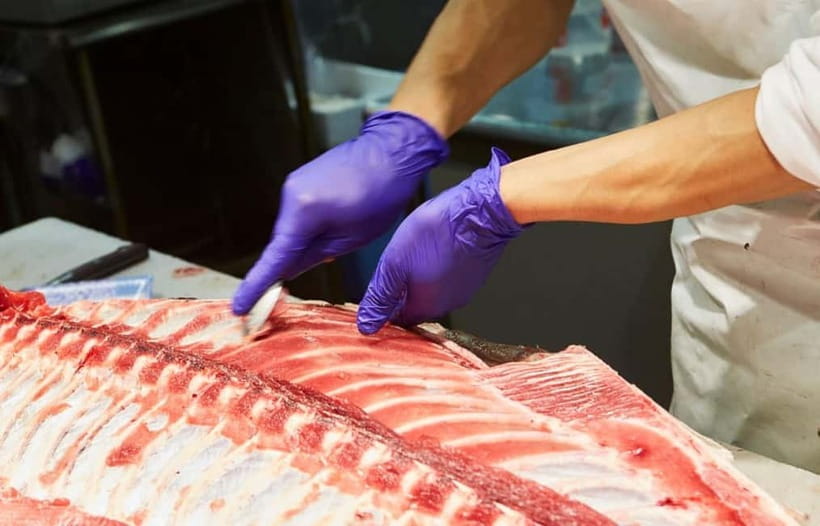
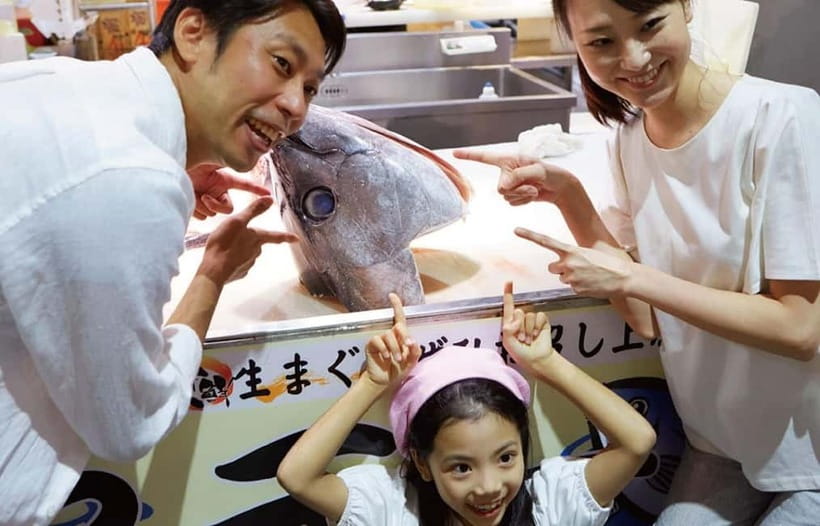
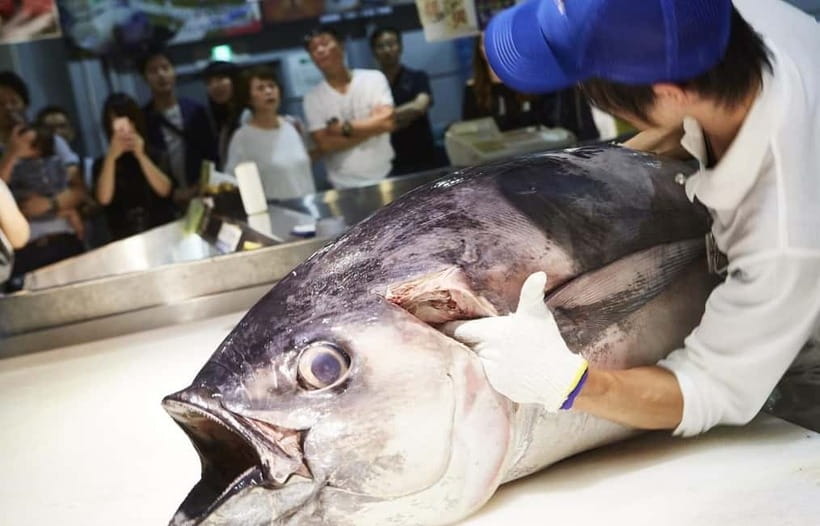
The best moment is the tuna-cutting demonstration. A large tuna is broken down in front of you with quick, precise cuts while the staff explain the fish’s anatomy. The show turns lunch into a small lesson in Japanese seafood culture, and it gives you a better sense of how a whole fish becomes the portions sold at the market.
The timing is not fixed. The demonstration takes place two or three times a day, but the exact time can change. Bad weather or other special circumstances can cancel it. Treat it as a welcome possibility, not a guaranteed centerpiece.
You should also allow time for the market’s shopping areas. Seasoned seafood, packaged food, gourmet items, and local gifts are available, making this a useful stop if you want edible souvenirs. Keep your purchases manageable because food is not allowed in the vehicle.
The market can take up to two hours, including the guided visit, sightseeing, and lunch. That is enough time to eat and browse, although the group may not move at exactly your preferred pace. If you want the fullest experience, ask the guide for help choosing seafood. Tiger has been especially useful to English-speaking participants, offering advice about what to buy and how to prepare it at the market’s barbecue tables.
The seafood stop is one of the strongest parts of the tour because it feels connected to daily life. You are not just looking at a historic building. You are choosing lunch, watching a skilled food demonstration, and seeing how the region presents its catch.
Toretore Onsen and the practical bath decision
The hot spring stop is optional, and that is sensible. Some people will be eager to use a Japanese bath, while others will prefer to spend the time sightseeing or relaxing after lunch.
Toretore Onsen is described as having more than 1,300 years of history, with references in old Japanese writings and links to imperial visits. Its sodium bicarbonate spring water is known for a smooth feel, and the bath complex includes a salt-stone bedrock bath described as Japan’s first of its type.
Entry is not included in the $83 price. You should also check the tattoo policy before booking this as a bathing experience. Tattooed bathers may face restrictions, so the onsen is not a sure fit for everyone.
The practical value of the optional stop is flexibility. You can add a traditional Japanese bathing experience without paying for it if you do not want to enter. Just remember that a hot spring visit takes time, and the day already has a full schedule.
Bring comfortable shoes for the complete outing and cash for lunch, admission, and personal spending. You will want a camera too, though the coastal scenery is more rewarding than trying to document every themed cat detail.
Same city, a completely different kind of day:
- 1-Day Tokyo Bus Tour
★ 5.0 · 14,250 reviews - PERFECT KYOTO 1-Day Bus Tour
★ 5.0 · 13,518 reviews - Tokyo: TOKYO SKYTREE® Admission ticket
★ 4.5 · 11,192 reviews - Tokyo: teamLab Planets TOKYO Digital Art Museum Entry Ticket
★ 4.6 · 9,779 reviews
Senjojiki’s rock shelves above the Pacific
Senjojiki Rock Plateau is the first of two strong coastal stops. The name refers to the broad layers of rock spread along the shoreline. From the top, you face the Pacific and see how the sea has shaped the coast over time.
The scheduled stop is about 30 minutes. That is enough for photographs and a short walk, but not for a long coastal ramble. Wear shoes with a good grip, especially if the rock is wet. Comfortable footwear matters throughout the day, and it matters most here.
Sunset can be beautiful if the timing lines up, but you should not count on a full sunset experience. Traffic, the season, and the tour’s changing order all affect the arrival time. Still, the open ocean and broad rock shelves provide a welcome change from the bus and market.
This stop works best as a viewpoint rather than a major hike. You get a strong visual impression quickly, which suits a packed day trip. If you want extended time along the coast, you would need to visit Shirahama independently.
Sandanbeki and the sea caves
Sandanbeki adds a different kind of drama. Here, tall rock cliffs meet the water, and an elevator takes you 36 meters down to sea-level caves. The caves are linked with stories of pirates from the Heian period, and displays help explain the setting.
Admission is optional and not included. The cliffs themselves are part of the sightseeing stop, so you can still enjoy the coastal views without entering the caves. If you do pay for admission, the elevator ride and underground formations give you a closer look at the force of the ocean.
The scheduled visit is about 30 minutes. That makes the optional cave admission a time decision as much as a money decision. Ask the guide how much time remains before entering, especially if you want photographs above ground.
Together, Senjojiki and Sandanbeki make a good pair. One gives you wide rock shelves and ocean views. The other brings you down into a confined sea-level setting with historic stories and natural formations.
What the guide and coach add
A multilingual guide leads the day in English, Japanese, or Chinese. Guide Tiger has received particularly strong praise for organization, clear explanations, and regular WhatsApp updates in English and Chinese. He has also been described as attentive about keeping the group together and offering restaurant suggestions after the tour.
That kind of help matters on a complicated day. The route includes a rural station, a large market, an optional bath, and two coastal sites. A good guide saves you from guessing where to go, how long you have, and which market foods may be worth buying.
The driver also has a major role. You are on the road for several hours, and the tour includes expressway travel, parking, and changing coastal conditions. The air-conditioned coach keeps the day easier than arranging the same route by public transport.
The tradeoff is group-tour timing. On weekends, public holidays, and peak seasons, traffic may force the guide to change the order of stops, shorten visits, or reduce the number of stops. You get convenience and coverage, but not total control.
Is $83 a fair price?
At $83 per person, the tour offers solid value if you want all-day transportation from central Osaka. The price includes the cat-themed train, air-conditioned round-trip transport, a guide, professional driver, tolls, fuel, and parking.
You still pay for lunch, personal purchases, the hot spring, and Sandanbeki Cave admission. Those extras are easy to control, since the two admissions are optional. Your final cost depends mostly on what you eat and buy at ToreTore Market.
The value is strongest for couples, families, and first-time visitors who do not want to rent a car or decode the regional transport system. It is also useful if you want several different kinds of experiences in one day: local railway culture, seafood, bathing, and ocean scenery.
The price is less convincing if you want a long train ride, a slow market visit, or several hours at the hot spring. You are paying for range and transportation, not for deep time at one place.
Who should book this day out?
I would recommend this tour to you if you want a break from Osaka’s city streets and enjoy a full schedule. Families may like the cat train and station design, food lovers get a strong market stop, and photographers have several very different settings.
It also suits visitors who value a helpful guide. Tiger’s clear communication and market assistance can be especially useful if you do not speak Japanese. The tour is offered in English, Japanese, and Chinese.
I would think twice if you dislike long coach rides or need a flexible pace. The train ride is short, the coastal stops are brief, and traffic can alter the plan. The tour is not suitable for wheelchair users, and tattoo restrictions may affect the hot spring option.
Book it if you see the cat train as the opening act for a broader Wakayama day. Skip it if the cat railway is your only reason for going and you want a serious rail journey. For most visitors, the best parts are the combination of Tama’s story, a hands-on seafood market, and the Pacific coast.
FAQ
Where does the tour meet in Osaka?
The meeting point is Nipponbashi Station Exit 2, near the Namba and Shinsaibashi area, at 1-chōme-3-6 Nipponbashi, Chuo Ward, Osaka. Arrive at least 15 minutes before the 8:30 a.m. departure.
How long does the tour last?
The experience lasts about 10 hours. The planned return to Osaka is around 6:40 p.m., but traffic and changes to the day’s order can affect arrival time.
Which cat train will I ride?
The train design depends on the daily operating schedule. You may ride the Tama Train, Strawberry Train, or Toy Train.
Is lunch included?
No. Lunch is at your own expense at ToreTore Market. You can choose from seafood dishes such as tuna sashimi bowls, grilled seafood, and octopus rice.
Is the hot spring included?
No. Toretore Onsen is an optional experience, and admission costs extra. If you have tattoos, entry may be restricted.
Can I enter Sandanbeki Cave?
Yes, but cave admission is optional and not included in the tour price. The coastal cliffs can still be visited if you choose not to enter the cave.
More Spa & Hot Springs in Japan
- From Osaka: Himeji Castle, Arima Onsen & Mt. Rokko Day Tour
★ 4.6 · 339 reviews - Osaka: Nara and Uji Day Trip with Deer Park and Hot Spring
★ 4.4 · 302 reviews - From Tokyo: Private Tour to Fuji/Hakone – Onsen, Art, Nature
★ 5.0 · 116 reviews - Mt. Fuji, Hakone Private Tour from Tokyo – Onsen, Arts and Nature
★ 5.0 · 79 reviews
More Shopping Tours in Japan
- Tokyo Tsukiji Fish Market Food and Culture Walking Tour
★ 5.0 · 3,184 reviews - Tokyo: Tsukiji Fish Market Food and Walking tour
★ 5.0 · 1,724 reviews - Tokyo: Tsukiji Fish Market Guided Walking Tour
★ 4.9 · 1,397 reviews - Nishiki Market Brunch Walking Tour (7 Tastings + Brunch)
★ 5.0 · 1,355 reviews
Just added around Japan
- Tokyo: Customizable Private Guided Walking Tour★ 4.5 · 129 reviews
- Private Harajuku Omotesando Architecture Tour★ 4.9 · 18 reviews
- Tokyo: Guided Walking Tour of Tsukiji Market with Lunch★ 4.4 · 24 reviews
- Tokyo: Private Personalized Local Food Tour★ 4.5 · 101 reviews
- Tokyo: Guided Helicopter Ride★ 4.9 · 24 reviews
- Tokyo GINZA: KONPARU Japanese Cabaret Show with Drink★ 4.8 · 38 reviews
- Tokyo: Guided Walking Tour of Tsukiji Market with Breakfast★ 4.4 · 134 reviews
- Tokyo: Gotokuji Cat Temple, Shinjuku Cat Cafe & 3D Cat Tour★ 4.9 · 38 reviews
Spa & Hot Springs, compared.
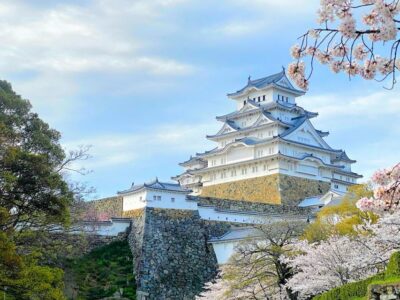
Himeji Castle, Arima Onsen & Mt. Rokko Day Tour
Read our review →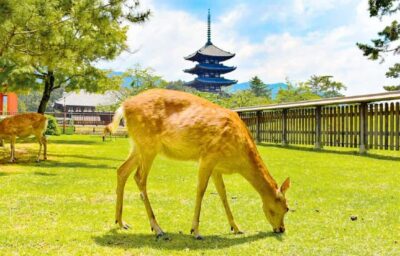
Nara and Uji Day Trip with Deer Park and Hot Spring
Read our review →
Private Tour to Fuji/Hakone – Onsen, Art, Nature
Read our review →
Mt. Fuji, Hakone Private Tour from Tokyo – Onsen, Arts and Nature
Read our review →

Private Nagano 1-Day Tour:Snow Monkeys,Zenko-ji,Obuse,Sake,Onsen
Read our review →
Mt Takao Tour with Ramen and Tattoo-Okay Hot Spring
Read our review →
Snow Monkey & Shibu Onsen Afternoon Tour (Depart: Iiyama & Nozwa)
Read our review →Browse the lists this tour appears in