
REVIEW · OSAKA TOURS
Osaka Sushi Miso soup Adventure: A Journey of Exotic Flavors
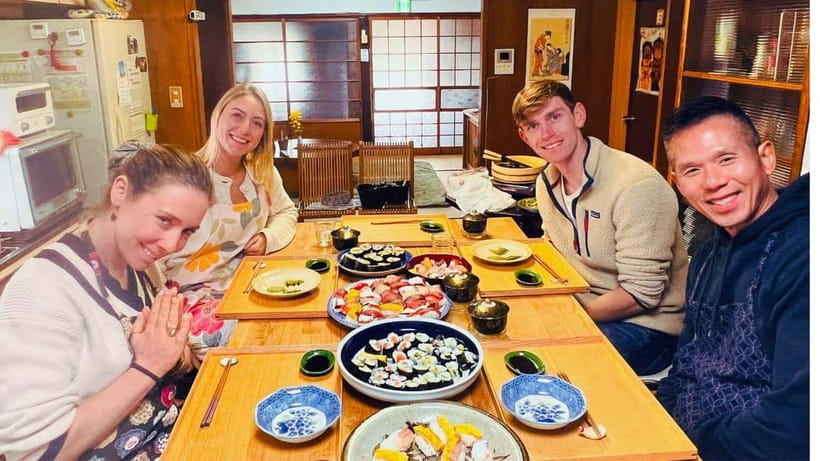
The best part of this Osaka cooking class is that you do not simply watch a chef assemble pretty sushi. You prepare the rice, season fish, roll hosomaki, shape nigiri, cook tamagoyaki, and make miso soup from scratch. Chef Yuki teaches in English and shares techniques learned from a sushi master with more than 40 years of experience.
I especially like the focus on tuna zuke and kombu-jime salmon, since both methods make sushi more practical at home. I also like the small size, limited to six people, which gives you room to ask questions and get help with delicate steps such as rice preparation and omelet rolling.
The main drawback is location. The class is in Nukata, not central Osaka, so you need about 30 minutes on the Kintetsu Nara Line from Namba, followed by a five-minute walk. That is a fair trade for a quieter, personal class, but it takes planning.
In This Review
- Key Points Before You Book
- What Makes Chef Yuki’s Class Different
- Starting Near Nukata Station
- Preparing Rice and Dashi From the Start
- Tuna Zuke and Kombu-Jime Salmon
- Shaping Nigiri and Rolling Hosomaki
- Making Tamagoyaki With a Square Pan
- Finishing With Homemade Miso Soup
- A Small, Personal Class in English
- What You Can Take Home
- Is the $96 Price Good Value?
- Who Should Book This Osaka Class?
- Should You Book the Sushi and Miso Soup Adventure?
- FAQ
- Where is the cooking class located?
- How do I reach the class from Namba?
- How long does the experience last?
- What language does Chef Yuki use?
- How many people can join the class?
- What sushi will I make?
- What other Japanese dishes are included?
- Are ingredients included?
- Can vegetarians join?
- What is the cancellation policy?
Key Points Before You Book
- Make several Japanese dishes in three hours: Prepare nigiri, hosomaki, marinated tuna, kelp-cured salmon, tamagoyaki, dashi, and miso soup.
- Learn from Chef Yuki in English: Her instruction covers both technique and the everyday cooking ideas behind Japanese food.
- Use preservation methods at home: Tuna zuke and kombu-jime salmon can help keep fish fresh for three to four days.
- Expect a genuinely small group: The class accepts no more than six participants, and some sessions may be much smaller.
- Plan the trip from Namba: Take the Kintetsu Nara Line to Nukata Station, then walk about five minutes to the white building at 4-19 Nukata-cho.
What Makes Chef Yuki’s Class Different
Many sushi classes concentrate on the final presentation. Here, you work through the less glamorous but more important parts first. Properly prepared rice gives sushi its balance, and the class explains how to handle it in a traditional pot rather than treating it as an afterthought.
Chef Yuki has more than a decade of culinary experience and trained under a sushi master with over 40 years in the craft. That background matters because sushi is built from small details: the texture of the rice, the amount of vinegar, the pressure used when shaping nigiri, and the way a topping is prepared.
You also get a look at Japanese food beyond raw fish. Dashi broth, miso soup, wasabi preparation, and tamagoyaki help place sushi within a larger home-cooking tradition. I like this approach because you leave with several useful skills instead of one recipe that only works for a special occasion.
The class takes place in a cozy home setting near Nukata Station. That makes the experience feel personal rather than staged for a large audience. It also means the atmosphere is informal, so you should be comfortable learning in a private cooking space rather than a commercial school kitchen.
Other Osaka days people book alongside this one:
- Osaka Go Karting Tour with Funny Costume
★ 5.0 · 2,658 reviews - Osaka Castle: Museum and Tower Entry Ticket
★ 4.5 · 2,380 reviews - Osaka: Shinsekai Food Tour with 13-15 Dishes at 5 Eateries
★ 4.8 · 2,204 reviews
Starting Near Nukata Station
Your destination is 4-19 Nukata-cho, Osaka, a white building about five minutes from Nukata Station. From Namba, board the Kintetsu Nara Line train bound for Kintetsu Nara and get off at Nukata. The ride takes about 30 minutes and costs approximately ¥430.
The directions advise heading northeast along Route 308 after leaving the station. The class asks you to arrive 10 minutes early, which is sensible. Allowing a little extra time is useful here because you are traveling away from the main sightseeing core and need to identify the correct building.
Chef Yuki has also met participants near the station or at the nearby FamilyMart. This has been particularly helpful for first-time visitors trying to find the apartment. I would still keep the meeting instructions handy and contact the host if you are uncertain, since the class is not directly at Namba or near Osaka’s major central sights.
The trip is not difficult, but it does affect your schedule. Set aside roughly half a day once you include the train ride, walking, three-hour lesson, and return journey. The class works well on a day when you want a slower activity after sightseeing, rather than as a quick stop between major attractions.
Preparing Rice and Dashi From the Start
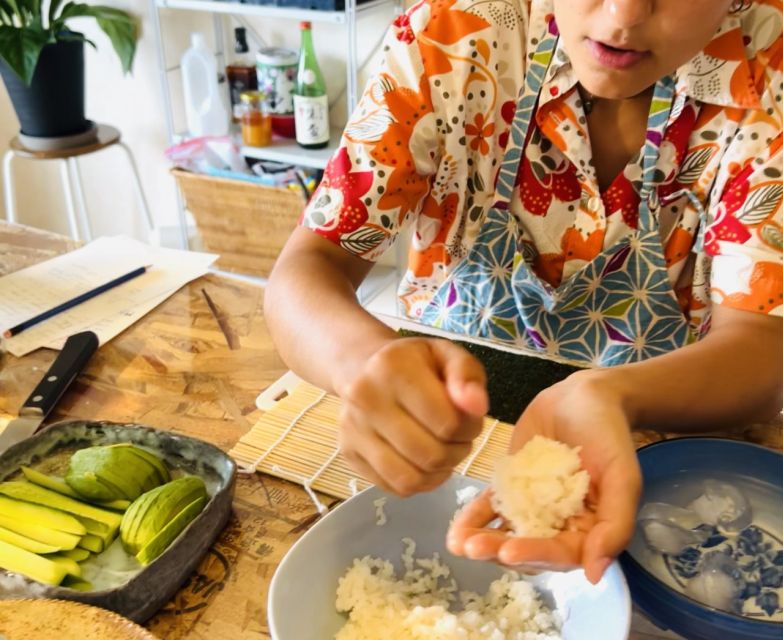
The class begins with the foundations of Japanese cooking. You learn how sushi rice is selected and prepared, including the traditional approach to cooking it in a pot. This is one of the most useful parts for home cooks because rice texture can make or break homemade sushi.
You also work with dashi broth, the savory base used in many Japanese dishes. The lesson connects dashi to miso soup and gives you a better sense of how Japanese cooks build flavor without relying on heavy sauces.
The pace is hands-on. You are not standing at the back of a room while someone else handles the knife and stove. Chef Yuki explains the steps, then helps you carry them out. Beginners can ask questions as they go, while people who already know basic sushi preparation can pick up finer points about rice, seasoning, and ingredient treatment.
This format also suits couples and families who want to cook together. A parent brought a baby to the class after checking in advance, and the small setting allowed Chef Yuki to provide extra support. That does not mean every family arrangement is automatically suitable, so contact the host before booking if you need a special accommodation.
Tuna Zuke and Kombu-Jime Salmon
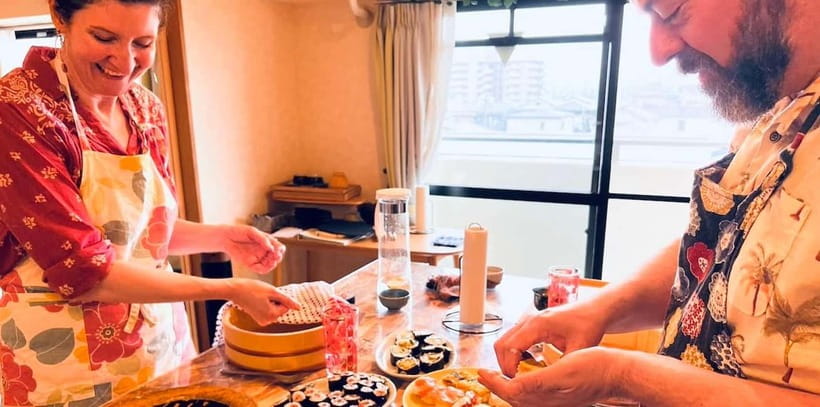
Two of the most useful preparations are tuna zuke and kombu-jime salmon. Tuna zuke means tuna treated in a traditional soy-based marinade. The seasoning adds flavor while changing the way the fish works with the rice.
Kombu-jime salmon is cured with kelp. This old technique brings savory notes to the salmon and helps preserve its freshness. The class explains that these methods can allow the fish to be kept for three to four days, making them especially useful when you return home and cannot buy sushi-grade ingredients every day.
That practical angle gives the lesson more value than a simple restaurant-style demonstration. You are learning methods that can fit into a home kitchen and a busy schedule. The techniques also help you think about sushi as preparation and timing, not just assembly.
You should still follow safe food-handling advice in your own country and use fish suitable for raw preparation. The class teaches preservation techniques, but it does not remove the need for careful sourcing and refrigeration at home.
Same city, a completely different kind of day:
- Osaka Food Tour: 13 Dishes at 5 Local Eateries
★ 5.0 · 2,149 reviews - Hungry Osaka Street Food Tour:15 Tastings & 3 Drinks with a Local
★ 5.0 · 1,727 reviews - Osaka: Tea Ceremony Experience
★ 4.9 · 1,426 reviews - Osaka Kickstart: Hotspots & Hidden Gems Tour
★ 5.0 · 1,306 reviews
Shaping Nigiri and Rolling Hosomaki
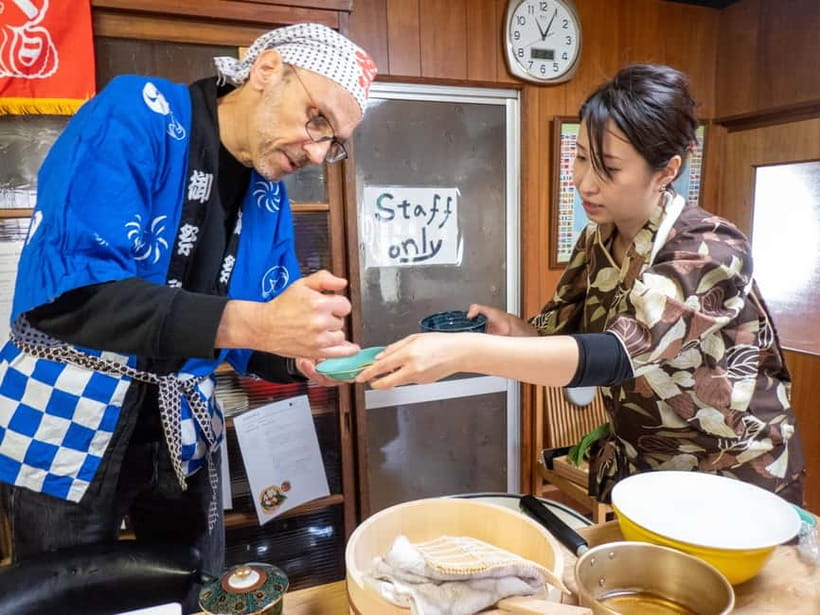
Nigiri is the classic hand-shaped sushi: seasoned rice topped with fish. It looks simple, but the shape depends on a light touch. Press too hard and the rice becomes dense. Handle it too loosely and the piece falls apart.
Chef Yuki guides you through the balance of rice and topping. This is where a small class helps. With up to six participants, you have a better chance of receiving direct correction instead of repeating a mistake through an entire batch.
Hosomaki gives you a different challenge. These are thin rolls with a single main ingredient, wrapped neatly in nori. The narrow shape forces you to control the amount of rice and filling. It is an accessible way to practice rolling before trying more elaborate sushi at home.
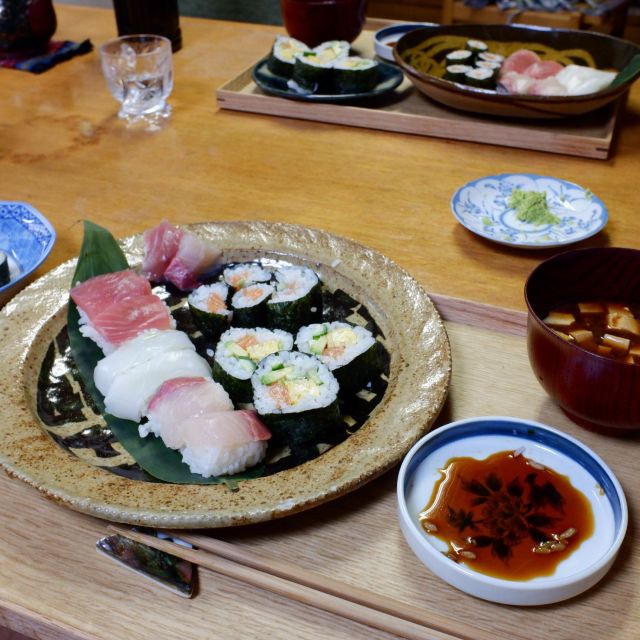
The class includes three sushi styles, according to the detailed cooking experience described by participants. You will handle both the delicate work of nigiri and the more mechanical process of rolling maki. The variety keeps the lesson moving and gives you several techniques to repeat later.
Do not expect every piece to look restaurant-perfect on your first attempt. That is part of the point. You learn how much pressure to use, how to spread rice, and how to make the finished pieces hold together. The skills improve with practice, and the class gives you a strong first lesson.
Making Tamagoyaki With a Square Pan
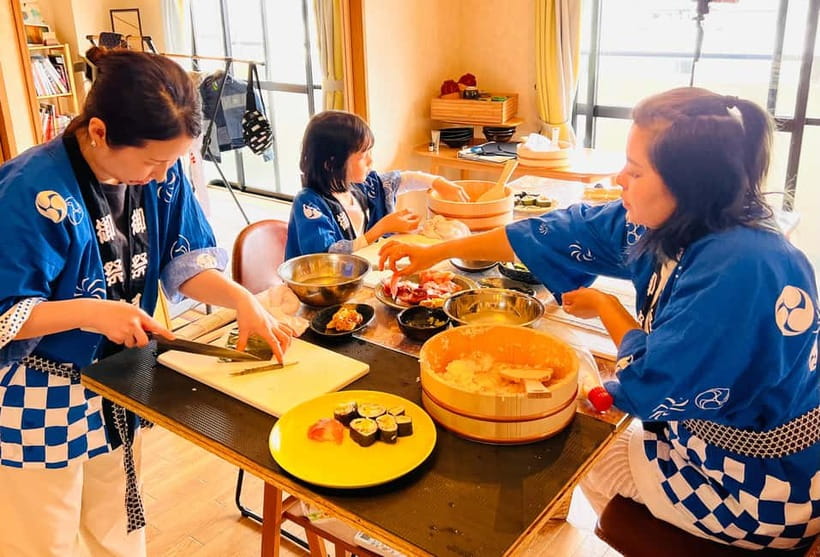
Tamagoyaki, the Japanese rolled omelet often served with sushi, is another highlight. It is cooked in layers and rolled into a compact shape, usually with a square pan. The process is more technical than making an ordinary omelet because you must cook thin layers, roll them neatly, and keep the shape even.
This is a good inclusion because tamagoyaki gives you a cooked dish to practice alongside raw fish. It also shows how sushi meals combine contrasting textures and flavors. The omelet is soft and gently seasoned, while the fish and rice provide a different set of tastes.
If you have never used a square pan, expect a learning curve. Chef Yuki helps you through the process, and the hands-on format lets you understand the timing better than a written recipe alone. You can then repeat the method at home with the right pan and a little patience.
Finishing With Homemade Miso Soup
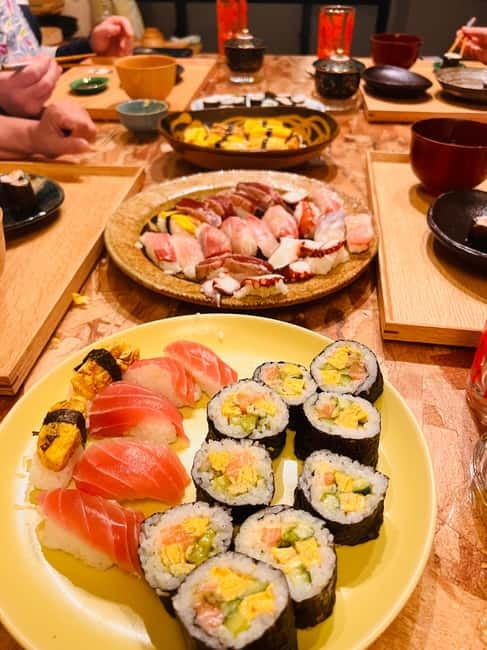
Miso soup completes the meal and gives the class a satisfying finish. You prepare the soup from scratch, using dashi as its base and traditional seasonings to develop the flavor.
This part is valuable because miso soup is far easier to bring into your regular cooking than hand-shaped sushi. Once you understand the broth and seasoning, you have a simple Japanese dish you can make again and again.
The soup also helps explain the meal as a whole. Sushi is not an isolated food category. Rice, broth, omelet, fish, kelp, and fermented miso all have a place at the table. By making them together, you get a clearer picture of how the flavors relate.
At the end, you eat the dishes you prepared together. That shared meal gives the three-hour session a natural reward, and it lets you taste the results while the methods are still fresh in your mind.
A Small, Personal Class in English
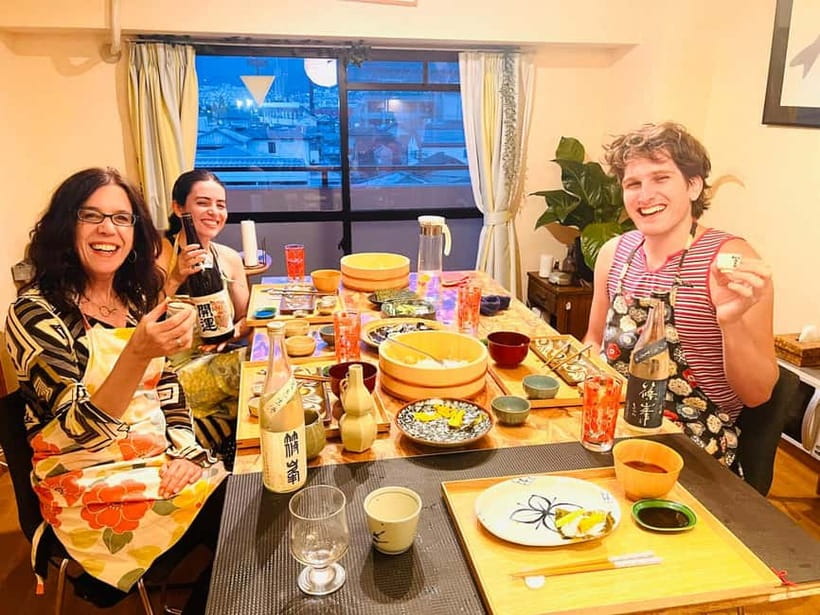
The group size is limited to six, but some sessions may be much smaller. One participant attended alone, while another class had only four people. That flexibility can make a major difference if you prefer direct instruction or do not enjoy large group activities.
Chef Yuki teaches in English and takes time to answer questions. The experience also includes personal conversation about her life, Osaka, and her interest in traditional Japanese cuisine. You get cultural context without sitting through a formal lecture.
The home setting has clear benefits. It feels relaxed, and you can ask about everyday cooking, ingredient choices, and ways to adapt the dishes at home. It is also less polished than a purpose-built culinary studio, so people seeking a sleek professional kitchen may prefer a different kind of class.
The personal style is one of the strongest reasons to book. You are not only following a recipe. You are learning from a cook who has made these foods part of her own life and can explain the practical decisions behind them.
What You Can Take Home
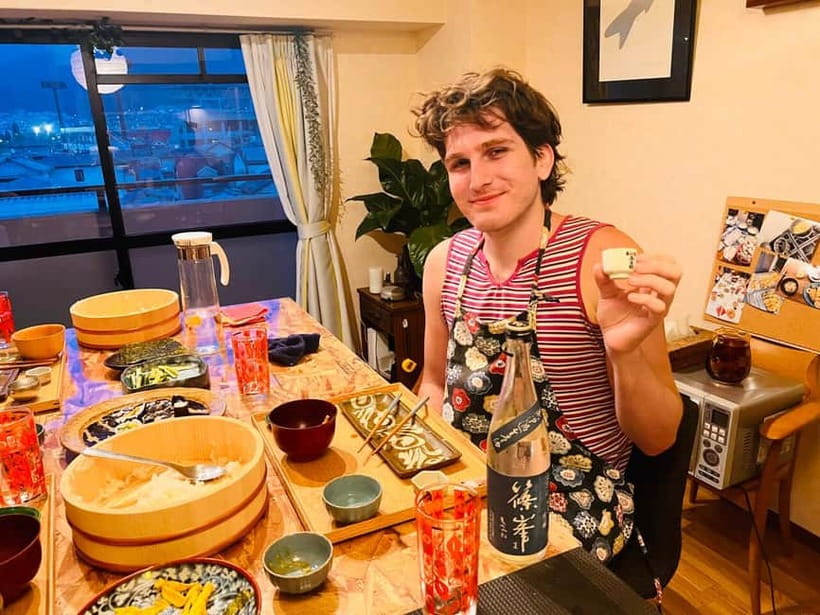
Chef Yuki sends recipes after the class, giving you a useful reference once you return home. This is important because sushi preparation involves several steps, and it is easy to forget the proportions or order of work after a busy trip.
The recipes make the course more than a one-day memory. You can repeat the miso soup, tamagoyaki, hosomaki, and fish preparations for friends or family. One participant even bought Chef Yuki’s cookbook, which suggests that extra cooking material may be available directly from the host, though it is not included in the stated price.
The most transferable lessons are the rice preparation, dashi, omelet, and fish treatments. You may not make nigiri every week, but you can use the same attention to seasoning and preparation in many Japanese meals.
Vegetarians should contact Chef Yuki ahead of time. A vegetarian participant was accommodated successfully, but advance notice is the considerate way to allow the ingredients and lesson to be adjusted.
Is the $96 Price Good Value?
At $96 per person, this is not a cheap meal, but it is more than a meal. You receive three hours of instruction, fresh ingredients, traditional seasonings, hands-on practice, and the food you prepare. You also get recipes to use later.
The value is strongest if you want to learn rather than simply eat sushi. A restaurant meal might cost less, but it would not teach you how to cure salmon with kelp, marinate tuna, season rice, roll hosomaki, or make dashi and miso soup.
The small group also supports the price. With no more than six people, Chef Yuki can guide individual steps and respond to different skill levels. That would be harder in a large class.
I would consider the cost worthwhile for sushi fans, home cooks, and visitors who want a personal connection to Japanese food. If you are only looking for a quick tasting, the three-hour commitment and train ride may not suit you.
The booking terms add useful flexibility. You can cancel up to 24 hours before the activity for a full refund, and you can reserve now and pay later. Starting times vary, so check availability before arranging the rest of your Osaka day.
Who Should Book This Osaka Class?
I recommend this class most for:
- First-time sushi makers who want patient, direct instruction
- Experienced home cooks who want better rice, dashi, or fish-preparation techniques
- Couples looking for a relaxed food activity away from the busiest central streets
- Families who confirm arrangements in advance
- Vegetarians who contact the host before booking
- Sushi lovers who want recipes they can use after returning home
It is less suitable if you dislike raw fish, have only a short window in Osaka, or want a class in central Namba. The class requires a trip to Nukata and rewards people who are willing to spend time on preparation.
Should You Book the Sushi and Miso Soup Adventure?
Book it if you want to understand how sushi is made, not just take a photo of it. Chef Yuki’s class combines several dishes, practical preservation methods, a small English-speaking group, and a home setting that encourages questions.
The strongest reasons to go are the hands-on work, the personal instruction, and the useful techniques you can repeat at home. The main compromise is the location outside central Osaka, but the route from Namba is straightforward and the class lasts long enough to feel like a full food experience.
For a slower, personal afternoon with food you prepare yourself, this is a strong choice. Plan the train journey, arrive early, and tell Chef Yuki about dietary needs or a baby before the day of the class.
FAQ
Where is the cooking class located?
The class is at 4-19 Nukata-cho, Osaka, in a white building near Nukata Station.
How do I reach the class from Namba?
Take the Kintetsu Nara Line from Osaka Namba Station toward Kintetsu Nara. Get off at Nukata Station, then walk about five minutes to the address.
How long does the experience last?
The cooking class lasts three hours.
What language does Chef Yuki use?
Instruction is provided in English.
How many people can join the class?
The class is limited to six participants.
What sushi will I make?
You will make nigiri sushi, hosomaki, tuna zuke, and kombu-jime salmon.
What other Japanese dishes are included?
You will prepare tamagoyaki and miso soup, and the class also covers dashi broth and wasabi preparation.
Are ingredients included?
Yes. Fresh ingredients and traditional seasonings are included.
Can vegetarians join?
Vegetarian participants have been accommodated, but you should tell Chef Yuki in advance so the class can be prepared appropriately.
What is the cancellation policy?
You can cancel up to 24 hours in advance for a full refund. You can also reserve now and pay later.
Just added around Osaka
- (Ticket Included) Explore Osaka Castle & Museum of History★ 4.8 · 21 reviews
- Hidden Osaka – Yukaku Red Light Tour & Culinary Adventure★ 4.8 · 96 reviews
- Osaka: Walking Tour and Top Highlights★ 4.8 · 104 reviews
- Osaka: Private Ceramic Painting Workshop★ 5.0 · 13 reviews
- Pickleball in Osaka, Kobe & Kyoto with Locals!★ 4.7 · 80 reviews
- Eat Like a Local in Osaka – Private Custom Street Food Tour★ 4.3 · 33 reviews
- Osaka:SUMO BEATS SHOWCASE: Taiko Drum and Wagyu burger!★ 4.2 · 37 reviews
- Kimono photoshoot-Includes 100 photo data★ 5.0 · 21 reviews
Osaka Tours, compared.

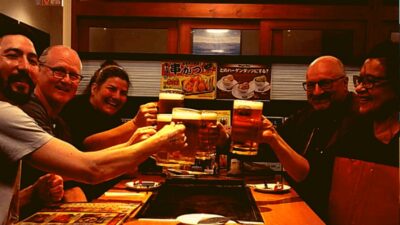
Shinsekai Food Tour with 13-15 Dishes at 5 Eateries
Read our review →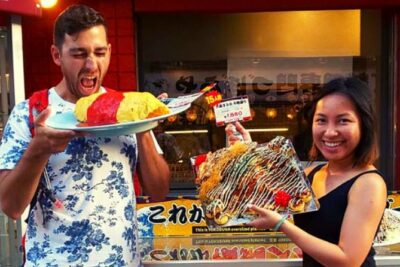
Osaka Food Tour: 13 Dishes at 5 Local Eateries
Read our review →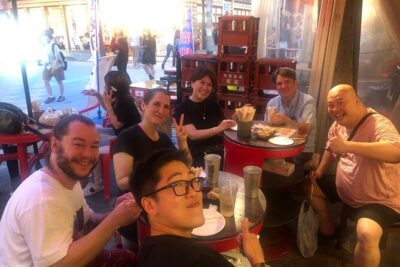
Hungry Osaka Street Food Tour:15 Tastings & 3 Drinks with a Local
Read our review →
Hotspots & Hidden Gems Walking Tour Private or Group
Read our review →
Deep Backstreet Osaka Tours (Option to add Dinner)
Read our review →Browse the lists this tour appears in