
REVIEW · OSAKA TOURS
Osaka: Small Group, Big Flavors & Hidden Local Secrets Tour
Osaka’s best food experience may begin outside a McDonald’s, then quickly leave the bright signs behind. This three-hour walk takes you through Tenma’s old alleys and lively Kyobashi, where small restaurants serve the food locals actually order. I like the maximum six-person group and the way the evening uses three restaurants, not one long sit-down meal. You get more variety, more chances to ask questions, and a better look at Osaka after dark.
I also like the short train hop between districts. Tenma feels nostalgic and close-knit, while Kyobashi has a looser after-work mood. The main consideration is the pace and menu: 15 or more dishes is a full dinner, and some food may be unfamiliar or adventurous. Tell the provider about dietary needs ahead of time, and come ready to eat.
In This Review
- Key points at a glance
- Why this Osaka night tour feels different
- Meeting at Tenma Station
- Tenma: old lanes and a full first course
- A three-minute train ride to Kyobashi
- The final restaurant and three-drink allowance
- What the guides add to the meal
- Food variety, adventurous choices, and menu changes
- Is $94 a fair price?
- Who should book this evening
- Practical details that affect your night
- Should you book the Tenma and Kyobashi food tour?
- FAQ
- Where does the tour begin?
- Where does the tour finish?
- How long does the experience last?
- How many dishes are included?
- How many drinks are included?
- Can dietary restrictions be accommodated?
- What languages are available?
- Is the tour suitable for children or wheelchair users?
Key points at a glance
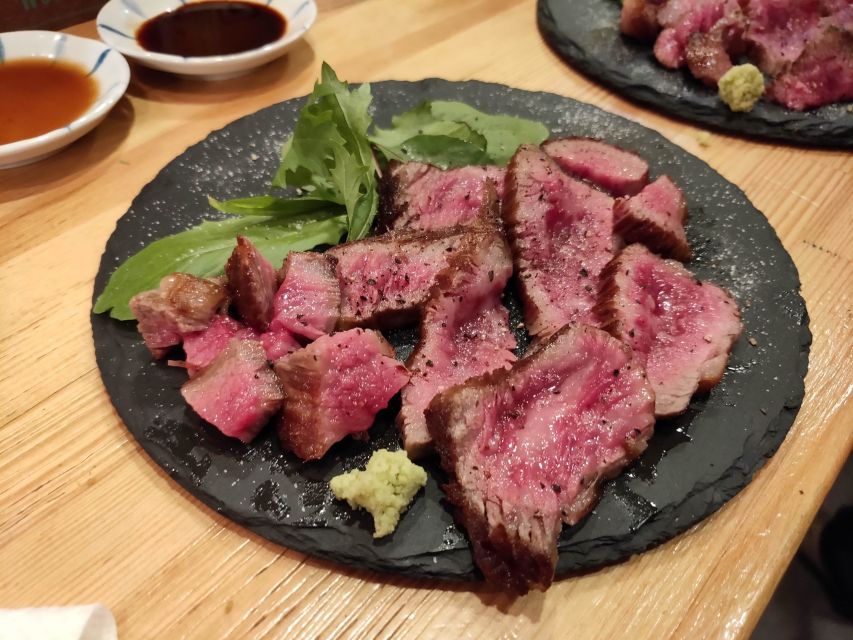
- Fifteen or more dishes: Small plates add up to a full dinner, with enough variety to sample foods you might not order alone.
- Two very different districts: Tenma offers narrow lanes and old storefronts; Kyobashi brings a livelier, more eclectic evening scene.
- Three local restaurant stops: Each stop includes one drink, with alcoholic and non-alcoholic choices available.
- A genuinely small group: Six people is the maximum, allowing direct conversation with guides such as Ferdinand, Kevin, Bryan, Laura, Joshua, and others on the team.
- A practical first-night choice: Local food advice and neighborhood tips can help you plan the rest of your Osaka stay.
- No Dotonbori circuit: The route avoids Osaka’s most familiar tourist zone in favor of districts with everyday local life.
Why this Osaka night tour feels different
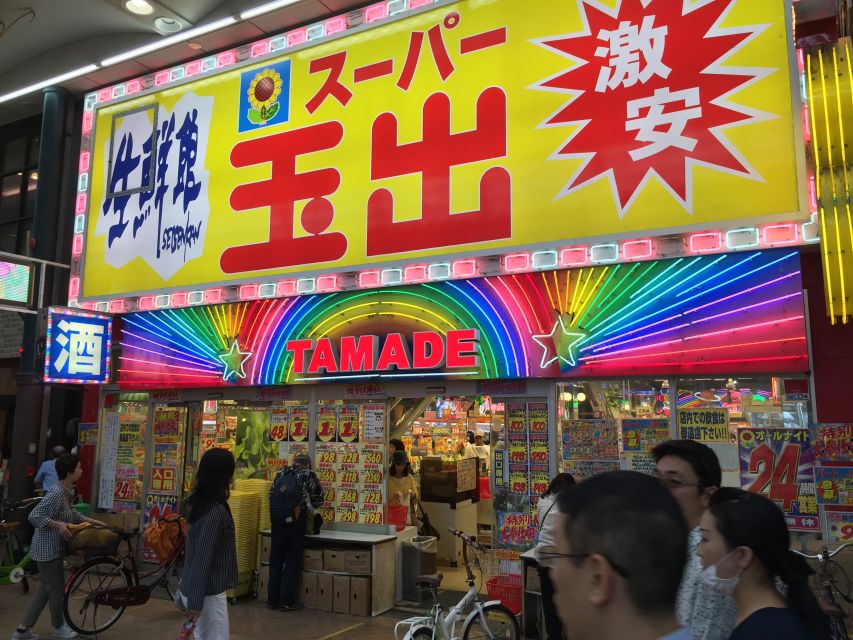
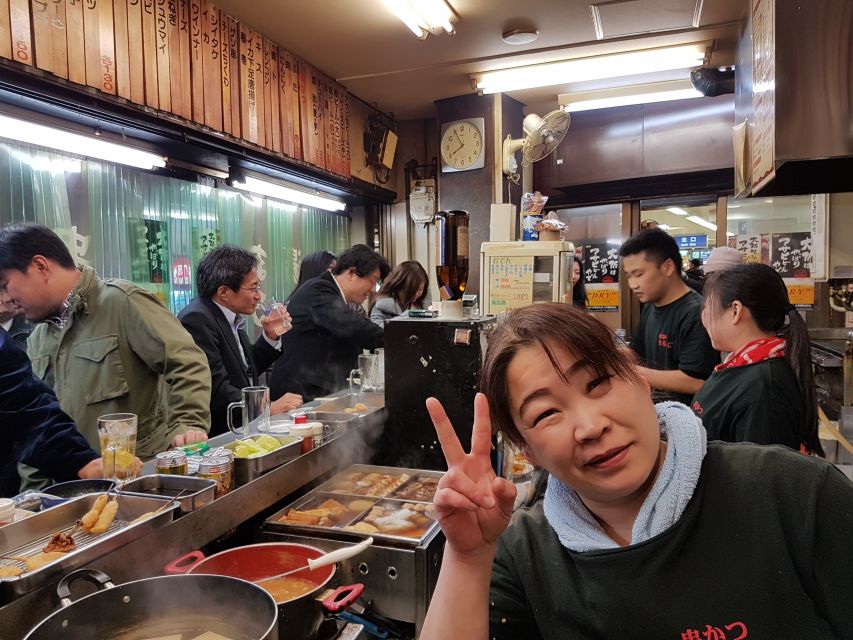
Osaka is famous for food, but the city’s character is not found only in its best-known signs and photo spots. Tenma and Kyobashi show you a more ordinary Osaka, with narrow lanes, small counters, old shops, and people stopping for a drink after work.
That matters because food makes more sense when you see where it is eaten. Your guide can explain why Osaka has such a strong comfort-food culture, why residents defend favorite restaurants with unusual seriousness, and how neighborhood habits shape the evening.
I would book this early in an Osaka visit if you want practical advice. Several guides, including Ferdinand, Kevin, Bryan, and Oisín, have been praised for giving useful suggestions about food, customs, and places to visit later. You may finish the night with a better sense of where to eat on your own.
The tour is not built around formal dining or famous restaurants. It is about moving, tasting, talking, and seeing how the city works after dark. That makes it a good fit if you prefer local atmosphere to polished presentation.
Other Osaka days people book alongside this one:
- Osaka Go Karting Tour with Funny Costume
★ 5.0 · 2,658 reviews - Osaka Castle: Museum and Tower Entry Ticket
★ 4.5 · 2,380 reviews - Osaka: Shinsekai Food Tour with 13-15 Dishes at 5 Eateries
★ 4.8 · 2,204 reviews
Meeting at Tenma Station
The meeting point is in front of the McDonald’s at Tenma Station, 4-chōme-12-1 Tenjinbashi, Kita-ku, Osaka. The restaurant is only a landmark for finding your guide, not part of the food route.
Tenma is a useful place to begin because the district changes quickly once you leave the station area. Your first walk lasts about 45 minutes and combines neighborhood sightseeing with food-related stories. Expect narrow lanes, older storefronts, and a market area that feels lived-in rather than dressed up for visitors.
You will want comfortable shoes. The walk is not described as a long-distance hike, but the route uses alleys and streets, and the evening includes several stops. Tenma’s charm comes partly from its compact, slightly untidy layout, so this is not a smooth, staged promenade.
A small group helps here. With only six people, you can hear the guide more easily and ask about signs, customs, ingredients, or places that catch your eye. The setting also feels less like a lecture and more like walking around with a well-informed local friend.
Tenma: old lanes and a full first course
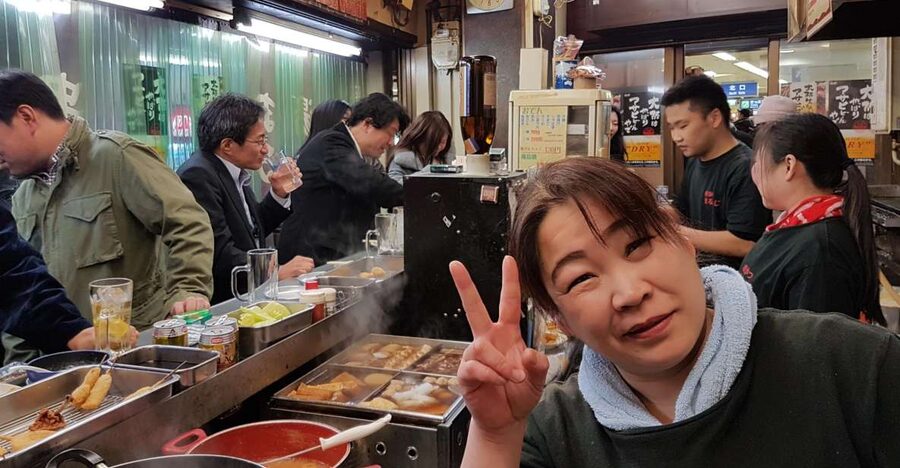
The Tenma section is the heart of the neighborhood story. Your guide points out details that are easy to pass without context, then leads you into local restaurants for the first tastings.
The exact menu changes with the season and restaurant availability. You might try fish, beef, vegetables, and other Japanese dishes, but the provider does not promise a fixed list. That flexibility is useful for keeping the food fresh and for using restaurants that are open and operating normally.
The first restaurant visit includes a drink, with beer, cocktails, spirits, or a non-alcoholic option available. The stop lasts about 30 minutes. Rather than ordering one large entrée, the group shares several smaller plates, allowing you to sample more styles and textures.
A second Tenma stop adds another set of dishes and another drink. This is where the meal begins to feel substantial. The portions are tasting-sized, but 15 or more dishes over three restaurants can easily amount to a full dinner. Several people have specifically found the food plentiful, so you should avoid arriving after a large meal.
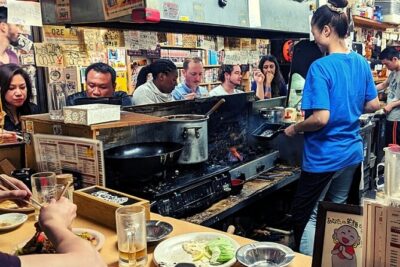
The second stop also gives you more time to notice the district itself. Regulars sit at small counters, conversations drift through the alleys, and the restaurants feel connected to their neighborhood. The point is not to pretend you have discovered a secret city. It is to show you how much of Osaka’s food life happens away from the major sightseeing routes.
A three-minute train ride to Kyobashi
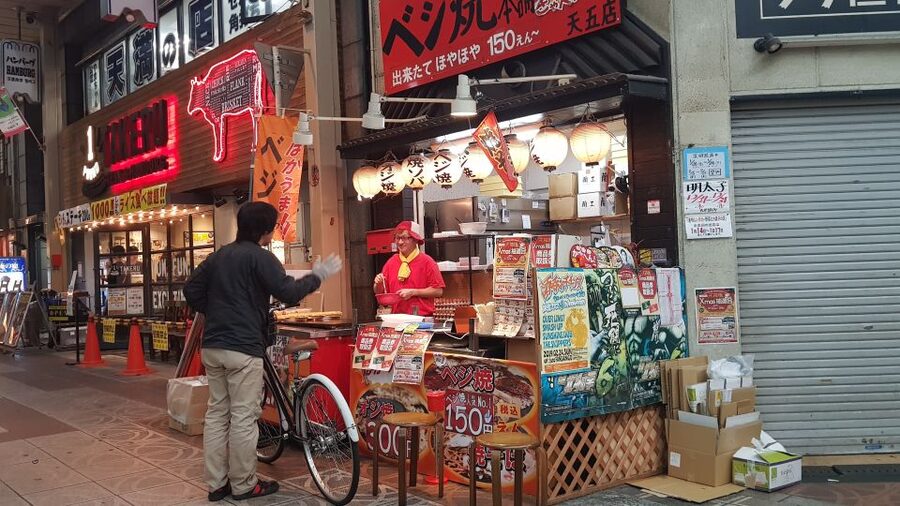
After the Tenma restaurants, you take a short local train ride to Kyobashi. The ride is about three to four minutes, although the itinerary allows roughly 10 minutes for the transit portion. Train fare is included.
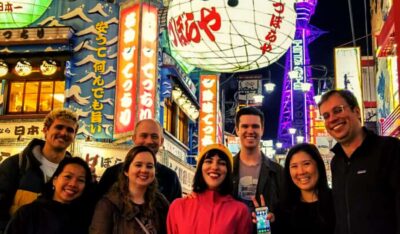
This small transfer is one of the tour’s smartest features. You do not spend much time commuting, but you get a clear change of mood. Tenma is presented as nostalgic and closely tied to older food traditions. Kyobashi feels more eclectic, with after-work diners, glowing counters, and conversations spilling into the street.
The Kyobashi walking section lasts about 20 minutes. Your guide gives you a quick orientation before the final restaurant stop. It is enough time to understand the district’s character without turning the tour into a long city walk.
I like this contrast because it gives the evening shape. If all three stops were in one district, the food might be good but the cultural picture would be narrower. Moving between Tenma and Kyobashi lets you compare two nearby parts of Osaka and see that local nightlife is not one single thing.
Same city, a completely different kind of day:
- Osaka Food Tour: 13 Dishes at 5 Local Eateries
★ 5.0 · 2,149 reviews - Hungry Osaka Street Food Tour:15 Tastings & 3 Drinks with a Local
★ 5.0 · 1,727 reviews - Osaka: Tea Ceremony Experience
★ 4.9 · 1,426 reviews - Osaka Kickstart: Hotspots & Hidden Gems Tour
★ 5.0 · 1,306 reviews
The final restaurant and three-drink allowance
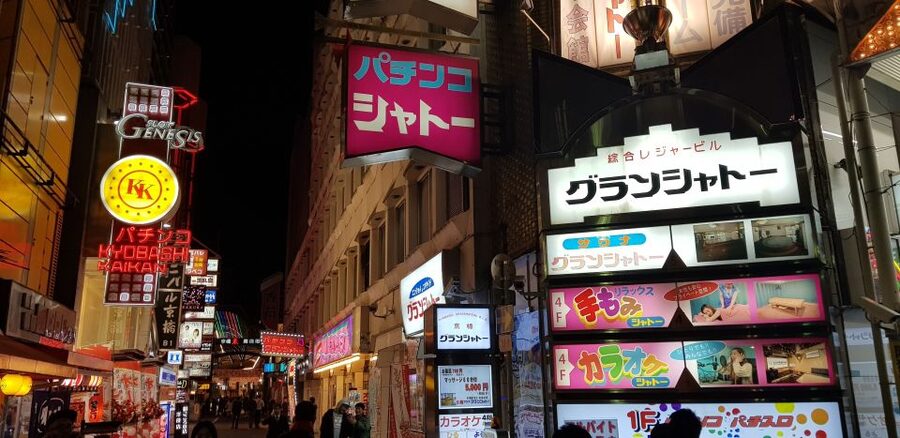
The third restaurant is in Kyobashi and includes at least five more dishes. You receive one drink at this stop, bringing the included total to three, one at each restaurant.
The drink choices can include beer, cocktails, spirits, tea, or non-alcoholic alternatives, depending on the stop. Drinks beyond the included one cost extra, usually around 500 yen each, and you pay the restaurant directly. That detail matters if you are planning a long evening of drinking rather than a food-focused walk.
Japan’s legal drinking age is 20. The restaurants are not bars, but people may be drinking around you, and the tour includes mildly adult conversation. The activity is intended for teenagers and adults, with a minimum age of 13.
The final stop is also a good test of your appetite. By this point, you may already feel full, yet the last dishes are part of the tour’s variety. If you eat lightly during the day, the amount should feel generous. If you prefer a small dinner, this outing may be more food than you need.
What the guides add to the meal
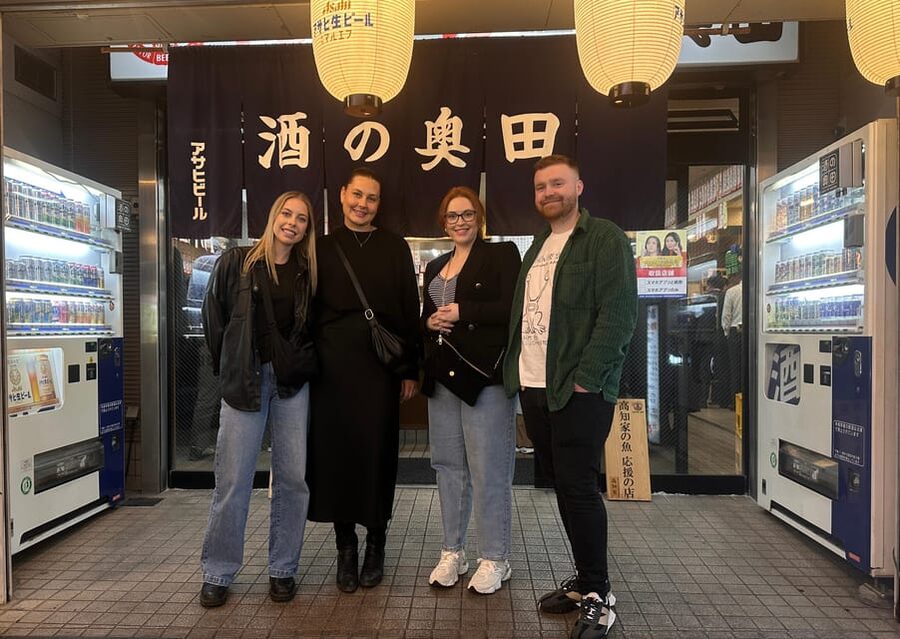
The food is only half the reason to book. The guide supplies the context that helps you understand what is on the table and why the neighborhood matters.
Ferdinand appears often in the feedback and is described as lively, attentive, and especially good at connecting food with Japanese history and daily customs. Kevin is another frequently praised guide, with a background and local connection that helped explain buildings, districts, and regional food. Bryan has been noted for handling cultural questions respectfully and for keeping the group involved.
Other guides named by guests include Joshua, Laura, Damian, Jamie, Oisín, Lito, Ichiro, Levy, and Brian. Guide assignments can change, so you should not book expecting one particular person unless the provider confirms it. The guide language options are English, French, and Spanish.
The best part of a small group is the conversation. You can say you want adventurous food, ask for an explanation of a custom, or request a change for a dietary restriction. A pescatarian request was accommodated, and the provider says dietary needs can be handled when reported in advance.
Do not expect a classroom presentation. The strongest version of this tour seems to come through stories shared while walking, eating, and waiting for dishes. That informal approach is useful in Osaka, where etiquette and ordering habits can be hard to read from a guidebook.
Food variety, adventurous choices, and menu changes
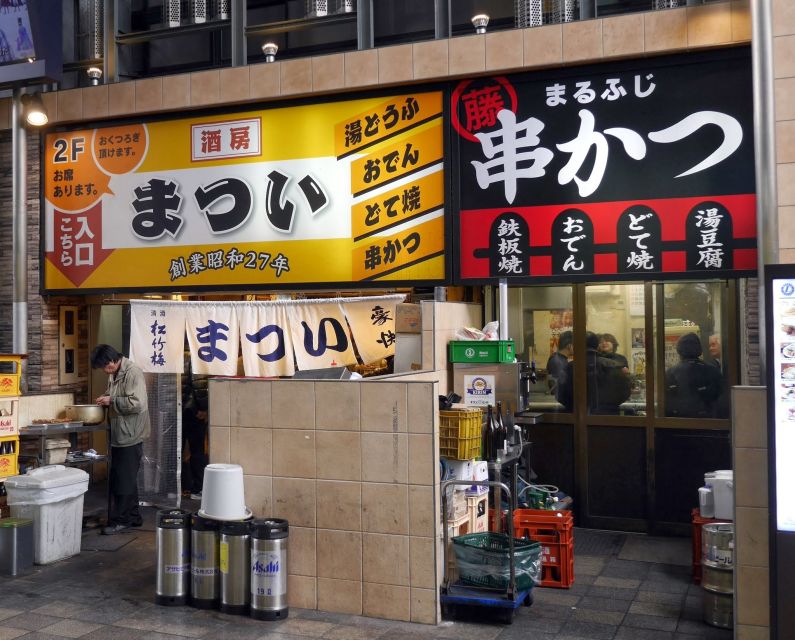
The advertised total is 15 or more dishes, but the exact food depends on the season and the restaurants available that evening. You may see familiar Japanese staples alongside items you would not feel ready to order on your own.
Some menus can be adventurous. One person described trying raw horse, which gives you a sense that the guide may offer more than safe, familiar choices when the group is willing. You are not required to accept every dish, and you should explain your comfort level at the start.
A same-day wagyu upgrade may be available, but it is subject to availability. Treat this as an optional possibility, not a guaranteed part of the meal.
The small-plate format is valuable for first-time visitors. You can try tuna, beef, vegetables, drinks, and other regional choices without committing to a full serving of each. If something is not for you, there are still many other dishes coming.
The tradeoff is that a changing menu makes direct comparison difficult. You cannot rely on a fixed food list when deciding if the tour includes one exact specialty. If a particular dish is essential to your Osaka plans, ask the provider before booking.
Is $94 a fair price?
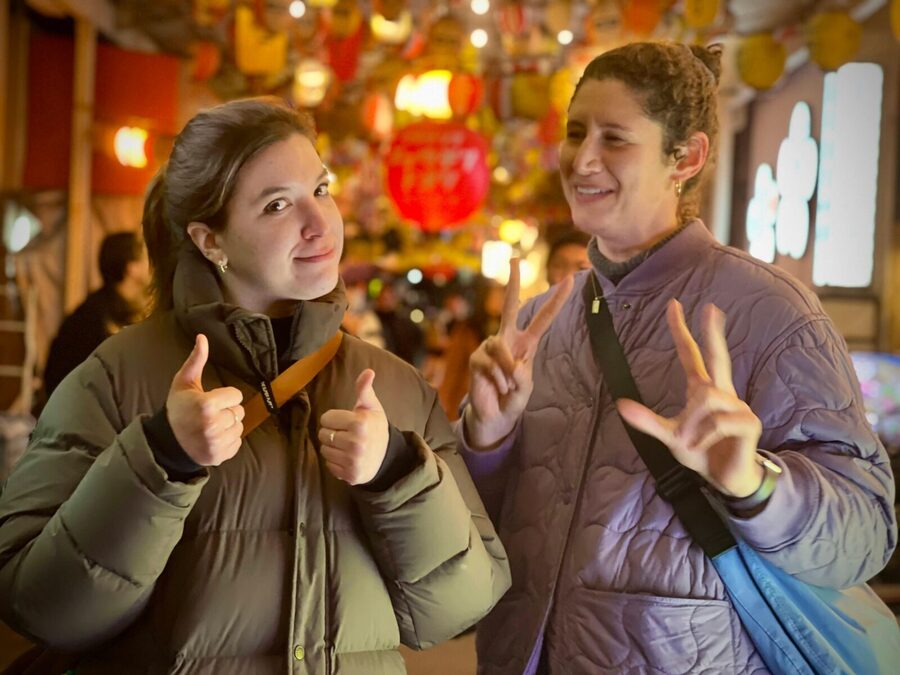
At $94 per person, the tour is not the cheapest way to eat in Osaka. You could order several inexpensive meals for less money if your only goal is calories.
The value comes from combining a full dinner, three restaurants, three drinks, a local train ride, and a guide in three hours. You are also paying for access to places that may feel intimidating when you do not read Japanese menus or understand local restaurant customs.
The six-person limit improves the value. A large food tour can become a queue with a guide at the front. Here, you have a better chance to ask questions, hear the answers, and build an easy conversation with the group.
Solo visitors should read the minimum-group condition carefully. The provider tries not to charge a solo supplement, but if at least two people have not booked, you may be offered an alternate date, asked to pay a 3,000 yen supplement, or given a full refund.
For couples and small groups, the price is easier to justify. You get a guided introduction to two districts, enough food for dinner, and suggestions that may improve the rest of your stay. For budget travelers focused only on eating, it is less compelling.
Who should book this evening
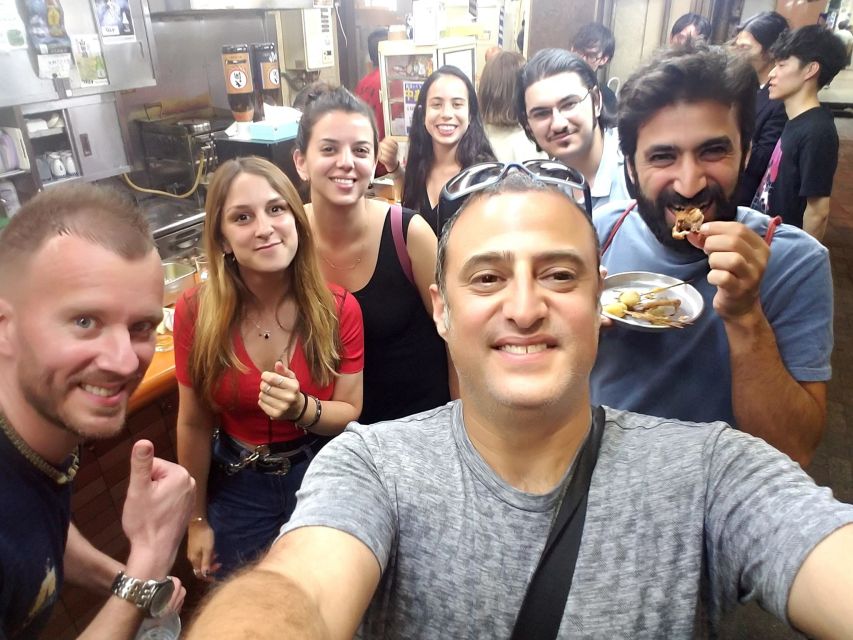
I would recommend the tour for you if you:
- Want to try local dishes but feel unsure about entering small restaurants alone.
- Prefer food with neighborhood context instead of a checklist of famous dishes.
- Enjoy meeting a few other people in a relaxed setting.
- Like trying unfamiliar foods and can handle a substantial meal.
- Want Osaka suggestions early in your trip.
- Are comfortable walking through narrow streets and using stairs or train stations.
It is less suitable if you need wheelchair access, dislike shared dining, or want a quiet, formal meal. The route is not suitable for children under 13, and the adult conversation and drinking atmosphere may not fit every family.
You should also tell the provider about dietary restrictions in advance. Last-minute requests may be harder to manage because the restaurants and menu can change.
Practical details that affect your night
The full activity lasts three hours and ends at Kyobashi Station. There is no standard hotel pickup or drop-off, though an additional pickup option may be available when booking.
Free cancellation is available up to 24 hours before the activity for a full refund. You can also reserve and pay later, which helps if your Osaka schedule is still changing.
Plan to arrive at the meeting point in front of the Tenma Station McDonald’s. Wear comfortable shoes, arrive hungry, and keep enough room in your evening for the final restaurant. If you want extra drinks, carry a little cash or another payment method for the approximate 500 yen add-on cost.
I would book this for an early evening during the first part of your Osaka stay. You will still have time to continue into the night afterward, and the food advice can help you avoid ordering at random on later days.
Should you book the Tenma and Kyobashi food tour?
Book it if you want local food, a small group, and useful cultural explanation in one efficient evening. The strongest parts are the three-stop format, the contrast between Tenma and Kyobashi, and guides who make unfamiliar places easier to enter.
Skip it if you want a fixed menu, a low-cost meal, or a polished restaurant experience. The food can change, the dinner is generous, and some dishes may push beyond familiar Japanese fare.
For most curious eaters, $94 is a reasonable price for the access and guidance. This is not simply a night of sampling dishes. It is a practical introduction to the Osaka neighborhoods where people actually gather after work, eat with friends, and argue over the best version of a local favorite.
FAQ
Where does the tour begin?
The tour begins in front of the McDonald’s at Tenma Station, located at 4-chōme-12-1 Tenjinbashi, Kita-ku, Osaka, 530-0041, Japan. The McDonald’s is only the meeting landmark and is not part of the food tour.
Where does the tour finish?
The tour finishes at Kyobashi Station after the final restaurant visit and neighborhood walk.
How long does the experience last?
The experience lasts three hours. The route includes walking in Tenma, three restaurant visits, a short train ride, walking in Kyobashi, and the final meal stop.
How many dishes are included?
The tour includes 15 or more dishes, described as a full dinner’s worth of food. The exact dishes can change with the season and restaurant availability.
How many drinks are included?
You receive up to three drinks, one at each restaurant. Alcoholic and non-alcoholic options are available. Additional drinks usually cost around 500 yen each and are paid directly to the restaurant.
Can dietary restrictions be accommodated?
Dietary restrictions can be accommodated if you notify the activity provider in advance. The exact options depend on the restaurants and menu available that day.
What languages are available?
Live guiding is available in English, French, and Spanish.
Is the tour suitable for children or wheelchair users?
The tour is not suitable for children under 13 or for wheelchair users. The restaurants may have customers drinking, and mildly adult topics are discussed. The legal drinking age in Japan is 20.
Just added around Osaka
- (Ticket Included) Explore Osaka Castle & Museum of History★ 4.8 · 21 reviews
- Hidden Osaka – Yukaku Red Light Tour & Culinary Adventure★ 4.8 · 96 reviews
- Osaka: Walking Tour and Top Highlights★ 4.8 · 104 reviews
- Osaka: Private Ceramic Painting Workshop★ 5.0 · 13 reviews
- Pickleball in Osaka, Kobe & Kyoto with Locals!★ 4.7 · 80 reviews
- Eat Like a Local in Osaka – Private Custom Street Food Tour★ 4.3 · 33 reviews
- Osaka:SUMO BEATS SHOWCASE: Taiko Drum and Wagyu burger!★ 4.2 · 37 reviews
- Kimono photoshoot-Includes 100 photo data★ 5.0 · 21 reviews
Osaka Tours, compared.

Shinsekai Food Tour with 13-15 Dishes at 5 Eateries
Read our review →
Osaka Food Tour: 13 Dishes at 5 Local Eateries
Read our review →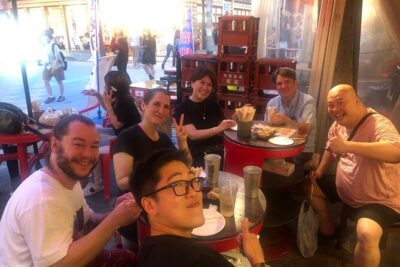
Hungry Osaka Street Food Tour:15 Tastings & 3 Drinks with a Local
Read our review →
Hotspots & Hidden Gems Walking Tour Private or Group
Read our review →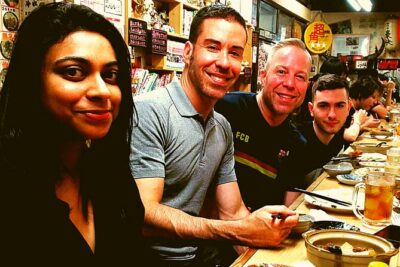
Deep Backstreet Osaka Tours (Option to add Dinner)
Read our review →Browse the lists this tour appears in