
REVIEW · OSAKA TOURS
Osaka Dotonbori: Hand Roll Sushi Experience
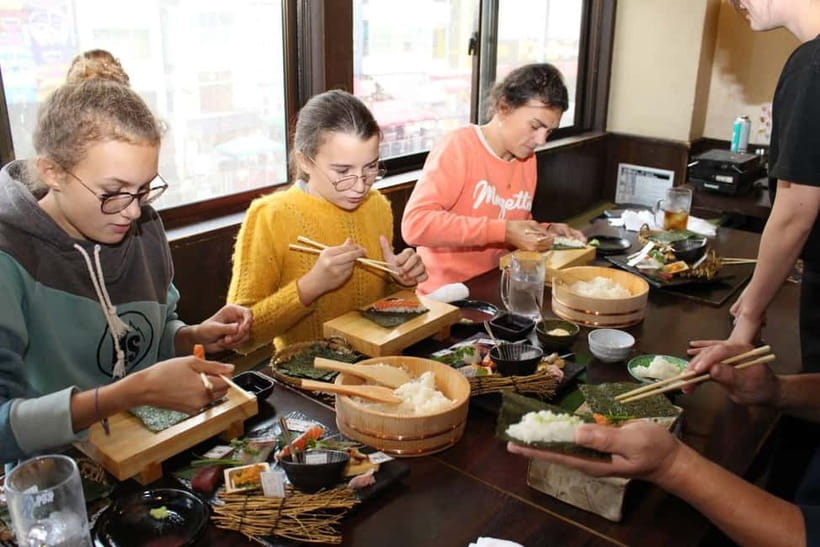
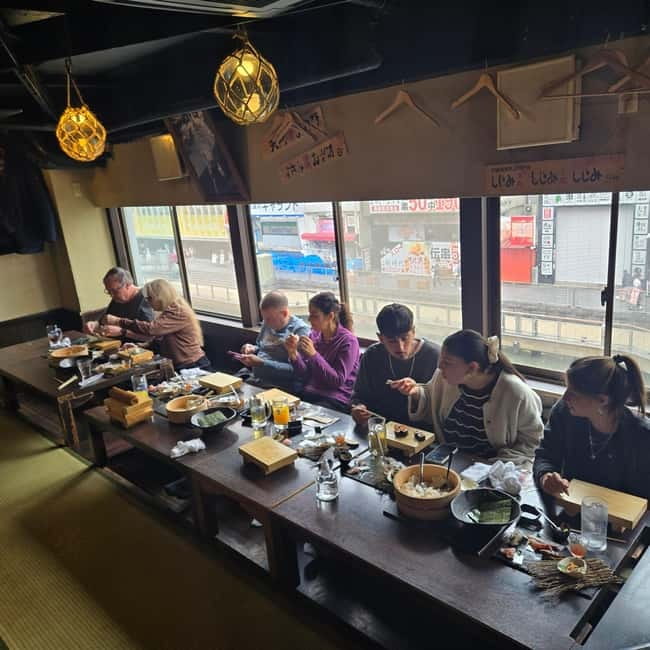
Dotonbori is famous for neon signs, crowded lanes, and oversized restaurant displays, but this sushi class gives you a quieter view of the district. Upstairs at Kaisen Monogatari Dotonbori, you’ll sit on tatami beside the river, learn how seasoned rice is made, taste real wasabi, and build hand-rolled sushi with seasonal seafood.
I like the hands-on format, since you do not simply watch a chef work. I also like the tatami room and river view, which offer a pleasant break from the noise below. The main drawback is that you may not choose every fish yourself, and the sushi is eaten as you make it rather than displayed together on one final platter.
In This Review
- Key points at a glance
- A calmer corner of Dotonbori
- What the two-hour class includes
- Starting with sushi and seasonal seafood
- Why the sushi rice lesson matters
- The real wasabi tasting
- Making your own hand-rolled sushi
- Food quality, portions, and the value of 8,000 yen
- Who will enjoy this experience most
- Timing your visit in Osaka
- Small practical details that make a difference
- My final take: a good food lesson with a real sense of place
- FAQ
- Where does the hand-rolled sushi experience take place?
- How long does the activity last?
- What time does the experience start?
- How much does the experience cost?
- What is included in the price?
- Is transportation included?
- Is the experience available in English?
- What should I bring?
- Can I cancel the booking for a refund?
Key points at a glance
- Real wasabi tasting: Learn how fresh Japanese wasabi differs from the paste commonly served abroad.
- Sushi rice lesson: Practice the balance of Japanese rice and vinegar before making your rolls.
- Dotonbori River setting: Enjoy the view from a traditional tatami room on the second floor.
- Chef-led preparation: A chef and assistant guide you through the sushi-making process in English.
- Two-hour schedule: Choose the noon or 2 pm session, with one soft drink included.
- 8,000 yen price: The fee includes ingredients, tools, instruction, and the sushi you prepare.
A calmer corner of Dotonbori
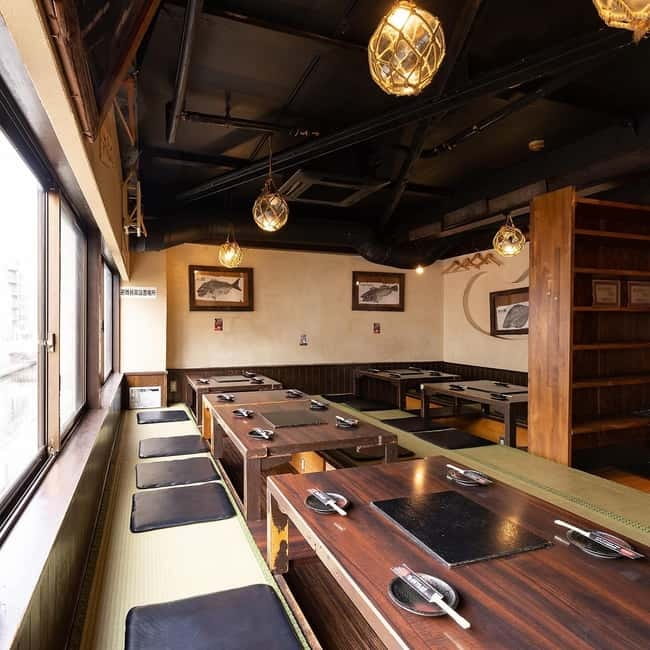
Dotonbori is not usually where you go for peace and quiet. Its main streets are packed with signs, restaurants, arcades, and people moving from one food stop to the next. This experience places you right in the center of it all, but inside a traditional tatami room on the second floor of Nico Building.
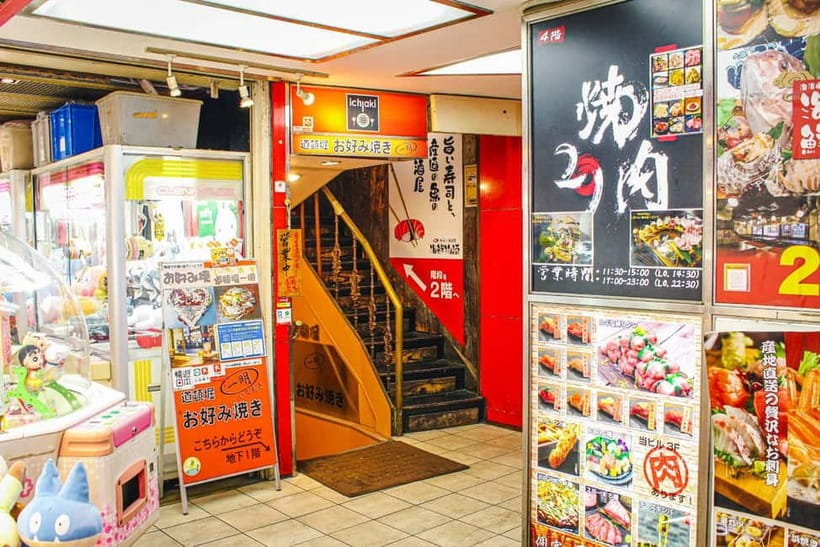
The entrance is on the main street. Look for the Nico Building at 1-6-12 Dotonbori, Chuo-ku, then head upstairs. A game arcade occupies the first floor, so do not mistake the lively entrance for the restaurant itself.
Once seated, you get a different angle on the neighborhood. The Dotonbori River view gives the class a sense of place, and the tatami setting makes the meal feel more connected to Japanese dining customs than a standard restaurant table would.
I like this arrangement because it pairs one of Osaka’s most energetic districts with a slower activity. You can see the famous area, then spend two hours learning something rather than simply taking photos and moving on.
Other Osaka days people book alongside this one:
- Osaka Go Karting Tour with Funny Costume
★ 5.0 · 2,658 reviews - Osaka Castle: Museum and Tower Entry Ticket
★ 4.5 · 2,380 reviews - Osaka: Shinsekai Food Tour with 13-15 Dishes at 5 Eateries
★ 4.8 · 2,204 reviews
What the two-hour class includes
The session follows a clear sequence. You begin with an introduction to sushi, then move to sushi rice, wasabi, and finally the hand-rolled sushi itself.
The class is held twice daily, at 12 pm and 2 pm, and each session lasts two hours. That timing matters when planning your day in Osaka. The noon class can serve as lunch, while the 2 pm option works well after a morning visit to another part of the city.
All materials and tools are provided. You do not need to bring special equipment or buy extra ingredients. One soft drink is also included, but other meals and drinks are not part of the stated price.
You should arrive in comfortable clothes. A hat, camera, and water are also listed as useful items to bring, though the activity itself supplies the cooking materials.
Starting with sushi and seasonal seafood
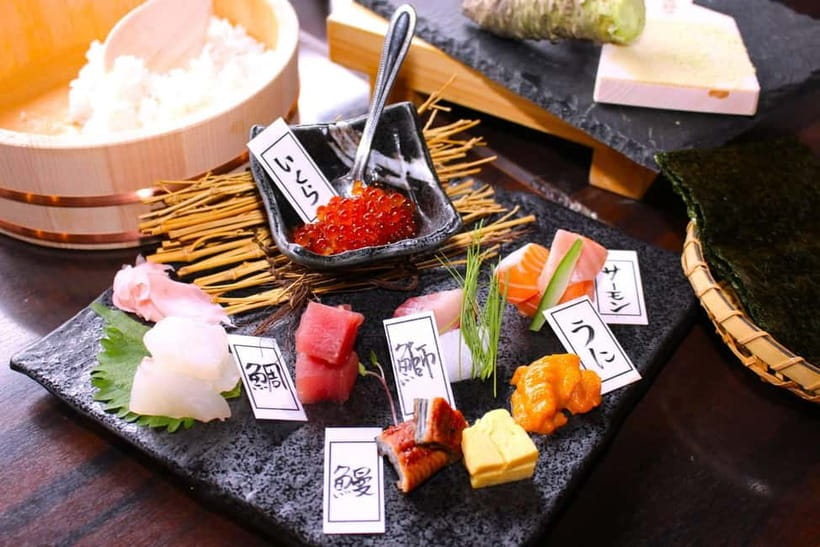
The opening lesson introduces sushi and the flavors of Japan’s seasonal seafood. The seafood selection is part of the appeal, since the class is designed around fresh ingredients rather than only familiar, fixed choices.
This is also where you should set your expectations. You may receive fish that you would not have selected on your own. Some people appreciate the chance to try something unfamiliar, but picky eaters may find the fixed selection less convenient.
The available ingredients offer variety for building your rolls. You can focus on how different seafood, rice, soy sauce, and wasabi work together. One especially nice touch is the restaurant’s homemade soy sauce, which is served with the finished rolls.
I would treat the seafood as part of the lesson, not simply as a customizable lunch. If you want complete control over every fish on your plate, this may not be the right format. If you are curious about Japanese ingredients and willing to try what is served, it gives you a wider taste of the local food tradition.
Why the sushi rice lesson matters
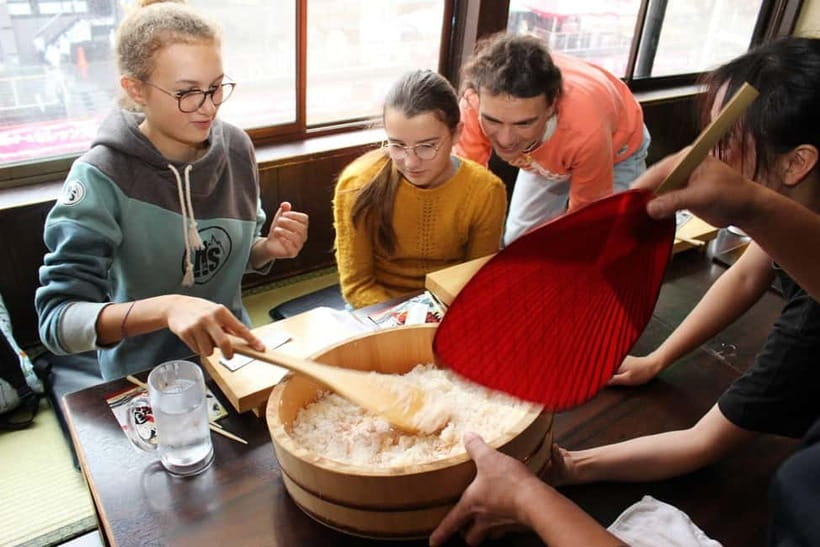
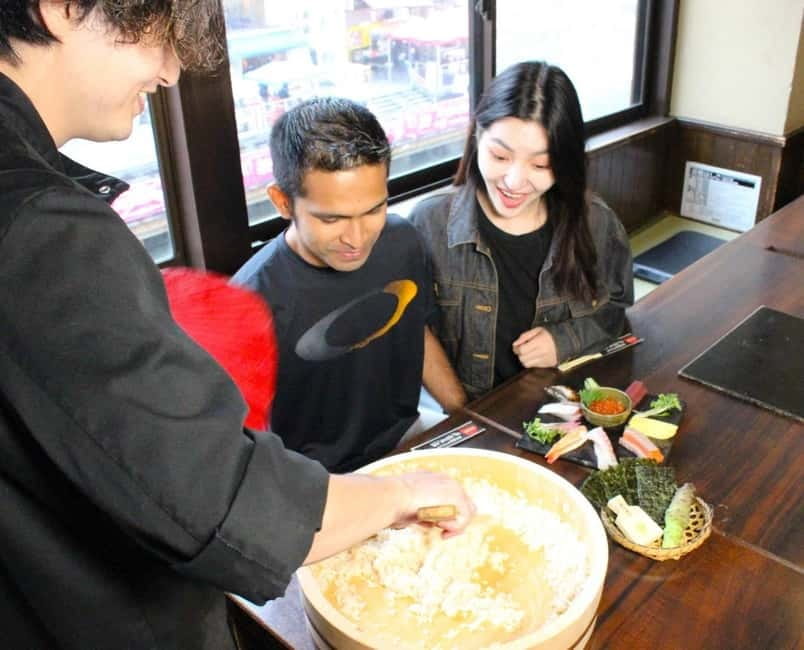
Sushi rice looks simple, but the seasoning controls the whole roll. The class shows you how Japanese rice is prepared and how vinegar is mixed through it.
That short lesson adds useful context. You learn that the rice is not just a neutral base for fish. Its texture, warmth, and vinegar balance affect how the seafood tastes and how well the roll holds together.
You also get to take part in the preparation rather than receiving a finished bowl without explanation. For families and first-time cooks, this step makes the class more than a craft activity. You begin to understand why sushi made in Japan can taste different from a roll assembled elsewhere.
The instruction is practical. You get the chance to see the process, then use the rice in your own hand-rolled sushi. If you have never worked with sushi rice, the guidance should help you avoid the common problem of making rolls that are too loose, too full, or difficult to eat.
Same city, a completely different kind of day:
- Osaka Food Tour: 13 Dishes at 5 Local Eateries
★ 5.0 · 2,149 reviews - Hungry Osaka Street Food Tour:15 Tastings & 3 Drinks with a Local
★ 5.0 · 1,727 reviews - Osaka: Tea Ceremony Experience
★ 4.9 · 1,426 reviews - Osaka Kickstart: Hotspots & Hidden Gems Tour
★ 5.0 · 1,306 reviews
The real wasabi tasting
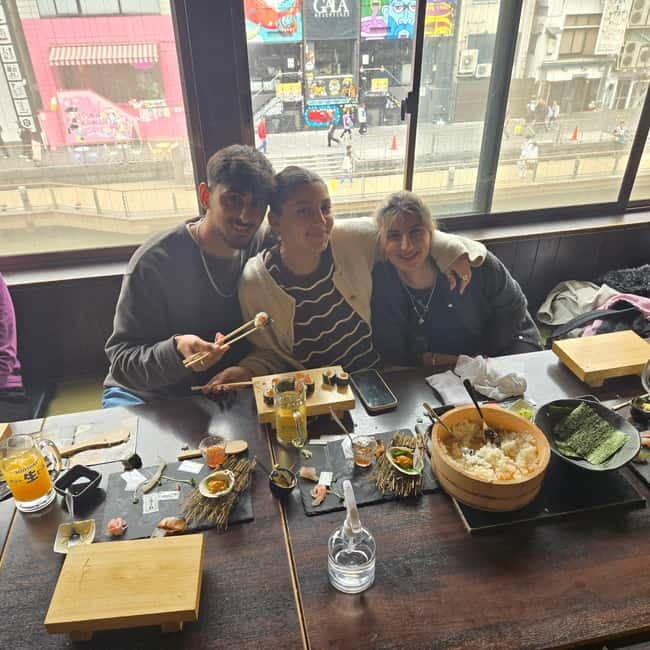
The wasabi tasting is one of the more distinctive parts of the experience. Many people outside Japan know wasabi mainly as a green paste served beside sushi. Real wasabi has a different aroma and a sharp, fresh spiciness.
The class gives you time to notice that difference before you use the condiment with your sushi. Its heat can surprise you, but the tasting is also a useful lesson in how a familiar Japanese flavor is often simplified outside the country.
I like this part because it is small but memorable. You are not just told that the wasabi is authentic. You get to taste it, compare its aroma and heat for yourself, and decide how much to add to your roll.
If you are sensitive to spicy food, start with a small amount. The point is to understand the flavor, not to prove how much heat you can handle.
Making your own hand-rolled sushi
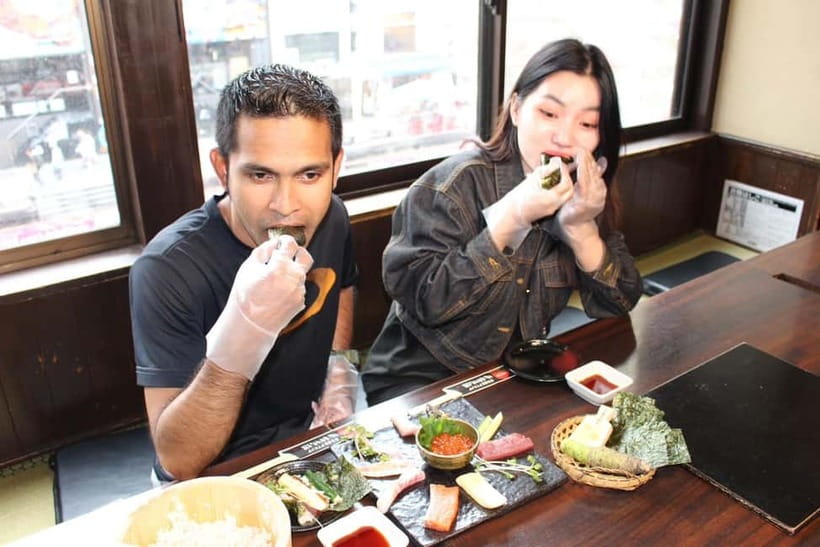
The main activity is the hands-on sushi-making session. With the rice, seafood, and other provided ingredients in front of you, you build your own hand rolls under the chef’s direction.
The class is suitable for beginners because the chef and assistant guide you through the process. You can ask questions as you work, and the assistant helps with the practical steps. That support is useful for families, couples, and anyone who feels unsure about shaping sushi.
You may also make different styles of sushi and learn what to watch for while preparing them. The emphasis is not on producing restaurant-perfect pieces. It is on understanding the basic method and enjoying the food you have made.
One detail is worth knowing before you book: you eat the sushi as it is prepared. You will not necessarily end with a large platter showing all your rolls together. Some people prefer this because the sushi is fresh and you can taste each piece during the lesson. Others may want to see the full result of their work before eating it.
For me, the format makes the class feel like lunch with instruction built in. You get immediate feedback from each roll, even if the final presentation is less dramatic.
Food quality, portions, and the value of 8,000 yen
The listed cost is 8,000 yen per person, tax included, or about $54 in the supplied price. That fee covers the sushi introduction, rice-making session, wasabi tasting, hand-rolled sushi lesson, ingredients, tools, and one soft drink.
The value depends on what you want from a food activity. You are paying for a meal, but also for two hours of instruction, a central Dotonbori location, and a traditional room with a river view.
Several practical details improve the value. You receive plenty of food during the class, the ingredients are fresh, and you do not need to purchase cooking tools or additional materials. The homemade soy sauce adds another restaurant-specific touch that you would not get from a generic cooking kit.
Still, this is not the cheapest way to eat sushi in Osaka. If you only want a quick meal, a sushi restaurant will probably cost less and take less time. The price makes more sense if you want to learn, taste ingredients you might not otherwise try, and make the food yourself.
I would also plan this as a substantial meal. The class provides enough food to leave you satisfied, so avoid booking it immediately before another major lunch or dinner.
Who will enjoy this experience most
This class suits several kinds of visitors:
- Families: Children can take part in shaping and filling the rolls, while the chef and assistant offer help.
- First-time sushi makers: You receive instruction on rice, wasabi, and rolling rather than being left to guess.
- Food-focused visitors: The seasonal seafood and real wasabi add useful local flavor.
- Couples and small groups: The tatami room creates a relaxed setting for a shared activity.
- Dotonbori sightseers: The location lets you combine a famous Osaka district with a planned meal.
It may be less suitable for someone with strong seafood dislikes. You cannot count on choosing every fish, and the menu details do not specify exactly which seasonal ingredients will be served on a given day.
It is also not the best pick if you want a polished chef demonstration with a finished platter at the end. The class is more casual and participatory. You make the sushi, eat it along the way, and leave with a better sense of the process.
Timing your visit in Osaka
The two start times make this easy to fit into a Dotonbori day. The 12 pm session works naturally as lunch, while the 2 pm session gives you a little more time in the morning.
Because the activity lasts two hours, avoid scheduling another attraction at exactly the end time. The class finishes back at the meeting point, but you may want a few extra minutes to leave the building and reconnect with the busy street outside.
The location is convenient if you are already exploring central Dotonbori. Transportation to and from the activity is not included, so you arrange your own way to Nico Building.
The English-language format is another useful point for international visitors. The food and setting carry much of the experience, but clear instruction matters when you are handling rice, seafood, and tools.
Small practical details that make a difference
Wear comfortable clothes. You will be seated for the class and working with food, so relaxed clothing is more sensible than anything formal.
Bring a camera if you want photos of the room, the river, or your finished rolls. You can also bring water, though one soft drink is included.
The entrance can be easy to miss because the first floor is a game arcade. Start from the main street entrance and go to the second floor rather than searching for a separate storefront along the river.
The activity ends where it begins. There is no transportation service, no separate hotel pickup, and no stated meal beyond the sushi prepared during the session and the included soft drink.
Booking can be kept flexible with the reserve-and-pay-later option. You can cancel up to 24 hours in advance for a full refund, which is useful when Osaka plans are still shifting.
My final take: a good food lesson with a real sense of place
I would recommend this experience if you want more than a meal in Dotonbori. The combination of real wasabi, seasonal seafood, sushi rice instruction, and hand-rolling gives you several things to taste and practice.
The tatami room and river view also make the setting more memorable than a standard cooking counter. The chef and assistant provide friendly, hands-on help, and the English-language format keeps the lesson approachable.
Think carefully if you need to choose every ingredient or want one impressive platter at the end. The fixed seafood selection and eat-as-you-go format are the main compromises.
For families, curious eaters, and anyone who wants a practical introduction to sushi, 8,000 yen is a fair price for two hours of food, instruction, and an Osaka setting you will not get from a supermarket sushi tray.
FAQ
Where does the hand-rolled sushi experience take place?
It takes place at Kaisen Monogatari Dotonbori, on the second floor of Nico Building at 1-6-12 Dotonbori, Chuo-ku, Osaka. The entrance is on the main street, and a game arcade is on the first floor.
How long does the activity last?
Each session lasts two hours.
What time does the experience start?
Sessions begin at 12 pm and 2 pm.
How much does the experience cost?
The stated cost is 8,000 yen per person, including tax. The supplied price is also listed as $54 per person.
What is included in the price?
The fee includes an introduction to sushi, a sushi rice-making session, a wasabi tasting, hands-on hand-rolled sushi preparation, all materials and tools, and one soft drink.
Is transportation included?
No. Transportation to and from the activity location is not included.
Is the experience available in English?
Yes. English is listed as the available language.
What should I bring?
You should bring comfortable clothes. A hat, camera, and water are also listed as items to bring.
Can I cancel the booking for a refund?
Yes. You can cancel up to 24 hours in advance for a full refund.
Just added around Osaka
- (Ticket Included) Explore Osaka Castle & Museum of History★ 4.8 · 21 reviews
- Hidden Osaka – Yukaku Red Light Tour & Culinary Adventure★ 4.8 · 96 reviews
- Osaka: Walking Tour and Top Highlights★ 4.8 · 104 reviews
- Osaka: Private Ceramic Painting Workshop★ 5.0 · 13 reviews
- Pickleball in Osaka, Kobe & Kyoto with Locals!★ 4.7 · 80 reviews
- Eat Like a Local in Osaka – Private Custom Street Food Tour★ 4.3 · 33 reviews
- Osaka:SUMO BEATS SHOWCASE: Taiko Drum and Wagyu burger!★ 4.2 · 37 reviews
- Kimono photoshoot-Includes 100 photo data★ 5.0 · 21 reviews
Osaka Tours, compared.

Shinsekai Food Tour with 13-15 Dishes at 5 Eateries
Read our review →
Osaka Food Tour: 13 Dishes at 5 Local Eateries
Read our review →
Hungry Osaka Street Food Tour:15 Tastings & 3 Drinks with a Local
Read our review →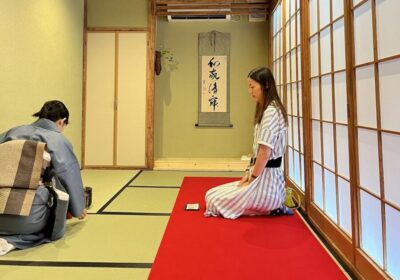
Hotspots & Hidden Gems Walking Tour Private or Group
Read our review →
Deep Backstreet Osaka Tours (Option to add Dinner)
Read our review →Browse the lists this tour appears in