REVIEW · OSAKA TOURS
Nostalgic Osaka walk, totally different from Dotonbori
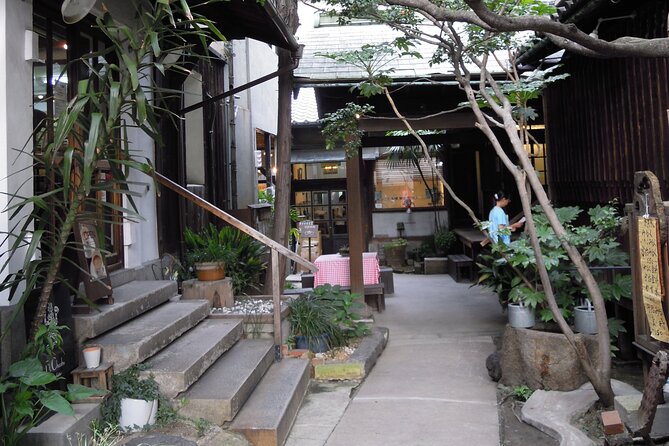
Osaka’s Karahori district feels worlds away from Dotonbori. On this two-hour walk, guide Chieko leads you through narrow lanes, old machiya houses, small shops, and quiet corners where people still live. You see a tatami workshop, a historic bonito shop, a chocolatier, and a refurbished traditional house.
I like the personal scale of the tour and the way it connects ordinary life with Osaka’s past. I also like the thoughtful shopping stops, where you can find gifts made or sold by local businesses instead of the usual airport souvenirs. The main drawback is simple: this is a real walking tour, with some uphill and downhill sections, and the pace may feel tiring in hot or wet weather.
In This Review
- Key points to know before you book
- Why Karahori makes a better change of pace than Dotonbori
- Starting at Tanimachi and meeting Chieko
- Inside the Inoue Seijosho tatami workshop
- One hour along Karahori Shopping Street
- Shopping for things you will not find at the airport
- Bonito, chocolate, and a taste of local character
- The old moat wall and a quiet alley café
- What the $36.13 price includes
- Who will enjoy this walk most
- Practical details that matter
- Should you book the Karahori walk?
- FAQ
- How long does the Nostalgic Osaka walk last?
- Where does the tour start?
- Where does the tour end?
- Is the tour offered in the morning or afternoon?
- How many people can join the tour?
- What is included in the price?
- Are meals, coffee, or tea included?
- Are admission tickets required for the stops?
- What happens if I arrive more than 15 minutes late?
- Can I cancel for a full refund?
Key points to know before you book
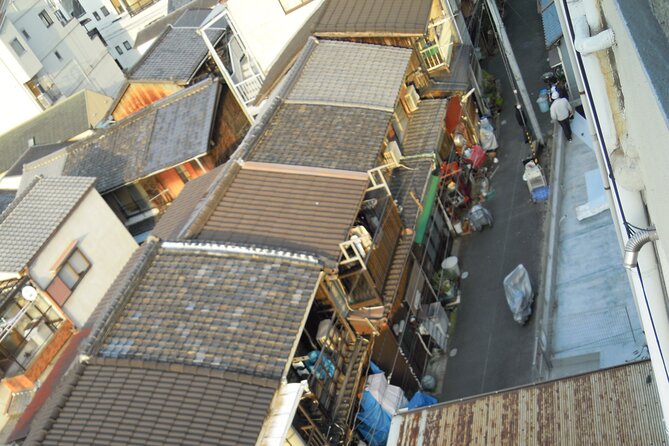
- Karahori instead of Dotonbori: Walk through an older residential district close to central Osaka, far from the city’s main entertainment crowds.
- A maximum of six people: The small group makes it easier to ask Chieko questions and pause at tiny shops.
- Tatami, bonito, chocolate, and old houses: The route links traditional crafts, food culture, local shopping, and architecture.
- Morning or afternoon timing: You can fit the walk around a larger Osaka sightseeing plan.
- Two hours, with plenty of walking: Wear comfortable shoes and expect narrow lanes, steps, and gentle slopes.
- $36.13 per person: The price is fair if you value local context and personal guiding, but food, drinks, and purchases cost extra.
Why Karahori makes a better change of pace than Dotonbori
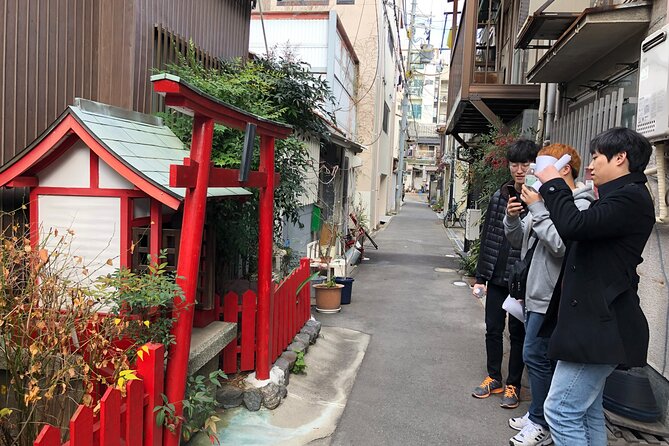
Dotonbori is fun, but Osaka is not only neon signs, giant food displays, and crowded canal streets. Karahori offers a quieter look at the city, with old houses, local businesses, alleyways, and traces of the district’s earlier defenses.
The appeal is not one grand sight. It is the accumulation of small details. You might stop to look at a traditional building, see how an old business still works, or hear how the neighborhood has changed while retaining its older shape. Chieko’s role is important because the route would be easy to miss if you simply walked around on your own.
The tour has earned a 4.9 rating from 23 ratings, with 96 percent recommending it. That fits the experience as described: this is less about checking off famous landmarks and more about having a local person explain what you are seeing.
You should come with curiosity rather than a long list of major attractions. If your ideal Osaka tour includes panoramic views, famous temples, or a large food tasting, this walk may feel modest. If you want to understand how people live in an older central neighborhood, it offers much more.
Other Osaka days people book alongside this one:
- Osaka Go Karting Tour with Funny Costume
★ 5.0 · 2,658 reviews - Osaka Castle: Museum and Tower Entry Ticket
★ 4.5 · 2,380 reviews - Osaka: Shinsekai Food Tour with 13-15 Dishes at 5 Eateries
★ 4.8 · 2,204 reviews
Starting at Tanimachi and meeting Chieko
The walk begins at 6-chōme-2-24 Tanimachi in Chuo Ward. The experience ends back at the meeting point, so you do not need to arrange a separate pickup or figure out where to go afterward.
The group is limited to six people. That matters here. Karahori’s lanes and small businesses are not designed for a large line of people, and a small group lets you hear explanations without constant crowding. You can also ask about daily life, customs, local food, or places to visit after the walk.
Chieko is praised for her warm manner and strong connection to the neighborhood. She greets local people and takes care not to disturb residents, which is especially important on lanes where homes and businesses sit close together. You are entering a living district, not an open-air museum.
The tour is offered in the morning or afternoon. A morning start should suit you if you want a calm first look at Osaka, while an afternoon departure can fit after other sightseeing. The tour takes about two hours, though your own shopping pauses may affect how quickly the route feels.
Inside the Inoue Seijosho tatami workshop
The first stop is Inoue Seijosho, where you can see how tatami mats are made. The shop master shows you the tatami materials and the machine used in production.
This is a useful opening because tatami is more than a decorative symbol of Japan. It is part of the traditional interior of Japanese homes, temples, inns, and other buildings. Seeing the materials and machinery gives you a practical sense of the craft instead of only seeing a finished mat in a hotel room.
The stop lasts about 10 minutes and has no admission charge. It is brief, so do not expect a full craft lesson or a long demonstration. Its value is in seeing a working specialist business and learning how a familiar Japanese object is produced.
For families and first-time visitors, this may be one of the clearest cultural stops. It gives you something concrete to look at and a good subject for questions. It also sets the tone for the rest of the walk, which keeps returning to older forms of work and local commerce.
One hour along Karahori Shopping Street
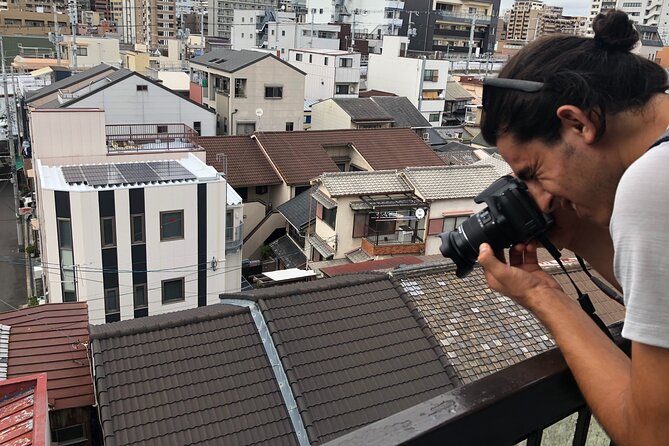
Karahori Shopping Street is the heart of the tour. You spend about an hour walking through a local shopping area where daily life continues alongside older buildings and small stores.
The street is not presented as a polished theme park. That is part of its charm. You can see the district as a place where people shop, work, and live. Chieko explains the area as you walk, pointing out older houses and machiya buildings that are more than a century old.
Machiya are traditional urban townhouses, often narrow at the front and long behind. In Karahori, some have been maintained, some have been repaired for new uses, and some show their age. That mixture gives you a more honest picture of Osaka than a perfectly preserved historic street would.
The route also includes narrow side paths and quieter lanes. These passages are where the experience becomes especially personal, but you need to behave carefully. Residents still live there, including older people, so keep your voice down, do not block paths, and do not photograph private homes without permission.
The walk includes some uphill and downhill sections. It is not described as strenuous, but you should wear shoes with a good grip. In warm weather, the combination of walking and narrow streets may feel tiring, and poor weather can lead to cancellation.
Same city, a completely different kind of day:
- Osaka Food Tour: 13 Dishes at 5 Local Eateries
★ 5.0 · 2,149 reviews - Hungry Osaka Street Food Tour:15 Tastings & 3 Drinks with a Local
★ 5.0 · 1,727 reviews - Osaka: Tea Ceremony Experience
★ 4.9 · 1,426 reviews - Osaka Kickstart: Hotspots & Hidden Gems Tour
★ 5.0 · 1,306 reviews
Shopping for things you will not find at the airport
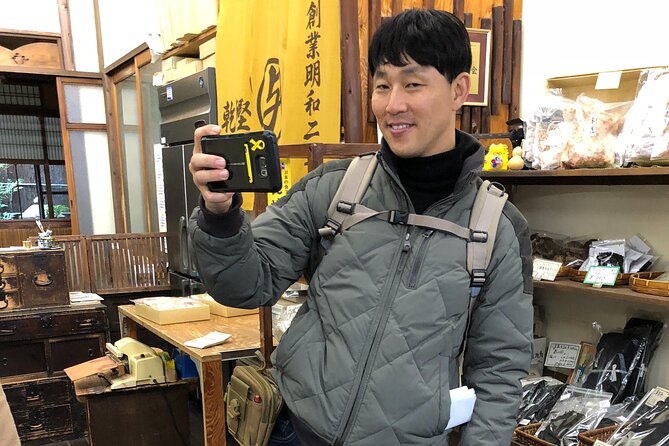
Karahori’s small shops are one of the strongest reasons to book this walk. The route introduces you to local stores where you might find gifts that feel more connected to Osaka than mass-market items from Hands, LOFT, or the airport.
At クーデリーカフェ, you visit a café set inside a renovated old house. You can browse items that are not typically sold at airport souvenir shops. The stop lasts about 15 minutes, and purchases are not included in the tour price.
This is a good place to ask Chieko for suggestions if you want a small, useful, or unusual keepsake. The café setting also offers a glimpse at how older buildings are being given new life. You may buy something there, but you should not count on a long café break because the scheduled stop is short.
At Len, a refurbished commercial complex, a traditional house has been converted into a group of shops. This 10-minute stop shows another version of neighborhood renewal. Instead of clearing away older buildings, local businesses can use them for new purposes.
That mix of old structure and new retail is one of the most interesting themes of the walk. Karahori is not frozen in the past. It is adapting, and the tour helps you see that change at street level.
Bonito, chocolate, and a taste of local character
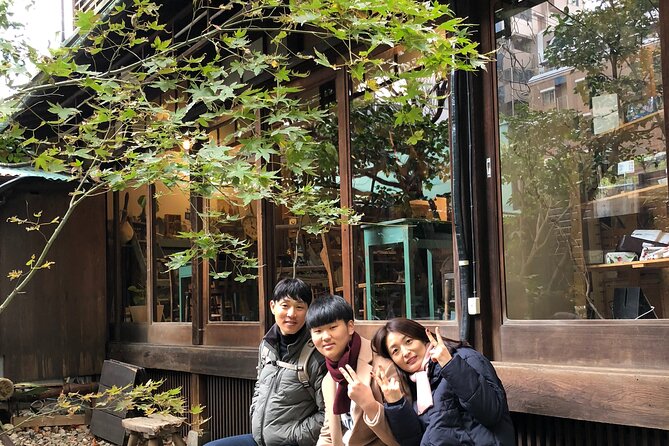
Maruyo-shoten is a bonito shop founded in 1765, with more than 250 years of history. The stop lasts only about five minutes, but it introduces you to an important Japanese ingredient and to the idea of a long-running family business.
Bonito is commonly dried and prepared into flakes used in Japanese cooking. At this shop, you can learn what authentic bonito is and see how a traditional food business fits into the neighborhood. The short visit will not replace a cooking class, but it adds food culture to the architectural and craft elements of the route.
Next comes chocolatier Ek Chuah, Karahori Kura Main Shop. The stop is also about five minutes. Chieko clearly has a personal favorite here, and the shop gives you a chance to consider Osaka’s modern specialty food scene alongside its older stores.
The combination works well. You move from a centuries-old bonito business to a contemporary chocolatier, seeing how Karahori supports both established trades and newer, design-minded shops. If you want to buy food gifts, plan to pay separately and allow for the fact that the tour itself includes no meals, coffee, or tea.
The old moat wall and a quiet alley café
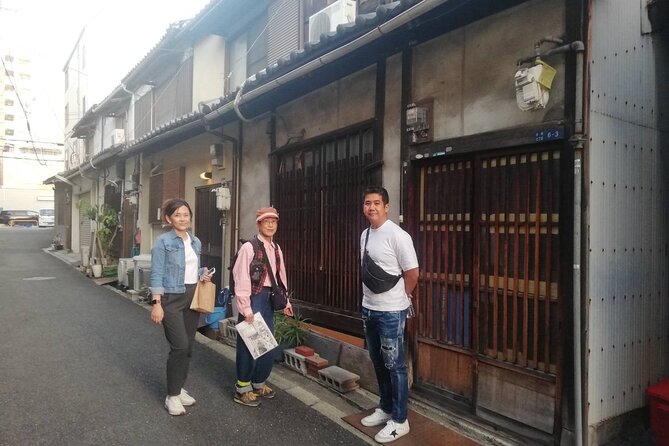
Near the end of the route, you visit a café tucked into an alley. Beside it is part of an original Osaka Castle moat wall, said to remain from the 15th century.
This is the kind of detail that makes a neighborhood walk worthwhile. A large castle is easy to notice. A surviving piece of wall beside a small café is not. The setting links everyday modern life with the city’s earlier military and political past without turning the tour into a formal castle visit.
The itinerary does not give a set duration for this final stop, so the timing may depend on the group and the day. Treat it as a chance to pause and look closely rather than as a major attraction with a long presentation.
It is also worth keeping expectations in check. You will not be touring Osaka Castle itself, and the walk is not a substitute for the castle museum or grounds. Instead, you see a small surviving trace in a residential part of town, which is a more understated but authentic kind of discovery.
What the $36.13 price includes
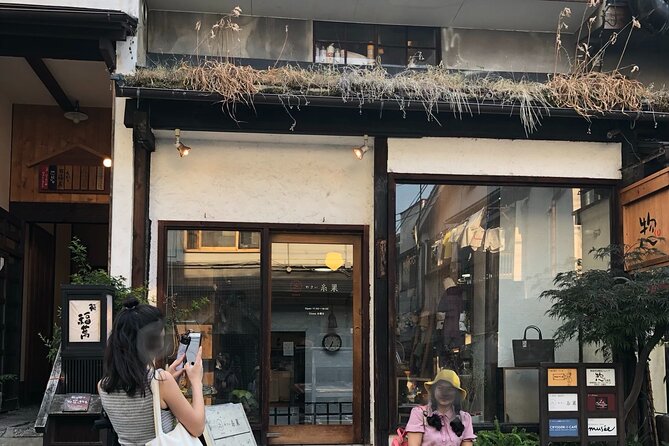
At $36.13 per person, the tour sits in a reasonable range for a two-hour small-group experience in central Osaka. You are paying for Chieko’s local knowledge, route planning, interpretation, and introductions to businesses you might not find on your own.
The maximum group size of six improves the value. In a larger group, a tatami workshop or narrow alley could feel awkward, and personal questions would be harder. Here, the guide can respond to your interests, and the route may include extra details based on what you enjoy. One group even received cat-related information after mentioning a love of cats.
The price includes bottled water. It does not include food, coffee, tea, entrance fees, or anything you purchase. The listed stops have no admission charge, but you should bring money or a payment method if you want bonito, chocolate, café items, or souvenirs.
I would book this for the local access rather than for the number of formal attractions. If you are happy to spend $36.13 for context and conversation, the value is good. If you prefer a self-guided walk and do not plan to shop or ask questions, you may find the cost harder to justify.
Who will enjoy this walk most
This experience suits you if you have already seen the main Osaka sights or want to add a different side of the city to your first visit. It is also a strong choice if you enjoy architecture, traditional crafts, neighborhood food shops, small cafés, and quiet streets.
The walk works well for people who like to ask questions. Chieko can discuss everyday life, Japanese culture, local businesses, and the area’s past, so you get more than a fixed script. Her friendly exchanges with shop owners also add a human touch.
You should be comfortable walking for two hours. The route includes slopes and alleyways, and some surfaces may be uneven. Most people can take part, and service animals are allowed, but the supplied information does not give detailed accessibility specifications for wheelchairs or mobility devices. If that matters to you, ask the provider before booking.
Families may enjoy the variety of stops, especially the tatami machinery and chocolate shop. Shoppers should also come prepared to buy items separately. The tour is less suitable if you want a scheduled meal, extensive tastings, or a relaxed café visit.
Practical details that matter
You receive confirmation when you book, and the mobile ticket makes entry simple. The tour is near public transportation, but the stated meeting point is 6-chōme-2-24 Tanimachi, so check your route carefully and allow time to arrive.
Do not be late. If you arrive more than 15 minutes after the start, you cannot join because the group must keep to its schedule. That rule is strict, so build in extra time for Osaka’s stations and streets.
The tour requires good weather. If rain or other poor conditions force cancellation, you are offered another date or a full refund. A minimum number of participants is also required, and if that number is not reached, you can choose a different date or experience or receive a full refund.
Free cancellation is available up to 24 hours before the start time. Canceling or changing the booking less than 24 hours ahead does not qualify for a refund.
Should you book the Karahori walk?
Book it if you want a close look at ordinary Osaka, especially after seeing Dotonbori, Osaka Castle, or the city’s major shopping areas. The best parts are Chieko’s personal guidance, the small group, the old machiya houses, and the access to businesses such as the tatami maker and 1765 bonito shop.
Skip it if your priority is a food tour with included tastings, a major sightseeing landmark, or a completely flat route. You will spend much of the two hours walking and listening, with optional shopping along the way.
For the right kind of visitor, this is a warm, useful introduction to Karahori. It shows Osaka as a lived-in city, not just a collection of famous stops. Wear good shoes, arrive early, respect the residents, and leave room in your bag for something more personal than an airport souvenir.
FAQ
How long does the Nostalgic Osaka walk last?
The tour lasts approximately two hours.
Where does the tour start?
It starts at 6-chōme-2-24 Tanimachi, Chuo Ward, Osaka, 542-0012, Japan.
Where does the tour end?
The experience ends back at the meeting point.
Is the tour offered in the morning or afternoon?
You can choose a morning or afternoon departure.
How many people can join the tour?
The tour has a maximum of six travelers.
What is included in the price?
Bottled water is included.
Are meals, coffee, or tea included?
No. Meals, coffee, and tea are not included. You can buy food or drinks at local shops and cafés at your own cost.
Are admission tickets required for the stops?
The listed stops show free admission. You may still want money for purchases at shops and cafés.
What happens if I arrive more than 15 minutes late?
You cannot join the tour if you are more than 15 minutes late.
Can I cancel for a full refund?
Yes. You can cancel at least 24 hours before the start time for a full refund. Changes or cancellations made less than 24 hours before the start time are not accepted for a refund.
Just added around Osaka
- Samurai dress-up and shows, plus Tea Ceremony & Calligraphy★ 5.0 · 27 reviews
- Kyoto & Nara Private customized tour with English speaking Guide★ 4.5 · 99 reviews
- Well-balanced BENTO (lunch box) Cooking Class★ 5.0 · 35 reviews
- Urban Canvas: Osaka Street Art Bike Tour★ 5.0 · 47 reviews
- OSAKA:Feel the Power! Learn Taiko Drum from Professionals★ 5.0 · 28 reviews
- Volleyball in Osaka & Kyoto with Locals!★ 5.0 · 21 reviews
- 1.5〜2 Hours Traditional Kintsugi Work Shop in Namba Osaka★ 5.0 · 75 reviews
- Umami Town Street Food Tour★ 5.0 · 120 reviews
Osaka Tours, compared.

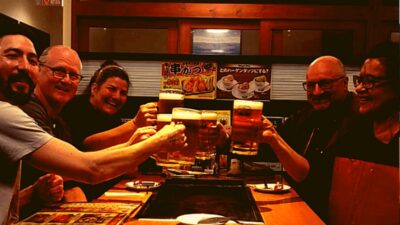
Shinsekai Food Tour with 13-15 Dishes at 5 Eateries
Read our review →
Osaka Food Tour: 13 Dishes at 5 Local Eateries
Read our review →
Hungry Osaka Street Food Tour:15 Tastings & 3 Drinks with a Local
Read our review →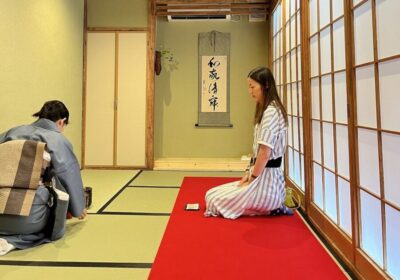
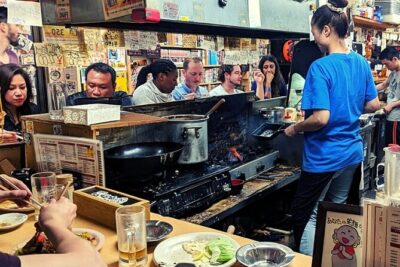

Hotspots & Hidden Gems Walking Tour Private or Group
Read our review →