
REVIEW · PHOTOGRAPHY SESSIONS
Membership Car Club GTR35 LibertyWalk Daikoku car meet photoshoot
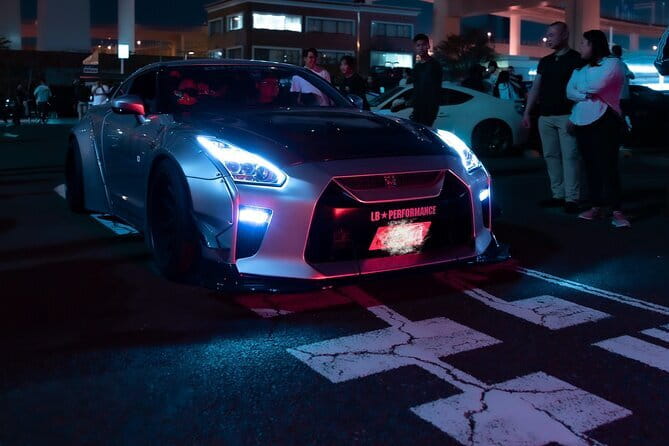
Tokyo’s famous car culture comes alive when you leave Akihabara in a Liberty Walk GT-R R35 and head for Daikoku Parking Area. This is a ride-along with a real car club, not a standard sightseeing bus. You cruise the Wangan route, meet other tuned cars, and get photos that feel far removed from ordinary Tokyo sightseeing.
I like the direct link to local car culture, especially the stop at A-PIT Super Autobacs, where Japanese performance-car owners shop for parts and accessories. I also like the small shared format, with three people per car and a maximum of 12 people. The main caution is reliability: the experience has a 4/5 score from 45 ratings, but some people report that the driver failed to appear or stopped responding, so confirm the meeting details before you go.
In This Review
- Key points to know before you book
- Why this is more than a Tokyo night drive
- Akihabara to the Wangan, Tokyo’s famous Bayshore road
- Rainbow Bridge gives the route a proper Tokyo setting
- A-PIT Super Autobacs is the practical car-culture stop
- Daikoku Parking Area is the main event
- Tokyo Tower ends the night with classic city views
- What the $215 price really buys you
- The biggest concern is dependable operation
- Who will enjoy this most
- Should you book this GT-R car-club experience?
- FAQ
- Where does the experience start?
- Where does the experience finish?
- How long does the experience last?
- Is this a private tour?
- What car will I ride in?
- Is Daikoku Parking Area included?
- Is the A-PIT Super Autobacs stop included?
- Can I go inside Tokyo Tower?
- Does the experience operate in bad weather?
- What is the cancellation policy?
Key points to know before you book
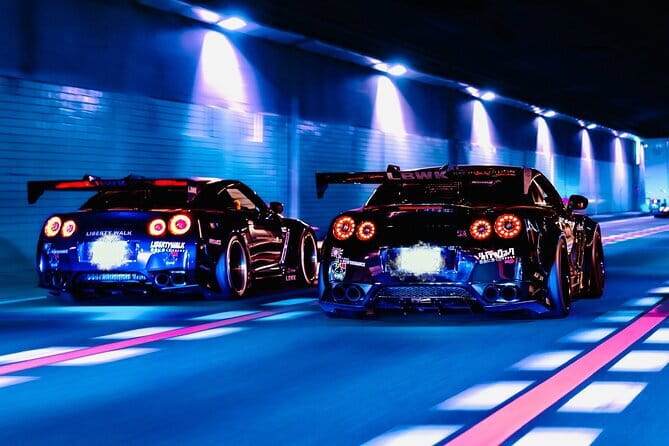
- Liberty Walk GT-R ride: The main draw is a ride-along in a dramatic tuned Japanese sports car, though the exact car may vary.
- Daikoku Parking Area: You get about an hour at Tokyo’s best-known gathering place for Japanese car culture.
- Wangan route: The drive uses the famous Bayshore highway associated with Tokyo’s Midnight Club street-racing lore.
- A-PIT Autobacs stop: Allow about 30 minutes to browse parts, clothing, car magazines, stickers, and souvenirs.
- Small shared group: Cars carry three people, while the full outing is limited to 12 people.
- Weather and communication matter: The experience needs good weather, and cancellation is free until 24 hours before departure.
Why this is more than a Tokyo night drive
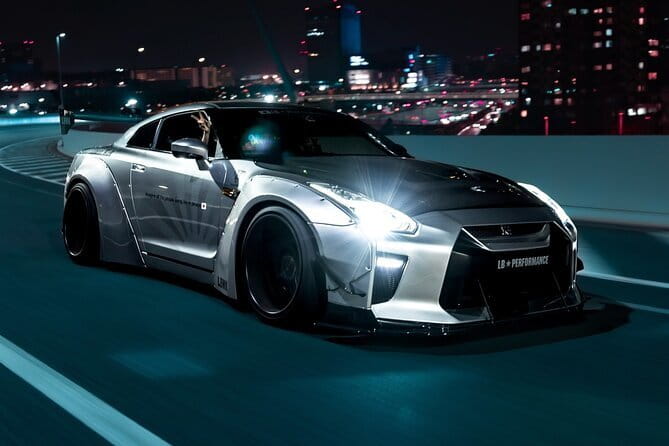
This experience is built around the thrill of riding in a special car, but the best part is the connection between the road and the meeting places. You are not simply driven past Tokyo landmarks. You follow a route familiar to car fans, stop where Japanese owners shop for parts, and finish at a parking area where the cars themselves are the attraction.
The starting point near Animate Akihabara puts you in one of Tokyo’s most recognizable districts. Akihabara is known for electronics, anime, manga, video games, maid cafés, and enormous stores such as Yodobashi Multimedia Akiba. That makes it a practical meeting point, though you should not expect the car-club portion to include time for shopping there.
From Akihabara, the evening shifts quickly from city streets to expressway cruising. The small-car format helps. With three people in a car, you get a more personal ride than you would in a large group vehicle, and the drivers can usually speak with you about the car and the route. Several drivers have been praised by name, including Timi, Julie, Samir, Fernando, Hitomi, Henrique, and Oliveira.
The experience is shared, so you do not have the car to yourself. It is also not presented as a private tour. That distinction matters if you are booking for a couple or family and want guaranteed control over seating. One serious comfort point is worth noting: a tall passenger found the back seat cramped during the full outing. If you are over six feet tall, ask in advance about seating before paying.
A few more Tokyo trips to weigh up
- Best Go Kart Experience in Shibuya Crossing with Iconic Photos
★ 5.0 · 348 reviews - Tokyo Go-Karting Experience: Shibuya Crossing with Photos
★ 4.8 · 190 reviews - Tokyo Cyberpunk Street Photo Tour
★ 5.0 · 165 reviews
Akihabara to the Wangan, Tokyo’s famous Bayshore road
The first major thrill is the move onto the Wangan route, or Bayshore highway. Among Japanese car fans, this road has almost mythical status because of its connection with high-speed street-racing culture and the Midnight Club era.
The road itself is not a theme-park ride. You are on a real public highway, so traffic, weather, and road conditions shape the experience. The appeal is the feeling of cruising through Tokyo in a tuned car, surrounded by the city’s lights and expressway structures. The car, rather than a scripted performance, provides the excitement.
This is one place where expectations matter. The description uses the language of adrenaline and Fast and Furious-style action, but responsible driving is still essential. You should expect a car-focused night drive, not a guaranteed racing experience. The strongest part is the sound, styling, and presence of the cars, along with the sense that you are seeing Tokyo through the eyes of a local car club.
The drive can also extend beyond central Tokyo toward Yokohama and back, depending on the route and conditions. That possibility appears in the experience details, but the precise drive may vary. Treat the route as flexible rather than expecting a fixed number of kilometres or a particular amount of highway speed.
Rainbow Bridge gives the route a proper Tokyo setting
Rainbow Bridge connects Odaiba with central Tokyo across Tokyo Bay. Its illuminated structure is one of the city’s most familiar sights, and it gives the drive a strong visual change from Akihabara’s shops and signs.
The bridge is more than a photo backdrop. It helps explain the geography of the outing, linking central Tokyo with the waterfront roads used to reach the Daikoku area. You may see Tokyo Skytree and the bay from the route, creating a useful contrast between old-school car culture and modern Tokyo architecture.
The schedule includes Rainbow Bridge as part of the drive rather than as a long walking stop. That means you should be ready to take photos from the car or during brief pauses, not plan on a separate sightseeing visit with lots of free time. If your priority is landmark photography, the later Tokyo Tower stop is more predictable.
A-PIT Super Autobacs is the practical car-culture stop
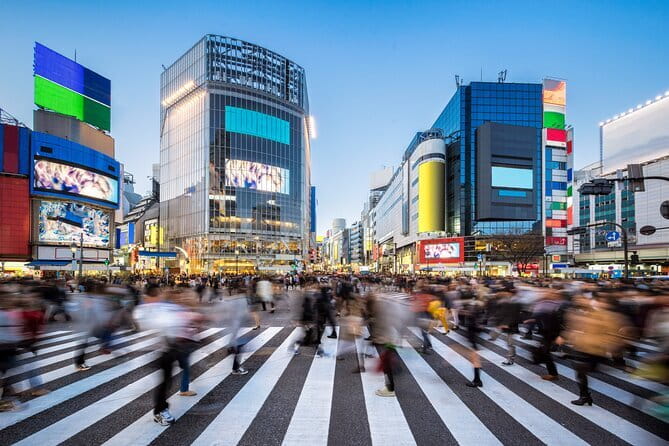
A-PIT Super Autobacs is one of the most useful stops because it shows the everyday side of Japanese tuning culture. This is not only a place for visitors to look at shiny cars. It is an automotive parts and accessories shop used by Japanese car owners for maintenance, upgrades, and styling items.
You get roughly 30 minutes here. That is enough to browse, but not enough for a slow shopping trip if you want to inspect every shelf. You may find car parts, clothing, accessories, key chains, stickers, magnets, and Japanese car magazines. The magazines can make especially good souvenirs because Japanese titles sold overseas are limited and often expensive.
I like this stop because it gives the evening some substance. Daikoku is the dramatic payoff, but A-PIT shows the buying and building side of the hobby. It helps you understand that Japanese car culture is not just about rare cars gathered for photographs. It also includes shops, parts, maintenance, clothing, magazines, and a strong interest in personalizing ordinary vehicles.
Admission is included, and there is no separate entry charge listed. Any purchases are your responsibility. The short stop also means the shop is best treated as a browse and souvenir opportunity, not as a full shopping excursion.
Same city, a completely different kind of day:
- Mt Fuji and Hakone 1-Day Bus Tour Return by Bullet Train
★ 5.0 · 26,383 reviews - 1-Day Tokyo Bus Tour
★ 5.0 · 14,250 reviews - Tokyo: TOKYO SKYTREE® Admission ticket
★ 4.5 · 11,192 reviews - Tokyo: teamLab Planets TOKYO Digital Art Museum Entry Ticket
★ 4.6 · 9,779 reviews
Daikoku Parking Area is the main event
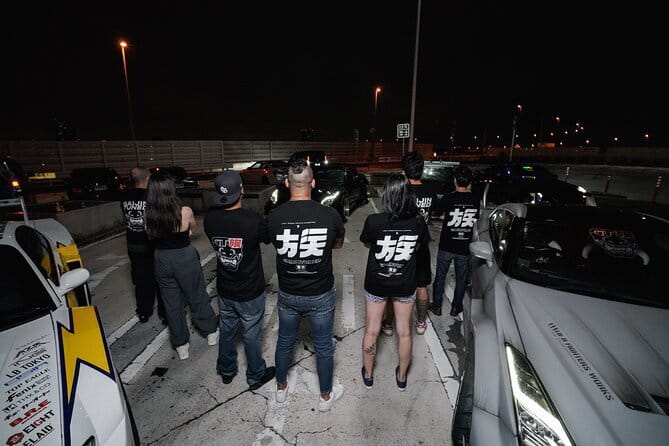
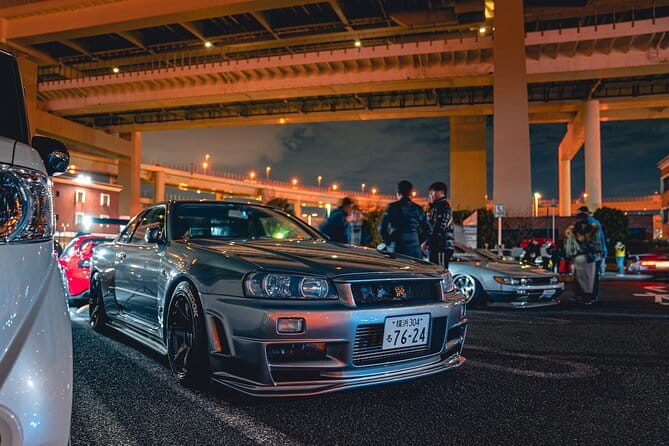
Daikoku Parking Area is the reason most people book this experience. Located near Yokohama and connected to the expressway network, it is known as a gathering spot for car owners from the greater Tokyo area. On a good night, you might find Japanese sports cars, tuned sedans, American cars, and unusual builds sharing the same space.
You get about an hour here. That is a reasonable amount of time for walking around, taking photos, looking at details, and talking with the club members. The atmosphere can change from night to night, so the exact cars on display are never guaranteed. Weather, timing, and local conditions all matter.
The parking area is not a formal museum. It is a working rest stop, and the cars are privately owned. You should be respectful, avoid touching vehicles, and ask before taking close-up photos of people or interiors. The appeal comes from seeing the scene as it actually operates, rather than viewing a display prepared only for a tour.
The car club may also meet other members at A-PIT and travel toward Daikoku together. That can expand the group of cars beyond the vehicles used for the ride. Specific cars mentioned in past outings include a Liberty Walk GT-R, S15 Silvia, Mustang, Chaser, Type R, and WRX, but you should not book on the assumption that one particular model will be present.
For a car enthusiast, this is the strongest value in the experience. A normal Tokyo night tour might show you illuminated streets and famous buildings. This outing takes you to a place where the cars are the main attraction, and where the social side of the hobby is as important as the machinery.
Tokyo Tower ends the night with classic city views
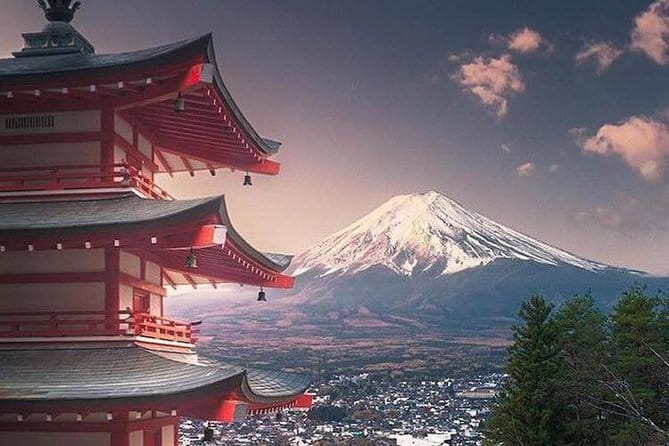
The final photo stop is Tokyo Tower. At 333 metres, the red and white tower remains one of Tokyo’s most recognizable symbols, even after Tokyo Skytree became taller.
You get about 20 minutes here, with photos outside. Admission to the tower is not included, and the schedule does not provide a tower visit. That is perfectly sensible for a four-hour car outing. The purpose is to photograph the cars with Tokyo Tower in the background, not to spend the night inside an observation deck.
This stop gives the experience a broader Tokyo identity. Daikoku and the Wangan are aimed at car fans, while Tokyo Tower supplies the classic city image that works well for family members or friends who may not be devoted to JDM cars. It also provides a final chance for group photographs before returning to Akihabara.
The route includes Rainbow Bridge again in the supplied schedule, so expect some overlap in the waterfront sightseeing. The precise order may change, especially at night or in poor weather.
What the $215 price really buys you
At about $215.18 per person, this is expensive compared with a basic Tokyo bus tour or a self-guided visit to a car shop. You are paying for a specialised ride, club access, vehicle costs, parking, and a carefully chosen route that would be difficult to reproduce without local help.
The value is strongest if you care about Japanese cars, Liberty Walk styling, the Wangan, or Daikoku. A serious fan who has always wanted to ride in a tuned GT-R may find the price worthwhile, especially because the outing combines transport with access to places that are awkward to reach by ordinary public transportation.
The value is weaker if you mainly want Tokyo sightseeing. You will see Rainbow Bridge and Tokyo Tower, but only briefly. The four-hour schedule is built around cars, not detailed visits to landmarks. A first-time visitor seeking temples, markets, museums, or a broad city introduction should spend this money elsewhere.
The shared setup keeps the price below what a private luxury car experience might cost, but it also means less control. Three people share a car, and the full group can reach 12 people. Ask how seating is assigned and which vehicle is expected before departure. The exact car can be a major part of the value.
The biggest concern is dependable operation
The strong praise focuses on the cars, the drivers, and the sense of fun. People have singled out drivers such as Timi, Julie, Samir, Fernando, Hitomi, Henrique, and Oliveira for being friendly, enthusiastic, and helpful. That human element matters because the driver is not just operating the car. They shape how much you learn and how comfortable you feel during the ride.
But the operation has a serious warning sign. Several bookings have reportedly ended with the driver not appearing at the Akihabara meeting point, followed by no response to calls or messages. That is not a minor inconvenience. It can cost you an entire evening and damage a carefully planned trip.
Because of this, I would confirm the booking and meeting details well before the start time. The stated meeting point is Animate Akihabara, at 4-chome-3-1 Sotokanda, Chiyoda City, Tokyo. Keep the provider’s contact information available, arrive early, and make sure you know the exact location rather than relying only on a vague Akihabara reference.
The experience requires good weather. If poor weather cancels it, you are offered another date or a full refund. If you cancel, you receive a full refund only when you do so at least 24 hours before the start time. Changes or cancellations within 24 hours are not accepted for a refund.
Who will enjoy this most
I would recommend this to a dedicated car fan, a teenager fascinated by Liberty Walk, a parent planning a special gift, or anyone who has put Daikoku Parking Area high on a Japan wish list. The strongest comments describe the ride itself as the fulfilment of a long-held dream, especially for people who grew up watching Japanese car films and tuning videos.
It can also work well for a small family group, provided everyone is comfortable sharing a car. One parent and child combination had a particularly good time with a friendly driver, but the back seat may feel tight for a tall adult.
I would not choose it for someone who dislikes cars, gets uncomfortable in a cramped vehicle, or wants a relaxed sightseeing evening. The route involves several hours of sitting in a shared car, with the biggest rewards coming from the vehicles and the parking-area atmosphere.
Should you book this GT-R car-club experience?
Book it if riding in a Liberty Walk GT-R, seeing Daikoku, and cruising the Wangan are central to your Tokyo plans. The combination of A-PIT Autobacs, expressway driving, Rainbow Bridge, Daikoku, and Tokyo Tower gives you a memorable four-hour route with a clear theme.
Before booking, accept three conditions: the exact car may vary, the ride is shared, and the operator’s communication record appears uneven. Confirm everything directly, especially the meeting point and driver contact. If those practical concerns are handled, this can be a thrilling and unusually personal look at Tokyo’s JDM scene. If they cannot be confirmed, choose a more established activity.
FAQ
Where does the experience start?
It starts at Animate Akihabara, located at 4-chome-3-1 Sotokanda, Chiyoda City, Tokyo 101-0021, Japan.
Where does the experience finish?
The outing ends back at the Akihabara meeting point.
How long does the experience last?
The experience lasts about four hours.
Is this a private tour?
No. It is a shared experience. Three people ride in each car, and the full group can include up to 12 people.
What car will I ride in?
The experience centers on a Liberty Walk GT-R R35, but cars used during the outing can vary. Other club cars, including an S15 Silvia, may be used.
Is Daikoku Parking Area included?
Yes. The schedule allows about one hour at Daikoku Parking Area, and no separate admission fee is listed.
Is the A-PIT Super Autobacs stop included?
Yes. The stop lasts about 30 minutes, and admission is free. You can browse car parts, clothing, accessories, magazines, and souvenirs.
Can I go inside Tokyo Tower?
The outing includes a 20-minute photo stop at Tokyo Tower. Admission to the tower is not included.
Does the experience operate in bad weather?
The experience requires good weather. If it is canceled because of poor weather, you are offered another date or a full refund.
What is the cancellation policy?
You can cancel for a full refund up to 24 hours before the start time. Cancellations or changes made within 24 hours are not accepted for a refund.
Just added around Tokyo
- Private Memorable Tokyo Tour with English Speaking Driver★ 5.0 · 30 reviews
- Private Tokyo Custom Full-Day Tour by Chartered Vehicle★ 5.0 · 16 reviews
- Private Sightseeing to Mt Fuji and Hakone with English Driver★ 5.0 · 51 reviews
- Tokyo Photography Masterclass – Private Photography Lesson★ 5.0 · 25 reviews
- Private Mt. Fuji Day Trip from Tokyo with English-Speaking Driver★ 5.0 · 33 reviews
- 4 Day Tour – Mount. Fuji, Tokyo, Hakone, Kamakura and Yokohama★ 5.0 · 19 reviews
- Private Unforgettable Mt Fuji Tour with English Speaking Driver★ 5.0 · 142 reviews
- Private Tokyo Food Tour – A Journey Through Time Through Food★ 5.0 · 36 reviews
Photography Sessions, compared.
Best Go Kart Experience in Shibuya Crossing with Iconic Photos
Read our review →
Tokyo Go-Karting Experience: Shibuya Crossing with Photos
Read our review →
[Okinawa Blue Cave] Snorkeling with Private Guide+ Free Photos
Read our review →
Browse the lists this tour appears in