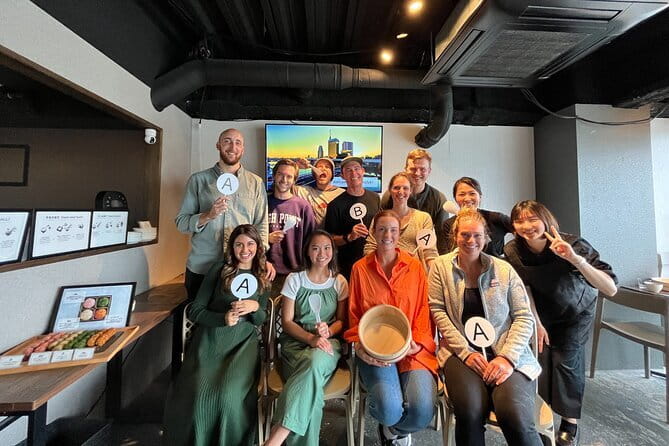
REVIEW · OSAKA TOURS
Make Sushi and Create Unforgettable Memories in Osaka
The most appealing part of this Osaka activity is that you do not just order sushi, you make it yourself. In about 1 hour 40 minutes, an English-speaking instructor leads you through sushi rolls and authentic nigiri in a beginner-friendly kitchen near Dotonbori and Shinsaibashi.
I like the hands-on format, which turns a meal into a useful travel memory. I also like the convenient central location, since you can pair the class with an evening around Osaka’s famous food streets. The main consideration is that the class is short, so this is an introduction to sushi making rather than a full cooking course.
In This Review
- Key points
- Making sushi instead of simply ordering it
- A central Osaka address near Dotonbori
- What happens during the 1 hour 40 minute class
- Learning rolls and nigiri in the same session
- The value of friendly instruction
- What the $35.93 price includes
- Who will enjoy this Osaka food activity
- A note about the available feedback
- Timing the class with your Osaka plans
- Accessibility and participation
- Small memories, useful skills and a full stomach
- Should you book this sushi class?
- FAQ
- Where does the sushi-making class take place?
- How long does the experience last?
- How much does the class cost?
- Is the class taught in English?
- Do I need previous cooking experience?
- What types of sushi will I make?
- Are ingredients included?
- Is hotel pickup available?
- Can I cancel for a full refund?
Key points
- Make both rolls and nigiri: You learn two familiar sushi styles rather than focusing on only one.
- English guidance: The instructor explains each step in English, making the class suitable for beginners.
- Central Osaka setting: The location near Dotonbori and Shinsaibashi fits easily into a day of sightseeing.
- Food is included: Ingredients and the meal you prepare are covered in the price.
- Good for solo visitors: You do not need to arrive with a group or cooking partner.
- $35.93 price point: The fee covers instruction, ingredients and your finished meal, which makes it a reasonable short activity.
Making sushi instead of simply ordering it
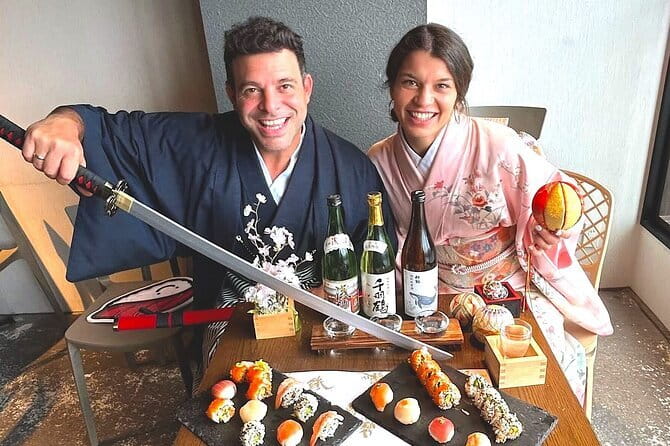
Osaka is famous for eating well, but a cooking class gives you a different way to understand that food culture. Here, you work through the process yourself, then sit down to eat the sushi you have prepared.
That shift matters. A restaurant meal can be memorable, but the meal ends when the bill arrives. A class gives you a story to carry home, along with a basic sense of how rolls and nigiri are put together.
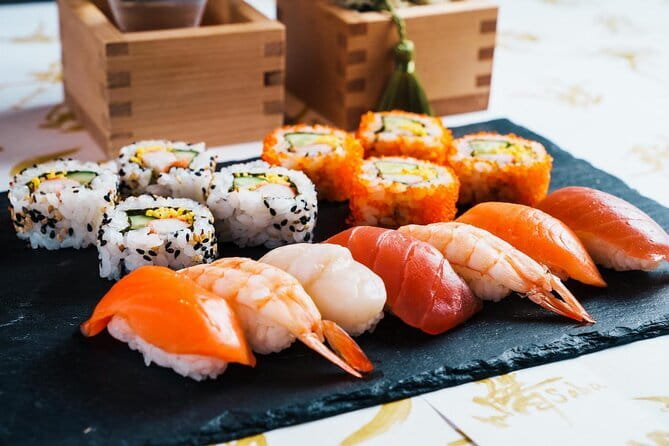
The class covers both rolled sushi and authentic nigiri. That is useful for first-time cooks because the two forms require different handling. Rolls are assembled and shaped as a group, while nigiri depends more on forming rice and placing the topping neatly.
You should not expect professional chef training in less than two hours. Instead, think of this as a clear introduction that helps you understand the basics without demanding previous skill.
Other Osaka days people book alongside this one:
- Osaka Go Karting Tour with Funny Costume
★ 5.0 · 2,658 reviews - Osaka Castle: Museum and Tower Entry Ticket
★ 4.5 · 2,380 reviews - Osaka: Shinsekai Food Tour with 13-15 Dishes at 5 Eateries
★ 4.8 · 2,204 reviews
A central Osaka address near Dotonbori
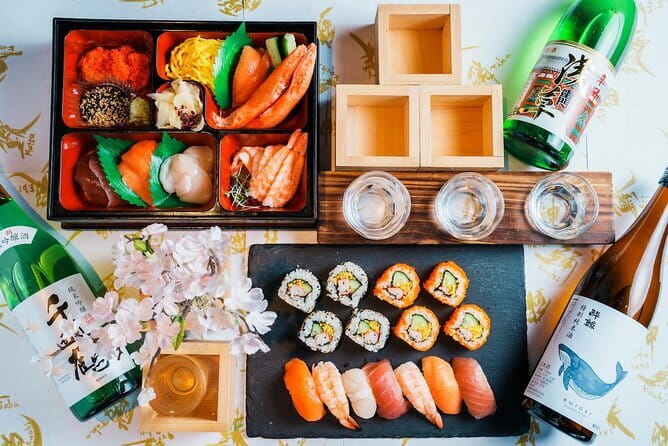
The class is located near Dotonbori and Shinsaibashi, two of the easiest areas in Osaka to combine with sightseeing and food stops. You can visit the class as part of a day in central Osaka, rather than setting aside a long trip to an outlying neighborhood.
This location is especially practical for a short visit. After the class, you can continue exploring nearby streets, shops and restaurants. Before booking, I would still check the exact meeting address and allow enough time to find the venue, since central Osaka can be confusing when you are moving between stations and crowded commercial streets.
The activity is listed as being near public transportation. Hotel pickup and drop-off are not included, so you make your own way there. That keeps the price down, but it also means you should plan your route before the start time.
What happens during the 1 hour 40 minute class
The activity follows a simple pattern: introduction, instruction, preparation, sushi making, eating and photographs. The exact order and pacing may vary, but the central focus is direct participation.
You begin with guidance from an English-speaking instructor. Since no experience is required, the explanations are intended for people who may never have shaped sushi before. This makes the class suitable for families, couples, friends and solo participants who want something more active than a standard meal.
The instructor then shows you how to make sushi rolls and nigiri step by step. That phrase is important. You are not simply watching a demonstration from across the room. You are there to practice the techniques and produce the food yourself.
Cultural explanations are also part of the experience. The class is not presented as a technical lesson alone. It connects the food to Japanese customs and gives you a little context for what you are preparing.
After the cooking, you eat the sushi you made. For me, this is the natural payoff. The finished pieces may not look exactly like those served by a professional sushi chef, but that is part of the fun. A slightly uneven roll can be more satisfying than a perfect restaurant plate because you know the work behind it.
There is also time for photographs. That makes sense for an activity built around a shared moment. If you are traveling with children or friends, the photos can help preserve the experience without requiring a separate photo stop.
Learning rolls and nigiri in the same session
The class earns much of its value by including two styles of sushi. Rolls are often the more approachable starting point because the ingredients are gathered together and shaped inside a sheet. The process gives beginners a clear result to work toward.
Nigiri offers a different challenge. It is a small portion of rice with a topping placed on top, so proportion and handling matter more. Learning both styles helps you see that sushi is not one single technique.
Do not judge the class by how quickly you master every movement. Sushi looks simple when an experienced cook makes it, but small steps can take practice. The useful goal is to understand the order of the work, handle the ingredients carefully and leave with enough confidence to recognize the main methods.
The presence of an instructor is important here. Written instructions alone would not help much if your rice shape or roll begins to fall apart. An English-speaking guide can show you how to correct the problem as it happens.
No instructor names are provided, so you should not expect a named chef-led workshop. The emphasis is on friendly local guidance rather than a celebrity chef or formal culinary credential.
Same city, a completely different kind of day:
- Osaka Food Tour: 13 Dishes at 5 Local Eateries
★ 5.0 · 2,149 reviews - Hungry Osaka Street Food Tour:15 Tastings & 3 Drinks with a Local
★ 5.0 · 1,727 reviews - Osaka: Tea Ceremony Experience
★ 4.9 · 1,426 reviews - Osaka Kickstart: Hotspots & Hidden Gems Tour
★ 5.0 · 1,306 reviews
The value of friendly instruction
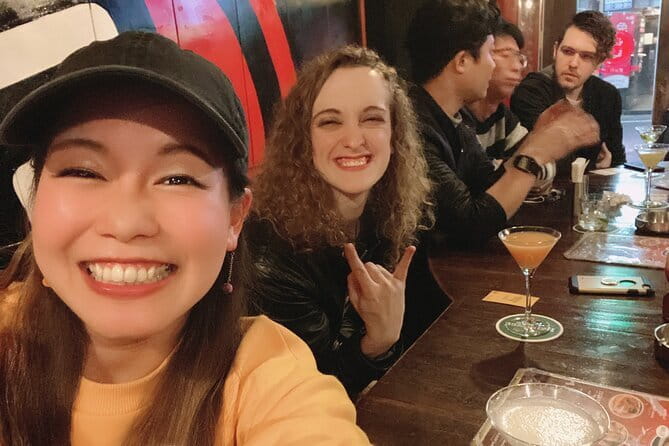
The clearest positive point attached to this activity is the staff’s welcoming approach. That matters in a cooking class because the atmosphere affects how willing you are to try unfamiliar techniques.
A stern or overly formal lesson can make beginners nervous. Friendly instruction gives you room to make mistakes, ask questions and enjoy the process. The available feedback specifically praises the staff as welcoming and friendly, which fits the class’s beginner-focused design.
The instructor also works in English. That does not mean every cultural detail will be extensive, but it removes a major barrier for international participants. You can follow the practical steps and understand the basic explanations without relying entirely on gestures.
This is also a social activity. Groups and solo participants are welcome, so you can join even if you are not traveling with a large party. The class gives solo visitors a structured way to meet people without forcing a long or demanding group excursion.
What the $35.93 price includes
At $35.93 per person, the fee covers the English-speaking instructor, cooking-class ingredients and the meal you make. That is a fair price for a central Osaka activity lasting close to two hours.
The value is strongest if you want both food and an activity. A comparable restaurant meal might give you more variety or a more polished presentation, but it would not include instruction or the satisfaction of making the food. A standard cooking lesson could also cost more if it runs for several hours or covers a wider menu.
The price is less attractive if you are looking only for the cheapest sushi meal. You are paying for the teaching, the ingredients, the use of the class setting and the shared experience, not just for a plate of sushi.
There are no hotel transfers included. That is normal for a short city-center class and helps keep the cost moderate. You should also remember that the listed price is per person, so a family or group needs to multiply the fee by the number of participants.
Who will enjoy this Osaka food activity
This class suits you best if you want a low-pressure cultural activity with an edible result. It is especially well matched to:
- First-time sushi makers
- Couples looking for a shared activity
- Families who want something more active than sightseeing
- Solo visitors who enjoy small group experiences
- Food-focused visitors staying near central Osaka
- Anyone who wants basic sushi skills without committing to a full-day course
It is also a practical choice for a mixed-interest group. One person can enjoy Japanese food, another can enjoy cooking, and everyone can take part in the final meal.
You may want to choose a different activity if you already have serious sushi-making experience or want advanced knife work, fish preparation or detailed culinary training. None of those advanced topics are specified here. The class is designed around an accessible introduction.
The duration also limits how much can be covered. At 1 hour 40 minutes, you get a focused lesson, not a broad survey of Japanese cuisine.
A note about the available feedback
The recorded score is 4.9 out of 5 from 14 reviews, with 100 percent recommending the experience. That is a strong early signal, especially for a small hands-on class.
Still, the written feedback supplied for this activity describes a sake experience in Tokyo, including snacks and a view over the water. Those details do not match the Osaka sushi-making class, so I would not use them as evidence that this activity includes sake, waterfront views or a Tokyo location.
The useful point you can take from that feedback is the praise for friendly, welcoming staff. That quality is relevant to a beginner cooking class, where clear help and a relaxed tone matter more than grand surroundings.
The activity also carries a two-time TripAdvisor Best of the Best recognition. That indicates strong visibility and customer response, but it does not replace checking the practical details. I would still confirm the meeting point, start time and any dietary questions before you go.
Timing the class with your Osaka plans
The central location makes this easy to fit into a day, but you should avoid placing it too close to a train departure or another timed booking. Cooking activities need a little breathing room, especially if you are unfamiliar with the neighborhood.
A class near Dotonbori and Shinsaibashi can work well before an evening walk through the area. It can also serve as a break in the middle of a sightseeing day. Since the class itself includes food, you may not want to schedule it immediately after a large lunch.
The experience is mobile-ticket friendly. You should have your booking confirmation available on your phone and make sure the device has enough battery for the day. Hotel pickup is not provided, so route planning remains your responsibility.
Free cancellation is available if you cancel at least 24 hours before the local start time. Changes or cancellations made within 24 hours are not accepted for a refund, so keep that deadline in mind when your Osaka plans are still changing.
Accessibility and participation
The activity is near public transportation, and most people can participate. Service animals are allowed.
That is helpful, but the information does not describe the kitchen layout, seating, step-free access, or accommodation for specific mobility needs. If you need those details, contact the provider before booking rather than assuming the venue will fit your needs.
The class welcomes solo participants as well as groups. That makes it more flexible than an activity that requires a private booking or a minimum party size.
Small memories, useful skills and a full stomach
The best reason to book this class is not that it teaches you to become a sushi chef in 100 minutes. It is that you get a friendly, practical way to connect with Japanese food while you are in Osaka.
You will learn the basic difference between rolls and nigiri, follow instructions in English, prepare ingredients and eat the result. You will also have photographs and a shared memory that a restaurant meal alone cannot provide.
The class is not a substitute for a long culinary course. It may not satisfy an experienced cook looking for advanced detail, and the available written feedback includes information from a different Tokyo sake activity, so expectations should stay focused on the confirmed Osaka sushi program.
Should you book this sushi class?
I would book it if you are near Dotonbori or Shinsaibashi, enjoy Japanese food and want a short activity that combines instruction with lunch or a light meal. The $35.93 price is sensible because it includes teaching, ingredients and the sushi you prepare.
I would skip it if you want an advanced chef course, a long menu of Japanese dishes or hotel transportation. For most first-time participants, though, this is a straightforward way to make sushi, meet people and add a hands-on food experience to an Osaka visit.
FAQ
Where does the sushi-making class take place?
The class takes place in Osaka, near Dotonbori and Shinsaibashi.
How long does the experience last?
The class lasts approximately 1 hour and 40 minutes.
How much does the class cost?
The listed price is $35.93 per person.
Is the class taught in English?
Yes. An English-speaking instructor guides the class.
Do I need previous cooking experience?
No. The class is designed for beginners, and no previous experience is required.
What types of sushi will I make?
You will learn to make sushi rolls and authentic nigiri.
Are ingredients included?
Yes. The ingredients for the cooking class and the meal are included.
Is hotel pickup available?
No. Hotel pickup and drop-off are not included.
Can I cancel for a full refund?
Yes, if you cancel at least 24 hours before the experience start time. Cancellations or changes made less than 24 hours before the start time are not accepted for a refund.
Just added around Osaka
- Samurai dress-up and shows, plus Tea Ceremony & Calligraphy★ 5.0 · 27 reviews
- Kyoto & Nara Private customized tour with English speaking Guide★ 4.5 · 99 reviews
- Well-balanced BENTO (lunch box) Cooking Class★ 5.0 · 35 reviews
- Urban Canvas: Osaka Street Art Bike Tour★ 5.0 · 47 reviews
- OSAKA:Feel the Power! Learn Taiko Drum from Professionals★ 5.0 · 28 reviews
- Volleyball in Osaka & Kyoto with Locals!★ 5.0 · 21 reviews
- 1.5〜2 Hours Traditional Kintsugi Work Shop in Namba Osaka★ 5.0 · 75 reviews
- Umami Town Street Food Tour★ 5.0 · 120 reviews
Osaka Tours, compared.

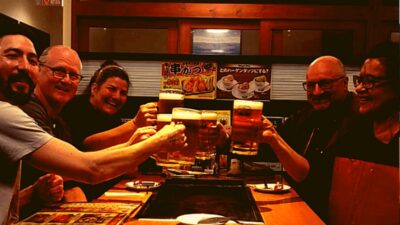
Shinsekai Food Tour with 13-15 Dishes at 5 Eateries
Read our review →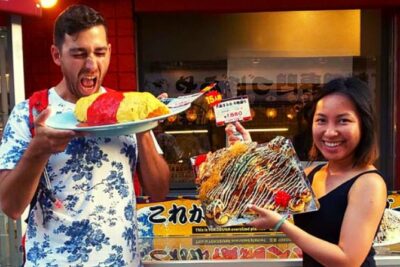
Osaka Food Tour: 13 Dishes at 5 Local Eateries
Read our review →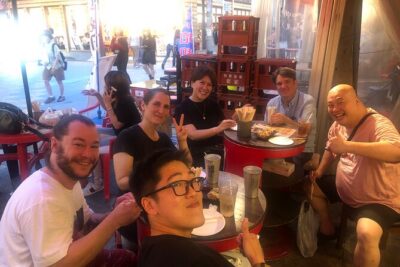
Hungry Osaka Street Food Tour:15 Tastings & 3 Drinks with a Local
Read our review →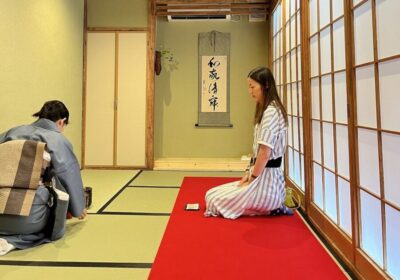
Hotspots & Hidden Gems Walking Tour Private or Group
Read our review →