
REVIEW · JAPAN
Made from flour in 30min! Ramen-noodle Making Experience!
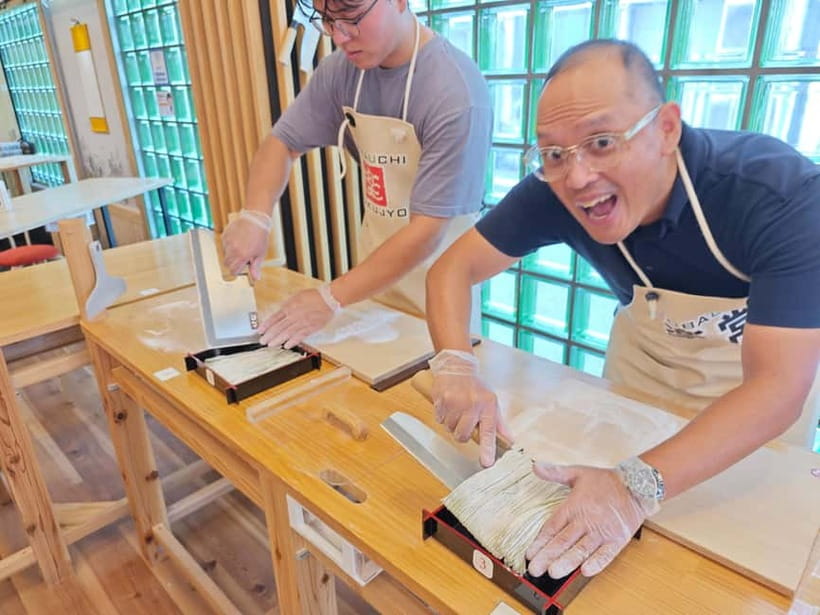
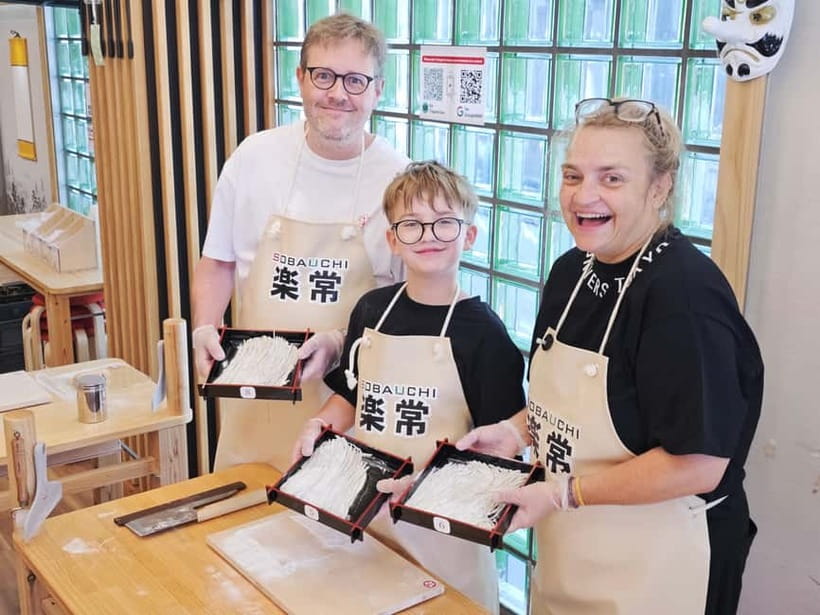
At SOBAGIRI-RAKUJYO, you turn flour into fresh ramen noodles in about 30 minutes, using a large traditional knife instead of a pasta machine. Staff then cook your noodles and serve them as ramen, so this is both a hands-on lesson and a proper meal.
I like the short, well-paced format, which fits neatly into a day of sightseeing in Asakusa. I also like the bright open kitchen, free drink, and Japanese snack station. The main point to consider is the price: $57 per person is fair for the meal and extras, but it is not a bargain if you want only a quick bowl of ramen.
In This Review
- Key points to know before booking
- Making ramen in the Kappabashi kitchen district
- From flour and water to ramen noodles
- Why the 50-minute schedule works
- Choosing your ramen bowl
- Free drinks and Japanese snacks
- What families should consider
- Accessibility, languages, and group size
- Is $57 good value?
- Best ways to fit it into an Asakusa day
- Who will enjoy this most?
- Should you book this ramen class?
- FAQ
- Where is the ramen noodle making experience located?
- How long does the experience last?
- What is included in the price?
- Which ramen flavors are available?
- Is the activity offered in English?
- Can children participate?
- Is the venue wheelchair accessible?
- Can I cancel for a full refund?
Key points to know before booking
- Cut every noodle by hand: You learn a traditional fine-cutting technique with a large noodle knife rather than using a machine.
- Thirty minutes of making, then eating: The activity gives you a useful taste of noodle production without taking over your day.
- Several ramen flavors are available: Choose from soy sauce, miso, shio, vegan, and vegan soup curry ramen.
- The meal includes more than noodles: One drink and all-you-can-eat snacks from Japanese manufacturers are included.
- Small groups keep the lesson manageable: The experience is limited to six participants, with space for up to 30 people in the wider shop.
- Kappabashi makes a natural pairing: You can combine the class with kitchenware shopping and a visit to Sensoji Temple.
Making ramen in the Kappabashi kitchen district
SOBAGIRI-RAKUJYO sits on the first floor of Kappabashi, Tokyo’s kitchenware district between Asakusa and Ueno. The shop is about 25 minutes from Sensoji Temple, making it a practical stop after temple sightseeing or during a walk through the cookware shops.
The meeting point is diagonally across from a food sample shop marked by a large beetle object. Kappabashi has plenty of unusual storefronts, but this landmark helps you get oriented. Arrive 10 minutes before your reserved time. That early arrival matters because the preparation begins quickly once the session starts.
I would not expect a dark workshop or a cramped cooking classroom. The space is described as bright, clean, spacious, and styled in a modern Japanese manner, with an open kitchen on the ground floor. The roomy layout is useful for families, groups, and wheelchair users, and it gives the class a more polished feel than a basic cooking demonstration.
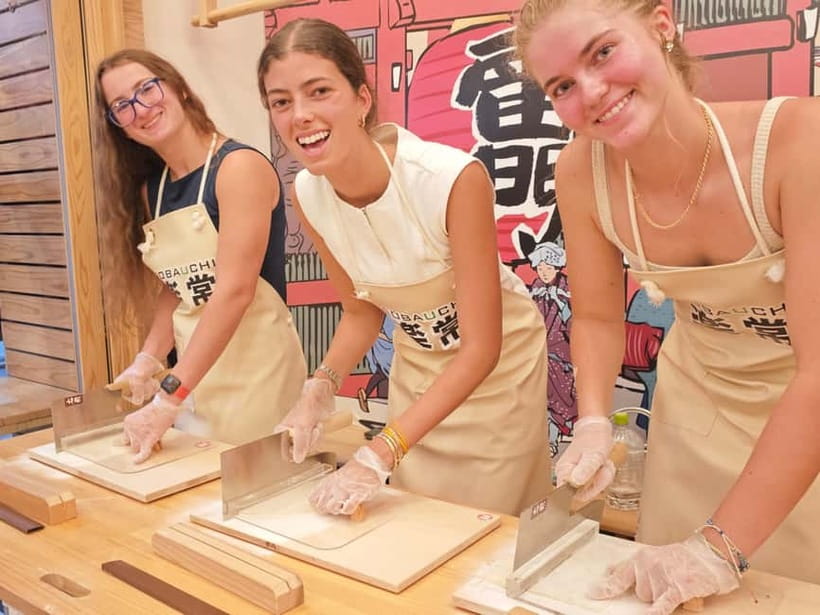
The small-group setup is limited to six participants. At the same time, the shop can accommodate up to 30 people, so the room has enough breathing space even when several tables are in use. Three participants sharing one table is not permitted, an arrangement that helps keep the knife work orderly.
Other Japan days people book alongside this one:
- Mt Fuji and Hakone 1-Day Bus Tour Return by Bullet Train
★ 5.0 · 26,383 reviews - 1-Day Tokyo Bus Tour
★ 5.0 · 14,250 reviews - PERFECT KYOTO 1-Day Bus Tour
★ 5.0 · 13,518 reviews
From flour and water to ramen noodles
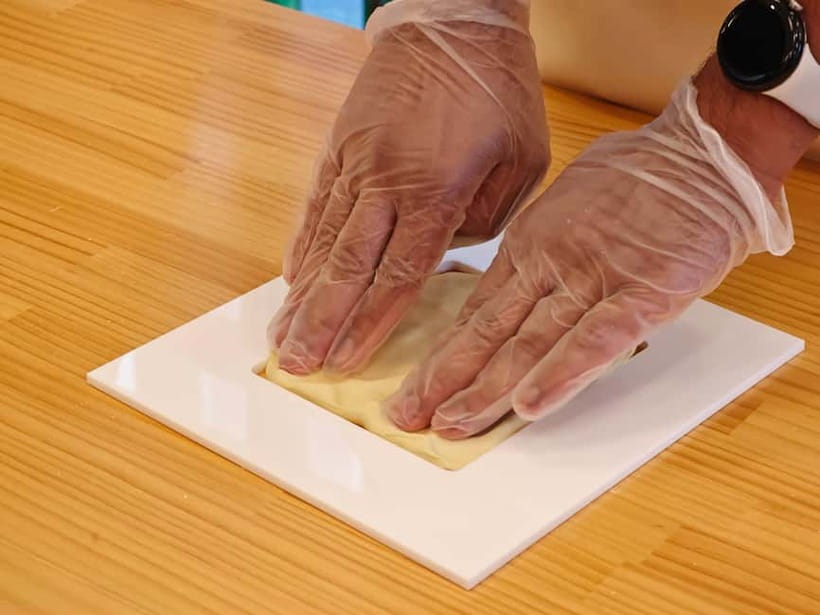
The central idea is simple: you make noodles from flour, then eat the noodles you made. The method compresses several steps into one short lesson, including mixing flour and water, kneading, flattening, and cutting.
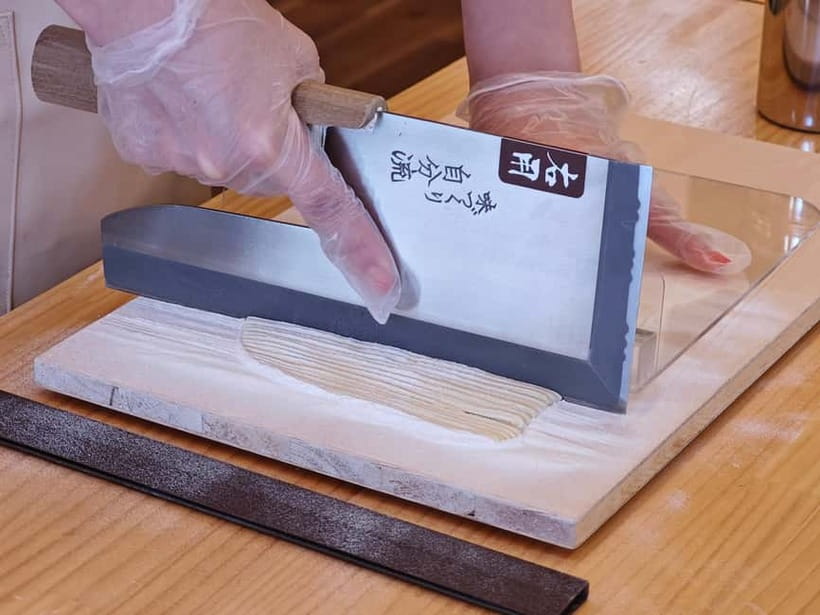
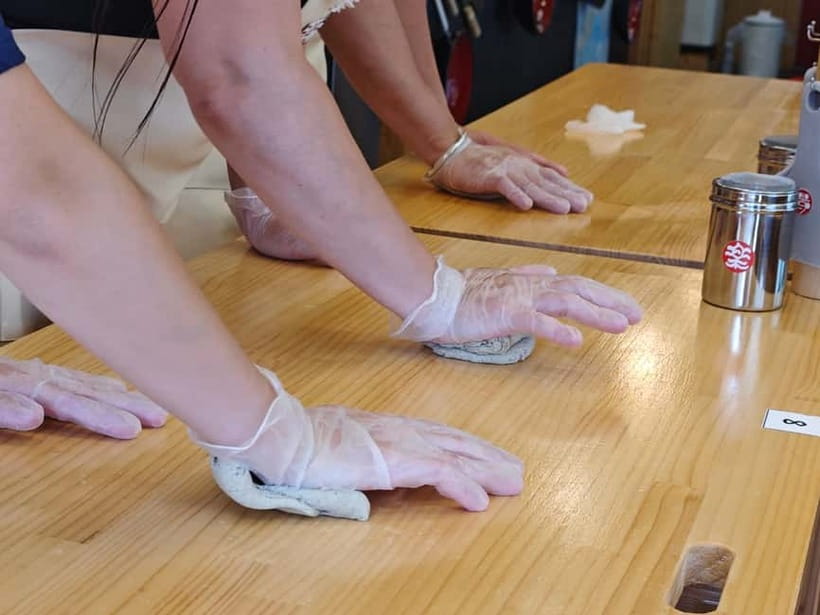
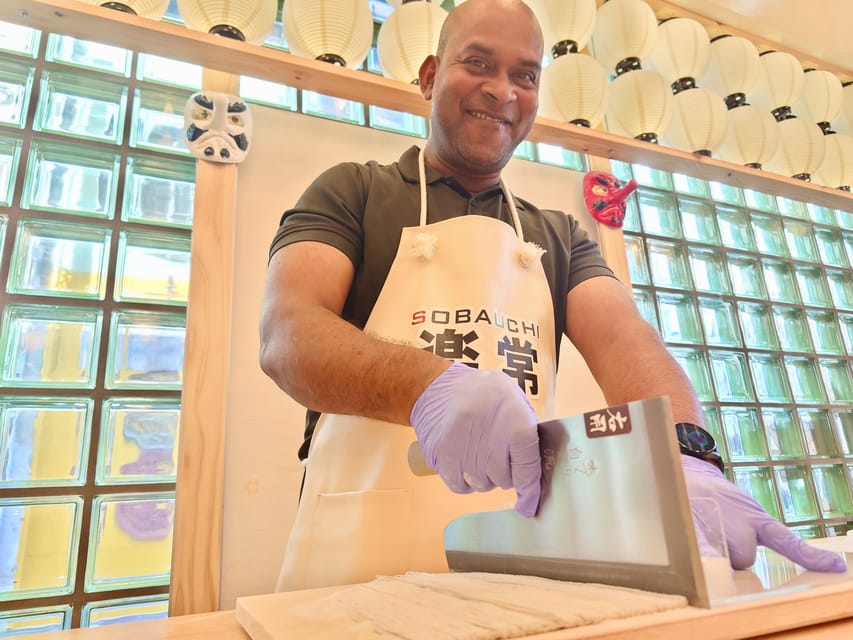
The most unusual part is the cutting. Instead of sending dough through a pasta machine, you use a large knife designed for noodle work and cut the dough into thin strips by hand. The technique is linked to Japanese noodle cutting traditions dating back to the Edo period, from 1603 to 1868.
You receive instruction in a careful, gentle way, with some humor built into the teaching. English instruction is available, and an English audio guide is included. That combination should help if you do not follow every spoken instruction immediately.
The cutting technique requires attention. You are handling a heavy knife, so this is not a free-form activity where everyone simply experiments. The staff teach the safe motion and fine cutting method, then guide you through the process.
I like this because you leave with a better sense of what handmade noodles involve. The class does not pretend to turn you into a ramen chef in half an hour. Instead, it gives you one memorable skill and lets you see how flour becomes something you can eat.
Why the 50-minute schedule works
The stated duration is 50 minutes. Reception begins 10 minutes before the activity, followed by about 30 minutes of noodle making and time to eat the finished bowl. The experience is designed around quick turnover rather than a long cooking school format.
That timing is one of its strongest features. A two-hour food class can be enjoyable, but it can also drain your energy, especially for young children or anyone fitting several Tokyo neighborhoods into one day. Here, you get the hands-on part done in about 30 minutes, then move on after eating.
The timing also works well during a Kappabashi shopping stop. You can visit kitchen knife shops, cookware stores, and food sample shops before or after the class. If you are staying in Asakusa, it can function as a compact lunch plan rather than a separate full-day activity.
There is one detail to clarify when you plan your day. The experience is advertised as 50 minutes, while the highlights describe 30 minutes of making and 30 minutes of dining. Treat the booking as a short scheduled session with meal time included, and allow a little extra time for arriving early and finishing your food.
Choosing your ramen bowl
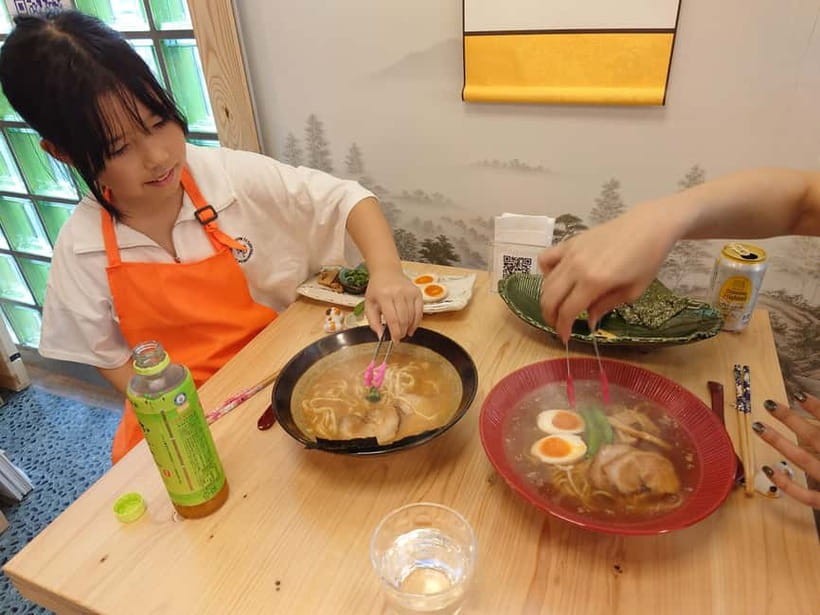
After you finish cutting, the staff cook the noodles. You are served the noodles you made, rather than receiving a random bowl prepared for someone else. That personal link gives the meal more meaning, even if the noodles are not perfectly uniform.
The available flavors include:
- Miso ramen
- Soy sauce ramen
- Shio ramen
- Vegan ramen
- Vegan soup curry ramen
Soy sauce is the familiar choice, but I would consider trying miso or shio if you have already eaten several standard ramen bowls in Japan. Vegan diners have two clearly listed choices, which makes the activity easier to book for a mixed group.
The finished bowl may include additions such as egg and pork, as indicated by the meal description and dining experience. Because the exact toppings can depend on the selected meal, check the available choices when booking or on arrival.
The staff also share a small part of the soup recipe that you can try to copy at home. The full recipe remains a trade secret, but this extra detail extends the experience beyond lunch. You get something practical to remember when you return home.
Same city, a completely different kind of day:
- Tokyo: TOKYO SKYTREE® Admission ticket
★ 4.5 · 11,192 reviews - Tokyo: teamLab Planets TOKYO Digital Art Museum Entry Ticket
★ 4.6 · 9,779 reviews - Mt Fuji & Hakone Cruise, Drum Show Bullet Train 1 Day from Tokyo
★ 4.0 · 7,413 reviews - Tokyo: Sumo Show Experience with Chicken Hot Pot and a Photo
★ 4.8 · 6,678 reviews
Free drinks and Japanese snacks
One drink is included. Choices may include beer, highball, lemon sour, juice, and non-alcoholic beer. This range is helpful for mixed groups, since children and adults can choose separately without one person paying for an unwanted alcoholic drink.
Drink refills cost extra, so I would treat the included serving as part of the meal rather than expect unlimited beverages. The selection still adds value to the $57 price, especially if you choose a beer or another adult drink.
The eating area also offers all-you-can-eat snacks from Japanese manufacturers. This is a small feature, but it makes the post-class period more relaxed. You can taste packaged Japanese snacks while waiting for the meal or after finishing the noodles.
I would not book this solely for the snack station. Still, when you add the drink, the snack access, the instruction, and the cooked bowl, the total package feels more substantial than a basic noodle demonstration.
What families should consider
The short schedule makes this a strong choice for families. Children are less likely to lose interest during a 30-minute making session than during a long cooking course, and the final meal gives the activity a clear reward.
There are important safety rules. Children under 2 are not suitable for the activity, and babies under 1 are also listed as unsuitable. Children working alone must be able to knead dough and handle a large, heavy knife by themselves.
If a child cannot safely manage the knife, a parent can pair with the child. One adult must accompany each child in a parent-child pairing. Parents remain responsible for their children, and any injury caused during the activity is the participant’s responsibility.
That makes this better for children who can follow instructions and handle a serious kitchen tool, not toddlers who simply want to watch. Observation-only entry is generally not available, so anyone entering should plan to order and take part in the meal.
Accessibility, languages, and group size
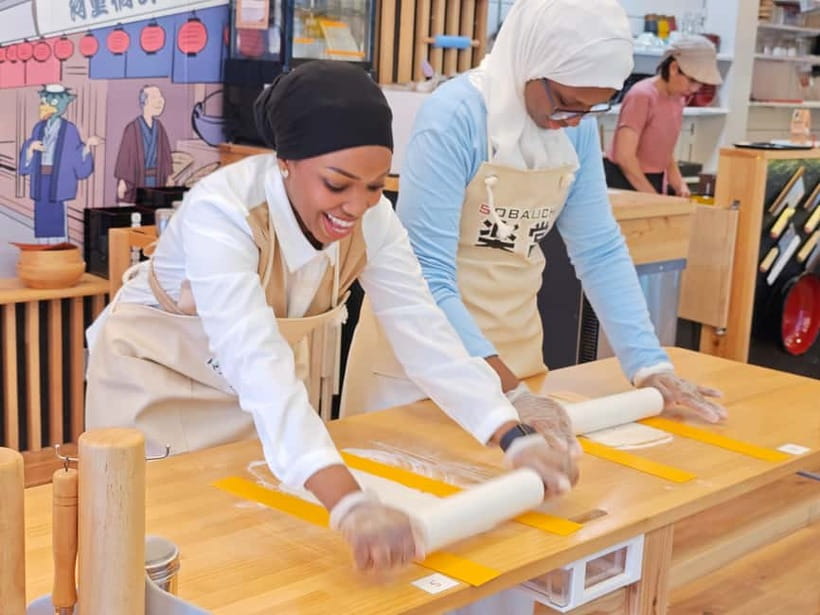
The experience is wheelchair accessible, and the spacious ground-floor layout should help people who need more room to move around. The supplied information does not specify the exact table height, aisle measurements, or details of assistance, so I would contact the venue ahead of time if you have specific mobility needs.
Japanese and English are supported. An English audio guide is included, and the hands-on nature of the class means you can also learn by watching the demonstration and copying the movements.
The small-group limit of six is a useful middle ground. You get more personal attention than in a large food tour, but the experience can still work for a family or a few friends traveling together.
People with buckwheat allergies cannot participate. The activity is also not suitable for anyone with gluten intolerance, and people with a cold are asked not to take part. These restrictions matter because the class centers on flour and shared food preparation.
Is $57 good value?
At $57 per person, this sits above the cost of an ordinary ramen lunch in Japan. You are paying for more than the bowl, though: the lesson, your own handmade noodles, one drink, and unlimited Japanese snacks are included.
The value is strongest if you want an activity with a meal attached. You are not just watching a chef work, and you are not paying separately for a cooking class and lunch. The staff cook your noodles after the cutting session, and the meal includes a choice of soup styles.
The value is weaker if your main goal is simply to eat excellent ramen as cheaply as possible. Kappabashi and Asakusa offer many food options, and a normal restaurant meal will usually take less planning and cost less.
I see the price as reasonable for a special occasion, a family activity, or a first-day introduction to Japanese food culture. It is also useful for people who want a compact activity between sightseeing stops rather than a lengthy culinary course.
The overall rating is 4.8 from 24 reviews, with especially strong praise for the clean setup, friendly staff, clear instructions, good ramen, and family suitability. One account reported a serious scheduling problem on arrival, so I would keep your confirmation details and make sure the reservation is active before setting out.
Best ways to fit it into an Asakusa day
I would pair the class with Sensoji Temple and Kappabashi rather than cross Tokyo just for the 50-minute session. Start at Sensoji, walk through the surrounding streets, then continue toward Kappabashi for kitchen tools, knives, cookware, and food models.
The venue is about 25 minutes from Sensoji Temple. That makes the location especially convenient if your day already includes Asakusa. After the meal, you can continue shopping without needing another major train ride.
Kappabashi is also a good place to buy a Japanese kitchen souvenir. The neighborhood’s focus on cooking supplies gives the noodle class useful context. After cutting noodles by hand, you may look at knives and tools with a sharper understanding of how Japanese kitchens use them.
If you are planning a tight schedule, book a time that leaves room for the 10-minute early arrival. I would avoid placing the class immediately before a fixed-ticket attraction unless you have enough margin for the meal.
Who will enjoy this most?
I would recommend SOBAGIRI-RAKUJYO to:
- Families with children old enough to handle the equipment safely
- Couples looking for a short food activity
- Friends who want to make and eat something together
- First-time visitors combining Asakusa with Kappabashi
- Vegan diners who want listed ramen options
- Visitors who prefer a small group to a large cooking class
- People who use wheelchairs and value a spacious ground-floor venue
I would be more cautious if you have a buckwheat allergy, gluten intolerance, or difficulty handling a large knife. I would also skip it if you only want a fast, inexpensive bowl of ramen and have no interest in making the noodles.
Should you book this ramen class?
Book it if you want a short, social food experience with a real meal at the end. The handmade cutting method, choice of ramen flavors, free drink, and Japanese snacks give the session more variety than a simple demonstration.
I especially like it for a family day in Asakusa because the 30-minute making period is easy to manage. For adults, the appeal is the traditional knife work and the chance to eat noodles that you personally shaped.
Skip it if the $57 price feels high for a meal, or if anyone in your group cannot use the heavy knife safely. For everyone else, this is a practical way to add a little hands-on Japanese cooking to a Kappabashi visit without surrendering half a day.
FAQ
Where is the ramen noodle making experience located?
SOBAGIRI-RAKUJYO is on the first floor of Kappabashi Kitchenware Street in Asakusa, Honshu, Japan. The meeting point is diagonally across from a food sample specialty store with a large beetle object.
How long does the experience last?
The stated duration is 50 minutes. The noodle-making portion takes about 30 minutes, followed by staff cooking the noodles and time to eat.
What is included in the price?
The $57 price includes the ramen-making activity, a meal made with the noodles you cut, one drink, and all-you-can-eat Japanese snacks.
Which ramen flavors are available?
Options include miso ramen, soy sauce ramen, shio ramen, vegan ramen, and vegan soup curry ramen.
Is the activity offered in English?
Yes. The experience is available in Japanese and English, and an English audio guide is included.
Can children participate?
Children can participate if they meet the age and safety requirements. Children working alone must be able to knead dough and use a large, heavy knife. If needed, a child can be paired with a parent, with one adult accompanying each child.
Is the venue wheelchair accessible?
Yes, the activity is listed as wheelchair accessible. Contact the venue ahead of time if you need details about specific mobility assistance.
Can I cancel for a full refund?
You can cancel up to 24 hours in advance for a full refund. The experience also offers reserve-now, pay-later booking.
Just added around Japan
- Tokyo: Customizable Private Guided Walking Tour★ 4.5 · 129 reviews
- Private Harajuku Omotesando Architecture Tour★ 4.9 · 18 reviews
- Tokyo: Guided Helicopter Ride★ 4.9 · 24 reviews
- Tokyo: Guided Walking Tour of Tsukiji Market with Lunch★ 4.4 · 24 reviews
- Tokyo: Private Personalized Local Food Tour★ 4.5 · 101 reviews
- Tokyo: Guided Walking Tour of Tsukiji Market with Breakfast★ 4.4 · 134 reviews
- Tokyo: Gotokuji Cat Temple, Shinjuku Cat Cafe & 3D Cat Tour★ 4.9 · 38 reviews
- Tokyo GINZA: KONPARU Japanese Cabaret Show with Drink★ 4.8 · 38 reviews