REVIEW · OSAKA TOURS
Let’s Dance Bon Odori Japanese folk Dance near Tsutenkaku
Bon Odori is usually tied to summer festivals, but at Ebisuza you can learn its easy circular steps at any time of year. I like the live shamisen and taiko elements, which give the class more character than a simple dance lesson, and I like that you can relax afterward with a drink.
The class is short, social, and limited to 15 people, so the instructor can keep the pace gentle. One thing to consider is that this is a dance experience near Tsutenkaku, not a guided tour of the tower or Isshinji Temple.
In This Review
- Key points to know before you book
- A folk dance class with a relaxed Osaka feel
- What happens at Ebisuza
- Shamisen and taiko add more than background music
- Tsutenkaku and Isshinji Temple: useful nearby landmarks
- Why the small group matters
- Choosing the afternoon or evening session
- The included drink and the alcohol question
- What the strongest parts of the experience offer
- Value at $19.60 per person
- Who should book this Bon Odori class?
- Should you book Ebisuza Bon Odori?
- FAQ
- How long does the Bon Odori experience last?
- Where does the experience begin?
- Where does the activity end?
- Is Bon Odori difficult for beginners?
- What drink is included?
- Are Tsutenkaku and Isshinji Temple guided visits?
- How many people can join the activity?
- Can I cancel for a full refund?
Key points to know before you book
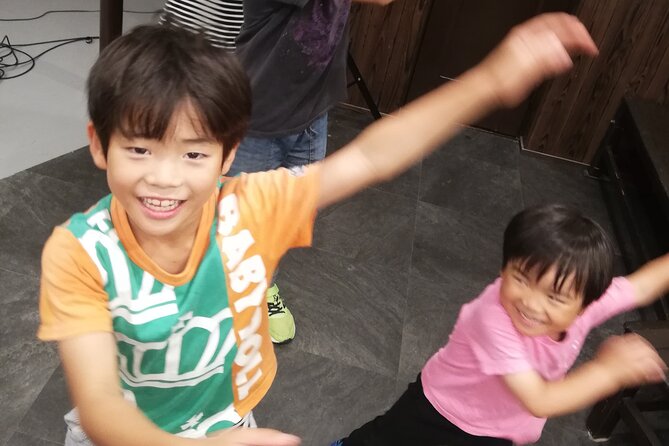
- Bon Odori uses simple, samba-like rhythms: You do not need dance experience to join the basic steps.
- Live shamisen and taiko may be part of the session: You can also get the chance to touch and try these traditional instruments.
- A drink is included: Choose coffee, tea, water, or a canned alcoholic beverage.
- Two time choices help with planning: Sessions are offered in the early afternoon and evening.
- The meeting point is near Tsutenkaku: Restaurants, the zoo, and local Osaka food are close by.
- The group is capped at 15 people: That makes instruction more personal than a large festival crowd.
A folk dance class with a relaxed Osaka feel
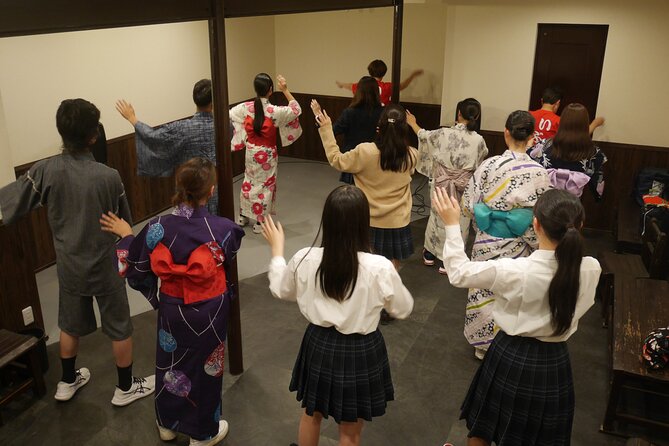
The appeal here is simple: you learn a Japanese dance by doing it, not by watching from the edge of a summer festival. Bon Odori is performed in a circle, often with dancers following repeated gestures and steps around a central point. At Ebisuza, the rhythm has a samba-like feel, which makes the movement lively without making it hard to follow.
You begin with a demonstration from the professional instructor. The basic steps come next, and the class gradually opens up. Bon Odori has few strict rules, so the second half gives you room to move more freely and enjoy the rhythm rather than worry about perfect form.
That makes this a good choice if you feel awkward about formal dance lessons. The point is not to produce a polished stage performance. You are learning a social dance that works because everyone moves together, repeats the same pattern, and lets the music carry the mood.
The class lasts about 90 minutes. That is long enough to learn the structure and settle into the movement, but short enough to fit neatly into a day of sightseeing around Osaka.
Other Osaka days people book alongside this one:
- Osaka Go Karting Tour with Funny Costume
★ 5.0 · 2,658 reviews - Osaka Castle: Museum and Tower Entry Ticket
★ 4.5 · 2,380 reviews - Osaka: Shinsekai Food Tour with 13-15 Dishes at 5 Eateries
★ 4.8 · 2,204 reviews
What happens at Ebisuza
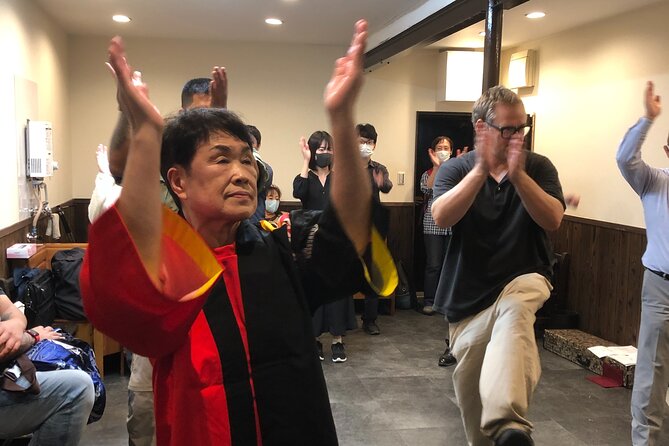
Your meeting point is 1-chōme-3-13 Ebisuhigashi, Naniwa Ward, Osaka, 556-0002. The studio is in central Osaka, near Tsutenkaku and the surrounding Shinsekai area. Since the activity ends at the same place, you do not need to arrange a separate return trip.
The first part focuses on watching and copying. The instructor demonstrates the Bon Odori, then leads you through the core steps. You may find the repeated movements easier than expected. The dance is designed for group participation, and the basic pattern gives you time to adjust as you go.
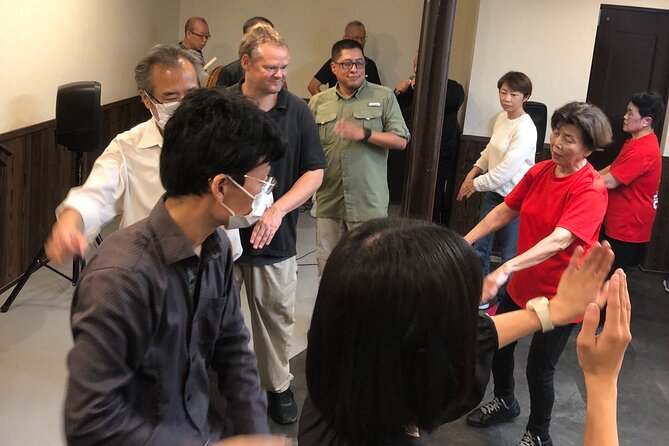
The circle is important. You are not simply facing a teacher and repeating a routine alone. As the class develops, you move with the group and begin to feel the shared pulse of the dance. That group feeling is one of the best reasons to book this instead of trying to learn Bon Odori from a video.
The second half is less formal. Once you know the basic pattern, you can loosen up and dance with more freedom. The class description encourages you to dance while feeling tipsy, but the alcoholic option is only one of the included drink choices. You can choose coffee, tea, or water instead.
Shamisen and taiko add more than background music
One of the most appealing details is the chance to encounter traditional Japanese instruments alongside the dance. Several class experiences have included shamisen and taiko, and you may be able to touch and try them yourself.
The shamisen is a three-stringed Japanese instrument with a distinctive, bright sound. The taiko is a Japanese drum, and even a short hands-on encounter helps connect the dance to the festival setting where Bon Odori is commonly performed.
This makes the class feel broader than a basic movement workshop. You are not only learning where to place your feet and hands. You are getting a small introduction to the sound world that often surrounds Japanese folk dance.
The instruments are also useful for anyone in your group who is less interested in dancing. Children and adults may enjoy trying the percussion, while others focus on the circle dance. The exact amount of live music or instrument time can vary, so you should treat it as a special feature rather than a guaranteed concert.
Tsutenkaku and Isshinji Temple: useful nearby landmarks
Tsutenkaku is listed as the first stop, but the activity begins and ends at the Ebisuza meeting point. The tower and the nearby Shinsekai district give you an easy way to locate the studio and plan the rest of your day.
Shinsekai is well known for casual Osaka food, including takoyaki, okonomiyaki, and kushikatsu. That makes the timing useful. An afternoon class can lead into an evening meal, while an evening session can work after a day spent around the city.
Isshinji Temple is also listed as a stop. The supplied details do not describe a separate guided visit inside the temple, so you should not book this expecting a temple tour. Think of Tsutenkaku and Isshinji as nearby sightseeing references connected with the studio’s location.
The zoo is close as well. If you are planning a day in this part of Osaka, you can combine the dance lesson with nearby sights and food without crossing the city between activities.
Same city, a completely different kind of day:
- Osaka Food Tour: 13 Dishes at 5 Local Eateries
★ 5.0 · 2,149 reviews - Hungry Osaka Street Food Tour:15 Tastings & 3 Drinks with a Local
★ 5.0 · 1,727 reviews - Osaka: Tea Ceremony Experience
★ 4.9 · 1,426 reviews - Osaka Kickstart: Hotspots & Hidden Gems Tour
★ 5.0 · 1,306 reviews
Why the small group matters
The maximum group size is 15 people. That is not a private lesson, but it is small enough to make a difference when you are learning a sequence of movements.
In a large festival crowd, you might copy the person next to you and hope you have the rhythm right. In this class, the instructor can demonstrate the steps clearly and help keep the group together. The structure also makes it easier to ask for clarification if a movement feels unfamiliar.
Bon Odori is forgiving, but a smaller group still helps you feel less exposed. You can make a mistake, watch the circle, and join back in without turning the class into a performance test.
The experience is also social without requiring much conversation. You take part through the dance itself. That can suit solo visitors, couples, friends, and families looking for an activity that feels distinctly Japanese but does not demand prior cultural knowledge.
Choosing the afternoon or evening session

The early afternoon option works well if you want to place the class between sightseeing stops. Tsutenkaku, Isshinji Temple, and the zoo are all nearby, and you can eat in the area afterward.
The evening session has a different mood. The dance, music, and included drink naturally fit a relaxed night out. You can finish with local Osaka dishes nearby, including takoyaki, okonomiyaki, or kushikatsu.
The choice depends less on the lesson itself than on how you want to shape your day. If you prefer sightseeing in the morning and dinner afterward, choose the afternoon. If you want a cultural activity to begin your evening, the later session may suit you better.
The activity lasts roughly 90 minutes, so allow time to find the meeting point and settle in. Confirmation is provided when you book, and the mobile ticket makes it practical to keep the booking on your phone.
The included drink and the alcohol question
Your $19.60 ticket includes a choice of coffee, tea, water, or a canned alcoholic beverage. That is a modest but useful addition, especially for an evening class.
The drink is not the main reason to book. The real value comes from the instruction, music, and chance to take part in a traditional dance. Still, having something included gives the session a relaxed finish and means you do not need to buy a drink separately during the class.
If you choose alcohol, keep in mind that the lesson still involves movement. You can select a nonalcoholic drink if you want to stay fully focused, if you are dancing with children, or if alcohol does not fit your plans.
The description presents the atmosphere as informal and cheerful rather than strict. That is helpful for beginners, but anyone looking for a formal cultural lecture or technical dance training may find the experience too light.
What the strongest parts of the experience offer
The most praised features are the easy instruction, kind hosting, live instruments, and sense of dancing together. Those strengths point to the type of experience this is best suited to.
The steps are slow and easy to follow. That matters if you have never tried Bon Odori, and it also helps if you have a physical limitation. One participant joined despite knee pain, and the class was still described as manageable. You should always judge your own comfort, but the gentle pace is reassuring.
The chance to touch the shamisen and taiko gives the class a memorable hands-on element. You may come expecting a dance lesson and leave with a stronger sense of how music and movement connect in a Japanese festival.
The group circle is another strong point. You are not expected to dance perfectly. The repetition lets you find the beat, and the shared movement takes some pressure off individual performance.
The hosts are described as kind and attentive, with clear directions for reaching the studio. That is especially useful in the Ebisuhigashi area, where you may be combining the class with food and sightseeing.
Value at $19.60 per person
At $19.60, this is reasonably priced for a 90-minute cultural activity that includes instruction, a drink, and possible access to traditional instruments. It is not simply a show where you sit and watch. You take part from the beginning and spend much of the session learning by doing.
The value is strongest if you want a local activity that fits around a wider Osaka schedule. The central location saves time, and the nearby food options make it easy to turn the class into part of a half-day or evening plan.
The value is less clear if you are only interested in a quick photo near Tsutenkaku. In that case, a dance class may take more time than you want. It also may not suit you if you want a detailed history of Bon Odori, since the focus is on participation rather than a long lecture.
Free cancellation is available up to 24 hours before the start time for a full refund. Changes or cancellations made less than 24 hours before the experience are not accepted, and the cut-off follows local Osaka time.
Who should book this Bon Odori class?
I would point this experience toward first-time visitors who want more than another sightseeing stop. It gives you a direct way to participate in Japanese culture without needing special clothing, dance training, or festival timing.
It also suits families and groups of friends. The easy rhythm, drink choice, and instrument time give people several ways to enjoy the session. Someone who does not love dancing may still enjoy the shamisen or taiko.
Solo visitors can fit in comfortably, too. The circle format creates a shared activity without forcing you to arrive with a large group.
You should think twice if you need a fully structured tour with several guided stops. Tsutenkaku and Isshinji Temple are part of the location context, but the heart of the booking is the Ebisuza dance session.
Should you book Ebisuza Bon Odori?
Book it if you want a friendly, hands-on cultural activity near Tsutenkaku. The combination of easy Bon Odori steps, a samba-like rhythm, possible live shamisen and taiko, and an included drink gives you a lot for $19.60.
I especially like it for people who have seen Japanese festivals but never joined the dancing. You get to learn the movement in a calm setting, then enjoy the social feeling that makes Bon Odori special.
Skip it if you are looking for a tower admission, temple tour, or formal performance. For everyone else, this is a compact and good-value way to add music, movement, and a little local fun to an Osaka day.
FAQ
How long does the Bon Odori experience last?
The activity lasts approximately 1 hour and 30 minutes.
Where does the experience begin?
It begins at 1-chōme-3-13 Ebisuhigashi, Naniwa Ward, Osaka, 556-0002, Japan.
Where does the activity end?
The activity ends back at the meeting point.
Is Bon Odori difficult for beginners?
The instructor first demonstrates the dance and then teaches the basic steps. The dance has few rules, and the steps are described as easy to follow.
What drink is included?
You can choose coffee, tea, water, or a canned alcoholic beverage.
Are Tsutenkaku and Isshinji Temple guided visits?
Tsutenkaku and Isshinji Temple are listed as stops connected with the experience, but the supplied details do not describe separate guided visits at either location.
How many people can join the activity?
The experience accepts a maximum of 15 participants.
Can I cancel for a full refund?
Yes. You can cancel at least 24 hours before the start time for a full refund. Cancellations or changes made less than 24 hours before the experience are not accepted.
Just added around Osaka
- Samurai dress-up and shows, plus Tea Ceremony & Calligraphy★ 5.0 · 27 reviews
- Kyoto & Nara Private customized tour with English speaking Guide★ 4.5 · 99 reviews
- Well-balanced BENTO (lunch box) Cooking Class★ 5.0 · 35 reviews
- Urban Canvas: Osaka Street Art Bike Tour★ 5.0 · 47 reviews
- OSAKA:Feel the Power! Learn Taiko Drum from Professionals★ 5.0 · 28 reviews
- Volleyball in Osaka & Kyoto with Locals!★ 5.0 · 21 reviews
- 1.5〜2 Hours Traditional Kintsugi Work Shop in Namba Osaka★ 5.0 · 75 reviews
- Umami Town Street Food Tour★ 5.0 · 120 reviews
Osaka Tours, compared.

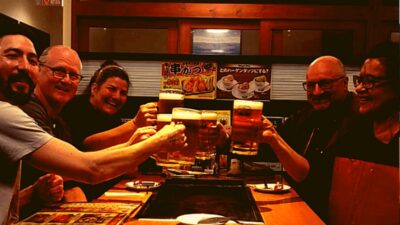
Shinsekai Food Tour with 13-15 Dishes at 5 Eateries
Read our review →
Osaka Food Tour: 13 Dishes at 5 Local Eateries
Read our review →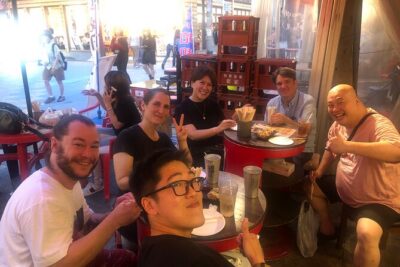
Hungry Osaka Street Food Tour:15 Tastings & 3 Drinks with a Local
Read our review →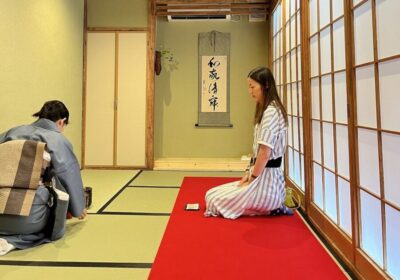
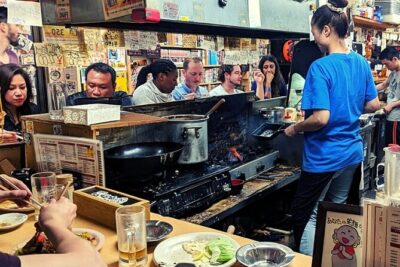
Hotspots & Hidden Gems Walking Tour Private or Group
Read our review →