
REVIEW · 1-DAY TOURS
Kyoto Top Four Highlights Day Trip from Osaka or Kyoto
Kyoto packs centuries of Japanese culture into a busy city, and this day trip tackles its biggest sights in one sweep. You’ll see Nijo Castle and the Golden Pavilion, then move west to Arashiyama before finishing beneath the red torii gates of Fushimi Inari.
I like the efficient route and the friendly guide support. You get air-conditioned transport, clear meeting instructions, and free time at each stop instead of being marched through every courtyard. I also like the useful human touches reported by guests, including Theodore’s WhatsApp directions, front seats for passengers with motion sickness, and Brian’s practical advice on finding the bus again.
The tradeoff is simple: nine hours is a lot of Kyoto in one day. With a group of up to 45 people, stops can feel busy, and the schedule leaves no room for slow temple wandering or a long hike up Mount Inari. Admission fees and lunch are extra.
In This Review
- Key points at a glance
- Why this Kyoto day trip works for a first visit
- Nijo Castle and the sound of the shogun’s palace
- Kinkaku-ji, Kyoto’s Golden Pavilion
- Arashiyama gives you the day’s breathing room
- Togetsukyo Bridge and the Rilakkuma stop
- Lunch is your own choice
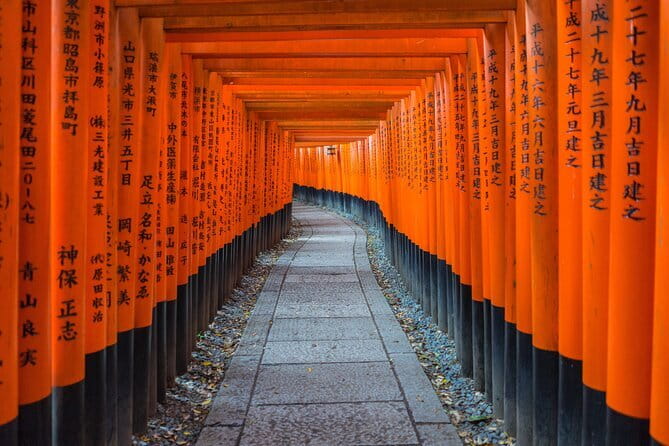
- Fushimi Inari ends with red torii gates
- Transport, group size, and the pace of the day
- What the $67 price really buys you
- Who should book this experience
- Should you book the Kyoto Top Four Highlights Day Trip?
- FAQ
- How long does the Kyoto day trip last?
- Where does the tour depart from?
- Which major Kyoto sights are included?
- Is transportation included?
- Are Nijo Castle and Kinkaku-ji admission fees included?
- Is lunch included?
- How many people can join the tour?
- Can I bring a stroller or large luggage?
- What is the cancellation policy?
Key points at a glance
- Four major Kyoto areas in one day: Nijo Castle, Kinkaku-ji, Arashiyama, and Fushimi Inari cover history, religion, gardens, bamboo, and city scenery.
- Arashiyama gets extra attention: You visit the Bamboo Forest, Nonomiya Shrine, Kimono Forest, Togetsukyo Bridge, and Rilakkuma Tea House.
- Guides keep the day moving: Theodore, Amy, Brian, Anson, Jackson, Charlie, and Saki have all been praised for organization, explanations, and cheerful help.
- Budget for ¥1,800 in admission fees: Nijo Castle and Ninomaru Palace cost ¥1,300, while Kinkaku-ji costs ¥500.
- Lunch is independent: The schedule provides time to eat on your own, so you control the meal and the cost.
- The final stop requires stamina: Fushimi Inari includes a long stretch of torii gates, and leaving early can mean missing the main attraction.
Why this Kyoto day trip works for a first visit
Kyoto is not hard to admire, but it can be hard to organize. The sights sit in different parts of the city, and public transport between them takes planning. This trip handles the long moves by air-conditioned vehicle, leaving you to focus on the places themselves.
The route gives you a useful first look at Kyoto’s main character. Nijo Castle brings in the shoguns and court life. Kinkaku-ji offers a famous temple garden and its gold-covered pavilion. Arashiyama shifts the mood to wooded paths and river views. Fushimi Inari closes the day with one of Japan’s most recognizable shrine walks.
That mix is the tour’s main strength. You are not spending nine hours on one theme or in one neighborhood. You get a broad introduction, which is especially useful if Kyoto is only a day trip from Osaka or if you have limited time in Japan.
The guides are an important part of the experience. The best feedback points to people who explain where to go, when to return, and what deserves your attention. Theodore, for example, used WhatsApp for detailed instructions before the day and translated between English and Mandarin during the tour. Anson was praised for keeping a large group informed and on schedule. Amy, Brian, Jackson, Charlie, and Saki also received warm praise for their organization and personable approach.
That said, guide quality can vary from one departure to another. One poor experience involved a heavy accent that made explanations difficult to follow, along with frustration about the group size. This is worth considering if detailed spoken commentary is your main reason for booking.
A few more Osaka trips to weigh up
- From Kyoto/Osaka: Kyoto Top Highlights 1-Day Guided Bus Tour
★ 4.5 · 714 reviews - Kyoto and Nara Day Trip from Osaka
★ 4.0 · 175 reviews - From Osaka or Kyoto: Kyoto and Nara 1-Day Bus Tour
★ 3.5 · 141 reviews
Nijo Castle and the sound of the shogun’s palace
Your first major stop is Nijo Castle, built in 1603 as the Kyoto residence of Tokugawa Ieyasu, the first shogun of the Edo period. It is one of Japan’s best-known castles, but do not expect a tall stone fortress like you might see in Europe.
The real prize is the palace complex. Ninomaru Palace is known for its decorated rooms and famous nightingale floors, which chirp underfoot as you walk. The design helped protect the shogun by making quiet movement difficult. Even without a long lecture, the building gives you a direct sense of how power operated in feudal Japan.
You have about one hour here. That is enough for a purposeful visit, but not for lingering over every painting or garden view. Admission is not included. The combined cost for Nijo Castle and Ninomaru Goten Palace is ¥1,300 per person.
I would use this stop to follow the main palace route, notice the painted interiors, and leave time for the garden. The castle became a UNESCO World Heritage site in 1994, but the designation is less important than what you see on the ground: a preserved palace setting where military authority met refined court culture.
Kinkaku-ji, Kyoto’s Golden Pavilion
Kinkaku-ji is the quick visual knockout of the day. The upper stories of this Zen Buddhist temple are covered in gold leaf, and the pavilion is reflected in the surrounding pond when conditions are right. The gardens add a calmer setting after the castle’s formal interiors.
You get about 40 minutes here, with an admission fee of ¥500. The visit follows a set path, so you should not expect to enter every building or spend hours exploring the temple grounds. Still, the short stop works well for the main view and a walk through the garden.
The Golden Pavilion is one of those places where the famous image can create high expectations. The actual visit is more controlled and often busy, so treat it as a focused photo and garden stop rather than a quiet retreat. Your guide’s timing matters here, especially when the group must return to the vehicle.
Arashiyama gives you the day’s breathing room
Arashiyama is the most varied part of the route. It has bamboo, shrines, a river bridge, small shops, a themed café, and a striking public art installation. The schedule divides the area into several short visits, so you get a taste of each rather than a long, unhurried walk.
The Bamboo Forest receives about 40 minutes. Towering bamboo stalks line the path, creating one of Kyoto’s most recognizable scenes. It is beautiful, but the path is also one of the city’s most photographed places. Go in expecting a memorable setting, not complete silence.
Nonomiya Shrine adds a more intimate stop. Its black torii gate is unusual because many visitors associate Shinto shrines with vermilion gates. The shrine is tied to the Arashiyama area and sits close to the bamboo route, making it easy to combine with the forest visit.
You also get about 20 minutes at the Kimono Forest, a textile art installation near the Arashiyama station area. Six hundred clear acrylic cylinders, each about two meters tall, display kimono fabrics in different patterns. It is a modern counterpoint to the temples and shrine, and it makes a good stop for photographs.
Same city, a completely different kind of day:
- Osaka Go Karting Tour with Funny Costume
★ 5.0 · 2,658 reviews - Osaka Castle: Museum and Tower Entry Ticket
★ 4.5 · 2,380 reviews - Osaka: Shinsekai Food Tour with 13-15 Dishes at 5 Eateries
★ 4.8 · 2,204 reviews - Osaka Food Tour: 13 Dishes at 5 Local Eateries
★ 5.0 · 2,149 reviews
Togetsukyo Bridge and the Rilakkuma stop
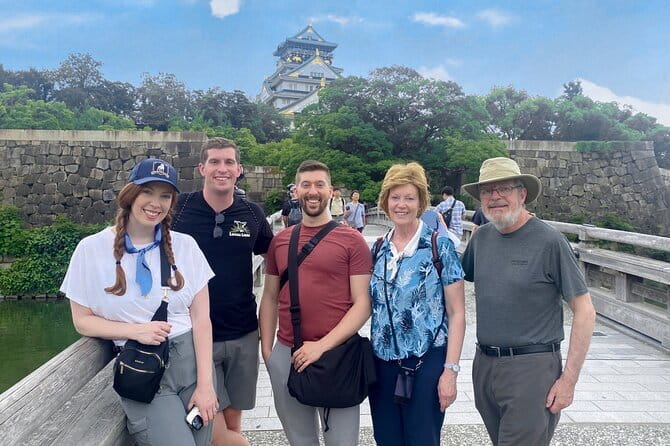
Togetsukyo Bridge is Arashiyama’s signature landmark. The bridge crosses the Katsura River and dates back to the Heian period, from 794 to 1185, though the present structure was most recently rebuilt in the 1930s.
You have about 15 minutes here. That is enough to see the bridge, take in the river setting, and make a few photographs. It is not enough for a long riverside stroll, so keep an eye on the return time.
The Arashiyama Rilakkuma Tea House receives another 15-minute visit. Rilakkuma means bear in a relaxed mood, and the café and shop use that gentle character theme throughout. This is a light, playful break from temples and shrines. You can wander around the shop and get a feel for the setting, but the short timing means you should not count on a full café meal here.
Arashiyama is where the day can feel rushed. The area deserves half a day on its own, especially if you want to browse shops, visit more temples, or walk along the river. On this trip, you get the best-known pieces in compact form. That is valuable for a first pass, but it is not the same as really settling into the district.
Lunch is your own choice
Lunch is not included, but time is provided for independent dining. That arrangement keeps the price down and gives you control over what you eat. It also means you should not expect a group restaurant or a fixed meal.
A longer break can be welcome after the morning’s castle and temple visits. Use it to choose something that fits your budget and pace, then return to the meeting point on time. Guides such as Brian have been praised for offering food suggestions, which can make the break easier in a busy sightseeing area.
The practical point is to budget for lunch separately. The tour price is $67 per person, which is reasonable for a nine-hour vehicle-based outing with a guide, but the two main admission fees and food raise the real cost.
Fushimi Inari ends with red torii gates
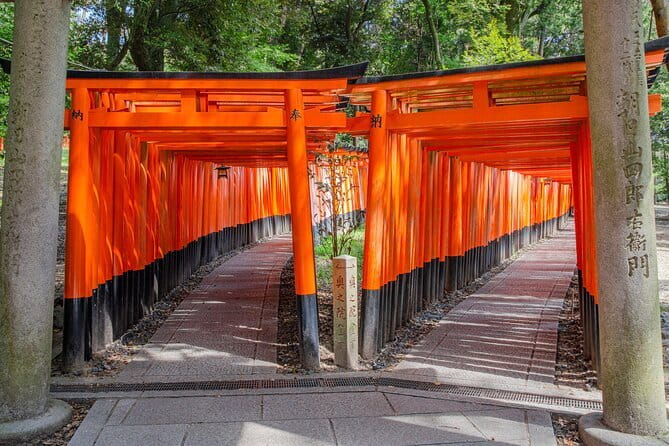
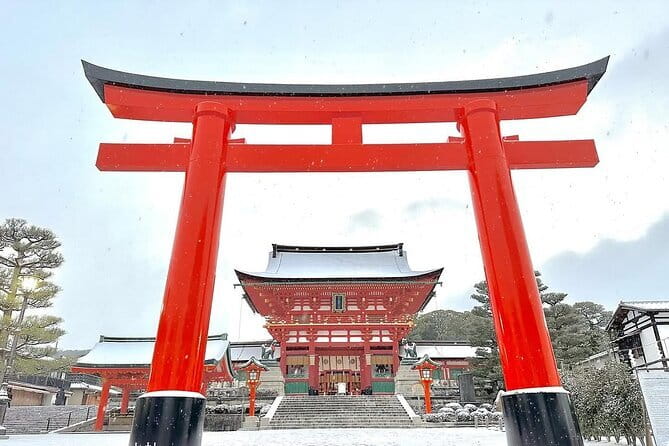
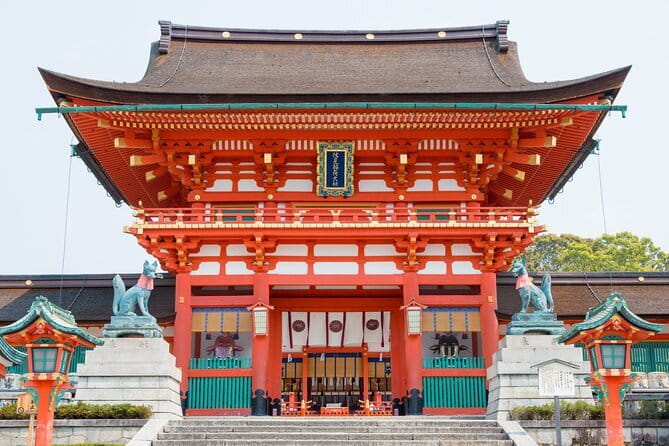
Fushimi Inari Taisha is the final stop, with about one hour and 10 minutes allotted. It is the head shrine of roughly 30,000 Inari shrines in Japan, dedicated to Inari, the Shinto deity associated with rice.
The shrine is famous for Senbon Torii, or the Thousand Torii Gates. Thousands of vermilion gates form covered paths up the wooded slopes behind the main shrine. You can walk through the first section quickly for the classic view, or continue farther if your legs and the clock allow.
This is the stop where clear instructions matter most. The paths can split, and the gate sequence continues well beyond the first photo spot. One guest missed part of the visit after leaving the group midway, so I would stay with the guide’s directions and confirm exactly where and when to meet.
One hour and 10 minutes is enough for a strong introduction, but not for reaching the mountain summit and returning. Wear comfortable shoes and keep your pace realistic. If you want a quiet, extended hike through the gates, visit Fushimi Inari separately on another morning.
Transport, group size, and the pace of the day
The air-conditioned vehicle is a major practical benefit. Kyoto’s sights are spread out, and traveling between them by public transport can take time, especially when you are carrying bags or managing several transfers.
The maximum group size is 45 people. That is large enough to create delays if people lose track of the meeting point, though strong organization can keep the day moving. Some departures may feel smaller, while others may approach the stated maximum. The guide’s directions and your own attention to the clock both matter.
The full day lasts about nine hours. That sounds generous, but the route includes several transfers and nine separate sightseeing points. You will spend much of the day on your feet, getting on and off the vehicle, and switching from one style of attraction to another.
If you use a stroller or carry large luggage, mention it when booking. If you book separately from relatives or friends, tell the provider at least one day ahead so you have a better chance of being assigned to the same vehicle.
What the $67 price really buys you
At $67 per person, this is a solid value if you want transport and structure more than independence. The price includes the air-conditioned vehicle and guide, but not the ¥1,300 Nijo Castle and Ninomaru Palace admission, the ¥500 Kinkaku-ji admission, or lunch.
Your minimum extra cost for the two paid sights is ¥1,800. Add food and the final price rises, but you are still paying for a full day of sightseeing without having to arrange the route yourself.
The value is strongest for a first-time visitor coming from Osaka, a family that wants simple logistics, or anyone who wants to see Kyoto’s famous sights without learning several train and bus connections. The value is weaker if you already know Kyoto well, dislike fixed departure times, or want long visits at fewer places.
Free cancellation is available up to 24 hours before the start time for a full refund. Changes or cancellations inside that 24-hour window are not accepted for a refund.
Who should book this experience
I would choose this trip if you have one day for Kyoto and want the major landmarks checked off efficiently. It suits first-time visitors, people based in Osaka, and anyone who prefers a guide to handle transport and timing.
It also works for guests who appreciate practical help. Several guides have been praised for clear directions, useful explanations, cheerful energy, and keeping people on schedule. If you have motion sickness, contact the tour team ahead of time. Theodore arranged front seats for affected passengers on one departure, though you should not treat that as a guaranteed arrangement.
I would skip it if you want a slow cultural day. Arashiyama alone can fill several hours, and Fushimi Inari rewards a longer walk. Independent visitors who enjoy choosing one temple, one neighborhood, and one meal at their own speed will probably prefer their own plan.
Should you book the Kyoto Top Four Highlights Day Trip?
Book it if your goal is maximum sightseeing in one organized day. The route covers Kyoto’s essential images, from the shogun’s palace and gold pavilion to bamboo paths and red torii gates. At $67 before admissions and lunch, it offers a fair way to handle a complicated day from Osaka or Kyoto.
Do not book it expecting solitude, deep time at each site, or a full Arashiyama experience. The smart way to use this trip is as an introduction. See the major sights, note what deserves a return visit, and let the guide take care of the long distances.
FAQ
How long does the Kyoto day trip last?
The experience lasts approximately nine hours.
Where does the tour depart from?
You can depart from Osaka or Kyoto.
Which major Kyoto sights are included?
The day includes Nijo Castle, Kinkaku-ji, Arashiyama, the Bamboo Forest, Nonomiya Shrine, the Kimono Forest, Togetsukyo Bridge, the Arashiyama Rilakkuma Tea House, and Senbon Torii at Fushimi Inari.
Is transportation included?
Yes. An air-conditioned vehicle is included, along with a guide.
Are Nijo Castle and Kinkaku-ji admission fees included?
No. Nijo Castle and Ninomaru Goten Palace cost ¥1,300 per person, and Kinkaku-ji costs ¥500 per person.
Is lunch included?
No. Lunch is not included, but time is provided for independent dining.
How many people can join the tour?
The maximum group size is 45 travelers.
Can I bring a stroller or large luggage?
You should indicate when booking if you are traveling with a stroller or large luggage.
What is the cancellation policy?
You can cancel up to 24 hours before the experience start time for a full refund. Cancellations or changes made less than 24 hours before the start time are not accepted for a refund.
Just added around Osaka
- Samurai dress-up and shows, plus Tea Ceremony & Calligraphy★ 5.0 · 27 reviews
- Kyoto & Nara Private customized tour with English speaking Guide★ 4.5 · 99 reviews
- Well-balanced BENTO (lunch box) Cooking Class★ 5.0 · 35 reviews
- Urban Canvas: Osaka Street Art Bike Tour★ 5.0 · 47 reviews
- OSAKA:Feel the Power! Learn Taiko Drum from Professionals★ 5.0 · 28 reviews
- Volleyball in Osaka & Kyoto with Locals!★ 5.0 · 21 reviews
- 1.5〜2 Hours Traditional Kintsugi Work Shop in Namba Osaka★ 5.0 · 75 reviews
- Umami Town Street Food Tour★ 5.0 · 120 reviews
1-Day Tours, compared.
Mt Fuji and Hakone 1-Day Bus Tour Return by Bullet Train
Read our review →
Mt Fuji & Hakone Cruise, Drum Show Bullet Train 1 Day from Tokyo
Read our review →
Peaceful Hiroshima & Miyajima UNESCO 1 Day Bus Tour
Read our review →
Hiroshima and Miyajima UNESCO Sites 1-Day Tour
Read our review →
Tokyo Customized Private Tour (Must See Places in 1 Day)
Read our review →
Kamakura & Enoshima Day Trip including Temple Tickets
Read our review →Browse the lists this tour appears in