REVIEW · FULL-DAY
Kyoto Full Day Sightseeing Tour from Osaka or Kyoto
Kyoto packs centuries of Japan into one very busy day. This tour links Nijo Castle, Kinkaku-ji, Fushimi Inari, and Arashiyama without asking you to puzzle out Kyoto’s wide, crowded transport network. It is a smart way to see the city’s headline sights when your time is short.
I like the mix of grand history and simple pleasures: the creaking floors of Nijo Castle, the Golden Pavilion reflected in its pond, and the walk beneath Fushimi Inari’s red gates. I also like having air-conditioned transport and a guide who can help with meeting points, timing, and lunch suggestions. The catch is the pace. Some stops are self-guided, and a large group can make the day feel more like organized transport than a traditional guided tour.
In This Review
- Key points to know before you book
- Four Kyoto highlights without the transport puzzle
- Nijo Castle: shogun power in polished wood
- Arashiyama: bamboo, bridges, and a quick village walk
- The Bamboo Forest
- Nonomiya Shrine
- The Kimono Forest
- Togetsukyo Bridge
- Kinkaku-ji: Kyoto’s Golden Pavilion
- Fushimi Inari: red gates and a choice of walking distance
- How the guide can change your experience
- Lunch, weather, and the physical pace
- Who should book this Kyoto day trip?
- Should you book it?
- FAQ
- How long is the Kyoto sightseeing tour?
- Can I join the tour from Osaka or Kyoto?
- What attractions are included?
- Are entrance fees included?
- Is lunch included?
- How many people can join the tour?
- Can I cancel for a refund?
Key points to know before you book
- Four major Kyoto areas in one day: Nijo Castle, Kinkaku-ji, Fushimi Inari, and Arashiyama cover very different sides of the city.
- About nine hours on the road: The schedule is efficient but packed, with little room for lingering or unexpected delays.
- Air-conditioned transport included: This matters in Kyoto’s summer heat and during rainy weather.
- Entrance fees are extra: Budget ¥1,300 for Nijo Castle and the Ninomaru Palace, plus ¥500 for Kinkaku-ji.
- Guide quality can shape the day: Guides including Jackson, Allan, Theodore, and Saki have received praise for clear communication and useful advice, while some tours have offered only brief explanations before each stop.
- Best for energetic sightseers: You’ll walk, climb, keep track of meeting times, and spend much of the day moving.
Four Kyoto highlights without the transport puzzle
At $67 per person, this is priced as an accessible group day trip rather than a private tour. The fare covers the vehicle and guide, but not lunch or the two paid attractions. Add the listed ¥1,800 in admission fees and your food costs, and you still have a fairly economical way to connect sights that are spread across Kyoto.
The real value is time. On your own, you could visit these places by train and bus, but arranging four separate areas in one day takes planning. Kyoto’s famous sites also draw heavy crowds, so a missed bus or wrong platform can cost you a large part of the afternoon. This tour removes much of that work.
You should understand the tradeoff. A vehicle can bring you close to the city’s main districts, but parking areas are sometimes five to ten minutes from the attractions. Some stops receive only a short introduction at the bus before you explore independently. If your idea of a tour means walking beside a guide through every gate and room, this may not fit.
A few more Osaka trips to weigh up
- Osaka: Minoh, Katsuoji Temple, & Minoh Falls Full-day Tour
★ 4.9 · 172 reviews - Osaka’s Best and Brightest: Private Full-Day Tour by Vehicle
★ 5.0 · 147 reviews - Full Day Tour of Kyoto with Private Transportation
★ 5.0 · 130 reviews
Nijo Castle: shogun power in polished wood
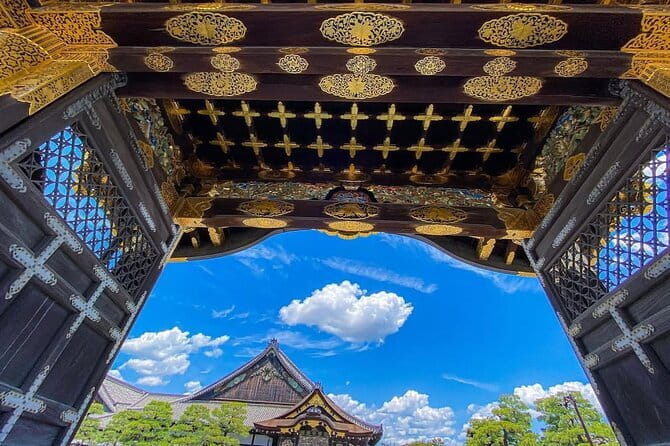
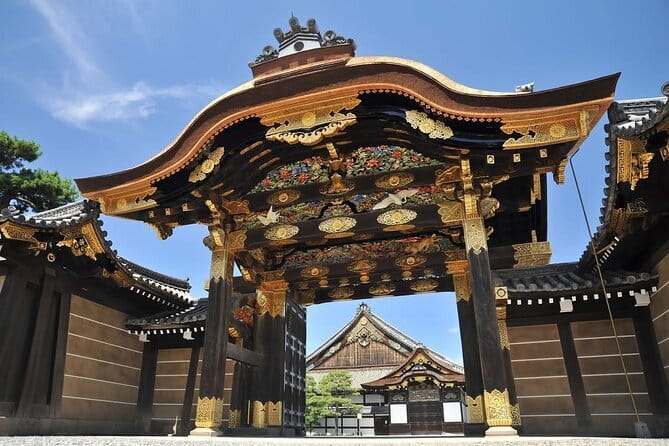
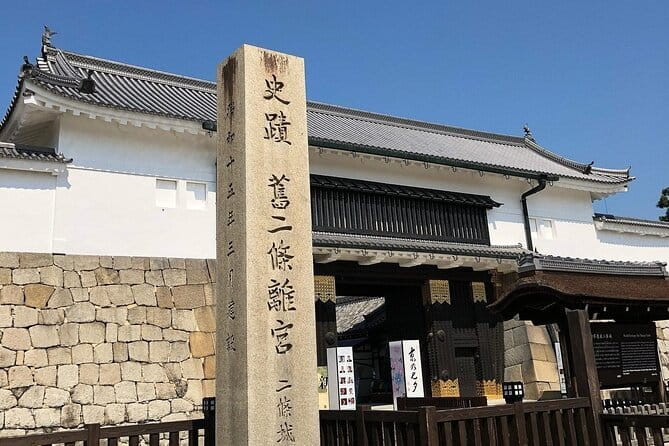
The day begins, or reaches its first major stop, at Nijo Castle, built in 1603 as the Kyoto residence of Tokugawa Ieyasu, the first shogun of the Edo period. The castle is more than an imposing outer wall. Its palace rooms reveal how power worked in feudal Japan.
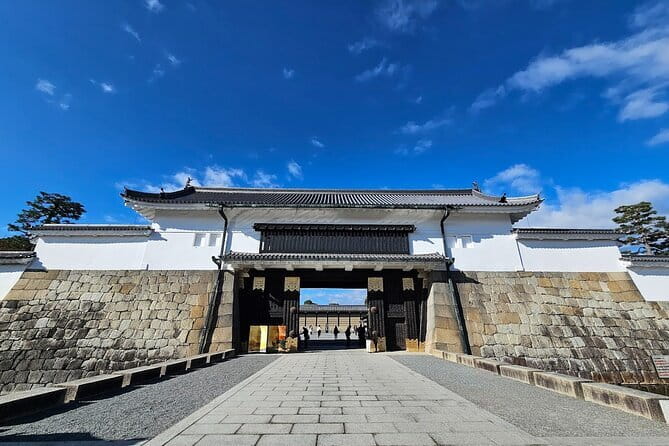
Allow roughly an hour here. The Ninomaru Palace is the main prize, with decorated rooms and famous nightingale floors designed to squeak underfoot. Those sounds helped warn of unwanted visitors. The palace architecture is one of the best surviving examples of its kind from Japan’s feudal era, and the site became a UNESCO World Heritage site in 1994.
The listed admission fee is ¥1,300 per person for Nijo Castle and the Ninomaru Palace. Bring that amount in your sightseeing budget. Because the visit is limited to about an hour, you will need to keep moving through the palace and grounds rather than treating the castle as a slow morning visit.
This is one place where a guide’s explanation can add real value. A short orientation about the shogun, palace protocol, and the meaning of the rooms helps turn beautiful woodwork into a readable piece of Japanese history. If your guide only points you toward the entrance, use the free time to focus on the palace details, painted panels, gardens, and defensive design.
Arashiyama: bamboo, bridges, and a quick village walk
Arashiyama sits in western Kyoto and is one of the city’s most popular areas. The itinerary divides the district into several short visits, which gives you a taste of its key sights but not much time for wandering.
The main Arashiyama area receives about 20 minutes. That is enough to get your bearings, see some of the surrounding streets, and move toward the bamboo grove. It is not enough for a long cafe stop, shopping session, or relaxed walk along the river.
The Bamboo Forest
The Arashiyama Bamboo Forest gets about 40 minutes. Tall bamboo stalks rise on both sides of the path, creating one of Kyoto’s most recognizable views. The grove is beautiful, but its fame means the path can be crowded, especially during holidays and peak sightseeing periods.
The experience is best approached as a short walk, not a silent retreat. You may find a few calmer stretches, but the tour schedule does not give you time to search widely for them. Wear shoes with good grip and keep the group’s meeting instructions close at hand.
Same city, a completely different kind of day:
- Osaka Go Karting Tour with Funny Costume
★ 5.0 · 2,658 reviews - Osaka Castle: Museum and Tower Entry Ticket
★ 4.5 · 2,380 reviews - Osaka: Shinsekai Food Tour with 13-15 Dishes at 5 Eateries
★ 4.8 · 2,204 reviews - Osaka Food Tour: 13 Dishes at 5 Local Eateries
★ 5.0 · 2,149 reviews
Nonomiya Shrine
Nonomiya Shrine receives around 20 minutes. This small Shinto shrine has a distinctive black torii gate, unlike the bright vermilion gates seen at many other shrines. Its location near the bamboo grove makes it an easy addition to the route.
The short stop works well if you want a quick look at a less monumental shrine. You can notice the gate, the compact grounds, and the contrast with the much larger attractions later in the day. Do not expect a long religious or architectural tour unless your guide chooses to provide one.
The Kimono Forest
The Kimono Forest is a modern art installation beside the Arashiyama rail area. It consists of 600 clear acrylic cylinders, each about two meters tall, filled with colorful kimono fabrics. The patterns give you a close look at Japanese textile design in a setting very different from Kyoto’s temples.
You have about 20 minutes here. That is plenty for photographs and a short walk among the pillars. It is also a useful reminder that Kyoto is not only about old buildings. The installation brings traditional fabric patterns into a contemporary public space.
Togetsukyo Bridge
Togetsukyo Bridge is Arashiyama’s best-known landmark. The bridge crosses the Katsura River and dates in original form to the Heian period, from 794 to 1185, though the current bridge was most recently rebuilt in the 1930s.
The stop lasts about 20 minutes. You can cross part of the bridge, take in the river setting, and photograph the surrounding hills. The view changes with the season, but the tour data does not promise a particular seasonal display, so plan to appreciate the river and bridge itself.
Arashiyama is where the schedule may feel most fragmented. You are visiting four nearby sights, yet each short stop requires regrouping. The upside is variety. The downside is that you may leave wishing for another hour in the district.
Kinkaku-ji: Kyoto’s Golden Pavilion
Kinkaku-ji, the Golden Pavilion, is one of Kyoto’s most recognizable temples. Its upper levels are covered in gold leaf, and the building sits beside a pond with gardens arranged around it. The reflection is the classic view, though the exact effect depends on light, weather, and crowds.
The visit lasts about 40 minutes, with a separate ¥500 admission fee. That time is enough to enter, see the pavilion from the main viewing path, and walk through part of the grounds. It is not generous if you want to pause for photographs, read every sign, and explore at a slow pace.
A useful tip is to move beyond the first viewing point when permitted by the flow of visitors. The pavilion itself is the focus, but the garden route gives you changing angles and a better sense of how the temple was designed as a scenic retreat.
This stop has drawn a practical complaint: some people want more time here and less at Fushimi Inari. I understand that view. Kinkaku-ji is compact, visually striking, and paid, so you may want to linger. If this temple is high on your personal list, keep your visit focused and do not spend the whole time waiting for a perfect photograph.
Fushimi Inari: red gates and a choice of walking distance
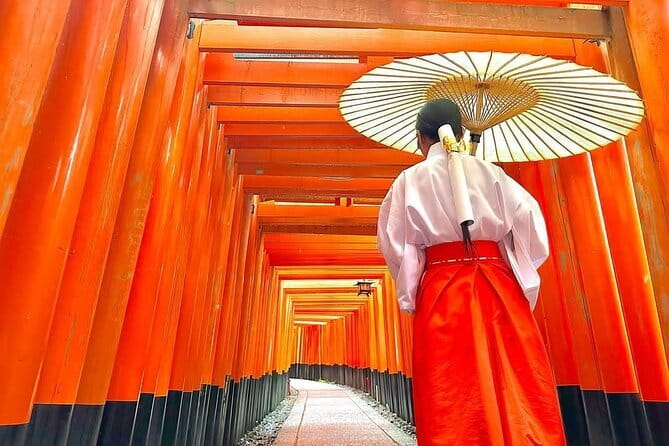
Fushimi Inari Taisha is the head shrine of the roughly 30,000 Inari shrines across Japan. It honors Inari, the Shinto deity associated with rice. The shrine is famous for its Senbon Torii, or thousands of vermilion torii gates, which form tunnels up the wooded mountain.
The tour allows about one hour and ten minutes, the longest single visit of the day. That sounds generous, but Fushimi Inari can easily absorb several hours. The path rises gradually, and the full mountain route is far longer than the section most people see during a quick visit.
Use the time wisely. Walk through the first gate tunnels, then decide how far you want to go before turning back. You do not need to complete the mountain trail to understand the place. The lower section gives you the strongest impression of the dense red gates, while going higher brings fewer people but requires more effort.
This is also the stop where group coordination matters most. The shrine grounds are large and the crowds can be thick. Confirm where the vehicle will wait and what time you must return. One guide, Anson, was praised for responding quickly when someone had trouble finding the bus, but you should still take responsibility for remembering the meeting point.
The area includes steps and uneven surfaces. The tour information says most people can participate, but it is not designed around slow sightseeing. If you have mobility concerns, ask about the walking route before booking and tell the operator about your needs in advance.
How the guide can change your experience

The strongest guide reports describe people who were organized, friendly, and active in helping the group. Jackson was praised for excellent English, timely WhatsApp messages, and clear reminders about the bus. Allan was described as experienced and attentive, while Theodore earned praise for sharing photo spots, restaurant tips, and information throughout the day.
Saki was singled out for clear explanations at the sights. Another guide was praised for keeping the group together in summer heat and offering a shorter option to people who had trouble keeping up. These details matter because the tour has many moving parts.
The experience is less satisfying when the guide gives a few facts on the bus, points toward an entrance, and leaves you to explore alone. Several complaints focus on that gap between a guided sightseeing tour and a transport service. There was also a report of a bus explanation being hard to hear, so a front seat or a working microphone can make a difference.
The operator has acknowledged that not every attraction is guided in the same way. Treat this as a tour with transportation, orientation, and varying levels of commentary. A strong guide can make it feel organized and personal. A weak guide can leave you searching for the entrance and watching the clock.
The maximum group size is 45 people. That is a sizable group for narrow shrine paths and crowded temple grounds. Guides may need to give instructions at the bus and set firm return times. This is not the setting for spontaneous detours.
Lunch, weather, and the physical pace
Lunch is not included. The guide may point out places to eat, but you should not count on a long restaurant break. With several stops and vehicle transfers, keep lunch simple and stay aware of the schedule.
Weather can shape the day sharply. Rain affects the bamboo path, shrine steps, bridge views, and time spent outdoors. Summer heat can make the schedule tiring, especially at Fushimi Inari. Carry water, wear comfortable shoes, and bring rain protection when the forecast calls for it.
The day is listed at about nine hours, though some accounts describe a longer day of roughly eleven hours. Departure and return details can vary by the chosen starting point and the day’s traffic. From Osaka or Kyoto, road conditions and pickup arrangements can add time.
Tell the operator in advance if you have a stroller or large luggage. Also notify the company at least one day ahead if you booked separately from relatives or friends. That helps place your party in the same vehicle.
Who should book this Kyoto day trip?
I would choose this tour if you are staying in Osaka or Kyoto, have only one open day, and want to see the city’s most famous places without planning every connection. It is especially useful for first-time visitors who value coverage over slow exploration.
Families may appreciate the air-conditioned vehicle and the ability to see four major areas in one day. Keep in mind that children still need to manage walking, crowds, and strict meeting times. The same is true for older visitors, particularly at Fushimi Inari.
I would not choose it if you want long temple visits, quiet photography, detailed cultural talks at every stop, or a flexible lunch. A private guide or a slower independent plan would better suit those priorities.
The free cancellation policy gives you some protection if your plans change, as long as you cancel at least 24 hours before the start time. Changes or cancellations inside that window are not accepted for a refund.
Should you book it?
Book this tour if your goal is to collect Kyoto’s major sights in one efficient day. The combination of Nijo Castle, Arashiyama, Kinkaku-ji, and Fushimi Inari is excellent, and the included transport is useful at $67 before admissions and lunch.
Go in with the right expectations. You are buying a packed group outing, not a private cultural walk. The best guides, including Jackson, Allan, Theodore, and Saki, can add useful context and keep the day running smoothly. The weaker version may feel like a bus ride between self-guided stops.
Wear good shoes, budget the extra ¥1,800 for admissions, keep your phone charged, and listen carefully for the return time. If seeing a lot matters more than lingering, this is a sensible Kyoto shortcut.
FAQ
How long is the Kyoto sightseeing tour?
The tour lasts approximately nine hours. Some experiences can run longer because of traffic, group movement, and the number of stops.
Can I join the tour from Osaka or Kyoto?
Yes. The experience offers departures from Osaka or Kyoto.
What attractions are included?
The route includes Nijo Castle, Arashiyama, the Arashiyama Bamboo Forest, Nonomiya Shrine, the Arashiyama Kimono Forest, Togetsukyo Bridge, Kinkaku-ji, and Fushimi Inari Taisha.
Are entrance fees included?
No. Nijo Castle and the Ninomaru Palace cost ¥1,300 per person, and Kinkaku-ji costs ¥500 per person. These fees are paid separately.
Is lunch included?
No. Lunch is not included in the tour price.
How many people can join the tour?
The maximum group size is 45 people.
Can I cancel for a refund?
You can cancel at least 24 hours before the experience start time for a full refund. Cancellations and changes made less than 24 hours ahead are not accepted for a refund.
Just added around Osaka
- Samurai dress-up and shows, plus Tea Ceremony & Calligraphy★ 5.0 · 27 reviews
- Kyoto & Nara Private customized tour with English speaking Guide★ 4.5 · 99 reviews
- Well-balanced BENTO (lunch box) Cooking Class★ 5.0 · 35 reviews
- Urban Canvas: Osaka Street Art Bike Tour★ 5.0 · 47 reviews
- OSAKA:Feel the Power! Learn Taiko Drum from Professionals★ 5.0 · 28 reviews
- Volleyball in Osaka & Kyoto with Locals!★ 5.0 · 21 reviews
- 1.5〜2 Hours Traditional Kintsugi Work Shop in Namba Osaka★ 5.0 · 75 reviews
- Umami Town Street Food Tour★ 5.0 · 120 reviews
Full-Day, compared.
Mount Fuji Full-Day Private Tour from Tokyo (Customizable)
Read our review →
Hiroshima / Miyajima Full-day Private Tour with Government Licensed Guide
Read our review →

5 Top Highlights of Kyoto Full Day Bike Tour (E-bike option)
Read our review →
Full Day Biking Tour Exploring the Best of Kyoto
Read our review →