REVIEW · FULL-DAY
Osaka’s Best and Brightest: Private Full-Day Tour by Vehicle
Osaka’s best feature is its mix of grand history and cheerful oddness, and this private day links both sides of the city. You’ll walk the grounds of Osaka Castle, browse Kuromon Market, ride up Abeno Harukas, and finish among the neon signs of Dotonbori. I like the private vehicle and the flexible route, especially when your group includes children, older adults, or anyone tired of train stations.
I also like that guides such as Thomas, Hugo, Kevin, Ferdinand, Lito, and Levy are praised for clear English, local restaurant advice, photos, and easy conversation. The main drawback is the price if you have only two people, and the day can feel too history-focused if you do not explain your interests before setting off.
In This Review
- Key points to know before booking
- What this private Osaka day is really like
- Osaka Castle begins the day with a grand view
- Shitennoji offers a calmer side of Osaka
- Shinsekai shows Osaka’s playful personality
- Tennoji, lunch, and Abeno Harukas
- Kuromon Market is the quick food stop
- Dotonbori finishes with neon and side streets
- The guides shape the day more than the vehicle
- Is $600 a fair price for up to six?
- Walking, children, and practical planning
- Who should book this Osaka tour?
- Should you book Osaka’s Best and Brightest?
- FAQ
- How long does the Osaka private vehicle tour last?
- What places are included?
- Is lunch included in the tour price?
- Is hotel pickup available?
- Is the tour private?
- Do children need a car seat?
Key points to know before booking
- A full Osaka sampler in 7.5 hours: Visit major landmarks, old neighborhoods, markets, and modern shopping districts in one day.
- Your guide is also your driver: A private vehicle cuts out transfers and makes hotel pickup much easier than using several trains.
- The route can change: The model course may be adjusted for your interests, walking ability, traffic, and available time.
- Lunch is local and flexible: Food is not included, but guides can suggest a place in the Tennoji area or near their own neighborhood.
- Expect some walking: The vehicle helps between districts, but this is not a sit-in-the-car tour.
- Best for small groups: The $600 price covers up to six people, so the value improves with a family or group of friends.
What this private Osaka day is really like
This is a sightseeing shortcut, but not a rushed one. The schedule covers six major stops, with driving time linking Osaka’s spread-out districts. You get a guide who handles navigation and translation while explaining what you are seeing.
The private format matters here. Osaka’s train system is excellent, but changing lines, finding the right exit, and moving a family through crowded stations can eat up a surprising amount of time. A vehicle lets you spend more of your day at the sights themselves.
The tour runs about 7 hours and 30 minutes, and pickup is offered in central Osaka, within or along the JR Loop Line area. Pickup farther out costs extra. The guide drives, so you are not hiring a separate chauffeur and lecturer.
The route is a model rather than a fixed contract. You can ask for more or less walking, and the guide may adjust the order or timing. Traffic can also force changes. This flexibility is useful, but I would tell the company and guide before the day begins if your group wants food, shopping, photography, or history to receive special attention.
A few more Osaka trips to weigh up
- Osaka: Minoh, Katsuoji Temple, & Minoh Falls Full-day Tour
★ 4.9 · 172 reviews - Full Day Tour of Kyoto with Private Transportation
★ 5.0 · 130 reviews - Full Day Hiroshima and Miyajima Tour by Bullet Train from Osaka
★ 4.5 · 117 reviews
Osaka Castle begins the day with a grand view
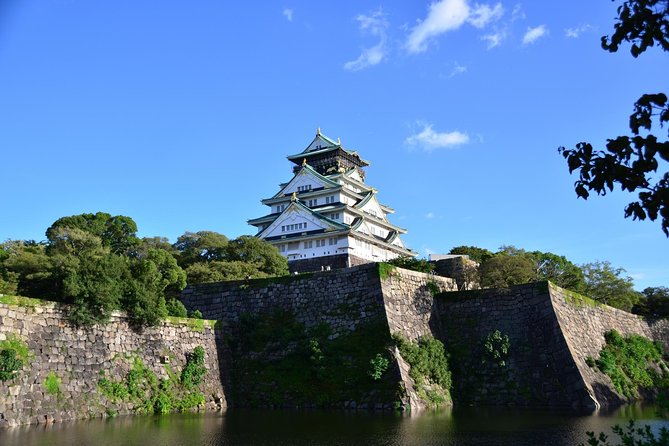
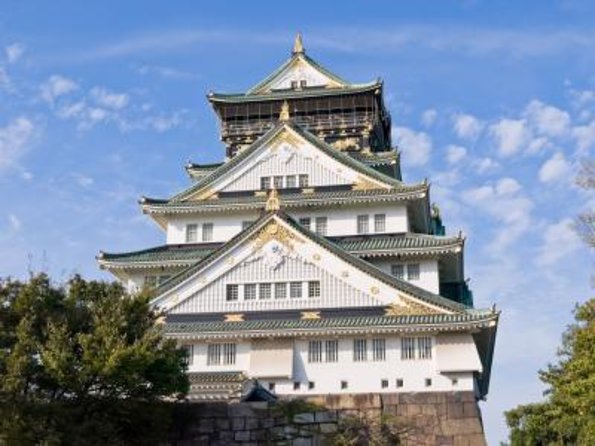
Osaka Castle is the obvious opening stop, and it earns its place. The grounds provide a strong first look at Osaka’s scale, with broad paths, stone walls, and the castle tower as the visual anchor.
You have about one hour here. The tour description emphasizes the grounds and the stories connected with the castle, rather than promising a long museum visit inside. That makes the stop a good fit if you want the landmark, photographs, and historical context without spending half the day indoors.
The castle is tied to major chapters in Japan’s political past, and a good guide can make the site more than a pretty tower. Thomas, Hugo, Ferdinand, and the other guides are described as offering background on Japanese history and culture in clear English.
Allow for walking at this first stop. One family found that the castle portion left some members with tired legs, and their guide adjusted the rest of the day. That is a useful reminder to speak up early. You do not need to prove anything to Osaka. Ask for a slower pace, shorter walks, or more vehicle time if needed.
Admission fees are included, though the published stop itself lists no separate admission charge. The main cost here is your time and energy.
Shitennoji offers a calmer side of Osaka
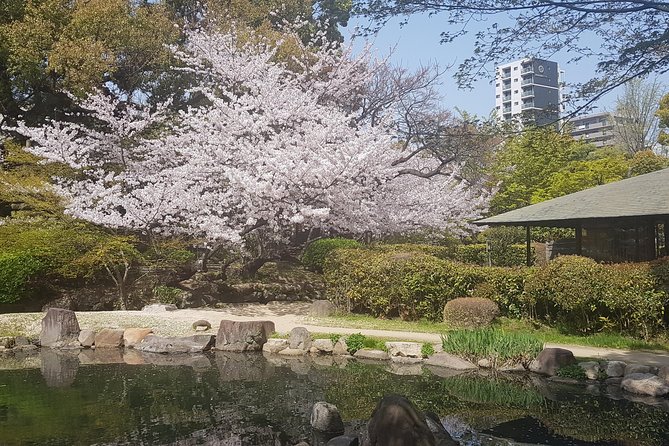
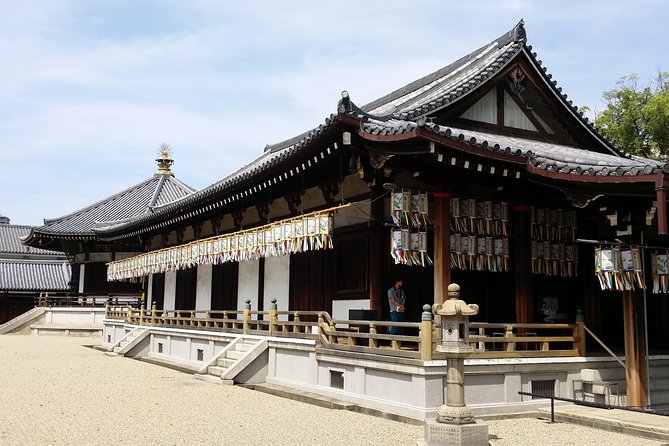
After the castle, the tour moves to Shitennoji for about 45 minutes. This Buddhist temple is described as one of the oldest in Japan, and its grounds give you a quieter change of mood after the castle’s broad public spaces.
The value of Shitennoji is not only the age of the site. It shows you a religious side of Osaka that can be missed if you focus only on shopping streets and neon. You can stroll, listen to an explanation of the temple’s place in Japanese Buddhism, and enjoy a pause in the day.
The stop is short, so do not expect an exhaustive temple visit. It works best as a focused introduction. One of the strongest features of this tour is the way a guide can explain how a place fits into the larger story of Osaka, rather than leaving you to guess what you are looking at.
If you prefer peaceful places, tell your guide. One successful route described a temple visit as secluded and calm even within the city. The exact temple sequence can vary, but the message is clear: the day does not have to be all crowds and city noise.
Shinsekai shows Osaka’s playful personality
The 30-minute stop in Shinsekai is brief, but it may be one of the most memorable. This neighborhood is known for games, food, colorful fashion, and a wonderfully unconventional atmosphere. It feels less polished than the city’s grand shopping zones, which is exactly the point.
You are not coming here for a formal historical tour. Shinsekai is about street character and everyday entertainment. It gives your guide room to explain local habits, neighborhood life, and the particular Osaka sense of humor.
Thirty minutes is enough for an introduction, a few photographs, and a look around. It is not enough for a long meal or a detailed exploration of every side street. If Shinsekai is a priority, ask whether you can trade time from another stop.
This is also where the guide’s personality matters most. The day works better when the person in front of you can tell a lively story, answer odd questions, and keep the mood light. Lito is repeatedly described as engaging and interactive, while Kevin is praised for being fun to spend a day with. Those qualities are especially useful in a neighborhood that is more about atmosphere than monuments.
Same city, a completely different kind of day:
- Osaka Go Karting Tour with Funny Costume
★ 5.0 · 2,658 reviews - Osaka Castle: Museum and Tower Entry Ticket
★ 4.5 · 2,380 reviews - Osaka: Shinsekai Food Tour with 13-15 Dishes at 5 Eateries
★ 4.8 · 2,204 reviews - Osaka Food Tour: 13 Dishes at 5 Local Eateries
★ 5.0 · 2,149 reviews
Tennoji, lunch, and Abeno Harukas
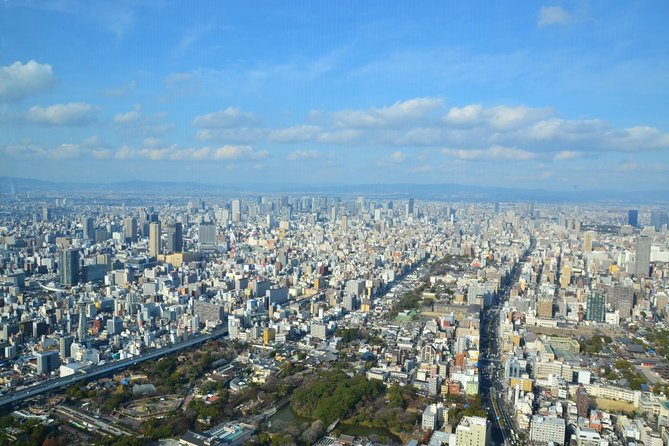
The longest scheduled stop is in the Tennoji area, with about 1 hour and 40 minutes for lunch and Abeno Harukas. This is smart planning. By this point, you have seen stone walls, a temple, and an old entertainment district. A meal and a high view provide a natural reset.
Food and drinks are not included, so budget separately for lunch. The guide can take you to a place that suits your preferences, and several accounts praise local restaurants chosen by guides such as Kevin, Hugo, Thomas, and Levy. One particularly useful pattern is the neighborhood restaurant: instead of treating lunch as dead time in a generic food court, the guide may introduce you to a place connected to local life.
Still, be specific. If you want udon, sushi, soba, or a family-friendly restaurant, say so before the tour. One dissatisfied party expected a dedicated udon stop and instead found food-court options. That mismatch could likely have been avoided with clearer planning, but it also shows why food requests should be made in advance.
Abeno Harukas gives you the modern Osaka view. At 300 meters, it is described as Japan’s tallest non-tower building. The observation experience provides a high look over the city and a sharp contrast with Shitennoji and Shinsekai below.
The stop can also include shopping. One visitor specifically enjoyed Harukas as a shopping destination. If your group wants retail time, tell the guide, since 1 hour and 40 minutes must cover both lunch and the building.
Kuromon Market is the quick food stop
Kuromon Market receives about 25 minutes. That is enough to look, smell, photograph, and perhaps buy something, but it is not a relaxed market lunch.
The market is packed with visual temptations: fish, meat, fruit, and many people moving through the same narrow commercial space. I would treat this as a preview rather than your main food experience. If you want to stop for several tastings, ask the guide how to use the available time and expect to keep moving.
This short visit works because it connects naturally with the final Dotonbori stop. You see Osaka’s food culture in a market setting, then head toward one of the city’s most famous entertainment districts. The two stops together help explain why Osaka is so strongly associated with eating, shopping, and bright public life.
Bring patience rather than a rigid shopping list. Market conditions and traffic affect timing, and the guide may need to keep the group on schedule.
Dotonbori finishes with neon and side streets
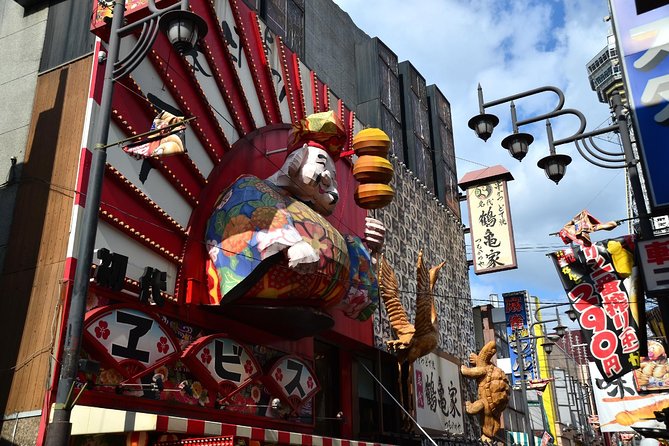
The final scheduled stop is about one hour in the Dotonbori district. Most people want the famous Running Man sign, but the district offers more than one famous photograph.
The guide may show you back streets, the kitchenware district, and other places based on your interests. That is a major advantage over simply arriving at the canal, taking a picture, and leaving. Ask for the areas that match your group: food, shopping, photography, local streets, or Osaka’s famous signs.
Dotonbori can be crowded and noisy, especially around its best-known signs. The vehicle gets you close to the district, but you will walk once you arrive. Keep your group together and expect the pace to slow around popular photo spots.
An hour gives you a good introduction, but not enough time to eat your way through the neighborhood. If you want dinner in Dotonbori, arrange it after the tour or ask whether the schedule can be adjusted. The tour includes no food, and its listed duration does not promise an evening meal.
The guides shape the day more than the vehicle
The vehicle solves a practical problem, but the guide determines the tone. The named guides associated with this experience include Thomas, Hugo, Kevin, Ferdinand, Lito, and Levy. Each is described as fluent in English and able to explain local history and culture.
Thomas is praised for being social, attentive to comfort, and good at choosing a local lunch. Hugo is often singled out for clear explanations, cultural comparisons, and knowledge of less crowded places. Kevin receives particular credit for combining history with anecdotes, helping with children and photographs, and adapting the schedule.
Ferdinand is described as flexible when tired legs required a change of plan. Lito brings an interactive style, while Levy is noted for adjusting the route and finding a strong local lunch. These details suggest a team with different personalities rather than one standardized presentation.
That variation is worth considering. A person who wants a lively, personal day may connect strongly with one guide and less with another. If you have a specific goal, tell the operator in advance and repeat it at pickup. Do not assume the guide will know that your family wants food over history, shopping over temples, or quiet streets over major sights.
Is $600 a fair price for up to six?
The cost is $600 per group, up to six people. For six, that works out to $100 per person before lunch. For four, it is $150 each. For two, it becomes $300 each, so the value depends heavily on your group size and how much you value time saved.
The price includes the private vehicle, related vehicle fees, an English-speaking professional guide who drives, and admission fees. Food and drinks are extra. A child seat costs 1,000 yen per booking and must be requested in advance when required.
I see the strongest value for families and small groups with one full day in Osaka. You avoid paying separately for several taxis, reduce the strain of navigating train stations, and can move directly between districts. You also get translation and context at the sights.
The value is weaker if you enjoy public transport, already know Osaka well, or want to spend a whole day in just one neighborhood. It is also less compelling for two people on a tight budget. In that case, compare the cost with regular trains and a shorter guided visit.
Walking, children, and practical planning
The tour requires moderate physical fitness, though the amount of walking can be adjusted. You will walk around Osaka Castle, Shitennoji, Shinsekai, Kuromon Market, and Dotonbori. The vehicle helps with distance, not with every step.
Families should take the car-seat rule seriously. Children under six, or children shorter than 140 centimeters, must use car seats under Japanese law. Request the seat before the tour, and pay the 1,000-yen fee on the day.
Hotel pickup is offered in central Osaka, within or along the JR Loop Line. Pickup outside that area costs extra. Confirm your exact address before booking so the additional fee does not surprise you.
The tour is private, meaning only your group participates. That gives you more control than a shared coach tour, but you still need to communicate. Mention mobility needs, food preferences, children’s ages, and must-see places before departure.
Free cancellation is available if you cancel at least 24 hours before the start time. Changes or cancellations inside that window are not accepted for a refund.
Who should book this Osaka tour?
I would choose this experience if you have one full day, want to cover several parts of Osaka, and do not want to build a route around train connections. It is especially useful for families, multigenerational groups, and first-time visitors who want both major sights and local neighborhoods.
It also suits people who value conversation. The best parts are not only the castle or the skyline. They are the explanations between stops, the local lunch suggestion, the ability to ask questions, and the chance to change the pace when your group runs out of energy.
I would hesitate if you want a highly specialized food tour, a slow museum day, or a guaranteed list of personal requests without advance planning. The model route is broad, and some stops are short. This is a strong overview of Osaka, not a deep visit to every site.
Should you book Osaka’s Best and Brightest?
Book it if the $600 group price works for your party and you want a comfortable, efficient introduction to Osaka. The combination of private transport, English guidance, flexible pacing, and six very different districts gives you a useful first picture of the city.
Before paying, send your priorities clearly. Ask for the guide’s name if available, request any child seat, explain your walking limits, and specify your lunch wishes. Do that, and the tour has a good chance of feeling personal rather than simply busy.
FAQ
How long does the Osaka private vehicle tour last?
The experience lasts approximately 7 hours and 30 minutes. Traffic and other outside factors may affect the timing and order of stops.
What places are included?
The model course includes Osaka Castle, Shitennoji, Shinsekai, Abeno Harukas, Kuromon Market, and the Dotonbori district.
Is lunch included in the tour price?
No. Food and drinks are not included. The guide can take you to a lunch place in the Tennoji area or suggest a restaurant that suits your preferences.
Is hotel pickup available?
Yes. Pickup is offered in central Osaka within or along the JR Loop Line. Pickup outside that area requires an additional fee.
Is the tour private?
Yes. Only your own group participates, with up to six people covered by the group price.
Do children need a car seat?
Under Japanese law, children under six years old or shorter than 140 centimeters must use a car seat. You must request one in advance, and the fee is 1,000 yen per booking, payable on the day.
Just added around Osaka
- Samurai dress-up and shows, plus Tea Ceremony & Calligraphy★ 5.0 · 27 reviews
- Kyoto & Nara Private customized tour with English speaking Guide★ 4.5 · 99 reviews
- Well-balanced BENTO (lunch box) Cooking Class★ 5.0 · 35 reviews
- Urban Canvas: Osaka Street Art Bike Tour★ 5.0 · 47 reviews
- OSAKA:Feel the Power! Learn Taiko Drum from Professionals★ 5.0 · 28 reviews
- Volleyball in Osaka & Kyoto with Locals!★ 5.0 · 21 reviews
- 1.5〜2 Hours Traditional Kintsugi Work Shop in Namba Osaka★ 5.0 · 75 reviews
- Umami Town Street Food Tour★ 5.0 · 120 reviews
Full-Day, compared.
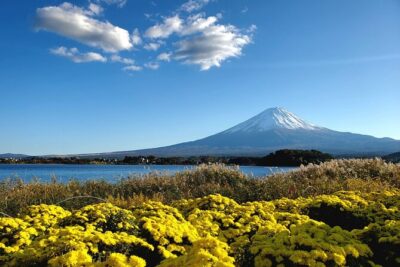
Mount Fuji Full-Day Private Tour from Tokyo (Customizable)
Read our review →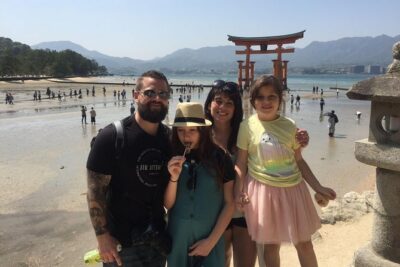
Hiroshima / Miyajima Full-day Private Tour with Government Licensed Guide
Read our review →
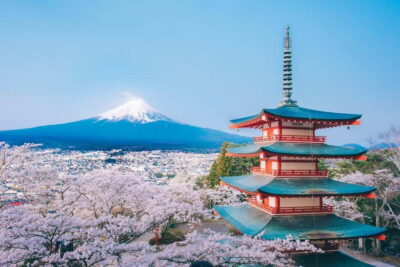

5 Top Highlights of Kyoto Full Day Bike Tour (E-bike option)
Read our review →
Full Day Biking Tour Exploring the Best of Kyoto
Read our review →