REVIEW · FULL-DAY
Full Day Tour of Kyoto with Private Transportation
Kyoto packs centuries of temples, shrines, old streets, and gardens into a surprisingly compact city, but its top sights are spread far apart. This private full-day tour gives you a comfortable vehicle, an English-speaking guide, and a practical way to cover Kiyomizu-dera, Kinkaku-ji, Arashiyama, and Fushimi Inari in one long day. Guides such as Ben, Christine, Lewis, and Somei are noted for adjusting the pace and finding good photo spots.
I like the door-to-door transport, especially if you are staying in Osaka, traveling with children, or returning to a cruise port on a strict schedule. I also like the flexibility: guides have helped arrange halal, vegan, sushi, ramen, and other meals, modified the plan for young children, and adjusted the route when someone became ill.
The tradeoff is simple: this is a lot of Kyoto in one day. The drive from Osaka can be long, crowds can be heavy, and the remaining hours are used for travel between stops. You will see the major sights, but you will not have time to linger at every temple.
In This Review
- Key Things to Know Before You Book
- Why Private Transportation Matters on a Kyoto Day Trip
- Kiyomizu-dera and the View Over Kyoto
- Sannenzaka and Ninenzaka, Kyoto’s Old Shopping Lanes
- Kinkaku-ji, the Golden Pavilion
- Arashiyama, Bamboo, and the Katsura River
- The Kimono Forest and a Short Arashiyama Photo Stop
- Fushimi Inari’s Red Torii Gates
- How Guides Shape the Day
- Price, Time, and Overall Value
- Who Should Book This Kyoto Tour
- Final Call: A Strong One-Day Kyoto Introduction
- FAQ
- How long does the Kyoto tour last?
- Where does pickup take place?
- Is transportation private?
- Which attractions are included?
- Are temple admission fees included?
- Is lunch included?
- Is the tour suitable for children?
- Is the tour accessible for people with limited mobility?
- What is the cancellation policy?
Key Things to Know Before You Book
- Six major Kyoto sights in one day: Kiyomizu-dera, Ninenzaka and Sannenzaka, Kinkaku-ji, Arashiyama, the Kimono Forest, and Fushimi Inari.
- Private transportation from Osaka or Kyoto: Fuel, parking, and travel time to and from the destinations are included.
- English-speaking guides with flexible styles: Ben, Christine, Lewis, Somei, Nozo, and others have led this experience.
- Good for families and larger groups: The tour can accommodate private groups, including one reported group of eight adults and two small children.
- Temple admissions are partly covered: Entry to Kiyomizu-dera and Kinkaku-ji is included, while lunch and personal spending are not.
- Moderate fitness is needed: Expect walking on stone lanes, temple grounds, shrine paths, and crowded pedestrian areas.
Why Private Transportation Matters on a Kyoto Day Trip
Kyoto’s famous sights do not line up neatly along one train or subway route. Kiyomizu-dera is in the eastern hills, Kinkaku-ji is in the northwest, Arashiyama is farther west, and Fushimi Inari is south of the central city. Public transport can handle these places, but changing trains and buses takes time and energy.
Here, your driver handles the long connections while your guide handles the sightseeing. That matters most when you are starting in Osaka, where the journey to Kyoto uses part of the day before you even reach the first temple. It also helps if you are traveling with older relatives, small children, or a group that would rather not spend the day studying transit maps.
The vehicles described in the experience are comfortable vans, with one family noting reclining seats and air conditioning. Parking fees and fuel charges are included, so you are not constantly watching for extra transport costs. The guide and driver may be separate people, allowing the guide to focus on explanations and photos while someone else deals with traffic.
The private format also means only your group participates. You do not need to match the pace of strangers or wait for a large tour group to gather. Guides have adjusted departure times, shortened the day when someone had a migraine, and made a detour so children could return to an accommodation for a nap.
A few more Osaka trips to weigh up
- Osaka: Minoh, Katsuoji Temple, & Minoh Falls Full-day Tour
★ 4.9 · 172 reviews - Osaka’s Best and Brightest: Private Full-Day Tour by Vehicle
★ 5.0 · 147 reviews - Full Day Hiroshima and Miyajima Tour by Bullet Train from Osaka
★ 4.5 · 117 reviews
Kiyomizu-dera and the View Over Kyoto
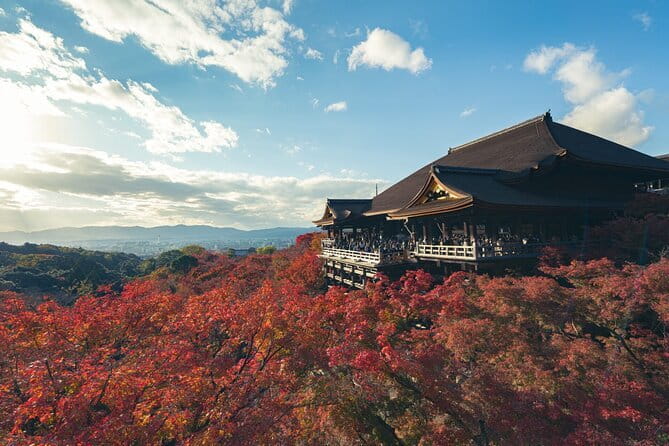
Kiyomizu-dera is a strong opening stop because it gives you both a major temple and a broad view over Kyoto. Its best-known feature is the wooden stage projecting from the hillside. From here, you can look across the city and down toward trees that turn especially attractive during cherry blossom and autumn foliage seasons.
You have about two hours here, with admission included. That is enough time to see the main temple area, take in the view, and walk through the surrounding streets without treating the visit as a quick photo stop.
This is also one of the more physically demanding parts of the day. The temple sits on a hillside, and the approach includes walking through busy areas. Wear shoes that are comfortable on slopes and stone paving. The tour requires a moderate level of fitness, and Kyoto’s crowds can make short walks feel slower than expected.
A guide adds useful context here. Ben, Christine, Lewis, and the other guides are described as explaining the importance of each site in clear English, rather than simply leading you from gate to gate. Several guides are also good at finding photo positions, which can be helpful when the most obvious viewpoint is crowded.
Sannenzaka and Ninenzaka, Kyoto’s Old Shopping Lanes
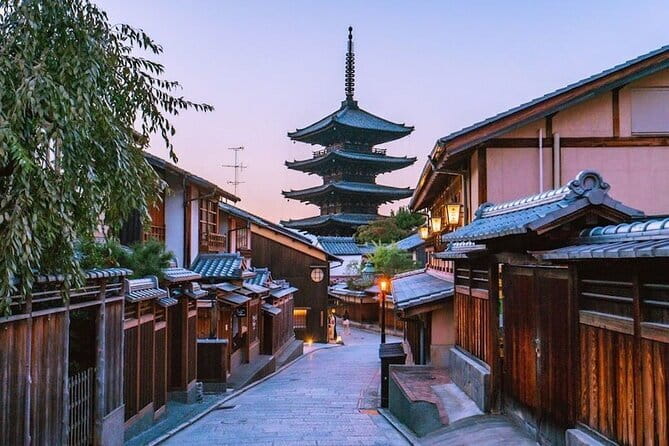
After the temple, you walk through Sannenzaka and Ninenzaka for about an hour. These stone-paved lanes are lined with traditional wooden buildings, shops, teahouses, and small places selling local food and souvenirs. The route leads toward Yasaka Pagoda and gives you a feel for old Kyoto street design.
This is one of the best parts of the day for slowing down slightly. The temples can feel grand and formal, while these lanes let you notice smaller details: shop fronts, tiled roofs, sweets, crafts, and the steady flow of people in traditional dress.
The drawback is crowding. The lanes are popular and not especially wide, so you should not expect a quiet stroll. Your guide can help you move through the area efficiently, but you will still share the streets with many other people.
If shopping matters to you, tell your guide early. The planned hour gives you some time to browse, but it is not a long shopping session. A guide may also point out places that suit your interests, as Somei did for visitors seeking local spots and Christine did for a group interested in ceramic shops.
Kinkaku-ji, the Golden Pavilion
Kinkaku-ji, also called the Golden Pavilion, is one of Kyoto’s most recognizable sights. The gold-leaf-covered building sits beside a pond, where its reflection creates the classic view most people expect. The setting is carefully composed, so even a short visit can feel rewarding.
You have about one hour here, and the 500-yen admission is included. That keeps the stop simple, but you should know that this is mainly a viewing route rather than an open-ended temple visit. You follow the grounds, pause at the best viewpoints, and continue with the group.
Kinkaku-ji is especially valuable for first-time visitors who want Kyoto’s most famous images in a single day. It is also a place where timing matters. The pavilion can be crowded, and the paths around the pond may slow down. Your guide can help you use the available hour well, though no private vehicle can remove the crowds once you are on foot.
Same city, a completely different kind of day:
- Osaka Go Karting Tour with Funny Costume
★ 5.0 · 2,658 reviews - Osaka Castle: Museum and Tower Entry Ticket
★ 4.5 · 2,380 reviews - Osaka: Shinsekai Food Tour with 13-15 Dishes at 5 Eateries
★ 4.8 · 2,204 reviews - Osaka Food Tour: 13 Dishes at 5 Local Eateries
★ 5.0 · 2,149 reviews
Arashiyama, Bamboo, and the Katsura River
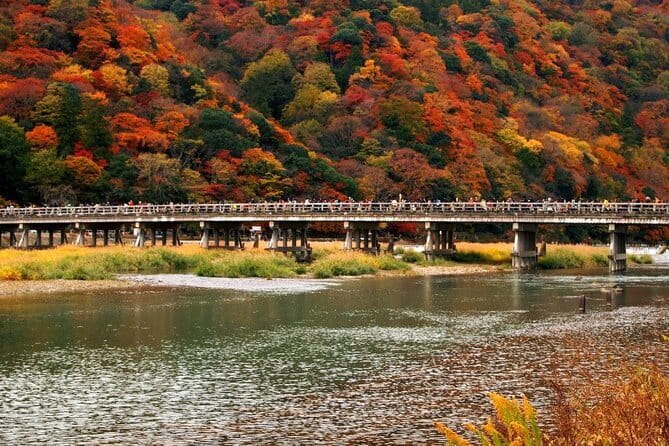
Arashiyama receives about two hours, making it one of the fuller stops. The main draw is the Bamboo Grove, where tall bamboo stalks form a narrow green corridor. The effect is unusual and photogenic, but the path is popular, so do not picture an empty forest walk.
Nearby, you can reach the Togetsukyo Bridge over the Katsura River. The bridge and riverbank bring a different mood from the bamboo path, with open views and seasonal trees. Cherry blossoms and autumn color can add a lot to this stop, though the experience naturally changes with the season.
The amount of walking here depends on how your guide organizes the visit and what your group wants to see. Some groups may focus on the bamboo, bridge, and nearby streets. Others may spend more time taking pictures or browsing. Make your priorities clear, especially if you want a slower walk or have young children.
The Arashiyama stop is also where the tour can feel most rushed if traffic has delayed the morning. You may need to choose between extended shopping, longer photography time, and a leisurely meal. That is not a flaw unique to this tour. It is the basic challenge of seeing eastern Kyoto, northern Kyoto, western Kyoto, and southern Kyoto in one day.
The Kimono Forest and a Short Arashiyama Photo Stop
The Kimono Forest takes about 30 minutes. This outdoor art installation uses more than 600 cylindrical pillars wrapped in colorful kimono fabrics. The pillars are lit and arranged along the area near Arashiyama’s station, creating an easy, low-effort stop between larger attractions.
I see this as a pleasant visual break rather than a major cultural site. It requires no admission fee and does not demand the walking time of a temple or shrine. It is a good place for photographs, especially if your group enjoys patterns and color.
Because the stop is brief, it can also be the first item to trim if your group needs more time elsewhere. Families with tired children may prefer to keep moving, while photographers or visitors interested in Japanese textiles may want to linger.
The nearby bridge area is part of the Arashiyama experience as well. Its location by the Katsura River connects the natural setting with the area’s cultural sights, giving you a wider picture of why Arashiyama is more than just a bamboo path.
Fushimi Inari’s Red Torii Gates

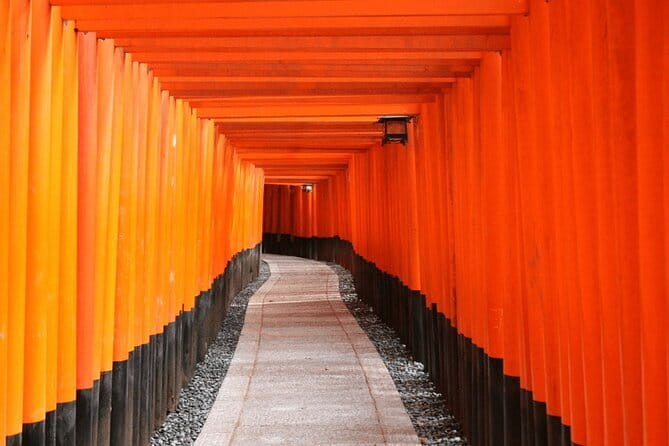
Fushimi Inari-taisha is the day’s major shrine stop. It is famous for thousands of red torii gates that climb Mount Inari, forming a long, atmospheric path through the wooded hillside.
You have about an hour here, which is enough to enter the shrine grounds and walk through a section of the gates. It is not enough to complete the full mountain route, so set your expectations correctly. Your guide can help you choose how far to go based on your energy and the time remaining.
This stop can be particularly striking late in the day, but it can also be crowded. The first section of the torii path is usually the busiest part of the experience. Walking farther may offer a calmer stretch, but it also means more uphill effort, and the tour has to protect the return schedule.
Fushimi Inari gives the day a different religious and visual character from the Buddhist temples. Kiyomizu-dera and Kinkaku-ji focus on temple architecture and grounds, while Fushimi Inari centers on Shinto gates, mountain paths, and worship. That contrast makes the itinerary feel broader than a simple temple circuit.
How Guides Shape the Day
The guide is the biggest variable in a private tour. Names associated with this experience include Ben, also called Yujiro, Christine, Lewis, Somei, Nozo, and Caroline. The strongest pattern is not a single fixed personality. It is the ability to adapt the day to the people in the vehicle.
Ben is described as friendly, energetic, strong in English, and good at explaining Japanese culture and history. He has also helped with local food, photography, unusual souvenirs, and dietary preferences. Christine is noted for careful planning, clear communication, family support, port pickups, and quick itinerary changes. Lewis is described as calm, organized, and good at selecting restaurants and keeping shore excursions on schedule.
Those details matter because this is not a self-guided transfer service. You are paying for someone to help you decide where to spend limited time. Tell the guide what matters most: temples, photographs, shopping, food, children’s interests, ceramics, sake, or avoiding long walks.
Food is not included, but the guides can help you choose a place. Past arrangements have included ramen, sushi, wagyu beef, halal meals, vegan food, and restaurants suited to allergy concerns. Dietary requests should be discussed before or at the start of the day so the plan remains practical.
Price, Time, and Overall Value
The listed price is $247.92 per person. That is not a budget Kyoto excursion, especially if you are traveling alone or as a couple. The value improves as your private group grows because you are paying for a vehicle, guide, fuel, parking, and a full day of service rather than separate train fares alone.
Two temple admissions are included: Kiyomizu-dera at 500 yen and Kinkaku-ji at 500 yen. Lunch, tips, and personal purchases are extra. Tips are welcomed, and you should budget for meals and shopping.
The main value is time and reduced effort. If you tried to cover these sights independently from Osaka, you would need to manage several long connections, crowded stations, parking or taxi decisions, and separate walking routes. A private vehicle does not make Kyoto’s distances disappear, but it lets you rest between them and keeps the day organized.
At the same time, this is not a relaxed, single-neighborhood Kyoto day. The schedule covers a large area, and the remaining hours are assigned to driving. If you prefer long temple visits, quiet gardens, or unplanned wandering, you may find the pace too tight.
Who Should Book This Kyoto Tour
I would consider this tour for a first visit when you have only one Kyoto day from Osaka. It also suits families, larger private groups, cruise passengers, and anyone who values an English-speaking guide more than the lowest possible price.
It is a particularly sensible choice if you want to see the city’s headline sights without figuring out the transport system. Families can request changes for children, and guides have shown flexibility with naps, food needs, medical problems, and special interests.
I would think twice if you are traveling on a very tight budget, dislike busy attractions, or want to spend half a day at one temple. The itinerary is ambitious by design. You get breadth, convenience, and guidance, not long periods of solitude.
The tour lasts about eight to ten hours, pickup is offered, and mobile tickets are available. Free cancellation is allowed up to 24 hours before the start time. The experience requires good weather, and a weather cancellation offers a different date or a full refund.
Final Call: A Strong One-Day Kyoto Introduction
Book this tour if your goal is to see Kyoto’s best-known sights in one organized day while staying in Osaka or using a port pickup. The private van, guide flexibility, included parking, and help with meals make the price easier to justify for families and groups.
Do not book it expecting a slow, contemplative tour. You will cover a lot of ground, face crowds, and spend real time in traffic. But if your Kyoto window is short, a guide such as Ben, Christine, Lewis, or Somei can turn a difficult do-it-yourself route into a clear and manageable day.
FAQ
How long does the Kyoto tour last?
The experience lasts approximately 8 to 10 hours. Some of that time is used for travel between Osaka or Kyoto and the sightseeing stops.
Where does pickup take place?
Pickup is offered, including from hotels and other locations in Osaka or Kyoto. Port pickup has also been arranged for some private groups.
Is transportation private?
Yes. The experience uses private transportation, and only your group participates.
Which attractions are included?
The route includes Kiyomizu-dera, Sannenzaka and Ninenzaka, Kinkaku-ji, Arashiyama, the Arashiyama Kimono Forest, the Togetsukyo Bridge area, and Fushimi Inari-taisha Shrine.
Are temple admission fees included?
Admission to Kiyomizu-dera and Kinkaku-ji is included. The stated entrance fees are 500 yen for each temple.
Is lunch included?
No. Lunch and personal expenses are not included. Tips are also separate, and they are welcomed.
Is the tour suitable for children?
Yes. The private format can suit families, and the itinerary has been adjusted for children and teenagers. Child car seats are not supplied, so families need to bring their own if required.
Is the tour accessible for people with limited mobility?
A moderate level of physical fitness is required. You should expect walking through temple grounds, on stone-paved lanes, and along shrine paths, including some hillside areas.
What is the cancellation policy?
You can cancel for a full refund up to 24 hours before the experience start time. Changes or cancellations made less than 24 hours in advance are not accepted for a refund. If poor weather causes the tour to be canceled, you can choose another date or receive a full refund.
Just added around Osaka
- Samurai dress-up and shows, plus Tea Ceremony & Calligraphy★ 5.0 · 27 reviews
- Kyoto & Nara Private customized tour with English speaking Guide★ 4.5 · 99 reviews
- Well-balanced BENTO (lunch box) Cooking Class★ 5.0 · 35 reviews
- Volleyball in Osaka & Kyoto with Locals!★ 5.0 · 21 reviews
- Urban Canvas: Osaka Street Art Bike Tour★ 5.0 · 47 reviews
- OSAKA:Feel the Power! Learn Taiko Drum from Professionals★ 5.0 · 28 reviews
- 1.5〜2 Hours Traditional Kintsugi Work Shop in Namba Osaka★ 5.0 · 75 reviews
- Umami Town Street Food Tour★ 5.0 · 120 reviews
Full-Day, compared.
Mount Fuji Full-Day Private Tour from Tokyo (Customizable)
Read our review →
Hiroshima / Miyajima Full-day Private Tour with Government Licensed Guide
Read our review →

5 Top Highlights of Kyoto Full Day Bike Tour (E-bike option)
Read our review →
Full Day Biking Tour Exploring the Best of Kyoto
Read our review →