
REVIEW · KAMAKURA DAY TRIPS
Kamakura Temples Private Guided Tour from Tokyo
Kamakura’s 13-meter Great Buddha is the star here, but the real pleasure is seeing it as part of a compact day of temples, gardens, shrine grounds, and old-town streets. From Tokyo, you ride the train with your own English-speaking guide, then explore three of the city’s main sights without having to plan every connection yourself.
I like the private format, which lets you ask questions and adjust the pace, and I like the contrast between Hase Temple’s gardens, Kotokuin’s huge bronze Buddha, and Tsurugaoka Hachimangu’s broad Shinto approach. The catch is value: at $145 per person, you still pay for trains, entrances, lunch, and drinks, so the final cost can rise quickly.
In This Review
- Key points to know before booking
- Why Kamakura makes a good day from Tokyo
- Starting from Tokyo by train
- Hase Temple and the eleven-faced Kannon
- Walking to Kotokuin’s Great Buddha
- Tsurugaoka Hachimangu, Kamakura’s central shrine
- Lunch and Komachi Street
- What the private guide adds
- Walking, timing, and the real cost
- What the day does well, and where it falls short
- Who should book this Kamakura tour
- FAQ
- How long does the Kamakura tour last?
- Where can pickup take place?
- Is transportation included?
- Which entrance fees must I pay?
- Is lunch included?
- How much walking is involved?
- Is the tour private and what language is available?
Key points to know before booking
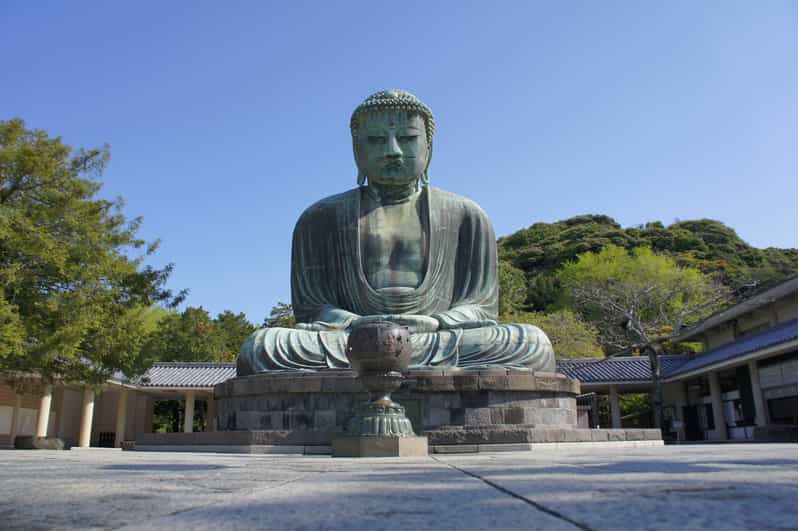
- The Great Buddha is an outdoor highlight: Kotokuin’s 13-meter statue gives the tour its biggest visual moment.
- Hase Temple adds gardens and symbolism: See the eleven-faced Kannon statue and rows of small Jizo figures.
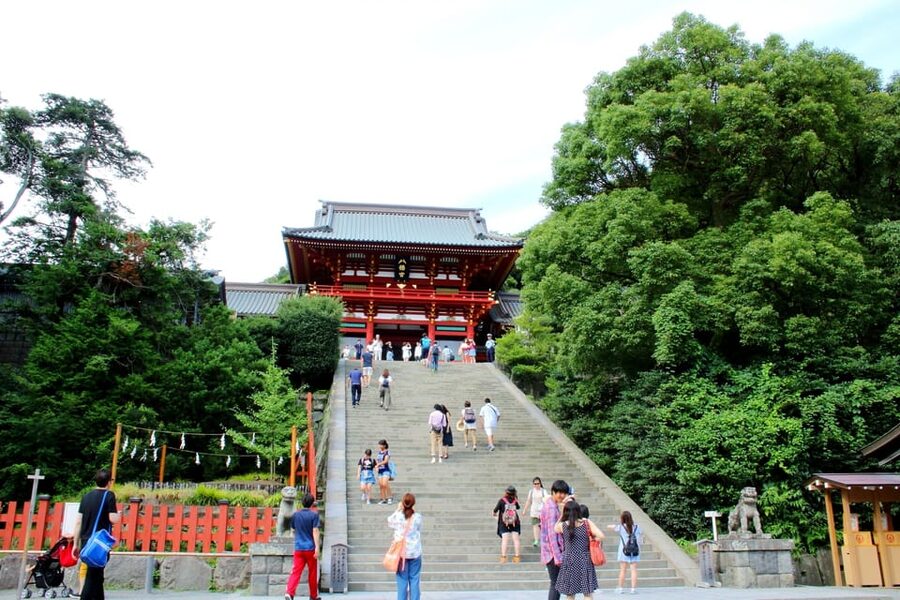
- Tsurugaoka Hachimangu explains Kamakura’s importance: The city’s central shrine links religion, politics, and samurai culture.
- Expect a walking day: You cover about 3 to 4 kilometers, including station transfers and temple grounds.
- Your guide handles the route: Train travel, walking connections, and explanations are arranged around your private group.
- Budget for extras: Transportation, 700 yen in listed temple admissions, lunch, and drinks are not included.
Why Kamakura makes a good day from Tokyo
Kamakura gives you a sharp change of pace from Tokyo without requiring a long intercity journey. The train ride takes about 70 minutes each way in the detailed schedule, or roughly one hour according to the general tour description. That makes this a practical full-day outing rather than a rushed side trip.
The city is best known for its temples, Shinto shrines, and connection to Japan’s medieval warrior government. You will not cover all of Kamakura in one day, but this route gives you three major sights and time on Komachi Street, where you can eat and browse.
I especially like the way the stops build on one another. Hase Temple begins with a close look at Buddhist belief and sculpture. Kotokuin gives you a single, unforgettable statue. Tsurugaoka Hachimangu then shifts the focus to Shinto worship and the city’s political past.
The private guide matters most during the train and walking portions. Kamakura is easy enough to reach, but a guide can explain what you are seeing while keeping the day moving. Several guides associated with this experience include Steve, Take, Mizuma-san, and Richie. The exact guide depends on your booking, but the important point is that the tour is conducted in English and limited to your own private group.
More Kamakura Day Trips in Tokyo
- Tokyo: Mt. Fuji, Kamakura, Big Buddha, & Lake Ashi Day Trip
★ 4.5 · 867 reviews - Tokyo:Sea of Mount Fuji, Hakone Ropeway, Ōwakudani, Enoshima
★ 4.9 · 84 reviews - Kamakura 8 hr Private Walking Tour with Licensed Guide from Tokyo
★ 5.0 · 80 reviews
Starting from Tokyo by train
Pickup is available from four listed locations: Tokyo Station, Tokyo, Shinjuku City, or Shinjuku Station. Hotel pickup and drop-off can also be arranged, but this part is done on foot. You should give the operator your hotel details when booking so the meeting plan is clear.
Do not picture a private vehicle waiting outside your hotel. You and your guide walk to the station, board public transportation, and pay the transportation costs yourselves. That arrangement keeps the tour tied to ordinary Japanese rail travel, but it also means you should wear shoes that are comfortable for a full day.
The train ride is a useful part of the experience rather than dead time. Your guide can outline Kamakura’s role in Japanese history and help you understand the order of the day. Since the tour includes transportation for both you and the guide, bring enough yen or confirm the preferred payment method before departure.
The schedule allows around eight hours in total, returning to Tokyo at about 4 or 5 pm. The return time can vary with the pace of the group and train connections, so I would avoid booking a tight evening reservation in Tokyo.
Hase Temple and the eleven-faced Kannon
Hase Temple, also called Hase-dera, is the first main stop. The listed sightseeing time is about 30 minutes, though the wider experience includes walking through the grounds and seeing the temple’s gardens.
The central religious focus is Hase Kannon, home to an eleven-faced statue of Kannon, the Buddhist Goddess of Mercy. The multiple faces represent different stages in the search for enlightenment. That detail gives your guide something concrete to explain, turning the visit from a quick photo stop into a short lesson in Buddhist imagery.
The temple’s gardens offer a change from the enclosed interior spaces. You can take in the carefully arranged grounds and visit Jizo-do Hall, where hundreds of small Jizo Bodhisattva statues are gathered. Jizo is closely linked with protection, and the rows of small figures create one of the stop’s most memorable details.
I would not rush Hase Temple. The main statue draws attention, but the smaller Jizo figures and outdoor setting make the place feel more personal. At the same time, 30 minutes is not a long window if you want a slow visit, detailed photographs, and a full explanation. Ask your guide early if Hase Temple is the stop you most want to savor.
Admission is 400 yen per person, paid separately on the tour day. The temple grounds may include steps and uneven walking, so comfortable shoes are more than a formality.
Walking to Kotokuin’s Great Buddha
From Hase Temple, you walk about 10 minutes to Kotokuin Temple. This short connection is one of the day’s easier stretches, and it avoids the need to arrange another vehicle between two nearby sights.
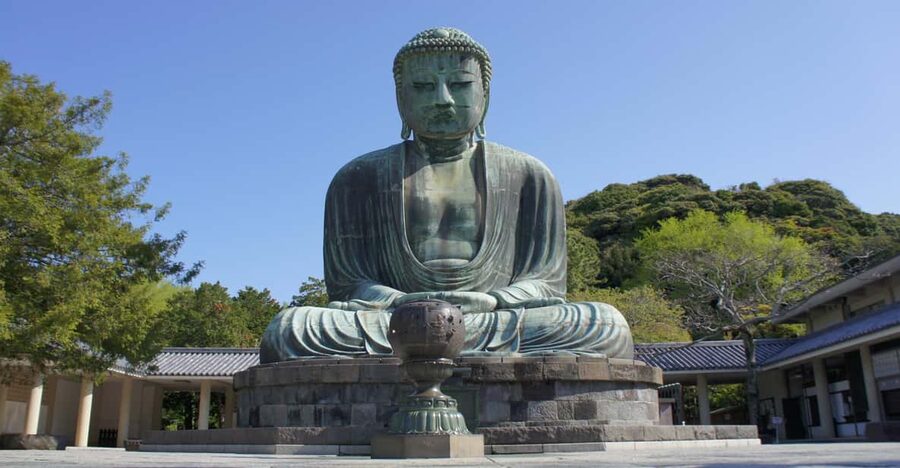
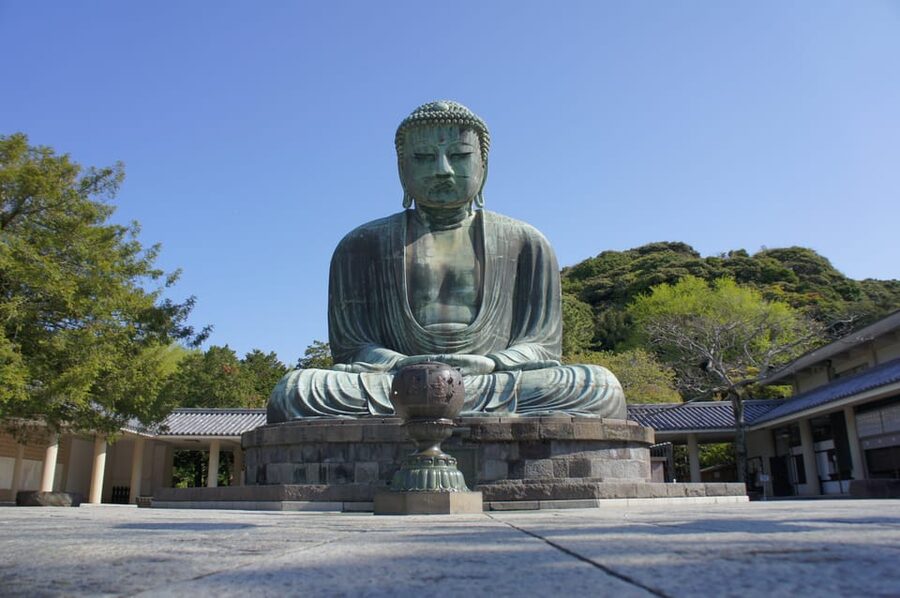
Kotokuin is home to Kamakura’s famous Great Buddha, a bronze statue about 13 meters high. It dates to 1292 and is the most instantly recognizable sight on the route. The statue’s scale is impressive, but the open setting also makes it easier to appreciate its shape from several angles.
Your guide explains the statue’s significance and background while you have time for photographs. The listed visit lasts about 30 minutes. That is enough for the main view and a short explanation, though it will feel brief if you want to linger.
This stop is especially good for first-time visitors to Japan because the visual message is simple. You see one enormous Buddhist figure, then learn why it matters. You do not need a long attention span or a specialist interest in religion to enjoy it.
Entrance costs 300 yen per person and is not included. Add that fee to the 400 yen Hase Temple admission, and you already have 700 yen in known entrance costs before lunch or transportation.
Same city, a completely different kind of day:
- Mt Fuji and Hakone 1-Day Bus Tour Return by Bullet Train
★ 5.0 · 26,383 reviews - 1-Day Tokyo Bus Tour
★ 5.0 · 14,250 reviews - Tokyo: TOKYO SKYTREE® Admission ticket
★ 4.5 · 11,192 reviews - Tokyo: teamLab Planets TOKYO Digital Art Museum Entry Ticket
★ 4.6 · 9,779 reviews
Tsurugaoka Hachimangu, Kamakura’s central shrine
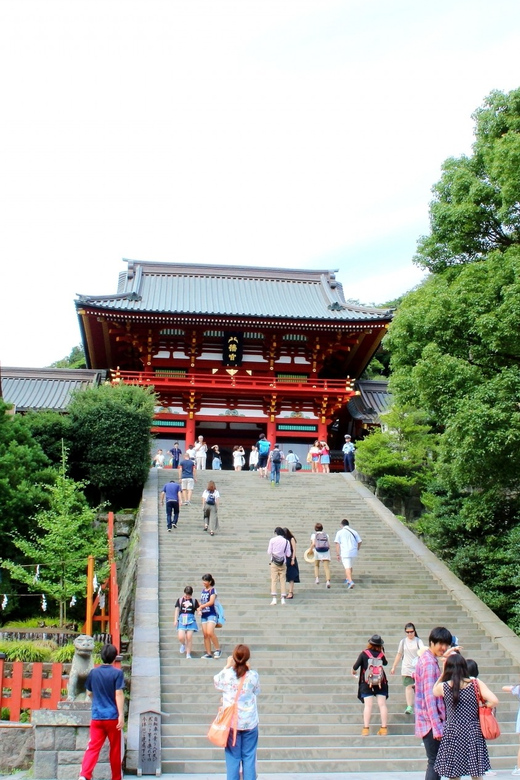
After Kotokuin, you take a train for about 10 minutes to the area around Tsurugaoka Hachimangu Shrine. The shrine visit is listed at roughly 30 minutes, followed by time for lunch and free time on Komachi Street.
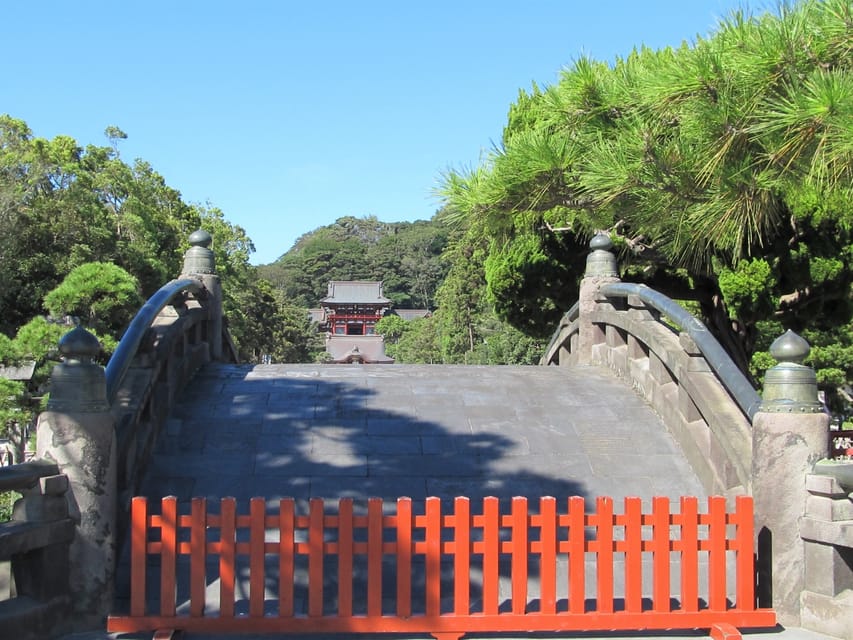
Tsurugaoka Hachimangu was founded in 1063 and is dedicated to Emperor Ojin, who is also linked with the God of War. It is Kamakura’s most important Shinto shrine and sits at the city’s geographical center. These facts help explain why the stop feels different from the Buddhist temples earlier in the day.
I like this part of the route because it widens the story. You are not simply collecting famous buildings. You move from Buddhist devotion to a major Shinto site tied to power, warfare, and the development of Kamakura as a major city.
The shrine complex offers a broad, calm setting for a walk and a chance to listen to your guide’s explanation. The tour description gives 30 minutes here, so expect an introduction rather than a long, unhurried examination of every feature.
If you have a strong interest in shrine architecture or want time for personal worship, tell your guide. A private group gives you more room to make such requests than a large shared excursion, though the day still has to stay on schedule for lunch and the return train.
Lunch and Komachi Street
Lunch takes place around Komachi Street, with about 1.5 hours set aside for food, guided time, free time, and shopping. The meal is not included, and you pay for both your own lunch and your guide’s food.
That arrangement gives you choice, but it also makes the final cost less predictable. You may prefer a quick meal to spend more time shopping, or you may want to sit down properly after the morning’s walking. Ask what restaurant options are available and how much time you will have before ordering.
Komachi Street is a useful place to end the sightseeing portion because it combines food and shopping in one area. You can use the free time to buy small souvenirs, look for local snacks, or simply rest before the train back to Tokyo.
The lunch break also helps balance the tight 30-minute temple visits. Earlier, the focus is on set sights and explanations. Here, you have room to slow down and make the afternoon feel less programmed.
Still, remember that the tour price does not cover lunch or drinks. If you are watching your budget, decide in advance how much you want to spend. A high-priced private tour can feel less worthwhile if you expect meals and admissions to be bundled into the fee.
What the private guide adds
The strongest reason to book this tour is the guide, not the train ticket or the admissions. You can reach Kamakura independently, buy the same entrance tickets, and visit the same famous places. The private format earns its cost only if you value personal explanations, route help, and the ability to ask questions.
The guides connected with this experience have different strengths. Steve is associated with a well-organized day that includes plenty of information and a green tea stop. Take has used maps and pictures to explain Kamakura’s past, which can help if dates and names are hard to keep straight. Mizuma-san brings strong knowledge of Japanese culture and history. Richie is described as accommodating to personal requests, though the amount of explanation can vary by guide.
That last point matters. The experience is not identical every time, because the guide shapes much of the day. Some people want a moving history lesson. Others mainly want someone to lead them through Kamakura and handle the route. Be clear about your expectations at the start.
A private guide can also help when Kamakura is crowded. The temples and shrine are major attractions, and busy periods can make the route feel slow. A guide familiar with the area may help you move between the main points without wasting time, but no guide can remove crowds entirely.
Walking, timing, and the real cost
The tour includes about 3 to 4 kilometers of walking. That is not an extreme distance, but it is spread across station platforms, streets, temple grounds, shrine paths, and shopping areas. Comfortable shoes are essential.
Transportation is not included for you or the guide. The stated estimate is around 2,000 yen per person, while the detailed information gives approximately 1,200 yen for a one-way train ticket. Because those figures are presented as estimates, confirm the current amount when you book and keep extra yen available.
Entrance fees are also paid on the day:
- Hase Temple: 400 yen per person
- Kotokuin and the Great Buddha: 300 yen per person
Lunch and drinks are separate. With the $145 tour price, transport, admissions, and food can make this a costly day for a solo visitor. For two people, the private guide cost may feel easier to justify, especially if you would otherwise pay for a separate guide or spend time working out the train route yourself.
The value is best for families, couples, and small groups who want personal attention. It is less compelling for confident independent visitors who are happy using trains, reading signs, and arranging their own lunch.
What the day does well, and where it falls short
The route is well chosen. Hase Temple, Kotokuin, and Tsurugaoka Hachimangu show three different sides of Kamakura, while Komachi Street gives you time to eat and shop. The train journey keeps the trip tied to local life instead of placing you inside a private sightseeing bubble.
The guide quality is central. Strong guides have explained Japanese history with maps, photographs, and clear cultural context. A good guide can also adjust to requests, help with crowded areas, and make the train rides useful.
The main weakness is the limited time at each major sight. Thirty minutes at Hase Temple, Kotokuin, and Tsurugaoka Hachimangu gives you an overview, not a slow study. If you want to photograph every corner or sit quietly at each temple, you may feel hurried.
The other concern is the price structure. Paying $145 per person and then adding transportation, admissions, lunch, and drinks can be surprising if you read the headline price as an all-inclusive total. The tour is paying for private guiding and convenience. It is not paying for every part of the day.
Free cancellation up to 24 hours before departure and the option to reserve now and pay later make planning easier. Those policies are useful if your Tokyo schedule is still shifting, but they do not change the separate costs on the day.
Who should book this Kamakura tour
I would recommend it to you if you want an English-speaking guide, prefer a private group, and would rather spend your day looking at temples than managing train changes and directions. It also suits families or small groups that want to ask questions without keeping up with strangers.
It is a good fit for first-time visitors who want a clear introduction to Kamakura. The route offers major sights without trying to cover every temple in the city, and the guide can connect what you see to Japanese religion and medieval politics.
I would think twice if you are traveling on a tight budget or already feel comfortable planning Japanese train trips. In that case, the extra cost may be hard to defend, especially since admissions, transportation, and lunch are all separate.
Book it if the guide’s knowledge and personal attention are the main reason you are going. Skip it if you mainly want transportation to the Great Buddha and a few famous photo stops. For the best experience, wear good shoes, ask for the hotel pickup plan in advance, and budget for every extra before you commit.
FAQ
How long does the Kamakura tour last?
The tour lasts about eight hours. It normally returns to Tokyo at around 4 or 5 pm.
Where can pickup take place?
The listed pickup choices are Tokyo Station, Tokyo, Shinjuku City, and Shinjuku Station. Hotel pickup is also available, but pickup and drop-off are on foot.
Is transportation included?
No. Public transportation for you and the guide is paid separately. The listed estimate is around 2,000 yen per person, and one-way train tickets are given as approximately 1,200 yen.
Which entrance fees must I pay?
Hase Temple costs 400 yen per person, and Kotokuin Temple, including the Great Buddha visit, costs 300 yen per person.
Is lunch included?
No. You pay separately for your own lunch, drinks, and your guide’s lunch.
How much walking is involved?
The tour includes about 3 to 4 kilometers of walking. Comfortable shoes are recommended.
Is the tour private and what language is available?
It is a private group tour with a live English-speaking guide. A National Government Licensed Guide Interpreter is included.
Just added around Tokyo
- Tokyo: Customizable Private Guided Walking Tour★ 4.5 · 129 reviews
- Private Harajuku Omotesando Architecture Tour★ 4.9 · 18 reviews
- Tokyo: Guided Helicopter Ride★ 4.9 · 24 reviews
- Tokyo: Guided Walking Tour of Tsukiji Market with Lunch★ 4.4 · 24 reviews
- Tokyo: Private Personalized Local Food Tour★ 4.5 · 101 reviews
- Tokyo GINZA: KONPARU Japanese Cabaret Show with Drink★ 4.8 · 38 reviews
- Tokyo: Guided Walking Tour of Tsukiji Market with Breakfast★ 4.4 · 134 reviews
- Tokyo: Gotokuji Cat Temple, Shinjuku Cat Cafe & 3D Cat Tour★ 4.9 · 38 reviews
Kamakura Day Trips, compared.
Kamakura & Enoshima Day Trip including Temple Tickets
Read our review →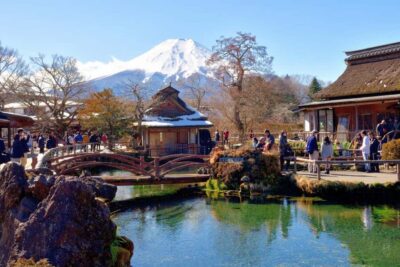
Mt. Fuji, Kamakura, Big Buddha, & Lake Ashi Day Trip
Read our review →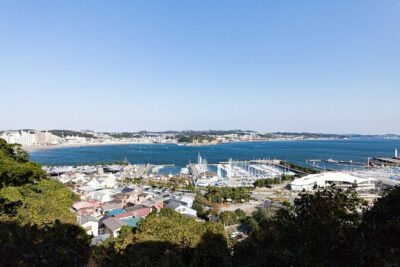
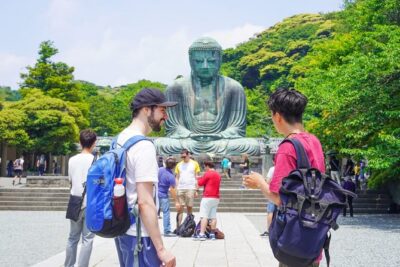
Kamakura Historical Walking Tour with the Great Buddha
Read our review →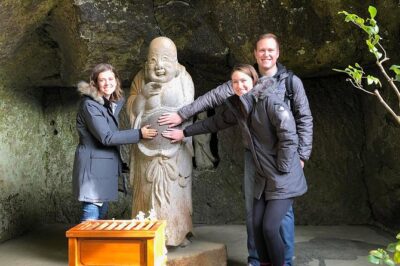
Kamakura Private Tour: Temples, Nature, and the Great Buddha
Read our review →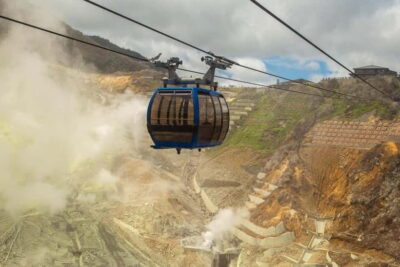
Sea of Mount Fuji, Hakone Ropeway, Ōwakudani, Enoshima
Read our review →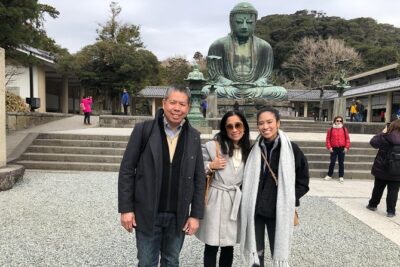
Kamakura 8 hr Private Walking Tour with Licensed Guide from Tokyo
Read our review →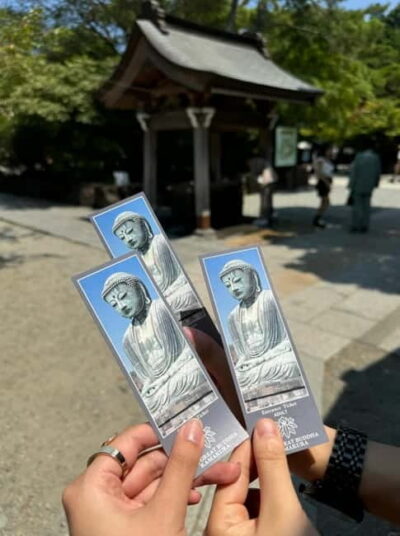
Kamakura & Enoshima Day Tour with Pickup & Train Ride
Read our review →Browse the lists this tour appears in