
REVIEW · KAMAKURA DAY TRIPS
Kamakura: A Journey Through Medieval Japan
Kamakura gives you medieval Japan without sending you far from Tokyo. In one outing, you can move from Zen temples and samurai politics to a giant outdoor Buddha, then finish on Enoshima, an old holy island with seaside views and plenty of cheerful Japanese kitsch.
I like the flexible pacing and the way the tour uses trains and buses to connect sites without turning the day into a long march. I also like the human touch from John, whose sharp storytelling, clear English, and knack for adjusting the route have made this a highly rated experience, with a 4.9 score from 32 bookings.
The main caution is simple: this is still a walking tour. There are places to sit and public transport helps, but the route is not suitable for wheelchair users or people with major mobility limits. The full eight-hour version is also a long day, especially if you add Enoshima.
In This Review
- Key points to know before booking
- Why Kamakura makes such a good Tokyo escape
- Engaku-ji begins the story with Zen
- Tokei-ji adds a different human story
- Shojin-ryori turns lunch into part of the lesson
- Tsurugaoka Hachimangu shows Kamakura at full scale
- Public transport keeps the day from becoming a slog
- The Great Buddha is the visual high point
- Enoshima adds sea, folklore, and a little kitsch
- The four-hour and eight-hour versions suit different plans
- What the $35 price really covers
- Practical advice for a smoother day
- Should you book this Kamakura tour?
- FAQ
- Where does the tour begin?
- Where can the tour finish?
- How long does the tour last?
- Is the tour private?
- Is the tour conducted in English?
- Is lunch included?
- Are vegetarian or vegan meals possible?
- What extra costs should I expect?
- Is the tour suitable for wheelchair users?
Key points to know before booking
- Start at Kita-Kamakura Station: Meet John outside the East Exit, a much easier rendezvous than a huge Tokyo rail hub.
- See the major Kamakura sights in one day: Engaku-ji, Tokei-ji, Tsurugaoka Hachimangu, and the Great Buddha form the core of the experience.
- Choose four or eight hours: The shorter option suits a half-day from Tokyo, while the longer version can add shojin-ryori and Enoshima.
- Expect a guide-led history lesson: John explains Zen, the Kamakura warrior government, religion, the Tokugawa shogunate, and Japanese daily life.
- Budget for extra costs: The $35 price covers the guide fee, but entrance fees, transport, and lunch are separate.
- Ask for dietary help in advance: Vegetarian and vegan meals are possible, and a gluten-free lunch was arranged for one visitor with celiac disease.
Why Kamakura makes such a good Tokyo escape
Kamakura was the center of Japan’s first warrior government about 900 years ago. That gives the town a different feel from Tokyo’s modern streets and Kyoto’s imperial polish. Here, temples, shrines, wooded hills, shopping streets, and the sea all fit into one manageable day.
The tour begins in Kita-Kamakura, north of the main town center. This is a useful choice. You start in a quieter temple district, then follow Kamakura’s story toward its political and religious heart.
I like the way the route links Buddhism and samurai rule rather than treating each temple as a separate photo stop. You learn why Zen mattered to politics, art, and religious practice, then see how those ideas fit beside Shinto worship and the warrior government.
John is the guide, and his strongest skill is storytelling. The praise for him is unusually consistent: people single out his stories about Kamakura’s historical figures, his lively style, and his ability to keep a four-hour visit moving. He also explains practical matters about food, public transport, and Japanese customs, which can help you for the rest of your trip.
More Kamakura Day Trips in Kamakura
- Tokyo: Kamakura & Enoshima Day Trip including Temple Tickets
★ 4.5 · 1,375 reviews - From Tokyo: Kamakura & Enoshima 1-Day Bus Tour
★ 4.5 · 189 reviews - Kamakura Historical Walking Tour with the Great Buddha
★ 5.0 · 129 reviews
Engaku-ji begins the story with Zen
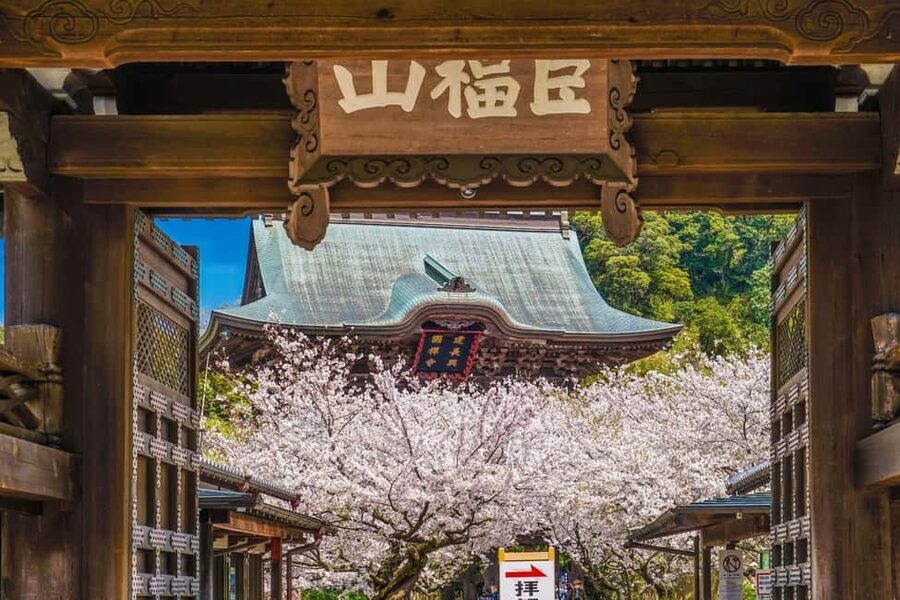
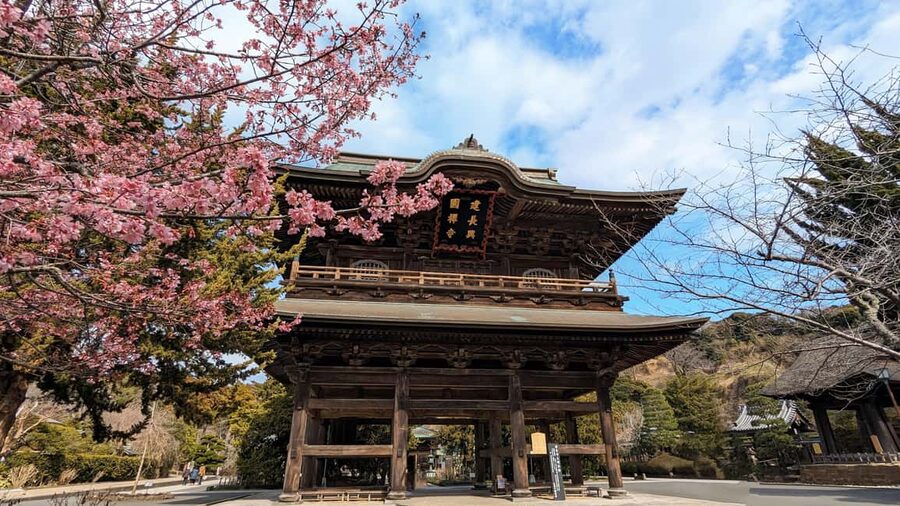
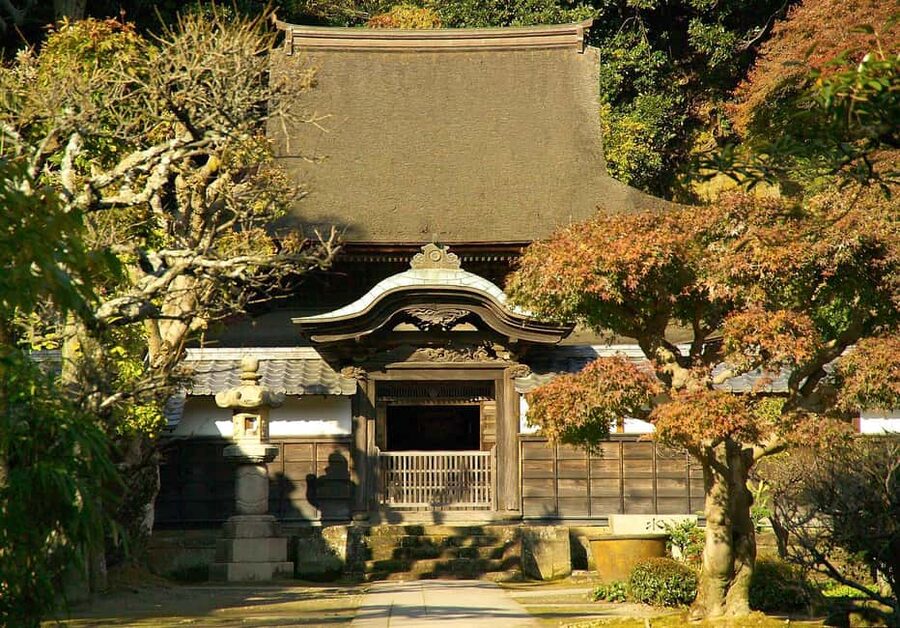
Engaku-ji receives about an hour of guided attention, making it the most substantial temple visit at the start. It is one of Japan’s major Zen temples, and it gives John room to explain how Zen Buddhism influenced Japanese politics, art, and religious life.
This is a better way to visit a temple than walking in, taking a few pictures, and leaving with no idea what you saw. You can ask questions and connect the buildings and practices to the wider Kamakura Period.
The tour information promises a gorgeous temple setting, but the useful point is the context. Engaku-ji is not just an attractive first stop. It establishes the main theme of the day: religion and political power were closely linked in medieval Japan.
Allow yourself time to listen here. If you are mainly chasing famous photographs, an hour may feel slow. If you want the background that makes the later shrine and Buddha more meaningful, this is time well spent.
Tokei-ji adds a different human story
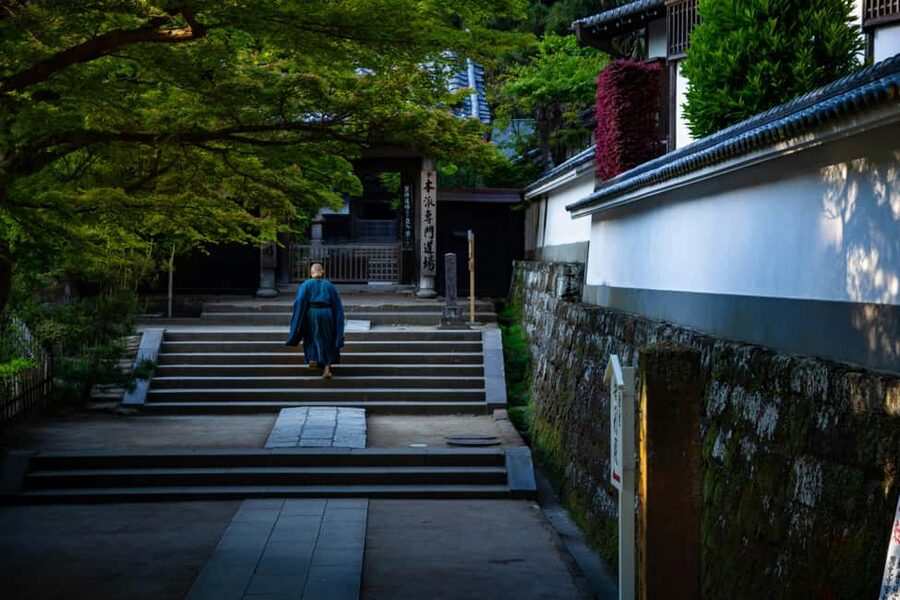
The next stop is Tokei-ji, with about 15 minutes of guided time. It was once a nunnery and became a pilgrimage place for women from across Japan.
That detail changes the mood of the morning. Engaku-ji introduces an influential male religious institution tied to the era’s ruling class. Tokei-ji brings in women’s religious lives and the role of pilgrimage.
The stop is brief, so you should think of it as a focused visit rather than a full temple tour. John’s storytelling matters here because a short explanation can give the place weight that a quick solo look might miss.
Shojin-ryori turns lunch into part of the lesson
For the longer tour, lunch can feature shojin-ryori, the vegetarian cuisine associated with Buddhist monks. It is generally included on the eight-hour route, but you can request it on the four-hour version.
I like this choice because it connects the meal to the day’s religious theme. It is not simply a break between attractions. You get to try food linked to Buddhist practice and learn something about Japanese cuisine at the same time.
Lunch is not included in the $35 price. Plan on about 1,000 yen per person, and remember that the guide’s lunch is also listed among the expenses guests cover. Vegetarian and vegan needs can be handled if you mention them ahead of time. A gluten-free restaurant was arranged for a person with celiac disease, so advance notice is worth giving.
The meal takes about 45 minutes. That is enough for a proper pause, but not enough for a lingering restaurant afternoon. If you have only four hours, you may prefer to focus on the sights and request shojin-ryori only if food is a high priority.
More kamakura day trips in Japan:
- Tokyo: Mt. Fuji, Kamakura, Big Buddha, & Lake Ashi Day Trip
★ 4.5 · 867 reviews - Kamakura Private Tour: Temples, Nature, and the Great Buddha
★ 5.0 · 121 reviews - Tokyo:Sea of Mount Fuji, Hakone Ropeway, Ōwakudani, Enoshima
★ 4.9 · 84 reviews - Kamakura 8 hr Private Walking Tour with Licensed Guide from Tokyo
★ 5.0 · 80 reviews
Tsurugaoka Hachimangu shows Kamakura at full scale
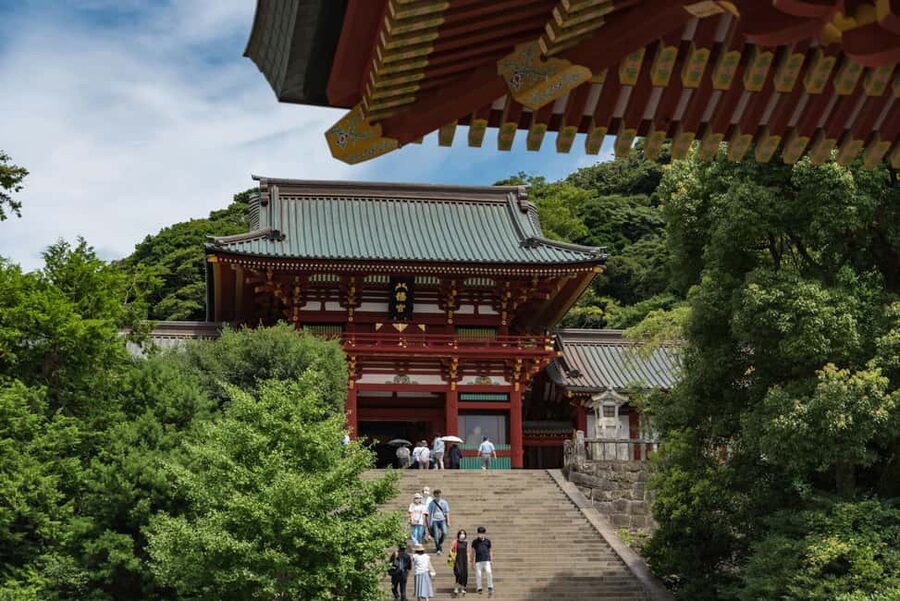
From the temple district, the tour moves to Tsurugaoka Hachimangu, Kamakura’s large and popular shrine in the center of town. The guided portion lasts about 30 minutes.
This is where the political side of Kamakura comes forward. The shrine is tied to the city’s warrior government, so it helps explain how religion supported public authority and national identity.
The setting also gives you a change of pace. The morning begins with Zen temple culture, then shifts to a major Shinto shrine in the middle of modern Kamakura. That contrast is one of the day’s strengths. Japan’s religious traditions do not appear in sealed compartments here.
Thirty minutes is enough for a clear introduction, though the shrine is popular and the central area can feel much busier than the quieter temple grounds. John’s route planning may help you avoid wasting time, and several people specifically valued his choice of photo spots and his ability to steer groups around crowds.
Public transport keeps the day from becoming a slog
After Tsurugaoka Hachimangu, a bus or coach ride of about 20 minutes takes you toward the Great Buddha. A train ride of about 15 minutes is used later for Enoshima.
This transport matters. Kamakura is compact enough to explore on foot, but not every major sight sits next to the next one. The tour combines walking with local transport so you can cover more ground without spending the whole day on pavement.
Transport costs about 400 yen per person, separate from the guide fee. That is a modest extra, but you should include it when working out the true cost.
You should still wear comfortable shoes and bring water, especially in summer. The guide notes that there are seats along the way, but the route includes temple grounds, shrine approaches, town streets, and Enoshima walking. One person described the day as requiring plenty of walking, while another appreciated the way John used transit to prevent the group from getting worn out.
The Great Buddha is the visual high point
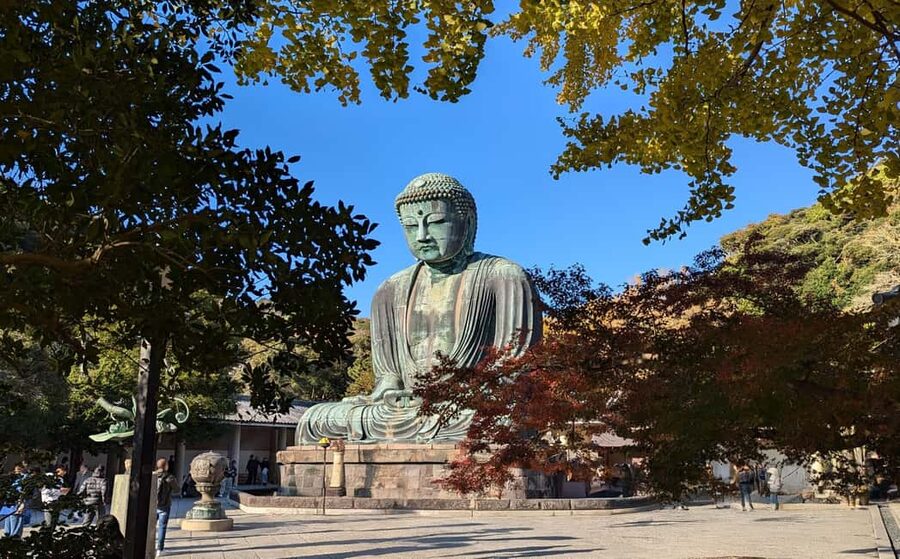
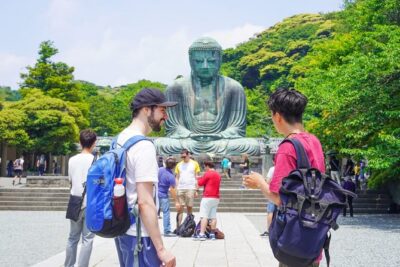
Kōtoku-in is home to the Great Buddha of Kamakura, one of the largest Buddha statues in Japan. The guided visit lasts about 30 minutes.
The statue is the sort of sight that can dominate a short Kamakura visit, but the guide helps put it in context. You are not just checking off a famous image. The Buddha brings the day’s religious themes into a single, powerful object.
The description calls it possibly the most beautiful large Buddha in the country. That is a matter of taste, but the scale alone makes it a major stop. After Engaku-ji’s temple setting, Tokei-ji’s story, and Tsurugaoka Hachimangu’s political importance, this visit gives you a strong visual finish to the central Kamakura route.
The stop can work well in a four-hour tour because it is focused and easy to understand. If your time is tight, this is one of the places I would keep, along with Engaku-ji and Tsurugaoka Hachimangu.
Enoshima adds sea, folklore, and a little kitsch
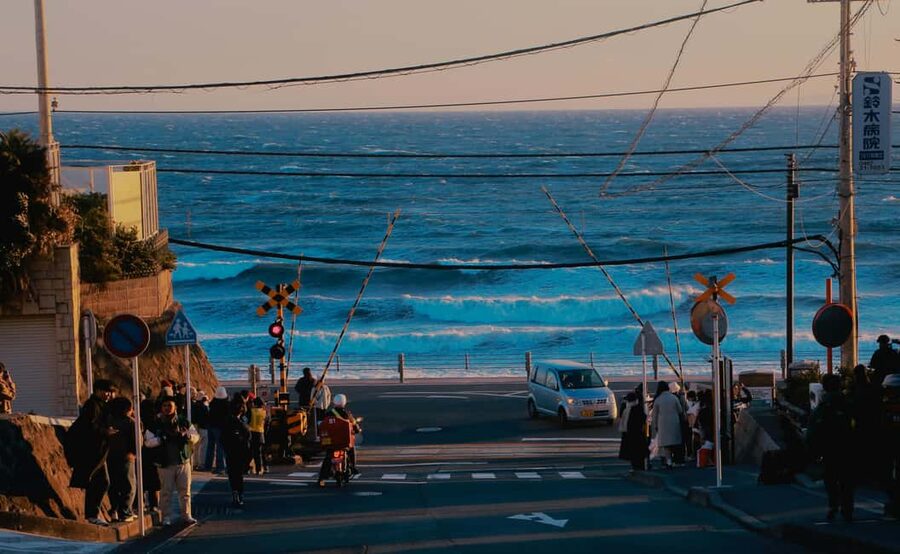
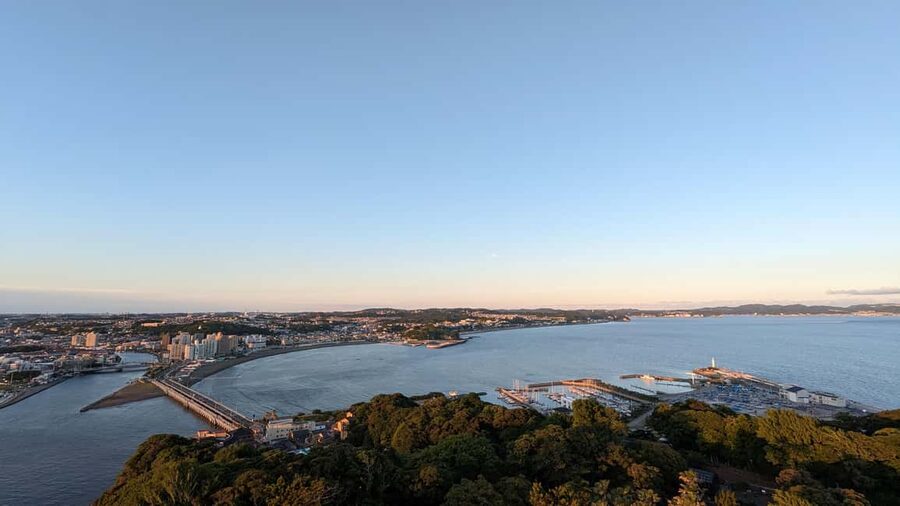
The private eight-hour tour can continue to Enoshima by train. The guided visit lasts about two hours, and the island provides a sharp change from Kamakura’s temples and historic center.
Enoshima was considered holy in ancient times. Today it is also a popular seaside escape for couples and families. That combination is exactly what makes it fun: sacred sites, natural scenery, and a more playful resort atmosphere share the same small island.
I would not call Enoshima a quiet ending. It is better understood as a lively counterpoint to the morning’s serious history. You might find touristy touches alongside religious sites and attractive coastal views, which is part of its character rather than a flaw.
The timing can be special. John has arranged routes around scenic views, including a sunset walk on one occasion. Since the tour is customizable, ask about the best fit for your date and preferred pace rather than assuming the exact same ending every time.
Enoshima also makes the eight-hour option feel like a full day beyond Tokyo. It is not merely an extra temple. It changes the experience from a focused historical half-day into a broader outing with nature and seaside culture.
The four-hour and eight-hour versions suit different plans
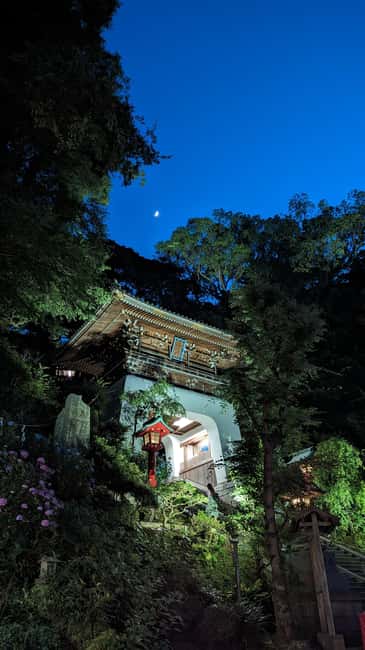
The four-hour version works best if you are making a day trip from Tokyo and want a guided introduction without giving up the rest of your day. You can see several major temples and shrines, reach the Great Buddha, and get a clear sense of why Kamakura matters.
The eight-hour version is the better choice if you want the food and Enoshima. It gives the day room to breathe, though you should be ready for a longer walk and more transport connections.
Private and small-group formats are available. A private tour is especially useful if your group has a strong interest in religion, samurai history, food, photography, or a specific pace. John has adjusted routes for groups of six and created customized plans for individual visitors.
That flexibility is not just a nice extra. Kamakura can mean different things to different people. One person may want every major site. Another may prefer fewer stops and more explanation. Families, older adults, and anyone managing dietary needs should discuss priorities before the day begins.
What the $35 price really covers
At $35 per person, the tour offers good value if you want a guide who can connect the sights and handle the practical movement between them. The guide fee and English-speaking local guide are included.
The price is not an all-in admission ticket. Add roughly 800 to 1,500 yen per person for entrance fees, about 400 yen for transport, and about 1,000 yen for lunch. The guide’s entry and lunch costs are also listed as expenses shared by the group, so confirm the final arrangement when booking.
Even with those additions, the main value is the time saved and the quality of explanation. Kamakura’s temples and shrine can be visited independently, but the meaning of Zen, the women’s pilgrimage tradition, and the warrior government is easier to follow with a good guide.
The tour’s high rating is supported by repeated praise for John’s professionalism, flexibility, strong English, and stories. One person called him the best storyteller they had encountered among more than 100 guides. That is an individual judgment, not a guarantee, but it points to the experience’s central strength.
Practical advice for a smoother day
Meet John outside the East Exit of Kita-Kamakura Station. The station has a simple layout, and this is an easier meeting point than trying to find someone inside a giant terminal such as Shinjuku.
Wear shoes suited to walking and expect a mixture of temple grounds, shrine paths, station areas, and town streets. Seats are available along the way, and public transport reduces the total distance, but the tour is not designed for wheelchair users or people with mobility impairments.
Tell John about dietary restrictions or physical concerns before the tour. Vegetarian and vegan meals are possible, and the gluten-free arrangement shows why early notice helps.
The activity is offered in English, with private or small groups available. You can cancel up to 24 hours in advance for a full refund, and you can reserve while paying later, useful if your Japan schedule is still shifting.
Should you book this Kamakura tour?
Book it if you want Kamakura to make sense, not just look pretty. John’s strength is turning temples, shrines, and a Buddha statue into one connected story about Zen, samurai government, pilgrimage, food, and modern Japanese life.
Choose four hours for a focused half-day from Tokyo. Choose eight hours if you want shojin-ryori, a slower pace, and Enoshima’s seaside finish. I would skip it only if you need a fully step-free outing, want to explore entirely alone, or dislike walking.
For most visitors, the $35 guide fee is a sensible investment, provided you budget separately for admissions, transport, and lunch. The best reason to book is not the number of stops. It is the chance to ask questions, adjust the pace, and hear Kamakura’s past told by someone who clearly enjoys bringing it to life.
FAQ
Where does the tour begin?
The meeting point is outside the East Exit of Kita-Kamakura Station.
Where can the tour finish?
The available drop-off points are Kita-Kamakura Station and Kamakura Station.
How long does the tour last?
The experience lasts between four and eight hours, depending on the option and route selected.
Is the tour private?
Private and small-group options are available.
Is the tour conducted in English?
Yes. The tour is offered with a live English-speaking guide.
Is lunch included?
No. Lunch costs about 1,000 yen per person. Shojin-ryori is generally part of the eight-hour tour, but it can be requested for the four-hour option.
Are vegetarian or vegan meals possible?
Yes. Vegetarian and vegan arrangements are possible if you notify the guide beforehand.
What extra costs should I expect?
Entrance fees are about 800 to 1,500 yen per person, transportation is about 400 yen per person, and lunch is about 1,000 yen per person. These costs are separate from the $35 guide fee.
Is the tour suitable for wheelchair users?
No. The experience is not suitable for wheelchair users or people with mobility impairments.
Just added around Japan
- Tokyo: Customizable Private Guided Walking Tour★ 4.5 · 129 reviews
- Private Harajuku Omotesando Architecture Tour★ 4.9 · 18 reviews
- Tokyo: Guided Helicopter Ride★ 4.9 · 24 reviews
- Tokyo: Guided Walking Tour of Tsukiji Market with Lunch★ 4.4 · 24 reviews
- Tokyo: Private Personalized Local Food Tour★ 4.5 · 101 reviews
- Tokyo GINZA: KONPARU Japanese Cabaret Show with Drink★ 4.8 · 38 reviews
- Tokyo: Guided Walking Tour of Tsukiji Market with Breakfast★ 4.4 · 134 reviews
- Tokyo: Gotokuji Cat Temple, Shinjuku Cat Cafe & 3D Cat Tour★ 4.9 · 38 reviews
Kamakura Day Trips, compared.
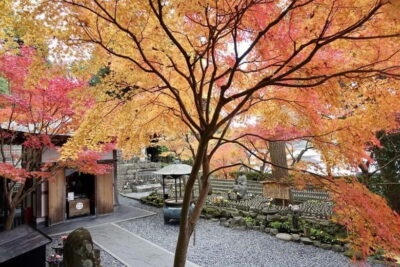
Kamakura & Enoshima Day Trip including Temple Tickets
Read our review →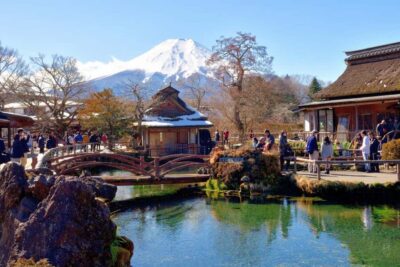
Mt. Fuji, Kamakura, Big Buddha, & Lake Ashi Day Trip
Read our review →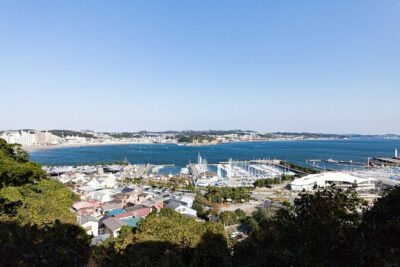
Kamakura Historical Walking Tour with the Great Buddha
Read our review →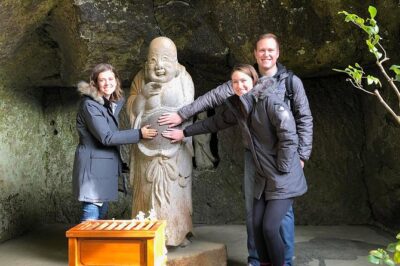
Kamakura Private Tour: Temples, Nature, and the Great Buddha
Read our review →
Sea of Mount Fuji, Hakone Ropeway, Ōwakudani, Enoshima
Read our review →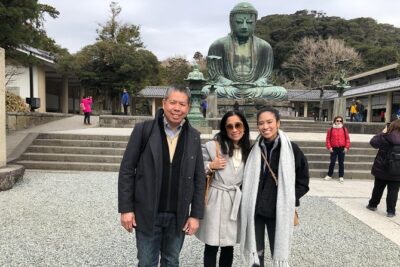
Kamakura 8 hr Private Walking Tour with Licensed Guide from Tokyo
Read our review →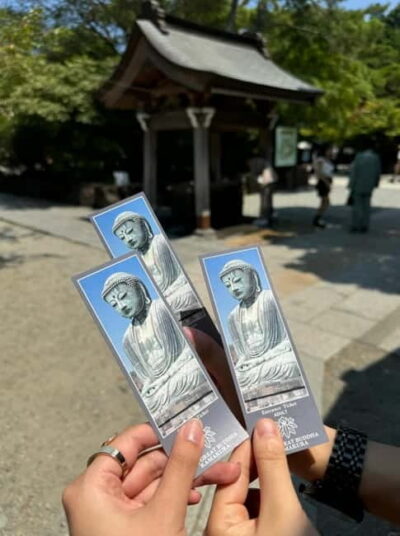
Kamakura & Enoshima Day Tour with Pickup & Train Ride
Read our review →Browse the lists this tour appears in