
REVIEW · HIROSHIMA TOURS
Hiroshima’s Heart: A 4-Hour Private Storytelling Walk
Hiroshima’s past comes into clearer focus when you approach it in layers. This private walk begins with the city before 1945, then follows its destruction and rebuilding through the castle grounds, Gokoku Shrine, Peace Memorial Park, and the A-Bomb Dome. Alex, who has lived in Hiroshima for more than 20 years, adds personal context that turns a list of monuments into a connected story.
I especially like the flexible starting point and the relaxed pace. You can begin at Shukkeien Garden or Peace Memorial Park, and the route can be adjusted to suit your interests. I also like the way this tour links samurai-era Hiroshima with the city’s modern peace message, rather than treating the bombing as the city’s entire identity.
The main consideration is walking time. Four hours is enough for a meaningful introduction, but it can feel full if you want a long museum visit, quiet reflection, and every stop on the route. Shukkeien and the Peace Memorial Museum also charge small admission fees, and transportation is not included if you need it.
In This Review
- Key points at a glance
- Why this walk works better than a quick monument checklist
- Starting at Shukkeien Garden
- Hiroshima Castle and the city before 1945
- Gokoku Shrine and everyday tradition
- Following the Peace Line into the memorial district
- The A-Bomb Dome and Children’s Peace Monument
- The Peace Memorial Museum in the final hour
- What the private format adds
- Timing, fitness, and practical comfort
- Who should book Hiroshima’s Heart
- Should you book it?
- FAQ
- How long is the Hiroshima’s Heart walking tour?
- How many people can join the private tour?
- Who leads the tour?
- Where can the tour begin?
- Where does the tour end?
- Is hotel pickup available?
- Is Shukkeien Garden admission included?
- Is the Peace Memorial Museum admission included?
- Will the guide accompany me inside the Peace Memorial Museum?
- Can I cancel for a full refund?
Key points at a glance
- Alex’s 20-plus years in Hiroshima: Expect local perspective, clear English, and room for questions about daily life as well as wartime history.
- A useful before-and-after route: Shukkeien, Hiroshima Castle, and Gokoku Shrine explain the city before 1945 before you enter Peace Memorial Park.
- A private group of up to six: Your group can set the pace and ask questions without keeping up with strangers.
- Peace Memorial Park with context: The A-Bomb Dome, Children’s Peace Monument, and other memorials are explained through survivor and family stories.
- Museum time built into the four hours: Alex may guide you through key sections when conditions allow, or give you an introduction before you explore quietly.
- Good first-day orientation: Food suggestions and ideas for what to do afterward help you plan the rest of your Hiroshima stay.
Why this walk works better than a quick monument checklist
Hiroshima can be difficult to understand from a map alone. The castle, garden, shrine, memorial park, and museum are all close enough to visit in one outing, but they tell very different parts of the city’s story.
This tour gives those places an order. You begin with Hiroshima as a castle town and cultural center. Then you see how the atomic bombing changed the physical city and how Hiroshima later built a public message around peace.
That structure matters. At the Peace Memorial Park, the monuments carry emotional weight, but they can also feel abstract if you have not first learned what the city was like before 1945. Moving from older Hiroshima into the memorial district gives you a clearer sense of what was lost and what was rebuilt.
Alex’s role is less about delivering a fixed speech and more about helping you make connections. The tour is designed for questions, reflection, and personal conversation. That makes it a strong choice if you want more than dates and famous names.
A few more Hiroshima trips to weigh up
- Hiroshima / Miyajima Full-day Private Tour with Government Licensed Guide
★ 5.0 · 1,298 reviews - Hiroshima City 4hr Private Walking Tour with Licensed Guide
★ 5.0 · 437 reviews - Hiroshima & Miyajima: Full-Day Private Tour & Licensed Guide
★ 4.8 · 252 reviews
Starting at Shukkeien Garden
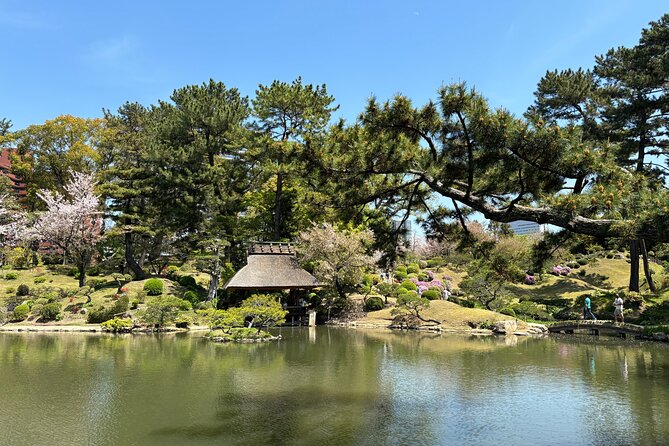
If you begin at Shukkeien, the tour opens in a calmer setting. This traditional Japanese garden has winding paths, ponds, and bridges, giving you time to settle into Hiroshima before the heavier parts of the day.
The garden is useful because it introduces the city through culture and place rather than catastrophe. Alex discusses Hiroshima’s early history and cultural roots as you walk, helping you picture the city’s older identity.
Plan on about an hour here. The ¥360 admission fee per person is not included, so bring that cost into your planning. The garden is also a good starting point for people who want a gentle introduction before visiting the memorial sites.
There is a practical trade-off. An hour in Shukkeien means less time elsewhere, especially if you want a careful museum visit. If the Peace Memorial Museum is your top priority, ask Alex about beginning at Peace Memorial Park instead.
Hiroshima Castle and the city before 1945
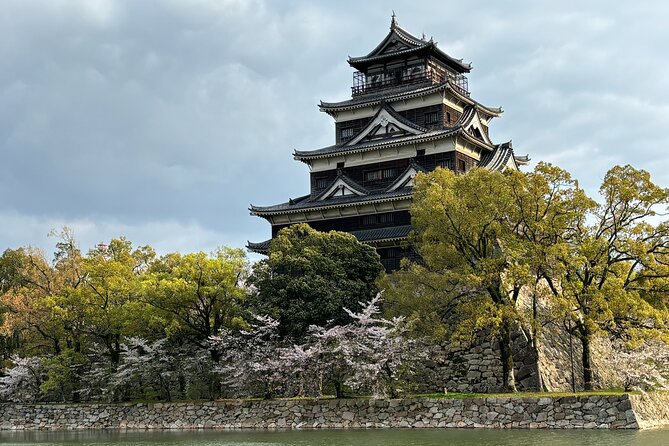
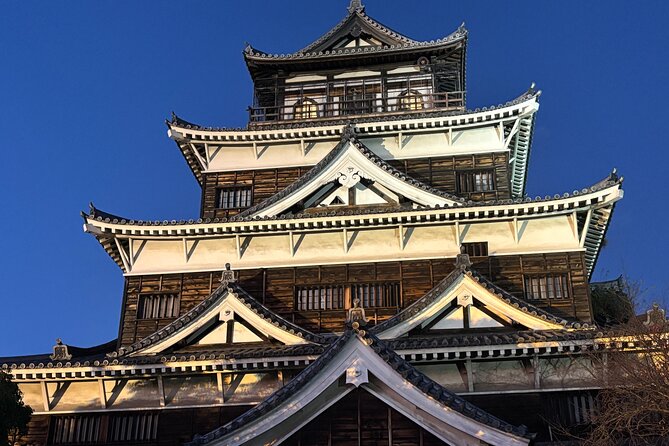
Hiroshima Castle is a reconstructed landmark, and the grounds are free to visit. The original castle was built in 1589 and once formed the center of the city’s samurai-era life.
The castle stop lasts about 30 minutes. That is enough for an outdoor visit and an explanation of how the area functioned before the bombing, but not enough for a slow, detailed castle tour. Think of it as historical framing rather than the main event.
I like this stop because it prevents Hiroshima from being reduced to one date in 1945. You get a picture of political power, local tradition, and everyday life before the city was destroyed.
The castle grounds also create a useful contrast with Peace Memorial Park. One place points toward Hiroshima’s older civic center, while the other carries the city’s international message of peace.
Gokoku Shrine and everyday tradition
Hiroshima Gokoku Shrine sits near the castle and adds a different kind of context. This is a Shinto shrine connected with local history and tradition, and the visit covers rituals, festivals, and ordinary spiritual life.
The stop takes about 30 minutes and has no admission fee. It is not presented as a major sightseeing attraction, which is part of its value. You get a glimpse of how religious practice fits into local life instead of moving from one famous structure to another.
For some people, this will be a quick and welcome pause between the castle and the memorial district. If your interests are focused almost entirely on the bombing and museum, you may prefer to keep this stop short and use the time for Peace Memorial Park.
Same city, a completely different kind of day:
- Peaceful Hiroshima & Miyajima UNESCO 1 Day Bus Tour
★ 5.0 · 5,309 reviews - Hiroshima: Hiroshima and Miyajima UNESCO Sites 1-Day Tour
★ 4.9 · 2,330 reviews - Hiroshima Historical Walking Tour – Why A-Bomb was Dropped
★ 4.8 · 893 reviews - Hiroshima Peace (Heiwa) Walking Tour at World Heritage Sites
★ 5.0 · 872 reviews
Following the Peace Line into the memorial district
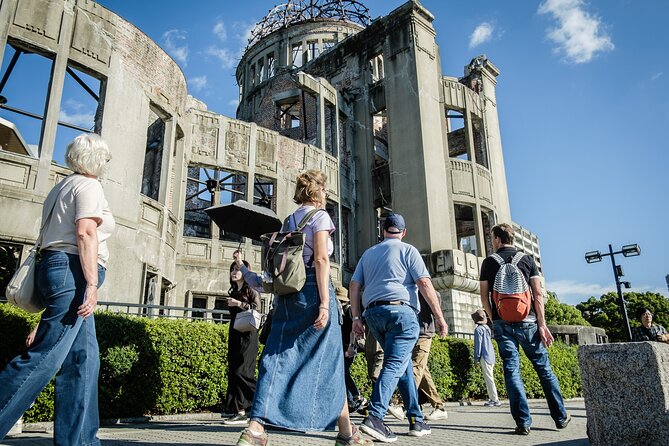
The walk then moves toward Peace Memorial Park. The tour describes this section as following the Peace Line, with Alex explaining stories and viewpoints that are easy to miss when you visit on your own.
This is where the tone changes. You are no longer only learning about the city’s older foundations. You are entering a place shaped by loss, remembrance, and Hiroshima’s continuing appeal for peace.
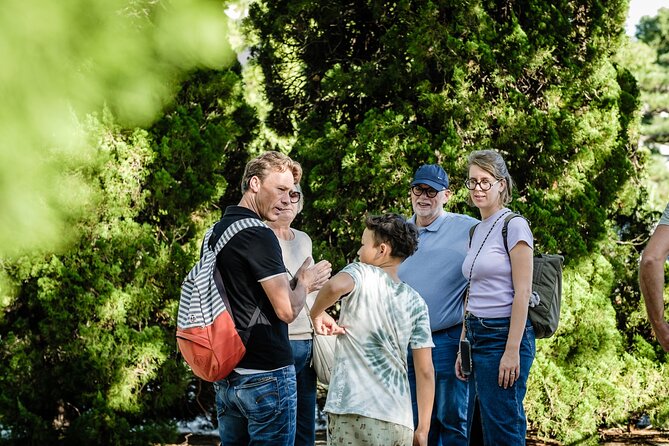
The pace is deliberately unhurried. You can ask questions as you go, and there is time to pause rather than simply snap a photo and move on. That matters in a memorial setting, where a fast schedule can make the experience feel detached.
Alex also shares stories connected with survivors and local families. These details give the monuments a human scale without turning the visit into a dramatic performance. The approach is straightforward and conversational, which suits the subject.
The A-Bomb Dome and Children’s Peace Monument
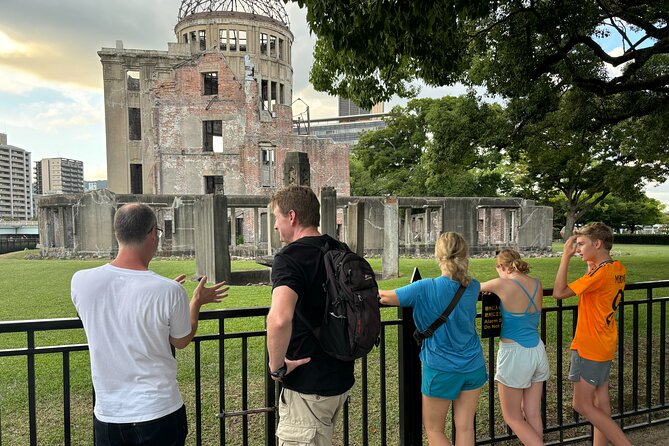
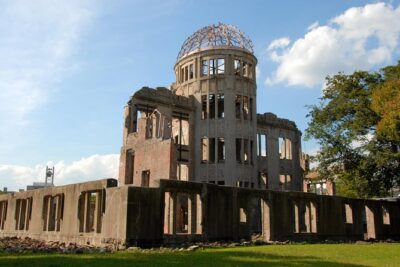
The A-Bomb Dome is one of Hiroshima’s most recognizable sites. Seeing it within the wider park, rather than as an isolated photo stop, helps explain its place in the city’s memory.
The Children’s Peace Monument adds another layer. It connects the memorial park to the experiences of children and families affected by the bombing. Alex uses the principal monuments as points for explanation, not just as stops to check off.
Allow about an hour for Peace Memorial Park. The park itself is free, but the emotional demands of the visit are not something you can measure by ticket price. You may appreciate having a guide who can explain what you are seeing and then give you room to think.
This part of the tour may be especially useful for families. One published experience included children who kept up with the long walk and asked questions throughout the day. The private format lets Alex adjust his explanations to different ages and interests.
The Peace Memorial Museum in the final hour
The Peace Memorial Museum is the most focused part of the itinerary. Admission is ¥200 per person and is not included in the tour price.
The schedule allows about an hour here. When conditions allow, Alex guides you through key sections and provides context. If the museum is crowded, or if you prefer to look through the exhibits quietly, he gives you an introduction and lets you explore at your own pace.
That flexibility is important. Museums dealing with trauma do not work equally well for every person in the same way. Some people want help understanding the exhibits, while others need silence and time. This arrangement gives you both options.
Still, one hour is limited. If you want to read every display carefully, you will probably need to return on your own. The tour is best viewed as an informed first visit, not a substitute for a full afternoon in the museum.
What the private format adds
The tour costs $209.03 per group of up to six people. That price is easier to justify when you fill the group, since it is not charged per person. A full group of six pays roughly $35 per person before the small entrance fees, while a couple pays much more per head.
For a family or group of friends, the value comes from the private setting and the ability to shape the day. You can ask about your own interests, slow down at a memorial, shorten a stop, or request food suggestions afterward.
The tour includes an English-speaking local guide, a four-hour private walk, a customizable itinerary, a flexible meeting point in central Hiroshima, and personal recommendations for food and further activities. Lunch is not included, and transportation is not included if it is needed.
Pickup is offered, and the meeting point can be arranged conveniently within central Hiroshima. The listed start and end point is Peace Memorial Park, but the actual beginning and ending depend on whether you choose the garden or the park. Confirm the precise meeting place before setting out.
Timing, fitness, and practical comfort
Most people can take part, and service animals are allowed. The tour is near public transportation, but you should still expect a substantial amount of walking over four hours.
The route covers a garden, castle grounds, shrine, park, and museum. Wear comfortable shoes and plan for changing moods as well as changing surfaces. The description does not promise a dedicated lunch break, so eat beforehand or ask Alex about food options afterward.
Booking this on your first full day in Hiroshima makes sense. You get an overview early, then have time to revisit the museum, memorial park, or another site with better bearings. Alex also provides recommendations for food and things to do after the walk.
The experience has also been adapted in practice. Alex has met people at hotels when meeting arrangements changed, and he has guided groups in English and Dutch. Do not assume every special request is guaranteed, but it is worth asking about timing, language, and pickup when you book.
Who should book Hiroshima’s Heart
I would choose this tour if you want the city’s difficult history explained with care, but also want to understand Hiroshima before the bombing. It suits families, couples, and small groups who prefer conversation over a large scheduled tour.
It is also a good fit if you are unsure how to approach the Peace Memorial Museum. Alex can supply an introduction, explain key sections, and leave you alone when quiet viewing feels more appropriate.
You may want another option if you dislike walking, want a full day at the museum, or prefer a highly structured tour with no flexibility. The four-hour plan has a lot in it, and each stop receives a limited amount of time.
The strongest part of the experience is the connection between places. Shukkeien, Hiroshima Castle, and Gokoku Shrine show the older city. Peace Memorial Park and the museum show the city’s painful transformation and its message to the world. Alex’s personal, easy-going style helps hold those pieces together.
Should you book it?
Book this walk if you want a thoughtful first look at Hiroshima and value a guide who can answer questions in plain English. The private group size, flexible route, local perspective, and balance of older sites with memorials make the price reasonable for a full group.
For two people, the cost is a bigger commitment. In that case, book it because you want personal guidance and a calm introduction, not simply because it covers famous sights. If you do book, choose your starting point based on your priority: Shukkeien for a cultural opening, or Peace Memorial Park for more direct access to the memorial sites and museum.
Free cancellation is available up to 24 hours before the start time. Changes or cancellations within 24 hours are not refunded.
FAQ
How long is the Hiroshima’s Heart walking tour?
The private walking tour lasts approximately four hours.
How many people can join the private tour?
The tour is private for your group, with up to six people included in the group price.
Who leads the tour?
The experience is led by Alex, an English-speaking local guide who has lived in Hiroshima for more than 20 years.
Where can the tour begin?
You can arrange to begin at Peace Memorial Park or in front of Shukkeien Garden. The exact meeting point is confirmed after booking.
Where does the tour end?
The tour concludes at either Peace Memorial Park after the museum or Shukkeien Garden, depending on where you begin.
Is hotel pickup available?
Pickup is offered, and the meeting point can be arranged within central Hiroshima. Transportation itself is not included if it is needed.
Is Shukkeien Garden admission included?
No. Admission to Shukkeien Garden costs ¥360 per person and is paid separately.
Is the Peace Memorial Museum admission included?
No. The museum entrance fee is ¥200 per person and is not included.
Will the guide accompany me inside the Peace Memorial Museum?
When conditions allow, Alex guides you through key sections. If the museum is crowded or you prefer to explore quietly, he provides an introduction and you visit independently.
Can I cancel for a full refund?
Yes. You can cancel at least 24 hours before the experience start time for a full refund. Cancellations or changes made less than 24 hours in advance are not refunded or accepted.
Just added around Hiroshima
- The Peace Memorial to Miyajima : Icons of Peace and Beauty★ 4.5 · 31 reviews
- Private Full Day Hiroshima Tour★ 4.5 · 29 reviews
- Hiroshima & Miyajima All-Inclusive Tour w/Licensed guide Pancho★ 5.0 · 54 reviews
- Okunoshima Rabbit Island Cycling Tour with Local Guide★ 4.5 · 17 reviews
- Shore Excursion from Hiroshima Port : Private Tour in Hiroshima★ 5.0 · 17 reviews
- Hiroshima Saijo Sake Tasting Tour with visit to 7 Breweries★ 5.0 · 104 reviews
- Miyajima Guided Tour and Fresh Oyster Farm Tour★ 5.0 · 20 reviews
- Hiroshima Country Cycling: Explore Rural Life 1 HR from City★ 5.0 · 22 reviews
Hiroshima Tours, compared.
Peaceful Hiroshima & Miyajima UNESCO 1 Day Bus Tour
Read our review →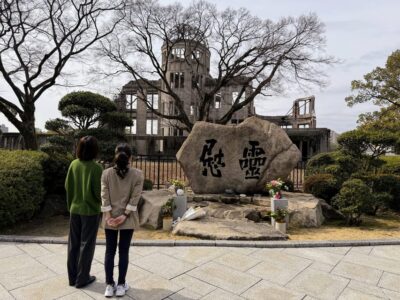
Hiroshima and Miyajima UNESCO Sites 1-Day Tour
Read our review →
Hiroshima / Miyajima Full-day Private Tour with Government Licensed Guide
Read our review →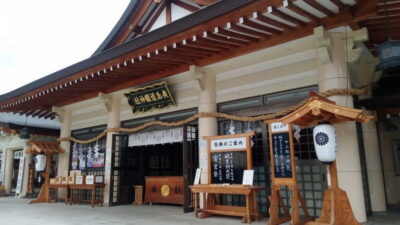
Hiroshima Historical Walking Tour – Why A-Bomb was Dropped
Read our review →
Hiroshima Peace (Heiwa) Walking Tour at World Heritage Sites
Read our review →
Hiroshima in a Nutshell: Morning Bike Adventure
Read our review →
Hiroshima City 4hr Private Walking Tour with Licensed Guide
Read our review →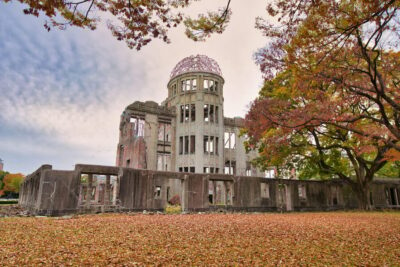
Browse the lists this tour appears in