
REVIEW · HIROSHIMA TOURS
Hiroshima: Peace Memorial Park and Atomic Bomb Dome Tour
Hiroshima’s Peace Memorial Park is easy to visit on your own, but the meaning of its monuments is not always easy to read. This $23 walking tour connects the Cenotaph, Flame of Peace, Children’s Peace Monument, Atomic Bomb Dome, and atomic bomb hypocenter into one clear story, led by a PhD scholar and local guide.
I like two things here: the guide gives attention to individual lives, including Sadako Sasaki and the Korean victims of the bombing, and the walk goes beyond the usual headline history to discuss Hiroshima’s rebuilding and life today. Guides such as Syed, Hussain, Shah, Khan, and Aaze are praised for warm, engaging explanations. The main drawback is practical: you walk a lot, often outdoors, and the experience may finish in about 90 minutes rather than the advertised two hours.
In This Review
- Hiroshima Peace Memorial Park Tour: Key Points
- Why a Guide Helps at Hiroshima’s Peace Memorial Park
- Starting at the Gates of Peace
- The Prayer Fountain and the Need for Water
- Forty Minutes Inside the Main Memorial Park
- The Flame of Peace and Cenotaph for the Victims
- Sadako Sasaki at the Children’s Peace Monument
- Remembering Korean Victims and International Support
- Ringing the Peace Bell
- Aioi Bridge and Why the Target Matters
- The Atomic Bomb Dome and Atomic Bomb Hypocenter
- What the $23 Price Really Buys You
- The Guides and Their Teaching Style
- Who Should Book This Hiroshima Walk?
- Should You Book It?
- FAQ
- How long is the Hiroshima Peace Memorial Park tour?
- What languages are available?
- Where does the tour meet?
- Is food included?
- What should I bring?
- Is the tour suitable for wheelchair users?
Hiroshima Peace Memorial Park Tour: Key Points
- The Atomic Bomb Dome is part of a connected story: You do not simply stop for a photograph. The guide explains its place in the bombing, the city’s destruction, and Hiroshima’s later peace work.
- Personal stories give the memorials a human scale: Sadako Sasaki, the Children’s Peace Monument, and stories of survivors help turn a large historical event into something more personal.
- The route includes less familiar memorials: You visit the Korean Atomic Bomb Victims Cenotaph, Prayer Fountain, Dr. Marcel Junod Memorial, and Norman Cousins Memorial.
- The guide explains why Hiroshima was selected: The discussion covers the city’s wartime role and why it became the primary target, giving useful context before or after visiting the museum.
- The walk ends at the atomic bomb hypocenter: This final stop is a direct, sobering way to understand where the explosion occurred.
- The price is unusually modest: At $23, you receive a live guide for a major historical site, though you should budget separately for food, museum admission if you choose to visit it, and personal expenses.
Why a Guide Helps at Hiroshima’s Peace Memorial Park
Peace Memorial Park is spacious, open, and beautifully arranged beside the Motoyasu River. That calm setting can make the place feel straightforward at first. In reality, almost every monument has a story, and the connections between them are easy to miss if you only walk from the Atomic Bomb Dome to the museum.
A good guide gives you a framework. You learn why the park was created, what the memorials ask you to remember, and how Hiroshima presents its past to the world today. The tour also places the atomic bombing in the wider political and military situation before 1945, an area that can receive less attention in a quick solo visit.
The guide’s role matters especially here because this is not a light sightseeing stop. The subject is painful, and the best explanations need both accuracy and restraint. Syed is described as passionate and articulate, while Hussain is praised for a gentle manner and strong command of the subject. Shah, Khan, and Aaze have also led tours, so the exact style may vary.
The activity is offered in English, Urdu, and Hindi. You can ask questions as you walk, rather than waiting until the end. That helps if you want to understand a particular memorial, clarify the timeline, or ask about Hiroshima’s recovery.
Other Hiroshima days people book alongside this one:
- Peaceful Hiroshima & Miyajima UNESCO 1 Day Bus Tour
★ 5.0 · 5,309 reviews - Hiroshima: Hiroshima and Miyajima UNESCO Sites 1-Day Tour
★ 4.9 · 2,330 reviews - Hiroshima / Miyajima Full-day Private Tour with Government Licensed Guide
★ 5.0 · 1,298 reviews
Starting at the Gates of Peace
The meeting point is the Gates of Peace, in front of the Italian restaurant Mario. This is a useful place to begin because the gates lead your attention toward the memorial area and set a reflective tone before the main monuments.
The opening guided talk lasts about 20 minutes. Here, the guide introduces Hiroshima, the purpose of the Peace Memorial Park, and the broad outline of what happened in 1945. This first explanation is important because it gives you the basic map of the site before you begin examining individual memorials.
You should arrive ready to walk rather than expecting a short series of roadside stops. One guide kept the group moving in rain, and other accounts describe the pace as well managed. Still, the amount of walking can feel substantial, especially in hot weather or under strong sun.
The Prayer Fountain and the Need for Water
The Prayer Fountain receives about 10 minutes. Its purpose connects to the suffering of people who desperately sought water after the bombing. The stop is brief, but it adds emotional weight to the park’s wider message.
This is also a good reminder to carry your own water. No food is served during the tour, and personal expenses are not included. Bring a bottle, sunscreen, a hat, and comfortable shoes. The route operates in all weather, so a rain layer is sensible if the forecast looks uncertain.
Photography is allowed, but memorial spaces call for care. You can take pictures of the architecture and park, yet you should avoid treating the site like a casual photo stop. The guide can help explain what deserves a quiet pause.
Forty Minutes Inside the Main Memorial Park
The central Peace Memorial Park portion takes about 40 minutes, making it the longest scheduled part of the route. This is where the tour gains much of its value. Rather than pointing out monuments in isolation, the guide explains how the park’s design, memorials, and river setting work together.
You learn about the lives lost in 1945 and the city’s later decision to build a place devoted to peace. The guide also discusses how Hiroshima rebuilt itself from destruction into a modern city and an international symbol of peace. That shift is one of the most useful parts of the walk. Hiroshima is not presented only as a place frozen in tragedy. You also hear about its traditions, food, contemporary landmarks, and daily life today.
The tour includes the Hiroshima National Peace Memorial Hall. The supplied schedule does not give it a separate timed stop, so ask your guide how it fits into your particular walk. The same applies to the Dr. Marcel Junod Memorial and Norman Cousins Memorial. They are included among the points covered, though the exact amount of time at each may depend on the group and pace.
One useful feature is the chance to ask questions. The route provides a broad introduction rather than a full museum visit, so you may leave with subjects you want to explore more closely at the Hiroshima Peace Memorial Museum.
Same city, a completely different kind of day:
- Hiroshima Historical Walking Tour – Why A-Bomb was Dropped
★ 4.8 · 893 reviews - Hiroshima Peace (Heiwa) Walking Tour at World Heritage Sites
★ 5.0 · 872 reviews - Hiroshima in a Nutshell: Morning Bike Adventure
★ 5.0 · 524 reviews - Hiroshima City 4hr Private Walking Tour with Licensed Guide
★ 5.0 · 437 reviews
The Flame of Peace and Cenotaph for the Victims
The Flame of Peace receives about 20 minutes. Its message is direct: the flame will continue burning until the world is free of nuclear weapons. In the park’s quiet setting, it offers a clear link between remembrance and Hiroshima’s call for peace.
The Cenotaph for the A-bomb Victims is one of the central stops. This is where you pay tribute to those who died. The guide explains its inscription and purpose, giving the monument more meaning than you would get from a quick photograph.
The tone here is necessarily serious. One of the strengths of this walk is that the guides allow room for questions and personal reflection instead of rushing from one landmark to the next. The explanations may include individual stories of people who survived and people who did not, which makes the scale of the bombing easier to grasp.
You should not expect entertainment in the usual sightseeing sense. The guides are described as engaging and even friendly, but the topic remains heavy. That balance suits the location. You get clear information without the memorials being treated as a performance.
Sadako Sasaki at the Children’s Peace Monument
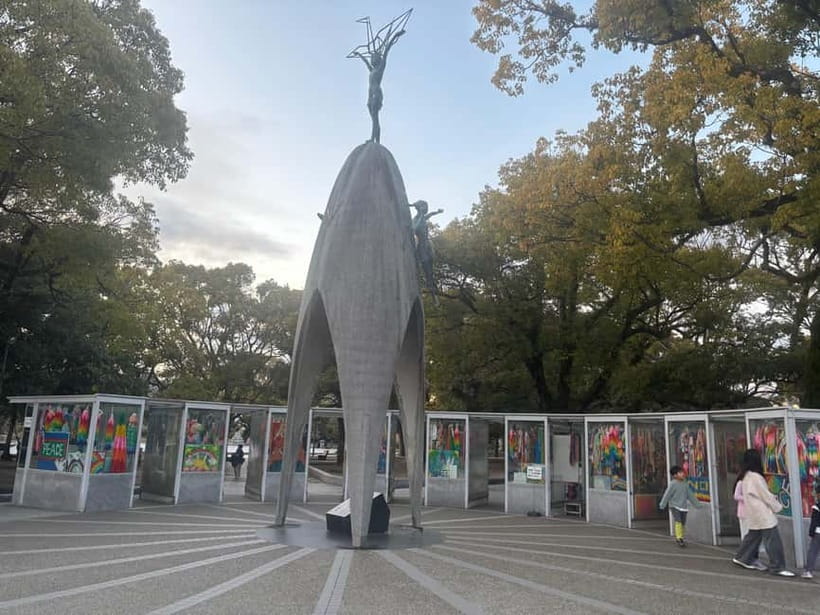
The Children’s Peace Monument takes about 10 minutes. It is closely tied to Sadako Sasaki and the story of the thousand paper cranes, one of the most widely known personal stories connected with Hiroshima.
This stop is especially effective for families and younger visitors because it gives a child’s perspective on the aftermath of the bombing. The monument also helps explain how paper cranes became a sign of hope and a call for peace.
The stop is short, so do not expect a long workshop or time to make cranes during the tour. Instead, you receive the story and its connection to the monument. If this subject matters to you, note the location so you can return later at your own pace.
Remembering Korean Victims and International Support
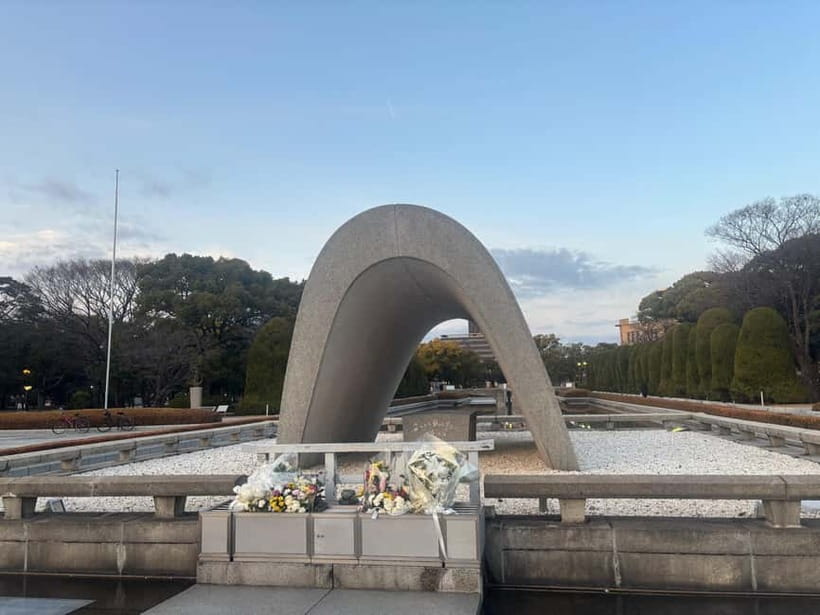
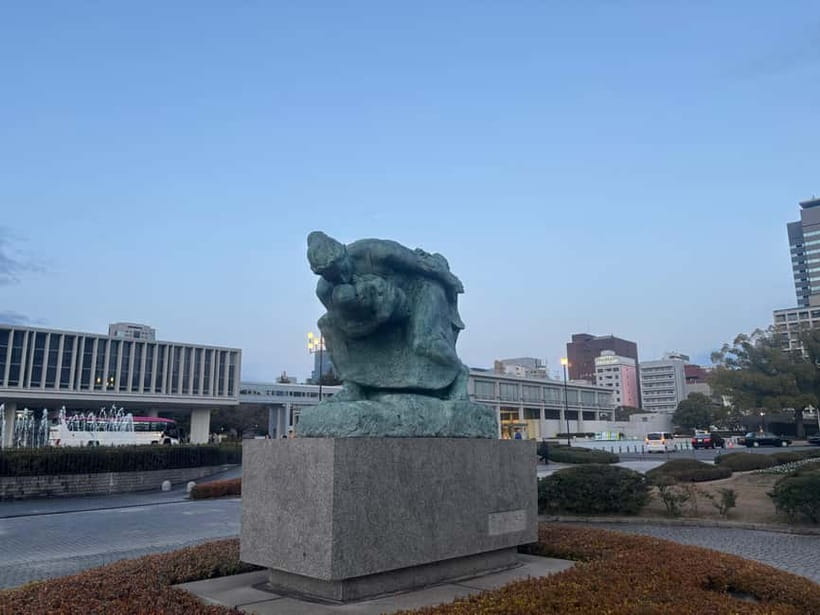
The Korean Atomic Bomb Victims Cenotaph is a valuable addition to the route. It reminds you that people from outside Japan were also among those affected by the bombing. This broadens the story beyond Hiroshima’s Japanese victims and gives the memorial park a more international scope.
The Dr. Marcel Junod Memorial and Norman Cousins Memorial add further international links. Including these stops signals that Hiroshima’s story is not only local or national. It has drawn medical, humanitarian, and peace advocates from around the world.
These are the sort of details you might pass without noticing alone. The route does not require you to know the park in advance, and the guide can point out why each memorial belongs in this setting.
Ringing the Peace Bell
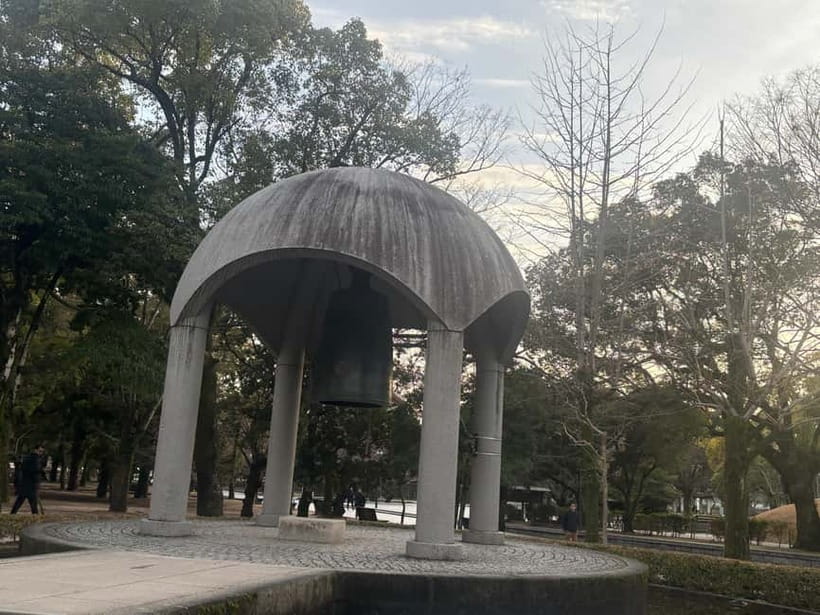
The Peace Bell is scheduled for about 10 minutes. You have the chance to ring it as a symbol of hope and world peace. This is one of the more active moments on an otherwise reflective walk.
The bell gives the group a shared gesture, but it is still wise to approach it with respect. The point is not simply to create a sound or a photograph. It is a small act that reflects the park’s larger message.
The tour’s mix of listening, walking, and brief participation keeps the two hours from becoming a lecture. That helps explain why guides receive praise for keeping adults, teenagers, and mixed groups involved.
Aioi Bridge and Why the Target Matters
At Aioi Bridge, the guide discusses the bombing’s target and the bridge’s place in the story. The tour explains why Hiroshima was selected as the primary target, rather than leaving that question for you to piece together later.
This part is valuable because the choice of target is often reduced to a single sentence. Here, you can ask about the wartime setting and the factors that shaped the decision. The exact detail and emphasis will depend on your guide, but the purpose is clear: to connect the bridge and surrounding area with the events of August 1945.
The bridge also helps you see how the memorial area relates to the city around it. Hiroshima is not an isolated historical exhibit. Streets, rivers, restaurants, and modern city life continue right beside these places of remembrance.
The Atomic Bomb Dome and Atomic Bomb Hypocenter
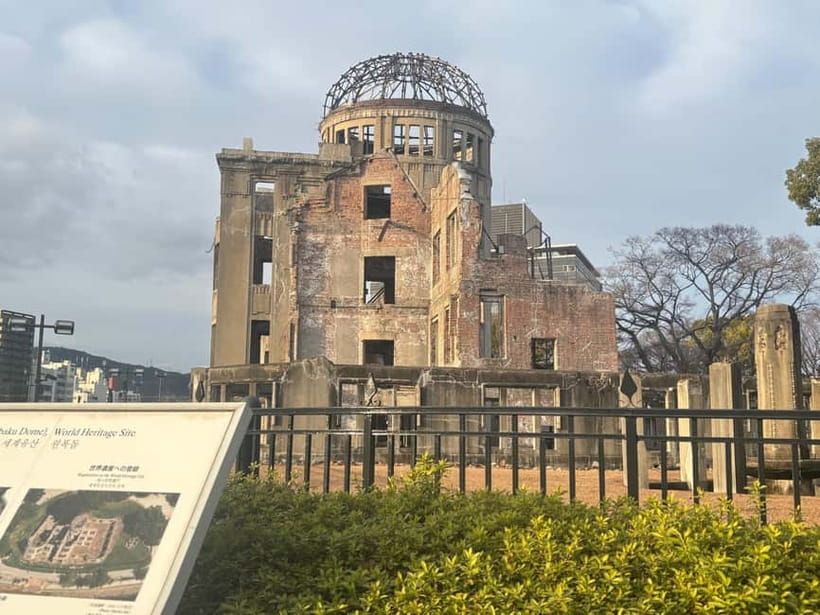
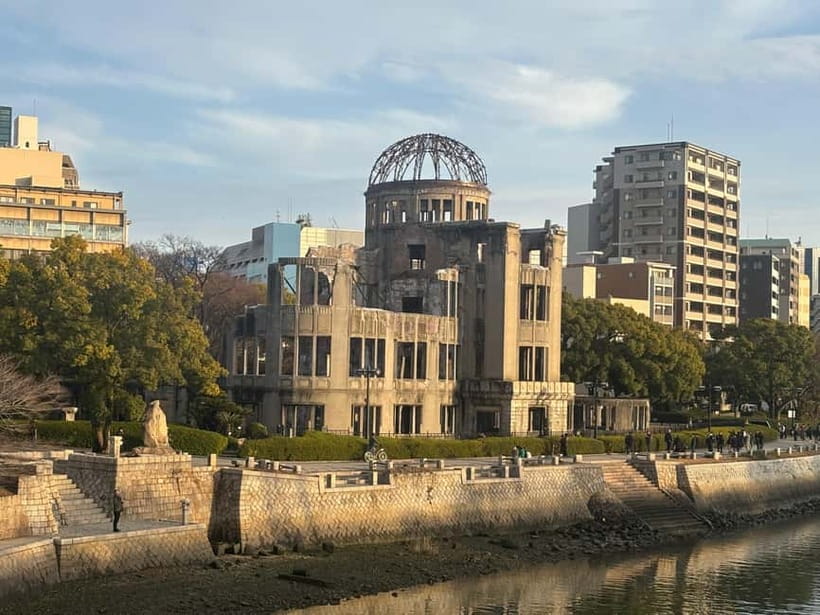
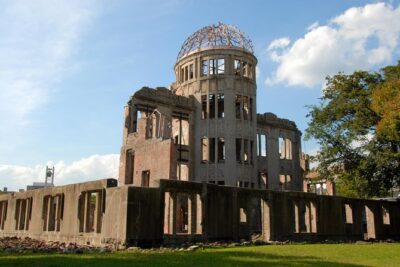
The Atomic Bomb Dome is the best-known sight on the route and a UNESCO World Heritage Site. Its damaged structure is powerful because it remains physically tied to the event, while the surrounding city was rebuilt.
Your guide explains what the building was, why it survived in its ruined form, and how it became a symbol of Hiroshima’s peace message. The scheduled visit is about 10 minutes, so you will probably want to return later if you wish to study the exterior at length or take more photographs.
The tour finishes at the Hiroshima Atomic Bomb Hypocenter Monument. This is a particularly strong ending because it identifies the point directly beneath the explosion. After visiting monuments that speak about remembrance and peace, you arrive at a marker tied to the event’s physical center.
The final stop can feel abrupt if the tour runs closer to 90 minutes. One family found that the shorter ending gave them useful context for exploring independently over the following days, but expected the full advertised two hours. I suggest leaving extra time afterward rather than scheduling an immediate train, meal, or museum appointment.
What the $23 Price Really Buys You
At $23 per person, this is a strong-value introduction to Hiroshima’s memorial district. You receive a live guide, a connected route through major landmarks, personal stories, and explanations of smaller memorials that are easy to overlook.
The value is greatest if you are visiting the park for the first time. A guide can help you understand the difference between the Cenotaph, the Flame of Peace, the Children’s Peace Monument, and the various international memorials. You also save time figuring out the route.
This is not a complete Hiroshima day tour. Hotel transport is not included, food is not included, and the walk does not replace a careful visit to the Peace Memorial Museum. Think of it as a well-priced introduction that helps you decide what deserves more of your time.
The booking terms are flexible. You can cancel up to 24 hours in advance for a full refund, and reserve now while paying later. The tour is not suitable for wheelchair users or people with mobility impairments, and smoking is not allowed.
The Guides and Their Teaching Style
The most praised feature is the guide’s delivery. Syed is repeatedly described as friendly, enthusiastic, engaging, and clear in English. He also sends messages before the start on some bookings and gives lunch suggestions afterward, including recommendations for okonomiyaki.
Hussain is described as warm and well informed, with a gentle approach to difficult material. Shah, Khan, and Aaze have also led groups, with Aaze receiving credit for involving both teenagers and adults. One booking had confusion over the start time, though the guide resolved it. Confirm your start time carefully before setting out.
The best guide for this subject is not simply the person who knows the most dates. You want someone who can explain the wider political setting, remember individual victims, answer questions, and give you quiet time when the subject calls for it. The feedback supplied here points strongly in that direction, though exact guide assignment can vary.
Who Should Book This Hiroshima Walk?
I would book this tour if you want a clear first look at Hiroshima Peace Memorial Park, especially if you have limited time or prefer learning through conversation. It suits solo visitors, couples, families with older children, and anyone who wants help finding the park’s less obvious memorials.
It is also useful before visiting the museum. The walk gives you a physical and historical map, so the museum’s displays have more context. You can also take notes about places to revisit on your own.
I would hesitate if you dislike walking, need guaranteed wheelchair access, or want a slow photography tour. The route runs in all weather, has no meal break, and may be shorter than two hours. You should also approach it with the right mindset: this is a serious memorial experience, not a sightseeing loop built around quick entertainment.
Should You Book It?
Yes, if you want an affordable, human explanation of Hiroshima’s most important memorial sites. The strongest reasons are the guide’s personal storytelling, the inclusion of the Korean victims’ cenotaph and other international memorials, and the final visit to the atomic bomb hypocenter.
Book it early in your Hiroshima stay if possible. Then you can return to the Atomic Bomb Dome, Children’s Peace Monument, or museum with a better sense of what you are seeing. Just wear practical shoes, bring water and sun protection, allow for rain, and keep your schedule open after the tour in case the walk ends early or you want time to reflect.
FAQ
How long is the Hiroshima Peace Memorial Park tour?
The advertised duration is two hours. The route includes several timed stops, but one booking lasted about 90 minutes, so allow some flexibility in your schedule.
What languages are available?
The live tour guide is available in English, Urdu, and Hindi.
Where does the tour meet?
The meeting point is at the Gates of Peace, on the front side of the Italian restaurant Mario.
Is food included?
No. The tour does not serve food, and personal expenses are not included. Bring water and arrange your own meal before or after the walk.
What should I bring?
Wear comfortable walking shoes and bring water, a hat, sunscreen, and a camera. Dress for the weather because the tour operates in all conditions.
Is the tour suitable for wheelchair users?
No. The experience is not suitable for wheelchair users or people with mobility impairments.
Just added around Hiroshima
- The Journey of Hiroshima from Tragedy to Peace★ 4.8 · 44 reviews
- Miyajima: Private Rickshaw Tour to Itsukushima Shrine★ 4.9 · 45 reviews
- Hiroshima: Miyajima Half-day Historical Walking Tour★ 4.7 · 100 reviews
- Hiroshima:Guided Virtual Tour/PEACE PARK TOUR VR★ 5.0 · 29 reviews
- Hiroshima/Miyajima Private Custom Tour with Local Guide★ 5.0 · 134 reviews
- Hiroshima: Saijo Sake Tasting at 7 Breweries Guided Tour★ 4.8 · 29 reviews
- Hiroshima: Tour of Atomic Bomb Dome & Peace Memorial Museum★ 5.0 · 20 reviews
- Hiroshima: Private Walking Tour with a Local★ 4.6 · 70 reviews
Hiroshima Tours, compared.
Peaceful Hiroshima & Miyajima UNESCO 1 Day Bus Tour
Read our review →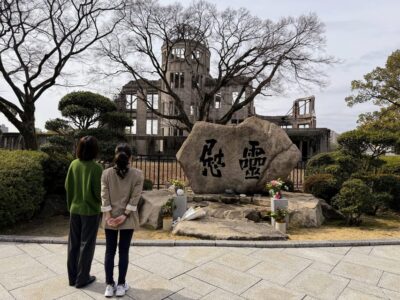
Hiroshima and Miyajima UNESCO Sites 1-Day Tour
Read our review →
Hiroshima / Miyajima Full-day Private Tour with Government Licensed Guide
Read our review →
Hiroshima Historical Walking Tour – Why A-Bomb was Dropped
Read our review →
Hiroshima Peace (Heiwa) Walking Tour at World Heritage Sites
Read our review →
Hiroshima in a Nutshell: Morning Bike Adventure
Read our review →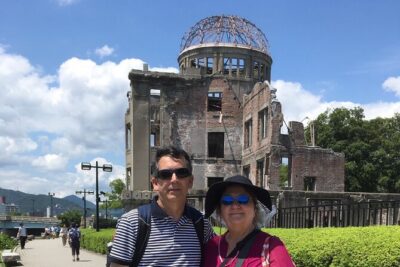
Hiroshima City 4hr Private Walking Tour with Licensed Guide
Read our review →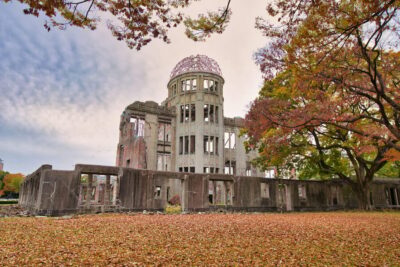
Browse the lists this tour appears in