
REVIEW · JAPAN
Halfway Up Mt,Fuji, Oshino Hakkai, Kawaguchiko from Tokyo
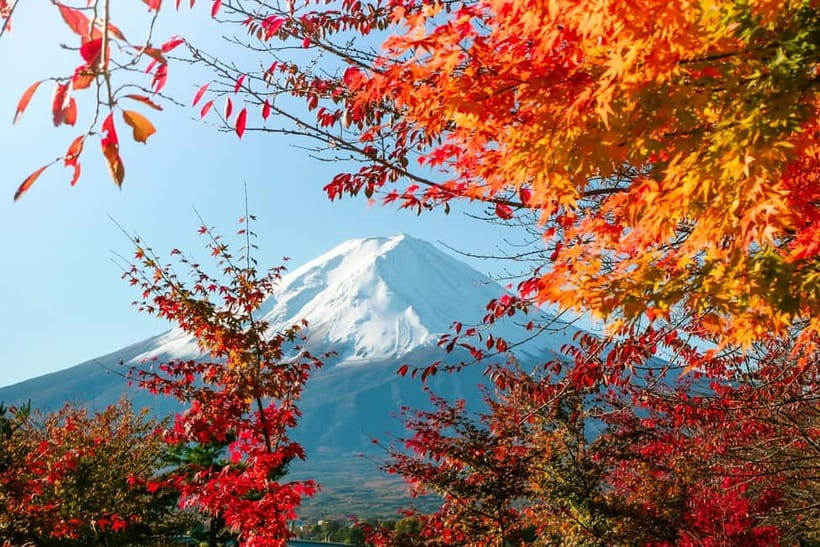
Mount Fuji is the star here, and the best moment comes high on the mountain at 5th Station, where clear weather can open views across the Fuji Five Lakes area. I like that the day also includes quiet ponds at Oshino Hakkai and a useful lunch break by Lake Kawaguchi, rather than rushing from one lookout to the next.
I also like the range of stops: mountain scenery, local food, a social-media-famous shopping street, and traditional spring-fed ponds. The main caution is practical: weather and traffic control the day. When clouds cover Fuji, or roads clog up, the tour can feel like a long bus ride with short stops.
In This Review
- Key points to know before booking
- What this Mount Fuji day tour is really like
- 5th Station: Fuji’s high viewpoint
- Lake Kawaguchi and the one-hour lunch break
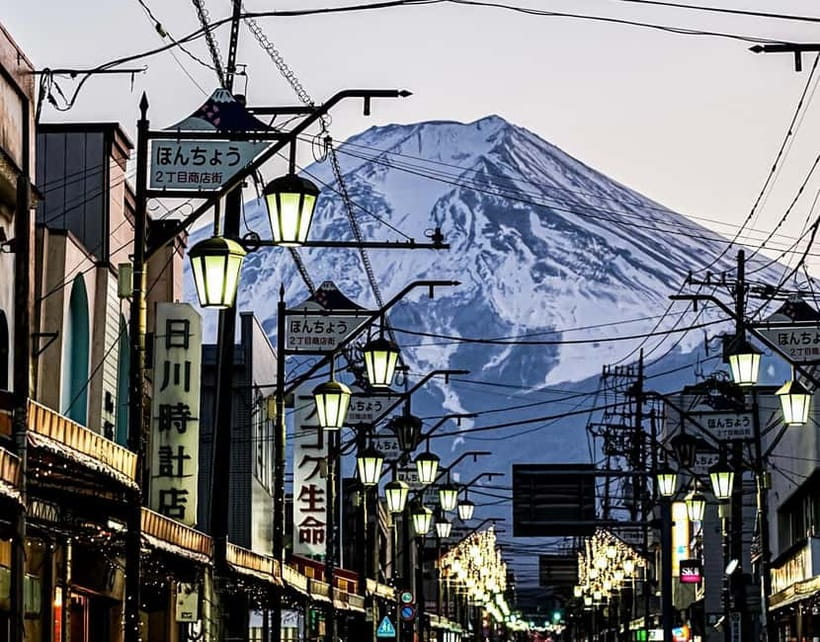
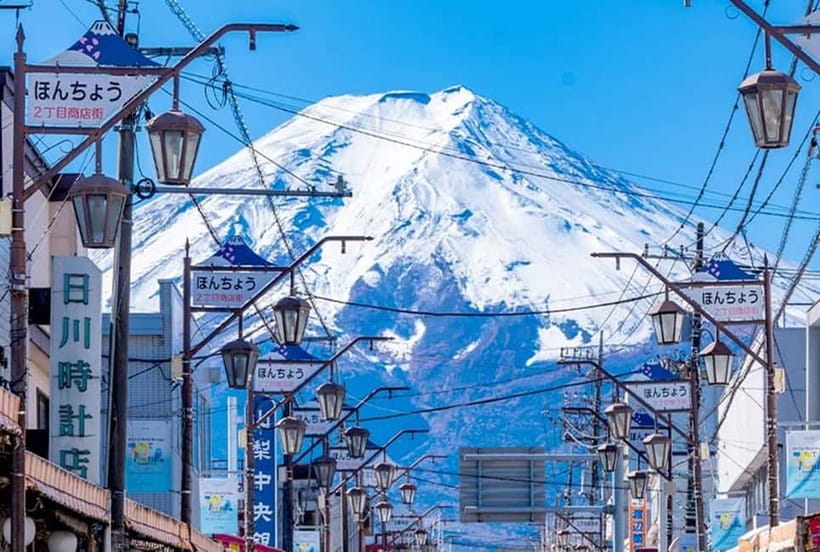
- Fuji Michi and the famous clock shop view
- Oshino Hakkai: clear water and a commercial edge
- Weather, traffic, and the risk of a shortened day
- Guides, language, and transport standards
- Who will get the most from the $74 price
- Practical ways to make the day better
- Should you book this Mount Fuji tour?
- FAQ
- Where does the tour start?
- Where does the tour finish?
- How long does the tour last?
- Is hotel pickup and drop-off included?
- Is Mount Fuji guaranteed to be visible?
- What happens if Mount Fuji’s 5th Station is closed?
- Is lunch included?
- Can I visit the Kawaguchiko Music Forest Museum?
- Which languages are available?
- Can infants join the tour?
- Can I bring large luggage?
- Is the tour suitable for wheelchair users?
- What is the cancellation policy?
Key points to know before booking
- Mount Fuji views depend entirely on the weather: The 5th Station may be misty, and the mountain can disappear from the other photo stops too.
- Lake Kawaguchi gives you a full hour: You can eat at Kawaguchiko Craft Park or use the break to explore nearby sights independently.
- Fuji Michi is a quick urban photo stop: The famous view includes traditional signs, lanterns, and overhead wires, but you must stay off the road.
- Oshino Hakkai mixes clear ponds with souvenir shops: It is attractive, though the setting may feel more commercial than tranquil.
- The ride begins in Tokyo and ends at Shinjuku: There is no hotel pickup or drop-off, and exact meeting points depend on your booking.
- This suits mobile sightseers more than slow-paced visitors: The tour involves getting on and off a vehicle several times and is not suitable for wheelchair users or people with mobility impairments.
What this Mount Fuji day tour is really like
This is a long, tightly timed day from Tokyo. You leave from one of two stated starting points, Ueno Park or Shinjuku Post Office, then finish at Shinjuku Post Office. The vehicle is air-conditioned, and the guide speaks English, Chinese, or both depending on the departure.
The advertised price is $74 per person, including transport, guide service, entrance fees, and taxes. That is fair for a full-day outing from Tokyo, especially because reaching the Fuji area independently involves planning train or bus connections and arranging local transport.
The trade-off is control. You do not choose how long to stay at each place, and you cannot count on a calm, leisurely day. The tour runs in poor weather and may be shortened if holiday traffic or severe conditions cause delays. I would treat it as an efficient introduction to the area, not a relaxed private tour.
Other Japan days people book alongside this one:
- Mt Fuji and Hakone 1-Day Bus Tour Return by Bullet Train
★ 5.0 · 26,383 reviews - 1-Day Tokyo Bus Tour
★ 5.0 · 14,250 reviews - PERFECT KYOTO 1-Day Bus Tour
★ 5.0 · 13,518 reviews
5th Station: Fuji’s high viewpoint
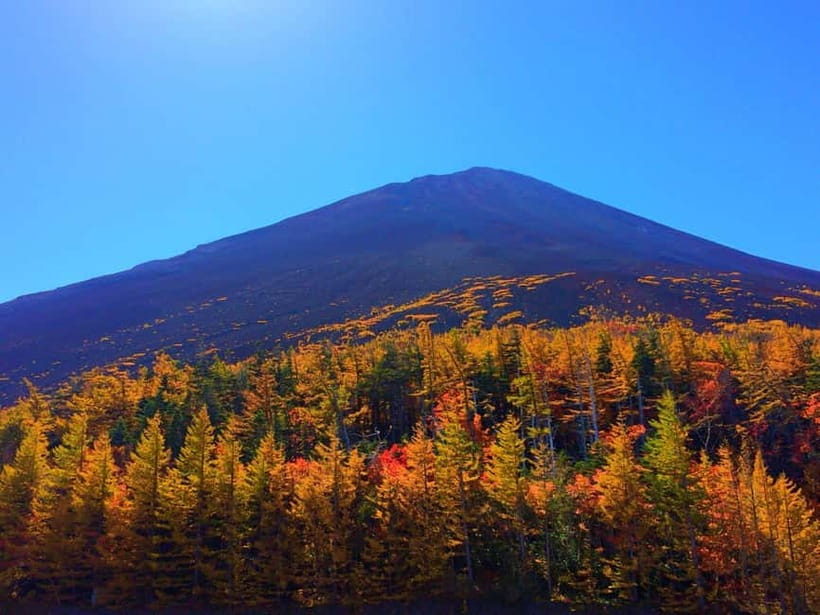
The first major stop is Mount Fuji’s 5th Station, with about 40 minutes to look around and take photographs. It is a popular stopping point on the mountain, and its appeal is simple: you are much higher than Tokyo, with a chance to see across the Fuji Five Lakes region.
That chance matters. The tour does not promise a clear view, and it cannot control clouds, rain, or storms. A sunny forecast in Tokyo does not guarantee good visibility at 5th Station. If Fuji is hidden, you may still enjoy the mountain setting, but the signature photograph will be missing.
The operator gives an alternative if the 5th Station is closed: the Yamanashi Prefectural Mount Fuji World Heritage Center. This is a useful backup, though it is a different kind of stop. You would be visiting a cultural and educational site rather than reaching the mountain itself.
Forty minutes is enough for a quick look and photographs. It is not enough for a long walk or a serious mountain outing. Wear shoes that are comfortable on uneven ground, and keep your belongings compact because oversize luggage is not allowed.
Lake Kawaguchi and the one-hour lunch break
The Lake Kawaguchi stop lasts about an hour and combines lunch with free time. The stated lunch location is Kawaguchiko Craft Park, set near the lake and surrounded by natural scenery. Local food options include hoto noodles and Koshu beef.
Hoto noodles are especially fitting here. This regional Yamanashi dish is a thick noodle stew, generally associated with hearty eating in the Fuji area. It gives you a more local meal option than simply grabbing a standard fast-food lunch, though the meal plan details depend on the option you select.
If you choose the free meal plan, you receive 60 minutes to explore and arrange your own food. The timing is strict, so do not wander too far. You need to return to the vehicle on time, and the tour cannot wait for late arrivals.
Two nearby suggestions are Momiji Kairo, also called the Maple Corridor, and the Kawaguchiko Music Forest Museum. Momiji Kairo is most attractive in autumn, when maple trees turn color. The Music Forest Museum has automatic musical instruments and landscaped gardens, but admission is not included.
I like this part of the day because it gives you a choice. You can keep things simple with lunch at the craft park, or use the break for a short independent visit. The limitation is that one hour disappears quickly once you account for finding food, walking, taking photographs, and returning to the bus.
Fuji Michi and the famous clock shop view
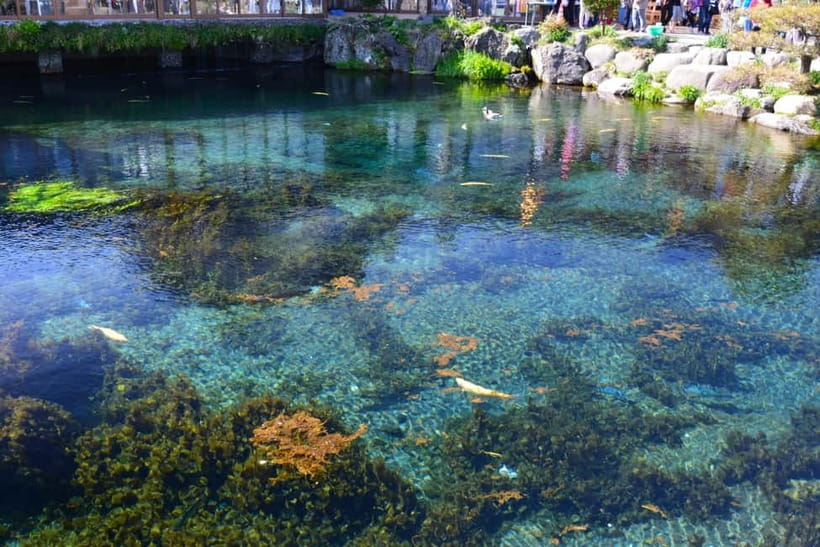
The stop listed as Hikawa Clock Shop is also described as Fuji Michi, or Honcho Street. You get about 30 minutes for photographs. The appeal is not wilderness or old temple architecture. It is the contrast between Mount Fuji in the distance and an ordinary Japanese shopping street in the foreground.
Traditional shop signs, lanterns, utility wires, and the mountain can combine into a striking frame. That slightly cluttered view is exactly what makes the scene popular online. It feels more like a real neighborhood than a purpose-built lookout.
This is also the stop where good manners matter most. Fuji Michi is a shopping and residential area, not a private photo studio. Do not take pictures while standing in the roadway. Keep noise low, stay clear of local businesses, and follow the guide’s instructions.
Thirty minutes is generous for one main photograph, though less so if the street is crowded or you want to browse. I would arrive with the composition in mind, take a few careful shots, and then use the remaining time to look around without blocking residents.
Same city, a completely different kind of day:
- Tokyo: TOKYO SKYTREE® Admission ticket
★ 4.5 · 11,192 reviews - Tokyo: teamLab Planets TOKYO Digital Art Museum Entry Ticket
★ 4.6 · 9,779 reviews - Mt Fuji & Hakone Cruise, Drum Show Bullet Train 1 Day from Tokyo
★ 4.0 · 7,413 reviews - Tokyo: Sumo Show Experience with Chicken Hot Pot and a Photo
★ 4.8 · 6,678 reviews
Oshino Hakkai: clear water and a commercial edge
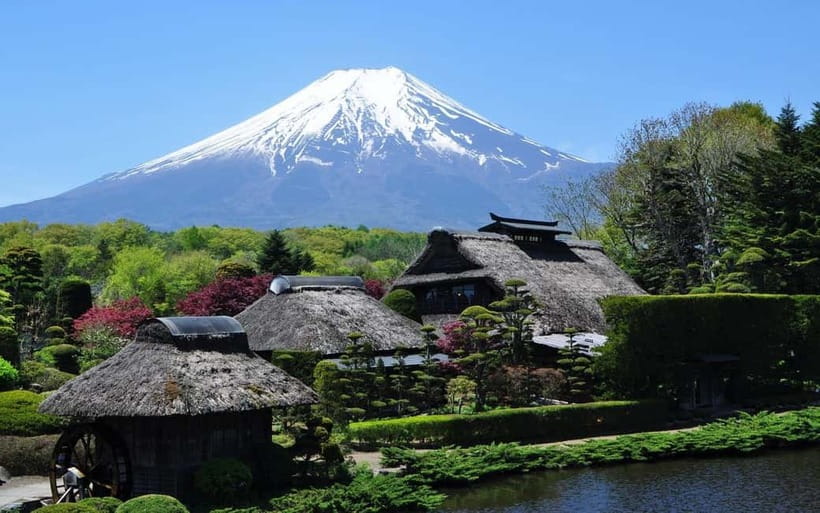
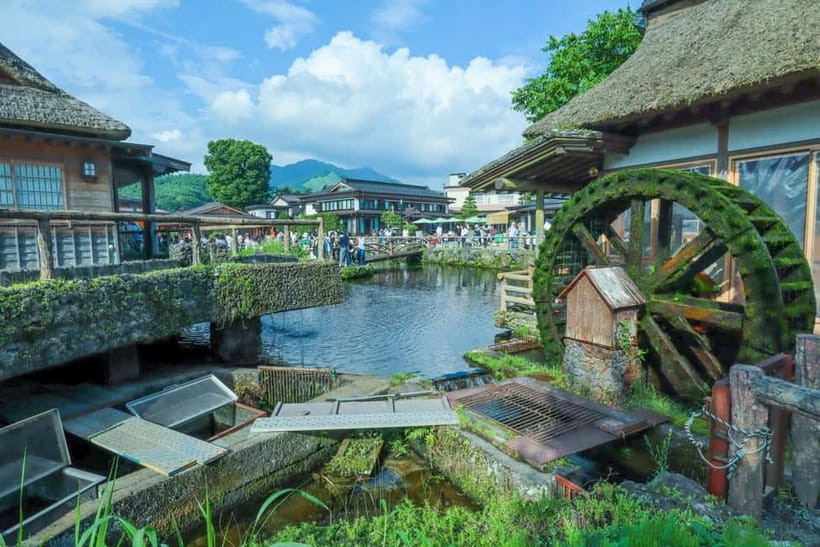
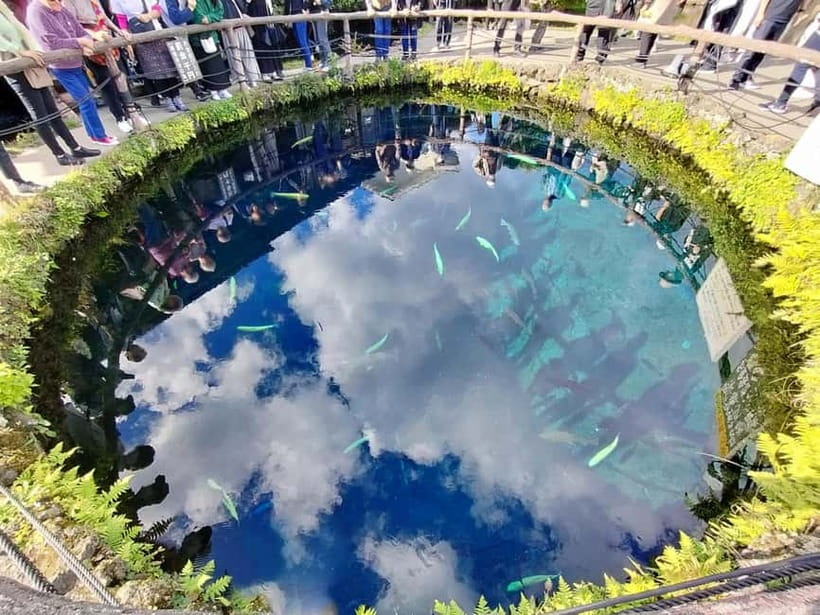
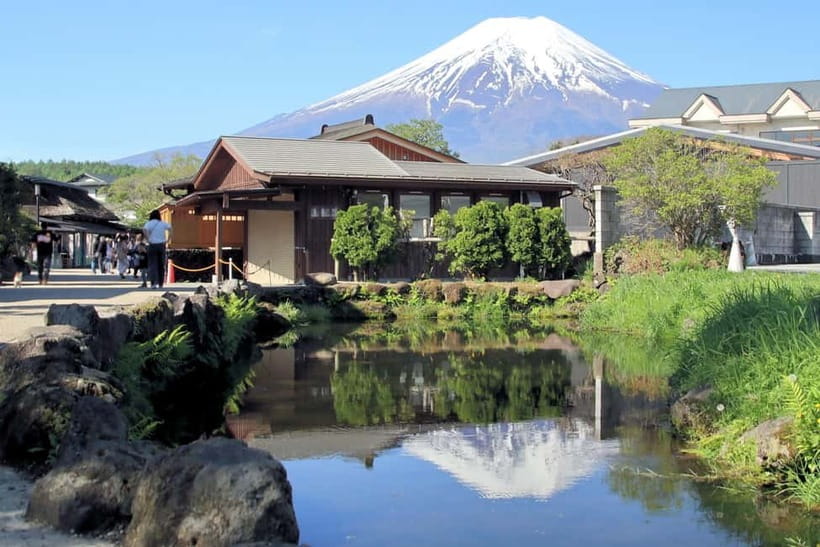
The final major stop is Oshino Hakkai, where you have roughly 50 minutes for sightseeing and shopping. The site is known for eight ponds fed by snowmelt from Mount Fuji. The water, wooden paths, greenery, and mountain setting give the area a strong traditional feel.
The ponds are recognized as a national natural monument. Each has its own name and place in local folklore, so this is more than a quick scenic stop. Look closely at the water and the way the springs are arranged, then take time to notice the small details around the paths.
You should also set your expectations. Oshino Hakkai is not an untouched rural retreat. Shops and souvenir stalls surround much of the visitor area, and the overall feel can be commercial. Some of the appeal comes from browsing local products and snacks, while other parts may feel crowded or less serene than the photographs suggest.
Fifty minutes is enough to see the main ponds and browse a little. It is not enough for a slow study of every corner. If you want the clearest water and the most peaceful photographs, move away from the busiest shop areas when the schedule allows.
Weather, traffic, and the risk of a shortened day
Mount Fuji tours live or die by visibility. Even when the tour runs as planned, you may see only cloud at the 5th Station, Lake Kawaguchi, or Fuji Michi. Rain and thunderstorms have already made some departures poor sightseeing days, with little or no mountain view.
The operator does not cancel simply because the forecast looks unpleasant. The vehicle normally departs unless you receive a direct notice that plans have changed. This makes the flexible cancellation policy useful before the 24-hour cutoff, but once you are on the road, the weather is part of the gamble.
Traffic is the other major risk. The tour lasts about 10 hours, but that is approximate. Holiday congestion or bad weather can cause delays, and the operator may reduce planned attractions without a refund if conditions become severe.
I would avoid placing an important evening reservation immediately after this trip. A late return is possible, particularly during busy travel periods. Keep the day open and carry water, snacks, and a light rain layer.
Guides, language, and transport standards
The tour includes an English-speaking or Chinese-speaking guide. Depending on the number of people booked, English and Chinese participants may share one bus. That arrangement can work well when the guide gives clear instructions in both languages, but it may feel less satisfying if you expect long commentary in English.
Guide quality appears to be an important part of the experience. One departure was rescued by a guide who kept working hard through rain and thunder, while another had complaints about little or no English guidance. Since no guide names are provided in the booking details, you should view the language service as available but not necessarily equally strong on every departure.
The transport is described as an air-conditioned vehicle, but comfort can vary. A cramped minibus has been a problem on at least one departure, and one serious mechanical incident led to four vehicle changes and waiting time. That is not a normal feature of the advertised tour, but it is a useful reminder that a low-cost group excursion cannot offer the same comfort or backup as a private car.
Do not bring oversize luggage. Smoking, alcohol, and drugs are not permitted. Be at the correct meeting point 10 minutes early. The vehicle cannot wait for late arrivals, even if you contact the operator after departure time.
Who will get the most from the $74 price
At $74, this is good value for someone who wants to see several Fuji-area highlights without arranging transport. The price covers the air-conditioned ride from Tokyo, the guide, transport back to Tokyo, taxes, and stated fees. You also get a full day outside the city for less than the cost and effort of piecing together several separate connections.
The value drops if your main goal is one perfect Mount Fuji photograph. The tour cannot control the clouds, and the time at each stop is limited. A poor-weather day can leave you with little scenery despite paying for the same route.
I would choose this for a first visit to the Fuji area, a solo visitor who wants a simple transport solution, or anyone who enjoys mixing scenic stops with food and shopping. It also suits photographers who like both mountain views and the unusual street scene at Fuji Michi.
I would hesitate if you dislike group schedules, need generous walking time, or have a fixed dinner booking in Tokyo. People with mobility impairments and wheelchair users should not book this experience because it is specifically not suitable for them.
Practical ways to make the day better
Check the weather for the Fuji area, not only Tokyo, before you go. If the forecast is poor, lower your expectations for the 5th Station and Fuji Michi, and think of the day as a regional outing rather than a guaranteed mountain-view trip.
Keep your bag small and your essentials close. A phone charger, water, rain protection, and cash for personal expenses will make the day easier, though the tour information does not specify which payment methods every stop accepts.
If lunch is not included in your selected option, decide in advance whether you want to eat at Kawaguchiko Craft Park or use the hour for another nearby stop. The Music Forest Museum requires a separate admission fee.
Take photographs responsibly at Fuji Michi. The famous angle is tempting, but stepping into the road is unsafe and disruptive. At Oshino Hakkai, save a few minutes for the ponds themselves before shopping takes over the stop.
Finally, do not schedule this as a tight connection day. Ten hours is an estimate, and traffic can change the return time.
Should you book this Mount Fuji tour?
Book it if you want a well-priced, all-in-one day trip from Tokyo and can accept a fixed schedule. The route covers the 5th Station, Lake Kawaguchi, Fuji Michi, and Oshino Hakkai, giving you several different views of the Fuji region in one outing.
Skip it if you need guaranteed mountain views, quiet exploration, accessible transport, or reliable premium comfort. The strongest parts are the variety of stops and the guides who work hard in difficult weather. The weak points are short visits, possible language inconsistencies, traffic delays, and the chance that clouds hide Fuji.
For the right person, $74 is a sensible way to get beyond Tokyo for a day. Just book with realistic expectations: the mountain decides how much of itself you see.
FAQ
Where does the tour start?
The tour has two possible starting locations: Ueno Onshi Park and Shinjuku Post Office. The exact meeting point depends on the option selected when booking.
Where does the tour finish?
The stated finish point is Shinjuku Post Office.
How long does the tour last?
The planned duration is about 10 hours. The actual return time can change because of traffic and weather.
Is hotel pickup and drop-off included?
No. Hotel pickup and drop-off are not provided. You must reach the assigned meeting point independently.
Is Mount Fuji guaranteed to be visible?
No. Visibility depends on the weather. The tour runs in poor conditions unless the local operator tells you otherwise.
What happens if Mount Fuji’s 5th Station is closed?
The itinerary is adjusted to visit the Yamanashi Prefectural Mount Fuji World Heritage Center.
Is lunch included?
The tour provides a 60-minute lunch break near Lake Kawaguchi. Depending on the selected option, you may have a meal plan or free time to arrange your own food. Personal expenses are not included.
Can I visit the Kawaguchiko Music Forest Museum?
You may use the one-hour Lake Kawaguchi break to visit it if time allows. The admission fee is not included.
Which languages are available?
Guides are available in English and Chinese. English-speaking and Chinese-speaking participants may share the same vehicle.
Can infants join the tour?
Infants under three years old are free without a seat. If an infant needs a seat, you must book at the children’s price.
Can I bring large luggage?
No. Oversize luggage is not allowed.
Is the tour suitable for wheelchair users?
No. The experience is not suitable for wheelchair users or people with mobility impairments.
What is the cancellation policy?
You can cancel up to 24 hours before departure for a full refund. The reserve-now, pay-later option is also available.
Just added around Japan
- Samurai Experience Mugai Ryu Iaido in Tokyo★ 5.0 · 40 reviews
- Private Sushi Making with a Sushi Master★ 5.0 · 102 reviews
- Retro Shibuya Food Tour★ 5.0 · 33 reviews
- Ride Through The Streets Of Shibuya and Sinjuku By Go Kart★ 5.0 · 86 reviews
- Tokyo Sumo Culture Tour with Chanko-Nabe Lunch in Ryogoku★ 5.0 · 26 reviews
- Cozy Tokyo Class: Ramen, Sushi, Sake Pairing & Cultural Exchange★ 5.0 · 74 reviews
- Tokyo Night Bike Tour: From Shibuya to Tokyo Tower via Roppongi★ 5.0 · 29 reviews
- Ride a rickshaw wearing a kimono in Asakusa! Enjoy authentic traditional culture!★ 5.0 · 14 reviews