
REVIEW · HISTORICAL TOURS
Fukuoka’s Sacred Path: Temples, History & Culture
Japan’s first Zen temple, a 10.8-meter wooden Buddha, an underground passage, and a shrine filled with festival history all fit into one afternoon in central Fukuoka. This walking tour links the old Hakata district with modern Canal City, so you get both quiet temple grounds and the city’s everyday energy.
I like the easy mix of temples and modern Fukuoka, and I like that the guides explain how Buddhism and Shinto are practiced side by side. Andy, Paula, and Arianna have each led this experience, with Andy especially noted for his patient pace and useful food and market suggestions.
The catch is simple: this is a proper walking tour, not a short hop between sights. Allow for several hours on your feet, and wear shoes that can handle pavement, temple approaches, and a leisurely walk back to Hakata Station.
In This Review
- Key points at a glance
- Why this Fukuoka walk works so well
- Starting at Hakata Station
- Shōfukuji, where Japanese Zen began
- Tōchōji and the 10.8-meter wooden Buddha
- Kushida Shrine and Hakata’s festival spirit
- Canal City brings the route into the present
- Sumiyoshi Shrine and a fitting finish
- The walk back and what three hours really means
- Guide style and language choices
- Is $77 a fair price?
- Who should book this walk?
- Should you book Fukuoka’s Sacred Path?
- FAQ
- How long does Fukuoka’s Sacred Path tour last?
- Where does the tour start?
- Where does the tour finish?
- Which languages are available?
- Is this a private tour?
- What sights are included?
- Is transportation included?
- Are food and drinks included?
- What should I bring?
Key points at a glance
- Japan’s first Zen temple: See Shōfukuji, founded in 1195 by Eisai, who brought Zen Buddhism from China.
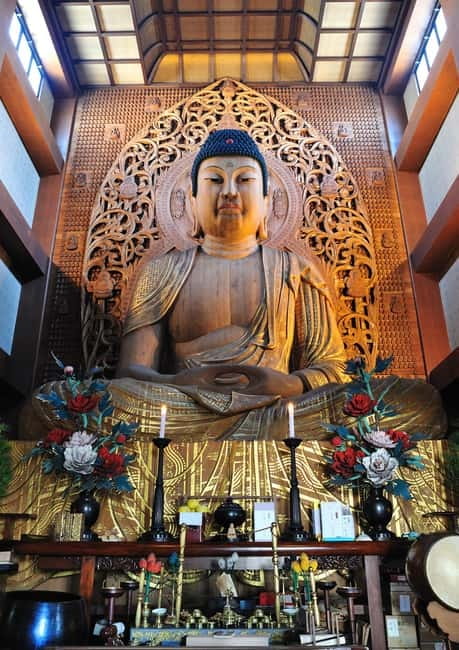
- A giant wooden Buddha: Tōchōji’s 10.8-meter statue is the visual high point, with an unusual underground passage nearby.
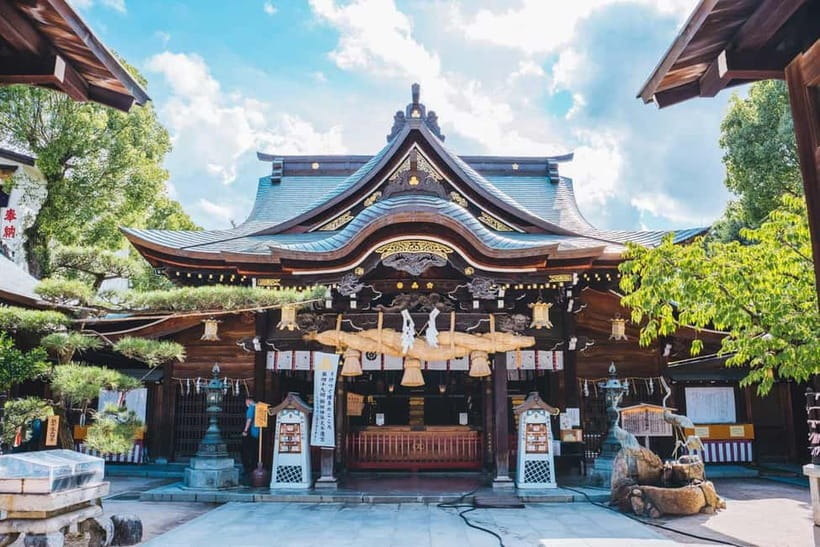
- Festival life at Kushida Shrine: Learn why the Hakata Gion Yamakasa festival matters so much to Fukuoka.
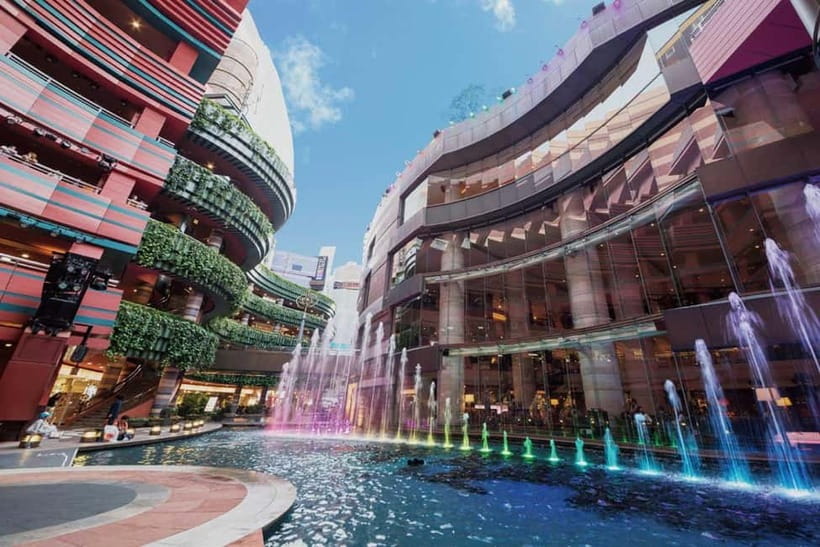
- Old and new in one walk: Canal City’s fountain show gives the route a sharp change of mood.
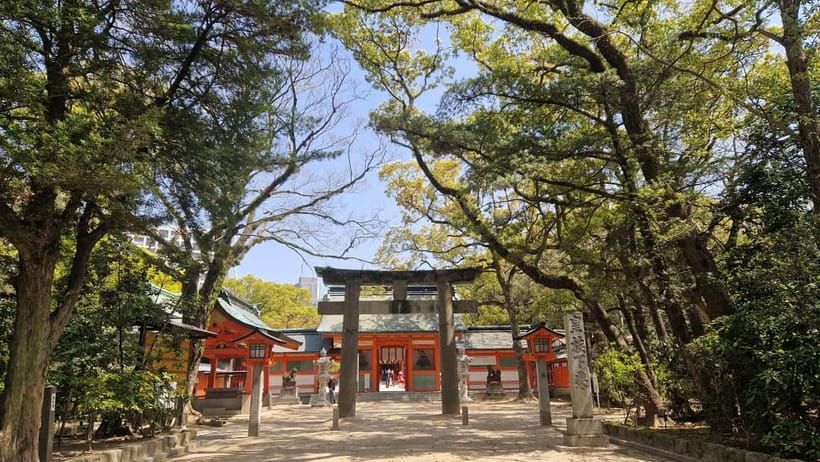
- A shrine for safe journeys: Finish at Sumiyoshi Shrine, a fitting stop for people continuing around Japan.
- Private guiding in English or German: Conversational Japanese is also available, and the pace allows time for questions.
Why this Fukuoka walk works so well
Fukuoka can feel easy to pass through. Many people use Hakata as a transport base, eat well, shop, and move on. This tour gives you a reason to slow down and see how the city’s spiritual life is woven into its streets.
The route is particularly useful if you are new to Japan. A guide can explain when to bow, how Buddhist and Shinto sites differ, and why a shrine or temple is more than a pretty place for photographs. You do not need prior knowledge of Japanese religion. The explanations are designed to make the details around you easier to read.
I also like the scale. Three hours is long enough to build a picture of Hakata, but short enough to fit around a train arrival, a meal, or an evening plan. The route begins and ends near Hakata Station, which keeps the logistics tidy.
This is a private group experience, described as a small-group tour, so you should have more room to ask questions than on a large sightseeing bus. The guides also add local conversation beyond the formal stops. Andy, in particular, has been praised for keeping the pace relaxed and offering useful suggestions for food and markets after the walk.
A few more Fukuoka trips to weigh up
- Fukuoka Essentials: History, Culture, & Charms
★ 4.8 · 39 reviews - World Heritage Shirakawa-go and Experience Tours from Kanazawa
★ 5.0 · 4,049 reviews - Tokyo: Imperial Palace and Shogun Historical Walking Tour
★ 5.0 · 2,251 reviews
Starting at Hakata Station
Meet outside the Casetify shop at Amu Plaza Hakata, just beyond Hakata Station’s West Exit. This is a practical meeting point, but give yourself enough time to find the correct station exit. Hakata Station is large, and a few extra minutes can save a rushed start.
From there, you walk for about 10 minutes to Shōfukuji. That opening stretch helps you shift from transport-center Fukuoka to old Hakata. It is also your first reminder that the tour is on foot throughout. Transportation costs are not part of the experience, though you do not need paid transport for the planned route.
Shōfukuji, where Japanese Zen began
Shōfukuji is the first major stop and one of the most meaningful. The temple was founded in 1195 by Eisai, the monk credited with introducing Zen Buddhism to Japan from China.
The appeal here is not just age. The grounds offer a quiet pause from the city, with traditional wooden architecture and a calmer rhythm than the streets around Hakata Station. Your guide explains Zen ideas and meditation while you walk, giving the buildings a cultural frame instead of leaving you to guess what you are seeing.
The scheduled visit lasts about 20 minutes. That is enough for an introduction and a look around, but not a lengthy temple study. I would pay attention to the atmosphere as much as the architecture. Shōfukuji works best as a place of stillness, and the short visit gives the tour a gentle beginning.
Photography is useful, but this is also a good place to put the camera down for a moment. Your guide can help with etiquette, which matters at religious sites. The tour is not simply a checklist of old buildings. It begins by showing you how a sacred space feels and functions.
Tōchōji and the 10.8-meter wooden Buddha
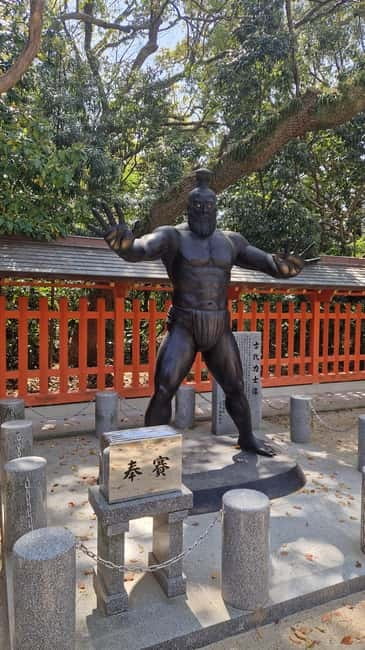
A five-minute walk brings you to Tōchōji Temple. Here the scale changes dramatically. The temple houses Japan’s largest wooden Buddha, a 10.8-meter figure that gives this stop real visual force.
Even if you have seen large Buddhist statues elsewhere in Japan, the Buddha at Tōchōji is a strong reason to book this walk. The guide can explain the temple’s place in Fukuoka’s Buddhist life while you take in the statue’s size and setting.
The visit is planned for about 30 minutes. That gives you time to see the Great Buddha and hear the story behind the temple, without turning the afternoon into a long lecture. The guide-led format is valuable here because a large statue can otherwise become a quick photograph and little more.
Tōchōji also has an underground passage connected with the journey through the afterlife. This is one of the route’s more unusual details. It gives the stop a different mood from Shōfukuji: the first temple is peaceful and open, while Tōchōji adds a symbolic experience below ground.
If enclosed spaces are uncomfortable for you, ask your guide about the passage before entering. The supplied information does not describe its length or exact conditions, so you should treat it as an optional point to discuss rather than assume it will suit everyone.
Same city, a completely different kind of day:
- Mt. Aso & Takachiho Gorge Tour with Optional Boat Ride
★ 4.7 · 222 reviews - Fukuoka: Takachiho Gorge & Scenic Railway One Day Tour
★ 4.8 · 178 reviews - Private Fukuoka Tour with a Local, Highlights & Hidden Gems 100% Personalised
★ 5.0 · 143 reviews - Fukuoka Your Way: 100% Customisable Private Tour with Local Guide
★ 5.0 · 83 reviews
Kushida Shrine and Hakata’s festival spirit
The walk to Kushida Shrine takes about 15 minutes. This is the longest gap between the main sights, though it remains a normal city walk. By this point, comfortable footwear starts to matter.
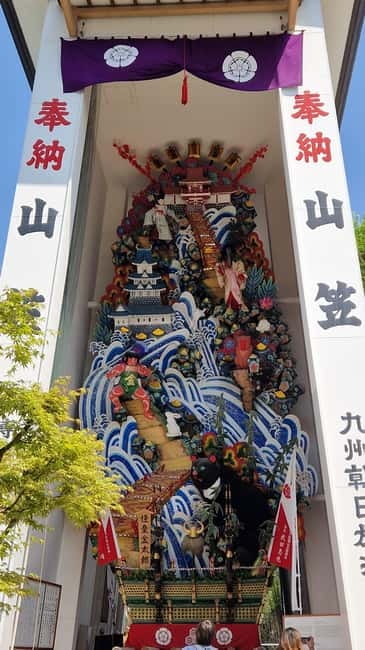
Kushida Shrine is closely tied to Fukuoka’s identity and is best known for the Hakata Gion Yamakasa festival, held each summer. A large Yamakasa float is displayed at the shrine, giving you a clear look at the scale and craftsmanship connected with the event.
The guided visit lasts around 30 minutes. You will hear about the festival and the traditions that bring the city to life, but the value goes beyond one seasonal celebration. Kushida helps explain how local customs remain part of daily city culture rather than existing only in museums.
This is also a useful place to learn shrine etiquette. Shinto sites have their own customs, and a guide can explain what you are seeing without making you feel awkward about doing the wrong thing. I appreciate that the tour sets Buddhism and Shinto next to each other. You get a practical sense of the difference, while also seeing how both traditions share space in Japan.
The shrine may be a highlight for anyone visiting outside festival season. You will not be attending the summer event as part of this three-hour walk, but the displayed float and the explanation give you a connection to it at any time of year.
Canal City brings the route into the present
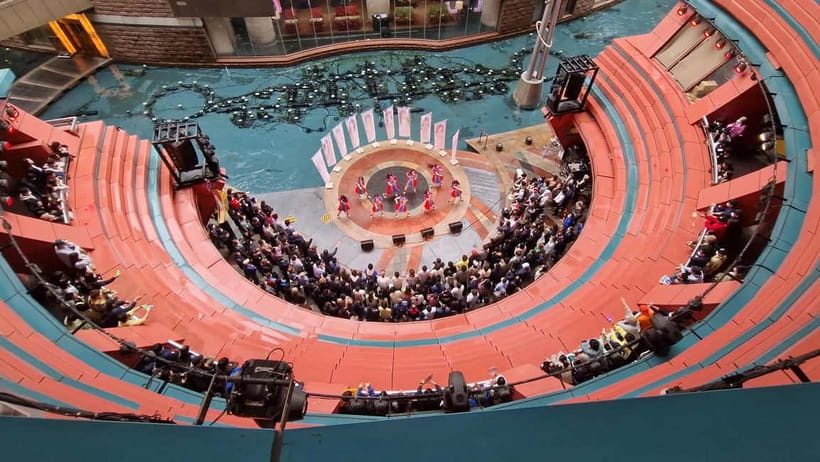
After Kushida Shrine, you walk toward Canal City Hakata for about 15 minutes. The contrast is deliberate and useful. One moment you are thinking about old religious customs and festival floats, and soon you are in a major shopping and entertainment complex.
The Canal City stop lasts about 15 minutes and includes time to see the fountain show, with water, music, and lights. It is a lighter interlude after the temples and shrines. You may find it less culturally important than the religious sites, but it shows another side of Fukuoka: polished, busy, modern, and designed for everyday leisure.
The fountain show also gives the walking route some variety. Three hours of temples can feel repetitive for people who are not especially interested in religious architecture. Canal City breaks up the pattern and makes the tour more accessible to families, first-time visitors, and anyone who wants a broad introduction rather than a specialist temple walk.
The schedule allows 15 minutes, so do not expect time for serious shopping or a full meal here. Food and drinks are not included. If Canal City interests you, note what you want to return to after the tour instead of trying to fit shopping into the guided visit.
Sumiyoshi Shrine and a fitting finish

A five-minute walk leads from Canal City to Sumiyoshi Shrine. This is the final sightseeing stop, with about 25 minutes set aside for a guided visit.
Sumiyoshi shrines are associated with safe travel and protection, making this a particularly appropriate place to finish a walking tour in Japan. The shrine is also described as one of Japan’s oldest Sumiyoshi shrines. Vermilion torii gates and a peaceful setting give the last stop a quieter tone after Canal City.
I like the order. The tour begins with Zen, moves through Buddhist symbolism and local festival life, passes through modern Fukuoka, then finishes with a shrine linked to journeys. It feels like a clear arc rather than five unrelated addresses.
There is time here to reflect on the differences between the sites. You have seen a Zen temple, a major Buddhist temple, a Shinto shrine tied to a major festival, a modern shopping center, and another old Shinto shrine. A good guide can connect those pieces and answer the practical questions that come up along the way.
The walk back and what three hours really means
From Sumiyoshi Shrine, the walk back to the Casetify shop takes about 15 minutes. Add the walking sections together and you have roughly 50 minutes of movement, before counting stairs, pauses, and time spent standing at the sights.
That makes this a leisurely but substantial walking experience. One guest specifically described the pace as slow enough to absorb the sights and ask questions, while another advised being ready for a long walk around the temples and shrines. I would take both points seriously: the tour is not rushed, but it is not a low-walking activity.
Bring comfortable shoes, a camera, and money for souvenirs. Check the weather before you go. The information provided does not promise indoor alternatives or transport if the weather turns poor, so rain or heat could affect your comfort.
The route returns to its starting point, which is useful if you have luggage stored nearby or a train connection later. Still, leave some buffer after the tour rather than scheduling a tight departure. The guides are encouraged to allow questions, and the relaxed pace is part of the experience.
Guide style and language choices
The tour is offered in English and German, and conversational Japanese is available. That makes it a good choice for couples, families, or private groups who want to ask questions in a comfortable language.
The guide names associated with the experience include Andy, Paula, and Arianna. Andy has been especially praised for patience, cultural explanations, easy conversation, and practical suggestions for local food and markets. Paula has guided visitors through the shrines and temples, while Arianna has led a private Hakata-focused walk.
Do not expect a formal academic lecture. The strongest feature here is conversation. You can ask how Buddhism and Shinto are practiced together, what a festival tradition means, or where to look for food after the walk. That personal exchange may be more useful than a dense list of dates.
The German option is a real advantage for German-speaking visitors. A German-language experience can make etiquette and religious terms easier to grasp, while English keeps the tour accessible to a wide range of visitors.
Is $77 a fair price?
At $77 per person, the value depends on how much help you want making sense of Fukuoka. You are paying for a three-hour private guided walk, not for entry to a large attraction or for transport and meals.
If you visited these places alone, you could still see much of the route. The price earns its keep through context, pacing, and the chance to ask questions. It also saves you the work of planning a route between Hakata Station, the temples, shrines, Canal City, and the return point.
The value is strongest for a first visit, a short stay, or anyone who wants a cultural orientation early in a trip. It is less compelling if you already know Hakata well, prefer exploring alone, or want a museum-heavy tour with extensive indoor time.
Since the group is private, the cost may make more sense when shared by several people rather than paid by one person traveling alone. The experience includes the local guide and the listed visits, but not food, drinks, transportation, or souvenirs.
Free cancellation is available up to 24 hours before the start for a full refund, and you can reserve now and pay later. Those terms make it easier to fit the walk into a changing Japan itinerary.
Who should book this walk?
I would recommend it to first-time Fukuoka visitors who want the city explained rather than simply photographed. It also suits history and culture fans, couples looking for a private outing, and people curious about the relationship between Buddhist temples and Shinto shrines.
It is a good early-trip choice because the route gives you practical orientation. The food and market suggestions offered by guides such as Andy can help shape the rest of your time in Fukuoka.
Families may enjoy the giant Buddha and Canal City fountain show, though younger children need to be comfortable walking for several hours. The tour is also a sensible fit for visitors arriving by train, since it starts and ends by Hakata Station.
I would think twice if you have limited stamina, dislike guided conversation, or need a fully weatherproof plan. You should also skip it if your main goal is extensive shopping, since Canal City receives only a short sightseeing stop.
Should you book Fukuoka’s Sacred Path?
Book this tour if you want a compact, thoughtful introduction to Hakata’s religious sites, local festivals, and modern city life. The combination is the real strength: Shōfukuji supplies calm, Tōchōji supplies scale, Kushida supplies local tradition, Canal City supplies contrast, and Sumiyoshi Shrine gives the walk a fitting close.
Choose it with comfortable shoes and an open afternoon. At $77, it is not the cheapest way to see the sights, but the private guide, language options, relaxed pace, and practical local advice can make it good value for a first visit.
FAQ
How long does Fukuoka’s Sacred Path tour last?
The tour lasts three hours, including guided visits and walking between the sights.
Where does the tour start?
Meet just outside Hakata Station’s West Exit, in front of the Casetify shop at Amu Plaza Hakata.
Where does the tour finish?
The walk returns to the Casetify shop at Amu Plaza Hakata, the same place where it begins.
Which languages are available?
The tour is offered in English and German. Conversational Japanese is also available.
Is this a private tour?
Yes. The activity is described as a private group experience with a local guide.
What sights are included?
The route includes Shōfukuji Temple, Tōchōji Temple, Kushida Shrine, Canal City Hakata, and Sumiyoshi Shrine.
Is transportation included?
No. The experience is a walking tour, and transportation costs are not included.
Are food and drinks included?
No. You need to pay separately for any food or drinks.
What should I bring?
Bring comfortable walking shoes, a camera, money for souvenirs, and clothing suited to the weather. Check the forecast before you go.
Just added around Fukuoka
- Kyushu Tour From Fukuoka: Itoshima Nature & Coastal Scenery★ 4.7 · 24 reviews
- Fukuoka Private and Personalized Walking Tour with a Local★ 4.7 · 46 reviews
- Fukuoka: Yufuin & Beppu Day Tour (Dazaifu / Brewery Options)★ 4.6 · 31 reviews
- Fukuoka: Private Walking Tour with Local Guide★ 4.8 · 22 reviews
- Fukuoka: Hakata Doll Painting Experience★ 4.8 · 30 reviews
- Fukuoka Essentials: History, Culture, & Charms★ 4.8 · 39 reviews
- Fukuoka: Nakasu Food Stall Private Guided Tour with Tastings★ 4.8 · 48 reviews
- Fukuoka: Customized Tour with Local Guide★ 4.9 · 22 reviews
Historical Tours, compared.
World Heritage Shirakawa-go and Experience Tours from Kanazawa
Read our review →
Imperial Palace and Shogun Historical Walking Tour
Read our review →
World Heritage Kyoto & Nara Uji Authentic Matcha Experience
Read our review →
Kyoto Gion: 2-Hour Geisha Culture & History Walking Tour
Read our review →
World Heritage Shirakawa-go Morning Guided Tour
Read our review →
Hiroshima Historical Walking Tour – Why A-Bomb was Dropped
Read our review →
Hiroshima Peace (Heiwa) Walking Tour at World Heritage Sites
Read our review →Browse the lists this tour appears in