
REVIEW · HISTORICAL TOURS
Fukuoka Essentials: History, Culture, & Charms
Fukuoka reveals itself best on foot, where a quiet Zen temple can give way to a shrine tied to a famous festival, then to the smells and sounds of a traditional shopping arcade. This private walk connects those pieces without making you work out the route yourself. I especially like Shofukuji’s calm grounds and the chance to see several important religious sites in one easy city walk.
I also like the personal pace and local advice. Guides such as Radim, Louise, and Vadim have adjusted walks for families, different walking speeds, and specific interests. The main consideration is that this is a walking experience with no food, drinks, attraction tickets, or transportation included, so you should budget for extras and wear comfortable shoes.
In This Review
- Key Points at a Glance
- A Smart First Walk Through Fukuoka
- Shofukuji, Where Zen Buddhism Took Root in Kyushu
- Tochoji Adds a Famous Buddhist Landmark
- Kushida Shrine and the Sound of Hakata’s Festival Life
- Kawabata Arcade for a Short Taste of Local Fukuoka
- Sumiyoshi Jinja, A Different Kind of Shrine
- Hakata Station’s Rooftop View
- Why the Private Format Matters
- Who Gets the Best Value for $58
- Practical Ways to Enjoy the Walk
- Should You Book Fukuoka Essentials?
- FAQ
- Where does the tour start?
- Can I meet the guide at my hotel?
- How long does the experience last?
- Is this a walking tour?
- What places are included?
- Is the tour private?
- What languages does the guide speak?
- Are food and drinks included?
- Can I cancel for a full refund?
Key Points at a Glance
- Shofukuji gives you Fukuoka’s oldest Zen setting, with quiet grounds and traditional architecture.
- Tochoji adds one of Hakata’s best-known Buddhist sights to the same morning.
- Kushida Shrine connects the city to Hakata Gion Yamakasa, one of Fukuoka’s major festivals.
- Kawabata Shopping Arcade offers a short taste of everyday local life, with shops, snacks, and plenty to notice.
- Sumiyoshi Jinja brings a different shrine style and a link to the sea within the city center.
- Hakata Station’s rooftop closes the walk with a broad city view, especially appealing near sunset.
A Smart First Walk Through Fukuoka
At $58 per person, this tour makes the most sense if you want a private introduction rather than a simple list of sights. You are paying for a local host, route planning, explanations, and the ability to adjust the experience as you go.
The standard route takes about three hours. The published duration can range from three to eight hours, so check the available start time and confirm the length you want when booking. A longer version may give you more time at the temples, extra conversation, or additional stops, but the core walk is designed as a compact introduction to central Fukuoka.
Your meeting point is the CASETiFY STUDiO in Amu Plaza Hakata, beside the main entrance under the large clock. This is a practical place to begin because Hakata Station is one of the city’s easiest landmarks. A hotel meetup may also be arranged if you are staying in a central location.
I see this as a good first or second activity in Fukuoka. It helps you get your bearings, introduces the city’s religious and commercial center, and gives you a chance to ask for restaurant, shopping, and later sightseeing suggestions. It is less suitable if you want a long temple meditation visit or a food-focused tour, since the arcade stop includes only about 15 minutes of free time and meals are not part of the price.
A few more Fukuoka trips to weigh up
- Fukuoka’s Sacred Path: Temples, History & Culture
★ 5.0 · 17 reviews - World Heritage Shirakawa-go and Experience Tours from Kanazawa
★ 5.0 · 4,049 reviews - Tokyo: Imperial Palace and Shogun Historical Walking Tour
★ 5.0 · 2,251 reviews
Shofukuji, Where Zen Buddhism Took Root in Kyushu
The walk begins with roughly 10 minutes on foot from the station meeting point to Shofukuji. That short approach is useful: you leave the noise of the station area behind and reach a quieter part of the city without needing a train or taxi.
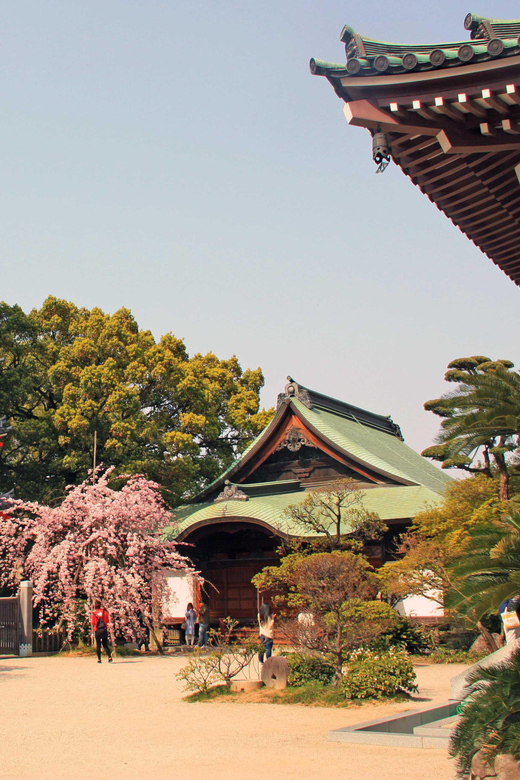
Shofukuji is presented as the oldest Zen Buddhist temple in Kyushu. For you, its value is not just age. The temple gives the tour a peaceful opening and a chance to look at Zen architecture, gates, buildings, and grounds with a guide who can explain what you are seeing.
I like the way this stop sets the tone. Fukuoka is a modern commercial city, yet this temple shows how much older religious life remains woven into the center. You are not simply taking a photograph of a wooden building. You are getting context for why temples and shrines still matter in daily Japanese life.
The grounds are a place to slow down. Your guide can point out details that are easy to miss when you walk through alone, while also keeping the visit moving so the tour can cover several other parts of Hakata. Since this is a guided visit rather than a private temple study session, expect an overview instead of an exhaustive lesson.
Tochoji Adds a Famous Buddhist Landmark
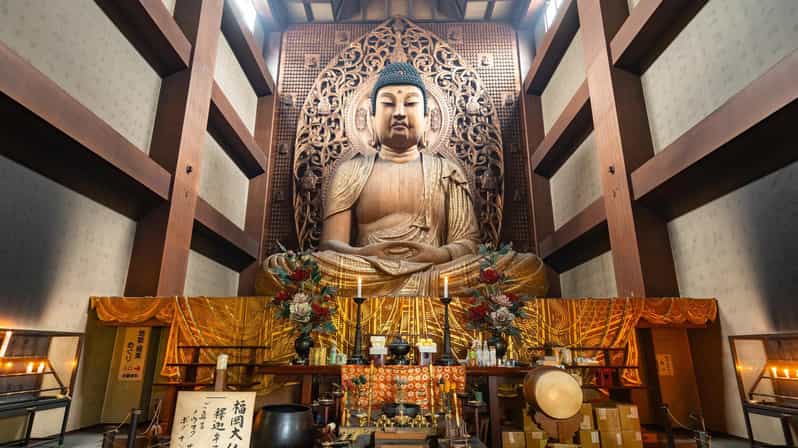
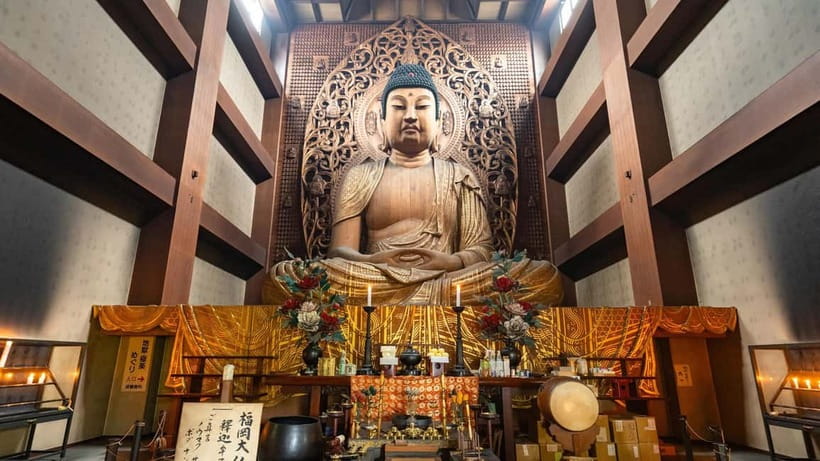
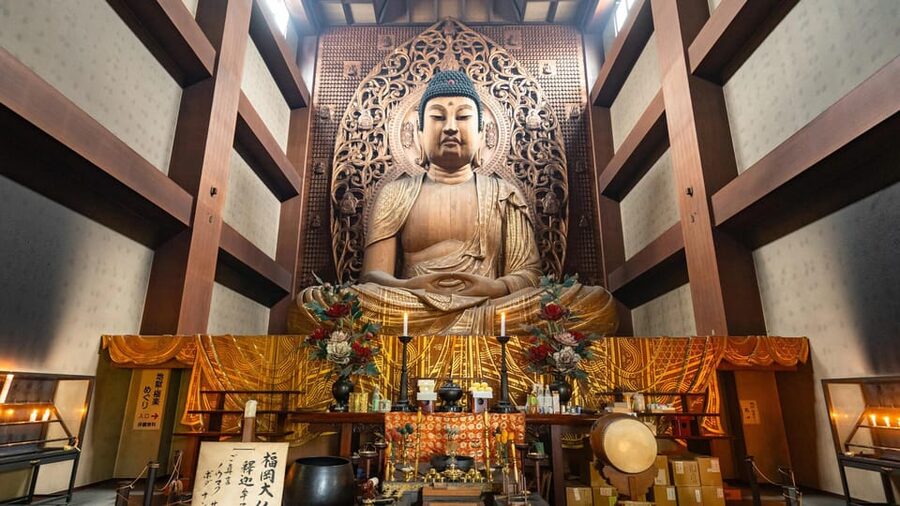
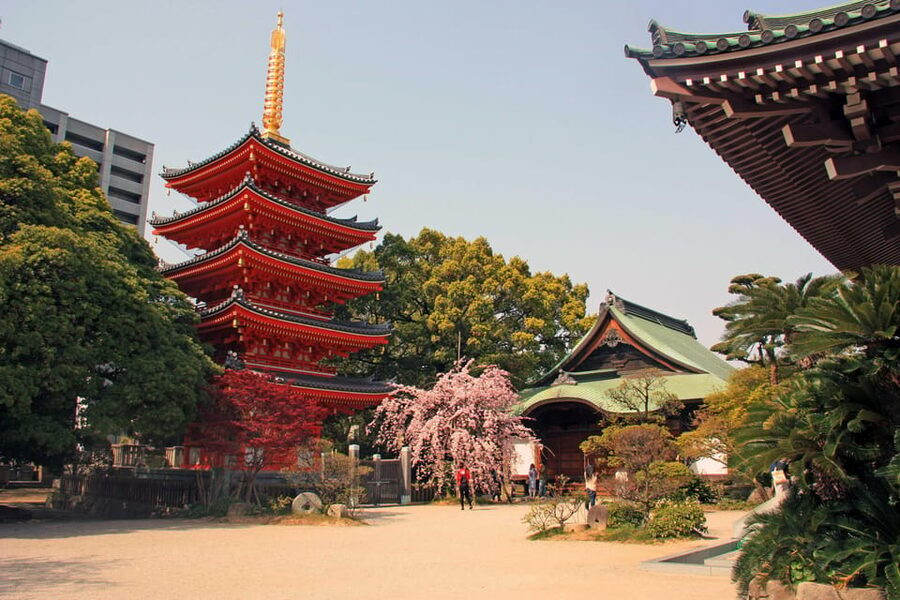
Tochoji Temple follows Shofukuji on the guided route. The experience description contrasts the two temples in a useful way: Tochoji is known for its large Buddha statue, while Shofukuji offers a stronger connection to early Zen in Kyushu.
That pairing gives you two different ways to understand Fukuoka’s Buddhist heritage. At Shofukuji, the setting and Zen tradition are central. At Tochoji, the scale of the Buddha provides a memorable visual focus. Your guide can help place both temples in the wider story of Hakata rather than treating them as unrelated photo stops.
The itinerary does not list a separate walking time between Shofukuji and Tochoji, so the exact flow may depend on your host and the pace of the group. As this is a private experience, you can ask for more explanation at one temple if it interests you, or keep moving if you have already visited similar sites elsewhere in Japan.
There is no attraction admission included in the tour price. That does not necessarily mean you will pay at every stop, but you should treat entrance fees as your responsibility where applicable. Ask your host about any ticket needed on the day.
Kushida Shrine and the Sound of Hakata’s Festival Life
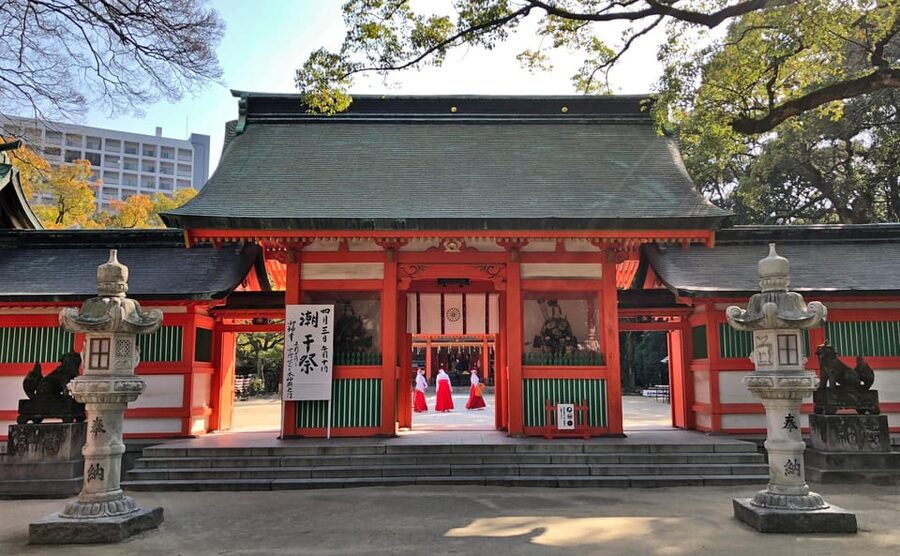
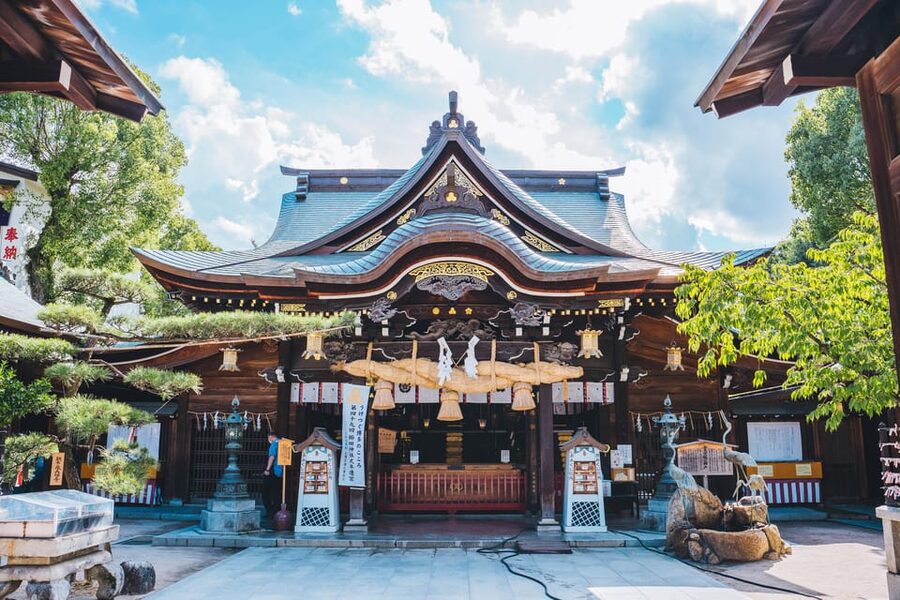
After the temple visits, you walk for about 10 minutes to Kushida Shrine. This is Fukuoka’s main shrine and one of the most meaningful stops on the route because it connects the quiet temple visits with the city’s public celebrations.
Kushida Shrine is closely tied to the Hakata Gion Yamakasa festival. The event is a major part of Fukuoka’s identity, and the shrine is active throughout the year. Your guide can explain the festival connection and point out details in the shrine buildings that may not mean much if you are exploring alone.
I like this shift in mood. The temples give you stillness. Kushida Shrine shows a more communal side of local tradition, where religion, neighborhood life, and seasonal events meet. It also helps explain why Fukuoka’s old center feels more than historic. It remains part of the city’s working present.
Take a moment to notice the construction details and the arrangement of the grounds. Your guide may add stories or local observations according to your interests. The private format is helpful here because you can ask simple questions without worrying about holding up a large group.
Same city, a completely different kind of day:
- Mt. Aso & Takachiho Gorge Tour with Optional Boat Ride
★ 4.7 · 222 reviews - Fukuoka: Takachiho Gorge & Scenic Railway One Day Tour
★ 4.8 · 178 reviews - Private Fukuoka Tour with a Local, Highlights & Hidden Gems 100% Personalised
★ 5.0 · 143 reviews - Fukuoka Your Way: 100% Customisable Private Tour with Local Guide
★ 5.0 · 83 reviews
Kawabata Arcade for a Short Taste of Local Fukuoka
From Kushida Shrine, the route moves into Kawabata Shopping Arcade. This traditional covered street is where the tour becomes more sensory. You can browse storefronts, look at local goods, notice food stalls, and take in the everyday pace of a neighborhood shopping area.
The planned free time is about 15 minutes. That is enough for a quick snack, a small purchase, or a look through the shops, but it is not enough for a slow meal or serious shopping expedition. Food and drinks are not included, so bring a payment method and use this stop to choose something that appeals to you.
I would not treat Kawabata as a major shopping session. Its strength is atmosphere. You get a break from formal sightseeing and a glimpse of the commercial life that supports the older shrine and temple district. The arcade also gives you a chance to hear, smell, and taste a little of Fukuoka on your own terms.
If you are hoping to buy several souvenirs, ask your host for extra time or recommendations. The private format may make that possible, but it is not guaranteed by the standard schedule. Families may appreciate the freedom to pause, while visitors focused on architecture may prefer to keep the visit brief.
Sumiyoshi Jinja, A Different Kind of Shrine
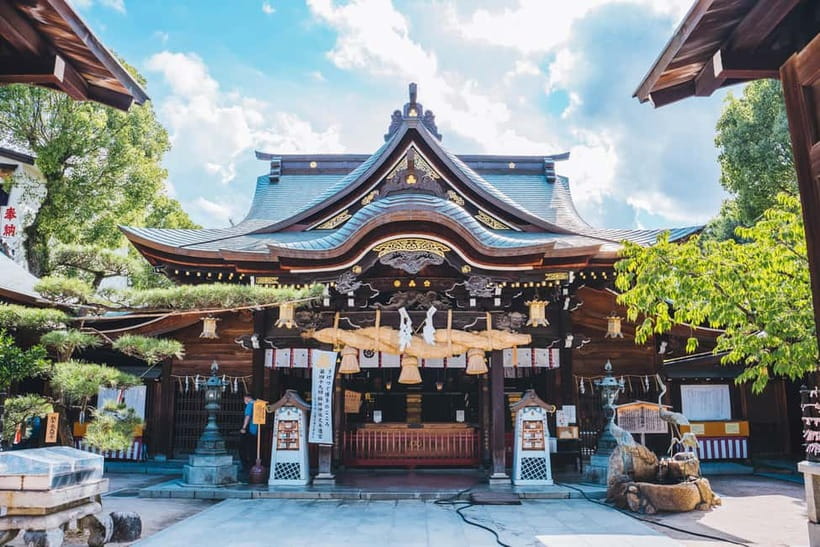
The walk from Kawabata Arcade to Sumiyoshi Jinja takes about 14 minutes. This is another manageable stretch, but the total route means you should plan for steady walking over several hours. If you have a temporary physical limitation, tell your host early. One guide has adjusted the pace and plan for a guest with a physical impairment, so advance communication can make a real difference.
Sumiyoshi Jinja has a style that differs from many other shrines. The route description highlights its connection to the sea, which gives this urban stop a different feeling from Kushida Shrine. You can compare the two sites directly: Kushida is tied to Fukuoka’s major festival life, while Sumiyoshi offers a calmer setting and a maritime connection.
This is one of the tour’s most useful comparisons. Japanese shrines can look similar at first, especially if you are visiting several in one trip. A guide can help you notice differences in architecture, purpose, atmosphere, and local associations.
The grounds offer another chance to slow down before the final city view. I would give this stop your attention even if you are more interested in modern Fukuoka than religious sites. It shows how the city’s older traditions occupy ordinary urban space rather than sitting apart from it.
Hakata Station’s Rooftop View
The final walk to Hakata Station takes about 13 minutes, with scenic views along the way. The tour ends back at the CASETiFY STUDiO in Amu Plaza Hakata, but the rooftop is the real farewell.
From Hakata Station’s rooftop, you can look across Fukuoka and see the city from above. The view gives the route a useful ending because you have just crossed temples, shrines, shopping streets, and station districts on foot. Near sunset, the city changes as lights begin to appear.
The rooftop is especially practical for first-time visitors. It helps you understand the layout of the city and gives you a broad reference point for the rest of your stay. Ask your guide about places you can see from above or areas worth visiting afterward, though specific advice will depend on your interests and the time available.
The view is weather dependent, of course. If clouds or rain spoil the panorama, the earlier stops still carry the tour. That balance matters: this is not a sightseeing product built around one lookout. The rooftop is a pleasant final scene after a route with several substantial stops.
Why the Private Format Matters
The strongest feature here is flexibility. Your host can adjust the pace, answer questions as they arise, and spend more time on the subjects you care about. The experience has been adapted for families, teenagers, different walking speeds, and personal interests.
Guide names associated with this experience include Radim, Louise, and Vadim. Radim is described as offering an easy, conversational style with strong English, while Louise has tailored the visit around what a group wanted to see and know. The host you receive depends on availability, so do not assume one particular guide unless you confirm it when booking.
The language options are English and Czech. A private group is available, which may be useful if you want the tour to move at your own speed or if you are traveling with family. The experience is not described as wheelchair accessible, so anyone with mobility needs should discuss the route and walking requirements before booking.
Transportation is not included. The standard plan is on foot, with other transport possible at extra cost. That keeps the base price clear, but you need to account for any added fares, food, drinks, or admission charges.
Who Gets the Best Value for $58
I think the $58 price is fair for a private, guided three-hour walk if you value conversation and local orientation. A large group tour may cost less, but it will not usually give you the same control over pace and questions. A self-guided walk costs little, yet it requires your own route planning and research.
You get the most value if this is your first time in Fukuoka, if you have limited time, or if you want help connecting religious sites to modern city life. The route includes enough variety to keep the morning from feeling repetitive.
You may find less value if you have already visited all five main stops, prefer independent exploration, or want a dedicated food tour. Kawabata Arcade includes only a short free period, and the tour does not include a meal or tasting package.
The three-hour version is also a useful option before another reservation. Confirm the start time, expected finish, and any extra stops if your schedule is tight. The advertised range reaches up to eight hours, so do not rely on the minimum duration without checking availability.
Practical Ways to Enjoy the Walk
Wear shoes suited to city walking. The route includes several walks of about 10, 14, and 13 minutes, plus time moving around temple and shrine grounds.
Start with an idea of what interests you most. Tell your host if you care about architecture, religious customs, local festivals, shopping, food, family pacing, or modern city life. The tour works best when the guide has something specific to build around.
Keep some money available for Kawabata Arcade, since food and drinks are not included. You should also allow for any attraction tickets or optional transportation costs.
The meeting point can be easy to miss inside a busy station complex. Look for the CASETiFY studio beside the main entrance, under the large clock. If you request a central hotel meetup, confirm the exact location in advance.
Free cancellation is available up to 24 hours before the experience for a full refund, and you can reserve now and pay later. Those terms are useful if your Fukuoka plans are still moving around.
Should You Book Fukuoka Essentials?
Book it if you want a friendly, private introduction to Fukuoka that combines temples, shrines, local shopping, and a rooftop view in one walk. The route is well balanced, and the ability to adjust the pace is a real benefit.
I would especially choose it near the beginning of a Kyushu trip. You can use the walk to learn how Hakata fits into Fukuoka, then ask your host for ideas for restaurants, shopping, and later stops.
Skip it if you want a food-heavy outing, a slow architectural study, or a fully transported tour. For most first-time visitors who value context and easy conversation, $58 is a reasonable price for a well-planned introduction.
FAQ
Where does the tour start?
The meeting point is the CASETiFY STUDiO at Amu Plaza Hakata, beside the main entrance under the large clock.
Can I meet the guide at my hotel?
A hotel meetup is available on request for central locations.
How long does the experience last?
The duration is listed as 3 to 8 hours. The standard walking experience is described as a three-hour tour, so check the available start times and duration when booking.
Is this a walking tour?
Yes. The included experience is a walking tour. Other transportation can be arranged at an additional cost.
What places are included?
The route includes Shofukuji, Tochoji Temple, Kushida Shrine, Kawabata Shopping Arcade, Sumiyoshi Jinja, and Hakata Station’s rooftop.
Is the tour private?
A private group is available, and the experience includes a private and personalized format.
What languages does the guide speak?
The available guide languages are English and Czech.
Are food and drinks included?
No. Food and drinks are not included. Kawabata Shopping Arcade includes free time for you to browse or buy something on your own.
Can I cancel for a full refund?
Yes. You can cancel up to 24 hours in advance for a full refund. You can also reserve now and pay later.
Just added around Fukuoka
- Kyushu Tour From Fukuoka: Itoshima Nature & Coastal Scenery★ 4.7 · 24 reviews
- Fukuoka Private and Personalized Walking Tour with a Local★ 4.7 · 46 reviews
- Fukuoka’s Sacred Path: Temples, History & Culture★ 5.0 · 17 reviews
- Fukuoka: Yufuin & Beppu Day Tour (Dazaifu / Brewery Options)★ 4.6 · 31 reviews
- Fukuoka: Private Walking Tour with Local Guide★ 4.8 · 22 reviews
- Fukuoka: Hakata Doll Painting Experience★ 4.8 · 30 reviews
- Fukuoka: Nakasu Food Stall Private Guided Tour with Tastings★ 4.8 · 48 reviews
- Fukuoka: Customized Tour with Local Guide★ 4.9 · 22 reviews
Historical Tours, compared.
World Heritage Shirakawa-go and Experience Tours from Kanazawa
Read our review →
Imperial Palace and Shogun Historical Walking Tour
Read our review →
World Heritage Kyoto & Nara Uji Authentic Matcha Experience
Read our review →
Kyoto Gion: 2-Hour Geisha Culture & History Walking Tour
Read our review →
World Heritage Shirakawa-go Morning Guided Tour
Read our review →
Hiroshima Historical Walking Tour – Why A-Bomb was Dropped
Read our review →
Hiroshima Peace (Heiwa) Walking Tour at World Heritage Sites
Read our review →Browse the lists this tour appears in