
REVIEW · PHOTOGRAPHY SESSIONS
Explore Unique Tokyo Streets / Learn with a Pro Photographer
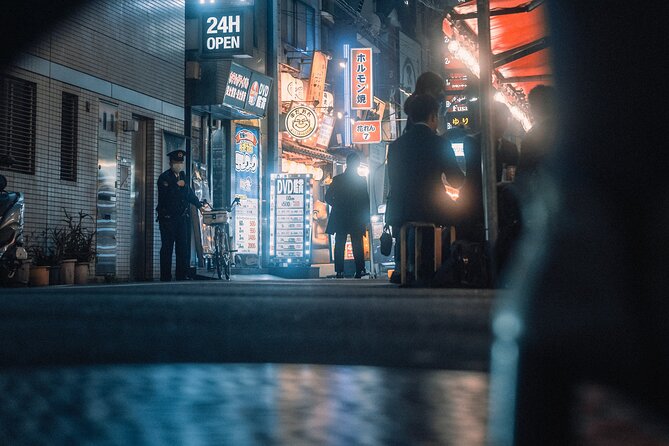
Tokyo after dark is the real subject here. With professional photographer Deniz Demir, you’ll walk through Yurakucho and Shinbashi, two areas where office workers, narrow streets, bright signs, and everyday city scenes give you plenty to frame. This is not a sightseeing march with a few camera tips tacked on. The photography lesson is the main event.
I like the six-person maximum, which gives you room to ask about your own camera instead of listening to a long lecture. I also like the practical range of instruction, from basic settings and lenses to framing, street photography choices, LED lights, and prisms. The main drawback is the price: $128.09 for about two hours is a serious spend, especially if you already feel confident shooting at night.
The evening timing adds real value, particularly on weekday tours when you may see Tokyo’s salaryman culture up close. You’ll need moderate physical fitness for the walk, and the experience returns to Shimbashi Station, so plan to keep your camera ready and your expectations focused on learning rather than checking off famous sights.
In This Review
- Key points to know before booking
- Why Yurakucho and Shinbashi work so well after dark
- What the two-hour photography walk covers
- The evening setting and Tokyo’s salaryman culture
- The value of a six-person maximum
- Why the guide’s background matters
- Tripod, lenses, and other equipment choices
- Is $128.09 a fair price for two hours?
- Who will get the most from this experience?
- Timing, meeting point, and cancellation
- Should you book this Tokyo photography walk?
- FAQ
- Where does the photography tour start?
- Where does the tour end?
- How long does the experience last?
- What areas of Tokyo does the tour explore?
- How many people can join the tour?
- Who leads the photography experience?
- What photography subjects are covered?
- Can the guide bring a tripod?
- Are there weekday evening options?
- What is the cancellation policy?
- Is the tour accessible by public transportation?
- Are service animals allowed?
Key points to know before booking
- Deniz Demir teaches from professional experience: He has photographed Tokyo for years and makes photography his full-time work.
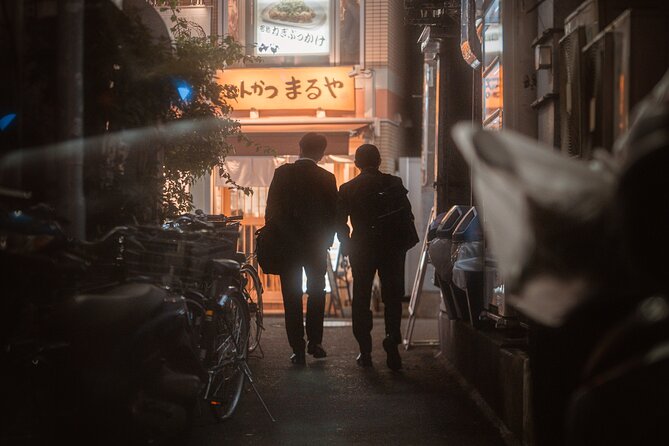
- Yurakucho and Shinbashi provide the setting: You’ll photograph Tokyo streets after dark, with weekday evenings offering a look at salaryman culture.
- The group is capped at six people: That matters when you need help with your own camera, lens, or settings.
- The lesson covers more than camera controls: Expect discussion of framing, street-shooting ideas, LED lights, prisms, and what to notice in your surroundings.
- A tripod is available if requested: This may help if you want to work on steadier night images or longer exposures.
- The walk lasts about two hours: It starts and ends at Shimbashi Station, with several evening time choices available.
Why Yurakucho and Shinbashi work so well after dark
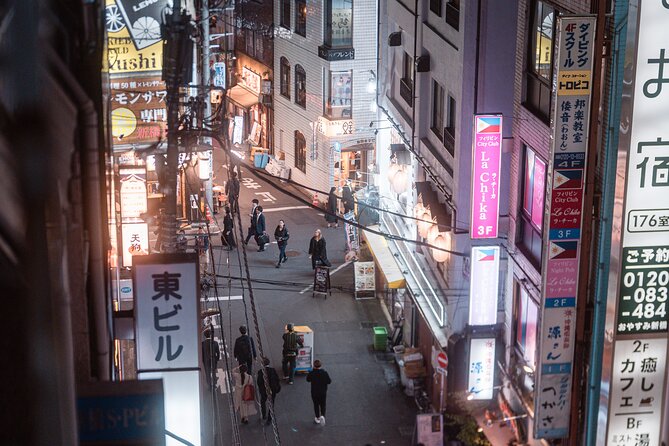
Many Tokyo photo walks chase a famous crossing or a postcard view. This one takes a different route through Yurakucho and Shinbashi, districts where the city feels close to the pavement. You get streets, signs, people, office life, and changing light rather than one grand lookout.
Yurakucho and Shinbashi are especially useful for learning street photography because they give you varied material within a compact evening walk. You might be working with artificial light one moment, then looking for a cleaner frame or a better angle a few steps later. The point is not simply to collect pictures of Tokyo. It is to learn why one frame works better than another.
The setting also helps you practice with real limits. Night streets can produce harsh highlights, dark corners, reflections, and moving subjects. Those conditions force you to make choices about exposure, focus, lenses, and timing. A guide who photographs these areas regularly can point out viewpoints you might pass without noticing.
The route begins at Shimbashi Station, 2 Chome-17 Shinbashi, Minato City, and returns to the same meeting point. That makes the outing simple to fit into an evening, though you should allow enough time to arrive at the correct station area before the start.
A few more Tokyo trips to weigh up
- Best Go Kart Experience in Shibuya Crossing with Iconic Photos
★ 5.0 · 348 reviews - Tokyo Go-Karting Experience: Shibuya Crossing with Photos
★ 4.8 · 190 reviews - Tokyo Cyberpunk Street Photo Tour
★ 5.0 · 165 reviews
What the two-hour photography walk covers
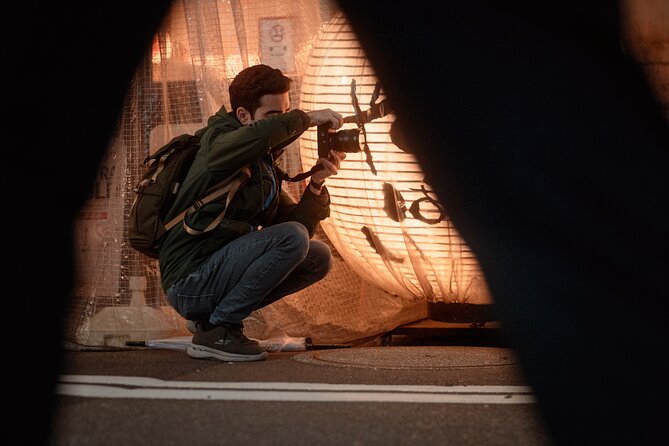
The experience begins with the practical side of photography. Deniz can discuss camera settings, lenses, and other equipment, so you can ask questions tied to the gear you actually carry. This is useful if you have recently upgraded your camera or still rely on automatic settings and want to understand what the controls are doing.
The instruction is not limited to technical basics. You may also discuss LED lights, prisms, and other tools that can change the way you handle a street scene. These accessories are not magic fixes. They are ways to experiment with light, color, and reflections, and the value comes from learning when they help rather than using them at random.
A major strength is the move from equipment to visual judgment. Deniz describes what to look for, how to frame a scene, and how to use the objects around you. That might mean paying closer attention to the way a sign frames a person, how a narrow passage controls the eye, or how reflections add another layer to an image.
The lesson also covers street-shooting philosophies. That phrase matters because street photography is not only about pressing the shutter quickly. You’ll be asked to think about your approach, your timing, and what kind of photograph you want to make. The aim is to turn an ordinary city moment into an image with purpose.
You should not expect a formal classroom session or a fixed set of technical exercises. The appeal is the moving lesson, with instruction connected to the streets in front of you. If you learn best by trying something immediately, asking a question, and adjusting your approach, this format should suit you.
The evening setting and Tokyo’s salaryman culture
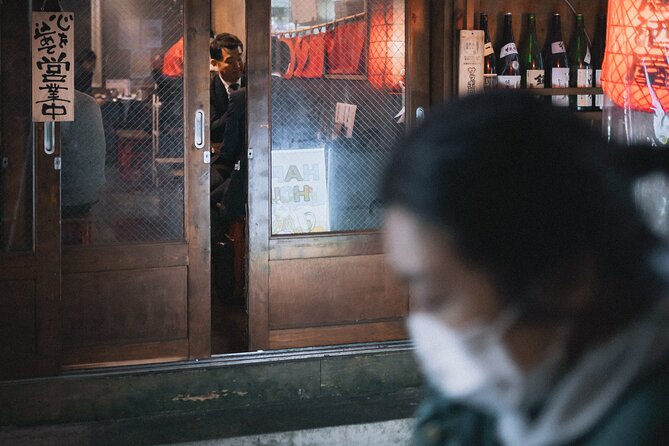
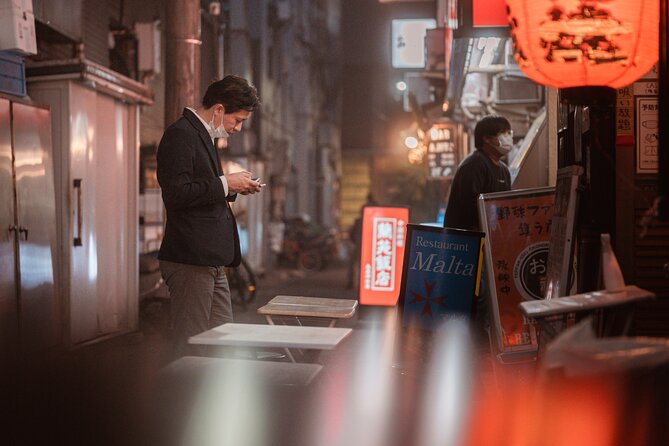
Weekday evening departures offer a particular advantage. As offices empty, you may see Japan’s salaryman culture in its everyday setting. The experience places you close to that part of city life while giving you photographic subjects and moments to consider.
This is not presented as a staged cultural show. That is important. You are looking at ordinary urban activity and learning how to photograph it with care. A good street photograph depends on timing and observation, not just bright neon. The guide’s role is to help you recognize a moment, choose a position, and make a frame that says something.
You should also remember that people are part of a public street scene, not props. The experience focuses on photography ideas and street-shooting choices, but you remain responsible for respectful behavior. Keep your attention on the scene, follow local expectations, and listen to your guide if he suggests a more suitable position.
If you book a weekend or non-weekday option, you may not get the same salaryman focus. The tour still explores Tokyo in the evening, but weekday timing is the better match if office culture is one of your main interests.
The value of a six-person maximum
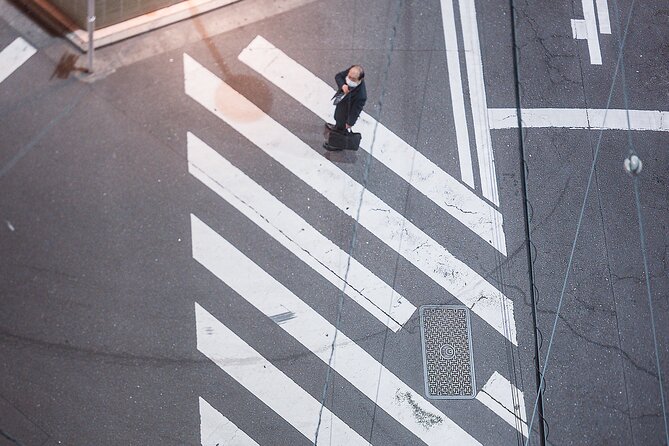
A maximum of six people is one of the most important details in the booking. Small groups make a difference on a photography walk because everyone works at a different pace. One person may need help with shutter speed, while another is choosing between lenses or trying to frame a moving subject.
With six or fewer participants, you have a better chance to ask specific questions about your own equipment. You can also hear the questions other people ask, which may reveal a problem you had not yet noticed. The group is still large enough to offer a few different ways of seeing the same street.
This format is more personal than a large city tour, but it is not a private lesson. If you want the guide’s attention every minute, a private photography session would likely offer more control, though that option is not described here. The small-group format gives you personal instruction while keeping the experience social.
The group discount feature may improve the value if you are booking with friends or family members who also take photographs. The supplied details do not state the discount amount, so check the final booking price rather than assuming a fixed saving.
Same city, a completely different kind of day:
- Mt Fuji and Hakone 1-Day Bus Tour Return by Bullet Train
★ 5.0 · 26,383 reviews - 1-Day Tokyo Bus Tour
★ 5.0 · 14,250 reviews - Tokyo: TOKYO SKYTREE® Admission ticket
★ 4.5 · 11,192 reviews - Tokyo: teamLab Planets TOKYO Digital Art Museum Entry Ticket
★ 4.6 · 9,779 reviews
Why the guide’s background matters
Deniz Demir moved to Japan in 2015 with a new camera and a desire to make better travel photographs. Over the years, photography became his profession, and he now works as a professional photographer in Tokyo. That personal path gives the experience a useful angle: you are learning from someone who built his skills through sustained practice rather than offering only a generic city walk.
He also runs one of the largest Meetup groups for creatives in the city. That suggests a strong interest in bringing people together around photography and other creative work. It does not guarantee that every teaching style will suit every person, but it fits the social, discussion-based nature of this small-group experience.
You can view his online portfolio at denizdemir.photos before booking. I recommend doing that. A photography guide’s style matters, and the portfolio can help you decide if his approach matches the kind of Tokyo images you want to make.
The strongest practical benefit is the chance to have your assumptions tested. One participant found the session useful for discovering gaps in their understanding of their own equipment, learning several new ideas, and putting those ideas to work during the walk. That is a good description of the likely payoff: you may return with better images, but you should also return with a clearer sense of what you still need to practice.
Tripod, lenses, and other equipment choices
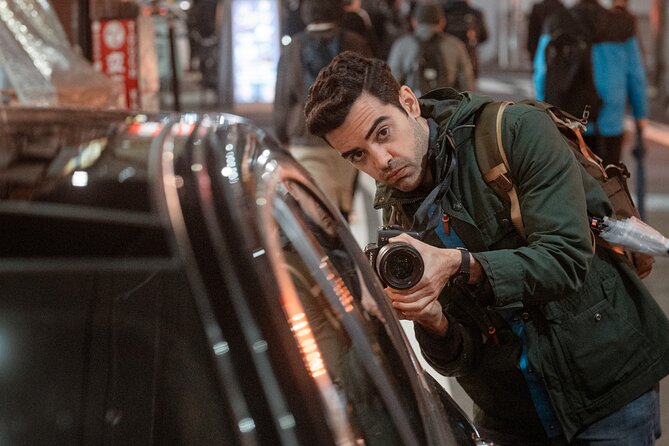
Deniz can bring a tripod if you request one. This is helpful if you want to work on night photography that needs a steadier camera, but it should not be treated as essential for everyone. A tripod can also add weight and slow your movement through the streets, so think about the kind of photographs you want to make before asking for it.
The tour covers lenses and gear, along with LED lights and prisms. You do not need to own every accessory to benefit from the discussion. In fact, learning what not to carry can be just as useful as learning what to buy.
Bring the camera you intend to use on the rest of your trip. A lesson is more useful when you practice with your own menus, buttons, lens, and limits. If you use a smartphone, the supplied details do not say how the lesson handles phone photography, so ask the provider before booking if that is your only camera.
This is also a good setting for learning what your equipment cannot do easily. Night scenes expose weak points quickly. You may find that an image needs a different lens, steadier support, a change in exposure, or simply a better position. Those lessons can save you from buying gear when the real fix is improved technique.
Is $128.09 a fair price for two hours?
At $128.09 per person, this is not a low-cost Tokyo walk. You are paying for a small group, a professional photographer, personalized help, and a lesson built around your own images. The price makes more sense if you already own a camera and want focused instruction rather than a general introduction to Tokyo.
The value is weaker if you mainly want sightseeing. The tour does take you through interesting evening districts, but its purpose is photography. You should not book it expecting a long list of landmarks, a broad history lesson, or a standard city tour.
The strongest case for the price is the group size. In a large photo walk, the guide may have little time to examine your settings or help you solve a problem. With six people maximum, the chance of individual attention is much better. Group discounts may also help if several people in your party want the same lesson.
The experience has a 4.9 rating from 19 ratings and a 100 percent recommendation rate, which provides a strong confidence signal. Still, the one detailed account available was not perfect, with a four-out-of-five assessment despite finding the instruction helpful and producing good photographs. I read that as a fair reminder that the experience depends on your goals, your starting skill, and the match between your expectations and the guide’s style.
Who will get the most from this experience?
I would put this tour high on the list for:
- Photographers who want to understand their own camera better
- Visitors interested in street photography rather than only famous sights
- People who prefer hands-on instruction while walking
- Couples, friends, or small groups who can use the group discount
- Anyone wanting to photograph Tokyo after dark
- Intermediate photographers looking for help with framing and visual choices
Beginners can benefit, since basic settings and lenses are included. You should be willing to ask questions and practice as you go. If you only want someone to take you to scenic viewpoints, the instruction may feel too technical.
It also suits photographers who already know the basics but feel their images look ordinary. The discussion of framing, surroundings, street-shooting ideas, and creative tools addresses the part of photography that comes after learning the buttons.
You may want to skip it if you dislike walking while carrying camera gear, need a completely private lesson, or are not interested in taking photographs throughout the evening. The physical requirement is moderate, but the supplied information does not give a precise walking distance or route length.
Timing, meeting point, and cancellation
You can choose from several evening tour options, which gives you some control over how the experience fits your Tokyo plans. Weekday evening options are the best choice if salaryman culture is a priority.
The tour starts at Shimbashi Station and ends back at the meeting point. It lasts about two hours and is near public transportation. A mobile ticket is available, and confirmation is sent at booking.
Free cancellation is available up to 24 hours before the start time for a full refund. If you cancel less than 24 hours before the experience, you will not receive a refund, and changes made within that period are not accepted. The cut-off uses Tokyo local time, so check the clock carefully if you are booking from another country.
Service animals are allowed. You should have moderate physical fitness, and the maximum group size is six people.
Should you book this Tokyo photography walk?
Book it if you want to improve how you see and photograph Tokyo, not just pass through its evening streets. Deniz Demir’s professional background, small group, and mix of technical and creative instruction give the experience a clear purpose. The best value comes when you arrive with a camera, a few questions, and a willingness to test new ideas.
I would be more cautious if the $128.09 price feels high for two hours or if you mainly want a sightseeing tour. Check Deniz’s portfolio first, request a tripod if it fits your plan, and choose a weekday evening if salaryman culture interests you. For a photographer who wants personal feedback and stronger night images, this is a focused and worthwhile way to spend an evening in Tokyo.
FAQ
Where does the photography tour start?
The tour starts at Shimbashi Station, at 2 Chome-17 Shinbashi, Minato City, Tokyo 105-0004, Japan.
Where does the tour end?
The activity ends back at the Shimbashi Station meeting point.
How long does the experience last?
The photography walk lasts approximately two hours.
What areas of Tokyo does the tour explore?
The experience explores the Yurakucho and Shinbashi areas during the evening.
How many people can join the tour?
The maximum group size is six people.
Who leads the photography experience?
The experience is provided by professional photographer Deniz Demir.
What photography subjects are covered?
The instruction includes camera settings, lenses, gear, LED lights, prisms, framing, street-shooting philosophies, and how to use your surroundings to create stronger images.
Can the guide bring a tripod?
Yes. Deniz can bring a tripod if you request one.
Are there weekday evening options?
Yes. Several evening tour options are available, and weekday evening tours include a focus on Japan’s salaryman culture.
What is the cancellation policy?
You can cancel at least 24 hours before the start time for a full refund. Cancellations or changes made less than 24 hours before the experience are not accepted for a refund.
Is the tour accessible by public transportation?
Yes. The meeting point is near public transportation.
Are service animals allowed?
Yes. Service animals are allowed on the experience.
Just added around Tokyo
- Private Memorable Tokyo Tour with English Speaking Driver★ 5.0 · 30 reviews
- Private Sightseeing to Mt Fuji and Hakone with English Driver★ 5.0 · 51 reviews
- Tokyo Photography Masterclass – Private Photography Lesson★ 5.0 · 25 reviews
- Private Tokyo Custom Full-Day Tour by Chartered Vehicle★ 5.0 · 16 reviews
- Private Mt. Fuji Day Trip from Tokyo with English-Speaking Driver★ 5.0 · 33 reviews
- 4 Day Tour – Mount. Fuji, Tokyo, Hakone, Kamakura and Yokohama★ 5.0 · 19 reviews
- Private Unforgettable Mt Fuji Tour with English Speaking Driver★ 5.0 · 142 reviews
- Private Tokyo Food Tour – A Journey Through Time Through Food★ 5.0 · 36 reviews
Photography Sessions, compared.
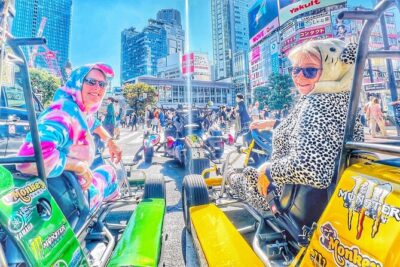
Best Go Kart Experience in Shibuya Crossing with Iconic Photos
Read our review →
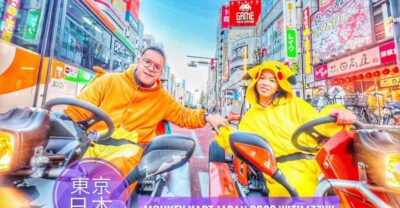
Tokyo Go-Karting Experience: Shibuya Crossing with Photos
Read our review →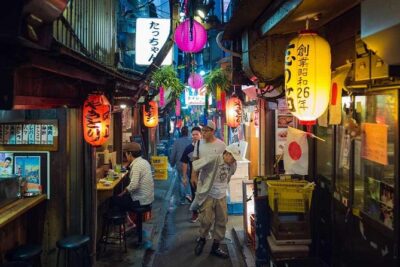

[Okinawa Blue Cave] Snorkeling with Private Guide+ Free Photos
Read our review →
Browse the lists this tour appears in