
REVIEW · CYCLING TOURS
eTour de Matsumoto – Electric Bike Tour
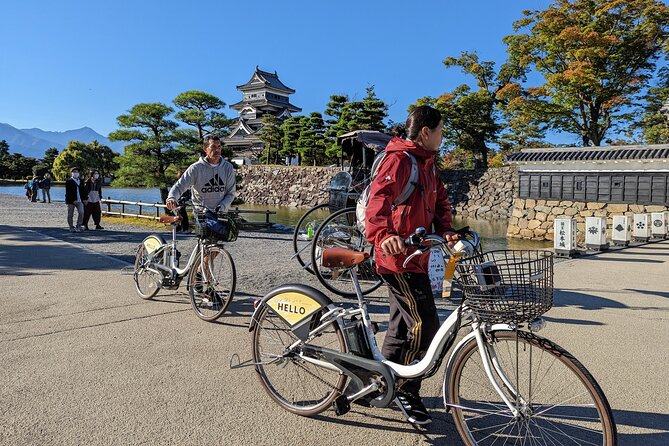
Matsumoto is at its best beyond the castle gates, where rice fields, farmhouses, vineyards, and mountain views replace city traffic. This four-hour electric-bike ride gives you that wider view, while still fitting in Matsumoto Castle and several historic sites.
I like the quiet countryside route and the chance to visit shrines that see far fewer overseas visitors. I also like the relaxed pace, English-speaking guide, and small maximum group of eight. The main consideration is physical effort: the ride is moderate, and lunch, snacks, insurance, and other personal costs are not included.
In This Review
- Key points at a glance
- Why an e-bike is the right way to see Matsumoto
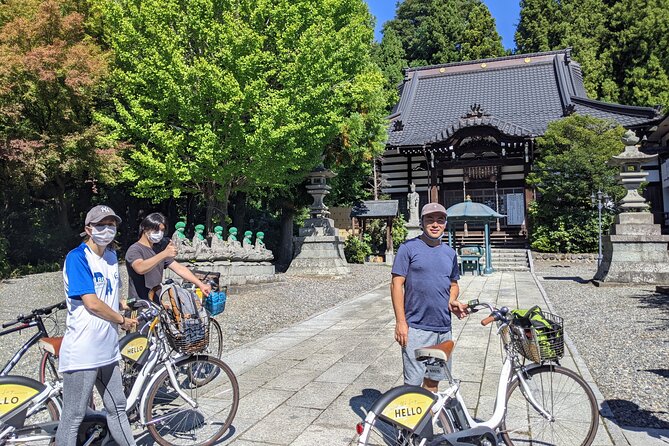
- Fukashi Shrine and Matsumoto’s local religious life
- Following the Susuki-gawa River into the Yamabe Valley
- Asama-Onsen Village and the role of hot springs
- Matsumoto Castle, the grand finish
- What the four-hour pace feels like
- Price, inclusions, and what you still pay for
- Who should book this Matsumoto bike tour
- Practical tips before you ride
- Should you book the eTour de Matsumoto?
- FAQ
- Where does the eTour de Matsumoto begin?
- Where does the tour end?
- How long does the bike tour last?
- Is an electric bicycle provided?
- Is a helmet included?
- Is lunch included?
- What fitness level is required?
- What happens if the weather is poor?
Key points at a glance
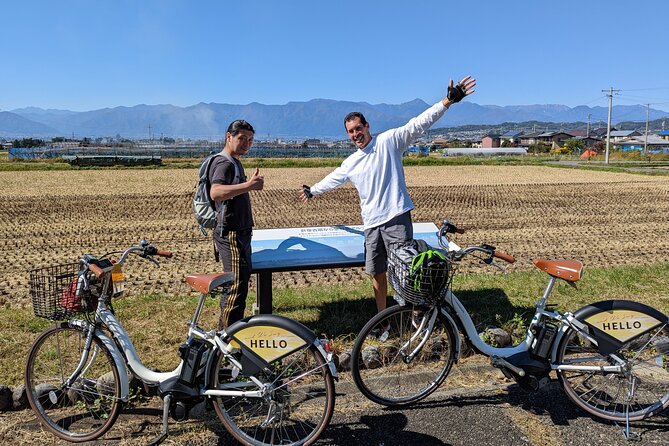
- Rice fields and farm roads: Cycle beyond central Matsumoto into open farmland with the Japanese Alps as a backdrop.
- Fukashi Shrine: Learn about Shinto worship, agriculture, water, wind, and the Tenjin festival at a historic local shrine.
- Yamabe Valley: Follow the Susuki-gawa River past vineyards, rice fields, and quiet rural scenery.
- Asama-Onsen Village: See one of Matsumoto’s best-known hot-spring areas and learn about the place of onsen in Japanese culture.
- Matsumoto Castle: Finish with one of Japan’s five castles designated a National Treasure.
- Small, guided outing: The group is limited to eight, with bicycles, helmets, photo stops, and an English-speaking guide included.
Why an e-bike is the right way to see Matsumoto
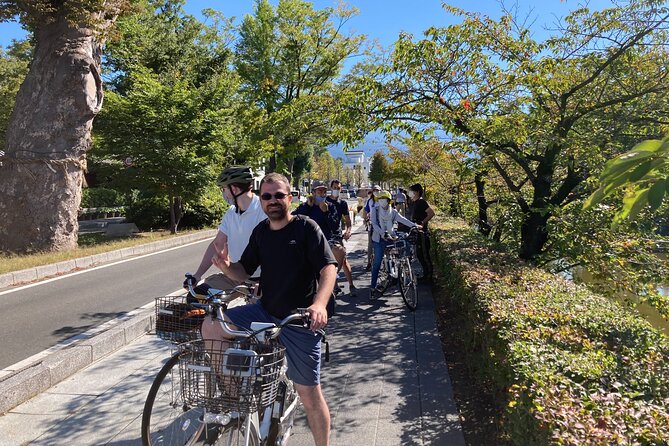
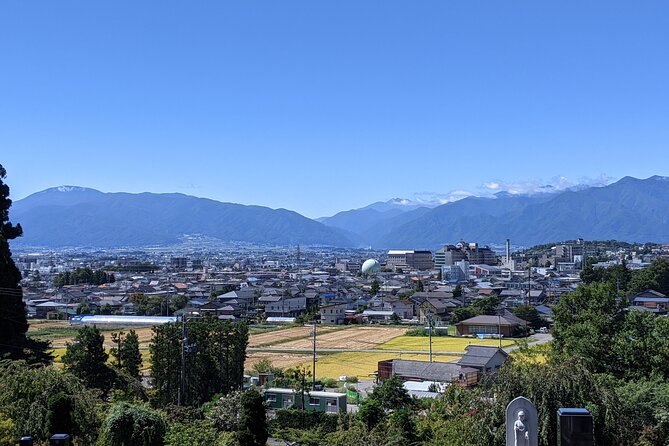
Matsumoto’s center is easy to explore on foot, but the city quickly opens into farmland. That is where this tour earns its keep. You can cover more ground than you would walking, yet still travel slowly enough to notice irrigation channels, traditional houses, shrines, and changing views of the mountains.
The electric bicycle helps with the moderate ride. It does not turn the outing into a motorized sightseeing trip, and you still need to pedal, but assistance makes the wider route more manageable. The tour is designed for discovery rather than speed, with breaks for photos and sightseeing.
I would not choose this as a racing excursion or a serious cycling challenge. You are here to see Matsumoto from several angles, not to chase mileage. That makes it a good fit for most people with moderate fitness who are comfortable spending several hours on a bicycle.
The tour begins and ends at Matsumoto Station, at 1 Chome-1 Fukashi. That is useful if you are arriving by train or staying near the station. The mobile ticket also makes the meeting process simple, though you should still allow time to find the exact meeting point before departure.
A few more Nagano trips to weigh up
- Hidden Kyoto E-Biking tour
★ 5.0 · 1,843 reviews - Tokyo Guided Small-Group Biking Tour
★ 5.0 · 1,250 reviews - Bike Tour Exploring North Kyoto plus Lunch
★ 5.0 · 1,087 reviews
Fukashi Shrine and Matsumoto’s local religious life
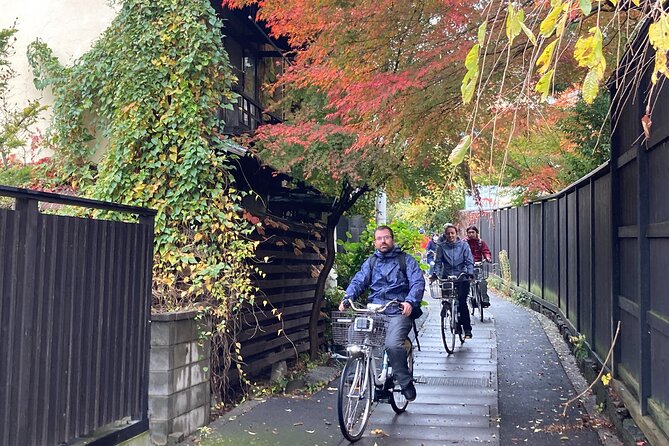
One of the first meaningful stops is Fukashi Shrine. It is dedicated to Suwamyojin, a Shinto deity connected with wind, water, and agriculture, and Tenjin, the deity associated with scholarship.
This is the kind of stop that gives the bicycle route its character. Matsumoto Castle is the city’s headline sight, but a local shrine helps you understand the everyday beliefs that shaped the countryside around it. Water and agriculture are not abstract ideas here. They connect directly to the fields and streams you will see later in the ride.
Fukashi Shrine is also linked with the Tenjin Matsuri, its best-known festival. Your guide can provide context about the shrine and its traditions, turning a short visit into more than a quick photograph.
I especially like this part of the outing for visitors who want a sense of place rather than a checklist of famous sights. The stop may feel quieter and less immediately dramatic than Matsumoto Castle, but that is part of its value.
Following the Susuki-gawa River into the Yamabe Valley
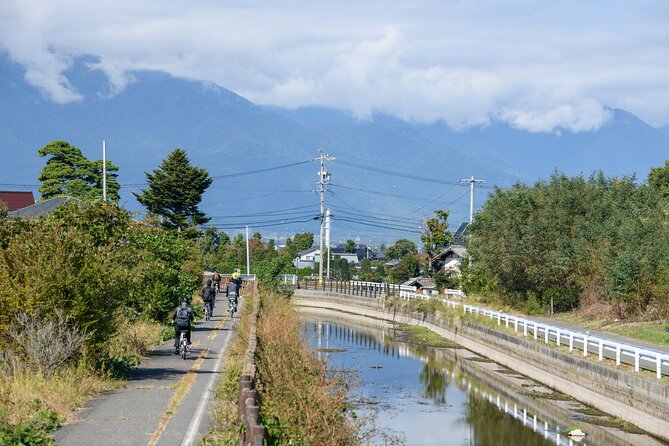
East of town, the Susuki-gawa River runs down from the mountains through vineyards and rice fields. The route continues toward the Yamabe Valley, an area known for quiet rural scenery and changing colors through the seasons.
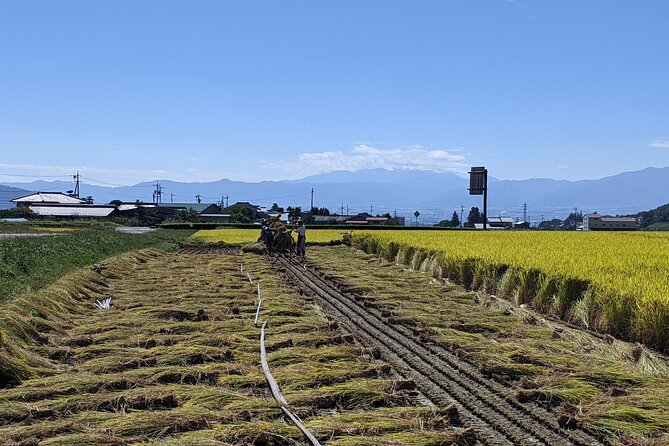
This is where the ride leaves the urban setting behind. You will pass broad fields, traditional Japanese farmhouses, and open views toward the Japanese Alps. The scenery is a strong reason to book this tour, particularly if your Matsumoto visit has otherwise focused on streets, museums, and castle architecture.
The electric bicycle matters more here because the ride covers the surrounding countryside rather than staying within the central sightseeing area. You can enjoy the views without having to treat every rise in the road as a test of endurance.
The guide also helps make sense of what you are seeing. A field can look like simply a field if you do not know how it fits into local life. With explanations about the area’s history and agriculture, the ride becomes a moving introduction to Matsumoto’s setting.
Bring water and sun protection, especially in summer. Snacks are also your responsibility. The route includes breaks, but the tour does not include food, and you should not count on a provided lunch.
Asama-Onsen Village and the role of hot springs
Asama-Onsen Village lies north of Matsumoto and is one of the area’s natural hot-spring centers. Onsen are an important part of Japanese culture, and this stop gives you a chance to see that tradition in its home setting.
You should not expect a long bathing session to be part of the tour. The experience is a bicycle discovery tour, and the itinerary does not include an onsen bath. Instead, Asama-Onsen adds cultural context and gives you another view of how Matsumoto works beyond its central streets.
For many first-time visitors to Japan, hot springs are familiar as a concept but less clear in practice. A stop in an onsen village can help you understand why these places matter, even if you are not using the baths during the ride.
The village also breaks up the cycling with a change of setting. After fields and river roads, the hot-spring area offers a different side of Matsumoto’s surroundings. Ask your guide questions here if you are curious about local customs, bathing etiquette, or the history of the area.
Same city, a completely different kind of day:
- 1-Day Snow Monkeys, Zenko-ji Temple & Sake in Nagano
★ 5.0 · 1,020 reviews - Nagano: Snow Monkeys, Zenkoji Temple & Sake Day Trip
★ 4.9 · 833 reviews - From Tokyo: Snow Monkey 1 Day Tour with Beef Sukiyaki Lunch
★ 4.6 · 295 reviews - Tokyo: Snow Monkey & Nagano Customiseable Private Day Tour
★ 4.8 · 138 reviews
Matsumoto Castle, the grand finish
Matsumoto Castle is the tour’s major historic sight. With more than 400 years of history, it is one of only five castles in Japan designated a National Treasure. The others are Himeji, Hikone, Inuyama, and Matsue.
The castle is especially effective as the final major stop because you have already seen the countryside that surrounds it. You are not looking at the castle as an isolated monument. You have spent the morning following rivers, passing fields, and seeing the mountain setting that helped shape Matsumoto’s identity.
The tour information does not promise admission to the castle interior, so you should confirm what your booking includes if entering the keep is important to you. The listed inclusions cover the English-speaking guide, bicycle, and helmet, not castle admission or other miscellaneous fees.
Even if your time at the castle is focused on the exterior and grounds, it remains a strong part of the route. The black-and-white structure is one of Japan’s most recognizable castles, and the visit gives the countryside ride a clear historical anchor.
If you have already toured Matsumoto Castle separately, the bicycle tour still offers value through the rural route, shrine, river valley, and onsen village. If you have not seen it yet, this outing can provide a useful first look, though you may want a separate visit if you want a slow, detailed interior tour.
What the four-hour pace feels like
The stated duration is about four hours. That is long enough to reach several parts of Matsumoto, but short enough to fit into a day that also includes other sightseeing.
You should expect a steady but relaxed outing. The tour includes a moderate amount of cycling and is described as suitable for most fitness levels. It also includes regular stops for sightseeing and photos, so you are not pedaling continuously for four hours.
That relaxed approach is one of the strongest features. You can pause at a shrine, look across the fields, listen to the guide, and take photographs without feeling pushed along. The trade-off is that you will not have unlimited time at every stop.
The group size is capped at eight people. That is small enough for a more personal feel and makes it easier to hear the guide and ask questions. Group size can affect the rhythm of a bike tour, so this limit is worth noting if you prefer a quieter experience.
An English-speaking guide leads the route. Kevin is one guide connected with the tour, and his strong knowledge of the Matsumoto area has been specifically praised. The guide’s role matters here because the scenery is only half the experience. Local explanations give the shrines, fields, hot springs, and castle a clearer connection.
Price, inclusions, and what you still pay for
The listed price is $88.02 per person. For four hours with an electric bicycle, helmet, guide, and a route that reaches both the city and countryside, I consider that a reasonable price for visitors who want more than a standard central walking tour.
The value depends on how much you use the included bicycle. If you only want Matsumoto Castle and the main streets, walking or using local transport may cost less and give you more control over your schedule. If you want to reach the rice fields, Yamabe Valley, Asama-Onsen Village, and rural shrines in one half-day, the guided e-bike format saves effort and planning.
Lunch is not included. One outing included a good soba lunch at a local restaurant, but you should treat that as a possible extra rather than a promised feature. Budget separately for lunch, snacks, drinks, souvenirs, and any miscellaneous fees.
Travel insurance and private insurance are also not included. Helmets are provided and must be worn, but additional safety equipment is not supplied. If you normally use cycling gloves, extra sun protection, or other gear, bring it with you.
Who should book this Matsumoto bike tour
I would choose this tour if you want to see the city and its surroundings in one outing, especially if you enjoy cycling but do not want a hard athletic ride. It suits couples, solo visitors, and small groups who like local history, rural scenery, and a guide’s explanation of what they are seeing.
It is also a good choice for a repeat visitor. If you have already walked the castle area, the countryside route gives you something different. The quiet shrines and farm roads offer a side of Matsumoto that is easy to miss when you stay close to the station and central streets.
Families and mixed-ability groups should think about the moderate fitness requirement. Electric assistance helps, but the tour still involves several hours of cycling. Everyone should be comfortable riding a bicycle and following the guide’s pace.
You should also check the weather forecast. The activity requires good weather, and poor conditions may lead to a different date or a full refund. For a full refund from a cancellation you make yourself, cancel at least 24 hours before the local start time. Changes or cancellations inside that window are not accepted and are not refunded.
Practical tips before you ride
Wear comfortable clothes that allow easy movement. You do not need racing gear, but avoid anything that makes pedaling or sitting on a bicycle awkward.
Pack water, snacks, and sun protection. These are especially important during the summer months, when four hours outdoors can feel longer than expected. A small bag for personal items is also sensible, though the provided details do not specify storage capacity.
Keep your phone charged. The ticket is mobile, and you will likely want it for photos during the ride. Arrive at Matsumoto Station with enough time to locate the meeting point without rushing.
The tour ends back at the station, which makes onward plans easier. Still, do not schedule a train immediately after the stated end time. A relaxed guided ride can run at a natural pace, and you will be happier with a little breathing room.
Should you book the eTour de Matsumoto?
Book it if you want the full setting of Matsumoto, not only its famous castle. The combination of rice fields, shrines, river roads, and mountain views is the real reason to go, while the castle supplies a memorable historical finish.
The tour has a 5 out of 5 rating from 16 reviews, with 100 percent recommending it. That matches the experience’s clearest strengths: a peaceful route, useful local history, friendly guiding, and a chance to reach places that are not usually part of a first-time city walk.
Skip it if you want a short, urban sightseeing tour, a castle interior visit with no time limits, or a strenuous cycling challenge. For most visitors with moderate fitness, good weather, and four free hours, this is a practical and enjoyable way to see Matsumoto beyond the postcard view.
FAQ
Where does the eTour de Matsumoto begin?
The tour begins at Matsumoto Station, located at 1 Chome-1 Fukashi, Matsumoto, Nagano 390-0815, Japan.
Where does the tour end?
The activity ends back at the meeting point at Matsumoto Station.
How long does the bike tour last?
The tour lasts approximately four hours.
Is an electric bicycle provided?
Yes. Use of the bicycle is included in the tour price.
Is a helmet included?
Yes. A helmet is provided and must be worn during the ride.
Is lunch included?
No. Lunch is not included. Snacks, drinks, and other personal purchases are also your responsibility.
What fitness level is required?
The tour includes a moderate amount of cycling and is suitable for most people with moderate physical fitness. The pace is relaxed, with breaks for sightseeing and photographs.
What happens if the weather is poor?
The activity requires good weather. If poor weather causes a cancellation, you will be offered another date or a full refund.
Just added around Nagano
- Wasabi Farm Walking Tour & Lunch★ 4.5 · 20 reviews
- 1-Day Tateyama-Kurobe Tour: Walking on the ‘Roof of Japan’★ 5.0 · 20 reviews
- Snow Monkeys, Hokusai & Sake: A Perfect Day in Nagano★ 5.0 · 19 reviews
- Ski or Snowboard Lesson in Shiga Kogen (4Hours)★ 5.0 · 34 reviews
- Snow Monkey Park & Miso Production Day Tour from Nagano★ 5.0 · 18 reviews
- Snow Monkey Park, Soba Lunch and Shibu Onsen Tour★ 5.0 · 12 reviews
- Nagano Spring: 1-Day Cherry Blossoms & Snow Monkeys Guided Tour★ 5.0 · 31 reviews
- Private Snow Monkey Tour – Conveniently Resort Hop and Sightsee★ 5.0 · 47 reviews
Cycling Tours, compared.


3h Tokyo E-Bike Tour: Hidden Gems, and Local Life with guide
Read our review →
Arashiyama Bamboo Forest & Hidden Gems Bike Tour (Early Bird)
Read our review →
Hiroshima in a Nutshell: Morning Bike Adventure
Read our review →
5 Top Highlights of Kyoto Full Day Bike Tour (E-bike option)
Read our review →Browse the lists this tour appears in