REVIEW · OSAKA TOURS
90 min Shared Handmade Udon Experience
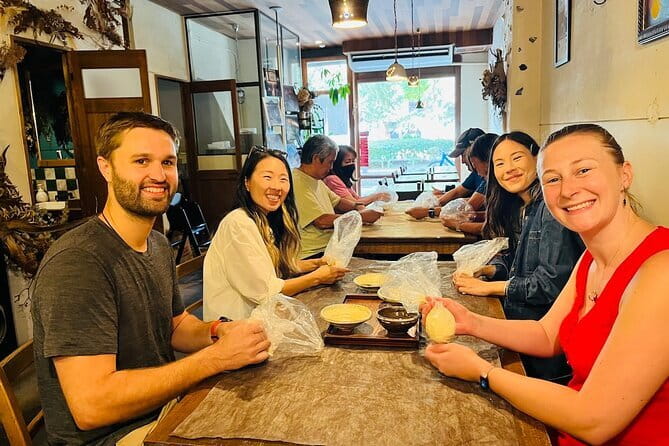
Making udon with your feet sounds silly until you learn why it works. At Udonzin Beat, you knead Sanuki-style dough this way to give the noodles their prized mix of firmness and softness, then watch the chef cook your batch for a meal right away. It is part cooking class, part lunch, and part cultural lesson.
I like two things here. First, the recipe lets you repeat the experience at home instead of leaving with only a full stomach. Second, the broth uses kombu, shiitake mushrooms, and katsuobushi, with no added flavor enhancers. The main consideration is the shared format: you may be grouped with other people, and the restaurant requires at least two participants for a class.
In This Review
- Key points at a glance
- Starting at Udonzin Beat in Osaka
- The story behind Sanuki udon
- Kneading the dough with your feet
- Eating the noodles you just made
- What the 90-minute schedule feels like
- The value of the $52.85 price
- Why families and groups may enjoy it
- Dietary needs and practical limits
- Who should book this Osaka food experience
- Should you book the handmade udon class?
- FAQ
- Where does the handmade udon class take place?
- How long does the experience last?
- Does the activity start and finish at the same location?
- What type of udon do you learn to make?
- Is the udon tasting included?
- Is a recipe included?
- Are photos included?
- Can vegetarians participate?
- Can children join the class?
- Are drinks and side dishes included?
- Do I need to book with another participant?
Key points at a glance
- Foot-kneaded Sanuki udon: Work the dough in the traditional style for a springy, smooth texture.
- Fresh noodles cooked for you: Choose hot or cold udon after the hands-on portion.
- Michelin-listed restaurant: Udonzin Beat was featured in the Michelin Guide from 2018 through 2023.
- Friendly family format: Children age two and up can join, and previous classes have included several families and children as young as four.
- Useful take-home recipe: You receive instructions for making udon after returning home.
- Small restaurant setting: The maximum group size is 20, with the possibility of joining a smaller shared class.
Starting at Udonzin Beat in Osaka
Your meeting point is Udonzin Beat, at 1-chōme-16-17 Shinmachi in Osaka’s Nishi Ward. The activity begins and ends at the restaurant, so you do not need to follow a guide across several parts of the city.
The location is near public transportation, which makes this a practical stop to add to an Osaka day. You should still allow enough time to find the restaurant and arrive promptly. The class lasts about 90 minutes, and the restaurant returns to regular service afterward, so late arrivals may cut into your own class time.
The setting is a small, cozy restaurant with coordinated decor and a clean bathroom. That matters here. You are not making noodles in a large demonstration kitchen where you stand at a distance. You take part in the process in a more personal restaurant environment, though the room can feel busy when a larger group is booked.
The class can hold up to 20 people. That is not a tiny private lesson, and you should be prepared to share the session with other participants. For a family or friendly group, this can add energy. If you want a quiet, one-on-one cooking lesson, this is not the right format.
Other Osaka days people book alongside this one:
- Osaka Go Karting Tour with Funny Costume
★ 5.0 · 2,658 reviews - Osaka Castle: Museum and Tower Entry Ticket
★ 4.5 · 2,380 reviews - Osaka: Shinsekai Food Tour with 13-15 Dishes at 5 Eateries
★ 4.8 · 2,204 reviews
The story behind Sanuki udon
The class begins with an explanation of udon and the Sanuki style. The teaching helps you understand why the preparation is different from simply buying noodles at a shop or boiling a packet at home.
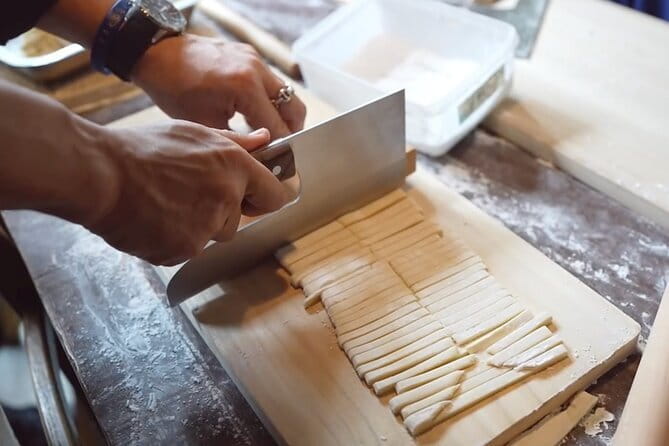
Sanuki udon is known for a texture that is firm yet soft, with a smooth bite. The foot-kneading step helps develop that texture. It is also the part children tend to remember, because it turns an ordinary cooking task into a playful physical activity.
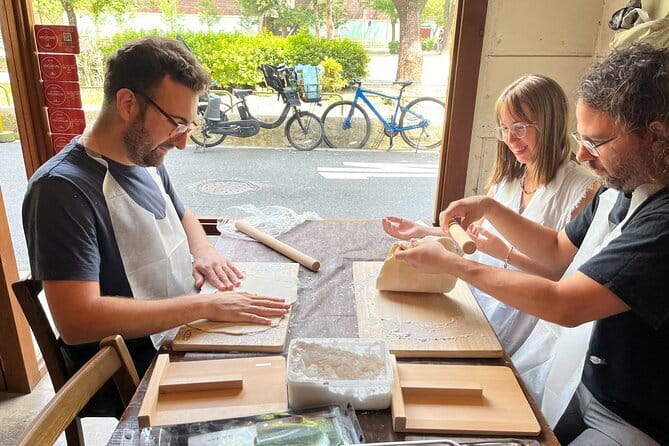
You do not need previous cooking experience. The lesson is built for beginners, and the instructors explain each stage as you go. Keiko and Nozomi have both led classes, and the teaching style is warm and welcoming rather than formal or fussy.
The history lesson is useful because it connects the food to everyday Japanese cooking. You are not only following instructions. You are learning why the dough is handled in this particular way and what makes Sanuki udon different from the noodles commonly sold in shops.
Kneading the dough with your feet
The central activity is hands-and-feet-on noodle making. You work the dough by stepping on it, a method that develops the smooth, springy texture associated with Sanuki udon.
Wear clothes you do not mind getting messy. The class is hands-on, and although the activity is designed for families and beginners, flour and dough are part of the fun. Comfortable clothing will let you concentrate on the food instead of worrying about keeping an outfit spotless.
This step makes the class more social than a standard cooking demonstration. You are doing the work alongside other people, comparing progress, and seeing how a simple mixture becomes a finished noodle. For children, it offers a clear task they can understand. For adults, it gives you a better feel for the effort behind a bowl of handmade udon.
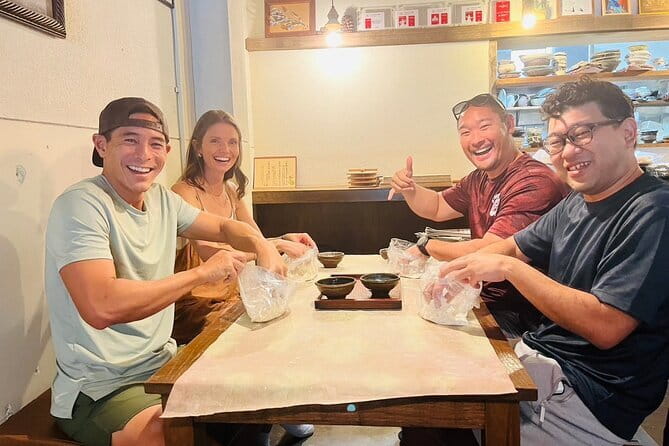
A class with several families can be lively. One previous group included 11 friends from three families and five children, so you should expect that the tone may be cheerful rather than hushed. That is a good match for a family outing or a group of friends. Solo participants should contact the provider in advance, since the class needs at least two people.
Eating the noodles you just made
After the preparation, the chef cooks your noodles. You then eat the udon you created, served either hot or cold.
The choice matters more than it might seem. Hot udon lets the broth take center stage, while cold udon puts more attention on the noodle texture. Since the noodles are freshly made during the class, this tasting is the payoff for the work you have just done.
The broth is made from natural, additive-free ingredients, including kombu, shiitake mushrooms, and katsuobushi, or bonito stock. These ingredients create a savory Japanese base without relying on artificial flavor enhancers. Vegetarians can take part, but you should share your dietary needs in advance so the restaurant can prepare appropriately.
Tempura and extra udon are available to order, but they are not included in the class price. Alcohol is also extra. You can sip Japanese sake or beer while making your noodles, which may suit adults who want to turn the lesson into a relaxed meal, but you should budget separately for those drinks.
The included tasting is enough to complete the experience, but it may not satisfy someone looking for a large lunch with several side dishes. If you have a hearty appetite, ordering tempura or extra noodles could change the final cost.
Same city, a completely different kind of day:
- Osaka Food Tour: 13 Dishes at 5 Local Eateries
★ 5.0 · 2,149 reviews - Hungry Osaka Street Food Tour:15 Tastings & 3 Drinks with a Local
★ 5.0 · 1,727 reviews - Osaka: Tea Ceremony Experience
★ 4.9 · 1,426 reviews - Osaka Kickstart: Hotspots & Hidden Gems Tour
★ 5.0 · 1,306 reviews
What the 90-minute schedule feels like
Ninety minutes is a sensible length for this activity. You have time to hear about udon, prepare the dough, knead it with your feet, and eat the finished noodles without giving up half a day of sightseeing.
The short format also makes the class easy to place between other Osaka plans. You may find it works best as a lunch activity or as a break between visits in the city. Since everything takes place at one restaurant, the schedule is simpler than a food tour that requires several meeting points.
The pace depends partly on the group. A class with 20 people may feel less personal than a small session, and each stage can take longer when many participants need help. The listed maximum is large enough to keep in mind when you decide how much personal instruction you want.
The instructor takes photos during the class and shares them with you. That is a useful extra for families, since someone does not have to stand behind the camera for the entire activity. It also gives you a record of the foot-kneading process, which is not the kind of cooking step most people photograph at home.
The value of the $52.85 price
At $52.85 per person, this costs more than simply ordering udon at a restaurant. You are paying for instruction, the activity itself, the cooked tasting, a recipe, photos, and local taxes.
The value is strongest if you want an activity rather than just a meal. You get to handle the dough, learn a traditional method, and eat the result. The recipe gives the class some lasting value, especially if you already enjoy cooking or want a practical reminder of your time in Osaka.
The price is less attractive if you only want a quick bowl of noodles. You also need to account for drinks, tempura, or extra udon if you choose them. Those add-ons are not included, so check the final bill before ordering several extras.
For families, the children’s fee is ¥5,000 for ages two and up. That makes the total worth calculating carefully for a larger family. Still, the format gives children a real role, rather than asking them to sit and watch an adult cook.
Why families and groups may enjoy it
This is a strong choice for families with children who like practical activities. Children age two and above can participate, and the class has accommodated groups with children ages four and ten. The foot-kneading is easy to understand and unusual enough to hold attention.
The class also works well for friends traveling together. A group can share the preparation, eat together, and order drinks afterward. The small restaurant creates a more intimate setting than a large commercial food workshop.
I would be more cautious about booking it for a very young child who cannot follow basic instructions or for anyone uncomfortable with flour, dough, or shared activity. The restaurant asks you to wear clothes that can get messy, and the class is not designed around wheat-free cooking.
Solo visitors need to contact Udonzin Beat ahead of time. The minimum is two participants, so a one-person booking is not guaranteed. The same advice applies if one adult wants to bring children as the only booked participant.
Dietary needs and practical limits

Vegetarians are welcome, but you must notify the provider in advance about dietary restrictions. The broth includes kombu, shiitake mushrooms, and katsuobushi, so you should ask about suitable preparation if you avoid fish or other animal products.
This activity is not recommended for people with a wheat allergy. Udon is a wheat-based food, and the class centers on making and eating it. The available vegetarian option does not mean the class is gluten-free.
Alcohol is optional and costs extra. You can enjoy sake or beer during the class, but you do not need to drink to take part. The included food is the handmade udon tasting, while side dishes and additional noodles are separate purchases.
A mobile ticket is provided, and confirmation arrives at booking. Cancellation is free when you cancel at least 24 hours before the start time. Cancellations or changes made within 24 hours are not refunded or accepted, and the minimum participant rule can lead to a rescheduled date or full refund if the class cannot run.
Who should book this Osaka food experience
I would choose this class if you want to understand a familiar Japanese food by making it yourself. The lesson offers more contact with the cooking process than a restaurant meal, but it remains short enough to fit into a busy Osaka schedule.
It suits families, couples who enjoy food activities, and groups of friends. It also works for first-time cooks because the instructors guide you through the process rather than expecting you to know kitchen techniques.
You may want to skip it if you have a wheat allergy, dislike group activities, or want a private lesson. The possible 20-person maximum and shared format are important details, especially for adults who prefer a quiet class with plenty of individual attention.
The Michelin Guide recognition from 2018 through 2023 adds confidence that the restaurant takes its food seriously, but the real reason to book is the combination of making, learning, and eating. The class gives you a simple story to remember: you made the noodles, the chef cooked them, and you tasted the result in the same restaurant.
Should you book the handmade udon class?
Book it if you want a friendly, practical Osaka activity with a clear food payoff. The foot-kneading method, fresh tasting, recipe, and shared restaurant setting make this more memorable than a standard meal, and the 90-minute length keeps the commitment manageable.
Before booking, confirm that your group meets the two-person minimum, notify the provider about dietary needs, and leave room in your budget for optional drinks or side dishes. Wear washable clothes and arrive on time.
For families and food-minded visitors, this is an easy recommendation. For anyone seeking privacy, a large meal, or wheat-free cooking, choose another Osaka experience.
FAQ
Where does the handmade udon class take place?
The class takes place at Udonzin Beat, located at 1-chōme-16-17 Shinmachi, Nishi Ward, Osaka, 550-0013, Japan.
How long does the experience last?
The experience lasts approximately 90 minutes.
Does the activity start and finish at the same location?
Yes. The activity ends back at the restaurant where it begins.
What type of udon do you learn to make?
You learn to make Sanuki udon, including the traditional step of kneading the dough with your feet.
Is the udon tasting included?
Yes. A tasting of the handmade udon is included, and you can have it hot or cold.
Is a recipe included?
Yes. You receive a recipe for making udon at home.
Are photos included?
Yes. The instructor takes photos during the class and shares them with you.
Can vegetarians participate?
Yes. A vegetarian option is available, but you should provide details about dietary restrictions in advance.
Can children join the class?
Yes. Children age two and above can participate. The listed children’s fee is ¥5,000.
Are drinks and side dishes included?
No. Alcoholic drinks, tempura, and extra udon are not included in the fee and can be ordered separately.
Do I need to book with another participant?
The class requires at least two participants. If you want to join alone, or if one adult is booking with children, contact the provider in advance to find a suitable session.
Just added around Osaka
- Samurai dress-up and shows, plus Tea Ceremony & Calligraphy★ 5.0 · 27 reviews
- Kyoto & Nara Private customized tour with English speaking Guide★ 4.5 · 99 reviews
- Well-balanced BENTO (lunch box) Cooking Class★ 5.0 · 35 reviews
- Volleyball in Osaka & Kyoto with Locals!★ 5.0 · 21 reviews
- Urban Canvas: Osaka Street Art Bike Tour★ 5.0 · 47 reviews
- OSAKA:Feel the Power! Learn Taiko Drum from Professionals★ 5.0 · 28 reviews
- 1.5〜2 Hours Traditional Kintsugi Work Shop in Namba Osaka★ 5.0 · 75 reviews
- Umami Town Street Food Tour★ 5.0 · 120 reviews
Osaka Tours, compared.

Shinsekai Food Tour with 13-15 Dishes at 5 Eateries
Read our review →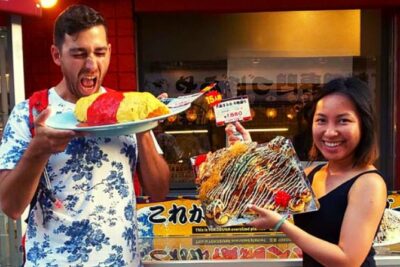
Osaka Food Tour: 13 Dishes at 5 Local Eateries
Read our review →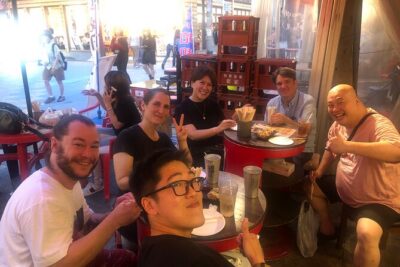
Hungry Osaka Street Food Tour:15 Tastings & 3 Drinks with a Local
Read our review →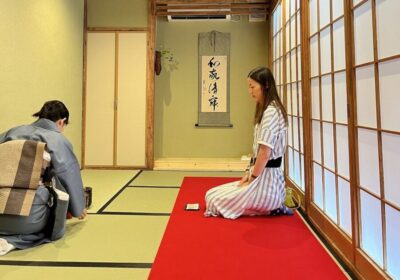
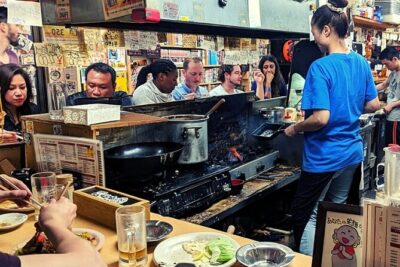

Hotspots & Hidden Gems Walking Tour Private or Group
Read our review →