
REVIEW · CYCLING TOURS
2.5 Hour-Guided Cycle Tour in the Central Tokyo
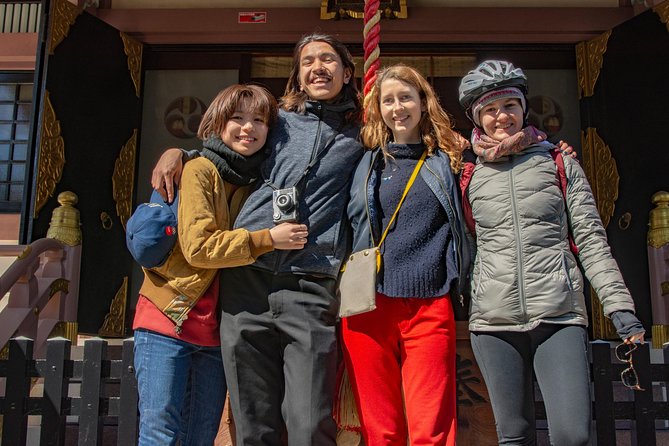
Tokyo reveals a different face from a bicycle seat. This 2.5-hour ride leaves the big roads behind for residential lanes, river paths, temple grounds, and old shopping streets around Asakusa and Sumida. Guide Takeshi leads the way, with a small maximum of six people.
I like the gentle pace and the mix of famous sights with ordinary neighborhood life. I also like the practical setup: a folding bike, helmet, a central meeting point near Hikifune Station, and enough free time left for the rest of your day. The main consideration is bike size, since the 14 to 20-inch folding bikes suit people from 140 to 180 centimeters tall.
In This Review
- Key points to know
- Why a bicycle works so well in eastern Tokyo
- Meeting near Hikifune Station
- Riding beside the Sumida River
- Honryuin Matsuchiyama Shoden and its unusual symbols
- Imado Shrine, a Tokyo power spot
- Senso-ji with bicycles parked nearby
- Watching candy take shape at Ameshin
- Crossing the Sumida River beneath Tokyo Skytree
- Kyojima Minami Park and everyday neighborhood life
- What the guide adds to the ride
- Who will enjoy this tour most
- Timing, weather, and cancellation
- Should you book the Tokyo Backstreets Bike Tour?
- FAQ
- Where does the cycling tour start?
- How long does the experience last?
- What type of bicycle is provided?
- Is a helmet included?
- Can I request a tandem bicycle?
- What happens if the weather is poor?
Key points to know
- Quiet Tokyo by bicycle: Ride along the Sumida River and through residential streets most city tours skip.
- A smart mix of sights: Visit Senso-ji, two smaller religious sites, a traditional candy shop, Skytree viewpoints, and a local shopping area.
- Relaxed riding: The route is suited to recreational cyclists and includes regular sightseeing stops.
- Small private experience: Your group can ride at its own pace, with no more than six people.
- Helpful local guide: Takeshi provides local insight, photographs, and safety support along the route.
- Plan for the weather: Rain can affect the outing, but raincoats may be provided and poor-weather cancellations offer a new date or full refund.
Why a bicycle works so well in eastern Tokyo
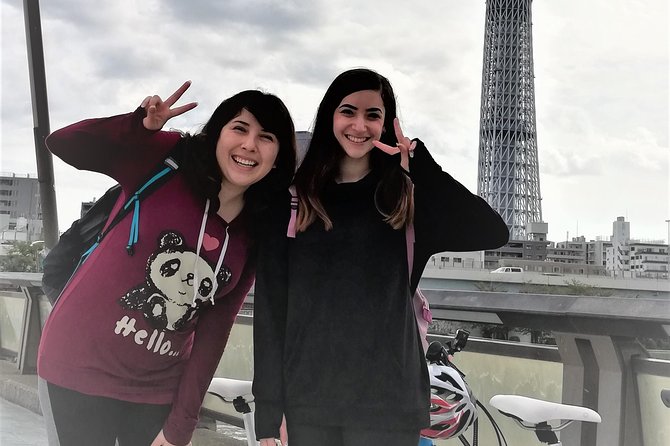
Central Tokyo can feel too large to understand on foot. The train gets you from one major stop to another, but it skips the in-between parts: narrow streets, small houses, local businesses, riverside paths, and the changing view of Tokyo Skytree as you move through the city.
This ride fills that gap. You are not racing from attraction to attraction. You pedal at an easy pace, stop often, park near the temples, and see how the city changes block by block. The route has enough famous Tokyo to satisfy a first visit, but its real value comes from the quieter stretches between those sights.
The cycling is described as gentle rather than athletic. That matters if you enjoy riding but do not want a demanding city workout. A 13-year-old and a 16-year-old managed the route with their family, and the experience also worked well for a cautious solo cyclist who felt uneasy about riding in a busy city.
You should still be comfortable balancing and steering a bicycle. Tokyo traffic is not removed from the experience, even though the route favors calmer streets and river paths. Takeshi’s safety-focused approach is a useful part of the tour, especially when crossing roads or bridges.
A few more Tokyo trips to weigh up
- Tokyo Guided Small-Group Biking Tour
★ 5.0 · 1,250 reviews - Tokyo Great Cycling Tour
★ 5.0 · 811 reviews - Tokyo Top Highlights 3h Guided E-bike Tour
★ 5.0 · 714 reviews
Meeting near Hikifune Station
The starting point is Tokyo Backstreets Bike Tour, inside the Synapse shared office at 2-24-14 Higashimukojima, Sumida City, Tokyo 131-0032. The meeting point is near public transportation, but you should allow time to find the office inside the shared workspace rather than assuming it will look like a conventional bike shop.
The tour ends back at the same place. That makes planning easier, since you do not need to work out how to retrieve luggage or reach a different neighborhood after the ride.
You receive a folding bicycle and helmet. The bikes have 14 to 20-inch wheels and are designed for people between 140 and 180 centimeters tall. If you are taller than 180 centimeters, tell the operator in advance so they can discuss the fit. A tandem bike is possible, but you need to request it at least three days before the tour.
The group limit is six. The experience is presented as private for your group, so you can enjoy a more personal pace instead of following a large line of cyclists. At $50.08 per person, the price is fair if you value the bike, the guide, route planning, and access to several areas in a short time. It is less appealing if you only want a quick ride and do not care about the stops or local explanation.
Riding beside the Sumida River
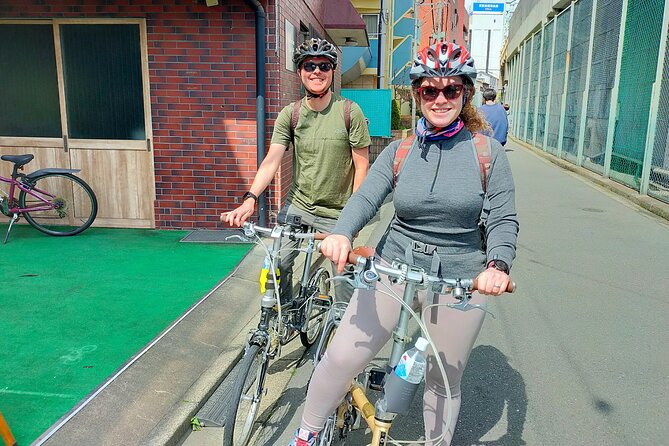
The first cycling stretch follows the bank of the Sumida River. In spring, this area is known for cherry blossoms, giving the opening ride a seasonal appeal. Even outside blossom time, the river provides a welcome break from Tokyo’s close-packed streets.
You get a moving view rather than a single lookout. The scenery changes as you pedal, and the open river corridor helps you get comfortable with the bike before the route becomes more urban. This is also one of the places where a bicycle makes a clear difference. You cover more ground than you would walking, but still move slowly enough to notice the surroundings.
Do not book this specifically as a cherry blossom tour unless your dates match the spring season. The flowers are a seasonal feature, not a year-round guarantee. The river ride remains part of the route, but the mood will change with the weather and time of year.
Honryuin Matsuchiyama Shoden and its unusual symbols
The first formal stop is Honryuin Matsuchiyama Shoden, a temple connected with Senso-ji and founded in 595. You have about 20 minutes here, with no admission charge.
The temple is especially interesting for its repeated images of daikon, or Japanese radishes, and pouches. The radish represents minds caught in deep ignorance, while the pouch carries its own religious meaning. These details give you something specific to look for instead of simply walking through another temple courtyard and taking a photo.
I like this stop because it adds a quieter religious site before the major crowds of Senso-ji. It also gives Takeshi room to explain local customs and symbols in a setting that feels more personal than a quick pass through a major landmark.
Twenty minutes is enough for a short visit and explanation, but not a long period of contemplation. If you want extended time at every temple, this schedule will feel brisk. The strength of the tour is variety, not lengthy visits at each stop.
Same city, a completely different kind of day:
- Mt Fuji and Hakone 1-Day Bus Tour Return by Bullet Train
★ 5.0 · 26,383 reviews - 1-Day Tokyo Bus Tour
★ 5.0 · 14,250 reviews - Tokyo: TOKYO SKYTREE® Admission ticket
★ 4.5 · 11,192 reviews - Tokyo: teamLab Planets TOKYO Digital Art Museum Entry Ticket
★ 4.6 · 9,779 reviews
Imado Shrine, a Tokyo power spot
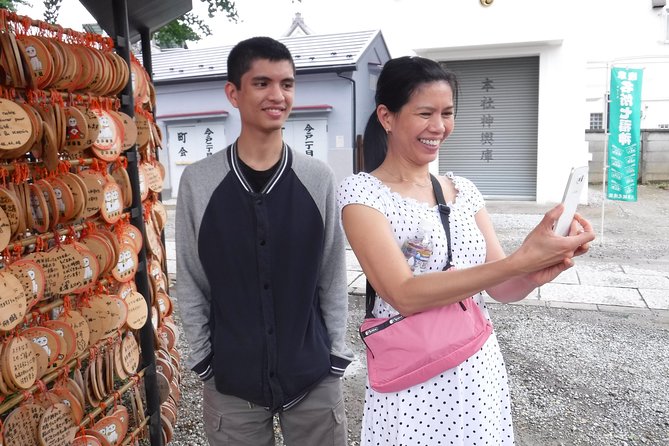
The route continues to Imado Shrine, founded in 1063. You have around 15 minutes here, again with free admission.
Imado is known as a power spot for people hoping to find love or a marriage partner. In Japan, a power spot is a sacred place associated with a particular kind of good fortune. That gives this shrine a clear identity and makes it more than a generic stop on a sightseeing route.
The short visit works well for a first look. You can see the shrine, hear why it matters, and continue without spending half the day at religious sites. If relationship-related blessings are not your concern, the appeal is still the chance to visit a place tied to modern Japanese spiritual life.
The two smaller religious stops also help balance Senso-ji. You see how a famous temple fits into a broader local setting, rather than treating it as an isolated attraction.
Senso-ji with bicycles parked nearby
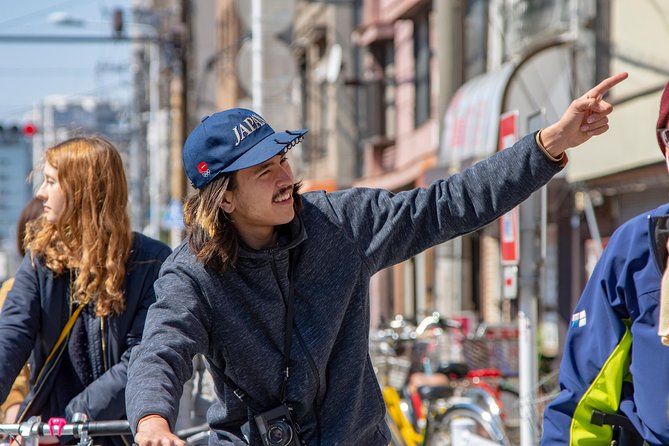
Senso-ji is the best-known stop on the route. The bikes are parked near the temple, and you explore the grounds on foot for about 30 minutes. Admission is free.
This is the place where the tour shifts from local lanes to one of Tokyo’s headline sights. The half-hour stop gives you enough time to walk inside, take photographs, and see the temple without turning the experience into a long temple tour.
The advantage of arriving by bicycle is practical. You do not need to spend the morning navigating several train changes, and you approach the temple through the surrounding neighborhood rather than arriving with only the station entrance as your point of reference.
Senso-ji can be crowded, and a bike tour cannot change that. The visit is best seen as a focused introduction. If this is your first time in Asakusa, you may want to return later on your own for a slower look at the temple grounds and nearby streets.
Watching candy take shape at Ameshin
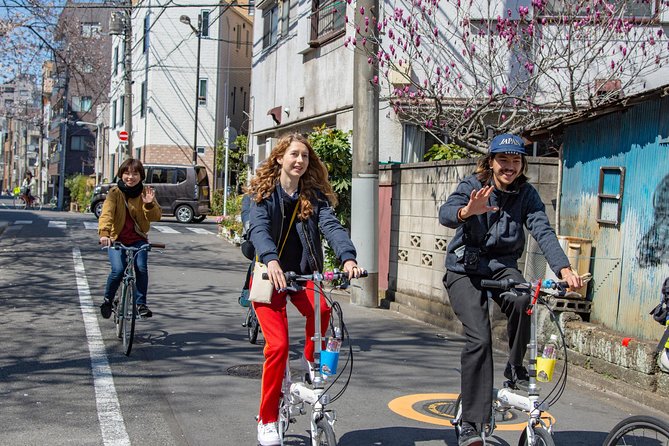
At Asakusa Amezaiku Ameshin, you can see Japanese traditional craft candy being made. The pieces are artistic, so this stop offers a different kind of culture from the temples and shrine.
The visit lasts about 15 minutes and has no listed admission charge. It is short, but it breaks up the riding and gives you a close look at a craft that is easy to miss if you stick to major museums and monuments.
You may also be taken to street stalls selling authentic Japanese food that you can buy for yourself. The exact food and cost are not specified, so bring some yen if you want the option of a snack. Do not treat food as included in the tour price.
Crossing the Sumida River beneath Tokyo Skytree
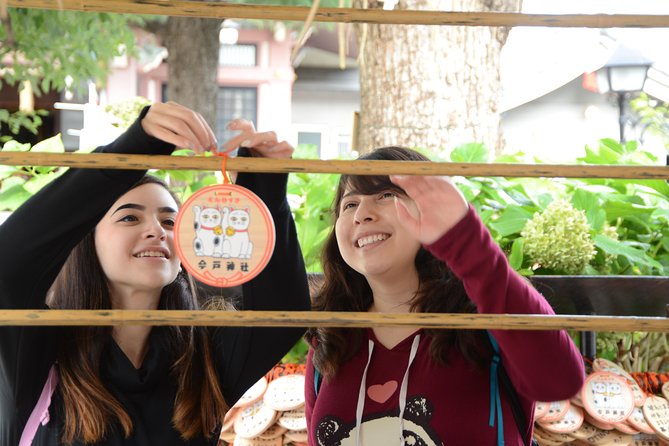
After Asakusa, the ride crosses the Sumida River. This section is valuable because the city looks different from the bridge, with open views and changing angles toward Tokyo Skytree.
The route then passes beneath the Skytree. You see the tower from several perspectives rather than taking one standard photograph from a fixed viewing area. That is one of the tour’s strongest visual features, particularly if you like architecture and city views but do not want to pay for an observation deck.
A bicycle also lets you connect these viewpoints naturally. The Skytree is not just a distant object on the skyline. It becomes a marker that grows, disappears behind buildings, and reappears as you continue through the neighborhood.
This part may involve road crossings and shared city space, so listen closely to Takeshi’s directions. The ride is not a closed course. His careful approach is especially useful for solo riders or anyone who feels cautious about cycling in Tokyo.
Kyojima Minami Park and everyday neighborhood life
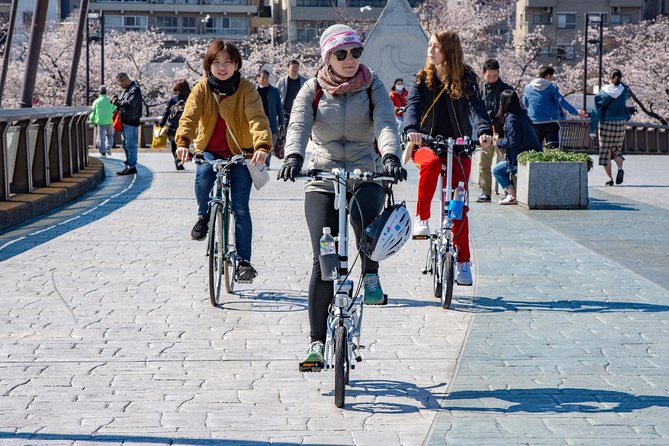
The final listed stop is Kyojima Minami Park, where you spend about 20 minutes. The nearby old-fashioned shopping mall offers a view of daily Japanese life rather than a polished sightseeing district.
This is the kind of place that gives the tour its character. You see the sort of local commercial area that many short Tokyo itineraries leave out. Shops, streets, and ordinary routines can tell you more about the shape of a neighborhood than another famous photograph.
The stop is not designed as a major attraction with a long list of things to see. Its value lies in contrast. After temples, a candy craft, a river crossing, and Skytree views, you get a quieter look at how people live and shop around eastern Tokyo.
What the guide adds to the ride
Takeshi is central to the experience. He leads the route, explains the sites, watches the group’s safety, and helps connect the landmarks with local life. He has also taken photographs for participants, including a solo rider with Tokyo Skytree, and sent photos afterward.
That photo help is a small but useful benefit. When you are cycling alone or with a family, it can be difficult to capture a good picture without handing a camera to a stranger. You should not assume a set number of photos, but the experience includes a guide who has made an effort to record the outing.
The guide has also adjusted plans around weather. In one case, he contacted the group when rain was forecast and discussed changing the booking. On a wet and cold day, raincoats were provided and he continued to check that everyone was safe.
Those details suggest a hands-on guide rather than a guide who simply recites facts at fixed stops. Still, weather remains important. The activity requires good conditions and can be canceled if the weather is poor.
Who will enjoy this tour most
I would choose this ride if you want to see Tokyo beyond the major station districts and prefer a manageable outing to a full-day bicycle excursion. It fits well into a first or second day in the city because the tour takes about two and a half hours and leaves the rest of your day open.
Families with older children can consider it, especially if everyone already rides comfortably. The reported family outing included children aged 13 and 16, and the pace was suitable for recreational cyclists.
It also suits solo visitors. A small group, a local guide, and help with photographs can make the ride feel less awkward than renting a bike and finding the route alone. Couples may like the Imado Shrine connection, while photographers will appreciate the repeated Skytree viewpoints and river crossings.
I would be more cautious if you are much taller than 180 centimeters, have trouble with small folding bikes, or want a serious cycling challenge. This is sightseeing by bicycle, not a long-distance ride. The route emphasizes stops, explanations, and neighborhood views.
Timing, weather, and cancellation
The experience is available with a mobile ticket, and confirmation is sent at booking. It is commonly reserved well ahead of time, with an average booking lead of about 36 days, so you should not leave it until the last minute if your schedule is fixed.
Free cancellation is available up to 24 hours before the start time. Canceling later, or requesting changes inside that 24-hour window, does not qualify for a refund.
Poor weather can cancel the tour. In that case, you are offered another date or a full refund. If the minimum number of participants is not reached, the operator offers another date or experience, or a full refund. These terms make the tour a safer choice to reserve early, but you should keep some flexibility in your Tokyo plans.
Should you book the Tokyo Backstreets Bike Tour?
Book it if you want a relaxed ride with real variety: a riverside path, two less-famous religious sites, Senso-ji, traditional candy making, bridge views, Tokyo Skytree, and a local shopping area. The small group and Takeshi’s safety care add value, especially for families and cautious cyclists.
Skip it if your priority is an intense ride, a long visit inside each temple, or a guaranteed sunny-day cherry blossom view. At $50.08, the tour earns its price through the bike, guide, route, and time saved getting between districts. For a compact introduction to eastern Tokyo that leaves your afternoon free, it is a sensible choice.
FAQ
Where does the cycling tour start?
It starts at Tokyo Backstreets Bike Tour inside the Synapse shared office at 2-24-14 Higashimukojima, Sumida City, Tokyo 131-0032. The meeting point is near public transportation and close to Hikifune Station.
How long does the experience last?
The guided ride lasts approximately 2 hours and 30 minutes. It ends back at the original meeting point.
What type of bicycle is provided?
The operator provides folding bicycles with 14 to 20-inch wheels. They are suitable for people between 140 and 180 centimeters tall. You should notify the operator in advance if you are taller than 180 centimeters.
Is a helmet included?
Yes. A helmet is provided for the ride.
Can I request a tandem bicycle?
Yes, but you must inform the operator at least three days before the booked tour date.
What happens if the weather is poor?
The tour requires good weather. If it is canceled because of poor weather, you can choose another date or receive a full refund.
Just added around Tokyo
- Private Memorable Tokyo Tour with English Speaking Driver★ 5.0 · 30 reviews
- Private Tokyo Custom Full-Day Tour by Chartered Vehicle★ 5.0 · 16 reviews
- Private Sightseeing to Mt Fuji and Hakone with English Driver★ 5.0 · 51 reviews
- Tokyo Photography Masterclass – Private Photography Lesson★ 5.0 · 25 reviews
- Private Mt. Fuji Day Trip from Tokyo with English-Speaking Driver★ 5.0 · 33 reviews
- 4 Day Tour – Mount. Fuji, Tokyo, Hakone, Kamakura and Yokohama★ 5.0 · 19 reviews
- Private Unforgettable Mt Fuji Tour with English Speaking Driver★ 5.0 · 142 reviews
- Private Tokyo Food Tour – A Journey Through Time Through Food★ 5.0 · 36 reviews
Cycling Tours, compared.
3h Tokyo E-Bike Tour: Hidden Gems, and Local Life with guide
Read our review →
Arashiyama Bamboo Forest & Hidden Gems Bike Tour (Early Bird)
Read our review →
Hiroshima in a Nutshell: Morning Bike Adventure
Read our review →
5 Top Highlights of Kyoto Full Day Bike Tour (E-bike option)
Read our review →Browse the lists this tour appears in