
REVIEW · GO-KARTS
Official Street Go Kart Tour Akihabara 2nd
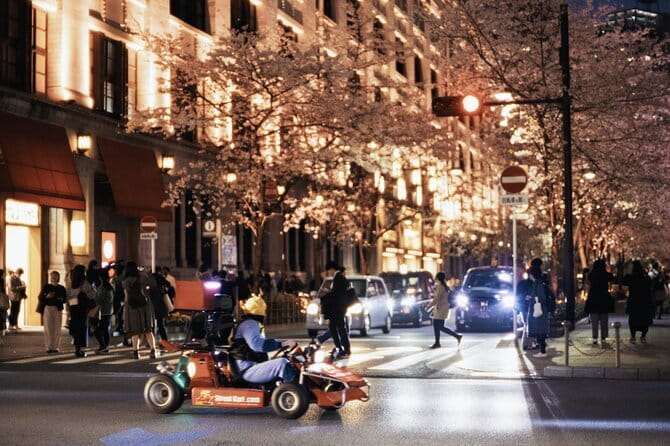
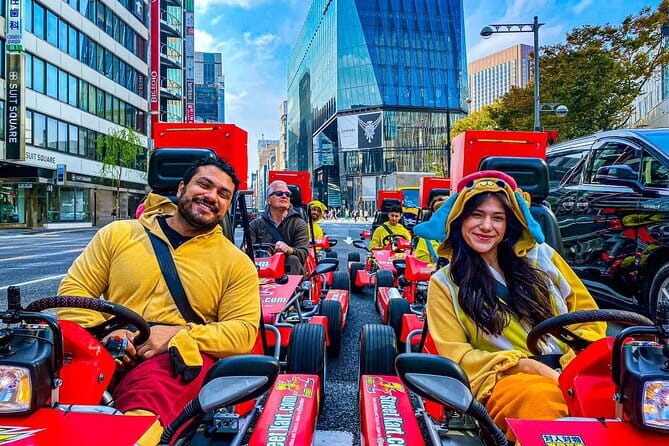
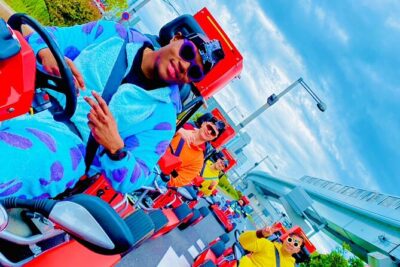
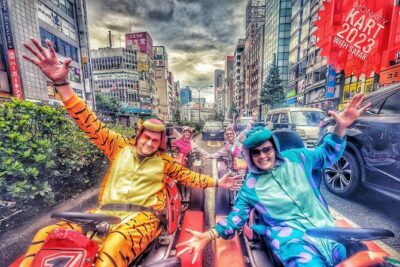
Tokyo becomes a very different place when you see it from a small go-kart in traffic, dressed in a playful character costume and waving at people along the way. This is not a sightseeing bus with a guide pointing out landmarks. You are the driver, and the city moves around you.
I like the small groups of up to six and the hands-on route through several famous districts. I also like the guides’ clear road instructions and photo-taking, with Sam, Khan, Julian, and Madz earning repeated praise for keeping groups together and helping nervous drivers feel at ease. The main catch is serious: city traffic demands attention, and you must bring the correct Japanese driving documents.
In This Review
- Key things to know before you book
- What this Tokyo go-kart ride is really like
- Costumes without the Nintendo problem
- Tokyo Station: a grand opening frame
- Akihabara, the natural home base
- Around the Imperial Palace, not inside it
- Harajuku and the Takeshita Street entrance
- Shibuya Crossing: the big finale
- Morning or evening: choose your city mood
- The guides are a major part of the value
- The driving documents are not optional
- Is $62.40 a fair price?
- Who should book this experience?
- Final call: book it for the ride, not just the photo
- FAQ
- How long does the go-kart tour last?
- Where does the tour start and finish?
- Do I need an International Driving Permit?
- Are there exceptions to the International Driving Permit rule?
- Can children or non-drivers ride in the karts?
- Are Mario or Nintendo costumes available?
- What happens if the weather is poor?
Key things to know before you book
- You drive through Tokyo traffic: This is a real road experience, not a closed track, so you need confidence behind the wheel.
- The route covers five famous areas: Expect Tokyo Station, Akihabara, the Imperial Palace area, Harajuku, and Shibuya Crossing.
- Every kart is single-seat: All participants must drive, be at least 18, and hold a license accepted for driving in Japan.
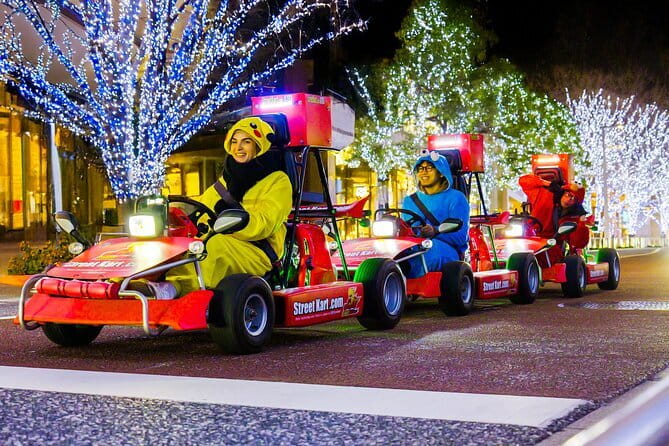
- Costumes add the fun: Character-style outfits are available, but Mario and Nintendo themes are not permitted.
- Evening rides change the mood: City lights and more pedestrians can make the outing feel more festive, while morning roads may be calmer.
- Photos are part of the memory: Guides take pictures during the ride, with a printed picture and a photo link available according to the experience details.
What this Tokyo go-kart ride is really like
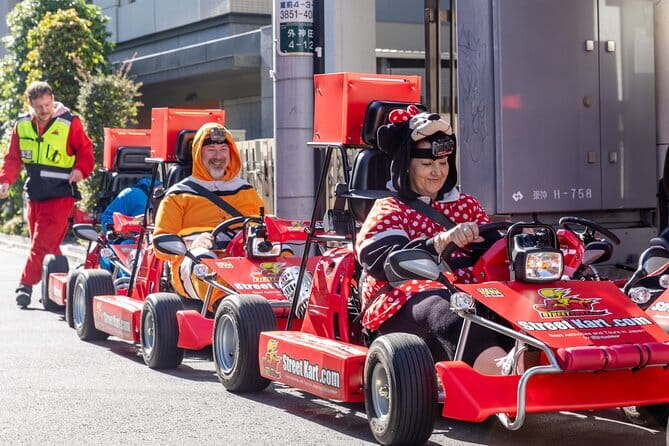
The experience begins at STREET KART Akiba 2nd in Kanda Sakumacho, near public transportation. You meet at the shop, complete the required checks, choose a costume, and receive instructions before setting out.
The outing lasts about 1 hour 40 minutes to two hours. That includes preparation, the road briefing, driving time, and returning to the same meeting point. The group limit is six people, which matters because a larger convoy would be harder to manage in Tokyo traffic.
Your guide drives a kart at the front and sets the pace. The guide also watches behind the group, checks that nobody is left behind, and gives directions along the way. Sam, Khan, Julian, and Madz are among the guides praised for clear instructions, friendly support, and attentive driving leadership.
You should not expect a fast race. The point is to stay with the group, follow the guide, and enjoy the odd sensation of driving through one of the world’s great cities in a tiny open kart. Some participants find the first minutes nerve-racking because they are sharing roads with regular traffic. That feeling usually makes the later confidence more satisfying, but it also means this is not the right pick for someone who wants a relaxed, passive tour.
A few more Tokyo trips to weigh up
- Flagship 2-Hours Official Street Go-Kart Tour – Tokyo Bay Shop
★ 5.0 · 4,974 reviews - Official Street Go-Kart in Shibuya
★ 5.0 · 3,435 reviews - Official Street Go-Kart Tour – Akihabara
★ 5.0 · 1,578 reviews
Costumes without the Nintendo problem
Costume rental is included in the $62.40 price. The outfits are part of the appeal, since they turn an ordinary drive into a playful street scene and make the photos more memorable.
There is an important limit. Mario and Nintendo-themed costumes, along with clothing or items that suggest those characters, are not allowed because of copyright restrictions. Do not plan your outfit around Mario, Luigi, or another Nintendo figure.
The available costume selection is not specified, so you should treat the offering as character-inspired dress-up rather than a promise of one particular outfit. If costumes are not your style, the tour is still about the drive, but you will miss one of its most visible social elements.
Wear closed footwear. Skirts and long dresses are not advised, both for comfort and for operating the kart. You will also want clothes that allow free movement and are suitable for the weather, since the experience requires good conditions and takes place outdoors.
Tokyo Station: a grand opening frame
One of the route’s first major sights is Tokyo Central Railway Station, known more precisely as the red-brick Marunouchi Station building. Its restored facade gives the opening section a strong sense of place, especially when viewed from street level rather than from inside a train station.
The stop is listed as free admission because you do not enter a paid attraction. You simply drive around the area and take in the building from the road. That distinction matters: this is a moving city tour, not a series of long sightseeing stops.
Tokyo Station is a useful early landmark because it quickly shows the contrast between old-looking brick architecture and Tokyo’s dense modern streets. Still, your attention must stay on the road. You may get only a brief view as the group passes, and this is not a good way to study the station’s architecture in detail.
Akihabara, the natural home base
The route then moves through Akihabara, Tokyo’s famous center for anime, manga, games, electronics, and character culture. Since the tour begins in the Akihabara area, this district fits the experience especially well.
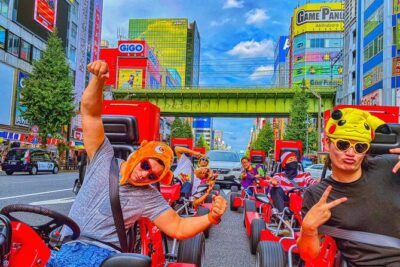
Here, the costumes make the most visual sense. You are driving through an area associated with the very themes that inspired the outfit portion of the tour. The streets can also be busy, so you should expect to balance quick looks at signs and storefronts with careful driving.
I like Akihabara as part of the route because it gives the tour a clear identity. This is not simply a generic city drive. You get a playful connection between the district, the costumes, and the go-kart format.
The tradeoff is that Akihabara is not being presented as a walking tour. You will not have time to browse shops, enter arcades, or stop for food. Think of this section as a moving introduction to the district, then return later if you want a closer look.
Same city, a completely different kind of day:
- Mt Fuji and Hakone 1-Day Bus Tour Return by Bullet Train
★ 5.0 · 26,383 reviews - 1-Day Tokyo Bus Tour
★ 5.0 · 14,250 reviews - Tokyo: TOKYO SKYTREE® Admission ticket
★ 4.5 · 11,192 reviews - Tokyo: teamLab Planets TOKYO Digital Art Museum Entry Ticket
★ 4.6 · 9,779 reviews
Around the Imperial Palace, not inside it
The route takes you around the Imperial Palace area, but you do not drive into the palace grounds. That wording is worth keeping clear, since the palace itself is not a driving attraction.
The streets around the palace offer a change of pace from Akihabara’s pop-culture focus. You get a more formal central Tokyo setting, with broad city views and a sense of the capital’s civic center. The tour does not turn this into a history lecture, so your experience here depends more on the route and the passing views than on a detailed explanation.
This part also shows why the go-kart format can be useful. In a short outing, you cover districts that would take much longer to connect on foot. You are not seeing each area in depth, but you are getting a broad feel for how Tokyo’s neighborhoods shift from one another.
Harajuku and the Takeshita Street entrance
Harajuku brings the route back to youth culture and Japanese fashion. The entrance arch to Takeshita Street changes design throughout the year, so the exact visual detail can vary with your visit.
Again, you pass through rather than stop for a shopping session. Takeshita Street is best known as a busy pedestrian destination, and the go-kart experience gives you a quick street-level look rather than time among the boutiques and snack shops.
This can be a highlight if you want a sampler of Tokyo districts in one ride. It can frustrate you if Harajuku is a priority and you want to shop, take your time with the crowds, or explore side streets. I would plan a separate visit to Harajuku if you want more than a passing view.
Shibuya Crossing: the big finale
The most famous part of the route is driving through Shibuya Crossing, the great scramble crosswalk. Few city sights are as immediately recognizable, and passing through it in a go-kart gives the route its clearest sense of occasion.
You should keep expectations sensible. This is not a private photo stop in the middle of the crossing. You drive with the traffic pattern and the group, following your guide’s directions. The crossing can be busy, and you may be more focused on spacing and signals than on admiring the surrounding screens.
That is also what makes the moment work. You are not merely looking at Shibuya Crossing from a pavement corner. You are part of the road scene, moving through one of Tokyo’s best-known public spaces. If you want a quieter view, return on foot afterward and watch the crossing from the sidewalks.
Morning or evening: choose your city mood
The timing affects the feel of the ride. A morning outing may offer clearer roads and a more manageable introduction to driving in Tokyo. One participant described a solo morning session as having clear roads, while noting that evenings bring larger groups and more pedestrians.
An evening ride can provide more city lights and a livelier street atmosphere. It may also bring heavier traffic and more people around the major districts. The choice is simple:
- Choose morning if road confidence is your main concern.
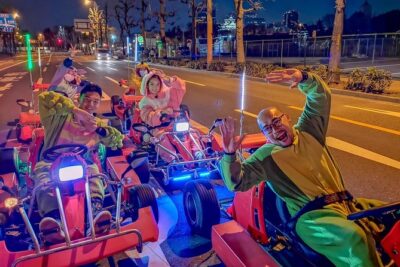
- Choose evening if you want illuminated streets, more public attention, and a more festive photo setting.
You cannot control every traffic condition, so treat these as general advantages rather than guarantees. The guide’s pace and your own comfort matter more than the clock.
The guides are a major part of the value
The kart is the unusual feature, but the guide determines how manageable the experience feels. You need someone who explains the rules plainly, maintains a steady pace, checks behind the group, and helps you respond to Tokyo traffic.
The strongest guide praise centers on Sam, Khan, Julian, and Madz. Sam is described as friendly, clear, and good at conversation. Khan is credited with careful checking and photo-taking. Julian receives praise for leading the group, while Madz helped nervous participants feel more confident on the road.
You should not assume one of these guides will lead your specific departure, but the repeated focus on guide support gives you a useful standard. Before leaving, pay close attention to the briefing. Once moving, follow the guide rather than trying to create your own route or speed.
Guides also take photographs during the ride. The experience includes a printed picture at the end and a link to photos according to the tour details. An action camera can be rented separately, including the camera, mount, and SD card, but that gear is not part of the base price.
The driving documents are not optional
This is the most important practical point. You need an International Driving Permit issued under the 1949 Geneva Convention from an authorized government association to drive in Japan.
There are special rules for some license holders. Participants with licenses from Switzerland, Germany, France, Taiwan, Belgium, or Monaco need a Japanese translation from the Japan Automobile Federation, known as JAF, instead of the standard permit.
Bring the physical document, not just a photograph or digital copy. You must also carry your physical passport. Licenses from countries not covered by the 1949 Geneva Convention, including China, Indonesia, Mexico, Qatar, and Saudi Arabia, are not accepted for this activity.
Your home-country license alone is not enough. Arrange the correct document before your trip, and contact the operator through the booking service if you are unsure about your license-issuing country. Without acceptable paperwork, you cannot drive.
Is $62.40 a fair price?
At $62.40 per person, the price is reasonable for a two-hour city activity if you value the driving itself, the costume, guide support, fuel, and photos. The listed price includes the kart rental, costume rental, fuel surcharge, and lead guide.
You are not paying for museum entry, meals, hotel transfers, or a long guided history lesson. Those exclusions keep the comparison clear. This is an entertainment experience with sightseeing built into the route, not a replacement for a full Tokyo city tour.
The value is strongest for someone who has already seen Tokyo’s standard sights and wants a memorable way to connect several neighborhoods. It is weaker if you mainly want quiet views, detailed commentary, or time to explore each stop.
Full coverage insurance costs an additional ¥1,000 per person. Food and drinks are not included, and hotel pickup and drop-off are not provided. The activity returns to the original meeting point, so you need to make your own way there and back.
Who should book this experience?
You should consider it if you are at least 18, hold the correct Japanese driving documents, and enjoy active city experiences. It suits confident drivers, pop-culture fans, couples, small groups, and anyone looking for an unusual Tokyo story to take home.
It can also work for cautious drivers who are willing to listen closely and start slowly. The guide support helped several people feel more comfortable, but no guide can remove the basic demands of driving in live traffic.
I would skip it if you dislike traffic, cannot legally drive in Japan, have mobility or hearing concerns that you have not discussed with the operator, or want a restful sightseeing ride. You must inform the operator about any level of hearing or mobility impairment before the activity.
The tour has free cancellation up to 24 hours before the start time. Changes or cancellations inside that window are not accepted for a refund. Since the ride requires good weather, poor conditions may lead to a different date or a full refund.
Final call: book it for the ride, not just the photo
I would book this tour if you want Tokyo sightseeing with a strong dose of participation. The route gives you quick looks at Tokyo Station, Akihabara, the Imperial Palace area, Harajuku, and Shibuya Crossing, while the guide and small group keep the outing organized.
Book in the evening for city lights and a bigger street audience, or choose morning for clearer roads and a calmer start. Most important, secure the correct International Driving Permit before you leave home.
The experience is not a deep look at each neighborhood, and driving may take more attention than you expect. But if you want a lively, unusual way to cross central Tokyo and you meet the license requirements, this is a good-value choice with memorable photos and a story far more interesting than another ride on the train.
FAQ
How long does the go-kart tour last?
The experience lasts approximately 1 hour 40 minutes to two hours.
Where does the tour start and finish?
It starts at STREET KART Akiba 2nd, Japan, 101-0025 Tokyo, Chiyoda City, Kanda Sakumacho, 4-chome 16, 1F. It finishes back at the same meeting point.
Do I need an International Driving Permit?
Yes. You need a physical International Driving Permit issued under the 1949 Geneva Convention by an authorized government association. You must also carry your physical passport.
Are there exceptions to the International Driving Permit rule?
Yes. Participants with licenses from Switzerland, Germany, France, Taiwan, Belgium, or Monaco need a Japanese translation from the Japan Automobile Federation, along with their physical domestic license and passport.
Can children or non-drivers ride in the karts?
No. The karts are single-seat, and every participant must drive. The minimum age is 18.
Are Mario or Nintendo costumes available?
No. Mario, Nintendo-themed costumes, and clothing or items suggesting those characters are not permitted because of copyright restrictions.
What happens if the weather is poor?
The experience requires good weather. If the operator cancels because of poor conditions, you will be offered another date or a full refund.
Just added around Tokyo
- Private Memorable Tokyo Tour with English Speaking Driver★ 5.0 · 30 reviews
- Private Tokyo Custom Full-Day Tour by Chartered Vehicle★ 5.0 · 16 reviews
- Private Sightseeing to Mt Fuji and Hakone with English Driver★ 5.0 · 51 reviews
- Tokyo Photography Masterclass – Private Photography Lesson★ 5.0 · 25 reviews
- Private Mt. Fuji Day Trip from Tokyo with English-Speaking Driver★ 5.0 · 33 reviews
- 4 Day Tour – Mount. Fuji, Tokyo, Hakone, Kamakura and Yokohama★ 5.0 · 19 reviews
- Private Unforgettable Mt Fuji Tour with English Speaking Driver★ 5.0 · 142 reviews
- Private Tokyo Food Tour – A Journey Through Time Through Food★ 5.0 · 36 reviews
Go-Karts, compared.
Flagship 2-Hours Official Street Go-Kart Tour – Tokyo Bay Shop
Read our review →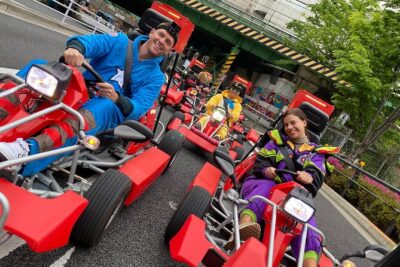
Tokyo Go Kart: Asakusa, Skytree, and Akihabara **IDP MUST**
Read our review →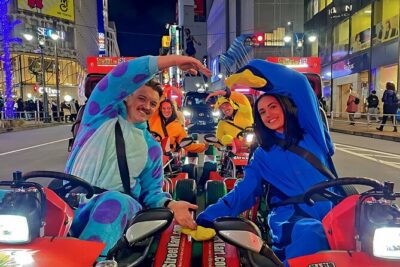
Shibuya Official Street Go-Kart in Shibuya Annex
Read our review →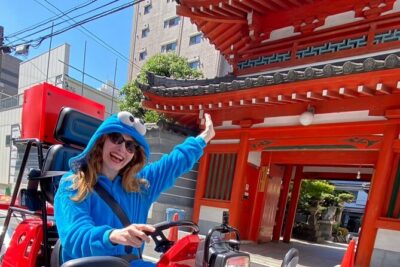

Asakusa, Skytree & Akhihabara Go-Kart City Experience
Read our review →Browse the lists this tour appears in