
REVIEW · PRIVATE GUIDED TOURS WITH DRIVER
Edo Tokyo & Japanese Culture Tour with Government Licensed Guide
Tokyo’s past is easy to miss beneath its towers, train lines, and neon. This private tour helps you find it, from the former Edo Castle grounds at the Imperial Palace to the sumo streets of Ryogoku and old Nihonbashi. You get a personal guide instead of a fixed group script, which matters in a city this large.
I like the customizable route and the practical help with trains and IC cards. Guides such as Shinji, Kei-san, Andy, and Show have tailored days around personal interests, explained architecture and philosophy, and even followed up on questions after the tour. I also like the mix of big sights and smaller history museums.
The main catch is the six-hour limit. You choose only three or four places, and transport, meals, and admission fees cost extra. Pick distant stops and your day can run long, as one guest discovered. This is a walking tour with public transport, not a private-car outing.
In This Review
- Key points to know before you book
- What this private Tokyo history tour really offers
- The Imperial Palace and Edo Castle setting
- Ryogoku, sumo’s home district
- Hokusai’s art in the Sumida district
- The Kanto Earthquake Memorial Museum
- Lunch and local flavor at Ryogoku Edo Noren
- Nihonbashi and the old roads of Japan
- The Sumida River and Tokyo’s eastern side
- Edo-Tokyo Open Air Architectural Museum
- Fukagawa Edo Museum and reconstructed daily life
- Walking, trains, money, and timing
- Is $154.37 good value?
- Who should book this tour?
- Should you book it?
- FAQ
- How long does the tour last?
- Is the tour private?
- How many sites can I visit?
- Can I enter the Imperial Palace?
- Are admission fees included?
- Is transportation included?
- Is lunch included?
- Is pickup available?
- Will the guide speak English?
- Can I cancel for a full refund?
Key points to know before you book
- Choose three or four sites: The long list of possible stops is a menu, not a promise that you will see everything.
- Use the guide for Tokyo’s trains: Several guides have helped visitors understand IC cards and the city’s initially confusing transit system.
- See Edo through different lenses: Sumo, Hokusai art, disaster recovery, food, old roads, and reconstructed streets all tell different parts of Tokyo’s story.
- Imperial Palace access is limited: You see the grounds and former Edo Castle setting, but not the inside of the palace.
- Budget for extras: Transit, entrance fees, lunch, and personal purchases are not included in the $154.37 price.
- Plan for a walking day: Pickup is on foot within a designated Tokyo area, and comfortable shoes matter.
What this private Tokyo history tour really offers
At $154.37 per person, this experience makes the most sense when you want context, not just a checklist of famous places. You are paying for a private, licensed English-speaking guide who can shape the day around your interests and explain what you are seeing as Tokyo changes from one neighborhood to the next.
The tour lasts about six hours. Its advertised format lets you choose three or four locations from a much longer list, so you should decide early what matters most. A history fan might choose the Imperial Palace, Ryogoku, and the Kanto Earthquake Memorial Museum. Someone drawn to art and daily life might prefer Hokusai, Fukagawa, and an Edo-style food stop.
I would not book this expecting a leisurely visit to every place listed. The sites spread across Tokyo, and the city’s train rides can eat up time. One particularly ambitious day involved places far apart and ran well over schedule. That is useful warning: a smaller route often gives you a better day.
The strongest part of the experience is the guide’s role. Shinji has been praised for careful communication before the tour and for shaping the route around a group’s interests. Kei-san has helped visitors notice architecture, aesthetics, history, and philosophy. Andy has answered questions patiently, researched items he did not know during the tour, and sent information afterward. Show has helped visitors learn how to use an IC card and manage Tokyo’s public transport.
Those details tell you what kind of tour this is. It is not simply a guide pointing at buildings. The best use of your time is to ask questions, explain your interests, and let the guide connect the stops.
More Private Guided Tours with Driver in Tokyo
- Tokyo 6hr Private Tour with Government-Licensed Guide
★ 5.0 · 3,902 reviews - Tokyo 4hr Private Tour with Government-Licensed Guide
★ 5.0 · 1,394 reviews - Mt Fuji Private Tour with English Speaking Driver
★ 5.0 · 861 reviews
The Imperial Palace and Edo Castle setting
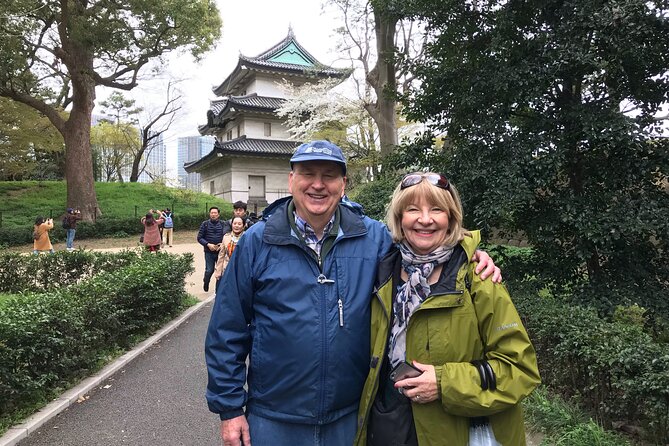
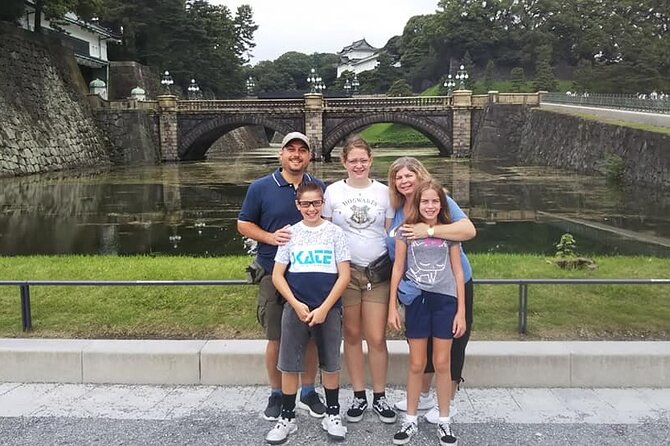
The Imperial Palace is a natural starting point because present-day Tokyo grew from Edo, and the palace occupies the former site of Edo Castle. You walk around a large park area with moats and stone defenses, seeing the setting that once formed the political center of Japan.
Set your expectations correctly. This tour does not include entry inside the Imperial Palace. The stop focuses on the grounds and the former castle site, not palace rooms or an indoor palace tour. Admission is also not included.
I like this stop for orientation. Tokyo can feel like a city built only in the last few decades, but the palace grounds give you a physical link to the city’s earlier power center. Your guide can provide the historical framework that is easy to miss if you simply stroll through the park alone.
The scheduled visit is about one hour. That is enough for a useful introduction, but not enough for a full palace-area exploration. If seeing an actual palace interior is important to you, ask about the exact plan before booking and consider using one of your three or four choices elsewhere.
Ryogoku, sumo’s home district
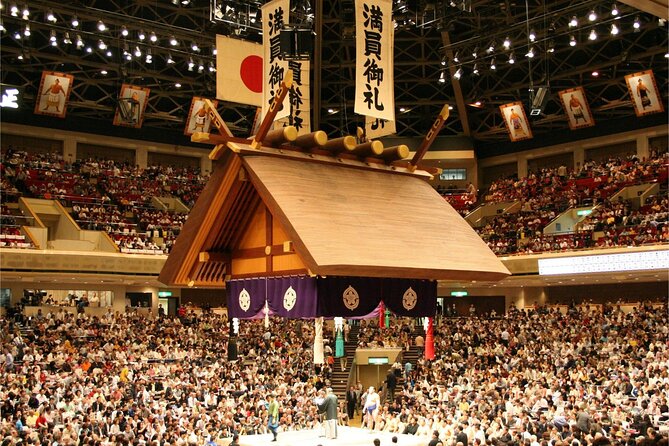
Ryogoku offers a very different view of Tokyo. This is the district associated with the sumo stadium, sumo stables, chanko restaurants, and other parts of the sport’s world. The Ryogoku Kokugikan is the central landmark, but the neighborhood matters just as much as the building.
The scheduled stop lasts about 30 minutes and has no admission charge. That makes it an efficient choice if you want to understand sumo culture without buying tickets to an event. You can ask your guide about the district’s role in sumo and how the nearby attractions fit together.
Do not confuse this visit with a sumo match or a stable visit. The supplied details promise a look at the area, not event tickets or guaranteed access to wrestlers and training. If you want a major sumo experience, confirm what can be arranged before the day.
Ryogoku pairs well with the Sumida Hokusai Museum and the Kanto Earthquake Memorial Museum because all three are in the same broad part of Tokyo. That combination can reduce the time lost on trains and create a focused day in eastern Tokyo.
Hokusai’s art in the Sumida district
The Sumida Hokusai Museum is devoted to Katsushika Hokusai, the ukiyo-e artist best known internationally for works such as The Great Wave. The museum gives your guide a chance to explain the artist and the broader world of woodblock prints, rather than leaving you to identify a few famous images without context.
The planned visit is about 30 minutes, and admission costs extra. That is a short museum visit, so you should treat it as a targeted stop rather than a full afternoon of art. Ask your guide to focus on the works or ideas most useful to you.
I like this option because it adds an artistic side to the Edo story. Sumo shows one part of traditional culture, while Hokusai offers a window into visual taste, printing, and popular culture. The two stops together make a more rounded history lesson.
The museum is especially sensible for visitors who want indoor time during poor weather. Still, admission and the short schedule mean you should weigh it against the other museums if art is your main reason for booking.
Same city, a completely different kind of day:
- Mt Fuji and Hakone 1-Day Bus Tour Return by Bullet Train
★ 5.0 · 26,383 reviews - 1-Day Tokyo Bus Tour
★ 5.0 · 14,250 reviews - Tokyo: TOKYO SKYTREE® Admission ticket
★ 4.5 · 11,192 reviews - Tokyo: teamLab Planets TOKYO Digital Art Museum Entry Ticket
★ 4.6 · 9,779 reviews
The Kanto Earthquake Memorial Museum
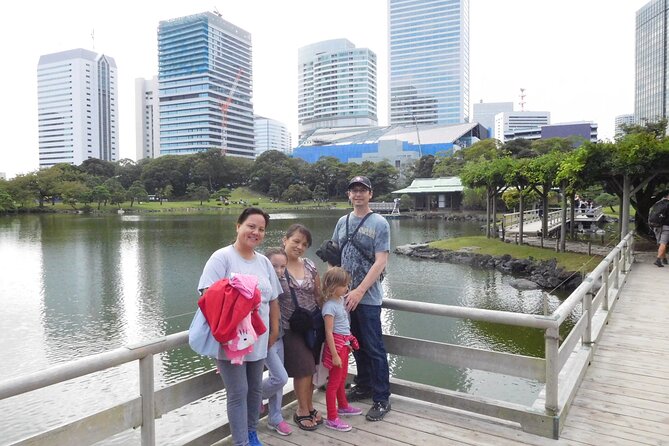
The Kanto Earthquake Memorial Museum covers the Great Kanto earthquake and Tokyo’s rebuilding afterward. This is an important stop because it moves the tour beyond old castles and period streets. Tokyo’s story also includes catastrophe, reconstruction, and the repeated work of reshaping a major city.
The visit is scheduled for one hour, with admission not included. That gives the subject more room than the Hokusai stop. You can expect a serious look at the earthquake and the way the city rebuilt, though the supplied details do not specify the exact exhibits or language services inside.
I value this stop for the perspective it adds. Tokyo’s physical form is not only the result of ancient traditions or modern technology. It has also been shaped by disaster and recovery. A guide can help connect what you see in the museum to the city outside.
This is probably less suitable if you want a light sightseeing day filled with photo stops. It is better for you if museums, urban history, and the forces that shape cities hold your attention.
Lunch and local flavor at Ryogoku Edo Noren
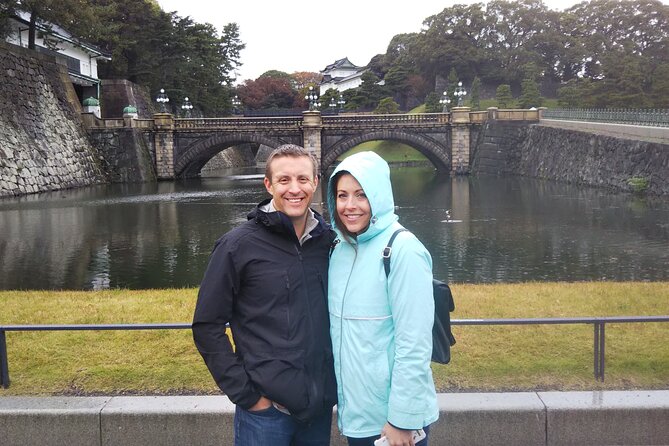
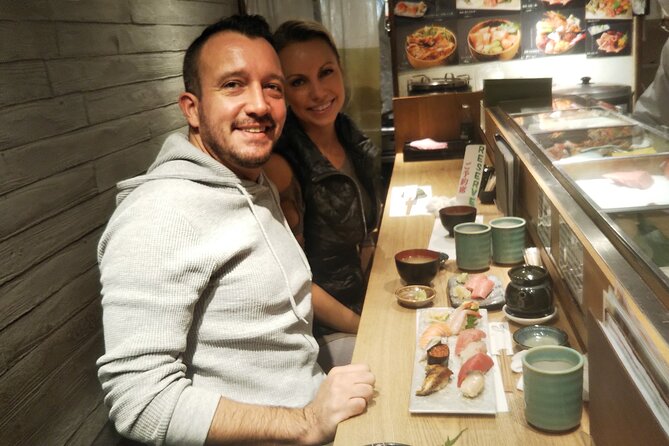
Ryogoku Edo Noren is a food court designed to resemble Edo-period Japan. It gives you a chance to pause, eat Tokyo-style dishes, and continue the historical theme in a more relaxed setting.
Lunch is not included, and the food court has an extra cost. That is both a drawback and a benefit. You pay for what you choose, rather than being locked into a set meal, but you should carry enough money and allow time in your budget.
The scheduled stop is about 45 minutes. That is enough for a practical meal break, though it may feel short if you are studying menus or want a long sit-down meal. Ask your guide how the food stop fits with your chosen museums and train connections.
I like the setting because food gives history a daily-life angle. A reconstructed Edo-style environment can help you picture how the period is presented today, while a local dish makes the stop more than a quick refueling break.
Nihonbashi and the old roads of Japan
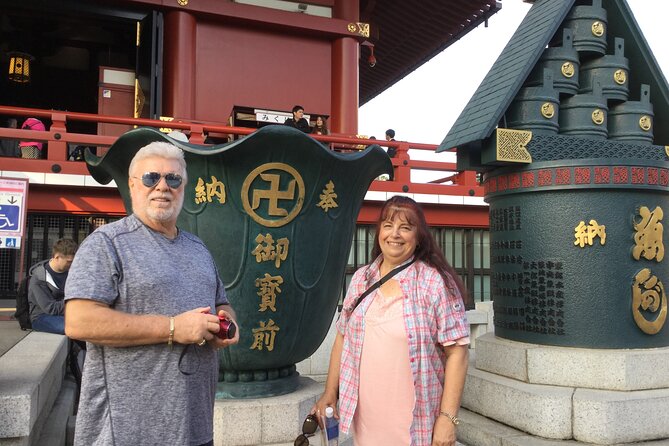
Nihonbashi once marked the starting point of five main roads running across Japan. It prospered as the center of Edo, and the area still carries an older feel amid modern Tokyo.
This stop is useful for understanding movement and commerce. Edo was not just a castle town with officials and warriors. Roads, bridges, markets, and river traffic helped make it a major center. Your guide can give the bridge and district a place in that larger story.
The stop does not have a listed duration or admission price in the supplied details. Because the overall tour is limited to about six hours, ask how much time your guide expects to spend there. It may work best as part of a route that also includes the Sumida River.
Nihonbashi is a good choice for you if you prefer an urban walk over a formal museum. You see Tokyo as a working city, with history embedded in streets and infrastructure rather than isolated behind glass.
The Sumida River and Tokyo’s eastern side
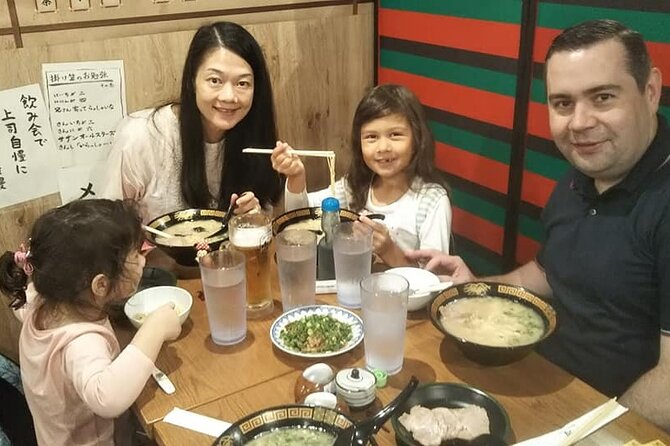
The Sumida River is one of Tokyo’s main rivers and one of the waterways most familiar to visitors. It begins north of central Tokyo and runs eastward through the city.
A river stop can seem simple, but it helps explain why eastern Tokyo developed as it did. Waterways connect neighborhoods, support movement, and give you a different way to read the city’s layout. The supplied plan does not list a fixed duration or separate ticket for the river, so treat it as a flexible walking or viewing stop.
This is another place where the guide adds value. Without explanation, a river can be just a scenic pause. With historical context, it becomes part of the story of how Tokyo grew and how its districts relate to one another.
Edo-Tokyo Open Air Architectural Museum
The Edo-Tokyo Open Air Architectural Museum sits in western Tokyo and offers an off-the-main-route look at Japanese culture. The Tokyo Metropolitan Government established it in 1993, and its focus is architecture presented in an open-air setting.
The listed stop is only 15 minutes, and admission costs extra. That is the clearest warning in the itinerary. Fifteen minutes may work as a quick look if the museum is already near another chosen stop, but it is not enough for a proper visit to a large open-air museum.
Ask your guide to confirm the planned time. If you care about architecture, you may want to make this one of your main three or four sites rather than accepting it as a brief add-on. The guide’s architectural interests, noted by one visitor, could make this a strong match for the right person.
The museum is less convenient for a tightly packed central Tokyo day because it is in western Tokyo. Combining it with eastern sites could create the same long transit problem that caused one customized tour to run over time.
Fukagawa Edo Museum and reconstructed daily life
The Fukagawa Edo Museum recreates an entire Edo-period neighborhood. Instead of viewing separate objects in display cases, you see streets, houses, shops, and other features arranged to show how people lived.
The planned visit is about 30 minutes, with admission extra. That is enough for a brisk introduction, but you may want more time if reconstructed environments are your favorite kind of museum. Ask whether the schedule can be adjusted before you commit to this stop.
Fukagawa works especially well for you if you want daily life rather than grand political history. The Imperial Palace explains power, Nihonbashi explains trade and roads, and Fukagawa helps make ordinary Edo life easier to picture.
It also pairs naturally with Ryogoku and the Sumida River. These eastern Tokyo choices can keep the day more coherent than mixing Fukagawa with the western open-air museum and a distant palace stop.
Walking, trains, money, and timing
This is primarily a walking tour, and pickup happens on foot within a designated area of Tokyo. You may use public transport between sites, but transportation fees are extra and no private vehicle is provided.
Bring local cash for trains, food, admissions, and small personal costs. One practical warning from a past day is that local transit may not accept your credit card, and some visitors have trouble getting money from an ATM. Japan can still be cash-based, so arrange money before the tour rather than assuming your card will solve every problem.
An IC card makes getting around easier, and several guides have helped visitors learn how to use one. If Tokyo’s train system feels bewildering at first, this is one of the tour’s most useful practical benefits. You leave with sightseeing context and better confidence moving around the city.
Wear comfortable shoes. Six hours of walking, station transfers, museum visits, and outdoor stops can add up quickly. Weather also matters, so keep your route flexible if rain or heat could make an outdoor-heavy day unpleasant.
The tour is private, and only your group participates. That gives you room to ask questions and adjust the pace, but it does not erase Tokyo’s distances. Tell the guide what you want most, then choose nearby sites when possible.
Is $154.37 good value?
The price is easier to justify for two or more people sharing a private tour than for a solo visitor. A private guide, English communication, itinerary planning, and transit help can be worthwhile in a city where the historical sites are spread out and the train network takes practice.
You still need to add transportation, museum tickets, lunch, and personal expenses. The guide’s entry fees are covered only for sights listed under the expected stops, and the experience does not include private transport. Read the price as a guide service fee, not an all-inclusive day.
Value depends on your goals. If you want independent wandering and already understand Tokyo’s trains, you may prefer to spend the money on admission tickets and explore alone. If you want a flexible history lesson and personal help with moving around, the cost is more reasonable.
The perfect use of this tour is a focused route. Choose three or four sites that fit one part of the city, not every place that catches your eye.
Who should book this tour?
You should consider it if you enjoy history, architecture, museums, traditional culture, or local neighborhoods. It is also a good first Tokyo activity if you want a guide to explain the city and show you how to use public transport.
Families and small private groups may appreciate the flexible format, especially when different people want different kinds of stops. The tour is suitable for most participants, and service animals are allowed.
You may want to skip it if you need a private vehicle, dislike walking, or want guaranteed entry inside the Imperial Palace. It is also a poor match for anyone determined to visit all seven or more listed places in six hours.
Free cancellation is available up to 24 hours before the local start time. Changes or cancellations inside that window are not accepted for a refund, so keep your final route and schedule in mind.
Should you book it?
Book this tour if you want Tokyo’s history explained by a real person and prefer a private route over a fixed group outing. I would choose a compact plan such as Imperial Palace, Nihonbashi, and one eastern Tokyo museum, or Ryogoku, Hokusai, and the earthquake museum.
I would not try to force in the western open-air museum on the same day as several eastern stops. The tour’s best qualities are the guide’s flexibility, transit support, and ability to connect separate parts of Tokyo. Give those qualities enough time to work, and the $154.37 fee can be worthwhile.
FAQ
How long does the tour last?
The experience lasts approximately six hours.
Is the tour private?
Yes. Only your group participates in the private tour.
How many sites can I visit?
The tour includes a customizable plan of three or four sites from the listed choices.
Can I enter the Imperial Palace?
No. The tour does not include access inside the Imperial Palace.
Are admission fees included?
No. Entrance fees are extra. Guide entry fees are covered only for sights listed under the expected stops.
Is transportation included?
No. Transportation fees are extra, and the tour does not provide a private vehicle.
Is lunch included?
No. Lunch and other personal expenses are not included.
Is pickup available?
Pickup is offered on foot within the designated area of Tokyo. This is primarily a walking tour.
Will the guide speak English?
The tour includes a licensed local English-speaking guide.
Can I cancel for a full refund?
Yes, if you cancel at least 24 hours before the experience start time. Cancellations or changes made less than 24 hours before the start time are not accepted for a refund.
Just added around Tokyo
- Private Memorable Tokyo Tour with English Speaking Driver★ 5.0 · 30 reviews
- Tokyo Photography Masterclass – Private Photography Lesson★ 5.0 · 25 reviews
- Private Tokyo Custom Full-Day Tour by Chartered Vehicle★ 5.0 · 16 reviews
- Private Sightseeing to Mt Fuji and Hakone with English Driver★ 5.0 · 51 reviews
- Private Mt. Fuji Day Trip from Tokyo with English-Speaking Driver★ 5.0 · 33 reviews
- 4 Day Tour – Mount. Fuji, Tokyo, Hakone, Kamakura and Yokohama★ 5.0 · 19 reviews
- Private Unforgettable Mt Fuji Tour with English Speaking Driver★ 5.0 · 142 reviews
- Private Tokyo Food Tour – A Journey Through Time Through Food★ 5.0 · 36 reviews
Private Guided Tours with Driver, compared.
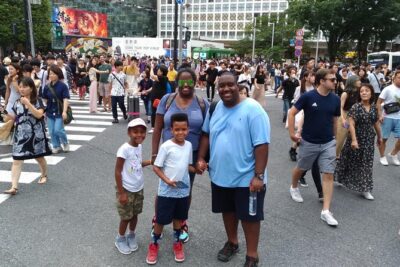
Tokyo 4hr Private Tour with Government-Licensed Guide
Read our review →
Kyoto 6hr Private Tour with Government-Licensed Guide
Read our review →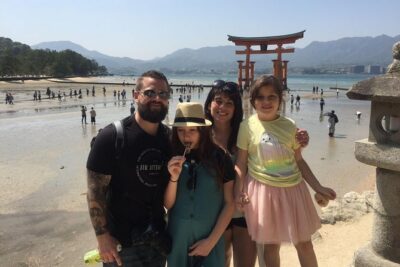
Hiroshima / Miyajima Full-day Private Tour with Government Licensed Guide
Read our review →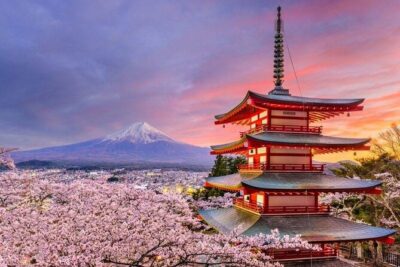
Kyoto 4hr Private Tour with Government-Licensed Guide
Read our review →
Mt. Fuji Day Trip from Tokyo with English Speaking Driver Guide
Read our review →
Hiroshima City 4hr Private Walking Tour with Licensed Guide
Read our review →Browse the lists this tour appears in