
REVIEW · GO-KARTS
East Tokyo Go-Kart Tour
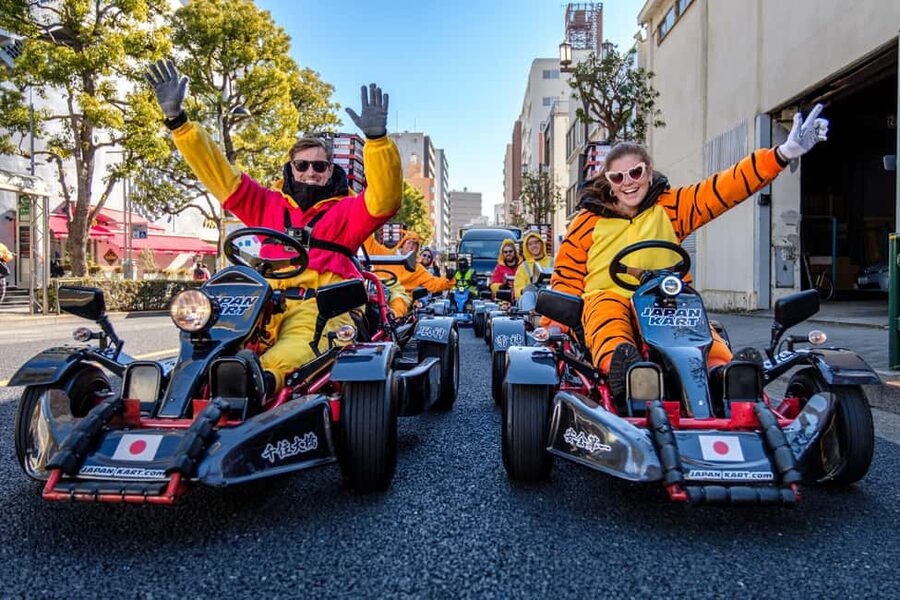
Tokyo has few better ways to get a quick jolt of energy than driving a go-kart on its public streets. This East Tokyo route takes you from Tokyo Bay and Rainbow Bridge toward Ginza, Nihonbashi, Akihabara, Ueno, and Asakusa, so you see several very different parts of the city in one outing.
I like the small groups of up to 10 and the careful lead-and-tail guide system. I also like that fuel, costumes, and photos are included, so the $64 price is not padded with small add-on fees. The main catch is simple but serious: you must arrive with the correct license, passport, and hard-copy international driving permit. No documents, no kart, and no refund.
In This Review
- Key points at a glance
- What the East Tokyo Go-Kart Tour is really like
- Starting near Tokyo Skytree
- Tokyo Bay and Rainbow Bridge set the tone
- Ginza brings the city back in close
- Nihonbashi and Kanda show another Tokyo
- Akihabara adds color and movement
- Ueno and Asakusa bring older Tokyo into view
- Safety, traffic, and comfort
- The paperwork can make or break your booking
- Is $64 a fair price?
- Who should book this ride?
- Final verdict: book it if the paperwork is ready
- FAQ
- How long does the East Tokyo Go-Kart Tour last?
- How much does the tour cost?
- Where does the tour meet?
- Do I need a driver’s license?
- What kind of international driving permit does Japan accept?
- Can I use a paper copy of my international driving permit?
- Are drivers under 18 allowed to join?
- Is the tour offered in English?
- What should I wear?
- What happens if bad weather cancels the tour?
Key points at a glance
- Rainbow Bridge and Tokyo Bay: Stop for photos and a wide city view before heading into central Tokyo.
- A two-hour city route: Pass Toyosu, Ginza, Nihonbashi, Kanda, Akihabara, Ueno, and Asakusa in one ride.
- Safety comes first: Expect a briefing, driving demonstration, traffic guidance, and staff at the front and rear of the group.
- A fun group setting: Choose a costume, pose for photos, and enjoy the reactions from people along the route.
- Strict driving paperwork: Bring your home license, passport, and a Geneva Convention 1949 international driving permit in booklet form.
- A shorter option exists: The SkyTree branch offers a one-hour route around Asakusa, Ueno, Akihabara, Ueno Park, Kappabashi, and Tokyo SkyTree.
What the East Tokyo Go-Kart Tour is really like
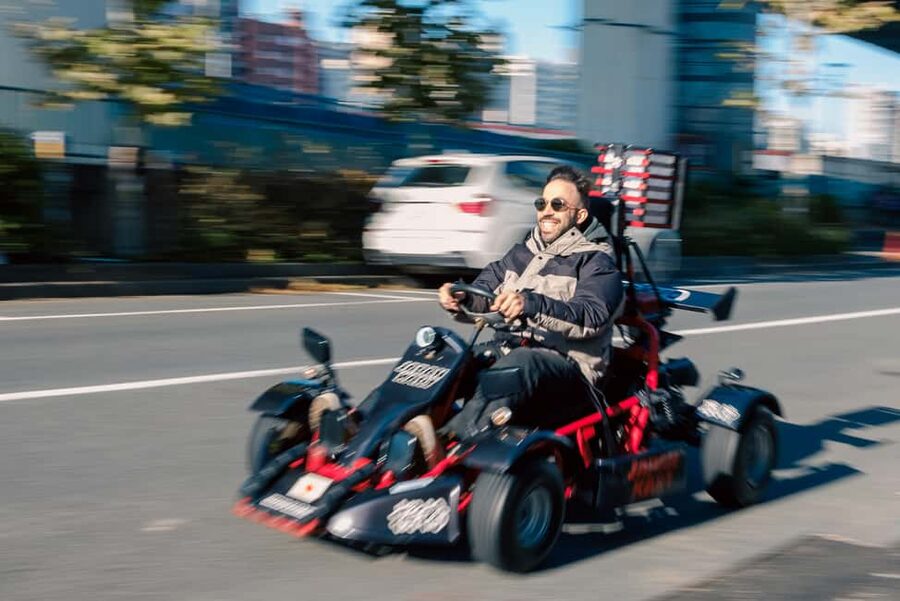
This is not a sightseeing bus with a guide explaining every building. You are the driver, and your attention belongs first to traffic, lane position, road surfaces, and the kart ahead of you. The sightseeing comes in between those tasks.
That distinction matters. You will pass major areas, but you may not absorb every landmark. One rider found the driving so absorbing that sightseeing became secondary. I think that is the fairest way to frame the experience: it is an exciting city ride with sightseeing along the way, not a history lesson on wheels.
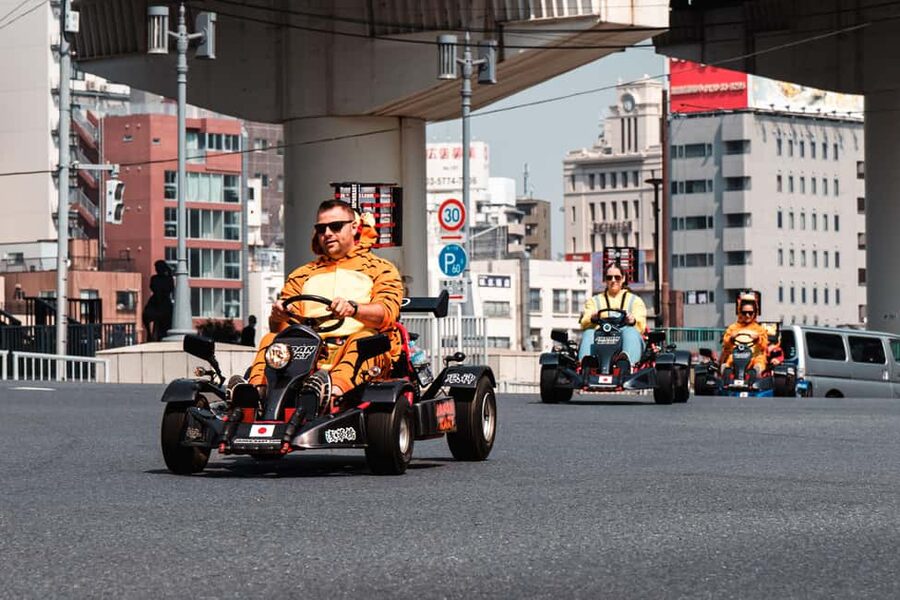
The go-karts are small, open, and low to the ground. That makes Tokyo feel close and immediate. You notice the wind, the road surface, the movement of nearby cars, and the scale of bridges and towers in a way you do not from a normal vehicle.
The staff provide a safety briefing and demonstration before every tour. The guide leads the group, and a staff member follows behind, helping keep the line together. This arrangement is especially useful when traffic separates the group at an intersection. The staff have also been praised for stopping when the group spreads out and for helping nervous drivers settle in during the first few minutes.
You may feel uneasy at first. Driving a kart onto Tokyo streets is a bigger step than driving around a private circuit. The briefing, the calm instructions, and the guide’s position at the front help. Give yourself a few minutes to adjust before expecting to enjoy the view.
A few more Tokyo trips to weigh up
- Flagship 2-Hours Official Street Go-Kart Tour – Tokyo Bay Shop
★ 5.0 · 4,974 reviews - Official Street Go-Kart in Shibuya
★ 5.0 · 3,435 reviews - Official Street Go-Kart Tour – Akihabara
★ 5.0 · 1,578 reviews
Starting near Tokyo Skytree
The meeting point is at the activity provider’s shop near Tokyo Skytree Tower. Confirm the exact branch and meeting instructions when booking, since the one-hour SkyTree branch uses a different meeting point from the longer JapanKart route.
Plan to arrive with time to spare. Staff need to check your documents, prepare the group, explain the kart, and cover traffic rules. The total booking window is listed as 90 to 150 minutes, although the actual driving time can vary. A full two-hour outing may include a short break, photo stops, preparation, and the return to the shop.
The shop provides the go-kart, fuel, taxes, costumes, and photos. Some outings also include a drink or small snack at the end, but those extras are not listed as a guaranteed inclusion, so treat them as a pleasant possibility rather than part of the price calculation.
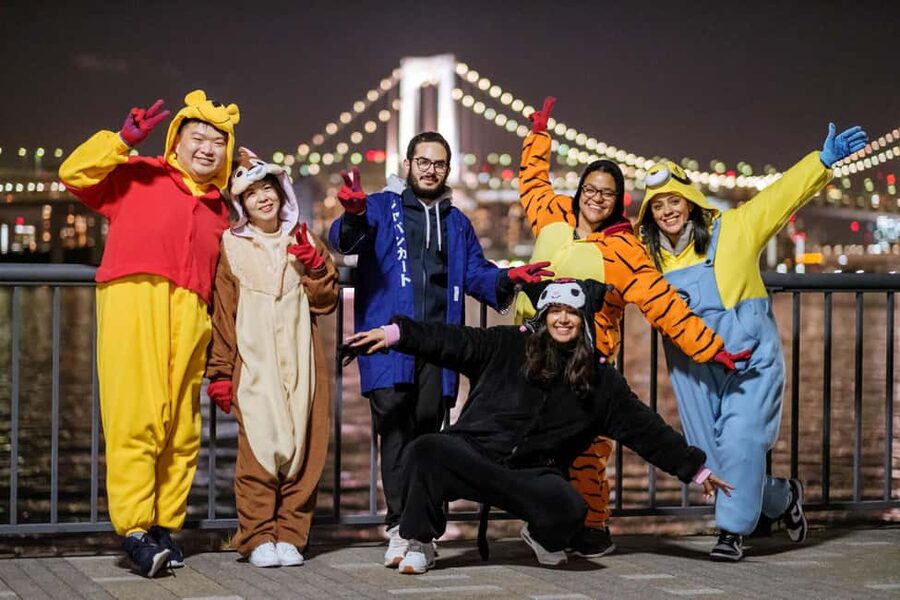
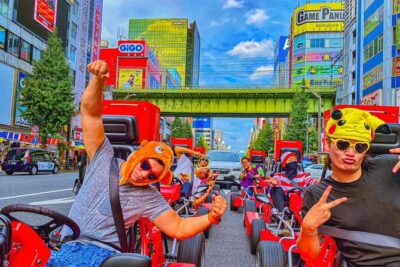
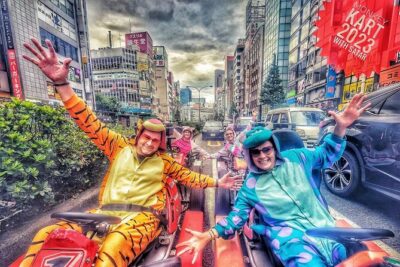
Costumes are available before departure. They are part of the playful mood, and people along the road may wave or take pictures. You are not required to make the ride a costume spectacle, but this is one of the few city tours where a silly outfit fits the setting perfectly.
Wear practical shoes. High heels, sandals, flip flops, and bare feet are not allowed. Alcohol and drugs are prohibited, as are alcoholic drinks in the vehicle.
Tokyo Bay and Rainbow Bridge set the tone
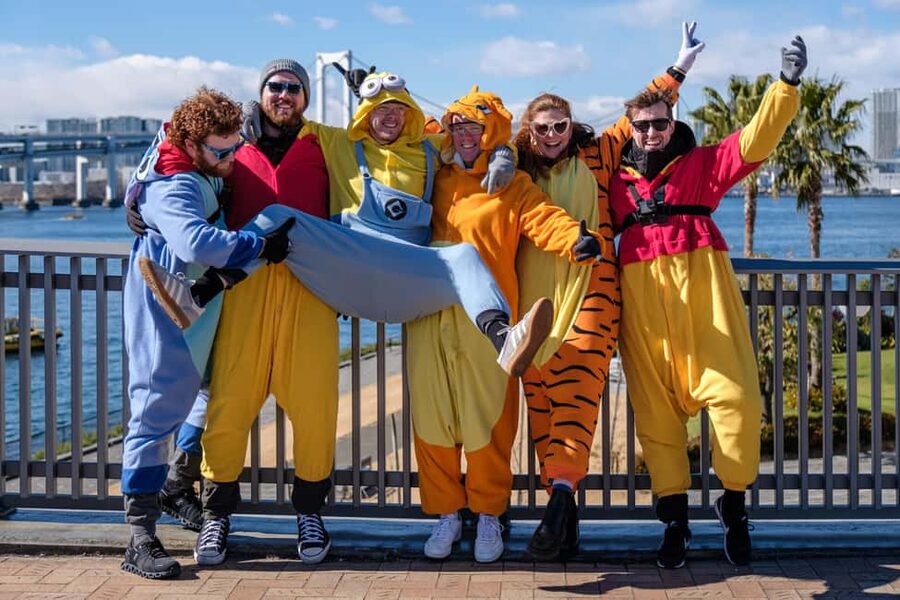
The route heads toward Tokyo Bay, with a break in the area for photos and a short rest. Rainbow Bridge is one of the visual highlights, and the open kart gives you a broad view of the bridge and the water around it.
This part of the ride feels more spacious than central Tokyo. The road is still the main event, but the bridge gives you a strong sense of the city’s size. Staff may stop at a scenic point for a group picture, and the guides take photos during the route. Those photos are included, which is useful because handling your phone while driving would be a poor trade for a picture.
The stop also gives you a chance to use the toilet and reset before the denser city streets. A phone or small camera may be possible to carry with an appropriate harness, but follow the staff’s instructions. Your first job is driving safely.
Weather can change the experience sharply here. Rain does not automatically cancel a tour, but wet roads and poor visibility can make the ride less comfortable and leave you focusing on driving rather than views. If the operator cancels because of bad weather, you receive a full refund, or you may reschedule if space is available. In one case, staff offered a rider the chance to move a rain-affected booking to another day, so ask about rescheduling if conditions look rough.
Ginza brings the city back in close
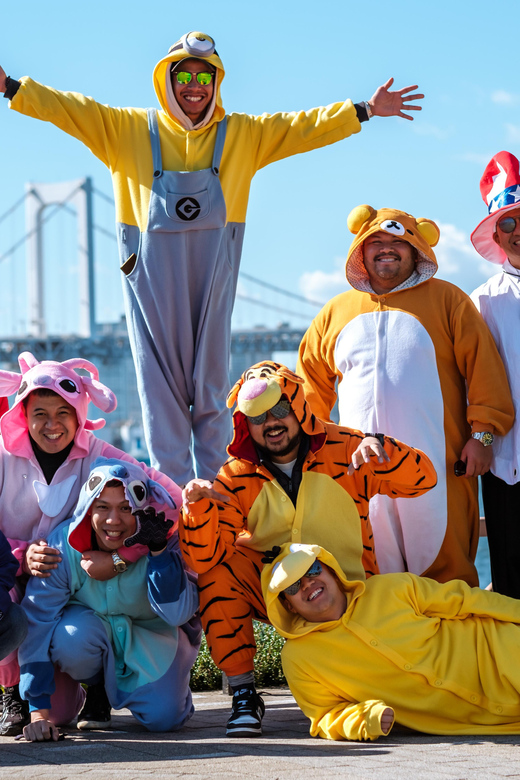
After Tokyo Bay, the route passes through Ginza, Tokyo’s polished shopping district. Here the setting shifts from open waterfront roads to large streets, department stores, signs, traffic, and busy intersections.
Ginza is fun from a kart because you are not sealed behind glass. You feel part of the street scene, and the costumes make the group easy for pedestrians to notice. The drawback is that this is also where you need to concentrate. You may pass an impressive building or sign without getting a good look.
Do not expect the kart to stop at each major sight. The route is designed to keep moving. If you want close-up views of Ginza’s shops or architecture, return on foot or by train later. The go-kart gives you a lively first look, not enough time for detailed exploration.
Evening departures can add a different mood, with city lights and a livelier atmosphere. Daytime rides make it easier to see road markings and surrounding buildings. Choose the time based on your priority: clearer views and easier orientation during daylight, or stronger city atmosphere after dark.
Same city, a completely different kind of day:
- Mt Fuji and Hakone 1-Day Bus Tour Return by Bullet Train
★ 5.0 · 26,383 reviews - 1-Day Tokyo Bus Tour
★ 5.0 · 14,250 reviews - Tokyo: TOKYO SKYTREE® Admission ticket
★ 4.5 · 11,192 reviews - Tokyo: teamLab Planets TOKYO Digital Art Museum Entry Ticket
★ 4.6 · 9,779 reviews
Nihonbashi and Kanda show another Tokyo
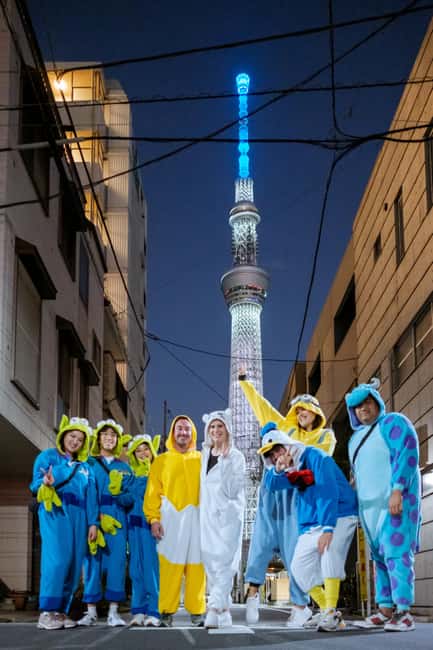
The route continues through Nihonbashi and Kanda. These areas connect modern Tokyo with older commercial streets, office districts, bridges, and long-established neighborhoods.
From a kart, you get a moving sample rather than a full visit. That is still valuable. In a normal day, covering Tokyo Bay, Ginza, Nihonbashi, Kanda, Akihabara, Ueno, and Asakusa would require several train rides and a lot of walking. Here, the route links them in a single continuous trip.
There is a cost to that efficiency. You are passing through, not stopping to browse shops or enter buildings. If you are seeking a slow neighborhood walk, this tour will feel rushed. If you want to cover ground and get a physical sense of how Tokyo’s districts fit together, the ride works well.
The English-speaking instructor gives practical direction rather than a long lecture. That suits the format. You need clear instructions about turns and traffic more than a stream of facts while operating a kart.
Akihabara adds color and movement
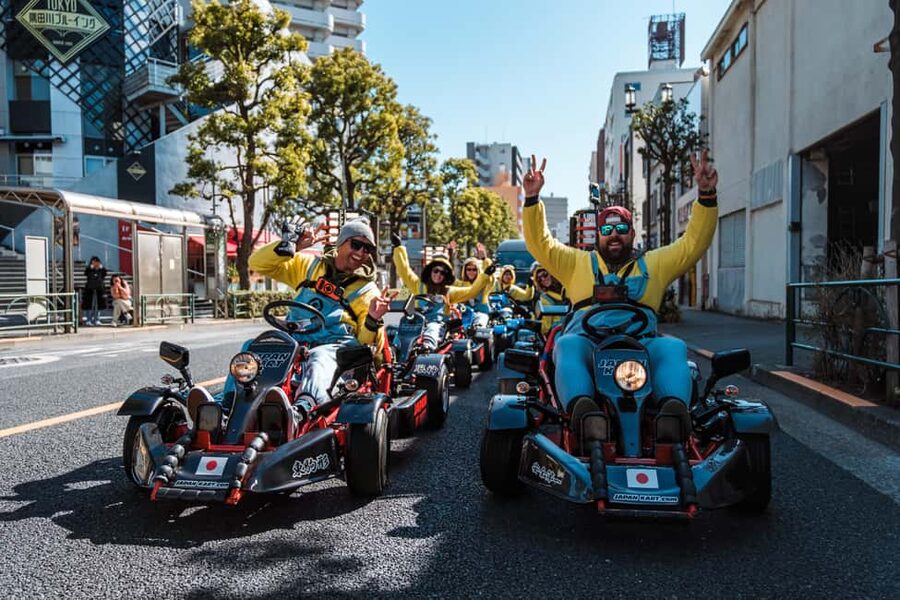
Akihabara is one of the route’s most recognizable sections, with its electronics stores, anime-related signs, and concentrated commercial energy. The district looks especially theatrical from a low, open vehicle.
It is also a place where the group may attract attention. People wave, point, or take photos, adding to the playful side of the experience. Costumes make sense here, though the route is not a photo shoot at every corner.
Keep your expectations in check. The tour does not promise a stop at every major Akihabara landmark, and traffic may limit how long you can look around. Think of this section as a rolling introduction. If Akihabara interests you, schedule a separate walking visit for arcades, shops, and cafés.
The route’s safety system matters in this district. Large roads, traffic lights, and turning vehicles can make a group of small karts feel exposed. The guides’ job is to keep everyone together and moving predictably. Follow their pace rather than trying to race ahead.
Ueno and Asakusa bring older Tokyo into view
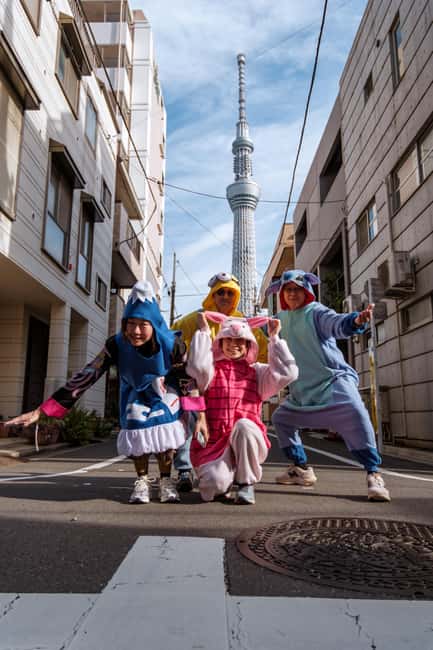
Ueno gives the ride a change of pace. The area is linked with parks, museums, shopping streets, and older city life. One rider’s favorite part was driving through Ueno, which makes sense: it feels less like a corporate center and more like a lived-in neighborhood.
Asakusa is the route’s strongest stop for old Tokyo atmosphere. The area around Senso-ji, traditional streets, and the nearby river gives you a very different impression from Ginza or Akihabara. You may not stop long enough to explore the temples, but seeing Asakusa from the road helps you place it within the wider city.
The one-hour SkyTree branch focuses on this eastern side. Its route includes Asakusa, Ueno, Akihabara, Ueno Park, Kappabashi Kitchen Tools Street, and Tokyo SkyTree. It is a better match if you want a shorter commitment or are already spending time near the tower.
The longer route is the better value for most first-time visitors who have the time and paperwork. It covers more districts and gives you more time to settle into the kart. The shorter route is useful when your schedule is tight, though one hour may feel brief once the briefing and preparation are counted.
Safety, traffic, and comfort

The strongest part of the operation is the attention to safety. Staff explain the controls and traffic rules before departure, and the lead guide keeps the group on course. A rear guide helps watch the line from behind. This is not a license to relax completely, but it makes the ride feel organized rather than chaotic.
You still drive on public roads. Cars can cut in, roads can be busy, and wet surfaces can reduce confidence. One rider specifically noted concentrating on driving and road conditions instead of sightseeing. That is an honest warning, especially if you are not comfortable driving in unfamiliar traffic.
The karts are described as clean and well maintained. The group limit of 10 keeps the procession manageable. Smaller groups may run, too, depending on the booking date. A group of only two or three can feel more personal, while a full group creates more of the costume parade effect.
The experience is not suitable for drivers under 18. The supplied information does not set out a maximum age or a detailed physical-access policy, so contact the operator if you have concerns about your ability to sit, steer, or drive for the route’s duration.
The paperwork can make or break your booking
This is the most important practical point. For most drivers, you must bring all three:
- Your valid driving license from your home country
- A hard-copy international driving permit issued under the Geneva Convention 1949 by an approved authority in your own country
- Your passport
Japan does not accept international permits issued under the Vienna Convention 1968 for this activity. Online companies that sell unofficial permits are not a safe substitute. The permit must be in booklet form, not simply a loose paper document.
Drivers with licenses from Switzerland, Germany, France, Taiwan, Belgium, Estonia, or Monaco need an original license, an official Japanese translation from the authorized organization, and a passport instead of the standard IDP arrangement.
US military SOFA license holders need an active military ID and a stateside driver’s license. Check your exact case before you arrive. If you cannot show the required hard copies, staff can deny participation without reimbursement. Forgetting the documents is not covered by the free cancellation policy.
Is $64 a fair price?
At $64 per person, the tour is reasonably priced for a two-hour activity in central Tokyo. You are paying for the kart, fuel, staff, taxes, costumes, and photos, not just a vehicle rental. The guided route also covers ground that would take much longer by foot.
The value is strongest if you enjoy driving and want a memorable activity rather than a standard city tour. It gives your feet a break while still moving through several districts. The included photos add real value because you can keep your hands on the wheel during scenic stops.
It is less useful if your main goal is detailed cultural interpretation. You do not get extended visits at Tsukiji, Ginza, Ueno, or Asakusa. You pass through them, then return later if a particular area catches your interest.
The operator may adjust bookings when mechanical parts reach capacity or when equipment issues affect the schedule. That is a sensible precaution, though it means you should avoid placing this activity immediately before a nonrefundable evening reservation.
Who should book this ride?
I would recommend it to confident drivers, repeat Tokyo visitors, couples, families with adult children, and anyone who wants a story to tell beyond the usual temple and observation deck visits. It also suits people who like group activities and do not mind being noticed.
It is a particularly good choice if you want to combine sightseeing with an active experience. The route covers enough districts to help you plan later visits, and the views around Tokyo Bay give the ride a clear visual highlight.
I would skip it if you dislike driving in traffic, need a quiet tour, want detailed commentary, or cannot secure the correct permit. A bus, walking tour, or train-based day will serve you better.
Final verdict: book it if the paperwork is ready
Book the East Tokyo Go-Kart Tour if you see Tokyo as a city to feel as well as see. The open-air ride, Rainbow Bridge views, costumes, friendly guides, and wide route make it memorable, and the $64 fee covers the major extras.
Just do not mistake it for a conventional sightseeing tour. You will spend much of your attention on safe driving, and that is part of the deal. Bring the correct documents, wear proper shoes, choose your weather carefully, and you will give yourself the best chance of enjoying this unusual trip through Tokyo.
FAQ
How long does the East Tokyo Go-Kart Tour last?
The activity lasts about 90 to 150 minutes, depending on the selected route, preparation, stops, and conditions. The longer tour is described as a two-hour route, while the SkyTree branch offers a one-hour route.
How much does the tour cost?
The listed price is $64 per person. Go-kart use, fuel, fees, taxes, costumes, and photos are included.
Where does the tour meet?
Check-in is at the activity provider’s shop near Tokyo Skytree Tower. The one-hour SkyTree branch has a different meeting point, so confirm your selected branch before going.
Do I need a driver’s license?
Yes. You must bring your driving license from your country of origin, your passport, and the correct international driving permit or official Japanese translation required for your license country.
What kind of international driving permit does Japan accept?
For most drivers, the permit must be issued under the Geneva Convention 1949 by an approved authority in your own country. Vienna Convention 1968 permits are not accepted.
Can I use a paper copy of my international driving permit?
No. The permit must be a hard copy in booklet form. A loose paper document or failure to show the permit at check-in can result in denial of participation without reimbursement.
Are drivers under 18 allowed to join?
No. The activity is not suitable for drivers under 18.
Is the tour offered in English?
Yes. The instructor and tour operation are provided in English.
What should I wear?
Wear closed, practical shoes. High heels, sandals, flip flops, and bare feet are not allowed.
What happens if bad weather cancels the tour?
If the operator cancels because of bad weather, you can receive a full refund or reschedule if availability allows. The operator may also adjust the schedule because of mechanical issues.
Just added around Tokyo
- Tokyo: Customizable Private Guided Walking Tour★ 4.5 · 129 reviews
- Private Harajuku Omotesando Architecture Tour★ 4.9 · 18 reviews
- Tokyo: Guided Helicopter Ride★ 4.9 · 24 reviews
- Tokyo: Guided Walking Tour of Tsukiji Market with Lunch★ 4.4 · 24 reviews
- Tokyo: Private Personalized Local Food Tour★ 4.5 · 101 reviews
- Tokyo GINZA: KONPARU Japanese Cabaret Show with Drink★ 4.8 · 38 reviews
- Tokyo: Guided Walking Tour of Tsukiji Market with Breakfast★ 4.4 · 134 reviews
- Tokyo: Gotokuji Cat Temple, Shinjuku Cat Cafe & 3D Cat Tour★ 4.9 · 38 reviews
Go-Karts, compared.
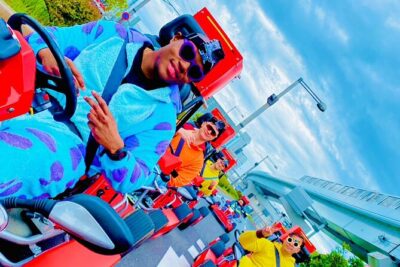
Flagship 2-Hours Official Street Go-Kart Tour – Tokyo Bay Shop
Read our review →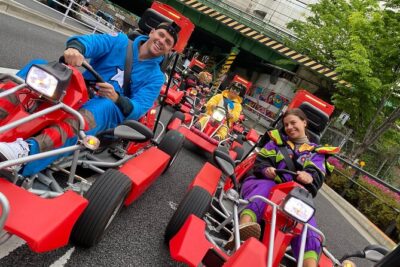
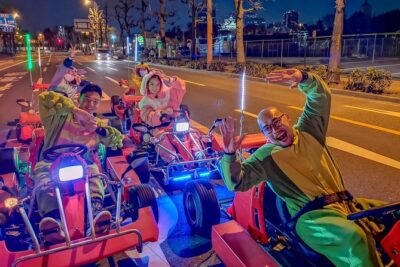
Tokyo Go Kart: Asakusa, Skytree, and Akihabara **IDP MUST**
Read our review →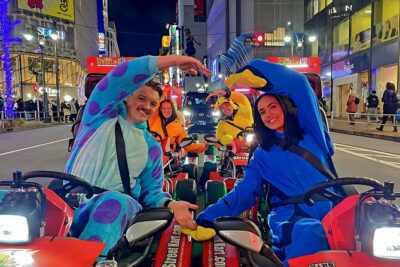
Shibuya Official Street Go-Kart in Shibuya Annex
Read our review →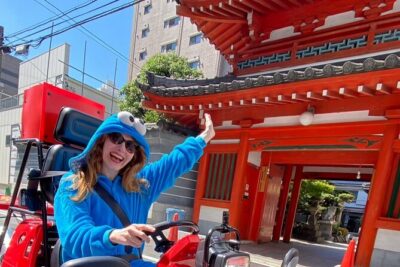

Asakusa, Skytree & Akhihabara Go-Kart City Experience
Read our review →Browse the lists this tour appears in