REVIEW · TOKYO TOURS
Tokyo:Stroll in Old traditional culture towns~Yanaka & Nezu
Tokyo’s Yanaka and Nezu districts offer something the city’s famous neon neighborhoods cannot: quiet lanes, old wooden houses, small temples, and ordinary local life. This 3.5-hour walk begins at Nippori Station and follows a relaxed route through one of Tokyo’s most traditional corners.
I like the focus on small religious sites and neighborhood details, not just headline attractions. I also like the personal touch from Sui, the main guide, who has helped families with children, taken photographs, answered questions, and offered food and shopping advice. The main drawback is simple: this is a walking tour with stairs, and hot summer weather can make three and a half hours outside tiring.
In This Review
- Key points at a glance
- Why Yanaka and Nezu feel different from central Tokyo
- Starting at Nippori Station and entering Yanaka
- Nezu Shrine and the meaning of a place of worship
- Tennoji Temple and a quieter Buddhist pause
- Yanaka Cemetery beneath the trees
- Old buildings, small businesses, and the Yoshida Liquor Store
- Yanaka Ginza for snacks and local shopping
- Sunset Staircase and the final view
- What the pace and season mean for you
- Is $29 good value?
- Who should book this Yanaka walking tour?
- Should you book it?
- FAQ
- How long is the Yanaka and Nezu walking tour?
- Where does the tour begin?
- Where can the tour finish?
- Is the tour conducted in English?
- What places are visited?
- Is the tour suitable for wheelchair users?
- What should I bring?
Key points at a glance
- Old Tokyo in daily use: Walk past homes, shops, temples, cemeteries, and small businesses in a lived-in neighborhood.
- Sui leads the walk: Her friendly, flexible style suits visitors who want conversation and detailed explanations in English.
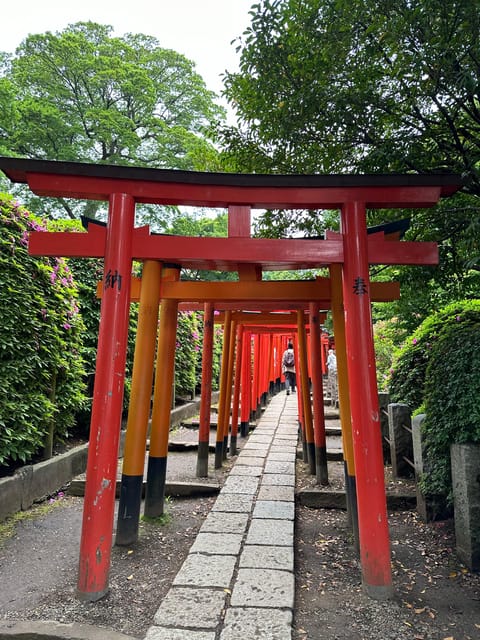
- Nezu Shrine’s torii path: See one of Tokyo’s oldest places of worship and its memorable rows of red gates.
- A slower pace: The route is designed for stopping, asking questions, taking pictures, and noticing details.
- Local food and shopping: Yanaka Ginza brings street food, small shops, traditional products, and souvenir ideas.
- Seasonal planning: Spring includes a traditional sweet, while summer adds a café stop and removes Yanaka Ginza from the route.
Why Yanaka and Nezu feel different from central Tokyo
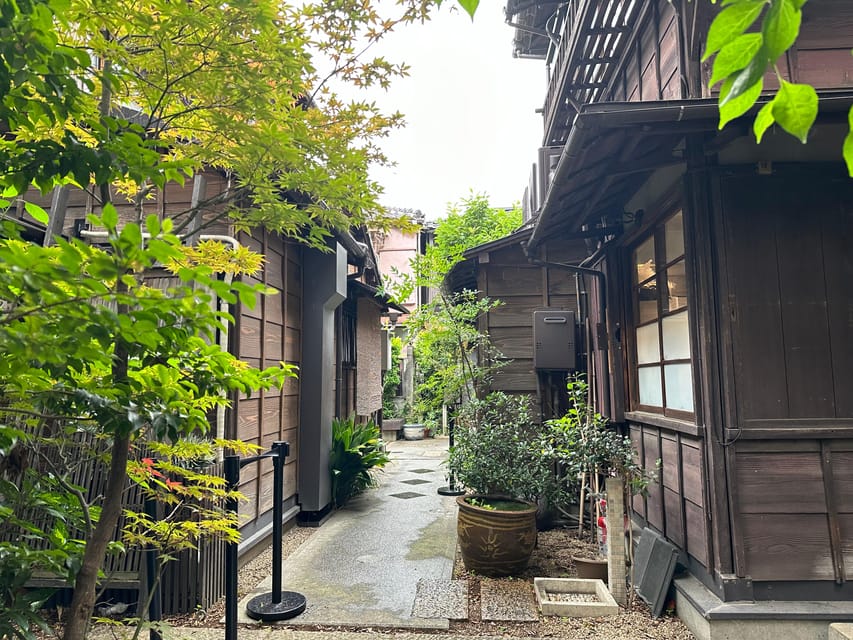
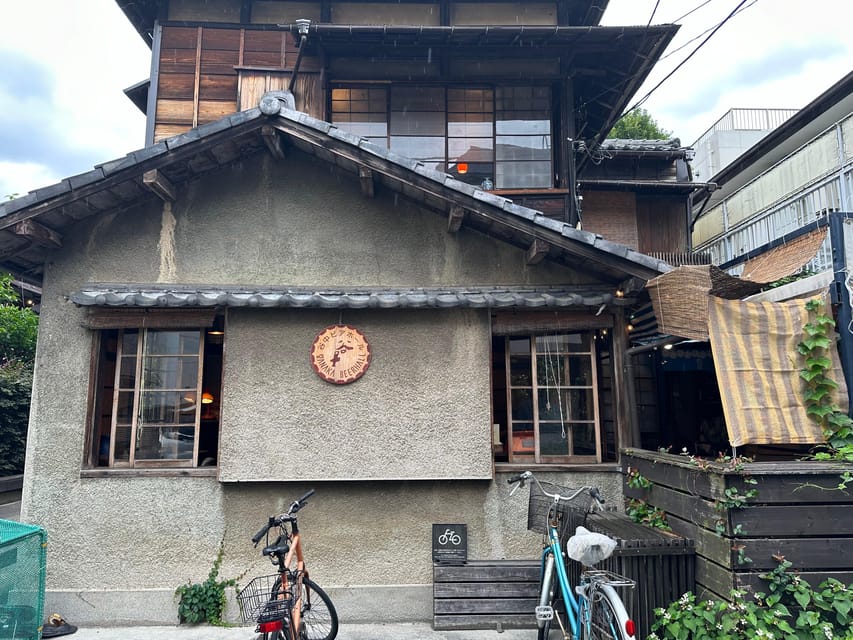
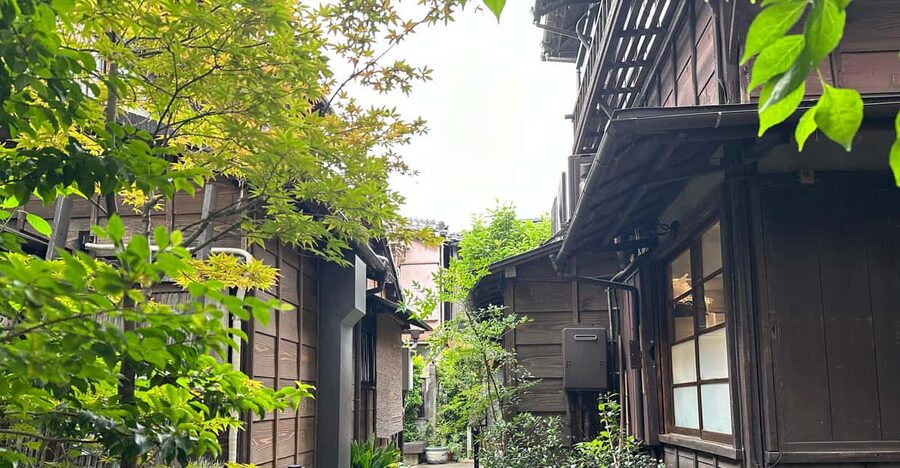
Tokyo is often presented through Shibuya crossings, Shinjuku towers, crowded shopping streets, and bright signs. Yanaka and Nezu give you another picture. The streets are quieter, the buildings are lower, and the rhythm is more local.
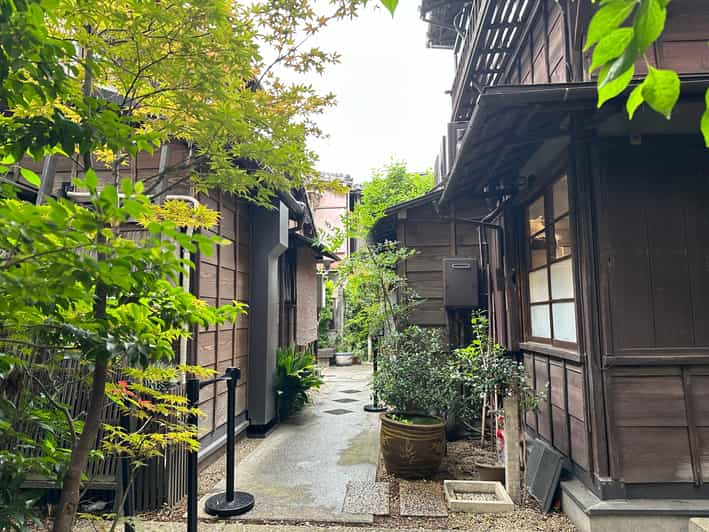
This part of the city retains many structures and street patterns from the Meiji period, from 1868 to 1912, through the Showa period, from 1926 to 1989. You will see a mix of old and new homes rather than an open-air museum frozen in time. That is the appeal. A nursery school, an older resident going about the day, a tiny shop, and a weathered house may all appear in the same short stretch.
I like this kind of walking because it gives you context for the Tokyo you see elsewhere. The tour is not only about old buildings. It shows how traditional customs, religious spaces, family businesses, and modern city life share the same neighborhood.
The small-group format matters here. Narrow lanes are better suited to a few people than a large crowd, and Sui can spend time explaining a question or adjusting the pace. Several bookings have also turned into private walks when no one else joined, though you should not assume that will happen on your date.
Other Tokyo days people book alongside this one:
- Mt Fuji and Hakone 1-Day Bus Tour Return by Bullet Train
★ 5.0 · 26,383 reviews - 1-Day Tokyo Bus Tour
★ 5.0 · 14,250 reviews - Tokyo: TOKYO SKYTREE® Admission ticket
★ 4.5 · 11,192 reviews
Starting at Nippori Station and entering Yanaka
The meeting point is the West Exit of Nippori Station, marked for Yanaka. Sui waits in the area after you leave the station. The directions are designed to help you find her, but you still need to arrive on time because the walk starts as scheduled.
From the station, the route moves into Yanaka’s residential streets. This opening section helps you get used to the tour’s approach. Instead of rushing from one major sight to another, you look at old and new houses, local shops, narrow lanes, and small details of daily life.
You may encounter nursery children, older residents, and shopkeepers along the way. The point is not to interrupt people or treat the area as a set piece. It is to see a functioning neighborhood and learn how local life fits around temples, shrines, homes, and shops.
Sui’s role is especially useful in this setting. She explains customs and history while leaving room for questions. Several families with children found her attentive and helpful, including one group whose children received small toys and treats along the way. If you are visiting with children, this is a more manageable introduction to old Tokyo than a long, formal museum visit, though the stairs and walking still require reasonable mobility.
Nezu Shrine and the meaning of a place of worship
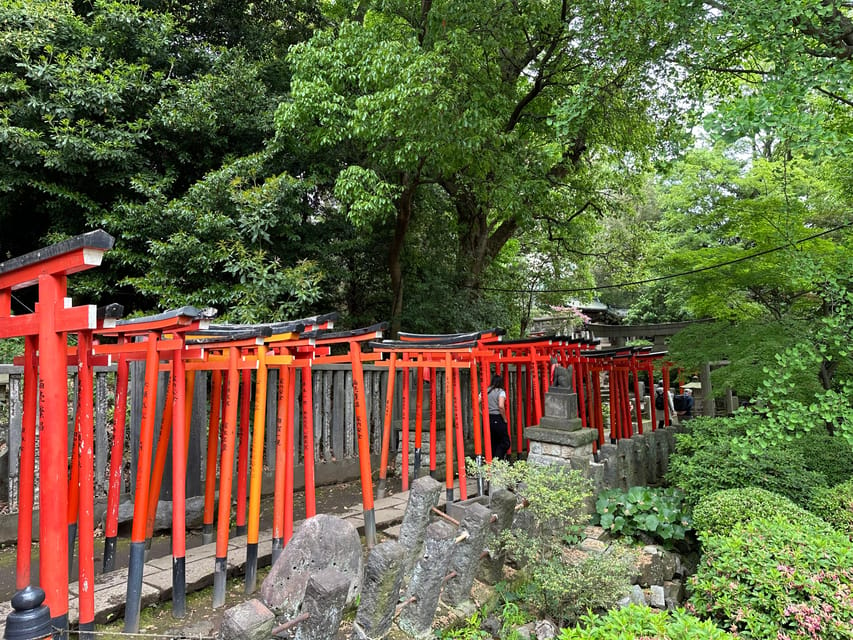
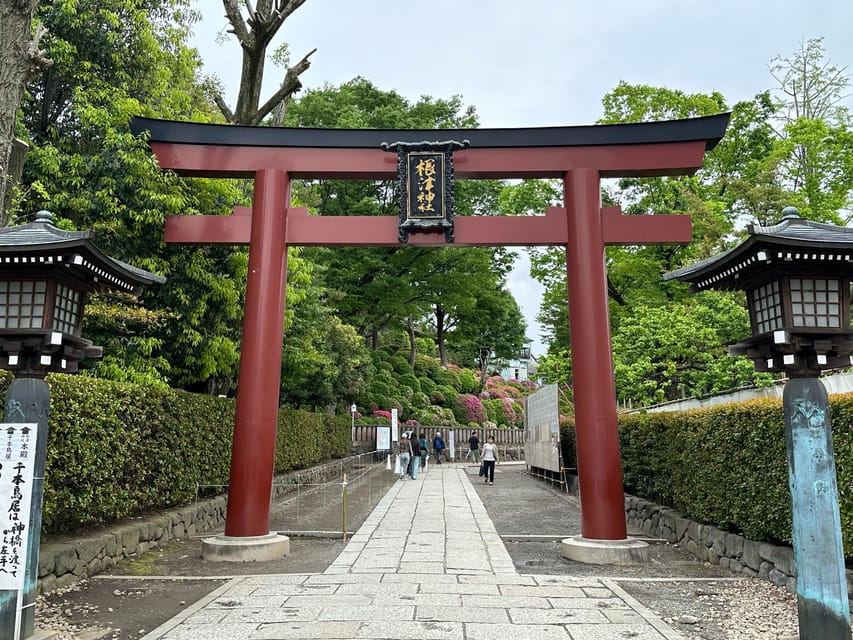
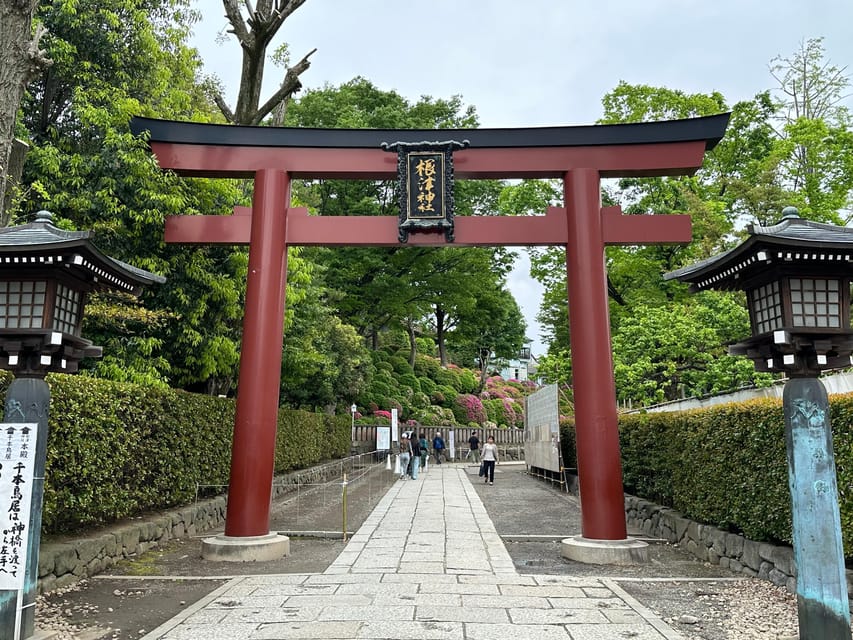
Nezu Shrine is one of the main stops and one of the most photogenic. Its torii-lined pathway gives the visit a strong visual moment, but the value is not only in taking pictures.
The walk introduces you to Japan’s two major religious traditions, Shinto and Buddhism. At Nezu Shrine, Sui can explain shrine customs and show you how to pray. For someone visiting Japan for the first time, that practical guidance is valuable. You do not have to guess what to do at the purification basin or how to approach the prayer area.
The shrine is also a good reminder that religious places in Tokyo are not always isolated monuments. They sit within ordinary neighborhoods, close to homes and businesses. The contrast between the calm shrine grounds and the surrounding streets is part of the experience.
You should be respectful with photographs and follow any signs or local instructions. The tour gives you a way to understand the space without turning the visit into a quick photo stop.
Tennoji Temple and a quieter Buddhist pause
Tennoji Temple brings the Buddhist side of the tour into view. Its large bronze seated Buddha is the central feature, and the temple grounds include a Japanese garden.
This is one of the places where the unhurried schedule pays off. You have time to pause, look at the Buddha, and enjoy a calmer setting away from the city’s busiest sightseeing areas. The tour description specifically emphasizes local temples that are often not crowded with visitors, so this stop fits the larger purpose of the walk: finding stillness in an enormous city.
Sui also explains how temple visits differ from shrine visits. That distinction can be confusing when you are moving around Japan on your own, especially if you are interested in religion but do not know the basic customs. Here, the information is tied to actual places rather than delivered as a general lecture.
Do not expect an elaborate temple complex filled with major national treasures. Tennoji is worthwhile for its atmosphere, garden, and Buddha, but the attraction is quiet and reflective rather than dramatic.
Same city, a completely different kind of day:
- Tokyo: teamLab Planets TOKYO Digital Art Museum Entry Ticket
★ 4.6 · 9,779 reviews - Mt Fuji & Hakone Cruise, Drum Show Bullet Train 1 Day from Tokyo
★ 4.0 · 7,413 reviews - Tokyo: Shinjuku Food Tour (13 Dishes at 4 Local Eateries)
★ 5.0 · 6,603 reviews - Tokyo Mt Fuji 5th St & Hakone Cruise Bus Tour w/Bullet Train
★ 4.4 · 5,024 reviews
Yanaka Cemetery beneath the trees
Yanaka Cemetery is one of Tokyo’s largest and most scenic cemeteries. The route passes along a beautiful row of trees, giving this part of the walk a different mood from the shrine and temple stops.
A cemetery may not be on every visitor’s list, but it helps explain Yanaka’s character. Religious sites and burial grounds are part of the neighborhood rather than being pushed far outside the city. Walking through the cemetery also offers a slower stretch where you can notice the trees, paths, and surrounding architecture.
As with any cemetery, quiet behavior is important. This is not a place for loud conversation or casual posing around graves. Sui’s guidance helps frame the visit as a look at local customs and the way Tokyo preserves sacred spaces within a dense urban area.
This stop may appeal most to visitors who enjoy history, architecture, and local culture. If you prefer a fast itinerary built around major landmarks, it may feel less exciting. For me, it is one of the stops that makes the tour feel grounded in the real neighborhood.
Old buildings, small businesses, and the Yoshida Liquor Store
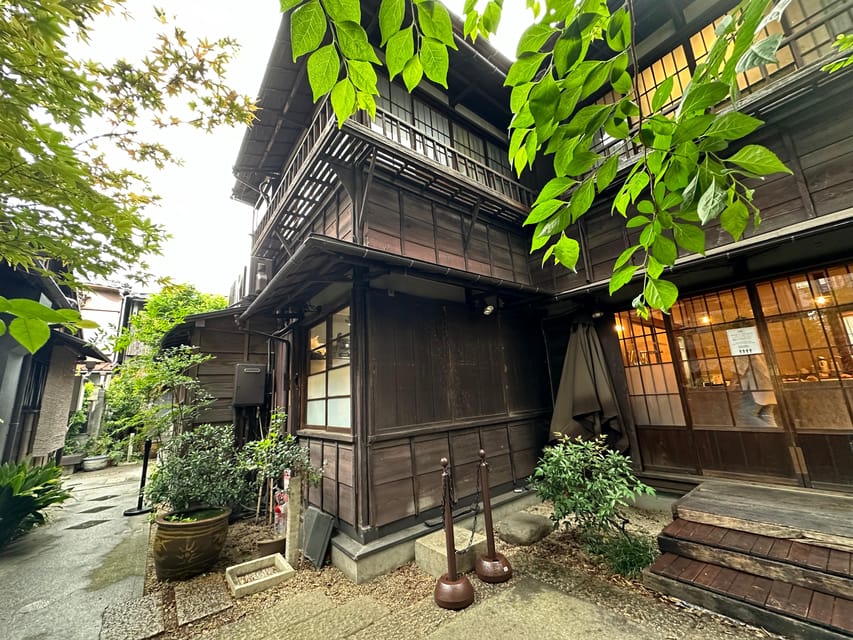
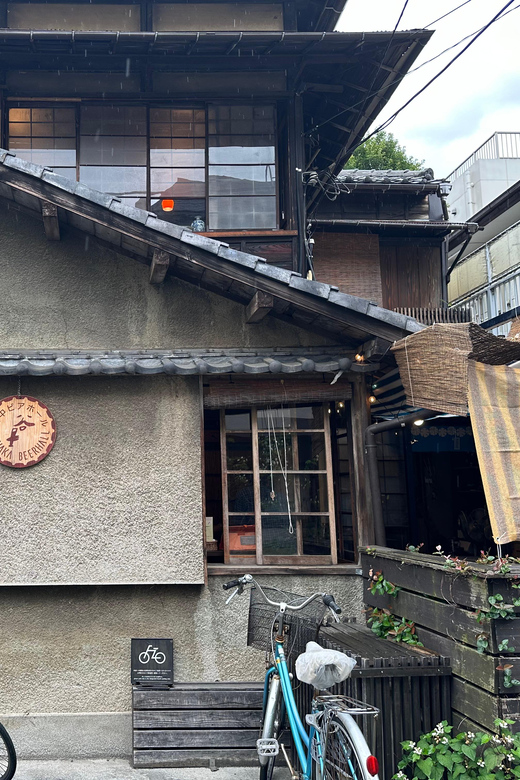
The route continues through traditional buildings from the Meiji and Showa periods. You will not see a perfectly preserved historic district where every structure belongs to one era. Instead, old houses and businesses appear beside newer buildings, offering a more honest view of how Tokyo changes while retaining pieces of its past.
One specific stop is Yoshida Liquor Store, a traditional Japanese sake shop. Small stores like this are easy to overlook if you are walking alone, especially when the signs are unfamiliar and the business looks modest from the street.
The shop gives Sui a chance to explain local products and the role of family-run businesses. You can also ask about sake, traditional sweets, snacks, and souvenirs. The tour does not promise that every shop will be open, so keep expectations flexible. Some businesses close on Mondays, and opening hours can vary.
Cash is worth bringing. The experience information specifically recommends it, and small neighborhood shops may be more useful to you when you have a few thousand yen available for food or small purchases.
Yanaka Ginza for snacks and local shopping
Yanaka Ginza is the most commercial part of the walk, but it still feels different from Tokyo’s giant department stores and chain shopping zones. This traditional shopping street is lined with food shops, small stores, and places selling souvenirs and local products.
Sui introduces you to street foods and helps explain what to look for. That is useful if you want to try something but are unsure what it is or how it is eaten. You can also ask for suggestions on handmade snacks, daifuku, and gifts to take home.
I would plan to spend a little extra money here if food shopping interests you. The tour price does not include purchases, and the $29 fee covers the guide rather than snacks or souvenirs. That keeps the base cost low, but you should bring cash and avoid treating the listed price as an all-inclusive outing.
Yanaka Ginza is also where the walking tour can feel busiest. It is not comparable to Shibuya at rush hour, but it has more foot traffic and commercial activity than the residential lanes. If you want the quietest part of the experience, the earlier neighborhood sections and temple grounds deliver more of that mood.
Sunset Staircase and the final view
The Sunset Staircase is a popular local photo spot and a natural place to end the main route. It gives you a simple view down the street and a chance to take pictures before the tour finishes.
The name suggests a sunset scene, but the tour’s exact timing may not line up with sunset. Think of it as a well-known neighborhood viewpoint rather than a guaranteed evening spectacle. Sui is also praised for taking photographs, so this can be a useful moment if you want a picture of yourself rather than another shot of Tokyo.
The tour has three possible drop-off points: Nippori Station, Yanaka Ginza, and Nezu Station. That flexibility is practical. You can continue eating or shopping around Yanaka Ginza, return to Nippori, or head onward from Nezu Station.
What the pace and season mean for you
The advertised duration is 210 minutes, or three and a half hours. In practice, the walk may finish a little earlier or later. The guide aims to let people stop, ask questions, rest, and take photographs rather than forcing a strict minute-by-minute schedule.
Several people have found the walk lasted close to four hours or included extra help after the official finish. That can be a benefit if you enjoy conversation, but it means you should not schedule a tight appointment immediately afterward. One useful tip from the experience: eat before you arrive or carry a snack. The route can run into lunchtime, and Yanaka Ginza comes near the end.
Spring is a particularly appealing time for the area. A free sakura mochi is offered during the listed spring period from March 25 to April 25, 2026, with another traditional sweet or food item substituted if necessary. The actual cherry blossom period depends on weather, so the dates do not guarantee full bloom.
Summer needs more planning. From June 1 to September 11, 2026, the tour includes one drink at a café in an old traditional building to reduce the risk of heat exhaustion. Yanaka Ginza is not included in the summer route, and the walk ends at Nezu Station. This seasonal change is sensible, since Tokyo can be intensely hot and humid.
The tour is still a three-and-a-half-hour walk, so wear comfortable shoes, carry water, and take the heat seriously. A past booking on a very hot day found the distance difficult, which is a fair warning even though the summer version adds a café break.
Is $29 good value?
At $29 per person, this is inexpensive for a guided English-language walk lasting 210 minutes. The value comes from access to local context rather than costly admissions or transport. You are paying for someone who can point out the meaning of places, explain religious customs, identify traditional products, and help you navigate small shops.
The cost works best if you want an introduction to Yanaka and Nezu without spending time researching a route. On your own, you could visit Nezu Shrine, Yanaka Cemetery, Yanaka Ginza, and Tennoji Temple. What is harder to reproduce is the connection between those stops and the smaller streets in between.
The price does not cover food, souvenirs, or any unlisted purchase. Bring cash and budget for snacks if Yanaka Ginza appeals to you. Free cancellation up to 24 hours before the tour and the reserve-now, pay-later option also reduce the risk of booking ahead.
Who should book this Yanaka walking tour?
I would choose this experience if you have already seen, or plan to see, Tokyo’s major modern districts and want a calmer counterpoint. It suits visitors interested in local customs, religious practice, architecture, neighborhood shops, and the history of ordinary city life.
It is also a strong choice for first-time visitors who want help understanding how to behave at shrines and temples. Sui’s friendly approach makes it suitable for couples, solo visitors, and families, especially if you enjoy asking questions rather than simply following a scripted route.
You should think twice if you dislike walking, stairs, cemeteries, narrow lanes, or flexible timing. The tour is not suitable for wheelchair users. You also need to accept that shops may be closed, especially on Monday, and that the route is about atmosphere and context rather than major spectacle.
Should you book it?
Yes, if you want to see an older, quieter side of Tokyo and value a guide who can turn small details into useful cultural information. Sui is the main guide, and her style appears especially suited to people who want conversation, photographs, food suggestions, and answers to questions along the way.
Book it early in your Tokyo schedule if you can. The advice on local snacks, restaurants, shops, and stations may help with the rest of your visit. Just wear good shoes, eat beforehand, carry cash, and leave a little space in your day in case the walk runs long.
FAQ
How long is the Yanaka and Nezu walking tour?
The tour is scheduled to last 210 minutes, or three and a half hours. It may finish a little earlier or later depending on the pace and stops.
Where does the tour begin?
The meeting point is Nippori Station, at the West Exit for Yanaka. The guide waits in the waiting area after you leave the station.
Where can the tour finish?
The available drop-off points are Nippori Station, Yanaka Ginza, and Nezu Station. During the summer version, the tour ends at Nezu Station.
Is the tour conducted in English?
Yes. The tour includes a live English-speaking guide. Sui is the main guide for this Yanaka walk.
What places are visited?
The route includes Yanaka and Nezu residential streets, Nezu Shrine, Tennoji Temple, Yanaka Cemetery, traditional Meiji and Showa-period buildings, Yoshida Liquor Store, Yanaka Ginza, and the Sunset Staircase.
Is the tour suitable for wheelchair users?
No. The tour is not suitable for wheelchair users, and it includes staircases.
What should I bring?
Wear comfortable shoes and bring cash. You should also eat before the walk or carry a snack because the route can extend into lunchtime.
Just added around Tokyo
- Private Memorable Tokyo Tour with English Speaking Driver★ 5.0 · 30 reviews
- Tokyo Photography Masterclass – Private Photography Lesson★ 5.0 · 25 reviews
- Private Tokyo Custom Full-Day Tour by Chartered Vehicle★ 5.0 · 16 reviews
- Private Sightseeing to Mt Fuji and Hakone with English Driver★ 5.0 · 51 reviews
- Private Mt. Fuji Day Trip from Tokyo with English-Speaking Driver★ 5.0 · 33 reviews
- 4 Day Tour – Mount. Fuji, Tokyo, Hakone, Kamakura and Yokohama★ 5.0 · 19 reviews
- Private Unforgettable Mt Fuji Tour with English Speaking Driver★ 5.0 · 142 reviews
- Private Tokyo Food Tour – A Journey Through Time Through Food★ 5.0 · 36 reviews
Tokyo Tours, compared.
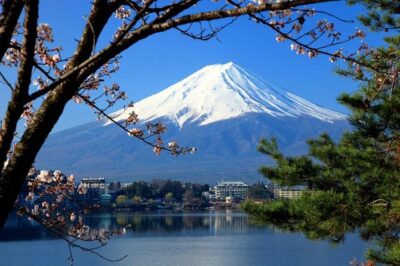
Mt Fuji and Hakone 1-Day Bus Tour Return by Bullet Train
Read our review →


teamLab Planets TOKYO Digital Art Museum Entry Ticket
Read our review →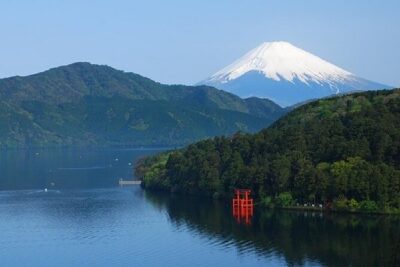
Mt Fuji & Hakone Cruise, Drum Show Bullet Train 1 Day from Tokyo
Read our review →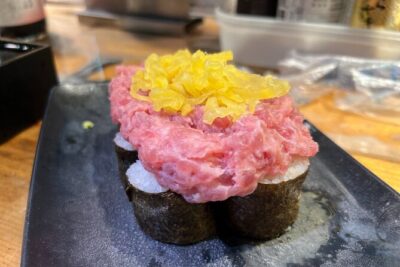
Shinjuku Food Tour (13 Dishes at 4 Local Eateries)
Read our review →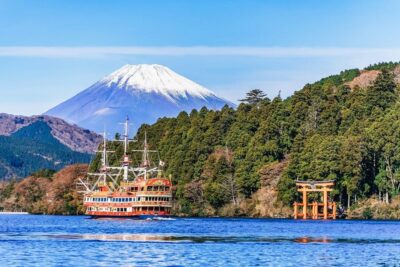
Tokyo Mt Fuji 5th St & Hakone Cruise Bus Tour w/Bullet Train
Read our review →