REVIEW · TOKYO TOURS
Tokyo’s Authentic and Finest Taiko Drumming Experience
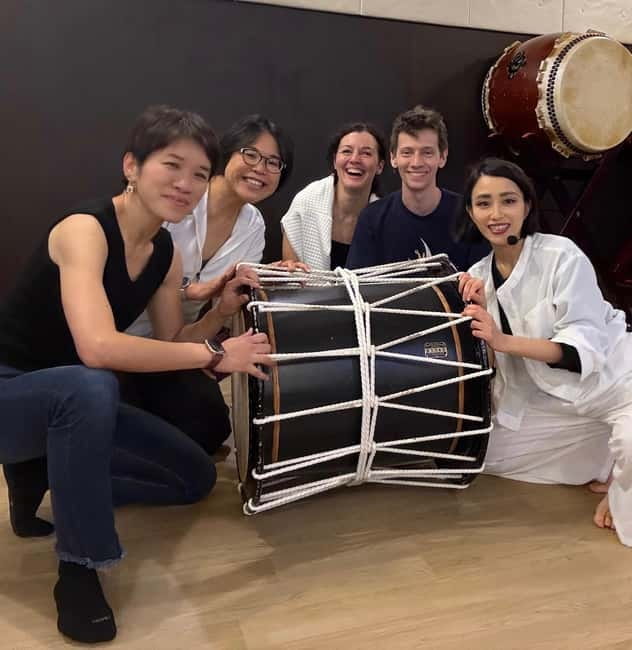
The most memorable part of this Tokyo experience is that you do not simply watch taiko drumming. You learn the posture, rhythm, movement, and dramatic poses behind it, then perform pieces yourself under the guidance of Eva Kestner, a highly accomplished artist and teacher. I especially like the mix of cultural background and active practice, plus the personalized video that lets you remember your performance and work on your form later.
I also like that the class includes both a traditional regional composition and a contemporary piece. The main thing to consider is physical effort: you may be surprised by how much exercise 90 minutes of drumming can be, and the studio can get warm.
In This Review
- Key points at a glance
- Why this taiko class feels different
- The first minutes: sticks, stance, and basic form
- Rhythm training and the growing pace
- Learning a traditional Miyake Island composition
- A contemporary piece and paired performance
- Eva’s demonstration performance
- A short history of taiko and its cultural role
- The personal video you take home
- How much exercise should you expect?
- Is $120 a fair price?
- Location, timing, and booking details
- Who will enjoy this most?
- My verdict: book it if you want to play, not just watch
- FAQ
- Where does the taiko workshop take place?
- How long does the taiko experience last?
- Do I need previous taiko drumming experience?
- Who teaches the workshop?
- What languages are available?
- What will I learn during the session?
- What should I bring?
- Do I receive anything after the workshop?
Key points at a glance
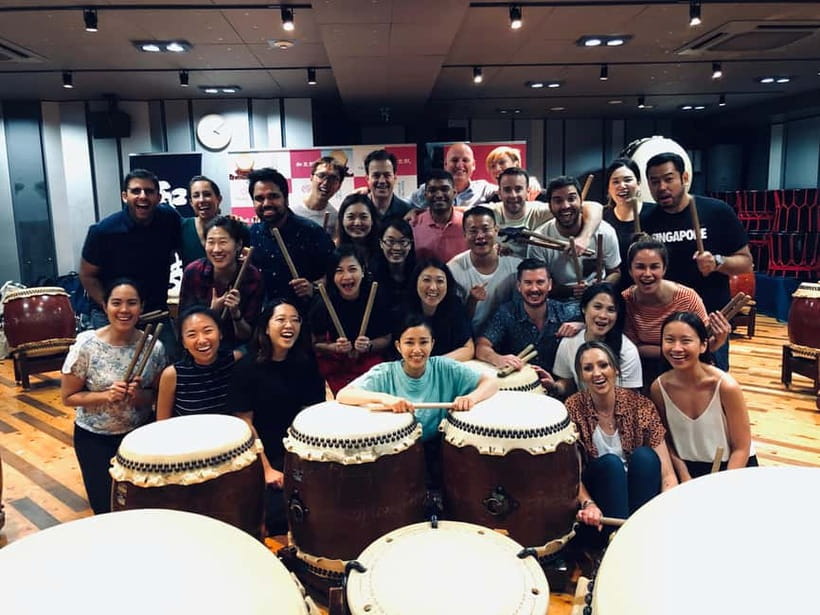
- A real lesson, not just a photo opportunity: You learn how to hold the sticks, use proper form, follow rhythms, and perform a piece.
- Led by Eva Kestner: Eva founded and served as the first musical director of Cornell University’s Taiko Drumming group and received an excellence award from the Tokyo University of the Arts New Artists Competition.
- Traditional and contemporary music: The workshop covers a traditional composition, including a regional piece from Miyake Island, as well as a contemporary work.
- More athletic than it looks: Expect movement, poses, repeated rhythms, and a useful workout for your arms and shoulders.
- A practical souvenir: You receive a personal video of yourself playing, with a private link that can help you practice later.
- Easy for beginners: No previous taiko experience is required, and instruction is offered in English and Japanese.
Why this taiko class feels different
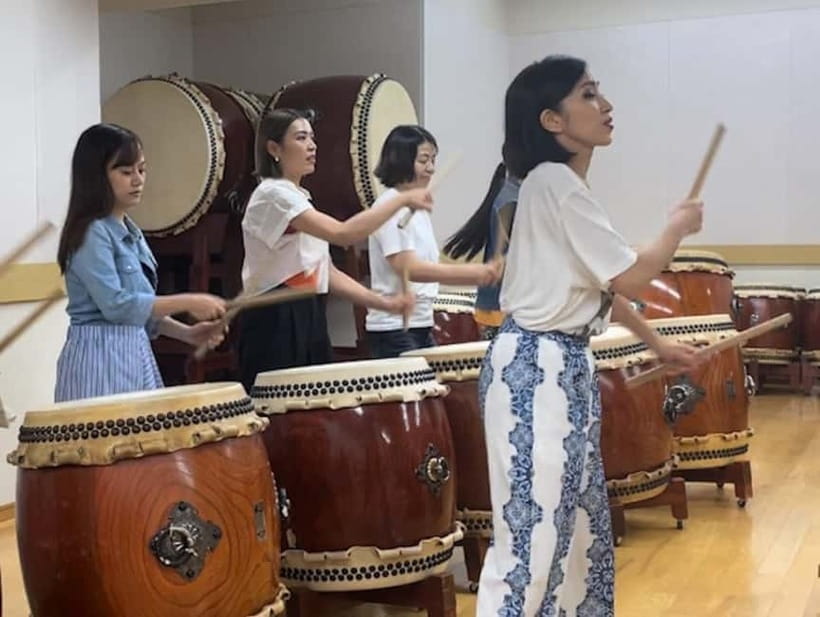
Tokyo offers many cultural activities built around watching, tasting, or dressing up. This one asks you to take part. You hold the bachi, the taiko sticks, learn the body position, and work through rhythms that gradually become a short performance.
That matters because taiko is not simply a matter of hitting a drum hard. The class introduces the role of posture, timing, movement, and style. You learn that the visual side of the performance is part of the music. The strong poses and coordinated motions are not decoration added at the end. They help shape the performance.
Eva’s background adds weight to the class. She founded Cornell University’s Taiko Drumming group and was its first musical director. She has also received an excellence award from the Tokyo University of the Arts New Artists Competition, and her original music has been published by Harper Collins and Cambridge International Curriculum.
You do not need to know any of that to enjoy the session, but it helps explain why the class feels more like a proper introduction to an art form than a quick tourist activity. Eva’s teaching style is described as clear, patient, energetic, and encouraging. She keeps the class moving, so you get a lot from the 90 minutes.
Other Tokyo days people book alongside this one:
- Mt Fuji and Hakone 1-Day Bus Tour Return by Bullet Train
★ 5.0 · 26,383 reviews - 1-Day Tokyo Bus Tour
★ 5.0 · 14,250 reviews - Tokyo: TOKYO SKYTREE® Admission ticket
★ 4.5 · 11,192 reviews
The first minutes: sticks, stance, and basic form
The class begins with foundation training. You learn how to hold the taiko sticks and how to position your body before working on simple rhythms.
This opening section is important for beginners. You are not left to copy random movements at full speed. Eva breaks down the physical basics so you can understand what your hands, arms, and body are meant to do.
The form may feel unfamiliar at first. Taiko performance uses more than the wrists, and the class includes movement and poses as well as striking. You will likely notice that the correct motion takes control rather than brute force.
I would pay close attention here. The early exercises may seem simple, but they prepare you for the faster and more structured sections later. One useful benefit of the class is that your personal recording can help you look back at your form after the session.
Rhythm training and the growing pace
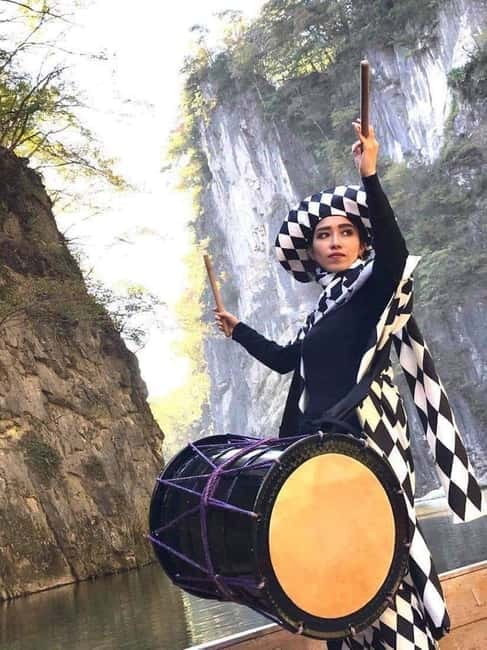
Once the basic position is clear, the class moves into rhythm training. You practice different beat patterns and learn to keep time while following Eva’s instructions.
This is where the workshop becomes lively. You may switch between rhythms, work with another participant, or use paired patterns in which each person has different beats and poses. The exercises are designed to keep you listening as well as moving.
The pace can be demanding. Several people describe the experience as tiring, with sore arms or a good deal of sweat afterward. The room may get warm, so shorts or other light, comfortable clothing can be a smart choice. Bring water, since hydration is not provided as part of the activity.
The physical side is not a flaw, but it is worth planning for. If you want a quiet cultural lecture, this is not it. If you enjoy an activity that leaves you feeling that you actually practiced something, the effort is part of the appeal.
Learning a traditional Miyake Island composition
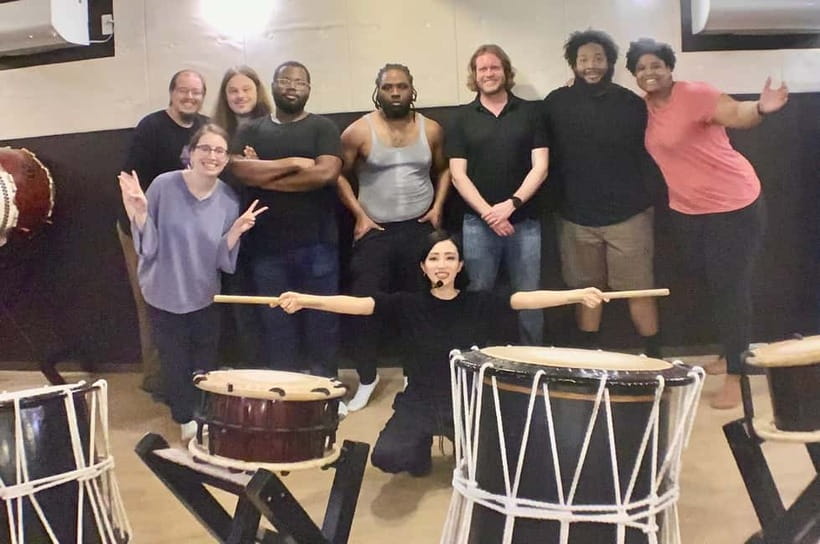
The class then applies the basic skills to a genuine traditional taiko composition. One piece taught in the workshop comes from Miyake Island, one of the islands near Tokyo.
This section gives the session a stronger cultural purpose. You are not only practicing isolated beats. You are learning a structured work with its own rhythm, movement, and performance style.
The piece can be challenging, especially for first-time players. You may need to remember the beat, watch Eva, keep your posture, and coordinate your movements at the same time. That sounds like a lot because it is, but the teaching is broken into manageable parts.
The satisfaction comes from putting those parts together. By the end, you have more than a vague idea of what taiko sounds like. You have taken part in a traditional composition and felt how discipline and energy combine in a performance.
Same city, a completely different kind of day:
- Tokyo: teamLab Planets TOKYO Digital Art Museum Entry Ticket
★ 4.6 · 9,779 reviews - Mt Fuji & Hakone Cruise, Drum Show Bullet Train 1 Day from Tokyo
★ 4.0 · 7,413 reviews - Tokyo: Shinjuku Food Tour (13 Dishes at 4 Local Eateries)
★ 5.0 · 6,603 reviews - Tokyo Mt Fuji 5th St & Hakone Cruise Bus Tour w/Bullet Train
★ 4.4 · 5,024 reviews
A contemporary piece and paired performance
The workshop also includes a contemporary taiko piece. This contrast is useful because it shows that taiko is not limited to one old style or one fixed sound.
The contemporary section may involve switching on and off the drum, using different rhythms, and adding poses to create a group performance. Paired work gives you a chance to hear how separate beat patterns fit together.
For families and friends, this can be one of the most enjoyable parts. You are making music together, but you also have to pay attention to one another. The activity works well for a group because the final result depends on coordination rather than individual skill alone.
Do not expect a polished concert performance from yourself after one class. That is not the point. The value is in learning enough structure to perform a short piece and in seeing how much concentration goes into a taiko presentation.
Eva’s demonstration performance
At some point in the session, Eva gives a demonstration performance. This is more than a break while you watch the expert.
Seeing Eva play gives you a clear sense of the power, timing, and movement you are trying to learn. Beginners often understand a technique better after seeing the whole pattern performed at speed. Her demonstration also gives you a chance to appreciate taiko as a serious musical form, not just a loud drum activity.
The contrast between your first attempts and Eva’s performance may be large. That is normal. It also makes the lesson more useful, since you can see where the control, precision, and stage presence are meant to lead.
A short history of taiko and its cultural role
The workshop includes a brief explanation of taiko’s history and place in Japanese culture. It is not presented as a long academic lecture, which suits the 90-minute format.
The timing is sensible. You receive enough background to understand why the instrument matters, then immediately put some of that understanding into practice. The class connects the physical techniques to the wider tradition instead of treating the drum as a novelty.
I like this balance. Too much explanation would leave little time to play. Too little would make the activity feel disconnected from Japan. Here, the historical context supports the lesson without taking over.
The personal video you take home
After the workshop, you receive a personalized video of yourself playing taiko. This is one of the strongest practical extras included in the price.
Many short cultural activities end when you walk out the door. The video gives you a lasting record of the session and lets you review your performance. It can also help you practice the form later, especially if you want to remember the rhythm or body position.
The video is not the same as a professional recording, and you should not book the activity expecting a polished performance film. Its value is personal. You get to see yourself taking part in the piece you learned, which makes the souvenir more meaningful than a standard photograph.
How much exercise should you expect?
You should treat this as an active class. The repeated arm movements, standing position, rhythm work, and performance gestures can make the 90 minutes surprisingly demanding.
The experience is not described as requiring prior fitness, and no previous taiko experience is needed. Still, you should be ready to move continuously for much of the session. Several participants found it exhausting, while others enjoyed the athletic quality.
Wear clothes that allow free movement. Bring a water bottle. A hot studio and heavy clothing will make the class less comfortable, particularly in warm weather.
If you have physical concerns, the available information does not specify limits, accommodations, or accessibility details. Contact the provider before booking if you need that information.
Is $120 a fair price?
At $120 per person, this is not a bargain activity. The value depends on what you want from a Tokyo cultural experience.
You receive a full 90-minute workshop with an accomplished instructor, drum sticks and drums, foundation training, rhythm work, a traditional composition, a contemporary piece, a demonstration performance, cultural background, and a personal video. You are paying for instruction and studio time, not just admission to a show.
I think the price is easier to justify if you want an active, small-group experience with a serious teacher. The class gives you a clear beginning, middle, and performance goal, which makes the time feel purposeful.
It may feel expensive if you only want to hear taiko or take a quick introductory lesson. A performance ticket would serve that purpose better, though it would not give you the chance to play or take home your own recording.
The perfect choice also depends on your group. Families, couples, and friends can enjoy the shared challenge, and a private group option is available. For groups larger than 20 people, you need to contact Eva directly at [email protected] to arrange the session.
Location, timing, and booking details
The experience takes place in the Honshu, Japan area, with the meeting point varying by the option you book. For large groups, the studio is described as about 20 minutes from Shibuya by train.
Do not assume every booking uses exactly the same meeting point. Check the location attached to your selected option before setting out, especially if you are planning another activity soon afterward.
The class lasts 90 minutes. Starting times depend on availability, so you should check the schedule before making other plans. The instructor teaches in English and Japanese.
You can cancel up to 24 hours in advance for a full refund. A reserve-now, pay-later option is also available, which is useful if your Tokyo schedule is still shifting.
Who will enjoy this most?
I would recommend this class to you if you want to do something hands-on and are open to a little physical effort. It suits first-time visitors who want cultural context, but it also works for people who simply like music, rhythm, and group activities.
Families can make a good choice here, since the class is interactive and the final video creates a shared memory. Couples and friends may enjoy the paired rhythms and poses, while private groups can arrange a more exclusive session.
The class is also a good fit if you value direct contact with an artist. Eva is not presented as a generic activity leader. She has a substantial performance and teaching background, and her own passion for taiko is central to the session.
I would hesitate if you want a relaxed hour with little movement, dislike repeating physical exercises, or are uncomfortable performing in front of others. The workshop is friendly, but you are expected to participate.
My verdict: book it if you want to play, not just watch
This is a strong choice for a memorable Tokyo activity because it combines instruction, culture, exercise, and a personal souvenir. The 5.0 rating from 28 bookings reflects the consistently positive response, with particular praise for Eva’s energy, clarity, patience, and skill.
The main caution is simple: taiko is work. You may leave with tired arms, and the room may feel warm. Wear light, comfortable clothing and bring water.
Book this experience if you want a proper beginner’s lesson with an artist, a traditional and contemporary repertoire, and a video of your own performance. Skip it if you are looking for a passive show or a low-effort sightseeing stop. For most active visitors, the chance to make the sound yourself is what makes the $120 worthwhile.
FAQ
Where does the taiko workshop take place?
The experience is in the Honshu, Japan area, and the meeting point may vary depending on the option you book. For groups larger than 20 people, the studio is described as about 20 minutes from Shibuya by train.
How long does the taiko experience last?
The workshop lasts 90 minutes.
Do I need previous taiko drumming experience?
No. The class is designed for beginners and includes foundation training before the rhythm and performance sections.
Who teaches the workshop?
The instructor is Eva Kestner, a professional taiko drummer, teacher, and composer. She founded and served as the first musical director of Cornell University’s Taiko Drumming group.
What languages are available?
Instruction is available in English and Japanese.
What will I learn during the session?
You will learn how to hold and use the taiko sticks, basic form, rhythm patterns, a traditional taiko piece, and a contemporary taiko piece. The workshop also includes a brief history and a demonstration by Eva.
What should I bring?
Bring comfortable clothing and a water bottle. Taiko can be physically tiring, and the studio may get warm.
Do I receive anything after the workshop?
Yes. You receive a personalized video of yourself playing the taiko drums. The drums and taiko sticks are provided during the activity.
Just added around Tokyo
- Private Memorable Tokyo Tour with English Speaking Driver★ 5.0 · 30 reviews
- Private Tokyo Custom Full-Day Tour by Chartered Vehicle★ 5.0 · 16 reviews
- Private Sightseeing to Mt Fuji and Hakone with English Driver★ 5.0 · 51 reviews
- Tokyo Photography Masterclass – Private Photography Lesson★ 5.0 · 25 reviews
- Private Mt. Fuji Day Trip from Tokyo with English-Speaking Driver★ 5.0 · 33 reviews
- 4 Day Tour – Mount. Fuji, Tokyo, Hakone, Kamakura and Yokohama★ 5.0 · 19 reviews
- Private Unforgettable Mt Fuji Tour with English Speaking Driver★ 5.0 · 142 reviews
- Private Tokyo Food Tour – A Journey Through Time Through Food★ 5.0 · 36 reviews
Tokyo Tours, compared.

Mt Fuji and Hakone 1-Day Bus Tour Return by Bullet Train
Read our review →

teamLab Planets TOKYO Digital Art Museum Entry Ticket
Read our review →
Mt Fuji & Hakone Cruise, Drum Show Bullet Train 1 Day from Tokyo
Read our review →
Shinjuku Food Tour (13 Dishes at 4 Local Eateries)
Read our review →
Tokyo Mt Fuji 5th St & Hakone Cruise Bus Tour w/Bullet Train
Read our review →