REVIEW · TOKYO TOURS
Tokyo Toyosu Tuna Auction + Breakfast (Sushi Dai or Bentomi)
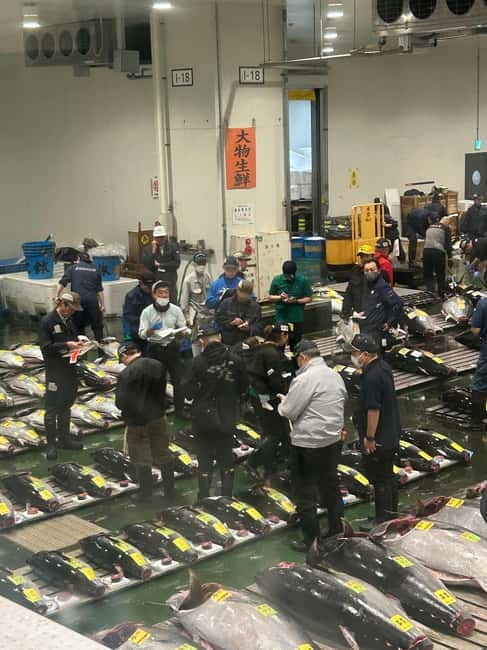
Toyosu’s tuna auction is Tokyo at its most focused: buyers inspect bluefin, auctioneers call prices, and quick hand signals move fish worth huge sums. You’ll be inside the market before sunrise, watching a working trade rather than a staged show. Rabia and Ami add useful context, and several tour plans offer a closer look at wholesalers handling the fish.
I like the katsuobushi shaving and tasting because it gives you something to do, not just something to watch. I also like the reserved breakfast option, especially at Sushi Dai, since it can spare you the famous pre-dawn queue. The main catch is important: breakfast is not included in the $141 price. You pay for the meal, while the tour arranges the reservation.
In This Review
- Key points to know before booking
- Why Toyosu before sunrise is worth the effort
- Choosing the gallery or the ground-level deck
- Meeting wholesalers and seeing tuna handled
- Shaving katsuobushi and comparing maguro-bushi
- Breakfast at Bentomi or Sushi Dai
- What the guides add to the morning
- Is $141 a fair price?
- Who will enjoy this Toyosu experience most
- Should you book it?
- FAQ
- What time does the tour start?
- Where is the meeting point?
- Is breakfast included in the $141 price?
- Can I choose between Sushi Dai and Bentomi?
- What is the difference between the viewing options?
- Is the tour available in English?
Key points to know before booking
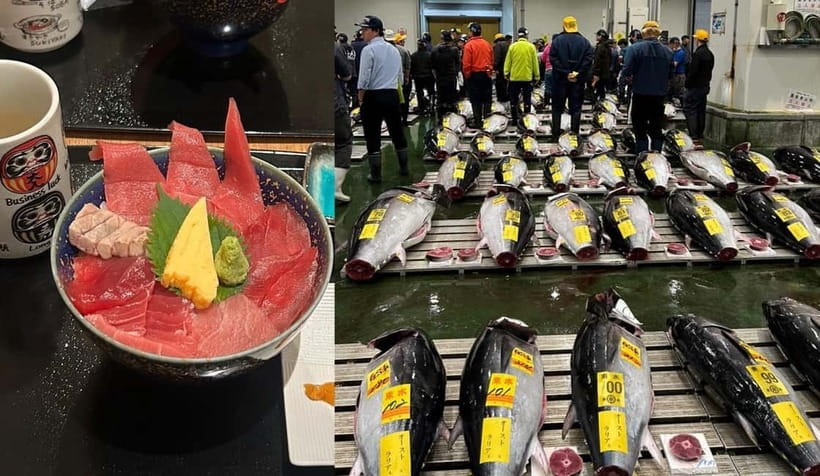
- The auction begins around 5:25 AM: Plan your route and arrival carefully, especially for the VIP option.
- The ground-level deck is limited to four people: It puts you close to the action but should be requested about two months ahead through Instagram.
- The third-floor gallery is the easier choice: You get a broad view of the hall and explanations from the guide.
- Sushi Dai and Bentomi are separate meal costs: The reservation is arranged, but the food bill is yours.
- The bonito lesson is a real hands-on extra: You shave katsuobushi, compare it with rarer maguro-bushi, and taste the difference.
- The market visit goes beyond tuna: You might see ceramics, restaurant equipment, wholesalers, tea, and fish preparation.
Why Toyosu before sunrise is worth the effort
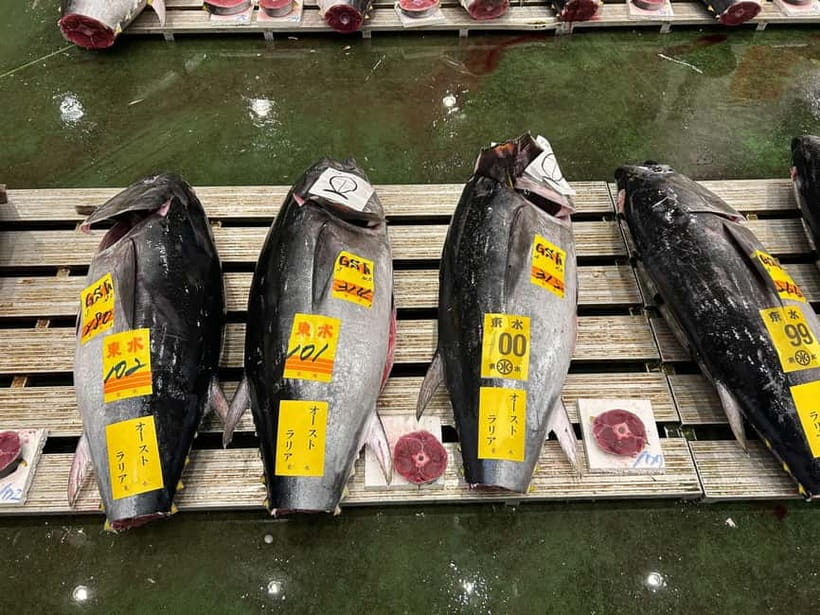
Toyosu Market is not an old-fashioned fish market tucked into a tiny street. It is a large, modern seafood center, and the auction is one part of a much bigger system that feeds Tokyo’s sushi counters and restaurants.
The early start matters. You meet at about 5:25 AM, when public transportation may not yet be available for the VIP plan. That means you need to check the route in advance and allow extra time. For the ground-level option, plan on arriving by taxi or on foot if needed. The standard gallery option is more forgiving, but you still do not want to arrive late and miss the opening action.
Once inside, your guide helps turn a room full of fish, movement, and shouted calls into a readable scene. Buyers inspect tuna for size, color, fat, freshness, and other signs of quality. The auctioneer uses calls and gestures, while buyers answer with hand signals known as te-jirushi. A short lesson makes those signals easier to follow.
I like this part because the value is not only visual. You begin to understand how a fish moves from the sea to a wholesaler, then to a sushi chef, and finally to your plate. The guide can also explain the difference between fresh and frozen tuna and why the highest-value fish attract such careful inspection.
Other Tokyo days people book alongside this one:
- Mt Fuji and Hakone 1-Day Bus Tour Return by Bullet Train
★ 5.0 · 26,383 reviews - 1-Day Tokyo Bus Tour
★ 5.0 · 14,250 reviews - Tokyo: TOKYO SKYTREE® Admission ticket
★ 4.5 · 11,192 reviews
Choosing the gallery or the ground-level deck
You have two main ways to watch the tuna auction, and they create different experiences.
The third-floor gallery offers a wide view over the auction hall. You can see the scale of the operation and watch several buyers and sellers at once. The distance means you will not get the same close-up view of fish preparation or hand signals, but it is a comfortable choice for a first visit and for anyone who prefers a clear overview.
Your guide stays with you and explains what is happening below. The auctioneers’ calls and the quick gestures can look mysterious at first, so having someone interpret the rhythm makes a real difference. From the gallery, you are watching the whole machine at work.
The ground-level deck is the special option. It holds no more than four people and places you only a few meters from the bidding activity. That closer position lets you feel the speed of the auction and see the buyers working at close range. On the right morning, you might also see the fresh tuna auction, though that is not guaranteed.
This option needs planning. You are advised to contact Yummy Guide through Instagram at @yummyguidejapan about two months ahead. Availability is limited, and the VIP plan requires an especially early arrival. If being close to the tuna is the main reason you are booking, do not assume this spot will be available automatically.
The gallery is the sensible fallback. It still gives you the central experience, and one of the strongest features of the tour is the explanation, not just the distance from the fish.
Meeting wholesalers and seeing tuna handled
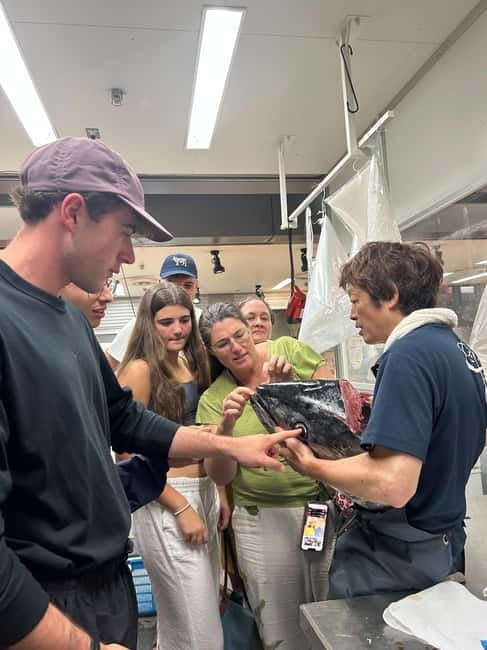
The most personal part of the morning may come after the auction, when the guide connects you with seafood vendors and wholesalers. This is where the tour can move beyond observation.
You might see a wholesaler prepare a tuna for sale, learn how the fish is handled, and sample high-quality sashimi. Several guests found this closer contact more memorable than simply looking down from the gallery. It also gives you a chance to ask questions about fishing, grading, and the route from auction to restaurant.
The exact vendor interaction may depend on the morning and the guide’s market connections. Rabia is repeatedly praised for her relationships with sellers and for introducing people to parts of Toyosu that are easy to miss on your own. She has also helped visitors look around at ceramics and restaurant equipment, which shows how much of the market’s interest lies outside the tuna hall.
One point to keep in mind: the advertised tour is mainly about the auction, the tasting, and breakfast. You may have some free time in the market rather than a fully guided walk through every section. If you want a detailed explanation of every stall and product, ask your guide questions as you go.
Shaving katsuobushi and comparing maguro-bushi
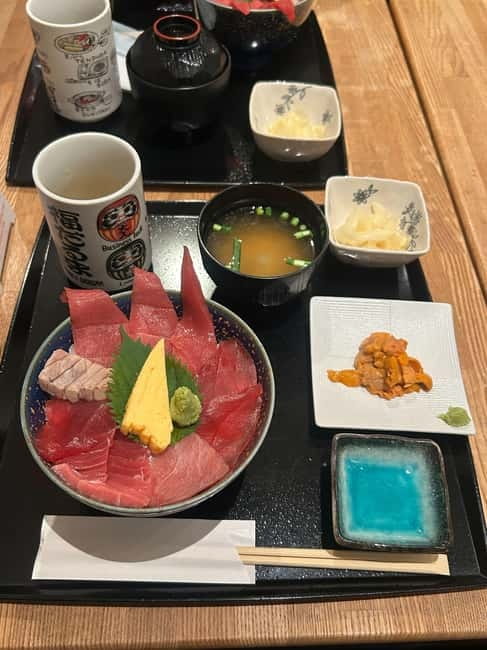
The katsuobushi session is a small but memorable change of pace. You get to shave real dried bonito, a basic Japanese ingredient used in dashi and many other dishes. The motion is simple but hands-on, and it gives you a better sense of how much care can sit behind a humble bowl of soup.
You then compare ordinary katsuobushi with maguro-bushi, made from tuna. The rarer tuna flakes offer a useful tasting comparison. This is not just a snack stop. It connects the seafood trade to the flavors you will taste throughout Japan, especially in broth, miso soup, and traditional cooking.
A special miso soup cup is included as a souvenir. The guide also offers photo time with Okami-san, using your own phone or camera. These are modest extras, but they help break up the early morning and give you a physical reminder of the market visit.
Same city, a completely different kind of day:
- Tokyo: teamLab Planets TOKYO Digital Art Museum Entry Ticket
★ 4.6 · 9,779 reviews - Mt Fuji & Hakone Cruise, Drum Show Bullet Train 1 Day from Tokyo
★ 4.0 · 7,413 reviews - Tokyo: Shinjuku Food Tour (13 Dishes at 4 Local Eateries)
★ 5.0 · 6,603 reviews - Tokyo Mt Fuji 5th St & Hakone Cruise Bus Tour w/Bullet Train
★ 4.4 · 5,024 reviews
Breakfast at Bentomi or Sushi Dai
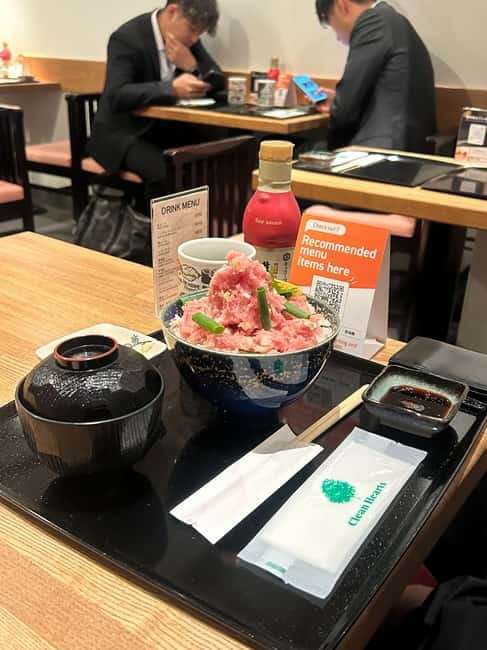
After the auction, you choose between two seafood breakfast plans, subject to the option you book.
Bentomi is a long-time favorite among seafood professionals. The meal centers on fresh tuna bowls, called kaisendon, and other dishes made with ingredients from that morning’s market. This is a good choice if you want a generous seafood meal and the direct taste of market-fresh ingredients.
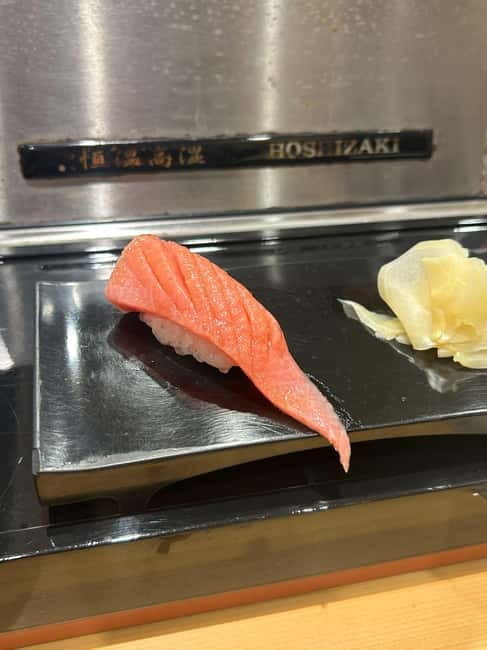
Sushi Dai is the more celebrated option. It is a well-known sushi counter listed in the Michelin Guide, with a refined omakase breakfast built around seasonal fish. The meal can be excellent, but seating is very limited and available only with selected tour plans.
The practical benefit is the reservation. Sushi Dai is famous enough to draw a long queue, and the tour can arrange your place without requiring you to spend hours lining up in the dark. One guest specifically appreciated getting the meal without the 4 AM queue, while another called the omakase the highlight of the morning.
Now for the detail that deserves bold print: the meal fee is not included. The $141 covers the tour services, auction viewing, guide, tasting, reservation arrangement, and listed extras. You still pay the restaurant directly or according to the booking instructions. Read the selected plan carefully so you know which breakfast venue is available and what you will pay for the food.
If you are comparing this with a cheaper market visit, the reservation service and personal guiding are where much of the extra value lies. If you only want to see the auction from the public gallery and eat wherever you find a seat, this tour may feel expensive.
What the guides add to the morning
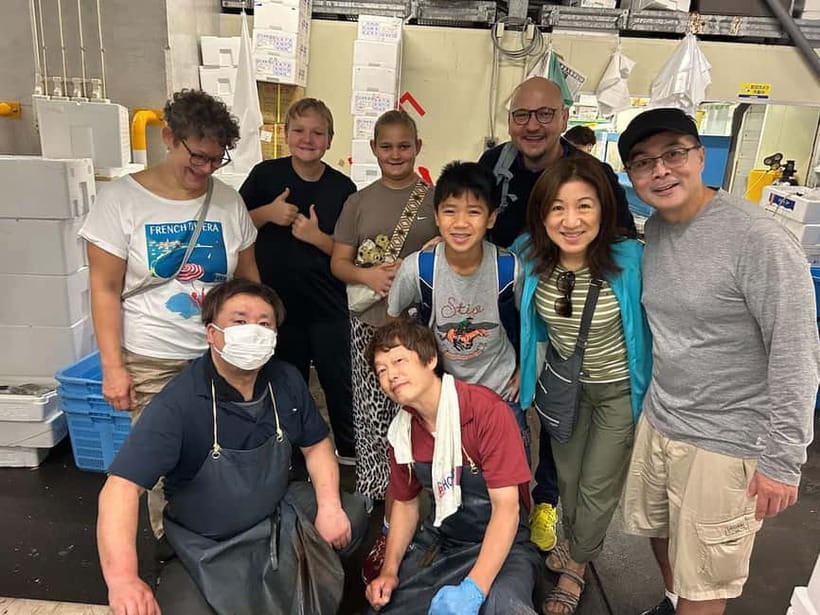
Rabia is the guide most often identified by name, and her role goes well beyond pointing toward the auction hall. She explains the market, answers questions about tuna and fishing, and uses personal connections with vendors to make the visit more direct.
Ami also guides the experience and has helped arrange Sushi Dai reservations. Together, the guides bring a friendly, conversational tone to a morning that could otherwise feel hard to understand.
The strongest praise centers on their communication, market relationships, and passion for the subject. Rabia has also offered useful Tokyo advice beyond the tour itself. That matters because Toyosu can be confusing at this hour, and clear guidance is valuable when signs and meeting directions are not always obvious.
One practical warning: the pickup area is inside Toyosu Market at PR Square, but the meeting point can vary by option. Directions have been described as unclear, so confirm the exact spot and arrive early. Do not count on finding the group at the last minute.
Is $141 a fair price?
At $141 per person, this is not a bargain breakfast excursion. The restaurant bill is extra, transportation is extra, and the standard gallery is open to a wider public audience. You are paying for access, interpretation, a small-group or private format option, market introductions, and the breakfast reservation.
The value improves if you want Sushi Dai. Avoiding the long queue can save a great deal of vacation time, and a reserved omakase after the auction creates a smooth morning. The value also improves if you secure the ground-level deck or enjoy meeting wholesalers rather than simply watching from above.
The price is harder to justify if you are mainly interested in a quick look at the auction. In that case, the third-floor gallery and a self-arranged meal may meet your needs for less. You should also remember that the experience lasts 150 minutes, so it is not a full-day market tour.
For many people, the best comparison is not the tour price against a free viewing area. It is the price against the cost of arranging the same early arrival, finding the right entrance, understanding the auction, locating a wholesaler, and securing Sushi Dai on your own. If those details sound stressful, the guide’s help has real value.
Who will enjoy this Toyosu experience most
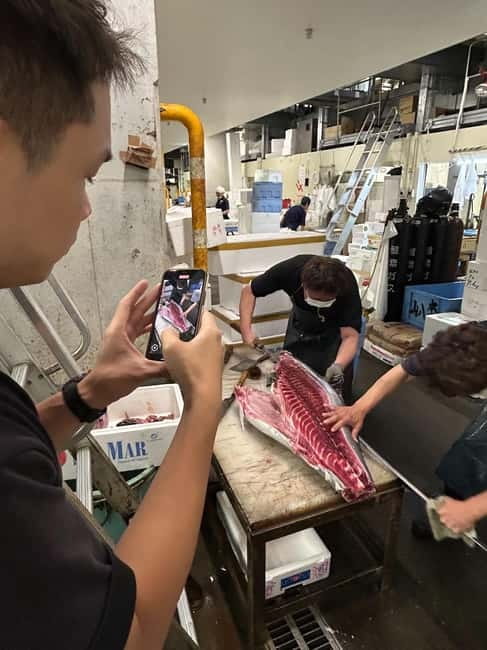
I would choose this tour if you care about how Japanese food reaches the table, not just how it looks on a sushi plate. It suits first-time Tokyo visitors who want an early morning activity with a clear focus and food lovers who want a better understanding of tuna grading, auction practice, and market work.
It is also a strong match for people who want Sushi Dai but do not want to gamble on the queue. Families and small private groups may appreciate the private option, although children and group details should be confirmed before booking.
You need comfortable shoes, comfortable clothes, a camera, and cash. The tour is not suitable for wheelchair users or vegetarians. The early start is the biggest test. If you are not willing to arrange a very early taxi, walk, or carefully timed arrival, skip the VIP plan and consider the standard gallery option instead.
Free cancellation is available up to 24 hours before the experience, and you can reserve now and pay later. That helps if your Tokyo schedule is still shifting, but it does not solve the early morning transport problem.
Should you book it?
Book this Toyosu tour if you want a guided look at the tuna trade, a chance to see fish preparation close up, and a serious seafood breakfast with the reservation handled for you. The katsuobushi activity, maguro-bushi comparison, wholesaler connections, and explanations from Rabia or Ami give it more substance than a quick photo stop.
I would especially recommend it to sushi fans, curious cooks, and anyone who values access to working market areas. Choose the gallery if you want a simpler plan. Ask about the ground-level deck well ahead if proximity is your priority.
Skip it if the extra $141 feels high before paying for breakfast, or if you only want a brief view of the auction. Also skip it if a 5:25 AM start would make the rest of your day miserable. For the right person, though, Toyosu offers a rare look at the craft, judgment, and hard work behind Tokyo’s famous seafood.
FAQ
What time does the tour start?
The tour starts early, at about 5:25 AM. You should arrive on time, especially if you are booking the VIP ground-level option.
Where is the meeting point?
The meeting point is at PR Square inside Toyosu Market, although it may vary depending on the option you book.
Is breakfast included in the $141 price?
No. The tour includes a reservation at Sushi Dai or Bentomi, but the meal fee is not included.
Can I choose between Sushi Dai and Bentomi?
The experience offers Sushi Dai or Bentomi breakfast options, but Sushi Dai seating is extremely limited and available only with selected tour plans.
What is the difference between the viewing options?
The ground-level deck accommodates a maximum of four people and places you close to the auction. The third-floor gallery offers a broader view from above and is an open-group option.
Is the tour available in English?
Yes. Live guiding is available in English and Japanese.
Just added around Tokyo
- Private Memorable Tokyo Tour with English Speaking Driver★ 5.0 · 30 reviews
- Private Tokyo Custom Full-Day Tour by Chartered Vehicle★ 5.0 · 16 reviews
- Private Sightseeing to Mt Fuji and Hakone with English Driver★ 5.0 · 51 reviews
- Tokyo Photography Masterclass – Private Photography Lesson★ 5.0 · 25 reviews
- Private Mt. Fuji Day Trip from Tokyo with English-Speaking Driver★ 5.0 · 33 reviews
- 4 Day Tour – Mount. Fuji, Tokyo, Hakone, Kamakura and Yokohama★ 5.0 · 19 reviews
- Private Unforgettable Mt Fuji Tour with English Speaking Driver★ 5.0 · 142 reviews
- Private Tokyo Food Tour – A Journey Through Time Through Food★ 5.0 · 36 reviews
Tokyo Tours, compared.
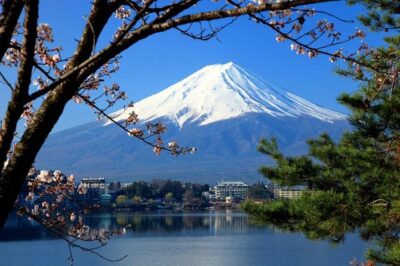
Mt Fuji and Hakone 1-Day Bus Tour Return by Bullet Train
Read our review →
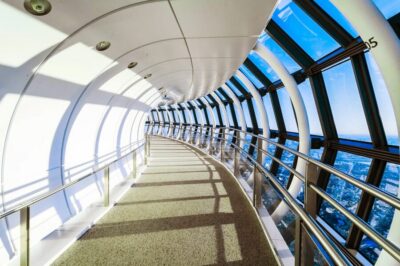

teamLab Planets TOKYO Digital Art Museum Entry Ticket
Read our review →
Mt Fuji & Hakone Cruise, Drum Show Bullet Train 1 Day from Tokyo
Read our review →
Shinjuku Food Tour (13 Dishes at 4 Local Eateries)
Read our review →
Tokyo Mt Fuji 5th St & Hakone Cruise Bus Tour w/Bullet Train
Read our review →