REVIEW · TOKYO TOURS
Tokyo: Origami Fun for Families & Beginners in Asakusa
Asakusa is known for temples, old streets, and crowds, but this 45-minute origami session offers a quieter way to spend part of your visit. You choose your own paper, pick a model from more than 100 designs, and work at your own pace with tablet guidance rather than sitting through a long formal class.
I like the freedom to make several different models, and I like the small groups, limited to six people. The staff can step in when your folds go wrong, yet you are not tied to a teacher-led lesson. The main drawback is the short time: 45 minutes is enough for several simple figures, but ambitious folders may wish for longer.
In This Review
- Key points to know
- A calm craft break in central Asakusa
- Choosing your design from more than 100 models
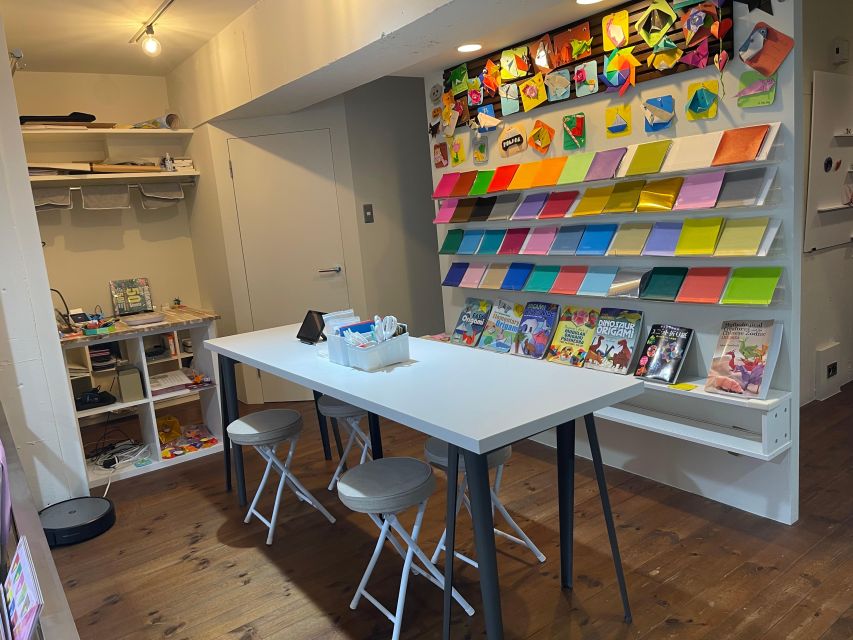
- Picking paper from the 50-color wall
- Following the tablet instructions at your own pace
- Decorating your finished origami
- Why the 45-minute schedule matters
- Is $27 a fair price?
- Who will enjoy this most?
- Fitting the studio into an Asakusa day
- Should you book this origami session?
- FAQ
- How long does the origami activity last?
- How much does the experience cost?
- How many origami models can I make?
- How many designs are available?
- How many paper colors can I choose from?
- Is the activity suitable for beginners?
- Are children allowed to participate alone?
- Do I need to bring anything?
- Is the studio wheelchair accessible?
- What languages are available?
Key points to know
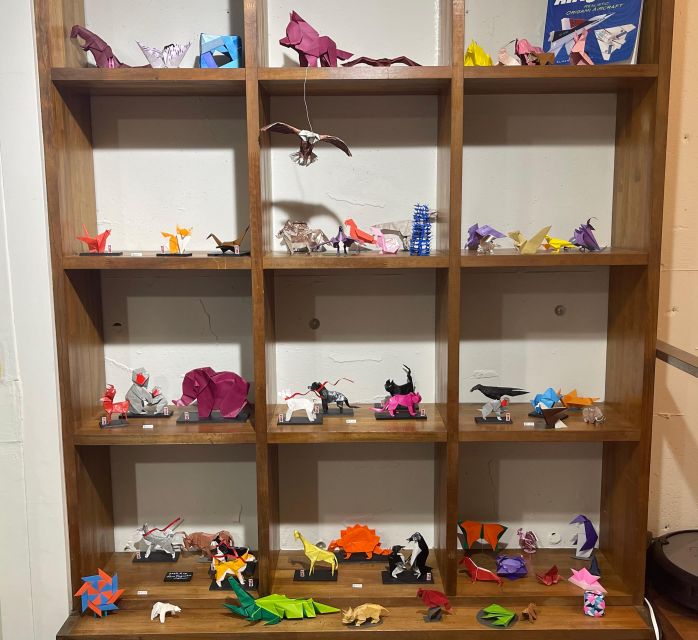
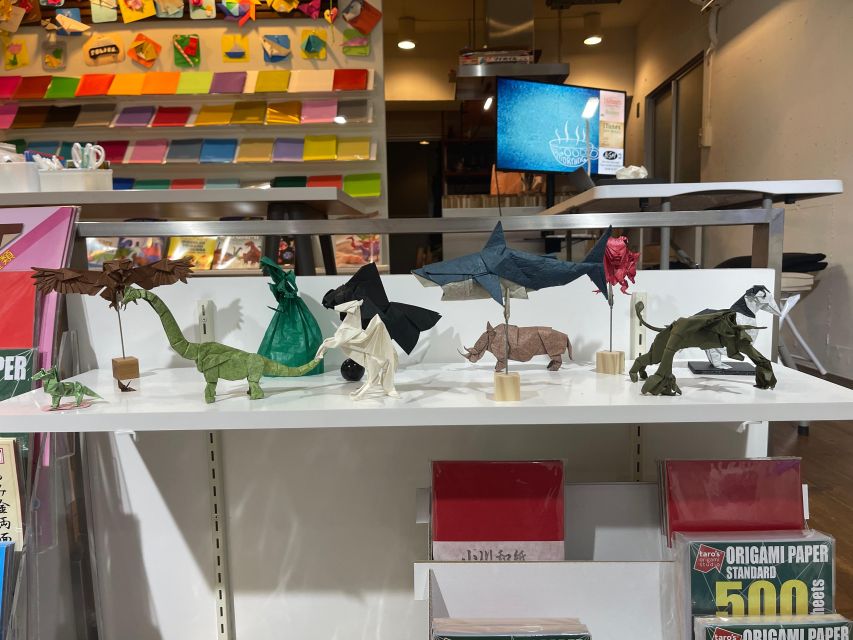
- More than 100 models: Choose animals, flowers, vehicles, and other designs from beginner to intermediate level.
- 50 paper colors: Pick sheets to match the model, then add stickers, stamps, or marker details.
- Tablet-guided format: You can pause, replay, or return to earlier folding steps whenever you need.
- Small groups: Sessions are limited to six participants, allowing staff to offer personal help.
- Bring socks: Shoes come off for the studio, and socks are required for participation.
- Simple but important limits: Children under 13 need adult supervision, and the studio has stairs only.
A calm craft break in central Asakusa
The appeal here is simple. You sit down with a square sheet of paper and turn it into something recognizable with your own hands. That makes a pleasant change from rushing between Tokyo sights, especially if you are visiting Asakusa with children.
The studio is on the main street side of its building. If you approach from the nearby park, you will be at the back and cannot enter there. Look for the company sign on the front and the brown sea turtle attached to the wall below the window. That small landmark matters because the back entrance is not the correct way in.
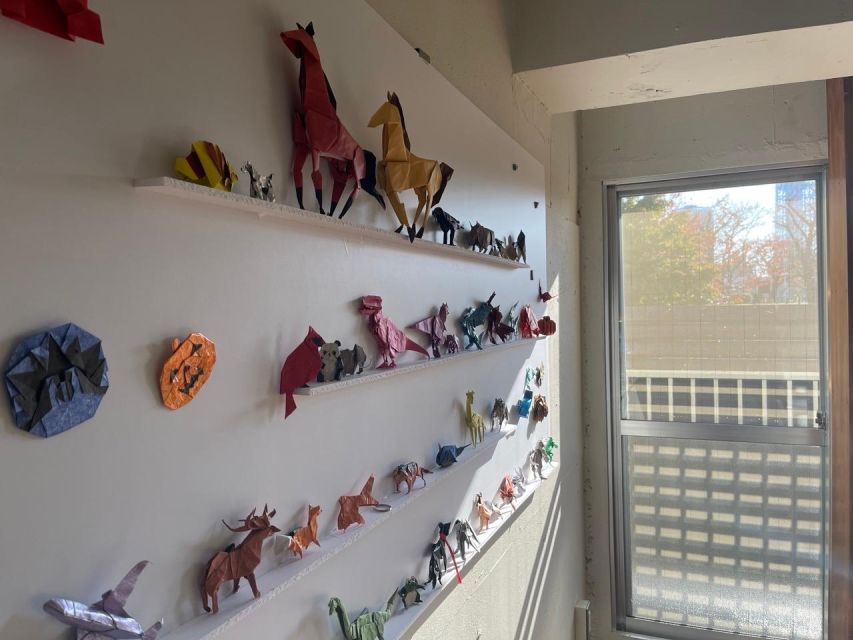
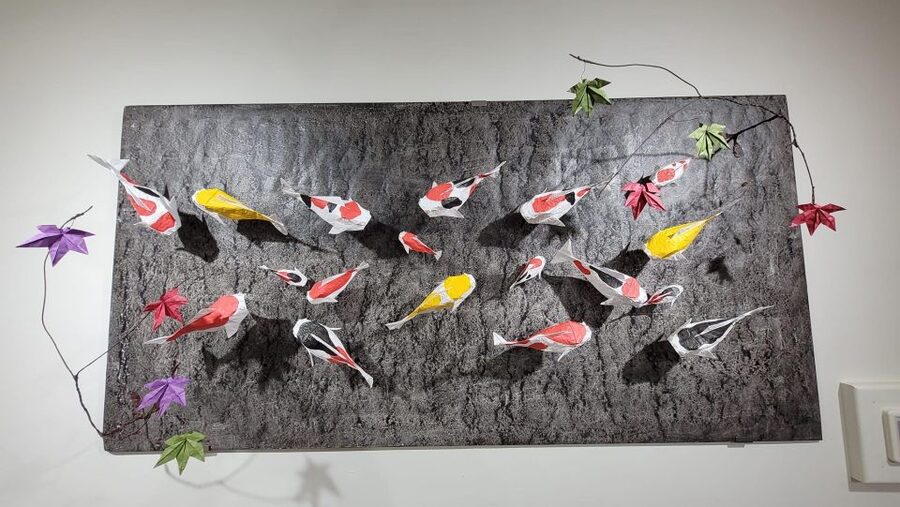
Once inside, you can look at origami displays before or after your session. The setting is intended to feel relaxed and attractive, giving you a place to concentrate on the folds instead of working at a busy café table or hotel room.
You should plan on removing your shoes, so bring socks. Socks are required, and you can purchase a pair beforehand if needed. The seating has no back support, another practical detail worth knowing if you have trouble sitting comfortably for a period of time.
Other Tokyo days people book alongside this one:
- Mt Fuji and Hakone 1-Day Bus Tour Return by Bullet Train
★ 5.0 · 26,383 reviews - 1-Day Tokyo Bus Tour
★ 5.0 · 14,250 reviews - Tokyo: TOKYO SKYTREE® Admission ticket
★ 4.5 · 11,192 reviews
Choosing your design from more than 100 models
The activity begins at a PC tablet with a touchscreen menu. You browse the available categories and select the model you want to try. The range goes from basic shapes for first-time folders to intermediate designs that require more careful creasing.
That choice gives the session a useful sense of control. A young child can begin with a manageable animal, while an adult or experienced folder can try a more involved flower or vehicle. You are not forced to make the same object as everyone else.
The large selection also lets you match the activity to your mood. If your first figure turns out well, you can return to the menu and start another. If a model proves too difficult, you can switch to something simpler without wasting the entire session.
The instructions take you from a flat square sheet to the finished form. You can replay a stage or return to an earlier step, which helps when a crease is slightly off. That is important because origami instructions can become confusing after one missed fold, especially for children.
The format is best described as independent folding with staff support. You are not attending a continuous, teacher-led demonstration. Instead, the tablet carries the main instruction while a staff member keeps an eye on progress and helps when necessary.
Picking paper from the 50-color wall
After choosing a model, you head to the paper wall. There are 50 colors to choose from, so paper selection becomes part of the activity rather than a quick technical step.
I like this because color can change the personality of the finished piece. A flower, animal, or vehicle can look playful, bold, soft, or simple depending on the sheet you choose. The instructions encourage you to think about the design before picking the paper, which is good advice for children who may otherwise grab the first color they see.
You may take more than one sheet during the 45 minutes and fold as many models as time allows. The exact number depends on the difficulty and on how quickly you work. A family group that includes a seven-year-old, an adult, and an older relative managed about four items per person during the allotted period, which gives you a useful idea of the pace for beginners.
Do not expect every model to be finished quickly. Simple designs may leave time for several attempts, while an intermediate figure can use much of the session. If you have a particular model in mind, start with it rather than spending too long comparing colors.
Following the tablet instructions at your own pace
When you return to your table, press the Play button to begin. The tablet guides you through each stage. You can pause, replay, and move back to earlier instructions, so you are not penalized for working slowly.
This setup works well for families because each person can follow a different model. A child can repeat a step several times while an adult continues, then ask for help when needed. It also suits solo beginners who prefer trying first before asking someone to take over.
The staff members are present to assist with the folding. They do not provide a full private lesson, so you should arrive ready to work from the screen. Help is available when a crease, flap, or turn becomes unclear, but the pleasure of the activity comes from making the object yourself.
One session included personal instruction from David, who folded several figures and explained the basics of origami. That kind of individual attention may be possible when the group is small and the staff member has time, but the activity is still designed around the tablet rather than guaranteed one-to-one teaching.
The staff approach is fairly hands-off. You can focus without someone correcting every movement, yet assistance is close by. That balance suits many beginners, though anyone looking for a structured origami course should choose a formal teacher-led class instead.
Same city, a completely different kind of day:
- Tokyo: teamLab Planets TOKYO Digital Art Museum Entry Ticket
★ 4.6 · 9,779 reviews - Mt Fuji & Hakone Cruise, Drum Show Bullet Train 1 Day from Tokyo
★ 4.0 · 7,413 reviews - Tokyo: Shinjuku Food Tour (13 Dishes at 4 Local Eateries)
★ 5.0 · 6,603 reviews - Tokyo Mt Fuji 5th St & Hakone Cruise Bus Tour w/Bullet Train
★ 4.4 · 5,024 reviews
Decorating your finished origami
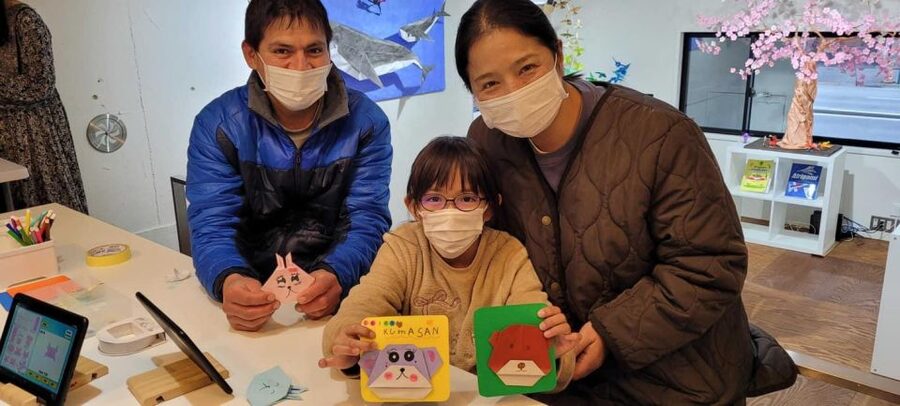
Once you have folded your models, you can personalize them with stickers, stamps, and markers. This step is especially useful for children, since it gives them a creative task after the more exact folding work is done.
You can also take photos during the session and after you finish. The origami displays provide an attractive backdrop and may give you ideas for another model. If you like something on display, purchases are available, though food and drinks are not included.
Decoration changes the tone of the activity. Folding requires patience and attention to detail, while stickers and markers let you make quick choices without worrying about perfect creases. For a mixed-age group, that means younger participants can stay involved even if they need help with the harder folds.
The finished objects are also easy to keep as small travel souvenirs. Unlike a mass-produced Tokyo trinket, they show what you selected, folded, and decorated during your time in Asakusa.
Why the 45-minute schedule matters
The short schedule is both a strength and a limitation. Forty-five minutes fits neatly into a day of sightseeing. You can place the activity between Asakusa stops without giving up half a day, and children are less likely to lose interest before it ends.
At the same time, the clock moves quickly. You need time to choose a model, select paper, follow the instructions, ask for help, and decorate. If you spend the first part browsing all 100-plus options, you may have less time for folding.
I would choose one appealing model right away, especially if you are new to origami. After completing it, you can use the remaining time for simpler designs. Families should also allow for different working speeds. One person may finish several pieces while another is still working through the first set of folds.
The session feels most rewarding when you treat it as a short creative break, not as a chance to master origami. You can learn the basic logic of folding and leave with several handmade pieces, but you will not cover a large number of techniques in one visit.
Is $27 a fair price?
At $27 per person, the value depends on what you want from the stop. The fee includes the paper, other supplies, instruction through the tablet system, and taxes and fees. You do not need to bring your own craft materials.
For a family, the cost pays for a prepared indoor activity in a central sightseeing area, with a choice of models and staff assistance. That is useful on a rainy day or when children need a break from temples and walking. The small group size also means you are not entering a large workshop with dozens of participants.
The price is less attractive if you expect a personal masterclass. This is not a private lesson, and the staff do not lead every fold from start to finish. You are paying for access to the studio, materials, a broad model library, and help when you need it.
I see the best value for first-time folders, families, and anyone who wants a hands-on Tokyo activity rather than another sightseeing stop. If you already fold origami confidently, the 100-plus model selection may still interest you, but the 45-minute limit could feel restrictive.
Who will enjoy this most?
I would recommend this for families with children around four or older, beginners, and adults who want a low-pressure introduction to origami. The activity allows everyone to choose a different level, so a family does not have to work through one shared design.
Children under 13 must have adult supervision throughout. Children under five who cannot fold independently need an adult beside them for the full activity, and the experience is not suitable for children under four.
The session can also work well for a multi-generation group. One review described a seven-year-old, a parent, and a grandmother making several pieces each, which shows how the format can bring different ages to the same table.
You should look elsewhere if you want a serious lesson with a dedicated instructor, back support, step-free access, or a long workshop. The studio has stairs only, no ramps or lifts, and seating without back support. People with a cold should not participate.
The activity is available in English and Japanese. That makes the tablet format particularly helpful if you are not comfortable following a long spoken lesson, though staff assistance is also offered in those languages.
Fitting the studio into an Asakusa day
The location makes this easy to pair with other time in Asakusa. You can make the studio your indoor craft stop during a busy sightseeing day, then continue exploring after your session. The activity itself does not include food or drinks, so plan refreshments separately.
Give yourself enough time to find the correct entrance. The studio is on the street side of the building, not the side facing the park. The company sign and brown sea turtle are the useful visual clues.
Because the group is limited to six, the room should feel more manageable than a large attraction. That does not guarantee a private lesson, but it improves your chances of getting a staff member’s attention when a fold goes wrong.
Book ahead if your schedule is tight. You can cancel up to 24 hours before the activity for a full refund, and the reserve-now, pay-later option lets you keep your plans flexible. Starting times vary, so check availability when choosing your date.
Should you book this origami session?
Book it if you want a short, creative activity in Asakusa, especially with children or first-time folders. The 50 paper colors, broad model menu, helpful staff, and small groups make it easy to begin without preparation.
I would be cautious if you need accessible facilities, supportive seating, or a traditional instructor-led course. Also remember to bring socks and to protect enough of your 45 minutes for the model you most want to make.
For most families, the appeal is not perfect origami technique. It is the chance to slow down, make something by hand, and leave Asakusa with a few personal souvenirs. At $27, that is a reasonable trade for a well-organized break from sightseeing.
FAQ
How long does the origami activity last?
The session lasts 45 minutes.
How much does the experience cost?
The price is $27 per person.
How many origami models can I make?
You may fold as many models as you can complete during the 45-minute session. The number depends on the model’s difficulty and your pace.
How many designs are available?
You can choose from more than 100 origami models, ranging from beginner to intermediate difficulty.
How many paper colors can I choose from?
The studio offers 50 colors of origami paper.
Is the activity suitable for beginners?
Yes. The tablet instructions are designed for beginners, and staff members are available to help with models when needed.
Are children allowed to participate alone?
Children under 13 need adult supervision throughout the activity. Children under five who cannot fold independently require adult supervision as well.
Do I need to bring anything?
You must bring socks or purchase a pair beforehand. Socks are required in the studio. Food and drinks are not included.
Is the studio wheelchair accessible?
No. The facility has stairs only, with no ramps or lifts. The seating does not have back support.
What languages are available?
The activity is available in English and Japanese.
Just added around Tokyo
- Private Memorable Tokyo Tour with English Speaking Driver★ 5.0 · 30 reviews
- Tokyo Photography Masterclass – Private Photography Lesson★ 5.0 · 25 reviews
- Private Tokyo Custom Full-Day Tour by Chartered Vehicle★ 5.0 · 16 reviews
- Private Sightseeing to Mt Fuji and Hakone with English Driver★ 5.0 · 51 reviews
- Private Mt. Fuji Day Trip from Tokyo with English-Speaking Driver★ 5.0 · 33 reviews
- 4 Day Tour – Mount. Fuji, Tokyo, Hakone, Kamakura and Yokohama★ 5.0 · 19 reviews
- Private Unforgettable Mt Fuji Tour with English Speaking Driver★ 5.0 · 142 reviews
- Private Tokyo Food Tour – A Journey Through Time Through Food★ 5.0 · 36 reviews
Tokyo Tours, compared.

Mt Fuji and Hakone 1-Day Bus Tour Return by Bullet Train
Read our review →


teamLab Planets TOKYO Digital Art Museum Entry Ticket
Read our review →
Mt Fuji & Hakone Cruise, Drum Show Bullet Train 1 Day from Tokyo
Read our review →
Shinjuku Food Tour (13 Dishes at 4 Local Eateries)
Read our review →
Tokyo Mt Fuji 5th St & Hakone Cruise Bus Tour w/Bullet Train
Read our review →