REVIEW · TOKYO TOURS
Tokyo: Legendary JDM CAR Daikoku Underground Meetup
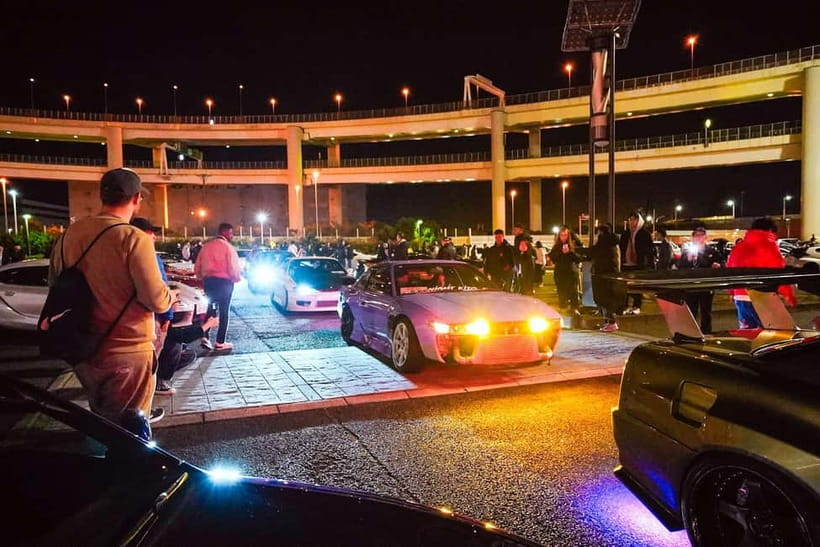
Tokyo’s Daikoku Parking Area is the main event here: a huge waterside rest stop where modified Japanese cars, supercars, luxury vehicles, and curious onlookers can gather in one noisy, memorable scene. The route also gives you Tokyo at night from the road, with Rainbow Bridge, the Bayshore Route, and Tokyo Tower folded into the same evening.
I like two things right away. First, you have a real car enthusiast such as Hana, Ryu, Jun, Jay, or Bin to explain what you’re seeing, not just a driver who points toward a parking lot. Second, A-PIT Shinonome adds substance, with tuning parts and performance gear to browse rather than only taking photos.
The main consideration is that Daikoku is not guaranteed to be packed. Police closures, rain, and road traffic can change the night, and there is no refund if bad weather means fewer cars. The tour also spends only about an hour at Daikoku, so serious photographers may wish for more time there than at the final Tokyo Tower stop.
In This Review
- Key points before you book
- Why Daikoku Parking Area is the main attraction
- The drive from Tokyo Station to the Bayshore Route
- A-PIT Shinonome, Tokyo’s car-parts playground
- Tokyo Tower gives the evening a second subject
- Picking the right vehicle option
- The guides are a major part of the value
- What the $82 price gets you
- Weather, closures, and the limits of the promise
- Who will enjoy this night most
- Should you book the Daikoku JDM tour?
- FAQ
- Where does the tour meet?
- How long does the experience last?
- Is Tokyo Tower admission included?
- Can I visit Daikoku if I choose to meet there directly?
- What happens if it rains or Daikoku is closed?
- What languages are available?
Key points before you book
- Daikoku is the highlight: Expect a public parking-area car meet, not illegal street racing or access to restricted areas.
- The night route matters: You travel through the C1 Inner Loop, across Rainbow Bridge, and along the Bayshore Route.
- A-PIT Shinonome is a useful stop: Browse Japanese car parts, tuning equipment, and performance accessories for about 30 minutes.
- Your guide shapes the evening: Guides including Hana, Ryu, Jun, Jay, Bin, and Kazu are car fans who explain cars, local customs, and Tokyo landmarks.
- Choose the vehicle carefully: Basic and sports car options are mixed-group rides, while the Toyota Alphard is the private comfort choice.
- Weather and police activity can change plans: An alternative stop may be offered, but the central experience cannot be promised in full.
Why Daikoku Parking Area is the main attraction
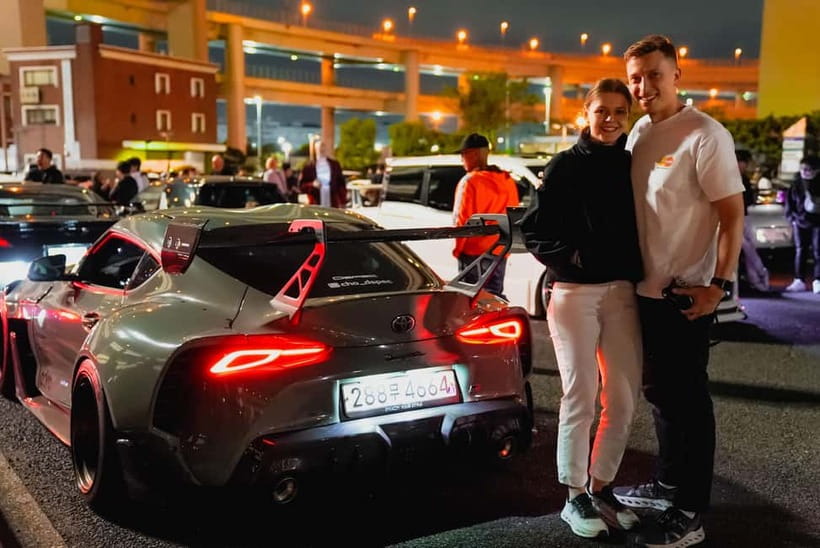
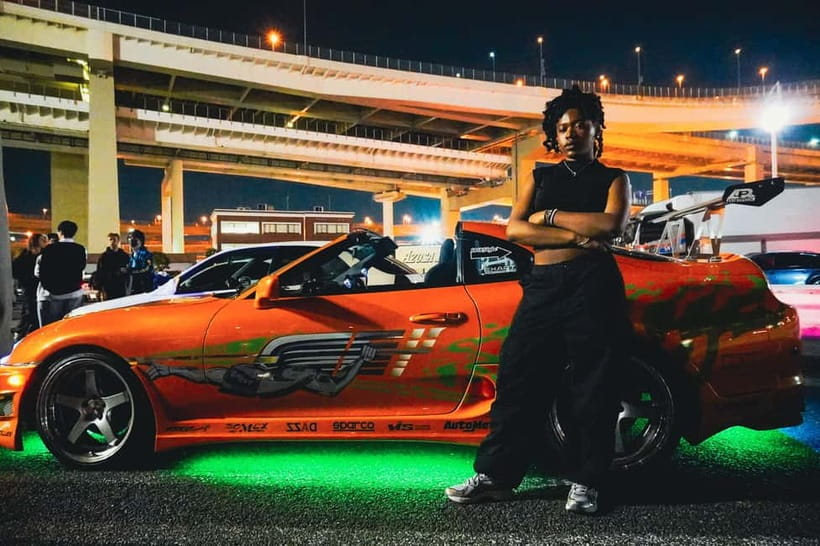
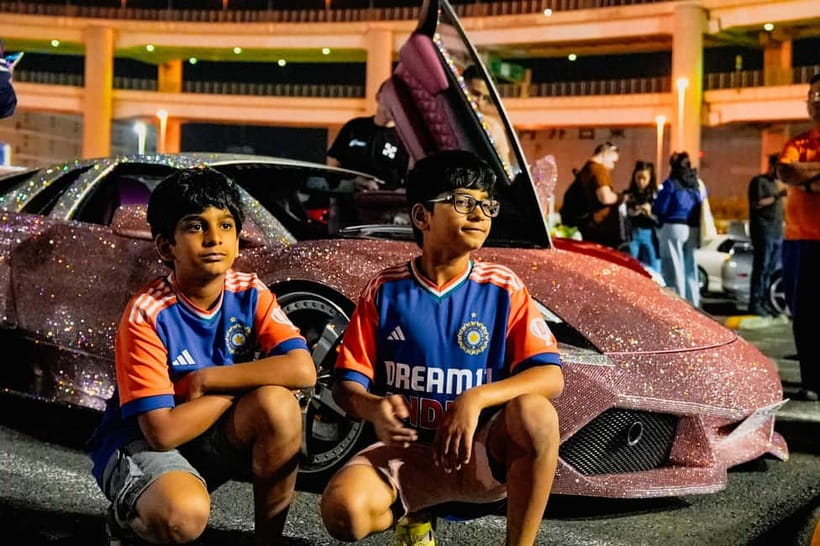
Daikoku is famous because it brings together several sides of Japanese car culture. You might see carefully built JDM cars, heavily modified sports cars, high-end European vehicles, and luxury models sharing the same broad parking area. The appeal is not simply spotting one famous car. It is watching the whole scene arrive, park, talk, take photos, and leave.
The sound is part of the show. Modified exhausts can be loud, and cars leaving the parking area may give you the thrilling roar many people associate with Tokyo’s street-car culture. That noise is exciting for enthusiasts, but it can be a lot if you prefer quiet sightseeing. This is an active meet, not a polished museum display, so the cars and atmosphere can change from one night to the next.
You receive about one hour of free time at Daikoku. That gives you room to walk around, look at details, and take photos without being attached to a guide every second. Guides can point out Japanese makes, modifications, and details that are easy to miss if you arrive without local context.
There is an important legal boundary. This experience takes you to the public Daikoku Parking Area and does not provide access to illegal street racing or restricted areas outside the parking facility. The name underground meetup refers to the local car scene and its reputation, not a promise of illegal activity.
Daikoku can also close to organized visits or become quiet because of police action. In one reported case, the guide changed the route and used other meeting points before continuing to Daikoku, Umihotaru, A-PIT, and Tokyo Tower. That flexibility is useful, but you should not book this expecting a fixed cast of cars.
Other Tokyo days people book alongside this one:
- Mt Fuji and Hakone 1-Day Bus Tour Return by Bullet Train
★ 5.0 · 26,383 reviews - 1-Day Tokyo Bus Tour
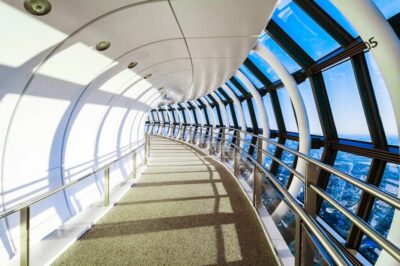
★ 5.0 · 14,250 reviews - Tokyo: TOKYO SKYTREE® Admission ticket
★ 4.5 · 11,192 reviews
The drive from Tokyo Station to the Bayshore Route
The usual meeting point is in front of the Tokyo Station Marunouchi North Exit taxi rank. Look for the yellow Epic Japan Experience or JDM TOUR TOKYO sign. Tokyo Station has several exits and large underground passages, so I would arrive early and confirm you are on the Marunouchi North side, not simply somewhere near the station.
The drive begins with Tokyo’s C1 Inner Loop, then heads toward Rainbow Bridge and the Bayshore Route. This is a good part of the experience for anyone who wants more than a parking-lot visit. You see Tokyo as a city built for movement: elevated roads, bridges, waterfront approaches, and glowing towers passing outside the window.
Rainbow Bridge is listed as a short pass-by, around five minutes, rather than a long stop. You will likely have time to take in the lights and skyline from the vehicle, but this is not a dedicated bridge photography session. The route is the attraction here.
Traffic is the variable. The advertised duration is four hours, but the finish can shift because of road conditions. Keep your evening after the tour open, especially if you have a train, restaurant booking, or show to catch. The route can be enjoyable precisely because it is a moving tour, but Tokyo traffic means the schedule should not be treated like a railway timetable.
A-PIT Shinonome, Tokyo’s car-parts playground
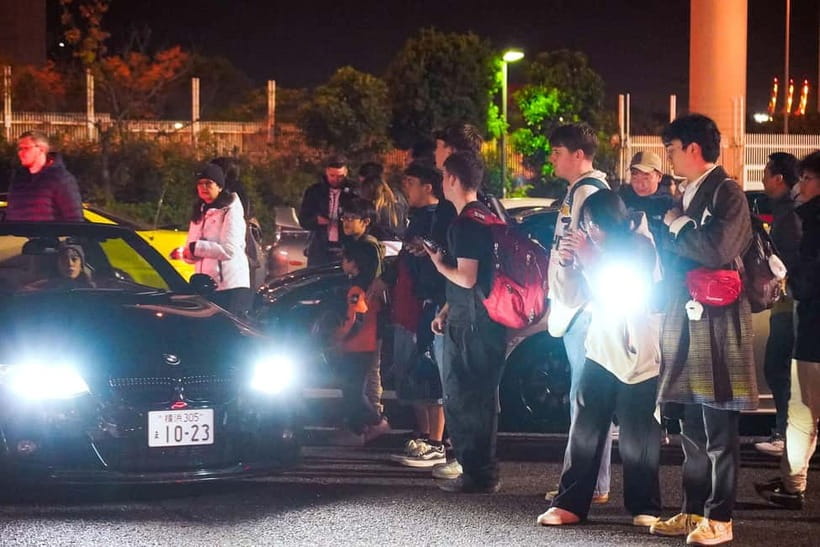
A-PIT Shinonome, also known as A-PIT Super Autobacs, is a 30-minute stop for free time and shopping. It is described as Tokyo’s largest car shop, with rows of parts, tuning equipment, accessories, and performance upgrades.
This stop gives the tour a useful change of pace. At Daikoku, you mainly look at finished cars. At A-PIT, you can see the tools and products behind the builds. Even if you do not plan to buy anything, the shop helps explain how Japanese owners personalize and improve their vehicles.
Half an hour is enough for a look around, but not enough for a slow shopping trip. If you are serious about parts, check your luggage space and customs rules before buying anything. The tour does not promise translation for every product or help with international shipping, so keep purchases simple unless you already know what you want.
I especially like this stop for people who are interested in the how of car culture. It can also work for companions who are less focused on individual models, since browsing a large Japanese automotive shop is different from standing beside a row of parked cars.
Tokyo Tower gives the evening a second subject
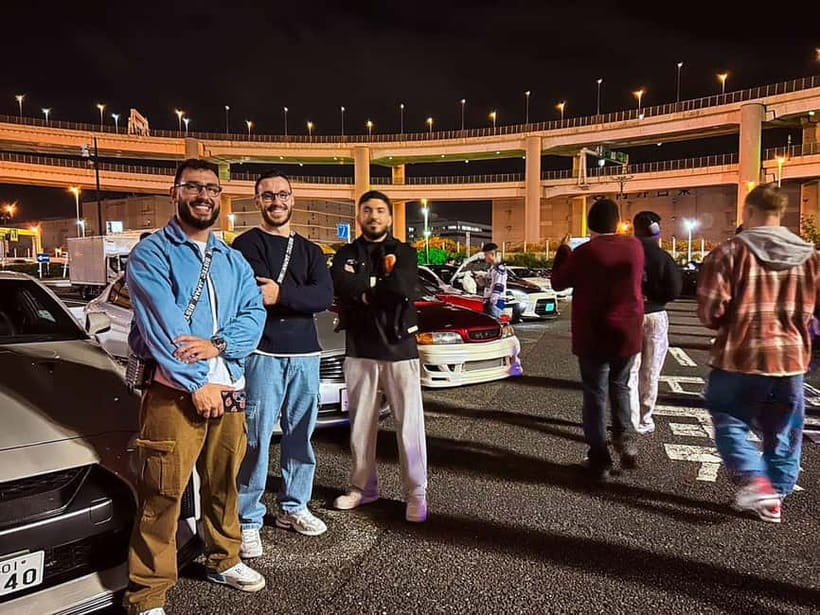
The final major stop is Tokyo Tower, where you have about 15 minutes for photos and a quick look around. The tower is lit at night and gives the outing a familiar Tokyo finish. For many people, this is the easiest place to capture a group photo or a portrait with a clear city icon behind them.
Do not confuse this with a tower observation visit. Entry to the Tokyo Tower observation deck is not included. The stop is a photo opportunity and short sightseeing break, so you should not expect time to go up, explore the deck, and return to the vehicle.
One participant specifically preferred more Daikoku time over Tokyo Tower. That is a fair criticism if your main goal is car photography. I see the balance differently for first-time visitors: Tokyo Tower makes the outing more appealing to a mixed group, while Daikoku delivers the stronger payoff for committed car fans. If you are booking for a family or a friend who only has a passing interest in JDM cars, the tower helps round out the night.
Same city, a completely different kind of day:
- Tokyo: teamLab Planets TOKYO Digital Art Museum Entry Ticket
★ 4.6 · 9,779 reviews - Mt Fuji & Hakone Cruise, Drum Show Bullet Train 1 Day from Tokyo
★ 4.0 · 7,413 reviews - Tokyo: Shinjuku Food Tour (13 Dishes at 4 Local Eateries)
★ 5.0 · 6,603 reviews - Tokyo Mt Fuji 5th St & Hakone Cruise Bus Tour w/Bullet Train
★ 4.4 · 5,024 reviews
Picking the right vehicle option
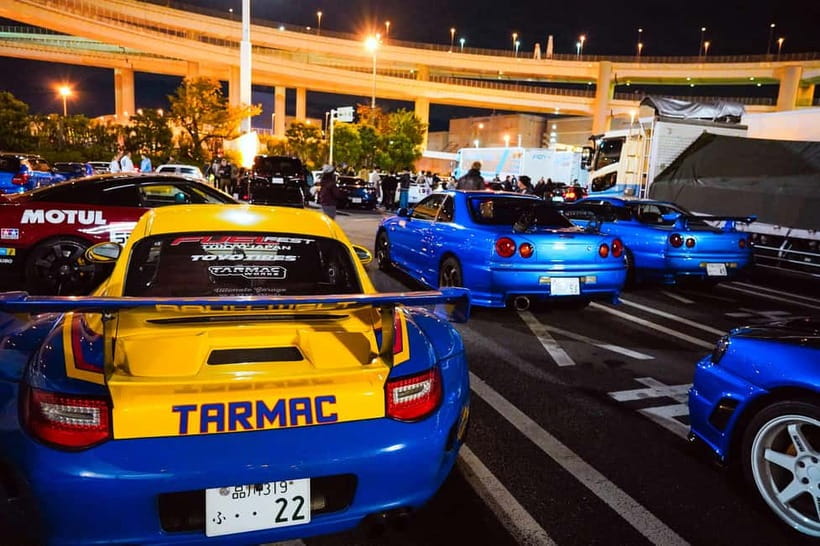
The vehicle choice affects the feel of the evening.
The Basic Car is clean and comfortable, with a mixed group rather than a private party. It is the sensible pick if you mainly want the route, the guide, and access to Daikoku without paying for a particular style of ride.
The Sports Car JDM option makes the drive itself part of the experience. Several people especially enjoyed riding as a passenger in a sports car and feeling the turbo acceleration. The exact car should not be treated as guaranteed unless confirmed when booking, but this option suits you if the ride matters almost as much as the meet.
The Toyota Alphard is the private, first-class comfort option. Choose it if you want more space and privacy, or if your group prefers a relaxed ride over a mixed-group atmosphere. The supplied details do not promise a specific performance car for the sports option, so ask about the vehicle available on your date before paying extra.
There is a legal and practical explanation behind the transport wording. The operator says it is not a transportation or taxi company, and the fee is for membership in the Epic Japan Experience community and guide service. Transportation is provided free as part of that arrangement. Pickup and drop-off must be at the same location under Japan’s road transport rules, although hotel pickup may be available in the area depending on the selected option.
You can also request to meet directly at Daikoku Parking Area. That may suit you if you have already arranged your own way there, but confirm the details in advance rather than assuming the regular Tokyo Station departure will wait.
The guides are a major part of the value
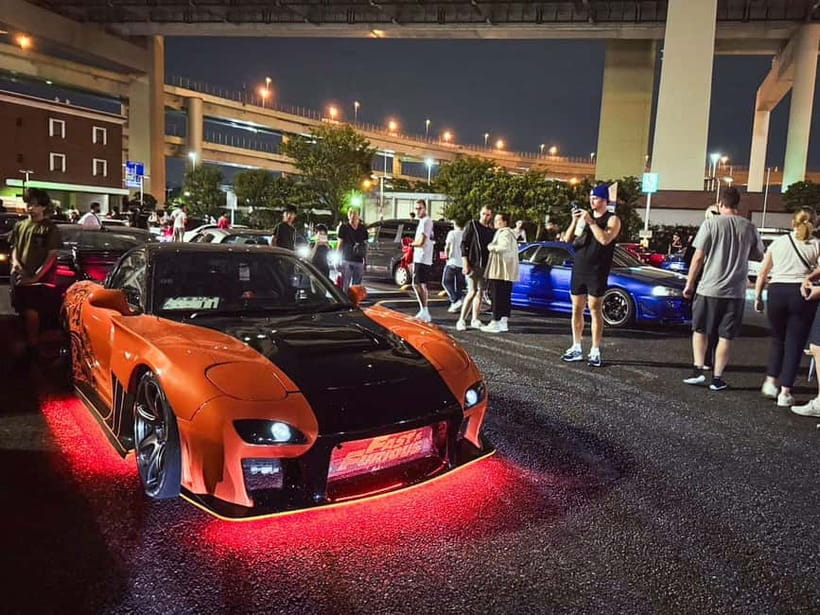
A car meet can be confusing if you do not know the models, modifications, or local etiquette. The guide turns a collection of parked cars into a story about Japanese car culture and the places along the route.
The team includes English, Japanese, and Vietnamese speakers. Individual guides named in the experience include Hana, Ryu, Jun, Jay, Bin, Kazu, Lam, and others. The strongest feedback centers on their friendliness, clear explanations, help with photos, and willingness to talk about modifications rather than simply move the group from stop to stop.
Hana is praised for her English, energy, and ability to take good photos. Ryu is described as both a good driver and a flexible guide, including on a night when police activity changed the route. Jun is a good match for people who value relaxed conversation and practical help with photos. Jay is repeatedly associated with strong car knowledge and enthusiasm for sports cars, while Bin is noted for easy conversation, cultural background, and making people feel cared for.
That range matters because the tour is not only for hardcore JDM fans. Parents, partners, and curious first-time visitors can enjoy the city drive and ask basic questions without feeling out of place. At the same time, a committed enthusiast can discuss turbo systems, modifications, and Japanese performance culture with someone who genuinely follows the subject.
The exact guide is not guaranteed, so book for the structure and local car focus rather than one named person. If language is important, select the language option carefully and confirm it before departure.
What the $82 price gets you
At $82 per person, the price is reasonable if you value access, local guidance, and the night drive as one package. A taxi or private car arranged independently to Daikoku may not solve the bigger problem: Daikoku is far from central Tokyo, and knowing where to go, when to go, and what to do if the area closes is part of the service.
You are paying for four hours, a guide, the Daikoku visit, A-PIT, the scenic route, and the Tokyo Tower stop. You also receive 5 percent discount coupons for other experiences run by the same community. Tokyo Tower observation admission is extra, and shopping at A-PIT is, naturally, your own cost.
The value drops if you only want a long session at Daikoku. One hour can feel short when cars are arriving and leaving, especially if you want careful photos. The sports car and private Alphard options may also change the cost, and the supplied price of $82 applies to the basic advertised experience, not necessarily every vehicle choice.
I would compare it with the cost and hassle of arranging a night car outing yourself. For a solo visitor or small group without local contacts, the guide and route make the fee easier to justify. For a large group with a rental car and strong knowledge of the area, the value may be less clear.
Weather, closures, and the limits of the promise
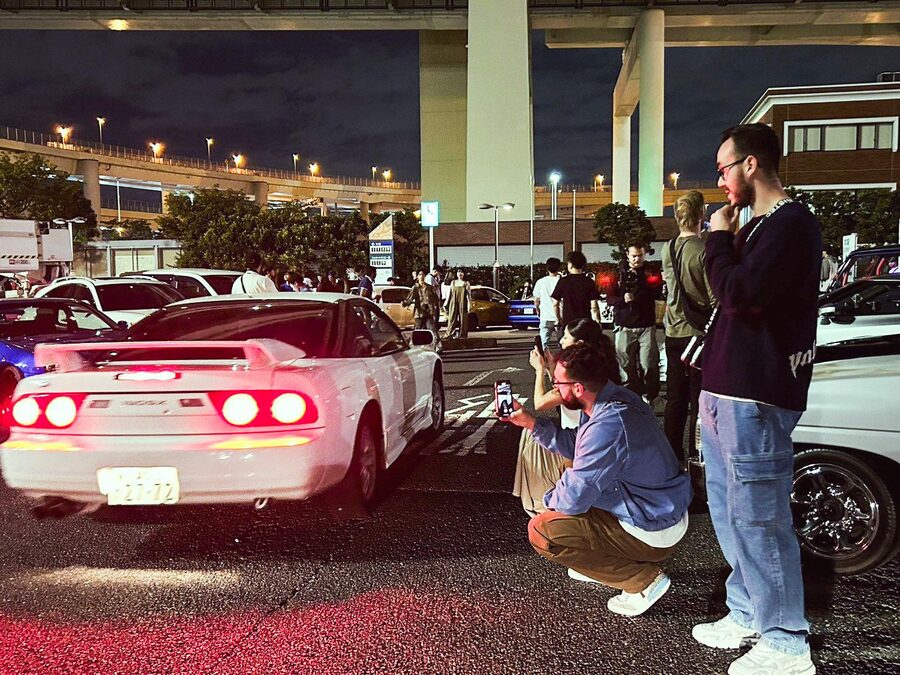
Daikoku is an active public meeting spot, not a scheduled stage show. Rain can reduce the number of cars, and police may close or restrict the area. Those conditions can lead to alternative stops, but they cannot manufacture the exact scene you hoped to photograph.
The tour does not offer a refund simply because bad weather produces a quieter meet. That policy is worth taking seriously. I would book on a night when you can accept a good city drive and car-shop visit even if Daikoku is less dramatic than expected.
Late arrivals are another firm issue. There is no refund for missing the meeting because you arrived after departure. Reach Tokyo Station early, find the correct taxi rank, and keep the yellow sign in mind. Some guides have worked hard to contact or wait for late participants, but you should not rely on that goodwill.
The end time can also vary with traffic. Do not schedule a tight connection immediately afterward. Free cancellation is available up to 24 hours in advance for a full refund, and reserve-now-pay-later booking may help if your plans are still changing.
Who will enjoy this night most
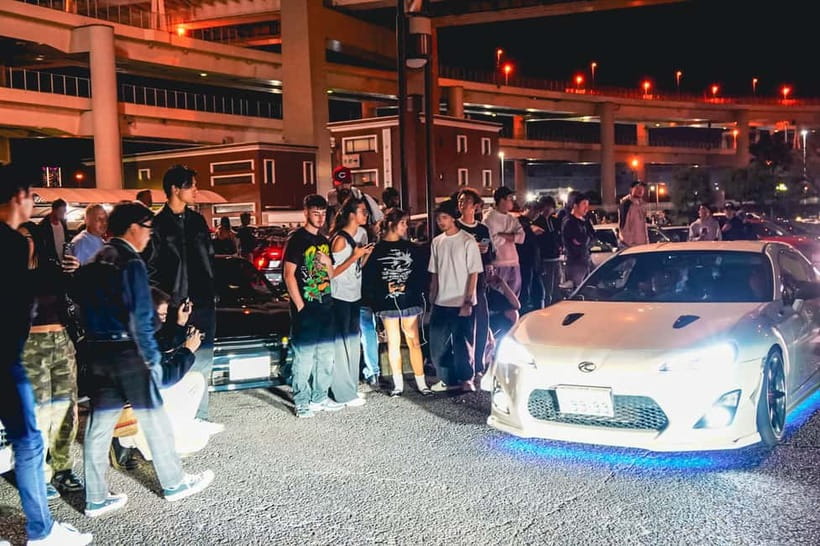
This is a strong fit for you if you enjoy Japanese performance cars, modified vehicles, engine and exhaust sounds, or the visual side of car culture. It is also a good choice if you want to see Tokyo from the road at night rather than spend the whole evening in central neighborhoods.
The experience works well for mixed groups because it includes bridges, waterfront roads, A-PIT, and Tokyo Tower. A partner who cannot name a Skyline or Supra can still enjoy the city views and the unusual setting. The guides also help keep the evening social and easygoing.
I would be more cautious if you dislike loud sounds, need a guaranteed schedule, or want a quiet sightseeing tour. I would also think twice if your only goal is to spend several hours photographing individual cars. The tour has several stops, and Daikoku receives about an hour rather than the whole four-hour block.
Should you book the Daikoku JDM tour?
I would book this if you want a guided introduction to Tokyo’s car scene with enough city sightseeing to keep the evening varied. The best parts are the chance to see Daikoku with a local car fan, the enjoyable night route, and the added context at A-PIT Shinonome.
Choose the Basic Car for value, the sports car option if the ride itself is important, and the Alphard for private comfort. Book with realistic expectations: the cars are not guaranteed, Daikoku can close, and Tokyo traffic can stretch the schedule.
For a first visit to Japan, this is a memorable way to connect a global car culture with the actual roads, shops, and meeting places around Tokyo. Just leave room for weather, police decisions, and the possibility that the final Tokyo Tower photo may be more predictable than the car meet itself.
FAQ
Where does the tour meet?
The standard meeting point is in front of the Tokyo Station Marunouchi North Exit taxi rank. The guide will hold a yellow sign reading Epic Japan Experience or JDM TOUR TOKYO.
How long does the experience last?
The advertised duration is four hours. The finish time can vary because of traffic, so leave extra time afterward.
Is Tokyo Tower admission included?
No. The Tokyo Tower stop is for photos and sightseeing. Entry to the observation deck is not included.
Can I visit Daikoku if I choose to meet there directly?
Yes, direct meeting at Daikoku Parking Area can be requested. Confirm the arrangement before the tour, since the regular meeting and drop-off rules may differ by option.
What happens if it rains or Daikoku is closed?
Bad weather may mean fewer cars, and police activity can close the area. The guide may use an alternative meeting spot or adjust the route, but refunds are not provided because rain reduces the gathering.
What languages are available?
Live guiding is available in English, Japanese, and Vietnamese. The vehicle choices include a mixed-group Basic Car, a mixed-group JDM sports car option, and a private Toyota Alphard option.
Just added around Tokyo
- Tokyo: Customizable Private Guided Walking Tour★ 4.5 · 129 reviews
- Private Harajuku Omotesando Architecture Tour★ 4.9 · 18 reviews
- Tokyo: Guided Helicopter Ride★ 4.9 · 24 reviews
- Tokyo: Guided Walking Tour of Tsukiji Market with Lunch★ 4.4 · 24 reviews
- Tokyo: Private Personalized Local Food Tour★ 4.5 · 101 reviews
- Tokyo GINZA: KONPARU Japanese Cabaret Show with Drink★ 4.8 · 38 reviews
- Tokyo: Guided Walking Tour of Tsukiji Market with Breakfast★ 4.4 · 134 reviews
- Tokyo: Gotokuji Cat Temple, Shinjuku Cat Cafe & 3D Cat Tour★ 4.9 · 38 reviews
Tokyo Tours, compared.
Mt Fuji and Hakone 1-Day Bus Tour Return by Bullet Train
Read our review →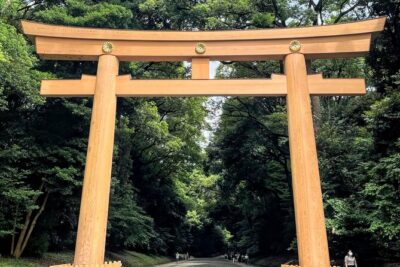
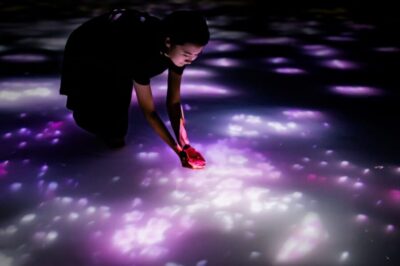
teamLab Planets TOKYO Digital Art Museum Entry Ticket
Read our review →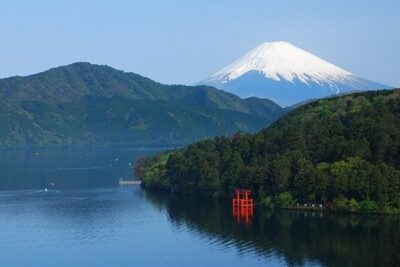
Mt Fuji & Hakone Cruise, Drum Show Bullet Train 1 Day from Tokyo
Read our review →
Shinjuku Food Tour (13 Dishes at 4 Local Eateries)
Read our review →
Tokyo Mt Fuji 5th St & Hakone Cruise Bus Tour w/Bullet Train
Read our review →