
REVIEW · TOKYO TOURS
Tokyo: Learn Traditional Origami with a Local
Origami looks simple until a few folds refuse to line up. This 90-minute class in Shinjuku gives you personal, step-by-step help from Manami Watanabe, a Tokyo native who has practiced since she was three. You choose three to five designs, then learn the stories and meanings behind what you make.
I like the choice of traditional and modern papers, since your finished pieces feel more personal than a plain souvenir. I also like the calm pace and the instructor’s patience, especially for families and first-timers. The main consideration is that experienced folders may find the available patterns too easy, and designs cannot be customized on site.
In This Review
- Key points at a glance
- Why this small craft fits a Tokyo itinerary
- Meeting Manami and choosing your designs
- The paper table is part of the fun
- Step-by-step folding, without the usual frustration
- The stories behind the crane, frog, and lotus
- The Shinjuku meeting point and what to know
- Is $58 a fair price for 90 minutes?
- Who will enjoy this most?
- Booking details that affect your decision
- Should you book the origami class?
- FAQ
- Where is the origami class held?
- Which station is closest?
- How long does the class last?
- How many origami shapes will I make?
- Is the class taught in English?
- Is this class suitable for beginners?
- Are materials included?
- Can children join the class?
Key points at a glance
- Tokyo-born instruction: Manami Watanabe has practiced origami since childhood and teaches in English.
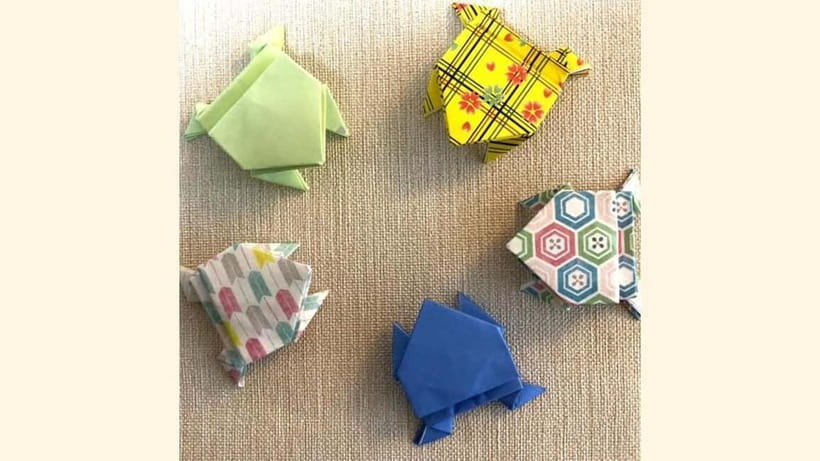
- Three to five finished pieces: Choose from beginner-friendly designs such as cranes, frogs, boxes, lotus flowers, balloons, and samurai helmets.
- Stories with every fold: Learn about the cultural meaning of shapes, including the importance of the crane in Japan.
- Beautiful paper choices: Select from traditional and modern sheets with different colors and patterns.
- Useful for mixed groups: Solo visitors, couples, families, and larger groups can take part, with advance notice needed for some children and care requirements.
- Easy souvenir value: Scissors, pens, a small carrying bag, water, and snacks are included.
Why this small craft fits a Tokyo itinerary
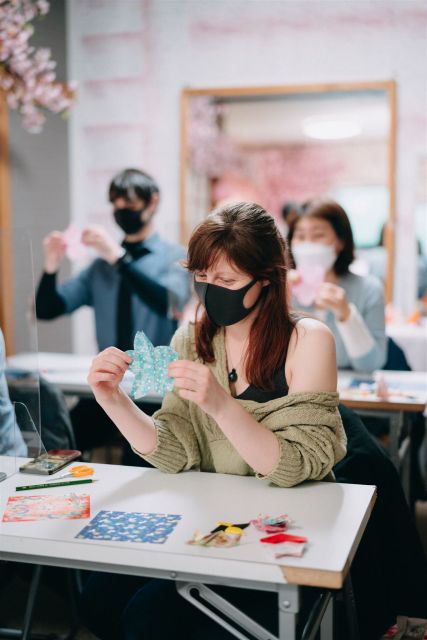
Tokyo can be noisy, crowded, and fast. Origami gives you 90 minutes of quiet concentration without asking you to leave the city center. You are still in Shinjuku, but your attention narrows to a square of paper, a crease, and the next instruction.
That change of pace is part of the appeal. You are not simply watching someone demonstrate a Japanese craft. You are making objects with your own hands, then carrying them away in a small bag. A crane or lotus flower made during your visit can become a modest reminder of Japan that costs less space than a ceramic souvenir.
The activity is designed mainly for beginners. That is good news if you have only folded paper airplanes or have never tried origami at all. Manami demonstrates each stage and keeps an eye on whether everyone is following. You can ask for help whenever a fold goes wrong, which is much easier than trying to decode a printed diagram alone.
I would not book this as an advanced origami workshop. The available designs are not customized during the session, and someone with serious paper-folding experience may find the choices basic. For most holiday groups, though, beginner-friendly means accessible rather than dull.
Other Tokyo days people book alongside this one:
- Mt Fuji and Hakone 1-Day Bus Tour Return by Bullet Train
★ 5.0 · 26,383 reviews - 1-Day Tokyo Bus Tour
★ 5.0 · 14,250 reviews - Tokyo: TOKYO SKYTREE® Admission ticket
★ 4.5 · 11,192 reviews
Meeting Manami and choosing your designs
The class begins with Manami showing examples at different skill levels. This is a useful start because you can judge the shapes before committing to them. If one design looks too tricky, you can choose another. If you are with children or a mixed-ability group, each person can select a project that feels manageable.
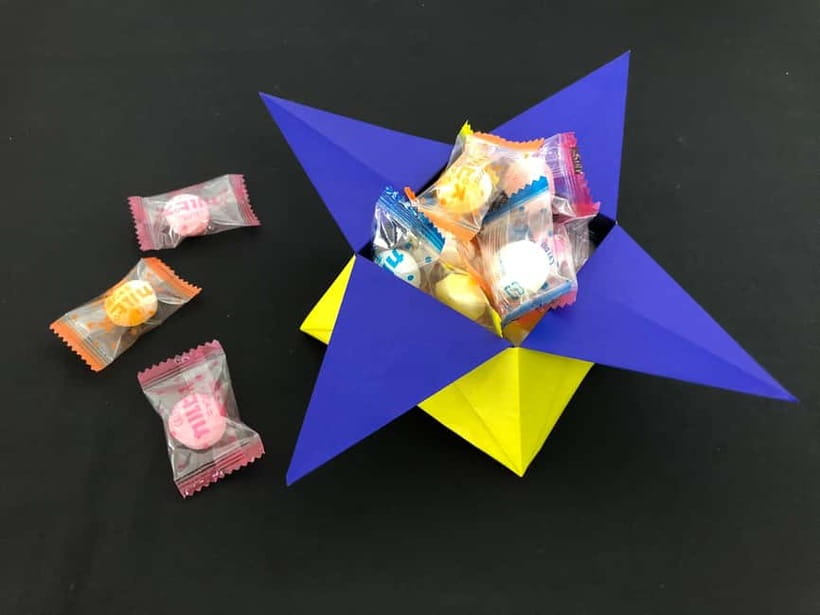
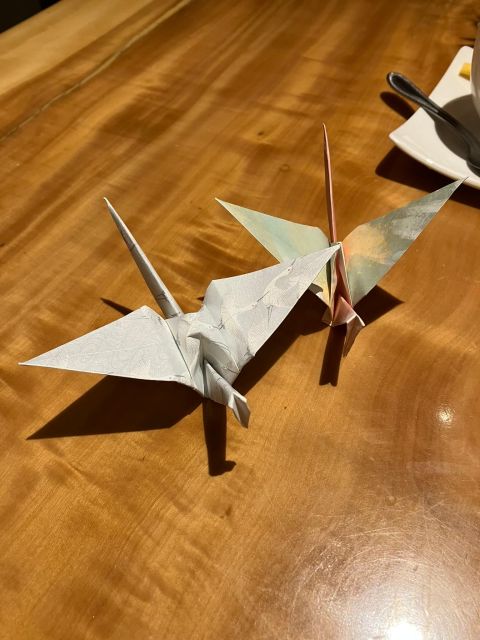
The stated range is three to five shapes in 90 minutes. The exact number depends on your pace and the designs you select. A crane, jumping frog, open box, and lotus flower have all been completed within a session, while other choices include a balloon and a samurai helmet.
That mix gives the class some variety. A crane introduces familiar Japanese symbolism. A jumping frog adds movement and play, since it can actually hop when folded correctly. A box offers a useful object rather than only a decorative figure. A lotus flower takes you in a more ornamental direction.
You may want to choose one easy design first. That lets you learn Manami’s method and become comfortable with the basic folds before trying something more involved. If you finish quickly, you can use the remaining time for additional pieces, with five being the upper end described for the class.
The paper table is part of the fun
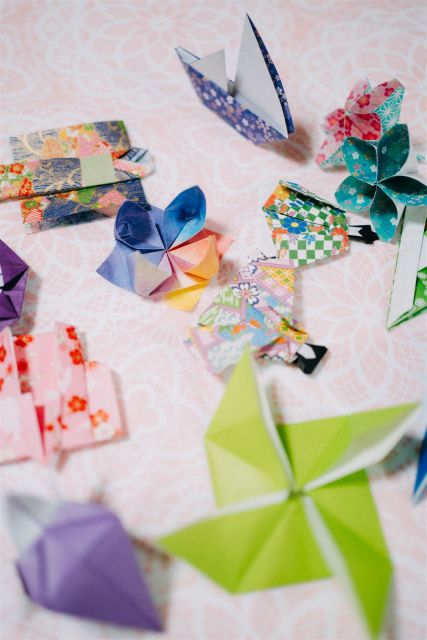
Paper is not an afterthought here. You receive a selection of traditional and modern origami sheets, many with attractive designs. You pick a sheet for each shape, so the color and pattern become part of the decision.
This matters because paper folding is both technical and visual. A complicated pattern can disappear on a heavily decorated sheet, while a simple fold may look striking on bold paper. Manami’s guidance helps you focus on the structure, but you still have a small creative choice to make each time.
The materials also make this practical for visitors. Origami paper, scissors, pens, small bags, water, and snacks are included. You do not need to arrive with supplies or worry about protecting your finished pieces in your luggage.
The small bag is especially useful if you have a full day planned after the class. Origami is light, but folded corners can be crushed in a crowded daypack. Carrying your pieces separately gives them a better chance of reaching home intact.
Step-by-step folding, without the usual frustration
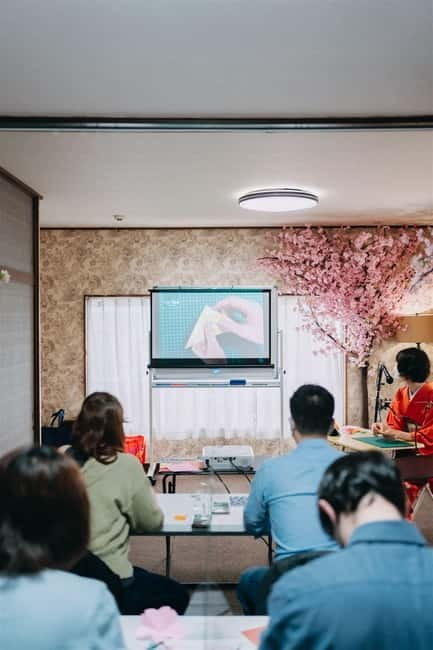
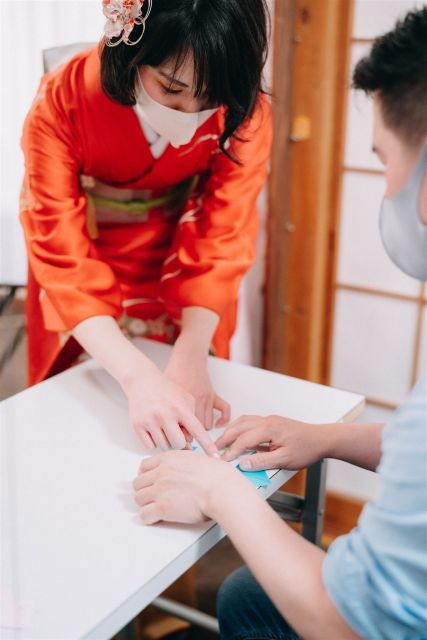
Origami instructions can look clear in a book and suddenly become confusing when the paper is in your hands. Manami’s teaching style addresses that problem directly. She takes the class through each fold, demonstrates the movement, and helps when a crease or alignment needs correcting.
Her approach is patient and encouraging. That is not a minor detail. Folding often requires precise pressure, and the difference between a clean result and a crumpled one can be a few millimeters. Gentle correction helps you improve without making the activity feel like a test.
This works well for children, too. An eight-year-old in one family group was given extra attention when certain steps became difficult. The class can therefore suit a family with older children, though you should contact the instructor in advance if anyone is under seven.
Adults should not assume the class is only for children. Several of the listed designs appeal to grown-ups because they produce recognizable objects and provide a hands-on way to learn about Japan. A parent and adult son, couples, and solo participants can all fit the format.
The English instruction is another practical benefit. You can ask questions while folding and hear the explanation of a shape’s meaning without relying on translation. That makes the class more than a silent craft demonstration.
Same city, a completely different kind of day:
- Tokyo: teamLab Planets TOKYO Digital Art Museum Entry Ticket
★ 4.6 · 9,779 reviews - Mt Fuji & Hakone Cruise, Drum Show Bullet Train 1 Day from Tokyo
★ 4.0 · 7,413 reviews - Tokyo: Shinjuku Food Tour (13 Dishes at 4 Local Eateries)
★ 5.0 · 6,603 reviews - Tokyo Mt Fuji 5th St & Hakone Cruise Bus Tour w/Bullet Train
★ 4.4 · 5,024 reviews
The stories behind the crane, frog, and lotus
Manami adds cultural context as you complete each piece. The origami crane is the most familiar example, and its importance in Japan gives the fold more weight than its pretty appearance alone suggests. Hearing why a shape matters helps you remember it after the class.
The explanations also connect ordinary paper figures to family and childhood. Manami has been folding since age three and shares personal stories alongside broader information about Japanese culture and history. That personal link gives the activity a human scale.
You should expect the cultural discussion to support the folding rather than replace it. This is not a long lecture on Japanese art. The stories arrive as you work, so the information has a clear connection to the object in front of you.
That balance is valuable on a short visit. You receive cultural background, but you also spend most of the time doing something. The class gives you a small piece of Japanese tradition that you can understand through action rather than only through a museum label.
The Shinjuku meeting point and what to know
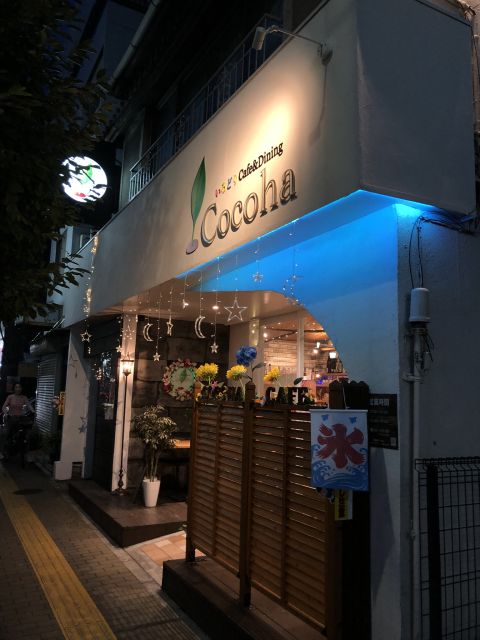
The meeting point is FEEP Shinjuku Higashi-guchi, in the Shinseido Building at 5F, 3-29-11 Shinjuku, Shinjuku-ku. The nearest station is Shinjuku-sanchome, served by metro lines M09, F13, and S02. You can also reach it from the east gate of JR Shinjuku Station.
FEEP is a shared workspace divided into meeting booths. The entrance is locked, so message Manami once you reach the fifth floor. This is important: do not simply wait outside and assume the instructor will spot you in the building.
Allow time to find the address, particularly if Shinjuku is unfamiliar to you. One family had trouble locating the meeting point, and Manami waited for them. That is reassuring, but arriving early is still the better plan.
The venue is wheelchair accessible. If your party includes a child under seven, an older person, or someone who needs special care, tell the instructor in advance because the venue must be changed. The activity itself is not restricted to solo visitors, couples, or small families. Larger tour groups can also take part.
Is $58 a fair price for 90 minutes?
At $58 per person, this is not the cheapest way to spend an hour and a half in Tokyo. Paper is inexpensive, and you could learn basic folds from a book or online video. The price makes more sense when you count the English guidance, prepared materials, cultural explanations, finished pieces, snacks, and the chance to ask for help at every stage.
You are paying for instruction and access to a local teacher, not for the paper alone. That distinction matters most if you want to avoid frustration or if your group includes people who learn at different speeds. A private or small-group session can also make the direct guidance more useful, though the available group arrangements are not specified.
The value is strongest for a first-time folder who wants a meaningful activity rather than another sightseeing stop. It is also good for a family looking for something everyone can do together, especially if museums and temples are beginning to feel repetitive.
The value is weaker for an accomplished origami hobbyist. Since the shapes are aimed mainly at beginners and cannot be tailored on site, you may finish quickly or wish for harder patterns. Check your expectations before booking.
Who will enjoy this most?
I would recommend the class to:
- Solo visitors who want an easy social activity with a local instructor
- Couples looking for a quiet shared project
- Families with children aged seven and older
- Adults who want a Japanese souvenir they made themselves
- Groups with mixed craft ability
- Visitors who enjoy cultural context along with hands-on work
It may not suit you if you want advanced modular origami, complex sculptural designs, or a completely open-ended craft session. The structure is friendly and guided, not experimental.
It is also worth considering your energy level. You sit and concentrate for most of the 90 minutes. That makes it a welcome break from walking, but it may feel less exciting if you are seeking a fast-moving activity.
Booking details that affect your decision
The activity lasts 90 minutes and is taught in English. Cancellation is free up to 24 hours before the start time, and you can reserve now and pay later, which helps if your Tokyo schedule is still changing.
Alcohol and drugs are not allowed. Water and snacks are provided, but no train-station pickup is included. You will need to make your own way to FEEP in Shinjuku.
I would also send a message before arrival if your group has special needs or includes anyone under seven. The listed wheelchair access is helpful, but the venue change for certain participants means the meeting details may differ from the standard address.
Should you book the origami class?
Book it if you want a calm, hands-on break in central Tokyo and like the idea of learning from a local person rather than buying a ready-made souvenir. Manami’s childhood connection to origami, careful instruction, and explanations of each shape give the 90 minutes real substance.
For families, solo visitors, couples, and beginners, the combination of paper choices, three to five finished pieces, and cultural stories offers good value at $58. I would skip it only if you already fold at an advanced level or want difficult designs chosen to match your ability. For everyone else, this is a practical, personal way to take a little piece of Japanese tradition home.
FAQ
Where is the origami class held?
The meeting point is FEEP Shinjuku Higashi-guchi, Shinseido Building 5F, 3-29-11 Shinjuku, Shinjuku-ku, Tokyo.
Which station is closest?
The nearest station is Shinjuku-sanchome, served by metro lines M09, F13, and S02. The location is also accessible from the east gate of JR Shinjuku Station.
How long does the class last?
The origami class lasts 90 minutes.
How many origami shapes will I make?
You can expect to make about three to five shapes during the session, depending on your pace and the designs you choose.
Is the class taught in English?
Yes. The instructor, Manami Watanabe, teaches the class in English.
Is this class suitable for beginners?
Yes. The designs are mainly intended for people who are new to origami, and Manami provides step-by-step guidance throughout the class.
Are materials included?
Yes. Origami paper, scissors, pens, small bags for carrying your work, water, and snacks are included.
Can children join the class?
Children can join, but you must contact the instructor in advance if anyone in your group is under seven. You should also provide advance notice if an older person or someone needing special care will attend.
Just added around Tokyo
- Private Memorable Tokyo Tour with English Speaking Driver★ 5.0 · 30 reviews
- Tokyo Photography Masterclass – Private Photography Lesson★ 5.0 · 25 reviews
- Private Tokyo Custom Full-Day Tour by Chartered Vehicle★ 5.0 · 16 reviews
- Private Sightseeing to Mt Fuji and Hakone with English Driver★ 5.0 · 51 reviews
- Private Mt. Fuji Day Trip from Tokyo with English-Speaking Driver★ 5.0 · 33 reviews
- 4 Day Tour – Mount. Fuji, Tokyo, Hakone, Kamakura and Yokohama★ 5.0 · 19 reviews
- Private Unforgettable Mt Fuji Tour with English Speaking Driver★ 5.0 · 142 reviews
- Private Tokyo Food Tour – A Journey Through Time Through Food★ 5.0 · 36 reviews
Tokyo Tours, compared.

Mt Fuji and Hakone 1-Day Bus Tour Return by Bullet Train
Read our review →


teamLab Planets TOKYO Digital Art Museum Entry Ticket
Read our review →
Mt Fuji & Hakone Cruise, Drum Show Bullet Train 1 Day from Tokyo
Read our review →
Shinjuku Food Tour (13 Dishes at 4 Local Eateries)
Read our review →
Tokyo Mt Fuji 5th St & Hakone Cruise Bus Tour w/Bullet Train
Read our review →