REVIEW · TOKYO TOURS
Tokyo: Karate Experience with Former All-Japan Champion
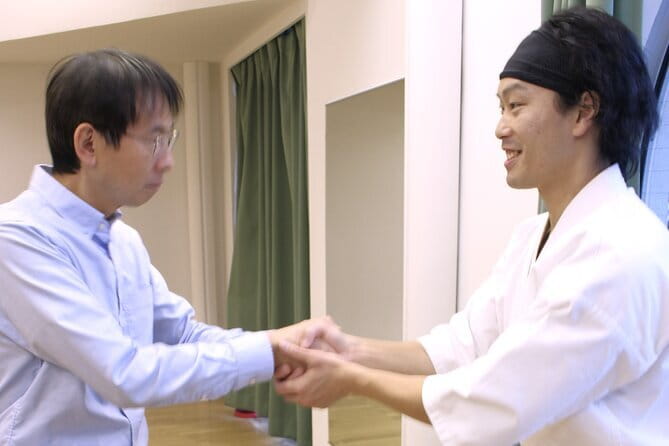
A former All-Japan champion leads you through the fundamentals of karate in a small Tokyo class, not a stage-managed demonstration. Ryo teaches the movements step by step, from the opening bow and belly breathing to punches, kicks, blocks, and safe, non-contact sparring.
I like the small maximum of eight people, which gives Ryo room to adjust the class for complete beginners and people with past martial arts experience. I also like the practical setup: a 90-minute lesson, uniform, and pads included, with morning and afternoon times near public transportation.
The main consideration is physical effort. You need a moderate level of fitness, and some kicks may challenge your hip or leg mobility. This is friendly instruction, but it is still a workout rather than a passive cultural show.
In This Review
- Key details before you book
- Meeting Ryo at Azumabashi Hall
- Beginning with the bow and steady breathing
- Stretching the hips, legs, shoulders, and chest
- Building a karate stance one move at a time
- Learning defense through non-contact kumite
- What makes Ryo’s teaching useful
- Kyokushin background and what you will actually practice
- Is $66.99 good value for 90 minutes?
- Who should book this karate class?
- Practical planning for your Tokyo day
- Should you book it?
- FAQ
- How long does the Tokyo karate experience last?
- Where does the karate class meet?
- Where does the activity end?
- Is the class suitable for beginners?
- How many people can join the class?
- Are a karate uniform and protective pads provided?
- Can I cancel for a full refund?
Key details before you book
- Train with former champion Ryo: He has 20 years of karate experience and teaches in clear English.
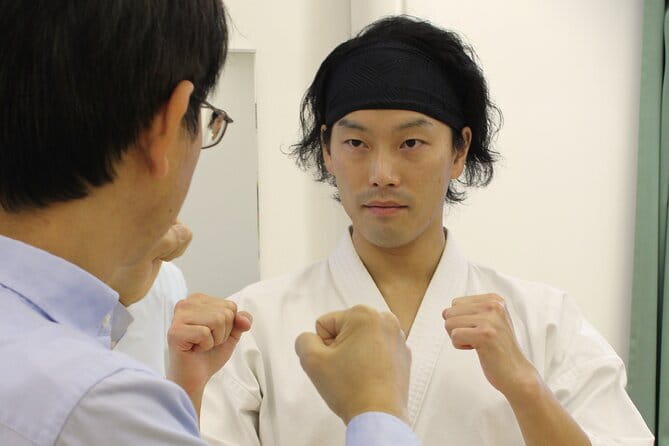
- Learn more than flashy moves: The class covers bowing, breathing, stance, basic attacks, blocks, and defensive movement.
- Practice safely: The final kumite section is non-contact, with pads supplied for the session.
- Small class size: No more than eight people are scheduled, though private or near-private sessions may happen when demand is light.
- Easy Tokyo access: The meeting point is Azumabashi Hall in Sumida City, near public transportation.
- Good value for active culture seekers: At $66.99, you receive roughly 90 minutes of instruction and use of a karate uniform and pads.
Meeting Ryo at Azumabashi Hall
The class begins at Azumabashi Hall, at 1-chōme-23-27 Azumabashi in Sumida City, Tokyo. The activity ends at the same place, so you do not need to keep track of a second drop-off point or arrange a return transfer.
The location is near public transportation, which matters in Tokyo. You can build the lesson into a morning or afternoon without giving up an entire day. Confirmation arrives when you book, and the activity is usually reserved about 29 days ahead, so I would not leave it until the last minute if this is high on your list.
Expect a focused training room rather than a sightseeing stop. The point is to work with Ryo and learn the structure of karate. Wear something suitable for movement underneath the provided uniform, and arrive ready to stretch, bend, and repeat techniques.
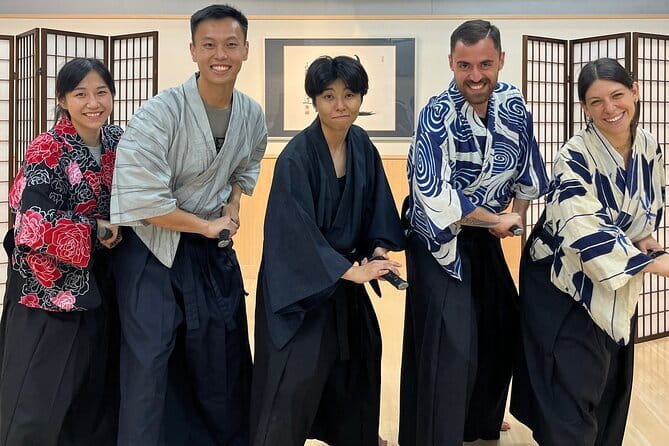
A class capped at eight people is a real advantage. Ryo can watch your stance, correct your posture, and change the pace when needed. If only one or two people book a session, you may receive a particularly personal lesson. The exact group size can vary, but the stated maximum keeps this from becoming a crowded fitness class.
Other Tokyo days people book alongside this one:
- Mt Fuji and Hakone 1-Day Bus Tour Return by Bullet Train
★ 5.0 · 26,383 reviews - 1-Day Tokyo Bus Tour
★ 5.0 · 14,250 reviews - Tokyo: TOKYO SKYTREE® Admission ticket
★ 4.5 · 11,192 reviews
Beginning with the bow and steady breathing
Karate begins with etiquette. Before throwing a punch or lifting a leg, you learn how to bow. The lesson follows the principle that you start with a bow and end with a bow, a simple structure that frames karate as a discipline as well as a form of exercise.
Ryo also introduces deep breathing from the belly. This may sound modest beside kicks and blocks, but it helps you settle your attention and control your movement. For a first-time participant, this is useful because it gives you something to focus on before the physical work begins.
The breathing practice also helps explain why karate is not simply about force. Good technique depends on posture, timing, balance, and a calm mind. You may leave with a better sense of how controlled movement can matter as much as strength.
The opening section should suit beginners well. You do not need to arrive knowing Japanese commands or martial arts terms. Ryo breaks the lesson into manageable pieces and demonstrates each action before asking you to repeat it.
Stretching the hips, legs, shoulders, and chest
Next comes a series of stretches for major parts of the body, including the leg muscles, hip joints, shoulder blades, and chest. This is not filler before the exciting part. The warm-up prepares you for the stances, kicks, and turning movements that follow.
Pay attention here if your mobility is limited. One participant with previous karate experience still found some kicks difficult because of restricted movement. That is a useful warning: the class is accessible, but accessible does not mean effortless.
The instructor adjusts the level to suit the people in front of him. If you are new to martial arts, Ryo can keep the movements basic and explain them clearly. If you have boxed, practiced another martial art, or trained in a different karate style, he can offer corrections and a different way to think about posture, stomach power, or sparring.
Do not force a kick to match someone else’s height. The goal is sound form and control. A lower, carefully placed kick is more useful than a high kick performed with poor balance.
Building a karate stance one move at a time
The central part of the session covers basic punches, blocks, and kicks. Each technique is divided into a few movements, so you learn the sequence rather than trying to copy a fast combination all at once.
That step-by-step method is particularly helpful for first-timers. You can concentrate on the position of your feet, the direction of your hips, and the return of your hands after each action. Ryo demonstrates the movement, then gives you a chance to repeat it.
The stance matters as much as the strike. A stable base helps you move with control, protect yourself, and generate power without swinging wildly. Ryo’s instruction places attention on precision and efficiency, not just on making contact with a target.
This is also where the class becomes a useful workout. You will repeat movements, shift your weight, and use your legs and core. The effort is described as intense but manageable, which sounds right for a 90-minute introductory lesson. You should expect to work up a sweat, but the lesson is not presented as an endurance test.
People with previous training may find the corrections especially worthwhile. One participant who had studied another karate style used the session to improve posture, stomach power, and sparring skills. That does not mean every experienced martial artist will receive a fully private syllabus, but Ryo has shown that he can adapt the content beyond a basic beginner script.
Same city, a completely different kind of day:
- Tokyo: teamLab Planets TOKYO Digital Art Museum Entry Ticket
★ 4.6 · 9,779 reviews - Mt Fuji & Hakone Cruise, Drum Show Bullet Train 1 Day from Tokyo
★ 4.0 · 7,413 reviews - Tokyo: Shinjuku Food Tour (13 Dishes at 4 Local Eateries)
★ 5.0 · 6,603 reviews - Tokyo Mt Fuji 5th St & Hakone Cruise Bus Tour w/Bullet Train
★ 4.4 · 5,024 reviews
Learning defense through non-contact kumite
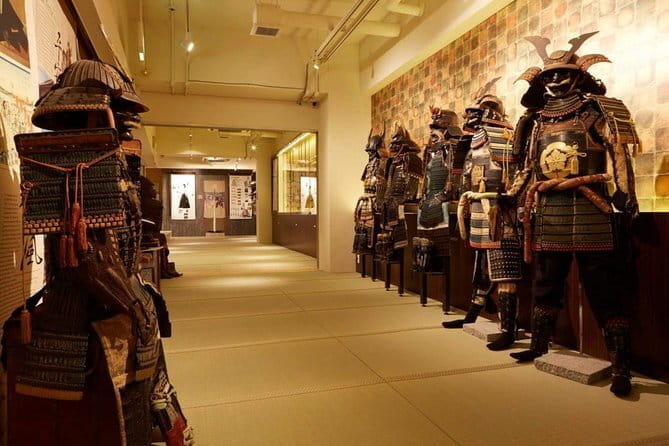
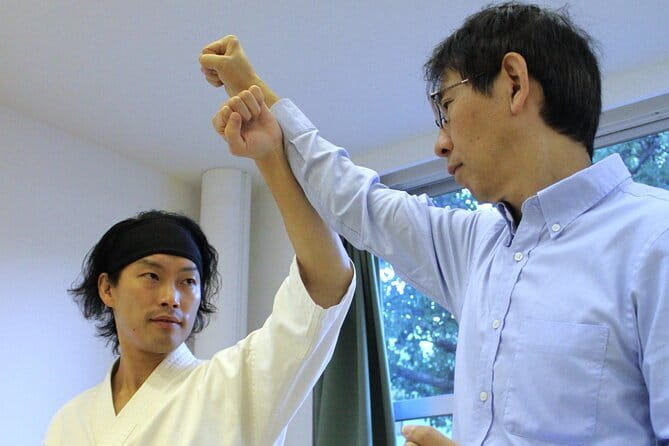
The final section introduces the essence of kumite, or sparring, without physical contact. Ryo shows how to respond to attacks such as punches, front kicks, and low kicks, using different defensive tips for greater precision and efficiency.
This is a smart format for a mixed-level class. You get a sense of timing and distance without trading blows with a stranger. Pads are included, adding a little protection and making the practice feel more like training than like a simple classroom demonstration.
Do not expect a full-contact bout. The focus is on recognizing an attack, choosing a response, and moving with purpose. You may practice the sequence slowly at first, then repeat it with more flow as the pattern becomes familiar.
For beginners, this section connects the earlier pieces. The stance gives you balance, the blocks give you a response, and the breathing helps you stay composed. For someone with prior experience, it can expose small habits in footwork or posture that are easy to miss during solo practice.
The non-contact format also makes the class a sensible choice for couples, friends, and mixed groups. You can learn together without worrying that a mistake will lead to an injury. The activity still requires care, especially during kicks and changes of direction, but it avoids the risks of hard sparring.
What makes Ryo’s teaching useful
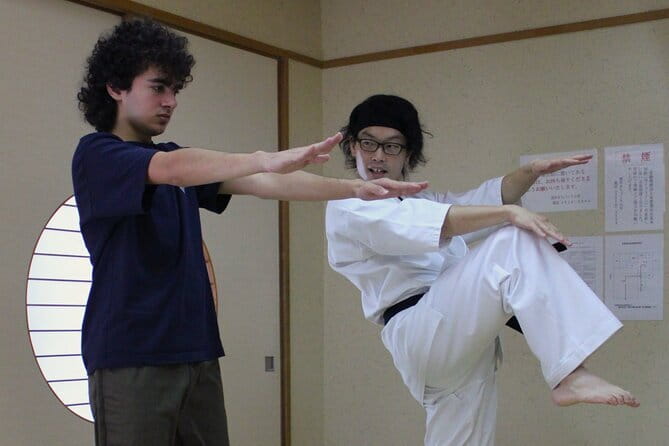
Ryo’s main strength is the way he explains and demonstrates techniques. Clear English is important here because karate depends on small physical corrections. If you misunderstand where to place your feet or how to turn your body, simply repeating the movement will not fix it.
He also brings the authority of a former All-Japan champion and 20 years of experience. That background matters most when he explains why a technique works, not simply when he shows that he can perform it.
The teaching style appears to balance challenge and approachability. You are expected to make an effort, but you are not treated as if you should already know the basics. The class can be fun and demanding at the same time, which is the right mix for a short activity during a Tokyo visit.
Ryo also talks with participants about cultural differences and similarities in martial arts. That conversation can add context to the physical practice, especially if you have studied karate in another country or trained in a different style. It gives the lesson a personal side without turning it into a lecture.
Kyokushin background and what you will actually practice
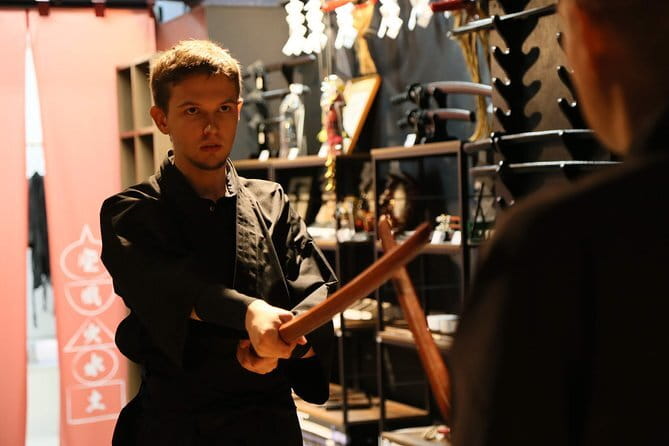
The class is based on traditional karate, with Kyokushin specifically mentioned by participants who had experience in that style. You should expect fundamental training rather than a complete survey of every karate school in Japan.
The focus is practical and introductory:
- Bowing and dojo etiquette
- Deep breathing from the belly
- Stretching and mobility work
- Basic stance and posture
- Punches and blocks
- Front and low kicks
- Defensive responses
- Non-contact kumite
That list makes the class useful for several kinds of people. You might be completely new to martial arts and want an active introduction to Japanese culture. You might have practiced boxing or another martial art and want to compare movement patterns. You might also have studied karate before and want a lesson with an instructor from a different background.
The experience will not make you proficient in karate in one morning. It can give you a clear first framework, a better sense of the discipline, and a few movements to keep practicing after you leave Japan.
Is $66.99 good value for 90 minutes?
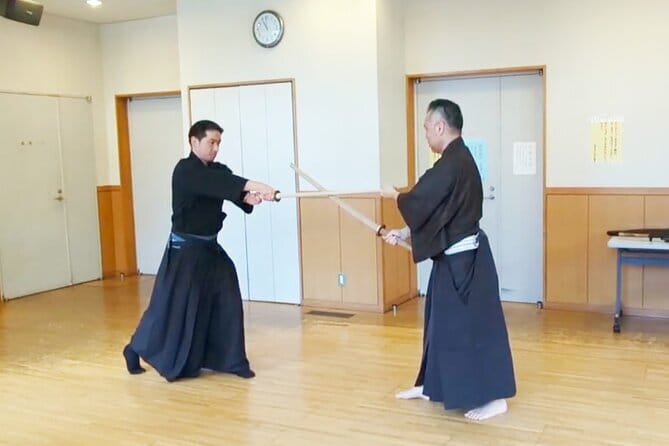
At $66.99 per person, this is not the cheapest physical activity in Tokyo. The value depends on what you want from the hour and a half.
You are paying for direct instruction from a former All-Japan champion, a small class with no more than eight people, a uniform, pads, and a structured lesson that includes both cultural etiquette and physical training. If you would otherwise spend money on a short fitness class or a staged cultural activity, this offers more personal instruction and participation.
The price is easier to justify for someone who values access to an experienced teacher. A large tourist group would not offer the same chance for individual correction. Even in a small class, the exact amount of personal attention will depend on how many people attend, so you should not assume a private lesson.
Group discounts may reduce the cost for couples, families, or friends booking together. The activity also offers morning and afternoon sessions, which helps you fit it around other Tokyo plans. Since the class lasts about 90 minutes and returns you to the starting point, it does not require a major time commitment.
For a budget-focused schedule, compare it with the cost of other guided experiences in Tokyo. For an active, hands-on cultural lesson with a respected instructor, the price is reasonable.
Who should book this karate class?
I would point this class toward:
- First-time martial arts participants who want clear instruction
- Couples looking for an unusual shared activity
- Families or friends who can manage moderate physical exercise
- People with previous karate or boxing experience
- Visitors who prefer participation to watching a cultural performance
- Anyone with a free morning or afternoon in Tokyo
You do not need to be a karate expert. The class is designed for beginners and people who have trained before, and Ryo adjusts the level to the group.
You should think twice if you want a gentle, seated cultural activity. Stretching, stances, kicks, and repeated drills require movement. Limited hip or leg mobility may affect how comfortably you perform some techniques, so be honest with yourself and work within your range.
You should also avoid treating the session as a chance to prove toughness. Karate rewards control. Follow Ryo’s pace, keep your movements precise, and do not push a kick higher than your body allows.
Practical planning for your Tokyo day
Choose the time that best matches your energy. A morning class can get you moving early, while an afternoon session may work better after a slower start. Both options leave the rest of the day open because the class runs about 90 minutes.
The meeting point is Azumabashi Hall, and the class ends there. Since it is near public transportation, you can continue to another Tokyo neighborhood by train after the lesson. Check your route carefully before setting out, since Tokyo station names and exits can take time to sort out.
A mobile ticket makes entry simple, and booking confirmation is provided at the time of reservation. Free cancellation is available up to 24 hours before the local start time. Cancellations or changes inside that window are not accepted for a refund.
The activity has a maximum of eight people. Group discounts are available, so check the price if you are booking with companions.
Should you book it?
Book this experience if you want to do something active, learn from a real instructor, and leave Tokyo with more than photographs. Ryo’s clear English, former championship background, and willingness to adjust the class make the lesson suitable for both newcomers and people who already know their way around martial arts.
I would be especially keen to book it for a couple or small group that wants a shared challenge without full-contact sparring. The uniform and pads remove some of the usual fuss, and the 90-minute length fits neatly into a busy Tokyo schedule.
Skip it if you are looking for a relaxed cultural talk or if moderate physical activity is not suitable for you. For everyone else, $66.99 buys a focused introduction to karate, a workout, and a direct connection to one of Japan’s best-known martial traditions.
FAQ
How long does the Tokyo karate experience last?
The class lasts approximately 1 hour and 30 minutes.
Where does the karate class meet?
The meeting point is Azumabashi Hall, 1-chōme-23-27 Azumabashi, Sumida City, Tokyo 130-0001, Japan.
Where does the activity end?
The class ends back at the meeting point.
Is the class suitable for beginners?
Yes. The lesson is designed for beginners as well as people who have practiced karate or other martial arts before.
How many people can join the class?
The activity has a maximum of eight participants.
Are a karate uniform and protective pads provided?
Yes. A karate uniform and pads are included.
Can I cancel for a full refund?
Yes, if you cancel at least 24 hours before the experience start time. Changes or cancellations made less than 24 hours before the local start time are not accepted for a refund.
Just added around Tokyo
- Private Memorable Tokyo Tour with English Speaking Driver★ 5.0 · 30 reviews
- Private Tokyo Custom Full-Day Tour by Chartered Vehicle★ 5.0 · 16 reviews
- Private Sightseeing to Mt Fuji and Hakone with English Driver★ 5.0 · 51 reviews
- Tokyo Photography Masterclass – Private Photography Lesson★ 5.0 · 25 reviews
- Private Mt. Fuji Day Trip from Tokyo with English-Speaking Driver★ 5.0 · 33 reviews
- 4 Day Tour – Mount. Fuji, Tokyo, Hakone, Kamakura and Yokohama★ 5.0 · 19 reviews
- Private Unforgettable Mt Fuji Tour with English Speaking Driver★ 5.0 · 142 reviews
- Private Tokyo Food Tour – A Journey Through Time Through Food★ 5.0 · 36 reviews
Tokyo Tours, compared.
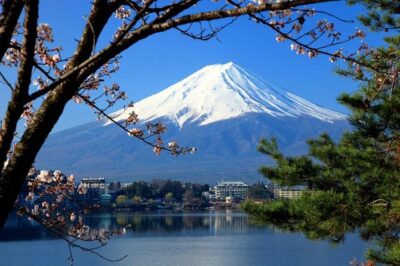
Mt Fuji and Hakone 1-Day Bus Tour Return by Bullet Train
Read our review →
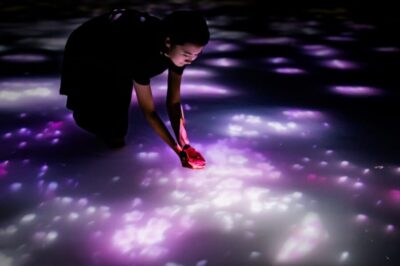
teamLab Planets TOKYO Digital Art Museum Entry Ticket
Read our review →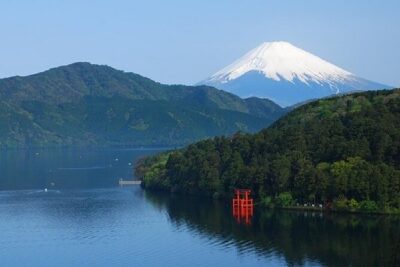
Mt Fuji & Hakone Cruise, Drum Show Bullet Train 1 Day from Tokyo
Read our review →
Shinjuku Food Tour (13 Dishes at 4 Local Eateries)
Read our review →
Tokyo Mt Fuji 5th St & Hakone Cruise Bus Tour w/Bullet Train
Read our review →