REVIEW · TOKYO TOURS
Tokyo: KABUKI, BUNRAKU, etc. presented by National Theatre
The striking thing here is that you are not watching a modern cultural show built for tourists. You are entering a formal Japanese theatre performance carried by trained performers, live music, stylized movement, and traditions passed down for hundreds of years. Kabuki, Bunraku, and Hogaku each offer a different doorway into Japanese culture.
I like the English audio guide, which gives you the plot and key stage actions without drowning out the performers. I also like the chance to hear the artists without loudspeakers, especially in Bunraku, where the narrator, shamisen player, and puppeteers must work as one. The main caution is time: some programs run from 75 minutes to three hours, and the slow pace and unfamiliar stories may test your patience.
In This Review
- Key points to know before you book
- A real Japanese theatre experience, not a tourist demonstration
- Kabuki: bold movement, music, and stage drama
- Bunraku: three artists sharing one puppet
- Hogaku: listening for the melody of snow
- The English audio guide helps, but it is not subtitles
- What the theatre visit is like in Yokohama
- Timing, breaks, and theatre manners
- Is $37 a fair price?
- Who will enjoy this most
- Should you book it?
- FAQ
- Where does the Bunraku performance take place?
- How do I reach KAAT Kanagawa Arts Theatre?
- Is the venue in Tokyo?
- What performances are available?
- Is an English translation provided?
- Are seats selectable?
- How long does the performance last?
- Can I take photographs or record the performance?
- Is the performance wheelchair accessible?
Key points to know before you book
- Authentic National Theatre Japan presentation: The program is produced by the organization that has supported Japanese classical performing arts since 1965.
- Yokohama venue for the Bunraku option: KAAT Kanagawa Arts Theatre is about five minutes from Nihon-ōdōri Station.
- English help without a full translation: Kabuki and Bunraku include an audio guide that explains the main points, while Hogaku includes an English explanation sheet.
- Three very different art forms: Kabuki joins drama, music, and dance; Bunraku combines puppetry, narration, and shamisen; Hogaku focuses on traditional Japanese music.
- Seats are assigned by the theatre: You do not choose your exact position when booking.
- A quiet, formal performance: Photography, video, audio recording, food, drinks, and noise are not allowed inside.
A real Japanese theatre experience, not a tourist demonstration
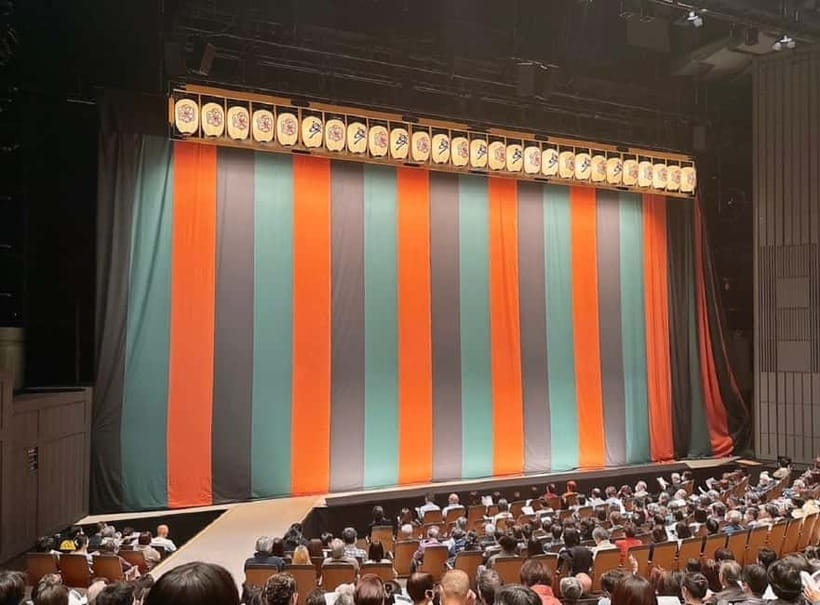
This program gives you a rare chance to see Japanese classical theatre in its proper setting. The National Theatre Japan has supported these art forms since its opening in 1965, and the performers are specialists who have trained within traditions that reach back for centuries.
That matters because Kabuki and Bunraku can look strange if you judge them by the rules of Western theatre. Movement may be deliberately formal. A pause may carry meaning. Music can repeat a phrase longer than you expect. A story may focus less on surprise and more on duty, emotion, beauty, and the pressure of social rules.
I like this honesty. You are not being given a short stage show with a few borrowed costumes. You are seeing an art form on its own terms. The tradeoff is that you need to give it time. The first part may catch your eye through costume, sound, and movement, but understanding the full performance takes attention.
The program choice is important. The available performance may be Kabuki, Bunraku, or Hogaku, and the content changes by date. Check the option title carefully before you pay. The general description covers several traditional arts, but your ticket applies to the specific program selected for that date.
Other Tokyo days people book alongside this one:
- Mt Fuji and Hakone 1-Day Bus Tour Return by Bullet Train
★ 5.0 · 26,383 reviews - 1-Day Tokyo Bus Tour
★ 5.0 · 14,250 reviews - Tokyo: TOKYO SKYTREE® Admission ticket
★ 4.5 · 11,192 reviews
Kabuki: bold movement, music, and stage drama
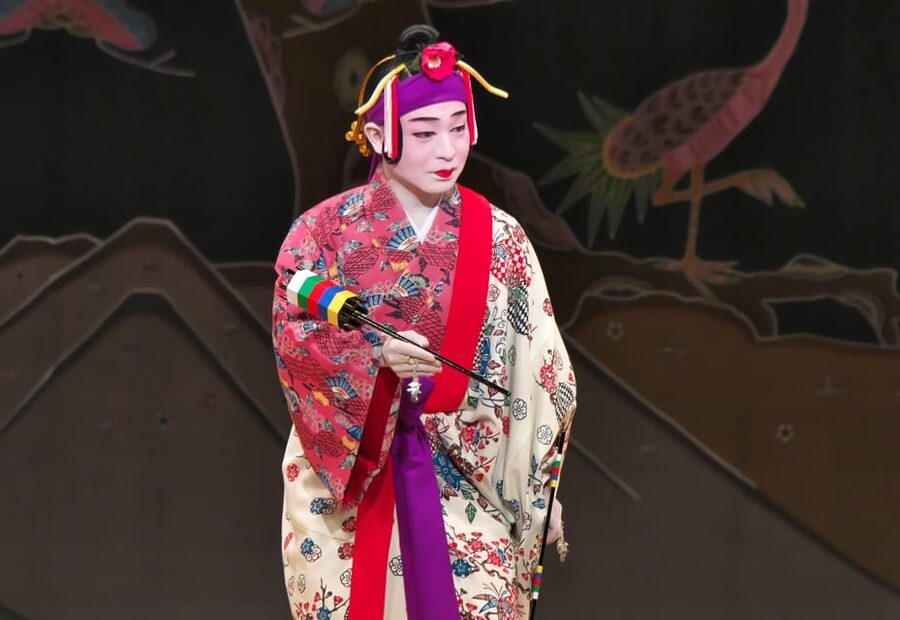
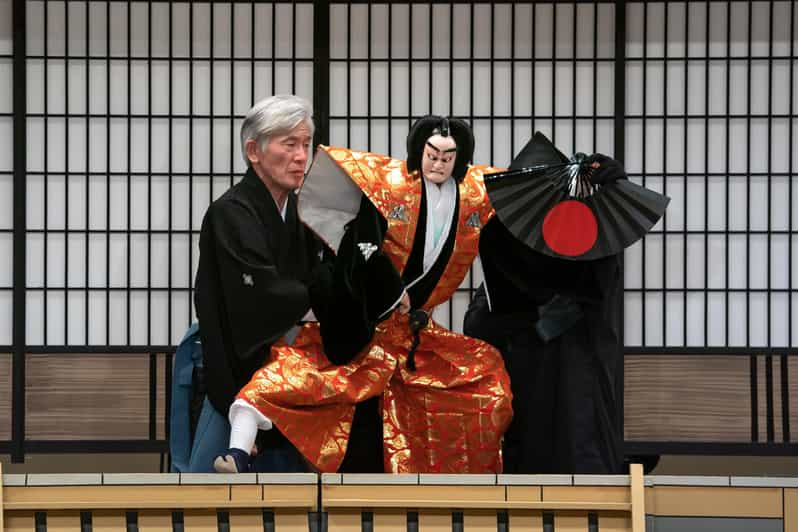
Kabuki is Japan’s best-known traditional theatre form, and it brings together acting, music, and dance. Its appeal is visual from the start: costumes, gestures, stage pictures, and carefully controlled movement do much of the storytelling.
You may find the acting broad by modern Western standards, but that is part of the form. A sudden pose, a turned head, or a frozen expression can signal a character’s emotion or importance. Kabuki has changed with each era while keeping its central style, so it is not simply a museum piece.
The English audio guide is especially useful here. It is not a word-for-word translation of every line. Instead, it gives an overview of the story and explains the key actions. That approach lets you keep listening to the live voices, instruments, and stage sounds.
I think this is the right level of help for a first visit. A literal translation would force you to choose between reading and watching. The guide gives you enough structure to follow the action, although you will still miss wordplay, cultural references, and some fine points of the dialogue.
Give yourself a few minutes before the curtain. An introductory explanation may cover the differences between Kabuki and Western theatre, which helps your eyes and ears adjust. You may need to listen to English in one ear while the Japanese performance continues in the other. At first that can feel awkward, but it becomes easier once the action begins.
Bunraku: three artists sharing one puppet
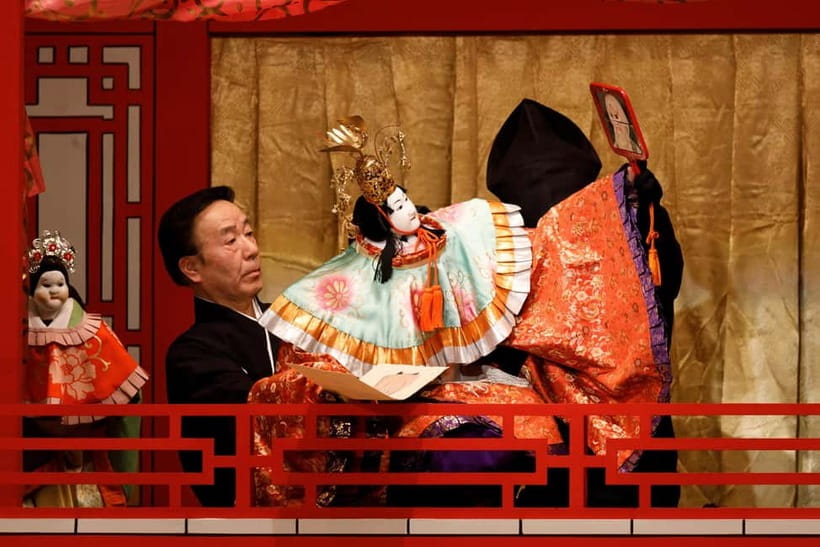
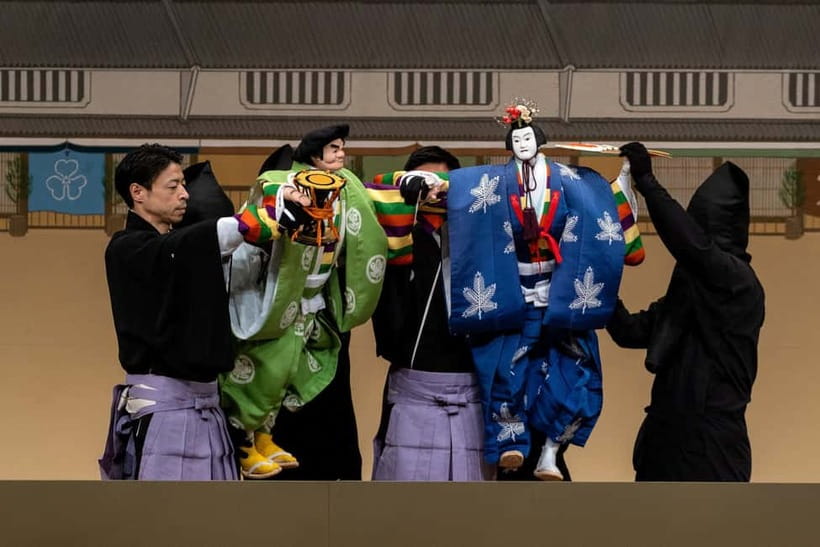
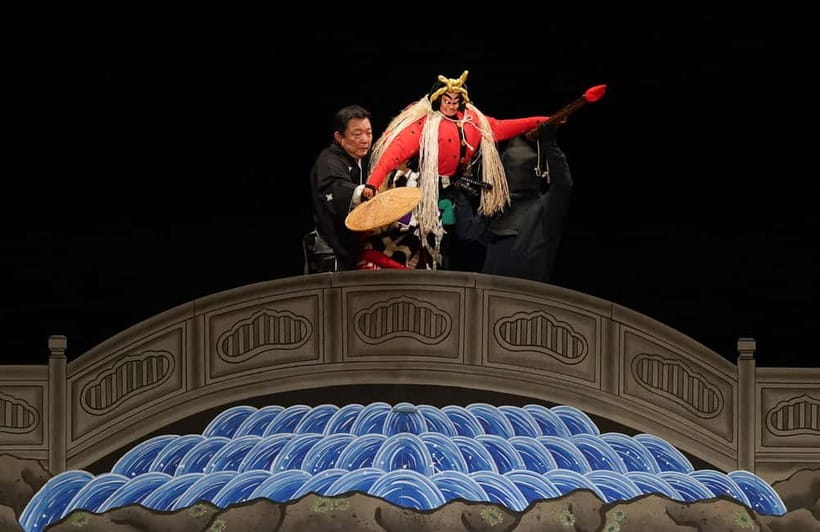
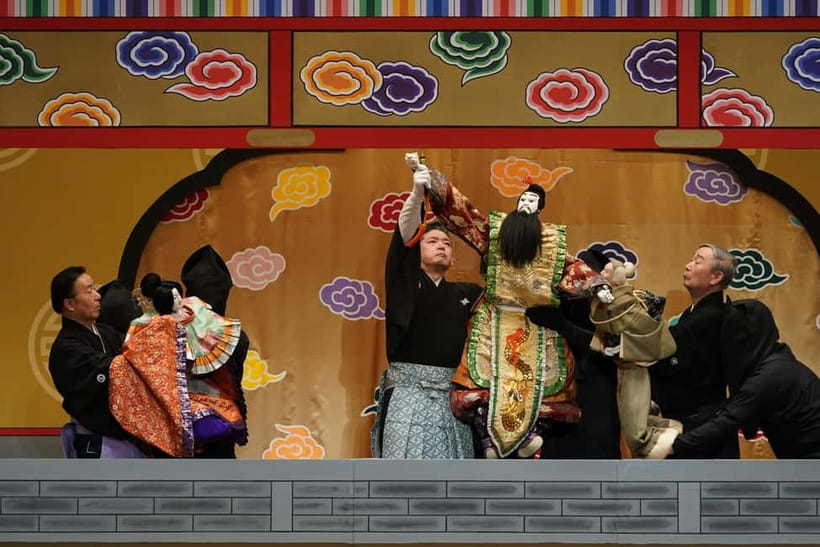
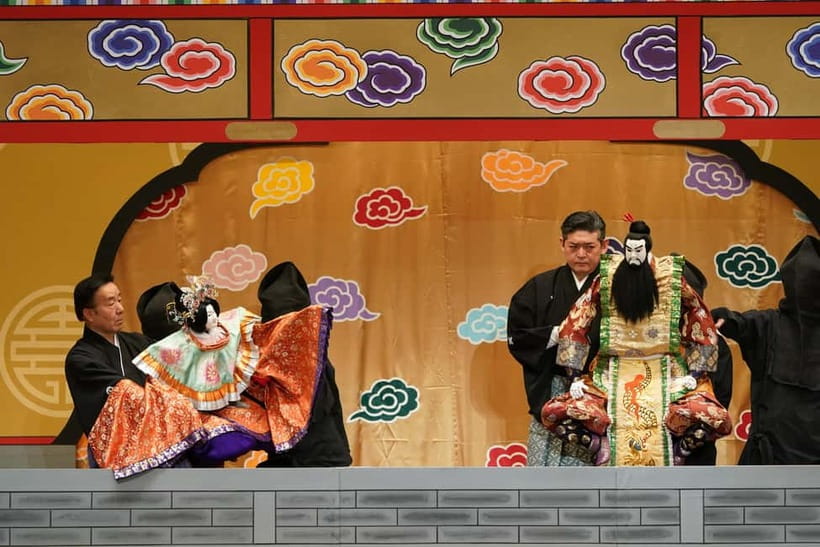
Bunraku is the most unusual choice for many first-time visitors. It is a sophisticated form of puppet theatre in which a narrator, a shamisen musician, and puppeteers work together to tell the story.
The narrator uses his full voice to present the dialogue and emotion. The shamisen supplies a strong, expressive musical line. The puppets move with surprising delicacy, and the performance depends on exact timing between all three elements.
This is not children’s entertainment. Bunraku is traditional theatre for adults, and it appears on UNESCO’s Representative List of the Intangible Cultural Heritage of Humanity. Stories may deal with love, family duty, sacrifice, or tragic choices. One program included a love-suicide story, so you should be ready for serious themes rather than a light puppet show.
The puppetry can take a little time to appreciate. You might first focus on the visible puppet, then notice how its head turns, how a hand moves, or how the narrator’s voice changes the emotional weight of a scene. The art lies in the teamwork and control, not in fast action.
The English audio guide gives you the main story and explains what is happening. It does not translate every line, so some emotional and literary detail will remain out of reach. Still, it can make the difference between watching a beautiful but confusing performance and understanding the basic stakes of the story.
One important warning: special programs may not use puppets in the usual way. Check the exact description for your date. The word Bunraku does not guarantee that every special presentation will follow the standard full puppet format.
Hogaku: listening for the melody of snow
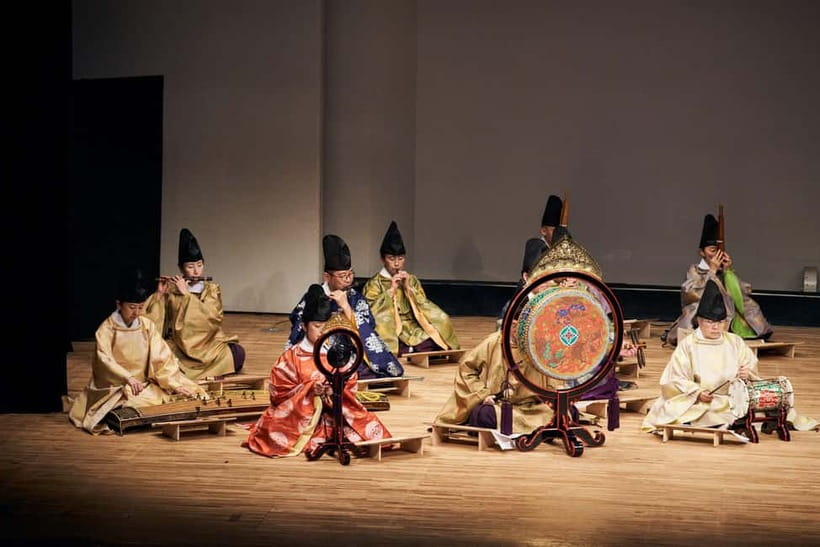
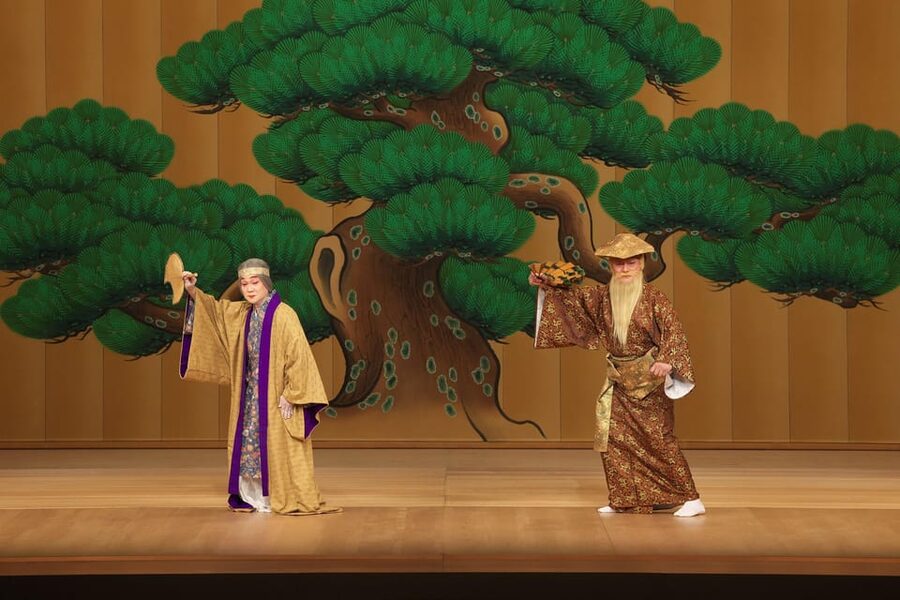
Hogaku is a concert of traditional Japanese music rather than a staged drama. The program described here centers on Yuki no Aikata, a long shamisen interlude from the jiuta Yuki, or Snow.
The melody has become associated with scenes of falling snow and appears in different songs. The point is not to follow a plot. Instead, you listen for how a familiar musical idea returns in different pieces and how the instruments create an image of winter.
For this performance, you receive a free English explanation sheet rather than the Kabuki or Bunraku audio guide. Read it before the music begins and keep it nearby if you want to understand the structure.
Hogaku is likely the most demanding option for someone who wants constant action. It is also the most direct way to hear the sound of traditional Japanese music without a dramatic story competing for your attention. If you enjoy careful listening, the program can be rewarding. If you need a clear narrative, Kabuki or Bunraku may be a better first choice.
Same city, a completely different kind of day:
- Tokyo: teamLab Planets TOKYO Digital Art Museum Entry Ticket
★ 4.6 · 9,779 reviews - Mt Fuji & Hakone Cruise, Drum Show Bullet Train 1 Day from Tokyo
★ 4.0 · 7,413 reviews - Tokyo: Shinjuku Food Tour (13 Dishes at 4 Local Eateries)
★ 5.0 · 6,603 reviews - Tokyo Mt Fuji 5th St & Hakone Cruise Bus Tour w/Bullet Train
★ 4.4 · 5,024 reviews
The English audio guide helps, but it is not subtitles
The audio guide is one of the strongest practical features of this experience. It is available in English for Kabuki and Bunraku, and it gives context on the story and important stage movements.
You should understand its limits before entering. It summarizes the main points instead of translating every spoken line. That protects the live performance, but it also means you will not catch every joke, poetic phrase, or cultural reference.
I recommend listening carefully to the opening explanation. It may explain how to read the performers’ movements and how this style differs from Western theatre. Once you understand the basic rules, the performance becomes easier to follow.
The first few minutes may feel confusing because your brain is processing two sound sources at once. You hear the English explanation while the artists continue in Japanese. Some people find that distracting, but the audio guide remains valuable, especially for the central plot.
For Hogaku, the printed English sheet serves a different purpose. It helps you identify the musical idea and understand why Yuki no Aikata matters, but it cannot explain music in the same running detail as an audio track.
What the theatre visit is like in Yokohama
The Bunraku option takes place at KAAT Kanagawa Arts Theatre in Yokohama, not at the National Theatre in Hanzomon, Tokyo. This is the detail most likely to cause trouble, so check the meeting information before leaving your hotel.
The nearest station is Nihon-ōdōri on the Minatomirai Line. From Exit 3 or 4, the theatre is about a five-minute walk. Motomachi-Chūkagai Station is another option, about eight minutes from Exit 1.
The Minatomirai Line runs directly through the Tokyu Toyoko Line and Tokyo Metro Fukutoshin Line. From Shibuya, a train bound for Motomachi-Chūkagai takes about 45 minutes. Build in extra time for the transfer and the walk. Arriving early also gives you a chance to collect your theatre ticket without rushing.
You must exchange the GetYourGuide voucher for the theatre-issued ticket at the venue entrance on the performance day. Staff will ask for the name of the person who made the reservation. Keep the booking details easy to access.
Exact seating is assigned by the theatre. You cannot select your position, so do not book this expecting a particular view. The venue is wheelchair accessible, but you should contact the provider as soon as possible if you need wheelchair seating.
Timing, breaks, and theatre manners
The total duration depends on the program, with performances lasting from about 75 minutes to three hours. A long program may include two breaks, giving you time to step outside or buy something before returning to your seat.
Do not bring drinks into the auditorium. One useful practical point is that a hot coffee bought during an interval may still be too hot to finish before the next section begins, so plan your break sensibly.
Japanese theatre etiquette is strict. Smoking, alcohol, drugs, pets other than assistance dogs, photography, video recording, audio recording, and noise are not allowed. Silence is part of the experience, not a minor rule.
This also affects family planning. The material is not automatically suitable for very young children. The pace can be slow, the performance may run for several hours, and quiet is expected. Older children who can handle serious themes may learn a great deal, but check the story content before booking.
Is $37 a fair price?
At about $37 per person, the ticket offers good value if you already want to see traditional Japanese performance. You receive the theatre ticket and, for Kabuki or Bunraku, English audio support. You are paying for a professional performance by top-level artists rather than a short cultural sample.
The value is less clear if you are choosing purely by sightseeing efficiency. A three-hour program can take a large part of your day, and the theatre is in Yokohama for the Bunraku option. If your stay is very short, you may prefer to spend those hours visiting several Tokyo sights.
I would compare the price with your goal. If you want a genuine encounter with Japanese performing arts, $37 is reasonable. If you want a quick, easy-to-follow show with a complete story and constant movement, this may feel expensive even though the ticket itself is not.
The flexible booking terms help. You can cancel up to 24 hours before the performance for a full refund, and the reserve-now, pay-later option lets you hold a place without paying immediately. Still, check the date and venue carefully before committing.
Who will enjoy this most
I would recommend this to you if you enjoy theatre, music, puppetry, or cultural history and are willing to meet an unfamiliar art form halfway. It is also a strong choice if you have already seen the usual temples and food markets and want something less obvious.
Kabuki suits you if costumes, drama, music, and stylized acting appeal to you. Bunraku is best if you are curious about puppetry and the relationship between voice, instrument, and movement. Hogaku suits careful listeners who enjoy traditional music more than plot.
You may want to skip it if your schedule is tight, you dislike slow performances, or you need a complete English translation. Even with the guide, some meaning will remain in the Japanese language, vocal style, and cultural setting.
Should you book it?
Book this experience if you want to see Japanese classical performance as a living art, not as a quick tourist display. The English support is genuinely useful, the price is fair for a professional theatre ticket, and the chance to watch Kabuki, Bunraku, or Hogaku in person is unusual.
Before booking, confirm three things: the exact art form, the venue, and the duration. For the Yokohama Bunraku option, allow about 45 minutes from Shibuya by direct train, collect your theatre ticket at the entrance, and prepare for a quiet performance that may last several hours.
If you can give it that time and attention, I think it is worth adding to a longer Japan visit.
FAQ
Where does the Bunraku performance take place?
The Bunraku performance takes place at KAAT Kanagawa Arts Theatre in Yokohama, not at the National Theatre in Hanzomon, Tokyo.
How do I reach KAAT Kanagawa Arts Theatre?
The nearest station is Nihon-ōdōri Station on the Minatomirai Line. The theatre is about five minutes from Exit 3 or 4. Motomachi-Chūkagai Station is about an eight-minute walk from Exit 1.
Is the venue in Tokyo?
The specific Bunraku venue is in Yokohama. The Minatomirai Line runs directly through to the Tokyu Toyoko Line and Tokyo Metro Fukutoshin Line, and the journey from Shibuya takes about 45 minutes on a train bound for Motomachi-Chūkagai Station.
What performances are available?
The program may feature Kabuki, Bunraku, or Hogaku. The exact content depends on the date, so check the selected option title and performance details before booking.
Is an English translation provided?
Kabuki and Bunraku include an English audio guide. It gives an overview of the main points rather than a literal translation of every line. Hogaku includes a free English explanation sheet.
Are seats selectable?
No. Seating positions are assigned by the theatre.
How long does the performance last?
The duration varies by program, from about 75 minutes to three hours. Check the available starting times and performance details for your chosen date.
Can I take photographs or record the performance?
No. Photography, video recording, and audio recording are not allowed inside the theatre. Noise, smoking, alcohol, and drugs are also prohibited.
Is the performance wheelchair accessible?
Yes, the activity is wheelchair accessible. If you need wheelchair seating, contact the provider as soon as possible so suitable seating can be arranged.
Just added around Tokyo
- Private Memorable Tokyo Tour with English Speaking Driver★ 5.0 · 30 reviews
- Private Tokyo Custom Full-Day Tour by Chartered Vehicle★ 5.0 · 16 reviews
- Private Sightseeing to Mt Fuji and Hakone with English Driver★ 5.0 · 51 reviews
- Tokyo Photography Masterclass – Private Photography Lesson★ 5.0 · 25 reviews
- Private Mt. Fuji Day Trip from Tokyo with English-Speaking Driver★ 5.0 · 33 reviews
- 4 Day Tour – Mount. Fuji, Tokyo, Hakone, Kamakura and Yokohama★ 5.0 · 19 reviews
- Private Unforgettable Mt Fuji Tour with English Speaking Driver★ 5.0 · 142 reviews
- Private Tokyo Food Tour – A Journey Through Time Through Food★ 5.0 · 36 reviews
Tokyo Tours, compared.
Mt Fuji and Hakone 1-Day Bus Tour Return by Bullet Train
Read our review →
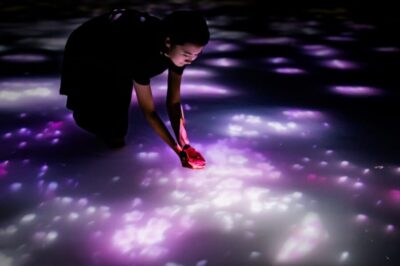
teamLab Planets TOKYO Digital Art Museum Entry Ticket
Read our review →
Mt Fuji & Hakone Cruise, Drum Show Bullet Train 1 Day from Tokyo
Read our review →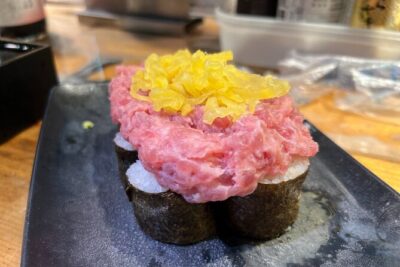
Shinjuku Food Tour (13 Dishes at 4 Local Eateries)
Read our review →
Tokyo Mt Fuji 5th St & Hakone Cruise Bus Tour w/Bullet Train
Read our review →