REVIEW · TOKYO TOURS
Tokyo: Discover the Art of Kintsugi in Ginza
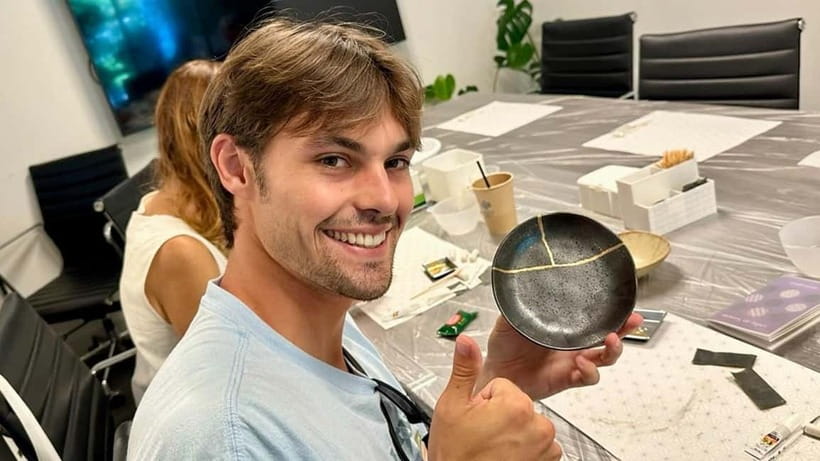
Broken pottery becomes the main event in this 90-minute Kintsugi workshop near Ginza Station. You use lacquer and metallic powder to turn cracks into part of the design, then take your repaired ceramic home. It is a gentle way to learn about a Japanese art form without giving up half a day.
I like the small group of no more than eight, since the instructor can help with delicate steps. I also like the easy location, just three minutes from Ginza Station, and the fact that every tool and material is ready when you arrive. The main consideration is time: this is a modern, shortened version of Kintsugi, not the traditional month-long process.
- A real hands-on repair: You work on a ceramic piece supplied at the workshop, rather than watching a demonstration only.
- A convenient Ginza setting: The room is on the ground floor of the Daiwa Ginza Building, inside Cafe AOU Ginza forest.
- English and Japanese instruction: Instructors such as Tatsu and Teki Sensei guide the group through each stage.
- A useful take-home souvenir: Your finished ceramic is packaged to protect it on the way home.
- A modern Kintsugi method: Synthetic lacquer and metallic powder let you finish in 90 minutes, but the item is for decoration only.
In This Review
- What this Ginza Kintsugi class is really about
- Finding the private room near Ginza Station
- Choosing the ceramic piece and learning the basics
- Making the repair with lacquer and metallic powder
- Packing your repaired souvenir for the journey home
- How the 90 minutes are likely to feel
- Is $75 a fair price in Tokyo?
- Who should book this experience
- Practical tips before you go
- Should you book the Ginza Kintsugi workshop?
- FAQ
- Where is the Kintsugi workshop held?
- How long does the workshop last?
- What is included in the price?
- Can I take my repaired ceramic piece home?
- Is this traditional natural-lacquer Kintsugi?
- Can I use the repaired piece in a microwave?
- Is the workshop available in English?
What this Ginza Kintsugi class is really about
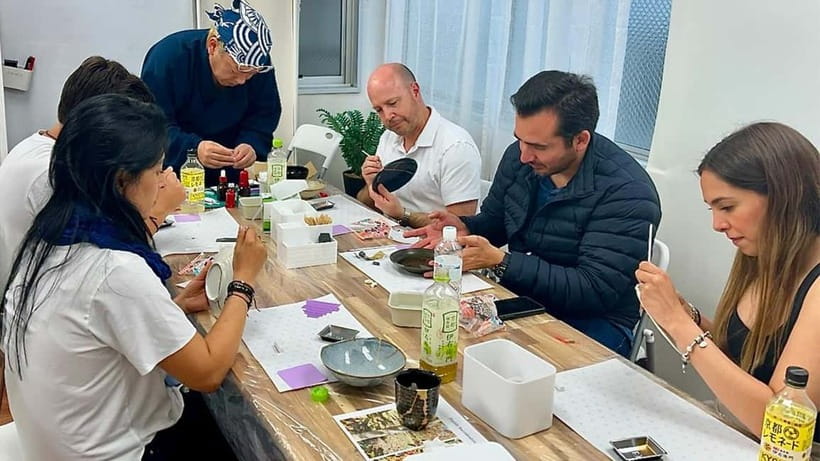
Kintsugi is the Japanese practice of repairing broken ceramics so the damage becomes part of the object’s character. Instead of hiding a crack, the repair draws attention to it with a metallic line. The idea connects with a Japanese appreciation for age, wear, and imperfection.
You do not need any art experience. The workshop is designed as a guided introduction, with a ceramic piece, tools, and materials supplied. That matters in Tokyo, where buying the right materials and finding a suitable broken bowl would be far more trouble than most short-term visitors want.
The finished result will not be museum-quality lacquerware, and that is not the point. You are learning the basic movements and leaving with something you helped repair yourself. The process gives you a quiet break from Ginza’s department stores, traffic, and bright signs.
The experience is offered in English and Japanese. Instructors have included Tatsu and Teki Sensei, both of whom are described as friendly, patient, and good at explaining the work. Tatsu has also shared stories about Ginza during the class, adding a local touch to what could otherwise be a purely technical activity.
Finding the private room near Ginza Station
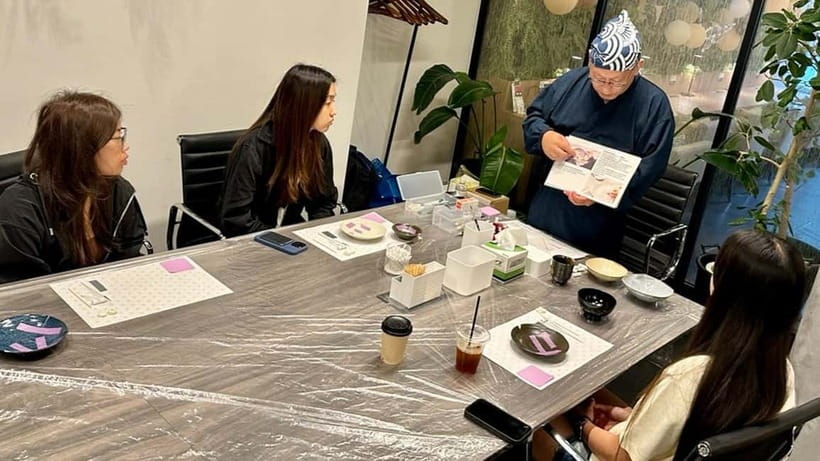
The meeting point is Cafe AOU Ginza forest, on the ground floor of the Daiwa Ginza Building. The venue is about three minutes from Ginza Station, which makes this easy to fit between shopping, lunch, or another central Tokyo stop.
You meet in a private room rather than a large public class space. This is useful for Kintsugi because some of the work is small and precise. A group capped at eight should also make it easier to ask for help when a crack does not line up or the lacquer goes on unevenly.
The venue can change based on availability and reservation numbers. You should check your email the day before the workshop for any updated location details. That is a small but important point: do not rely only on the original meeting information if your class is tomorrow.
The setting is part café and part workshop. A complimentary soft drink is included, and one session also included coffee while the instructor explained how the class would work. Treat the drink as a pleasant extra, not as the reason to book.
Other Tokyo days people book alongside this one:
- Mt Fuji and Hakone 1-Day Bus Tour Return by Bullet Train
★ 5.0 · 26,383 reviews - 1-Day Tokyo Bus Tour
★ 5.0 · 14,250 reviews - Tokyo: TOKYO SKYTREE® Admission ticket
★ 4.5 · 11,192 reviews
Choosing the ceramic piece and learning the basics
The class begins with an explanation of Kintsugi and the way the workshop method differs from the traditional craft. You may get a choice between two colored cracked plates or a similar ceramic item, depending on the session. The supplied piece means you can begin right away and do not need to risk a personal object with sentimental value.
This introduction gives the activity more meaning than a simple craft class. You learn why the repair line is made visible and how the technique reflects an acceptance of flaws. Some explanations may also touch on the natural lacquer used in traditional Kintsugi and how it differs from the synthetic material used here.
The instructor then lays out the tools and takes you through the repair in clear stages. You can expect help with the careful parts, especially if a piece is slightly out of position or the lacquer needs to be adjusted. The pace is friendly, but it is not completely self-directed.
That distinction is worth knowing before you book. You have hands-on work to do, but the instructor must keep the group moving together. If one person needs extra help, you may wait briefly before moving on. One participant wished for more individual work time, though the slower pace also allowed the instructor to give needed assistance.
Making the repair with lacquer and metallic powder
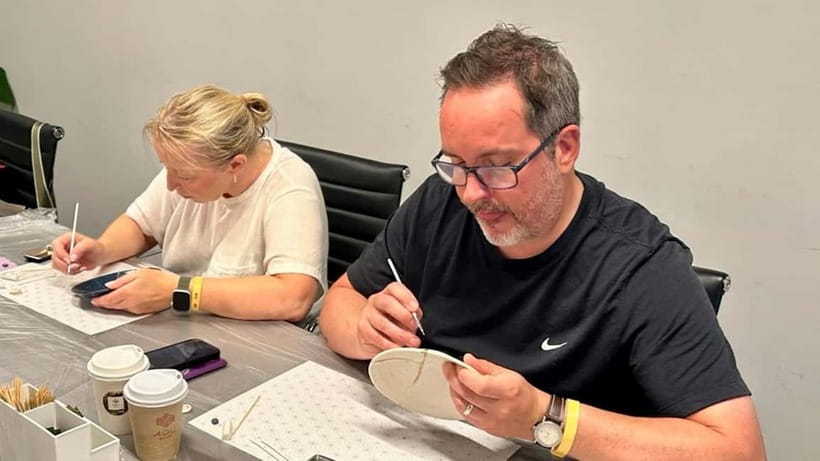
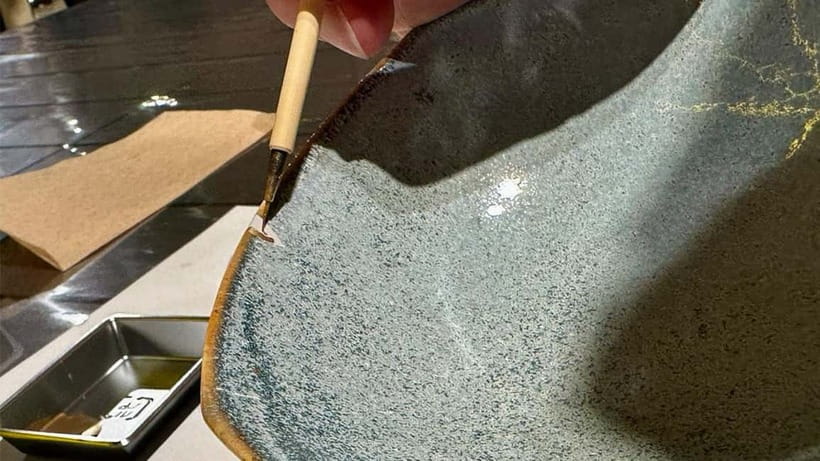
The central part of the class is joining the broken sections and marking the repair with a metallic finish. Synthetic lacquer replaces natural lacquer, while metallic powder is used instead of real gold. These choices make the 90-minute schedule possible and keep the activity accessible to beginners.
You should think of this as a craft version of Kintsugi inspired by the traditional method. It gives you the look and basic idea, but not the long curing and finishing process associated with authentic natural-lacquer work. Traditionally, a Kintsugi repair can take about a month. Here, you finish the piece during the workshop.
The work rewards patience more than artistic skill. You need to pay attention to how the ceramic sections meet and how much material you apply. The instructor can correct or guide you, but the final line will still carry the small marks of your own work. That is part of the appeal.
The class also offers a calm contrast to a full day of sightseeing. You sit, focus on your hands, and watch a damaged object take on a new form. If you enjoy making things, this is likely to be more satisfying than a short demonstration where the expert does everything for you.
Packing your repaired souvenir for the journey home
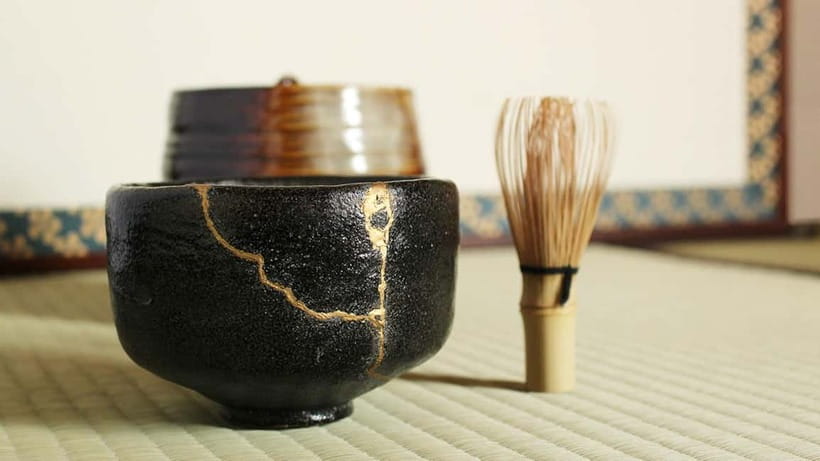
At the end, you keep the repaired ceramic piece. The workshop packages it carefully, which is especially helpful if you still have several days in Japan or plan to place it in checked luggage. The packaging is more than a nice touch: a newly repaired ceramic item needs protection from knocks inside a suitcase.
Your finished piece works best as a decorative object or keepsake. Do not use it in the microwave. The repaired item carries a risk of ignition, and the workshop specifically recommends decorative use only.
That limitation may disappoint you if you hoped to use the plate for meals. Still, it is clear and easy to plan around. You can display it on a shelf, use it as a small decorative tray if appropriate, or give it as a personal gift.
The souvenir also has a story that a shop-bought plate does not. You chose the piece, followed the repair steps, and left the cracks visible rather than covering them. For many people, that personal connection is the strongest reason to choose this class.
Same city, a completely different kind of day:
- Tokyo: teamLab Planets TOKYO Digital Art Museum Entry Ticket
★ 4.6 · 9,779 reviews - Mt Fuji & Hakone Cruise, Drum Show Bullet Train 1 Day from Tokyo
★ 4.0 · 7,413 reviews - Tokyo: Shinjuku Food Tour (13 Dishes at 4 Local Eateries)
★ 5.0 · 6,603 reviews - Tokyo Mt Fuji 5th St & Hakone Cruise Bus Tour w/Bullet Train
★ 4.4 · 5,024 reviews
How the 90 minutes are likely to feel
The short format works well for a Tokyo itinerary. You do not need to spend an entire afternoon at the venue, and the central location lets you continue on to Ginza shops or another nearby sight.
A typical flow includes:
- Meeting the instructor and settling into the private room
- Learning about Kintsugi and the workshop’s modern materials
- Choosing or receiving a cracked ceramic piece
- Following step-by-step repair instructions
- Applying the metallic finish with help from the instructor
- Having the piece packaged for transport
- Taking a drink during the session
The pace can vary with the group. Since there may be up to eight participants, the instructor sometimes needs to pause while someone catches up. If you want long stretches of independent work, this may feel slightly structured. If you are new to crafts, the guided pace is reassuring.
The class is best approached as a first taste of Kintsugi. You will learn the basic concept and make a finished object, but you will not master the full traditional craft in one sitting. The compact schedule is a strength for holiday planning and a limit for anyone seeking serious technical training.
Is $75 a fair price in Tokyo?
At $75 per person, the cost is not low for a 90-minute activity. You are paying for more than the ceramic itself, though. The fee covers instruction, all tools and materials, the piece to restore, a drink, the private workshop space, and protective packaging.
I think the value is strongest if you want a creative cultural activity with a finished souvenir. The class saves you from buying supplies, finding a broken ceramic piece, and learning the process alone. It also gives you direct help with a craft that can be difficult to understand from a quick museum visit or online video.
The value is weaker if you mainly want an inexpensive souvenir or a full traditional Kintsugi course. The material is synthetic, the metallic powder is not gold, and the item is decorative rather than suitable for regular table use.
For couples, friends, and families with older children, the cost can make sense because you share a quiet activity and each person leaves with a different result. Children must be at least 10 years old. The class is not suitable for babies under 1 year, people with mobility impairments, people with a cold, or people with hearing impairments, according to the stated participation limits.
Who should book this experience
I would choose this class for you if you like Japanese crafts, hands-on museums, thoughtful souvenirs, or activities that give you a break from sightseeing. It also suits first-time visitors who want to experience Ginza without spending the afternoon in high-end shops.
Families can consider it for children aged 10 and older. An instructor has worked well with children aged 10 and 14, though you should remember that the materials and ceramic pieces require care. Younger children are not accepted.
This is also a good option for a rainy day or for a group with mixed interests. Someone who does not care about shopping can enjoy the workshop while others explore Ginza before or afterward. The central setting makes that split plan practical.
You may want to skip it if you are looking for a formal lesson in traditional natural-lacquer Kintsugi. You should also pass if you need an accessible venue, cannot sit and work with small objects, or want a repaired dish that is safe for microwave use.
Practical tips before you go
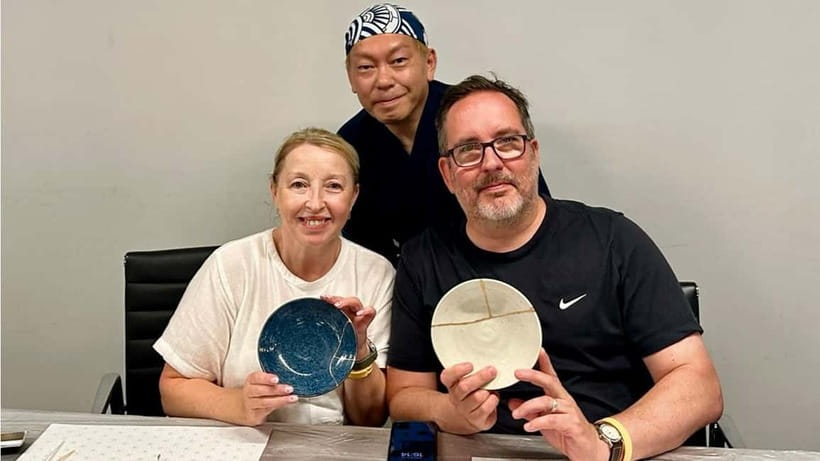
Allow enough time to reach the building, even though it is close to the station. Ginza has many entrances and large buildings, so confirm the exact meeting details and watch for an email if the venue changes.
Wear something that lets you work comfortably at a table. The provided tools and materials mean you do not need to bring a kit or ceramic item. You also do not need to prepare a broken piece in advance.
Keep the end of your day in mind. Your ceramic will be packaged, but it is still a fragile souvenir. If you are flying soon after the class, place it carefully among soft clothing and follow the instructor’s packing advice.
Finally, set the right goal. You are not trying to produce a flawless professional repair. You are making a small object whose visible crack tells the story of the process.
Should you book the Ginza Kintsugi workshop?
Book it if you want a personal, creative souvenir and an easy cultural activity close to central Tokyo transport. The small class, English or Japanese guidance, supplied materials, careful packaging, and friendly instructors such as Tatsu and Teki Sensei make it approachable for beginners.
Think twice if $75 feels high for a short class, if you want genuine gold and natural lacquer, or if you need a functional piece of tableware. For everyone else, this is a focused and memorable way to spend 90 minutes in Ginza, with a repaired ceramic object to remind you that a flaw can become part of the design.
FAQ
Where is the Kintsugi workshop held?
The meeting point is Cafe AOU Ginza forest, located on the ground floor of the Daiwa Ginza Building, about three minutes from Ginza Station.
How long does the workshop last?
The workshop lasts 90 minutes. Starting times vary, so you should check availability when selecting a date.
What is included in the price?
The price includes the 90-minute workshop, all tools and materials, a ceramic piece to restore, instructor guidance, and a complimentary soft drink.
Can I take my repaired ceramic piece home?
Yes. You take home the ceramic piece you repaired, and it is packaged to help protect it during your journey.
Is this traditional natural-lacquer Kintsugi?
No. Traditional Kintsugi can take about a month. This workshop uses synthetic lacquer and metallic powder so you can complete the repair within 90 minutes.
Can I use the repaired piece in a microwave?
No. The repaired item is recommended for decorative use only and is not microwave-safe because of a risk of ignition.
Is the workshop available in English?
Yes. Instruction is available in English and Japanese. The group is limited to eight participants.
Just added around Tokyo
- Tokyo: Customizable Private Guided Walking Tour★ 4.5 · 129 reviews
- Private Harajuku Omotesando Architecture Tour★ 4.9 · 18 reviews
- Tokyo: Guided Helicopter Ride★ 4.9 · 24 reviews
- Tokyo: Guided Walking Tour of Tsukiji Market with Lunch★ 4.4 · 24 reviews
- Tokyo: Private Personalized Local Food Tour★ 4.5 · 101 reviews
- Tokyo GINZA: KONPARU Japanese Cabaret Show with Drink★ 4.8 · 38 reviews
- Tokyo: Guided Walking Tour of Tsukiji Market with Breakfast★ 4.4 · 134 reviews
- Tokyo: Gotokuji Cat Temple, Shinjuku Cat Cafe & 3D Cat Tour★ 4.9 · 38 reviews
Tokyo Tours, compared.

Mt Fuji and Hakone 1-Day Bus Tour Return by Bullet Train
Read our review →


teamLab Planets TOKYO Digital Art Museum Entry Ticket
Read our review →
Mt Fuji & Hakone Cruise, Drum Show Bullet Train 1 Day from Tokyo
Read our review →
Shinjuku Food Tour (13 Dishes at 4 Local Eateries)
Read our review →
Tokyo Mt Fuji 5th St & Hakone Cruise Bus Tour w/Bullet Train
Read our review →