REVIEW · TOKYO TOURS
Tokyo Asakusa Rickshaw Tour
Asakusa is one of Tokyo’s best neighborhoods for seeing old and new Japan side by side. From a rickshaw, you glide past Edo-era houses, small shrines, and cherry trees, then look up to spot the Asahi Beer Headquarters and Tokyo Skytree. The ride gives you a useful overview without asking your feet to cover every street.
I especially like the flexible route and the personal attention from the driver. Guides such as Koko, Kei, Micchy, Taisei, and Yusuke have been praised for their humor, local stories, photo help, and restaurant suggestions. The main drawback is space: two adults fit, but the 74-centimeter-wide seat can feel snug, so larger passengers should book separate rickshaws.
In This Review
- Key Points
- Why a Rickshaw Works So Well in Asakusa
- Choosing Between 30 Minutes and Three Hours
- From Station Street to Edo-Era Asakusa
- Ushijima Shrine and the Three-Entrance Gate
- Honryuin Matsuchiyama Shoden and the Mystery of the Radishes
- Imado Shrine, Cats, and the Beckoning Cat
- Sensoji, Asakusa Shrine, and the Limits of the Ride
- Tokyo Skytree, the Sumida River, and the Asahi Building
- What the Guides Add
- Comfort, Weather, and Family Details
- Is $42.90 a Good Value?
- Who Should Book This Asakusa Ride?
- Final Verdict: Book It for the Personal View of Asakusa
- FAQ
- Where does the Tokyo Asakusa Rickshaw Tour begin?
- How long does the rickshaw tour last?
- Can I customize the rickshaw route?
- Can the rickshaw ride through Sensoji Temple?
- How many people fit in one rickshaw?
- What happens if bad weather cancels the tour?
Key Points
- A private ride with a flexible route: Tell your guide if you care most about shrines, old streets, photography, entertainment districts, or family-friendly stops.
- Strong photo opportunities: Sumida River views, Tokyo Skytree, Sensoji’s colorful gates, and the Asahi building all make easy picture stops.
- Good for a quick Asakusa overview: A 30 or 45-minute ride can help you get oriented before exploring on foot.
- Longer tours reach more local sights: Up to three hours gives you time for Ushijima Shrine, Imado Shrine, Honryuin Matsuchiyama Shoden, Rokku Street, and Sumida Park.
- The seat size matters: Two adults can ride together, but booking one rickshaw per person may be more comfortable.
- A weather-dependent outing: Rain gear, rugs, and seat warmers may help in poor conditions, but the operator can cancel for bad weather.
Why a Rickshaw Works So Well in Asakusa
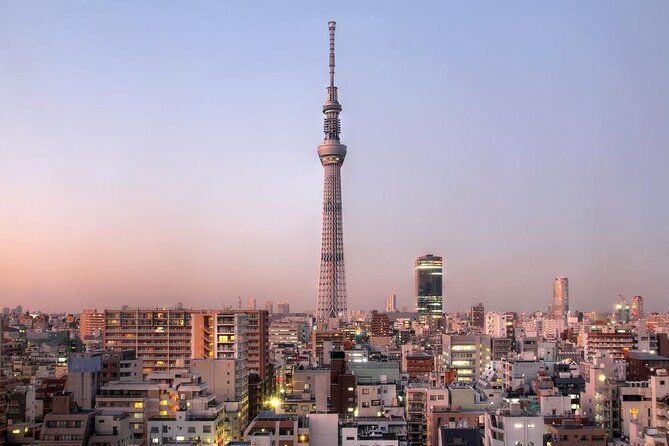
Asakusa can feel confusing at first. Sensoji Temple draws huge crowds, side streets twist around old shops and homes, and modern Tokyo keeps appearing between traditional buildings. A rickshaw solves part of that problem by giving you a moving introduction to the neighborhood.
You sit above street level while your driver pedals and narrates. You do not have to study a map, watch every crossing, or decide which small shrine deserves a visit. Instead, you can look around and ask questions as Asakusa changes from temple district to entertainment quarter to quiet riverfront.
This is a private tour, so only your group rides together. That matters because the experience feels more like a local introduction than a standard group excursion. You can ask to focus on religious sites, architecture, anime connections, photo stops, or the older streets of Asakusa.
The tour begins outside Asakusa Station at 1-chōme-1-4 Asakusa. You make your own way there, meet the driver, and settle into the rickshaw. The usual ending is near Kan’non-dōri, but you can discuss another drop-off with your guide. A different finishing point may bring an extra fee.
Other Tokyo days people book alongside this one:
- Mt Fuji and Hakone 1-Day Bus Tour Return by Bullet Train
★ 5.0 · 26,383 reviews - 1-Day Tokyo Bus Tour
★ 5.0 · 14,250 reviews - Tokyo: TOKYO SKYTREE® Admission ticket
★ 4.5 · 11,192 reviews
Choosing Between 30 Minutes and Three Hours
The length you select changes the character of the outing.
A 30-minute ride is best for a quick introduction. You will not see every place listed for the longer options, but you can get a feel for Asakusa, hear a few local stories, and stop for photos. This works well near the start of your Tokyo visit, especially if you plan to return later on foot.
A 45-minute ride gives you a little more breathing room. You can spend time on a shrine or viewpoint without rushing from one stop to the next. It is a sensible choice if you want the rickshaw itself to be the main experience but still want a useful neighborhood tour.
The longer options, including the three-hour ride, make more sense if you want several stops and a slower pace. You might combine the Sumida River area with Ushijima Shrine, Imado Shrine, Honryuin Matsuchiyama Shoden, old entertainment streets, and photo stops facing Tokyo Skytree.
I would not book the longest version simply because more time sounds better. The rickshaw seat is narrow, and sitting for several hours may not suit everyone. For most people, 45 minutes to 90 minutes offers a good balance. Choose three hours if you enjoy long, unhurried sightseeing and want to ask plenty of questions.
From Station Street to Edo-Era Asakusa
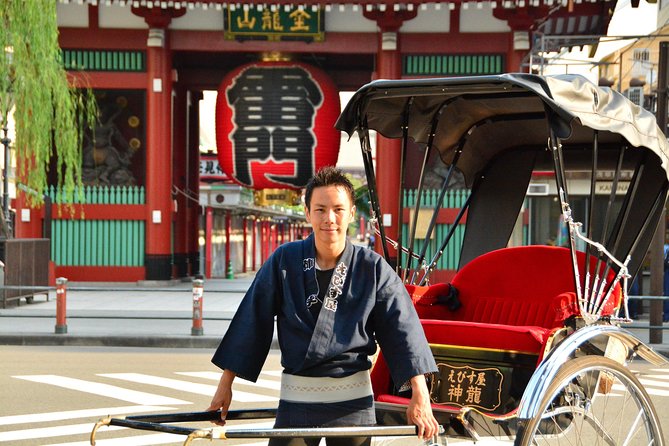
Your guide can take you through streets lined with old housing fronts and shop buildings that recall the Edo period. These are not just grand monuments. They show how Asakusa’s appeal comes from ordinary details: narrow lanes, traditional facades, small businesses, and older homes alongside modern Tokyo.
You may also pass a quirky street decorated with raccoon figures. The raccoon theme gives the ride a playful break from temples and formal shrines. It is the sort of detail you might miss if you stayed only on the main route to Sensoji.
Asakusa also has a long connection with entertainment. One stop may be Japan’s oldest amusement park still in operation. Another is the former Rokku entertainment district, once filled with cinemas and theaters before the war. The area now has a retro feel, and your guide can help explain how Asakusa changed from a major entertainment center into the neighborhood you see today.
The tour may also pass a venue that remains a center for comedy and stage shows. This is useful context because Asakusa is not only a religious destination. It has long been a place for leisure, performances, street food, and everyday city life.
Ushijima Shrine and the Three-Entrance Gate
Ushijima Shrine is one of the more interesting stops because its details invite questions. The shrine has a gate with three entrances rather than the single entrance many people expect at a Shinto shrine.
Your guide explains the meaning behind that design and gives you a better sense of how Shinto spaces work. The visit is usually about 15 minutes, and admission is not included, though the supplied tour details do not specify a separate admission charge.
This stop is valuable for anyone who wants more than a quick photograph. Small shrines can be easy to overlook in Tokyo, yet they often reveal local customs more clearly than the busiest landmark. You can pause, listen, and notice the layout without the pressure of a large sightseeing group.
Same city, a completely different kind of day:
- Tokyo: teamLab Planets TOKYO Digital Art Museum Entry Ticket
★ 4.6 · 9,779 reviews - Mt Fuji & Hakone Cruise, Drum Show Bullet Train 1 Day from Tokyo
★ 4.0 · 7,413 reviews - Tokyo: Shinjuku Food Tour (13 Dishes at 4 Local Eateries)
★ 5.0 · 6,603 reviews - Tokyo Mt Fuji 5th St & Hakone Cruise Bus Tour w/Bullet Train
★ 4.4 · 5,024 reviews
Honryuin Matsuchiyama Shoden and the Mystery of the Radishes
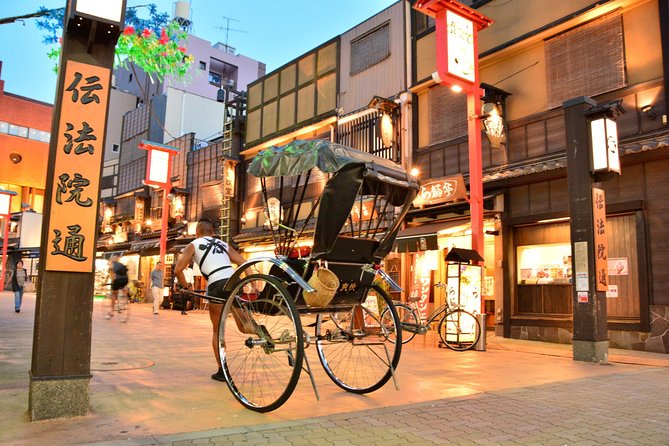
Honryuin Matsuchiyama Shoden is a Buddhist temple connected with Sensoji. Its most memorable feature is the repeated appearance of radishes, both at the temple and on its lanterns.
The guide explains why the radish is important here. That small symbol makes the temple easier to remember, and it gives you a concrete way to understand how Buddhist traditions use objects and images to express ideas.
The temple visit usually lasts about 15 minutes. Admission is not included. Since the rickshaw cannot operate inside the Sensoji and Asakusa Temple grounds, including the temple buildings, temple grounds, and Nakamise shopping street, you should expect to get out and walk at the appropriate points.
That restriction is sensible, but it affects your expectations. This is not a ride directly through Sensoji. The rickshaw brings you around the district, then your guide shows you where to continue on foot.
Imado Shrine, Cats, and the Beckoning Cat
Imado Shrine takes a lighter turn. It features cat figures, especially manekineko, the familiar beckoning cat associated with good fortune.
This is a fun stop for families and anyone interested in Japanese symbols. It also connects neatly with the many cat images you see around Japan. The guide can explain the meaning behind the figures rather than leaving you with only a quick photo.
Like the other shrine stops, Imado Shrine is listed as a 15-minute visit with admission not included. The route may not include every stop on shorter rides, so tell your guide what matters most before setting off.
Sensoji, Asakusa Shrine, and the Limits of the Ride
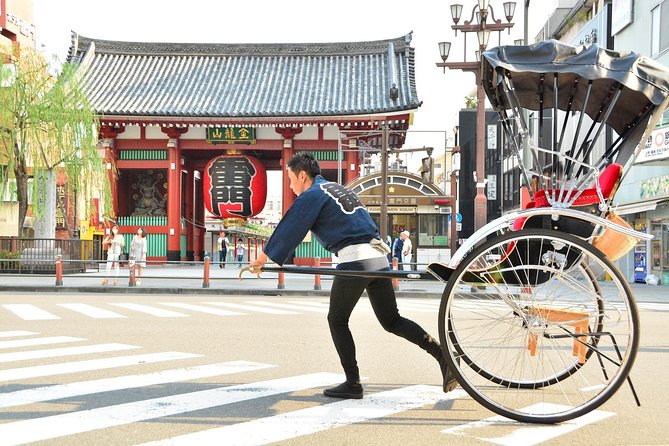
Sensoji Temple is the heart of Asakusa, with its famous bright gate and the shopping street leading toward the temple. Asakusa Shrine sits on the temple grounds, giving you a clear place to discuss the difference between Shinto and Buddhism.
That pairing is one of the tour’s strongest teaching moments. Your guide can explain how the two traditions exist side by side in Japan. The point is not to turn the visit into a lecture. It is to help you understand why a shrine and a Buddhist temple can occupy the same religious complex.
Remember that the rickshaw cannot ride through Sensoji, Asakusa Temple, the temple grounds, or Nakamise shopping street. You will need to explore these areas on foot. This is also one reason a rickshaw tour works best as part of your Asakusa visit, not as a complete replacement for walking around Sensoji.
Tokyo Skytree, the Sumida River, and the Asahi Building
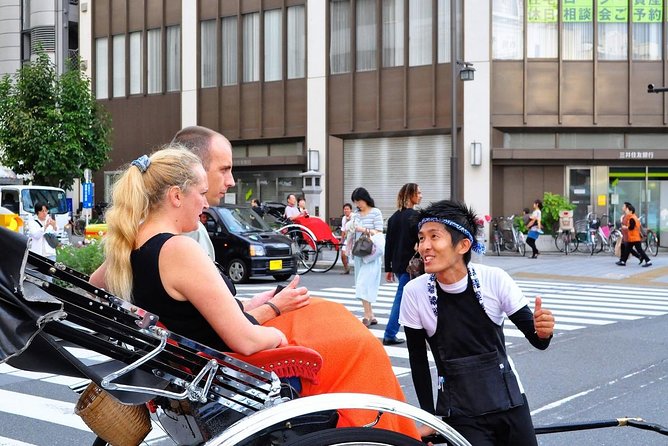
Across the Sumida River, Tokyo Skytree creates one of the tour’s easiest photo stops. The open view gives you a break from narrow streets and provides a strong contrast between old Asakusa and modern Tokyo.
Sumida Park follows the river and is especially appealing during cherry blossom season. Maple trees add color at another time of year, while the park itself gives you a place to pause between busy sightseeing stops.
The Asahi Beer Headquarters adds another unmistakable Tokyo landmark. Look for the golden flame shape on top of the building. Your guide can point it out as you move through the riverfront area, and you get a quick lesson in how modern corporate Tokyo shares space with shrines, temples, and old neighborhoods.
These stops are not all about architecture. They help you read the city. In a short stretch, you can see a historic shrine, a broad river, a famous tower, and a modern office building.
What the Guides Add
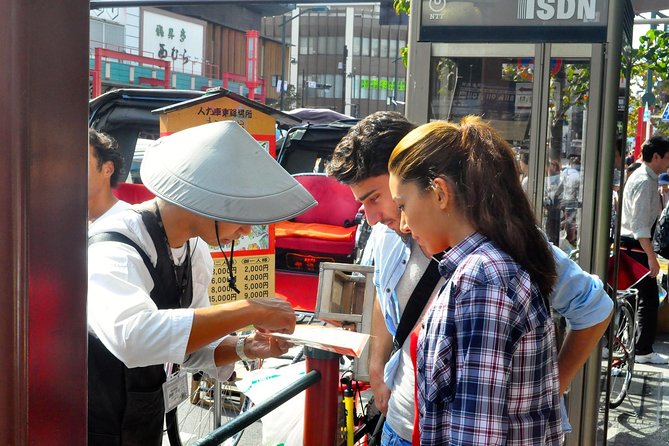
The driver is the key to the experience. You are not simply hiring a seat with wheels. You are paying for someone who pedals, navigates, explains, and often helps with photos.
Guide personalities vary, but the names appearing in the supplied feedback include Koko, Kei, Micchy, Taisei, Yusuke, Nene, BUCHI, Takumi, and Kazumasu-san. Koko is described as friendly, fit, attentive, and good at explaining local sights. Taisei is praised for his energy, humor, route skills, and photography. Micchy is noted for years of rickshaw experience and a personal approach.
Yusuke helped passengers with photos and kept the mood light, while Takumi provided information about Japanese language, culture, and history along with restaurant suggestions. A 12-year-old passenger enjoyed an anime connection shown by Kazumasu-san, who pointed out a scene associated with Demon Slayer.
English and Japanese-speaking drivers are available, subject to availability. Select your preferred language when booking, but understand that a particular named guide cannot be guaranteed.
Comfort, Weather, and Family Details
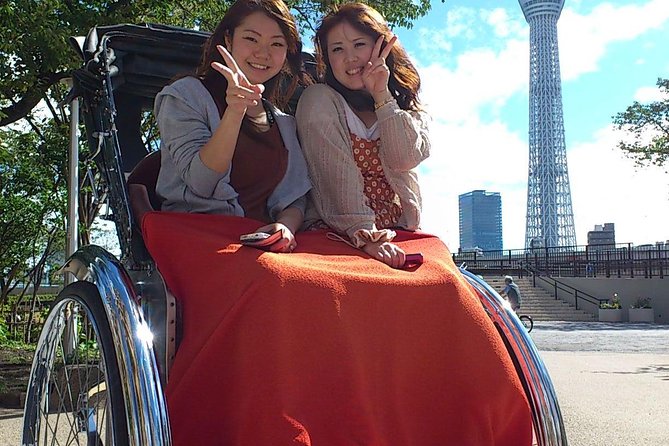
The rickshaw seats two adults, but the width is only 74 centimeters. Two adults can fit, and one couple specifically found the seat snug but comfortable. Still, if you are broad-shouldered or want more personal space, book a separate rickshaw for each passenger.
If you need two rickshaws traveling together, reserve them in advance. An extra rickshaw with an English-speaking guide might not be available on the day. The operator cannot guarantee space for passengers who discover at the meeting point that one rickshaw is too tight.
Children aged five and under can ride free on an adult’s lap. Up to two small children can ride with two adults. If a five-year-old uses one of the two seats, that child must be booked as an adult. Children aged six and over pay the adult rate.
The experience requires good weather. If rain causes cancellation, you can choose another date or receive a full refund. Some rides continue in light rain with covers, rugs, and warm seating, but you should bring sensible clothing and avoid treating this as an all-weather guarantee.
Is $42.90 a Good Value?
At about $42.90 per person, the tour costs more than simply walking through Asakusa. The value comes from the driver, the private format, the route planning, the historical explanation, and the chance to cover more ground with less effort.
For a short ride, you are paying mainly for orientation and atmosphere. That can be worthwhile early in a Tokyo stay, when you want to understand the district before returning to its temples and shops on foot.
The price makes more sense for a private group of two or a family that values convenience. Group discounts may be available, and a longer ride spreads the cost across several hours of guiding and sightseeing. Food, drinks, and hotel pickup are not included, so plan to reach the station meeting point yourself.
The tour is booked an average of 54 days ahead, which suggests that advance planning is wise, especially if you need separate rickshaws or an English-speaking guide. Free cancellation is available until 24 hours before the start time. After that point, changes and refunds are generally not accepted unless poor weather forces the operator to cancel.
Who Should Book This Asakusa Ride?
I would recommend it to first-time Tokyo visitors who want a quick neighborhood introduction, families who need a break from walking, couples looking for a memorable photo outing, and anyone interested in local religious sites.
It also suits visitors with limited time. A 30 or 45-minute ride can show you the shape of Asakusa before you decide where to spend the rest of the day.
You should think twice if you dislike confined seating, want to spend most of your time inside Sensoji, or expect a fixed route covering every listed stop. The tour is customizable, but a short duration cannot include everything. You also need to accept that the driver’s availability and language may vary.
Final Verdict: Book It for the Personal View of Asakusa
Book the Tokyo Asakusa Rickshaw Tour if you want more than a checklist of major sights. Its best feature is the human scale: your driver can explain a three-entrance shrine gate, point out a street of raccoons, show you a Skytree photo spot, and suggest where to eat afterward.
Choose 45 to 90 minutes for the best balance of comfort, sightseeing, and price. Book separate rickshaws if space may be an issue, and reserve early if you need English guidance or a particular date. If you make room for a little walking around Sensoji afterward, this becomes a lively and useful introduction to one of Tokyo’s most layered neighborhoods.
FAQ
Where does the Tokyo Asakusa Rickshaw Tour begin?
The meeting point is outside Asakusa Station at 1-chōme-1-4 Asakusa, Taito City, Tokyo 111-0032, Japan. Hotel pickup and drop-off are not included.
How long does the rickshaw tour last?
Available durations range from about 30 minutes to three hours. The places you see depend on the duration and the route you choose with your guide.
Can I customize the rickshaw route?
Yes. You can tell your guide what interests you most, such as shrines, temples, old streets, entertainment areas, photography, or Tokyo Skytree views.
Can the rickshaw ride through Sensoji Temple?
No. Rickshaws are not allowed inside the Sensoji and Asakusa Temple area, including the temple buildings, grounds, and Nakamise shopping street. You will need to walk through those areas.
How many people fit in one rickshaw?
A maximum of two adults can ride in one rickshaw. Up to two children aged five or under may ride with two adults if the children sit on an adult’s lap.
What happens if bad weather cancels the tour?
If the operator cancels because of poor weather, you can select another date or receive a full refund. For other cancellations, you must cancel at least 24 hours before the start time to receive a full refund.
Just added around Tokyo
- Tokyo: Customizable Private Guided Walking Tour★ 4.5 · 129 reviews
- Private Harajuku Omotesando Architecture Tour★ 4.9 · 18 reviews
- Tokyo: Guided Helicopter Ride★ 4.9 · 24 reviews
- Tokyo: Guided Walking Tour of Tsukiji Market with Lunch★ 4.4 · 24 reviews
- Tokyo: Private Personalized Local Food Tour★ 4.5 · 101 reviews
- Tokyo GINZA: KONPARU Japanese Cabaret Show with Drink★ 4.8 · 38 reviews
- Tokyo: Guided Walking Tour of Tsukiji Market with Breakfast★ 4.4 · 134 reviews
- Tokyo: Gotokuji Cat Temple, Shinjuku Cat Cafe & 3D Cat Tour★ 4.9 · 38 reviews
Tokyo Tours, compared.
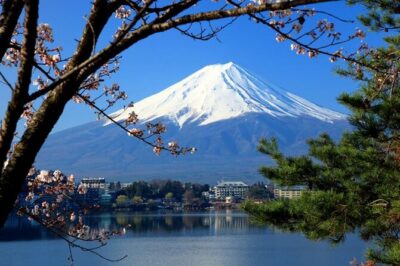
Mt Fuji and Hakone 1-Day Bus Tour Return by Bullet Train
Read our review →
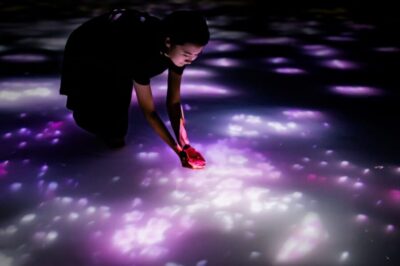
teamLab Planets TOKYO Digital Art Museum Entry Ticket
Read our review →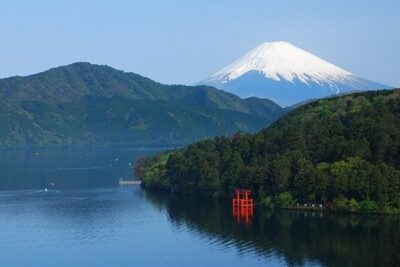
Mt Fuji & Hakone Cruise, Drum Show Bullet Train 1 Day from Tokyo
Read our review →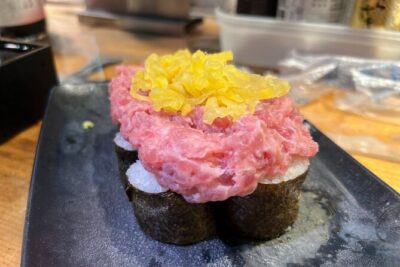
Shinjuku Food Tour (13 Dishes at 4 Local Eateries)
Read our review →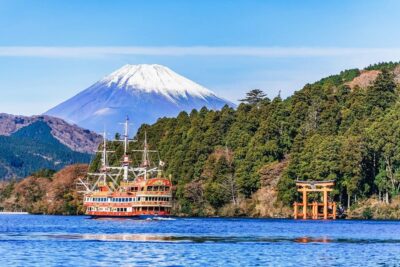
Tokyo Mt Fuji 5th St & Hakone Cruise Bus Tour w/Bullet Train
Read our review →