REVIEW · TOKYO TOURS
Tokyo After 5: Local Eats, Drinks & Culture Walk
Tokyo’s evening food culture is less about grand restaurants than about knowing which alley, counter, or basement to enter. This 210-minute walk takes you from Ginza’s depachika to Yurakucho’s lantern-lit yakitori lanes, then across to Tsukishima for hands-on monja-yaki.
I like the small group of eight, which makes it easier to ask questions and fit into tiny neighborhood restaurants. I also like the mix of eating and context: you taste the food, then learn why it matters. The main catch is that this is not a good choice for vegetarians, vegans, or anyone needing gluten-free food, and the subway transfers involve walking and stairs.
In This Review
- Key points
- Tokyo after work, one bite at a time
- Meeting at Mitsukoshi Ginza
- Ginza’s depachika food hall
- Yurakucho’s yakitori alleys
- Tsukishima and the monja-yaki hotplate
- Wagashi and the meaning of Japanese seasons
- What the small group changes
- Food restrictions, age, and practical limits
- Is $89 good value?
- Who should book this evening walk?
- Should you book Tokyo After 5?
- FAQ
- Where does the tour meet?
- Which subway lines serve the meeting point?
- How long does the tour last?
- Where does the tour finish?
- What food is included?
- Are drinks included?
- Can people under 20 drink alcohol?
- Is the tour suitable for vegetarians, vegans, or people avoiding gluten?
- What is the maximum group size?
- What language is the tour conducted in?
- What is included besides food and drinks?
- Can I cancel for a refund?
- Can I pay later?
Key points
- Depachika first: Learn how Tokyo’s department-store basement food halls present seasonal dishes, sweets, and everyday comfort food.
- Yakitori in Yurakucho: Eat grilled skewers where office workers gather after work, with two local drinks included.
- Cook your own monja-yaki: Use the hotplate in Tsukishima’s Monja Town, the dish’s traditional home.
- Seasonal wagashi: Try Japanese sweets shaped by the time of year, ingredients, and careful presentation.
- Small group format: With no more than eight people, you get more room for questions and help at the grill.
- Useful first-night introduction: The tour removes much of the worry around ordering, etiquette, and finding small local places.
Tokyo after work, one bite at a time
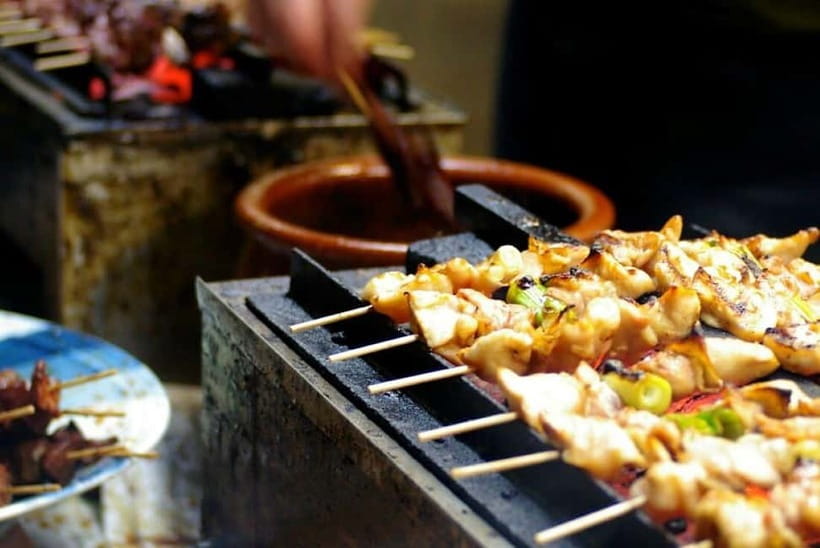
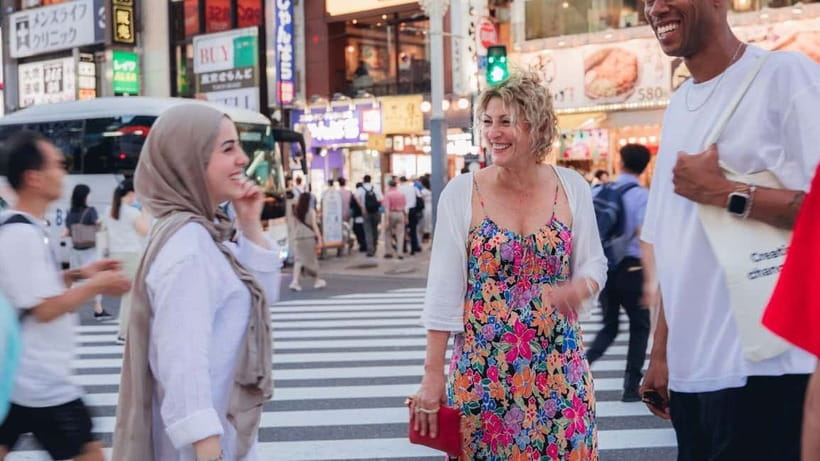
This is a food walk, but food is only half the point. You are seeing how Tokyo residents spend the hours between office closing time and heading home. The route links three very different settings: polished Ginza, the informal drinking lanes around Yurakucho, and Tsukishima, a neighborhood known for monja-yaki.
The experience costs $89 per person. That is not cheap for three and a half hours, but the fee includes three food tastings, two drinks, a local English-speaking guide, and two subway tickets. You are also paying for the social ease of entering places you might pass without understanding, plus help with ordering and cooking.
I would think of it as an evening orientation rather than a meal replacement. The portions are intended to let you sample several foods, not leave you stuffed. One past participant described the amount as just enough, while another enjoyed extra food such as melon bread and a chocolate-filled crepe. Extras are not guaranteed, so plan to buy more if you have a large appetite.
Other Tokyo days people book alongside this one:
- Mt Fuji and Hakone 1-Day Bus Tour Return by Bullet Train
★ 5.0 · 26,383 reviews - 1-Day Tokyo Bus Tour
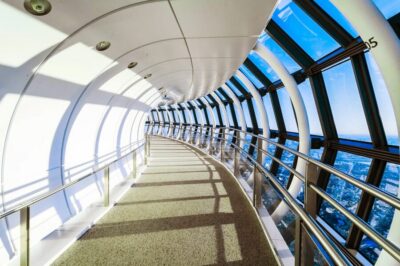
★ 5.0 · 14,250 reviews - Tokyo: TOKYO SKYTREE® Admission ticket
★ 4.5 · 11,192 reviews
Meeting at Mitsukoshi Ginza
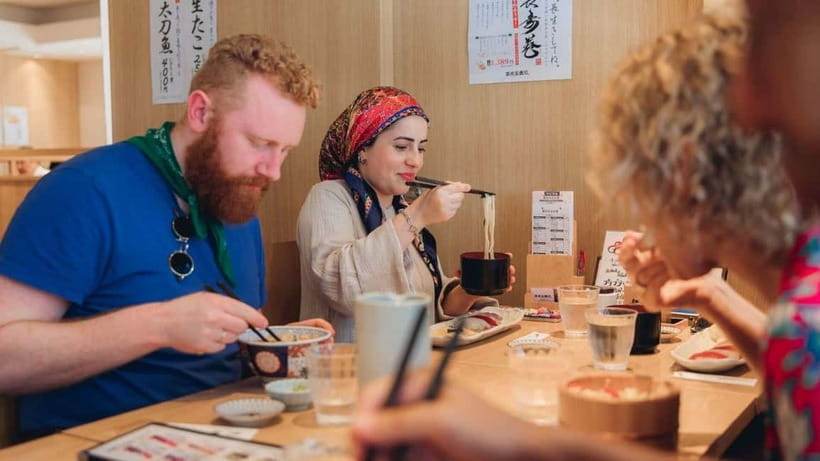
The meeting point is outside Mitsukoshi Ginza, beside the life-size seated Lion statue. This is a sensible location because it is directly by Ginza Station’s A7 exit and served by the Ginza, Hibiya, and Marunouchi subway lines.
Give yourself time to find the statue. One person had trouble locating the guide because the booking was made through a third party and the operating company name was not clear. I would save the meeting instructions and the provider name, Intrepid Urban Adventures, before leaving your hotel.
The tour finishes in Ginza, but not necessarily at the exact starting spot. That makes it handy for continuing your evening in the same part of town. Wear shoes you can walk in comfortably. A past participant estimated about 9,000 steps, and the route includes subway stations with stairs.
Ginza’s depachika food hall
Your first stop is a depachika, the basement food hall beneath a department store. These spaces are a practical part of city life, not just sightseeing displays. Tokyo residents come here for prepared dishes, boxed meals, sweets, gifts, and seasonal specialties presented with great care.
A guide can make this stop much more useful than a quick look on your own. You learn how the food is arranged, what kinds of dishes are common, and how seasonal sweets fit into Japanese food customs. It is a good place to notice the contrast between everyday convenience and formal presentation.
The food hall also sets up the rest of the evening. You begin with food that is precise and polished, then move toward smoky skewers and a casual hotplate meal. If you are new to Japan, this early explanation can help you recognize ingredients and understand basic etiquette before sitting down in smaller restaurants.
Do not expect a full tasting menu here. The listed food tastings focus on yakitori, monja-yaki, and wagashi, with the depachika serving as a guided food and culture stop. The exact order or selection may vary.
Yurakucho’s yakitori alleys
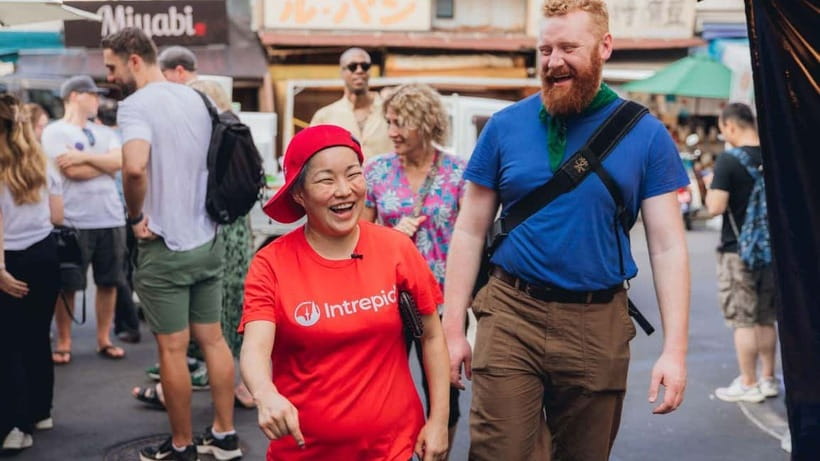
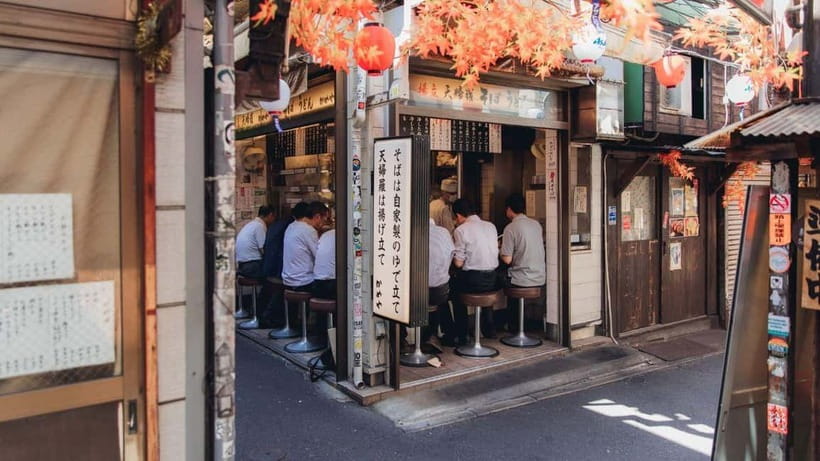
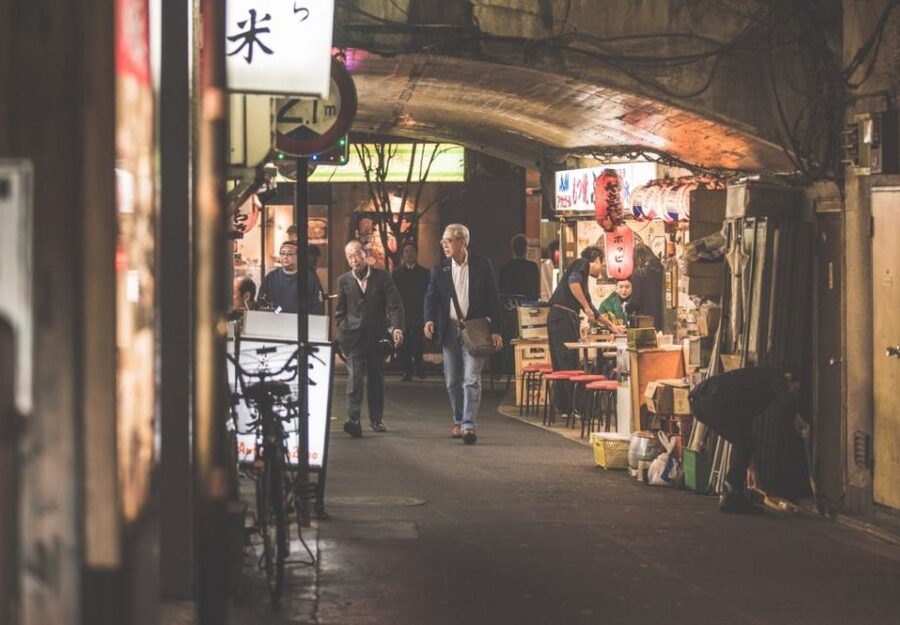
The route then heads to Yurakucho, where narrow lanes near the railway area fill with small eateries and after-work diners. The atmosphere is a sharp change from department-store Ginza. Lanterns, grill smoke, compact tables, and the steady flow of office workers give the area its own rhythm.
Yakitori is grilled chicken served on skewers, though the particular selection can include different cuts and vegetables. Here, the important lesson is not only what you eat but how the skewers are prepared and why this style of casual dining is tied to Tokyo’s workday.
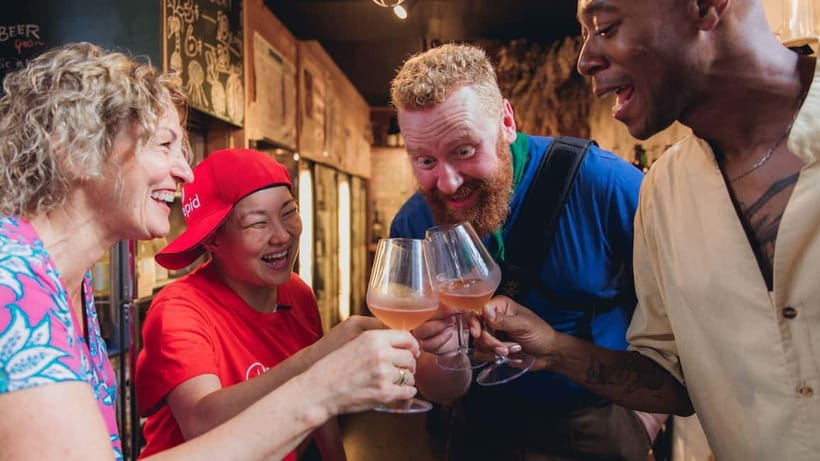
You get a local drink with the food. The included choices are sake, beer, or a soft drink, though alcohol is only served to people aged 20 or older. If you are under 20, you receive a non-alcoholic drink instead.
This is one of the strongest parts of the evening for anyone who wants local atmosphere without having to guess which doorway to enter. The group is small enough to sit together, and the guide can explain ordering and restaurant manners. Guides who have led this experience, including Tsunematsu Hidenori, Yuki, Kirir, Meg, and Yoshi, have been singled out for being friendly, patient, and good company.
The restaurant setting may be compact and informal. That is part of the appeal, but it can also mean close seating and occasional noise. One past account described a distracting child in a small restaurant. You should come ready for local dining as it is, not a quiet, polished meal with lots of personal space.
Same city, a completely different kind of day:
- Tokyo: teamLab Planets TOKYO Digital Art Museum Entry Ticket
★ 4.6 · 9,779 reviews - Mt Fuji & Hakone Cruise, Drum Show Bullet Train 1 Day from Tokyo
★ 4.0 · 7,413 reviews - Tokyo: Shinjuku Food Tour (13 Dishes at 4 Local Eateries)
★ 5.0 · 6,603 reviews - Tokyo Mt Fuji 5th St & Hakone Cruise Bus Tour w/Bullet Train
★ 4.4 · 5,024 reviews
Tsukishima and the monja-yaki hotplate
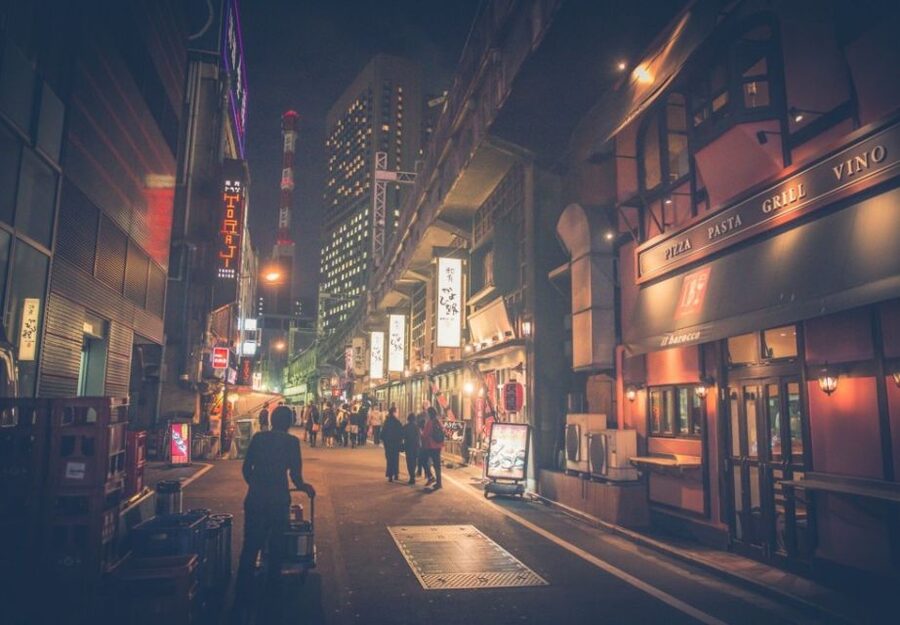
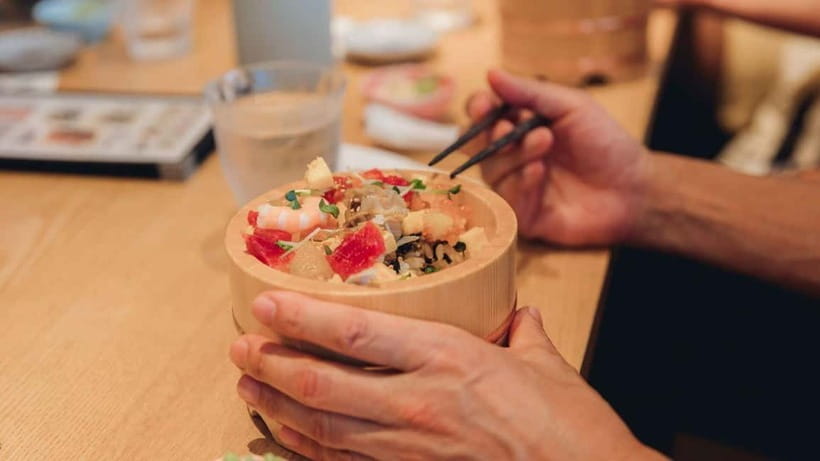
Next comes Tsukishima Monja Street, the home of monja-yaki. Monja is a savory batter dish cooked on a hotplate, with ingredients mixed in and chopped as it cooks. It is softer and more fluid than the better-known okonomiyaki, so the texture may take a moment to understand.
This is the most hands-on stop. You sit around the grill, watch the dish being prepared, and try the technique yourself. The guide and restaurant staff help you avoid turning the mixture into a messy pile, but some mess is part of the fun.
The meal may also include okonomiyaki, depending on the food selection. One account found the self-cooked dishes especially enjoyable, while another wished the guide had explained the ingredients and cooking methods in more detail. That is a fair point. If the guide moves quickly, ask what is in the batter, how the ingredients are cut, and why monja is associated with Tsukishima.
This stop is valuable because it turns dinner into participation. You are not simply handed a finished plate. You learn a small piece of local food practice, and you can repeat the dish later if you return to Monja Street or find it elsewhere in Tokyo.
The route between districts matters here. You use two subway tickets supplied by the tour, but the transfers add walking time and stairs. If someone in your party has limited mobility, ask for clearer details before booking. An 83-year-old participant had to leave because the amount of walking was more than expected.
Wagashi and the meaning of Japanese seasons
The sweet course is wagashi, traditional Japanese confectionery often made with ingredients such as red bean paste and mochi. The sweets are not merely sugary snacks. Their shapes, colors, and ingredients can reflect the season, a holiday, or an idea from Japanese aesthetics.
This stop gives balance to the smoky and savory food earlier in the evening. You learn how Japanese sweets can be designed to suggest flowers, weather, or a particular time of year. The exact wagashi selection will depend on what is available.
Wagashi can be unfamiliar. One person did not care for a red-bean-and-mochi sweet, while others enjoyed the range of food. That is normal. The tour is designed to introduce you to local tastes, not guarantee that every item will become a favorite.
If you have a strong sweet tooth, keep expectations measured. The tour includes a wagashi tasting, not unlimited desserts. Extra food and drinks can be purchased separately, and some past groups received additional treats, but those additions are not part of the stated inclusions.
What the small group changes
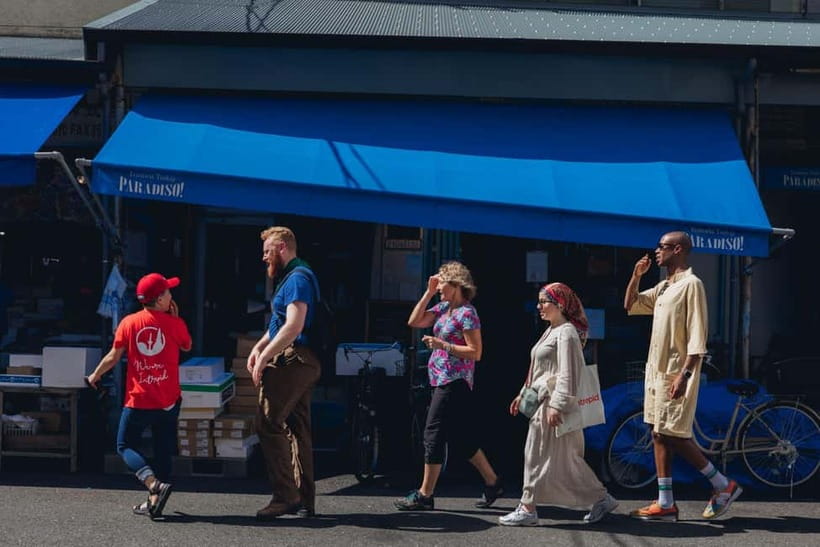
A maximum of eight people is a real advantage in Tokyo’s compact food businesses. A large group would be awkward around a hotplate or at a small counter. With eight or fewer, you have a better chance to hear the guide, ask about ingredients, and take part in cooking.
The group size also affects the social side. You spend much of the evening eating at shared tables, so it helps if you enjoy talking with people from different places. The pace is relaxed enough for conversation, but the schedule still has several stops and a subway ride.
The English-speaking guide is central to the experience. The best guides do more than translate a menu. They explain why a neighborhood looks the way it does, how a food is made, and what behavior is expected at the table. Tsunematsu Hidenori was praised for taking people to places they would not have found alone and for being enjoyable to talk with. Yuki, also called Snoopy by one participant, was remembered for patience and clear food knowledge. Other guides named in past experiences include Kirir, Meg, and Yoshi.
Guide quality can vary on any scheduled departure, and one person felt the food explanations could have been fuller. You can improve your own experience by asking direct questions rather than waiting for a lecture.
Food restrictions, age, and practical limits
This tour does not offer vegetarian, vegan, or gluten-free options. The stops are in establishments that cannot handle all dietary needs, so do not book it hoping to adapt the menu on the spot.
The minimum age is 12. Japan’s legal drinking age is 20, and anyone under 20 receives non-alcoholic drinks. The tour is therefore suitable for older children and teenagers who are comfortable with several food stops, but it is not a children’s activity built around familiar Western dishes.
You should also consider the physical side. The walk includes about 210 minutes of moving, standing, eating, and subway travel. The exact pace can vary, but the reported 9,000-step estimate gives you a useful guide. Stairs in stations may be a concern for anyone with limited mobility.
The tour is carbon neutral and operated by a B Corp certified company. That does not change what you eat or how far you walk, but it may matter if you prefer booking with a company that has formal environmental and social commitments.
Is $89 good value?
At $89, this experience is best judged against what it saves you from having to arrange yourself. You receive three named food tastings, two drinks, two subway tickets, a guide, and access to small local establishments. Ordering similar items independently could cost less, especially if you already understand Japanese menus and are comfortable entering tiny restaurants.
The tour earns its price through guidance and structure. You are not only paying for yakitori and monja. You are paying for a host who connects the food to Tokyo neighborhoods and helps you manage the hotplate, drinks, and etiquette.
It is good value if this is your first evening in Tokyo, if you want an easy introduction to Japanese food, or if you prefer a planned route. It is less compelling if you have already spent days eating around Ginza, Yurakucho, and Tsukishima, or if you want a large dinner rather than several samples.
The overall rating of 3.8 from 40 ratings suggests a generally positive but not flawless experience. The most consistent strengths are the guides, the local districts, the food variety, and the chance to visit places you might miss alone. The main cautions are walking, stairs, limited dietary flexibility, and occasional unevenness in how much food is explained.
Who should book this evening walk?
I would recommend it to first-time visitors who want a friendly start to Tokyo’s food scene without spending hours decoding menus. It also suits solo visitors and couples who like shared meals and conversation, since the small group creates an easy social setting.
Food-focused visitors will appreciate the range: department-store specialties, grilled skewers, monja-yaki, and wagashi. People who enjoy cooking will get the most from Tsukishima, where the meal becomes an activity rather than a simple tasting.
I would not choose it for a strict diet, a quiet luxury dining experience, or anyone who cannot manage several subway stairs and a long evening walk. If you want a full dinner, budget for extra purchases.
Should you book Tokyo After 5?
Book this tour if you want Tokyo explained through ordinary evening habits: buying food in a depachika, eating yakitori beside the tracks, and cooking monja-yaki around a shared hotplate. The neighborhood changes are the real appeal, and the small group makes the food stops workable.
Skip it if your diet rules out the included dishes or if 9,000 steps and subway stairs would be uncomfortable. For everyone else, $89 is a fair price for a guided introduction, two drinks, public transport, and access to local food settings that can be hard to approach on a first visit.
FAQ
Where does the tour meet?
It meets outside Mitsukoshi Ginza, beside the life-size seated Lion statue at 4-6-16 Ginza, Chuo-ku, Tokyo. The statue is near Ginza Station’s A7 exit.
Which subway lines serve the meeting point?
Ginza Station is served by the Tokyo Metro Ginza Line, Hibiya Line, and Marunouchi Line.
How long does the tour last?
The experience lasts 210 minutes, or three and a half hours.
Where does the tour finish?
It finishes in Ginza.
What food is included?
The included tastings are yakitori, monja-yaki, and wagashi.
Are drinks included?
Yes. Two local drinks are included. The choices are sake, beer, or a soft drink, subject to the tour’s serving rules.
Can people under 20 drink alcohol?
No. The legal drinking age in Japan is 20. Participants under 20 receive non-alcoholic drinks.
Is the tour suitable for vegetarians, vegans, or people avoiding gluten?
No. Vegetarian, vegan, and gluten-free options are not available on this tour.
What is the maximum group size?
The group is limited to eight participants.
What language is the tour conducted in?
The live tour guide speaks English.
What is included besides food and drinks?
The price includes an English-speaking guide, two subway tickets, a guided food walk, visits to local food spots, and hands-on yakitori and monja-yaki experiences.
Can I cancel for a refund?
You can cancel up to 24 hours in advance for a full refund.
Can I pay later?
Yes. The reserve-now-and-pay-later option lets you hold a place without paying immediately.
Just added around Tokyo
- Private Memorable Tokyo Tour with English Speaking Driver★ 5.0 · 30 reviews
- Tokyo Photography Masterclass – Private Photography Lesson★ 5.0 · 25 reviews
- Private Tokyo Custom Full-Day Tour by Chartered Vehicle★ 5.0 · 16 reviews
- Private Sightseeing to Mt Fuji and Hakone with English Driver★ 5.0 · 51 reviews
- Private Mt. Fuji Day Trip from Tokyo with English-Speaking Driver★ 5.0 · 33 reviews
- 4 Day Tour – Mount. Fuji, Tokyo, Hakone, Kamakura and Yokohama★ 5.0 · 19 reviews
- Private Unforgettable Mt Fuji Tour with English Speaking Driver★ 5.0 · 142 reviews
- Private Tokyo Food Tour – A Journey Through Time Through Food★ 5.0 · 36 reviews
Tokyo Tours, compared.
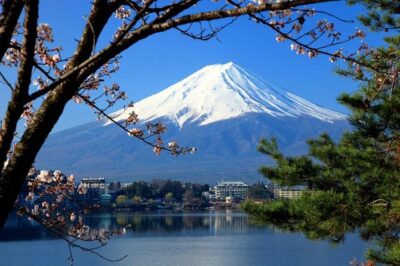
Mt Fuji and Hakone 1-Day Bus Tour Return by Bullet Train
Read our review →

teamLab Planets TOKYO Digital Art Museum Entry Ticket
Read our review →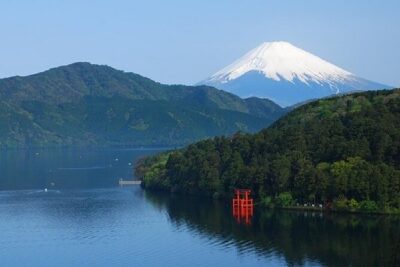
Mt Fuji & Hakone Cruise, Drum Show Bullet Train 1 Day from Tokyo
Read our review →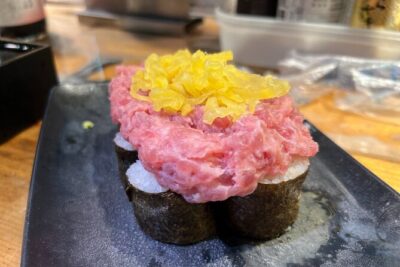
Shinjuku Food Tour (13 Dishes at 4 Local Eateries)
Read our review →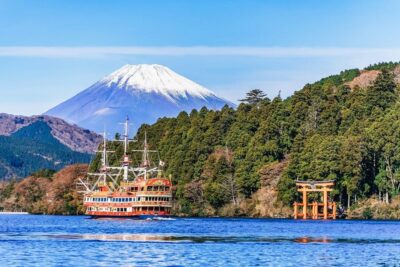
Tokyo Mt Fuji 5th St & Hakone Cruise Bus Tour w/Bullet Train
Read our review →