REVIEW · TOKYO TOURS
Tameike: Exploring the Heart of Japanese Politics Tour
Japan’s political center is not just a place for photo stops. On this three-hour walk, you enter the National Diet Building, learn how Japan’s government works, then move into the spiritual world of Hie Shrine before ending with matcha and sweets at a long-established tea shop. That mix gives the tour a useful rhythm: politics, religion, and everyday culture.
I like the small group of no more than five, which gives you room to ask real questions. I also like the guide’s role in connecting formal subjects, such as voting procedures and government offices, to ordinary Japanese life. The main consideration is pace: you walk between each stop, and the Diet Building has stairs, so comfortable shoes matter.
In This Review
- Key points at a glance
- Why the National Diet Building is the right place to start
- From government offices to Hie Shrine
- Matcha and sweets at Dobashi-en
- What makes the small group important
- How much value do you get for $129?
- Who should book this experience
- A practical three-hour plan
- My call: book it for context, not just landmarks
- FAQ
- How long is the Tameike politics tour?
- Where does the tour begin?
- Where does the tour finish?
- Is the tour conducted in English?
- How many people can join the tour?
- What is included in the price?
- Do I need comfortable shoes or cash?
Key points at a glance
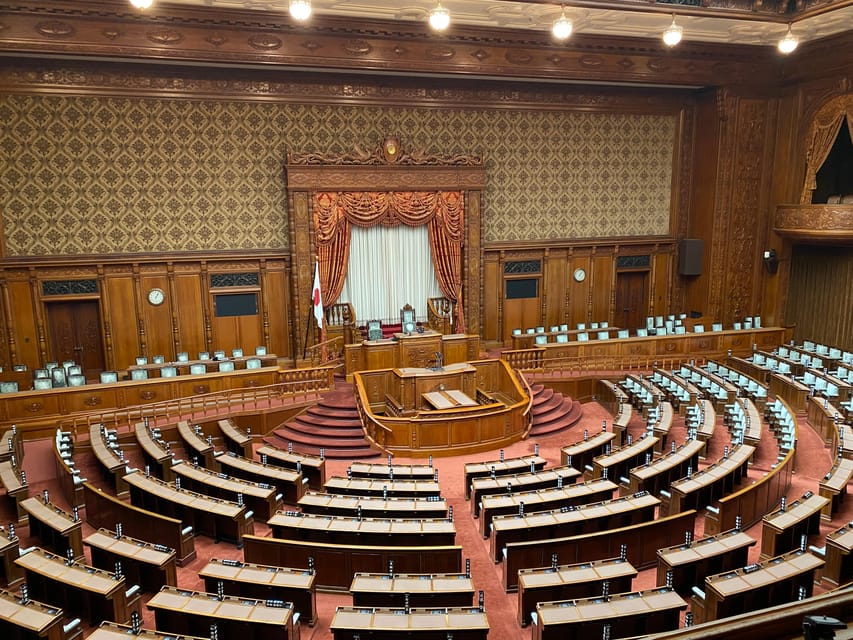
- A rare look at Japan’s political center: Spend about an hour inside the National Diet Building with an English-speaking guide.
- Megumi brings the government lesson to life: Her explanations cover political systems, voting, history, customs, and daily life.
- Hie Shrine adds a spiritual counterpoint: See monkey guardians, monkey-themed charms, and the compact Thousand Torii Gates.
- A proper tea finish: Dobashi-en serves traditional matcha and local sweets, followed by a souvenir tea gift.
- Small-group conversation: With a maximum of five people, you can ask about Japanese politics, religion, or social customs.
- Easy but active logistics: Meet at Kokkai-gijidōmae Station, Exit 1, and finish near Akasaka-mitsuke Station after about three hours.
Why the National Diet Building is the right place to start
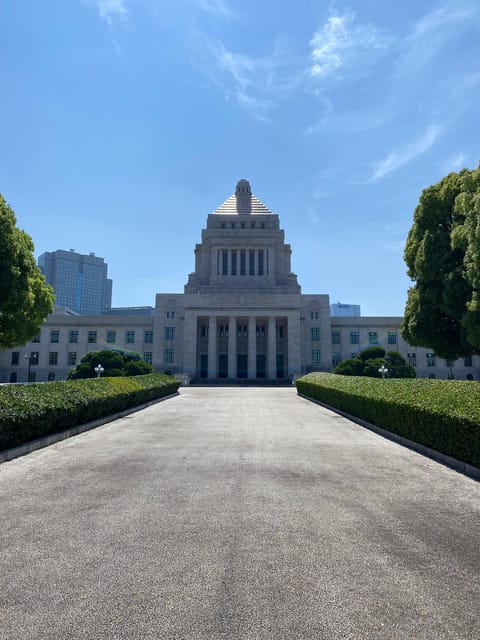
Many Tokyo tours explain Japan through temples, food, and shopping. This one begins somewhere less expected: the building where national politics takes place. That choice gives you a different way to understand the country before moving on to its religious traditions.
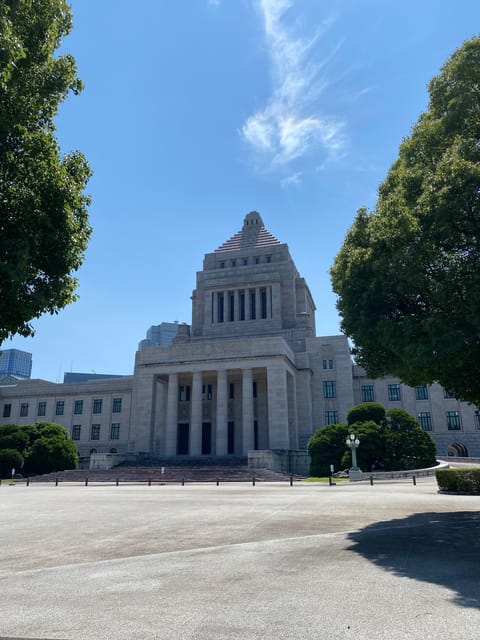
The tour starts at Kokkai-gijidōmae Station, Exit 1. Look for a guide wearing a navy blue happi, the traditional Japanese coat. From there, it is about a five-minute walk to the National Diet Building.
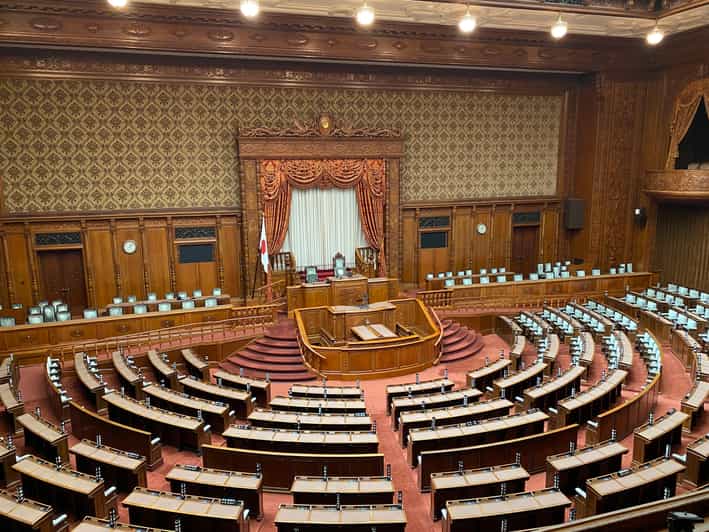
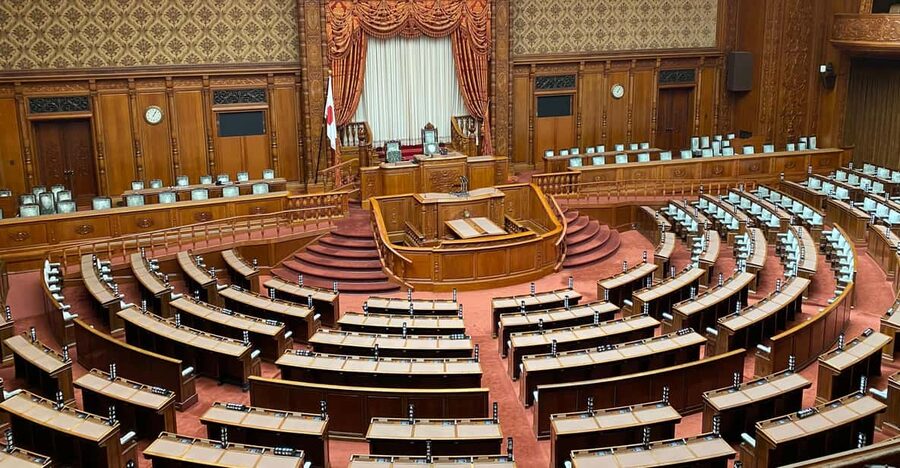
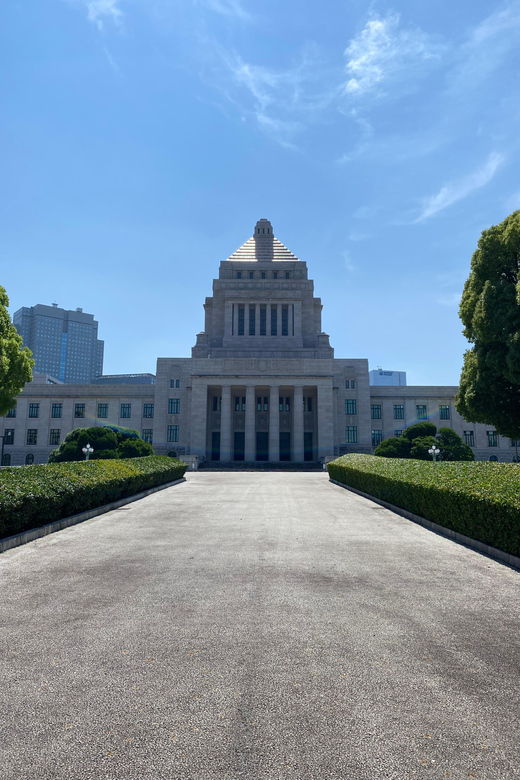
Inside, you spend roughly an hour on a guided English tour. The focus is not only the building’s impressive architecture. You also learn about the political events connected with it, how the government operates, and how voting procedures fit into the larger system.
I find this especially useful if Japanese politics seems hard to follow from the outside. Names, parties, chambers, and procedures can blur together when you only read a short explanation in a guidebook. A live guide can stop, explain a term, and answer the question that naturally comes up next.
The best part of this section is the chance to ask about the Japanese political system in plain English. Past guests have used the time to discuss domestic and global issues, the work of government, and the connection between political institutions and daily life. Guide Megumi, also called Meg, is praised for making room for questions rather than delivering a fixed speech and moving on.
The building visit does require stairs. You should wear shoes that are comfortable for walking and climbing, especially if your legs are already tired from sightseeing elsewhere in Tokyo. The exact interior route can depend on the day’s access arrangements, so think of this as a guided look at Japan’s political center, not a promise that every room will always be available.
Other Tokyo days people book alongside this one:
- Mt Fuji and Hakone 1-Day Bus Tour Return by Bullet Train
★ 5.0 · 26,383 reviews - 1-Day Tokyo Bus Tour
★ 5.0 · 14,250 reviews - Tokyo: TOKYO SKYTREE® Admission ticket
★ 4.5 · 11,192 reviews
From government offices to Hie Shrine
After the Diet Building, the group walks about 15 minutes to Hie Shrine. This short transfer is useful because the two sites sit close together but offer very different impressions of Japan.
Hie Shrine is known as a power spot for career success and matchmaking. You do not need to share those beliefs to enjoy the visit. The shrine gives your guide a natural way to explain Shinto worship, wishes, offerings, and the meaning of symbols found around a sacred site.
One detail to watch for is the shrine’s monkey imagery. Guardian monkey statues appear at the gate and main hall, and monkey motifs also appear on votive tablets and charms. Your guide can help you notice details that are easy to pass without context.
The monkeys are not just decoration. Their presence connects to the shrine’s traditions and gives the visit a more specific focus than a quick walk through a generic temple or shrine complex. If you are interested in Japanese symbols, this is one of the tour’s most memorable threads.
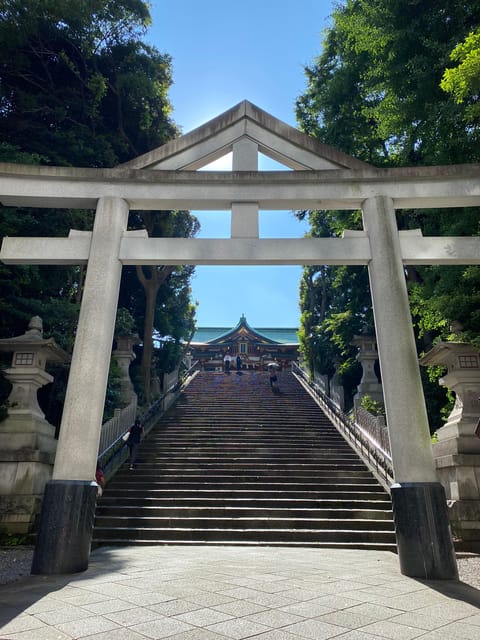
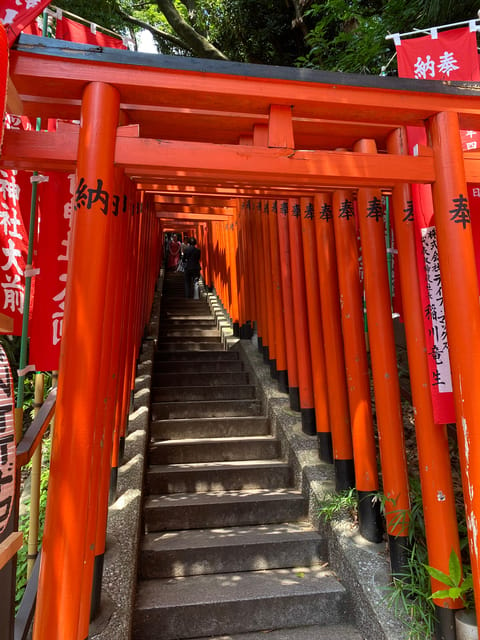
You will also see the Thousand Torii Gates, a compact passage reminiscent of the famous gates at Fushimi Inari Shrine in Kyoto. It is a good photo opportunity, but the tour is more useful if you treat the gates as part of the shrine experience rather than racing through for pictures.
The 45-minute stop includes guided sightseeing and an explanation of how to worship at a Shinto shrine. That practical help is valuable. You can learn the basic steps without worrying about making an obvious mistake, while still having time to look around and enjoy the setting.
Hie Shrine is not an all-day visit on this schedule. You receive an introduction and cultural context, then continue on foot. If you want an extended quiet visit for personal prayer or photography, you may prefer to return on your own later.
Matcha and sweets at Dobashi-en
The final walk takes about 15 minutes and leads to Dobashi-en, a long-established green tea shop. Here, the tour shifts from public institutions and religious practice to a familiar part of Japanese daily culture: tea and a small sweet.
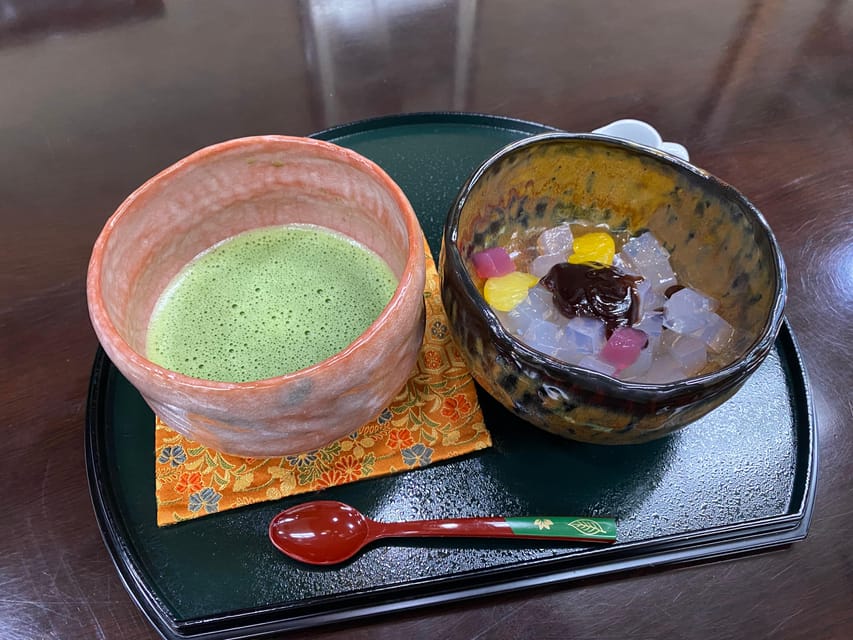
You spend about 45 minutes at the shop, enjoying traditional matcha and local sweets. This is more than a quick drink at the end of the route. It gives you a chance to sit down, ask follow-up questions, and think over what you have seen.
Matcha can be an acquired taste, particularly if you expect a sweet, milky tea. The snack helps balance its sharper flavor. For me, the appeal is the setting and the ritual as much as the food itself. After a morning or afternoon of walking, a quiet tea stop is a sensible way to finish.
You also receive a tea souvenir, which adds a small but practical value to the final stop. It is a better memento than another disposable trinket, especially if you already enjoy Japanese tea or want to share something from the experience at home.
Some shops in Japan may not accept cards, so bring cash. The tour information specifically advises preparing money in advance. Even if the tea and snack are included, cash is useful for any extra purchase you may want at the shop.
What makes the small group important
This experience is limited to five participants. That number matters most during the political portion, where questions can quickly move from the National Diet Building to elections, customs, and current affairs.
Guide Megumi receives especially strong praise for her ability to explain complicated subjects clearly and keep a real conversation going. Several people found the tour unusually personal when they were the only participant that day. A one-person tour is not guaranteed, but the small-group format makes that kind of exchange possible.
The guide’s value is not limited to memorized facts. You can ask about Japanese government, Shinto practices, social customs, and daily life in the same outing. One useful example from the tour’s conversations is the explanation of why public parks and other places in Japan may have few trash cans. Details like this help you understand the country beyond its famous sights.
I would book this for someone who likes to ask questions rather than simply follow a flag through a series of photo stops. It should also suit solo visitors, couples, and small families who want a guide with time to explain rather than a large-group presentation.
The trade-off is that a small-group tour can feel more conversation-based than entertainment-based. If you want a fast route through major landmarks with little talking, this may feel too detailed. If you want to understand what you are seeing, the format is a major advantage.
Same city, a completely different kind of day:
- Tokyo: teamLab Planets TOKYO Digital Art Museum Entry Ticket
★ 4.6 · 9,779 reviews - Mt Fuji & Hakone Cruise, Drum Show Bullet Train 1 Day from Tokyo
★ 4.0 · 7,413 reviews - Tokyo: Shinjuku Food Tour (13 Dishes at 4 Local Eateries)
★ 5.0 · 6,603 reviews - Tokyo Mt Fuji 5th St & Hakone Cruise Bus Tour w/Bullet Train
★ 4.4 · 5,024 reviews
How much value do you get for $129?
At $129 per person, this is not a budget walking tour. The price includes entry to the National Diet Building, the guided English tour, matcha and a snack at Dobashi-en, and a tea gift.
The value comes from the combination. You are not paying only for admission to one building, and you are not simply joining a generic neighborhood walk. You receive access to a site many independent visitors may not fully understand, a guided shrine visit, a seated tea experience, and a small-group guide who can answer questions throughout.
I think the price makes the most sense if you already plan to spend time around central Tokyo and want a structured half-day activity with unusual content. The National Diet Building is the main reason to book. Hie Shrine and Dobashi-en make the route feel complete rather than leaving you at a government office after the formal portion ends.
The value is weaker if you have little interest in politics, government, or guided cultural explanation. You can see a shrine and drink tea in other parts of Japan. The distinctive feature here is the connection between Japan’s national institutions and the customs that shape everyday life.
Free cancellation up to 24 hours before the start, along with the option to reserve now and pay later, gives you some planning flexibility. Starting times vary, so check availability before building the rest of your day around it.
Who should book this experience
I would recommend the tour to you if you want to:
- Understand how Japan’s government works in a clear, conversational way.
- See the National Diet Building with an English-speaking guide.
- Learn the basic steps of Shinto worship.
- Notice symbols such as monkey guardians, votive tablets, and charms.
- Enjoy a traditional tea stop after a moderate amount of walking.
- Ask questions about Japanese politics, customs, and daily life.
It is also a good choice for repeat visitors to Tokyo. If you have already seen the major temples and shopping districts, the National Diet Building offers a different angle on the city.
Families with older children may enjoy it if the children can manage stairs and stay interested during a government-focused explanation. The tour is less suitable for anyone who wants a low-walking activity or who is not feeling well on the day.
The route is not described as wheelchair accessible, and the National Diet Building has stairs. Since the supplied information only confirms the presence of stairs, you should contact the provider before booking if mobility access is important for you.
A practical three-hour plan
The route is simple enough to follow:
- Meet at Kokkai-gijidōmae Station, Exit 1.
- Walk five minutes to the National Diet Building.
- Spend about one hour on the guided visit.
- Walk 15 minutes to Hie Shrine.
- Spend about 45 minutes at the shrine.
- Walk 15 minutes to Dobashi-en.
- Enjoy tea and sweets for about 45 minutes.
- Finish at Akasaka-mitsuke Station.
The walking time totals about 35 minutes, not counting movement inside the Diet Building or around the shrine. That is manageable for most people who are comfortable on foot, but it is not a sit-down sightseeing experience.
Bring water and wear comfortable shoes. You should also arrive at the meeting point with enough time to find Exit 1 and identify the guide’s navy happi. The clear clothing description is helpful in a busy station area.
My call: book it for context, not just landmarks
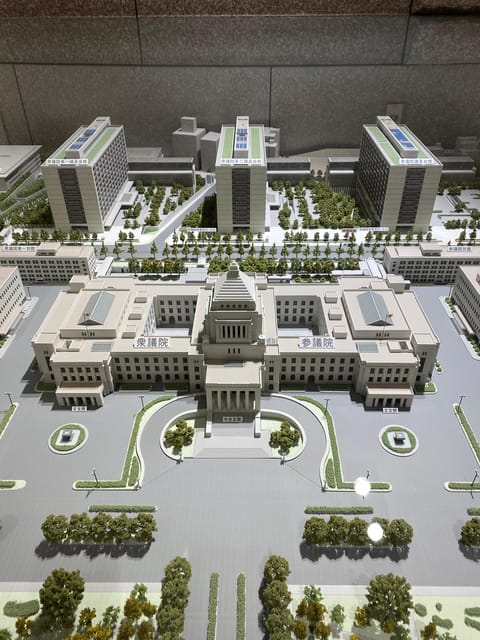
I would book Tameike: Exploring the Heart of Japanese Politics if I wanted to understand a side of Tokyo that most sightseeing routes skip. Its strongest feature is the guide-led discussion at the National Diet Building, especially with Megumi or Meg, whose style centers on clear explanations and open questions.
The shrine and tea shop keep the three hours from feeling like a civics lesson. Hie Shrine gives you symbols and ritual, while Dobashi-en gives you a calm taste of Japanese tea culture. The price is fair for this combination, though it is best suited to people who value interpretation and conversation.
Skip it if you want a cheap, fast walk or a full day devoted to famous shrines. Book it if you want to connect politics, religion, customs, and ordinary life in one compact route.
FAQ
How long is the Tameike politics tour?
The tour lasts three hours, including the guided visit to the National Diet Building, time at Hie Shrine, and tea and snacks at Dobashi-en.
Where does the tour begin?
It begins at Kokkai-gijidōmae Station, Exit 1. A guide wearing a navy blue happi waits at the meeting point.
Where does the tour finish?
The tour finishes at Akasaka-mitsuke Station.
Is the tour conducted in English?
Yes. The tour has a live English-speaking guide.
How many people can join the tour?
The group is limited to five participants.
What is included in the price?
The price includes entry to the National Diet Building, tea and a snack at Dobashi-en, and a souvenir tea gift.
Do I need comfortable shoes or cash?
Yes. Comfortable walking shoes are recommended because the route includes walking between sites and stairs at the National Diet Building. You should also carry cash because some shops may not accept cards.
Just added around Tokyo
- Tokyo: Customizable Private Guided Walking Tour★ 4.5 · 129 reviews
- Private Harajuku Omotesando Architecture Tour★ 4.9 · 18 reviews
- Tokyo: Guided Helicopter Ride★ 4.9 · 24 reviews
- Tokyo: Guided Walking Tour of Tsukiji Market with Lunch★ 4.4 · 24 reviews
- Tokyo: Private Personalized Local Food Tour★ 4.5 · 101 reviews
- Tokyo GINZA: KONPARU Japanese Cabaret Show with Drink★ 4.8 · 38 reviews
- Tokyo: Guided Walking Tour of Tsukiji Market with Breakfast★ 4.4 · 134 reviews
- Tokyo: Gotokuji Cat Temple, Shinjuku Cat Cafe & 3D Cat Tour★ 4.9 · 38 reviews
Tokyo Tours, compared.
Mt Fuji and Hakone 1-Day Bus Tour Return by Bullet Train
Read our review →
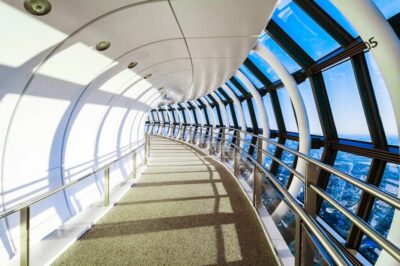

teamLab Planets TOKYO Digital Art Museum Entry Ticket
Read our review →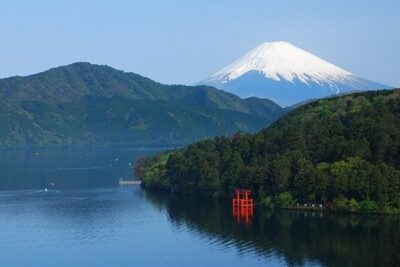
Mt Fuji & Hakone Cruise, Drum Show Bullet Train 1 Day from Tokyo
Read our review →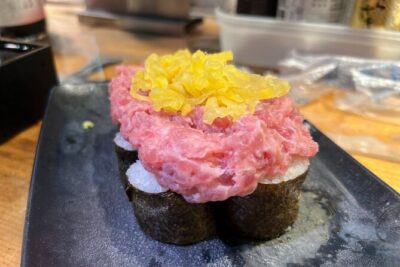
Shinjuku Food Tour (13 Dishes at 4 Local Eateries)
Read our review →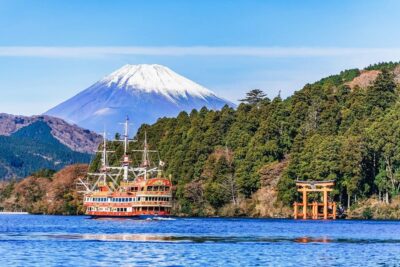
Tokyo Mt Fuji 5th St & Hakone Cruise Bus Tour w/Bullet Train
Read our review →