REVIEW · TOKYO TOURS
Shibuya: Ramen Dojo Tokyo | Make All 3 (Tonkotsu/Shoyu/Miso)
Making three kinds of ramen in 90 minutes is the clever part of this Shibuya class. You knead dough, cut noodles with a professional machine, prepare chicken chashu, and finish with three mini bowls of tonkotsu, shoyu, and miso.
I like the close, small-group format, which gives you patient help instead of a rushed cooking demonstration. I also like the side-by-side tasting: you can compare the salty, savory shoyu, the fuller miso, and the creamy-style tonkotsu in one sitting.
The main consideration is the broth. You adjust and prepare the soups, but the base broths are already prepared, so this is more a noodle-making and ramen assembly class than a full lesson in long-simmered stock.
In This Review
- Key points to know before you book
- Making three ramen styles near Shibuya
- The first 10 minutes: check-in and kitchen briefing
- Chicken chashu preparation in five minutes
- Twenty minutes of kneading and noodle cutting
- Finishing the chicken chashu
- Boiling the noodles and adjusting the soup
- Plating three mini bowls in five minutes
- Thirty minutes to taste, compare, and take photos
- What the $86.22 price gives you
- Who will enjoy this class most
- Timing, location, and cancellation details
- Should you book Ramen Dojo Tokyo?
- FAQ
- How long does the ramen class last?
- Where does the activity take place?
- How far is the studio from Shibuya Station?
- What types of ramen will I make?
- Is the class taught in English?
- Are meals included?
- Will I make the ramen broth from scratch?
- Do I make the noodles myself?
- Is the class suitable for beginners?
- What is included besides the food?
- Is hotel pickup included?
- Can I cancel for a refund?
Key points to know before you book
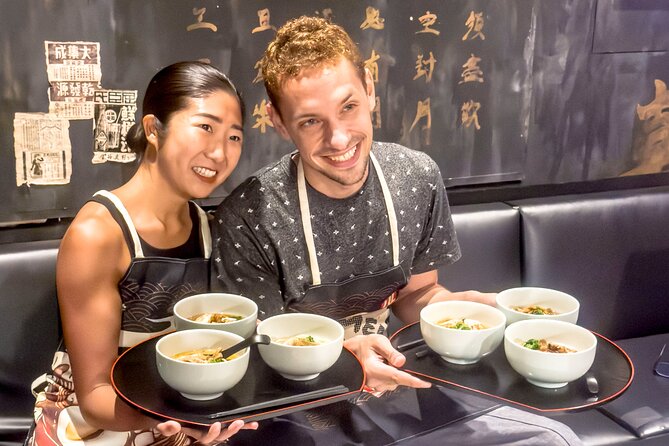
- Three ramen styles in one class: Taste tonkotsu, shoyu, and miso without ordering three separate meals.
- Fresh noodles are the hands-on highlight: Knead the dough and run it through a professional noodle cutter.
- Beginner-friendly instruction: The English-speaking instructor offers patient support, including for children who can follow kitchen directions.
- Chicken chashu is included: You prepare and finish the topping before plating your bowls.
- A practical Shibuya location: Walk about 10 minutes from Shibuya Station, then continue sightseeing when the 90-minute session ends.
- A real limitation for some diets: Wheat, egg, and soy are used, and strict vegan or religious dietary requests cannot be guaranteed.
Making three ramen styles near Shibuya
Tokyo is full of ramen shops, but eating a bowl and making one are different experiences. This class gives you a short, hands-on look at what happens before the noodles reach the counter.
You work at a studio in the Umekita Building at 7-11 Maruyamacho, about a 10-minute walk from Shibuya Station. That distance matters. You are not being collected from a hotel, and you need to find the studio yourself, but the walk is short enough to pair the class with shopping, cafés, or an evening in Shibuya.
The class lasts about 90 minutes and has a maximum of eight people. That is a useful group size for cooking. You should have enough access to the equipment and instructor to get help with kneading, cutting, boiling, and plating.
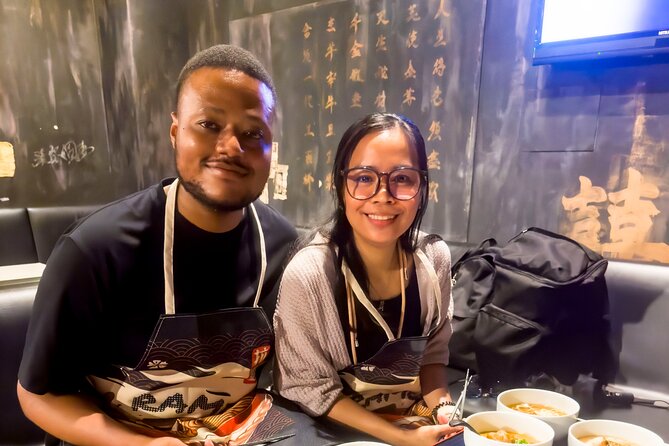
The tone is practical rather than formal. You are not sitting through a long lecture on ramen history. You get an apron, ingredients, kitchen equipment, and direct instruction, then spend most of the session making food.
Other Tokyo days people book alongside this one:
- Mt Fuji and Hakone 1-Day Bus Tour Return by Bullet Train
★ 5.0 · 26,383 reviews - 1-Day Tokyo Bus Tour
★ 5.0 · 14,250 reviews - Tokyo: TOKYO SKYTREE® Admission ticket
★ 4.5 · 11,192 reviews
The first 10 minutes: check-in and kitchen briefing
The opening briefing takes about 10 minutes. This is when you get settled, hear the plan, and learn how the session will run.
Because three ramen styles are packed into one class, the briefing helps you understand the order of work. You will move from preparation to noodles, then soup, toppings, and tasting. The class is conducted in English, and the small group gives the instructor room to explain the steps and correct your technique.
If you are new to cooking, do not be put off by the word from scratch. The lesson is designed for beginners. One participant found the process difficult at first but was able to make the noodles with patient guidance. That is a good sign for anyone who can cook only basic meals.
The class also worked well for an eight-year-old when an adult provided support. Children who enjoy hands-on food activities may have a fine time here, but the use of stairs and kitchen equipment means this is not suitable for everyone.
Chicken chashu preparation in five minutes
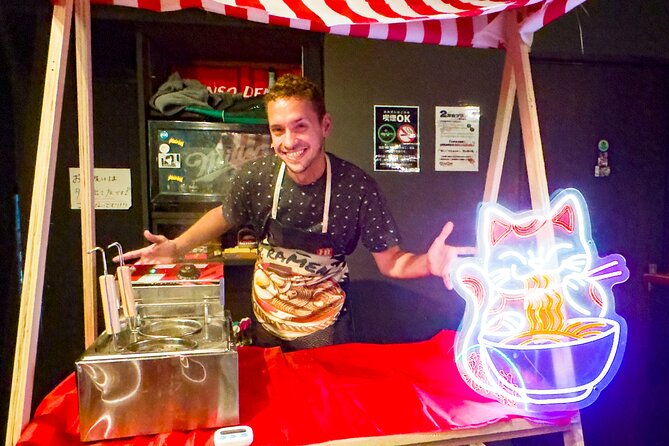
Next comes chicken chashu preparation, which takes about five minutes at this stage. You work with the ingredients and prepare the topping that will later sit on your ramen.
This is a nice touch because it gives the finished bowls more than noodles and soup. Chicken chashu adds a familiar ramen-shop element, and you get to see how the topping fits into the final presentation.
The preparation is brief, so do not expect a full lesson in meat preparation or a detailed study of every component in a ramen bowl. The focus is on making enough topping for the three small servings while keeping the class moving.
You will return to the chashu later for another 10 minutes of finishing work. That split keeps the class organized while the dough and noodles receive attention.
Twenty minutes of kneading and noodle cutting
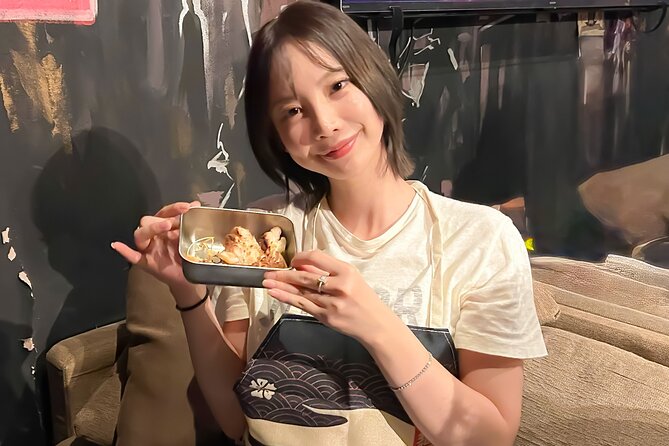
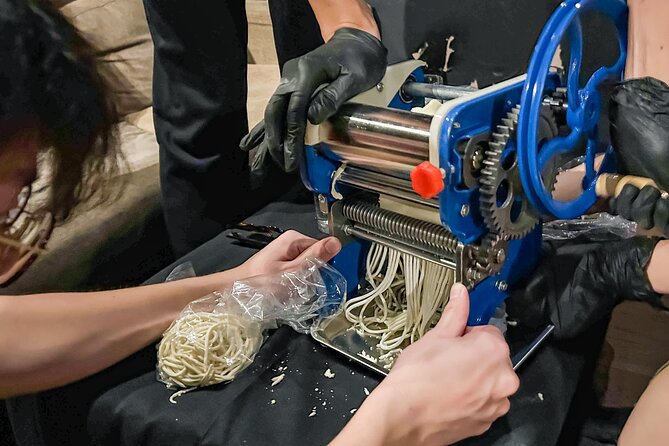
The noodle section is the heart of the experience. For about 20 minutes, you knead the dough and work it through a professional noodle machine.
This is where the class earns much of its value. You are not merely watching someone make ramen. You handle the dough, learn how it changes as you work it, and cut the noodles yourself with proper equipment.
The machine also makes the process accessible. Hand-cut noodles can require more skill and time than a 90-minute workshop allows. Here, the equipment helps you produce a consistent result while still giving you the satisfaction of doing the key work.
The lesson also gives you useful information for home cooking. The digital recipe provided afterward can help you repeat the process, although your home kitchen may not have the same noodle cutter. You can still apply the basic method and use the recipe as a guide for future attempts.
This part may be the most enjoyable for children and first-time cooks because the result is visible. A pile of dough becomes fresh noodles in front of you. It is also the part that creates the best photo opportunity before the bowls are assembled.
Same city, a completely different kind of day:
- Tokyo: teamLab Planets TOKYO Digital Art Museum Entry Ticket
★ 4.6 · 9,779 reviews - Mt Fuji & Hakone Cruise, Drum Show Bullet Train 1 Day from Tokyo
★ 4.0 · 7,413 reviews - Tokyo: Shinjuku Food Tour (13 Dishes at 4 Local Eateries)
★ 5.0 · 6,603 reviews - Tokyo Mt Fuji 5th St & Hakone Cruise Bus Tour w/Bullet Train
★ 4.4 · 5,024 reviews
Finishing the chicken chashu
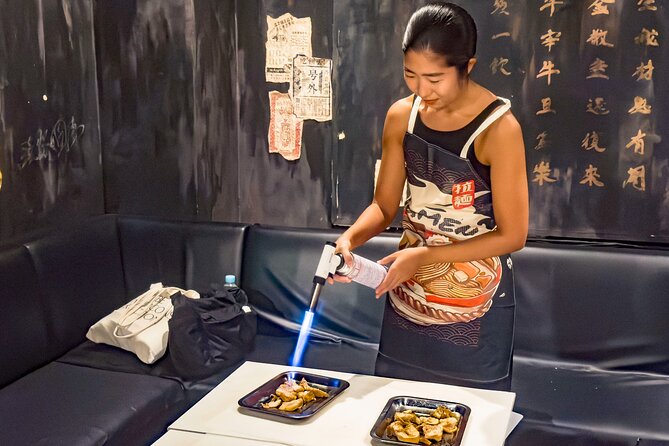
After the noodle work, you spend about 10 minutes finishing the chicken chashu. By this point, the class begins to feel like a production line, but in a good way. Each preparation step now has a clear purpose.
The chashu is not just a garnish added at the last second. You have worked on it earlier, then returned to complete it before plating. That gives you a better sense of how several small preparations come together in a ramen bowl.
Still, keep your expectations in check. The class is short, so it teaches the basic process rather than every possible topping or cooking method. If you want a full restaurant-style ramen course, this will feel abbreviated. If you want to understand the main pieces and make your own noodles, the pace is sensible.
Boiling the noodles and adjusting the soup
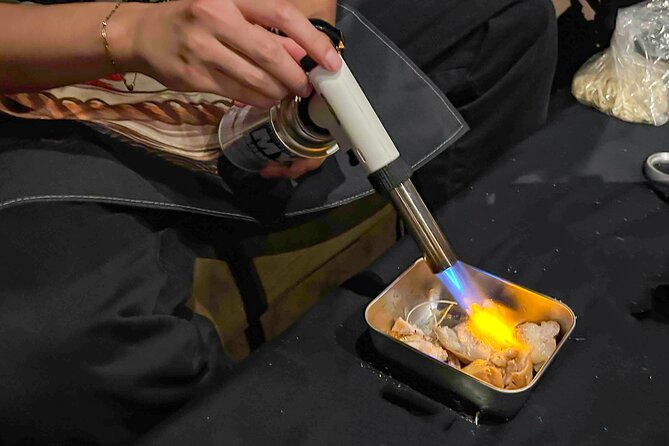
The next 10 minutes cover boiling the noodles and preparing the soup. You adjust the soup to your preferred taste, which gives you some control over the final flavor.
You then compare three styles:
- Tonkotsu: The familiar pork-bone style associated with a fuller, creamy soup.
- Shoyu: Soy-sauce-based ramen with a savory, salty character.
- Miso: A deeper, fermented flavor with extra body and seasoning.
The three soups let you notice how the same basic noodle-making process changes when paired with different flavors. That comparison is one of the smartest features of the class. In a ramen shop, you might choose one bowl and never know how the others differ. Here, each serving is small, so you can taste all three without turning lunch into a food endurance test.
There is one important catch. The broth is not the main thing you make from raw ingredients. The soups are prepared for the class, and your role is to prepare or adjust them before serving. One participant specifically wanted more broth instruction and felt that the noodle work received greater attention.
If broth is your main reason for booking, take that limitation seriously. You will learn how the soups differ and how to adjust them, but not how to spend hours building a stock from bones or aromatics.
Plating three mini bowls in five minutes
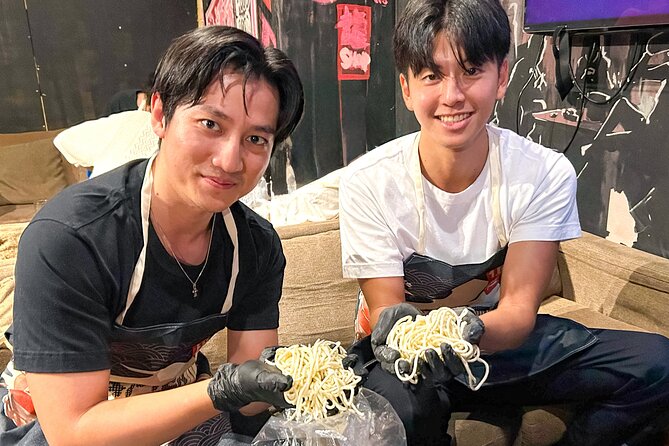
Plating takes about five minutes. You add noodles, soup, chicken chashu, and toppings to create three separate bowls.
The small servings are a practical choice. They allow you to taste three ramen types while keeping the meal manageable. They also make the final presentation more fun, especially if you like taking food photos.
This is a good point to notice the difference between a workshop and a restaurant meal. The bowls are made by you, so they may not look perfectly uniform. That is part of the appeal. You see the effect of noodle portions, toppings, and soup levels instead of receiving a finished bowl with all the work hidden.
The instructor can help you complete the bowls, and the group size should make it easier to ask questions. At the same time, a 90-minute schedule leaves little room for slow plating or repeated attempts. Listen closely during the earlier steps so you are not trying to catch up at the end.
Thirty minutes to taste, compare, and take photos
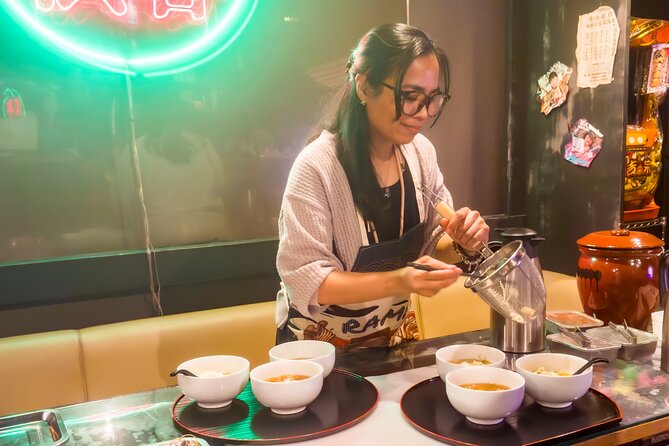
The final 30 minutes are set aside for tasting and photos. This is not a class where you finish cooking and are immediately sent out the door.
You can try the three bowls side by side and decide which style suits you best. For many people, the comparison is more useful than tasting one excellent bowl at a ramen shop because you can focus on the soup styles, noodle texture, and toppings in a single session.
The tasting also gives you time to ask last questions before leaving. Your digital recipe is provided after the class, so you can use the experience as a starting point for cooking at home.
Do not expect a full-size three-course meal. These are mini bowls, designed for sampling. The portions should prevent hunger during the class and give you a satisfying taste, but you may still want another meal later if you arrive very hungry.
What the $86.22 price gives you
At $86.22 per person, this is not the cheapest way to eat ramen in Tokyo. You can buy a good bowl for far less. The price makes more sense if you place value on the instruction, equipment, ingredients, three tastings, apron loan, and recipe.
You are also paying for access to a professional noodle machine and for an instructor who can guide a small group. The class gives you a skill to take away, not only a meal that disappears after lunch.
The value is strongest for people who enjoy cooking, food photography, or hands-on cultural activities. It is weaker for anyone who simply wants the best ramen taste for the lowest cost. A ramen shop will be faster, cheaper, and likely more polished in presentation.
The three-style format helps justify the price. You get tonkotsu, shoyu, and miso in one session, rather than committing to one flavor. The digital recipe adds a practical after-class benefit, though you may need to adapt the method if you do not own similar kitchen equipment.
Who will enjoy this class most
I would recommend this experience to first-time ramen makers, curious home cooks, and families with older children who can follow instructions and manage a kitchen setting.
It also suits a short Tokyo schedule. Since the class starts and ends at the same Shibuya studio, you can continue exploring the area afterward. There is no hotel pickup, no transfer time, and no long ride out of central Tokyo.
The class is especially useful if you want an activity that produces something you can eat. You spend most of the time doing rather than watching, and the three mini bowls keep the result tied to the work you have just completed.
It is less suitable for anyone seeking a serious broth-making course. It is also not appropriate for severe wheat, gluten, egg, or soy allergies, celiac disease, or severe airborne flour sensitivity. Strict vegans and people requiring fully compliant religious diets should not count on suitable substitutions.
You also need to be able to use stairs. Alcohol and other drinks are not included, and personal expenses and gratuities are separate.
Timing, location, and cancellation details
The studio is at the Umekita Building, 7-11 Maruyamacho, Shibuya, Tokyo 150-0044. The activity begins and ends there, and the location is near public transportation.
Allow extra time to walk from Shibuya Station. The walk is about 10 minutes, but busy Tokyo streets and station exits can slow you down. A mobile ticket is provided, and confirmation arrives when you book.
The maximum group size is eight people. That keeps the lesson personal without making it a private class. Hotel pickup and drop-off are not included.
You can cancel for a full refund up to 24 hours before the start time. Cancellations or changes within 24 hours are not refunded or accepted, and the cut-off follows local Tokyo time.
Should you book Ramen Dojo Tokyo?
Book it if you want to make fresh noodles, taste three major ramen styles, and leave with a recipe you can try at home. The patient instruction, small group, chicken chashu, and side-by-side tasting give the experience more substance than a simple cooking demonstration.
Think twice if your main goal is learning how to build ramen broth from the beginning. You will work with three soup styles and adjust their flavor, but the prepared broth means the class spends more time on noodles, toppings, and assembly.
For most first-time cooks, families, and food-focused visitors staying near Shibuya, the class offers a useful mix of activity and meal. At $86.22, it is a splurge rather than a bargain, but the three bowls and hands-on noodle work make it a fair choice for the right person.
FAQ
How long does the ramen class last?
The class lasts approximately 90 minutes.
Where does the activity take place?
It takes place at the Umekita Building, 7-11 Maruyamacho, Shibuya, Tokyo 150-0044, Japan.
How far is the studio from Shibuya Station?
The studio is about a 10-minute walk from Shibuya Station.
What types of ramen will I make?
You will prepare and taste mini bowls of tonkotsu, shoyu, and miso ramen.
Is the class taught in English?
Yes. An English-speaking instructor leads the class.
Are meals included?
Yes. The class includes three mini bowls of ramen for tasting.
Will I make the ramen broth from scratch?
No. The soups are prepared for the class, and you adjust and prepare them before serving. The main hands-on work focuses on noodles, chicken chashu, soup seasoning, and plating.
Do I make the noodles myself?
Yes. You knead the dough and cut the noodles using a professional noodle machine.
Is the class suitable for beginners?
Yes. Beginners are welcome, and the instructor provides hands-on support.
What is included besides the food?
Ingredients, kitchen equipment, an apron loan, an English-speaking instructor, and a digital recipe provided after the class are included.
Is hotel pickup included?
No. Hotel pickup and drop-off are not included.
Can I cancel for a refund?
Yes. You can receive a full refund if you cancel at least 24 hours before the experience start time. Cancellations within 24 hours are not refunded.
Just added around Tokyo
- Private Harajuku Omotesando Architecture Tour★ 4.9 · 18 reviews
- Tokyo: Customizable Private Guided Walking Tour★ 4.5 · 129 reviews
- Tokyo: Guided Helicopter Ride★ 4.9 · 24 reviews
- Tokyo: Guided Walking Tour of Tsukiji Market with Lunch★ 4.4 · 24 reviews
- Tokyo: Private Personalized Local Food Tour★ 4.5 · 101 reviews
- Tokyo GINZA: KONPARU Japanese Cabaret Show with Drink★ 4.8 · 38 reviews
- Tokyo: Guided Walking Tour of Tsukiji Market with Breakfast★ 4.4 · 134 reviews
- Tokyo: Gotokuji Cat Temple, Shinjuku Cat Cafe & 3D Cat Tour★ 4.9 · 38 reviews
Tokyo Tours, compared.

Mt Fuji and Hakone 1-Day Bus Tour Return by Bullet Train
Read our review →


teamLab Planets TOKYO Digital Art Museum Entry Ticket
Read our review →
Mt Fuji & Hakone Cruise, Drum Show Bullet Train 1 Day from Tokyo
Read our review →
Shinjuku Food Tour (13 Dishes at 4 Local Eateries)
Read our review →
Tokyo Mt Fuji 5th St & Hakone Cruise Bus Tour w/Bullet Train
Read our review →