REVIEW · TOKYO TOURS
Shibuya: Ramen Dojo Tokyo | Make All 3 (Tonkotsu/Shoyu/Miso)
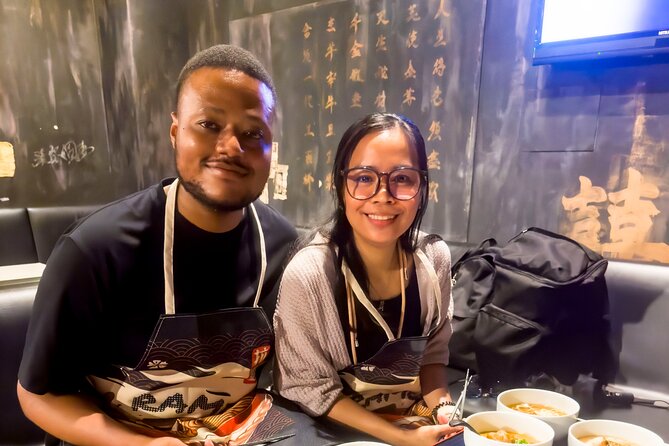
Ramen Dojo Tokyo lets you make the most important part of ramen from scratch, then compare tonkotsu, shoyu, and miso in one sitting. You knead dough, roll and cut noodles with a professional machine, prepare chicken chashu, and build three small bowls. I like the clear, friendly teaching, especially from instructors such as Kazuki, Kensei, Kai, and Arata. I also like that the digital recipe lets you repeat the experience at home.
The main consideration is that the broths are prepared in advance, since proper stock takes far longer than 90 minutes. You still make the noodles and meat yourself, but this is a guided workshop rather than a full ramen-chef apprenticeship. The studio has stairs only, and the flour, egg, soy, wheat, chicken, and pork ingredients rule it out for some diets.
In This Review
- Key points at a glance
- What makes this ramen class worth your time
- Finding the studio near Shibuya Station
- The first 15 minutes: briefing and chicken chashu
- Making noodles from scratch with a professional cutter
- Finishing the chashu and preparing the three soups
- Plating three mini bowls, then tasting them side by side
- How good is the instruction in English?
- What you really make, and what is prepared for you
- Who should book, and who should skip it
- Timing, clothing, and practical value
- Should you pay $64 for Ramen Dojo Tokyo?
- FAQ
- Where is Ramen Dojo Tokyo located?
- How long does the ramen class last?
- How much does the experience cost?
- Which ramen styles will I make and taste?
- Do I make the noodles myself?
- Are the ramen broths made during the class?
- Is the workshop taught in English?
- How many people can join each class?
- Are dietary substitutions available?
- What should I wear and when should I arrive?
Key points at a glance
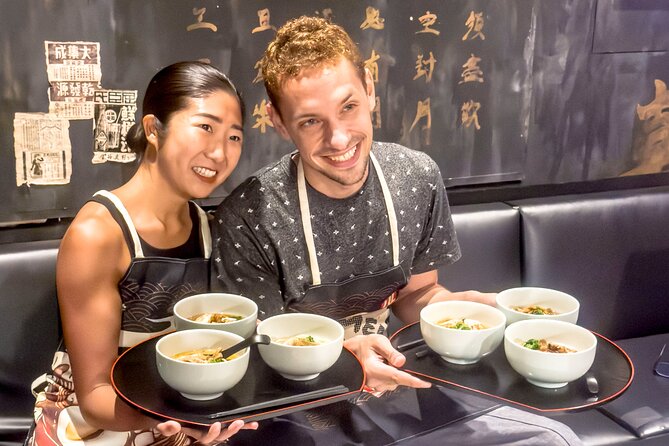
- Three ramen styles in one class: Taste tonkotsu, shoyu, and miso side by side instead of choosing just one bowl.
- Fresh noodles with real equipment: Knead dough, feed it through a professional roller, and cut your own noodles.
- A useful home-cooking lesson: The method is designed to be repeatable without special equipment, and a digital recipe arrives after class.
- Small English-guided groups: The class takes no more than eight people, with instructors offering step-by-step help.
- A filling meal, not just a demonstration: Three mini bowls can add up, so arrive hungry and avoid eating too close to class.
- Convenient Shibuya timing: The studio is about a 10-minute walk from Shibuya Station, and the activity begins and ends at the same address.
What makes this ramen class worth your time
Tokyo gives you endless chances to eat ramen. A bowl at a busy shop is usually faster and cheaper, but it tells you only part of the story. At Ramen Dojo Tokyo, you get to see how the noodles change from a rough mass of dough into the springy strands in your bowl. That hands-on work gives the meal more meaning.
I especially like the three-bowl format. Tonkotsu, shoyu, and miso are not just three names on a menu. They offer three different ways to understand ramen: tonkotsu brings a creamy, hearty style; shoyu gives you a soy-seasoned profile; and miso adds a deeper, fuller taste. The portions are mini bowls, but the total meal can still be surprisingly filling.
The experience costs $64 per person. That is more than you would pay for a standard ramen lunch, so the value depends on what you want. If you only want food, choose a ramen shop. If you want a 90-minute activity, instruction in English, fresh noodles, three tastings, equipment use, an apron, and a recipe to take home, the price is easier to justify.
The teaching receives the strongest praise. Kazuki is repeatedly singled out for precise explanations and calm instruction. Kensei is described as warm, funny, and helpful, while Kai, Arata, Ivy, Rick, Onodera, and other instructors also lead sessions. Instructor assignments can change, but the format remains focused on clear, practical steps.
Other Tokyo days people book alongside this one:
- Mt Fuji and Hakone 1-Day Bus Tour Return by Bullet Train
★ 5.0 · 26,383 reviews - 1-Day Tokyo Bus Tour
★ 5.0 · 14,250 reviews - Tokyo: TOKYO SKYTREE® Admission ticket
★ 4.5 · 11,192 reviews
Finding the studio near Shibuya Station
The studio is at 1F, 2-16-29 Ohashi, Meguro-ku, Tokyo 153-0044. It is described as about a 10-minute walk from Shibuya Station, which makes this easy to pair with time in Shibuya before or after class.
Allow enough time for the walk and for finding the correct entrance. Doors open 10 minutes before the scheduled start, and there is no waiting area or early entry before that window. Arrive five to 10 minutes early, not half an hour early.
Punctuality matters here. If you arrive five or more minutes late, you may have to join the class already in progress, or you may be refused for safety and class-flow reasons. Contact the provider before the start time if you are delayed. This is one of those activities where a relaxed departure from your hotel can quickly turn into a stressful dash, so plan the route carefully.
The session starts and ends at the same studio. There is no hotel pickup or drop-off, and drinks are not included. Afterward, you can continue exploring Shibuya without needing to find your way back to a tour bus or meeting point.
The first 15 minutes: briefing and chicken chashu
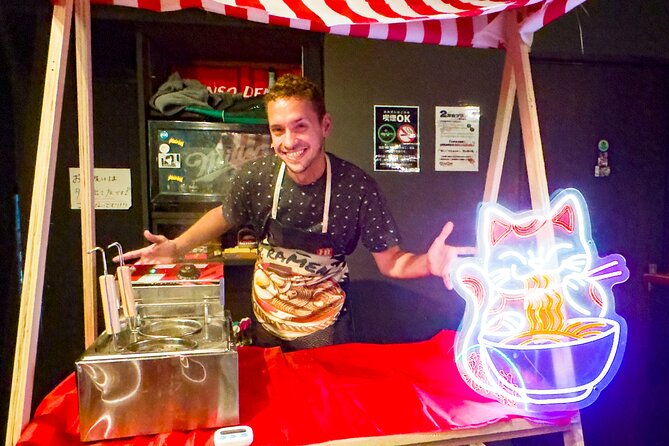
The opening 10 minutes cover check-in, safety, and an explanation of what you will make. The instructor introduces the three ramen styles and explains how the class will move between noodle preparation, meat, soup, and plating.
This short briefing matters because ramen has several parts moving at once. You need to understand which ingredients are ready, which ones you will prepare, and how the timing works before the kitchen gets busy. The small-group limit of eight helps here. An instructor can watch your technique instead of giving a speech to a large room.
Next comes about five minutes of chicken chashu preparation. The meat is handled as one of your main hands-on jobs, then finished later in the class. You are not simply watching an instructor place a slice on your bowl.
Some parts of the meal are prepared ahead of time. The long-cooked soup bases are ready before you arrive, and other components may also be set out for you. That is sensible for a 90-minute class, but you should know what you are buying: a practical introduction to ramen construction, not a full-day stock-making course.
Making noodles from scratch with a professional cutter
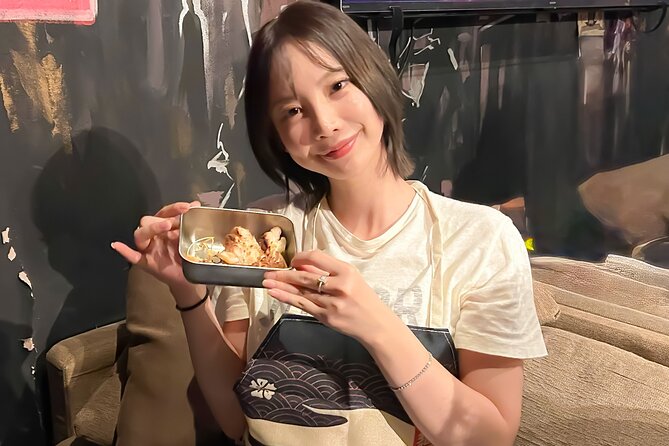
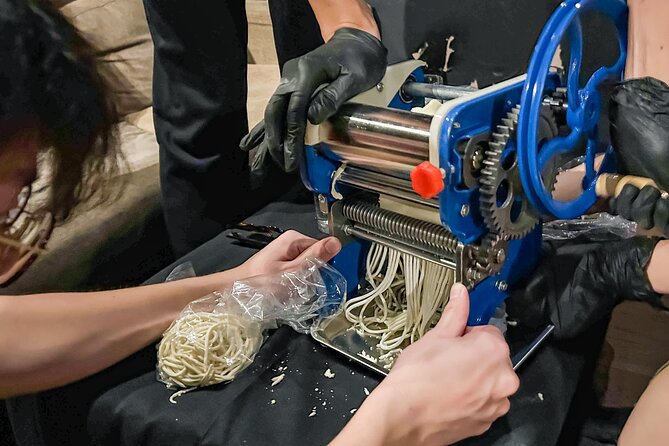
Noodle making takes about 20 minutes and is the heart of the class. You knead the dough, work it through a professional machine, and cut it into noodles. This is the part that creates the best photo opportunities, but the value is more than visual.
The instructor shows you how hand technique and the machine work together. One session included encouragement to use hand methods rather than relying only on electronic equipment. Another account described a rolling machine behaving awkwardly at first, which became part of the fun rather than a serious problem.
The practical lesson is useful. You do not need to buy a restaurant-grade machine to make ramen at home. The class gives you a sense of the dough texture, thickness, and cutting process, then provides a recipe afterward. You may not reproduce every detail perfectly in your own kitchen, but you leave with a method you can try.
Expect some flour on your clothes. Aprons are provided, but the class specifically warns that noodle making can get messy. Wear something comfortable and avoid clothing that you would be upset to dust with flour.
This is also the activity’s best fit for children. Ages six and up are recommended, and the hands-on work gives younger participants something real to do. Adults should still follow the instructor’s directions around kitchen equipment and hot surfaces.
Same city, a completely different kind of day:
- Tokyo: teamLab Planets TOKYO Digital Art Museum Entry Ticket
★ 4.6 · 9,779 reviews - Mt Fuji & Hakone Cruise, Drum Show Bullet Train 1 Day from Tokyo
★ 4.0 · 7,413 reviews - Tokyo: Shinjuku Food Tour (13 Dishes at 4 Local Eateries)
★ 5.0 · 6,603 reviews - Tokyo Mt Fuji 5th St & Hakone Cruise Bus Tour w/Bullet Train
★ 4.4 · 5,024 reviews
Finishing the chashu and preparing the three soups
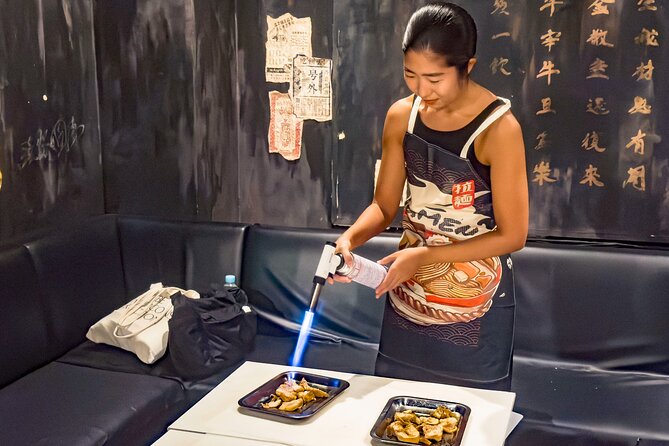
After the noodle work, you spend about 10 minutes finishing the chicken chashu. This gives the class a second practical cooking task and breaks up the dough work before the final assembly.
Soup preparation takes about 10 minutes. You adjust the soup base to your preferred strength, so you get some control over the final taste. That small choice makes the meal feel personal. You are not merely served three identical samples.
Still, the main broth bases are prepared before class. This is not a fault, but it is important context. Tonkotsu stock in particular requires long cooking, and trying to make three complete soup bases in 90 minutes would turn the workshop into a rushed demonstration. The pre-prepared broths leave room for you to focus on noodles, chashu, seasoning, and presentation.
The aroma of the different broths fills the studio during this stage. That sensory part helps you understand why the three bowls taste so different, even when they share some toppings and freshly made noodles.
Plating three mini bowls, then tasting them side by side
Plating takes roughly five minutes. You add noodles, soup, meat, and toppings to create three small bowls. The final result is intentionally photo-friendly, so take pictures before you start eating. Photography is welcome, and the provider asks people who post to use #RamenDojoTokyo.
The tasting and photo period takes about 30 minutes, which is generous for a class of this length. You can compare the bowls while they are fresh, ask follow-up questions, and enjoy the meal without having to hurry straight out.
The side-by-side tasting is the key reason to choose this class over a basic noodle-making lesson. You can decide which style suits you best and notice how the same general dish changes with a different base. For a first visit to Japan, this gives you useful vocabulary and a better sense of what to order later.
Do not make the mistake of eating a large meal shortly before class. Three mini bowls may sound modest, but several people find the total portion filling. The class works well as lunch or dinner, since the food is part of the experience rather than a tiny sample at the end.
How good is the instruction in English?
The class is conducted in English, with Japanese also available. English-speaking instructors explain each stage step by step, and the strongest praise is reserved for their patience, warmth, and ability to answer questions.
Kazuki is often noted for detailed and precise teaching. Kensei is praised for combining instruction with humor, while Kai is described as keeping the session both informative and enjoyable. Arata, Ivy, Rick, Onodera, and others have also led classes, so your instructor may differ from the names highlighted here.
The small-group setup matters more than any single instructor’s personality. With a maximum of eight people, the sensei can make sure everyone takes part. In smaller sessions, you might receive more time for questions and more direct help with the equipment.
This should suit you if you are nervous about cooking in a foreign country or worry that an English class will move too fast. The process is broken into simple jobs, and staff help you through the parts that require timing or equipment.
What you really make, and what is prepared for you
You make the noodles from scratch and take part in preparing and finishing the chicken chashu. You also adjust soup strength, add toppings, and plate the three bowls.
The soup bases are prepared ahead of time. Some other ingredients are ready for assembly as well. That division of labor keeps the workshop manageable and lets you eat the finished ramen within the scheduled 90 minutes.
Think of it as learning the building blocks of ramen. You gain direct experience with dough, noodles, meat, seasoning, boiling, and plating. You do not learn every step behind a long-cooked broth, and you should not book it expecting to prepare three stocks from raw ingredients.
The digital recipe is provided after class. This is a real benefit for anyone who wants to repeat the meal at home, especially since one of the most useful lessons is that the noodle-making approach can be adapted without special equipment.
Who should book, and who should skip it
I would recommend this to first-time visitors who want a food activity with a clear cultural connection. It is also a good choice for couples, families with children aged six and up, and anyone who enjoys making something instead of only photographing it.
Ramen fans get more from the class than casual eaters because the three styles provide a direct comparison. You can also book it as a meal activity. The three bowls are enough to make the session feel substantial, especially at lunchtime.
It is less suitable if your main goal is a traditional chef’s course. The broths are ready-made, the class moves at a friendly beginner pace, and the cooking tasks are selected to fit 90 minutes.
Dietary restrictions require careful thought. Wheat, gluten, egg, soy, chicken, and pork are used, and complete protection against cross-contamination cannot be guaranteed. Partial accommodation may be possible for people avoiding chicken or pork, vegetarians, and vegans, but you must ask in advance. Do not book if you have severe wheat, egg, or soy allergies, celiac disease, severe airborne flour sensitivity, or a need for strict dietary compliance.
The studio is accessible by stairs only. Guests who cannot use stairs should choose another activity.
Timing, clothing, and practical value
The full schedule is 90 minutes:
- Check-in and briefing: 10 minutes
- Chicken chashu preparation: 5 minutes
- Noodle making: 20 minutes
- Chicken chashu finishing: 10 minutes
- Noodle boiling and soup preparation: 10 minutes
- Plating: 5 minutes
- Tasting and photos: 30 minutes
That balance works well. You spend enough time making the noodles to feel involved, then have a long final period to eat and take pictures.
An apron is included, but flour may still reach your sleeves or trousers. Wear comfortable clothes and shoes suitable for standing in a kitchen. Follow staff instructions closely, particularly during boiling, cutting, and any finishing work involving heat.
The class has no hotel transportation and no drinks or alcohol included. Those are small omissions, but they matter if you are planning a full evening around it. Bring your own nonalcoholic drink plan if needed, or stop elsewhere afterward.
Cancellation is free up to 24 hours before the activity for a full refund. Reserve-now, pay-later booking is available, which helps if your Tokyo schedule is still shifting.
Should you pay $64 for Ramen Dojo Tokyo?
Book it if you want an active food lesson, three ramen tastes, an English-speaking instructor, and a recipe you can use later. The strongest reasons are the fresh noodles, the small group, and the chance to compare three soup styles in one sitting.
Skip it if you want the cheapest possible ramen meal, need a fully controlled allergy-safe kitchen, or expect to make every broth from the beginning. For everyone else, the $64 price is fair for a compact cooking class that also functions as lunch or dinner.
Arrive hungry, but not stuffed. Get there five to 10 minutes early, wear clothes that can handle flour, and contact the provider before class if you are delayed or need to discuss dietary changes. Those simple steps let you focus on the good part: turning dough into noodles, building three bowls, and eating the results while they are still fresh.
FAQ
Where is Ramen Dojo Tokyo located?
The studio is at 1F, 2-16-29 Ohashi, Meguro-ku, Tokyo 153-0044, Japan. It is about a 10-minute walk from Shibuya Station.
How long does the ramen class last?
The activity lasts 90 minutes, including the briefing, cooking tasks, plating, tasting, and photo time.
How much does the experience cost?
The listed price is $64 per person.
Which ramen styles will I make and taste?
You will prepare and taste three mini bowls: tonkotsu, shoyu, and miso ramen.
Do I make the noodles myself?
Yes. You knead the dough, roll it, and cut the noodles with a professional noodle machine.
Are the ramen broths made during the class?
The broth bases are prepared in advance because long cooking is not practical within the 90-minute session. You can adjust the soup strength before plating.
Is the workshop taught in English?
Yes. The activity is offered in English, with Japanese also available. Instructors include Kazuki, Kensei, Kai, Arata, Ivy, Rick, and others, depending on the session.
How many people can join each class?
The group size is limited to eight participants.
Are dietary substitutions available?
Partial accommodation may be possible for no chicken or pork, vegetarian, and vegan requests if you inquire in advance. Wheat, gluten, egg, soy, chicken, and pork are used, and complete prevention of cross-contamination cannot be guaranteed.
What should I wear and when should I arrive?
Aprons are provided, but flour may get on your clothes, so wear something practical. Arrive five to 10 minutes before the start. Doors open 10 minutes before class, and arrivals five or more minutes late may need to join in progress or be refused.
Just added around Tokyo
- Tokyo: Customizable Private Guided Walking Tour★ 4.5 · 129 reviews
- Private Harajuku Omotesando Architecture Tour★ 4.9 · 18 reviews
- Tokyo: Guided Helicopter Ride★ 4.9 · 24 reviews
- Tokyo: Guided Walking Tour of Tsukiji Market with Lunch★ 4.4 · 24 reviews
- Tokyo: Private Personalized Local Food Tour★ 4.5 · 101 reviews
- Tokyo GINZA: KONPARU Japanese Cabaret Show with Drink★ 4.8 · 38 reviews
- Tokyo: Guided Walking Tour of Tsukiji Market with Breakfast★ 4.4 · 134 reviews
- Tokyo: Gotokuji Cat Temple, Shinjuku Cat Cafe & 3D Cat Tour★ 4.9 · 38 reviews
Tokyo Tours, compared.

Mt Fuji and Hakone 1-Day Bus Tour Return by Bullet Train
Read our review →


teamLab Planets TOKYO Digital Art Museum Entry Ticket
Read our review →
Mt Fuji & Hakone Cruise, Drum Show Bullet Train 1 Day from Tokyo
Read our review →
Shinjuku Food Tour (13 Dishes at 4 Local Eateries)
Read our review →
Tokyo Mt Fuji 5th St & Hakone Cruise Bus Tour w/Bullet Train
Read our review →