
REVIEW · NIKKO DAY TRIPS
Nikko Toshogu, Kegon waterfall, Lake Chuzenji One Day Pvt. Tour
Nikko packs Japan’s sacred architecture, shogun-era history, mountain scenery, and one very tall waterfall into a long but rewarding day from Tokyo. This private vehicle tour makes the trip far easier than piecing together trains and local buses, especially for a group of up to five.
I like the generous route, which includes Toshogu Shrine, Rinno-ji Temple, Shinkyo Bridge, Kegon Falls, and Lake Chuzenji. I also like the small comforts: air conditioning, onboard Wi-Fi hotspot, parking, fuel, and a driver who may help with practical touches. A driver named Rana is specifically praised for providing water and snacks and helping with lunch arrangements.
The main drawback is the pace. Nikko is far enough from Tokyo that transport takes a large part of the day, and several admissions are extra. If you want a slow, quiet temple visit, this packed schedule may feel brisk.
In This Review
- Key points at a glance
- Why this private Nikko route works from Tokyo
- Toshogu Shrine, where Nikko turns grand
- Rinno-ji Temple and the three gilded figures
- The Toshogu museum for a closer look at the shogun’s world
- Nikko Botanical Garden and a pause among traditional plantings
- Shinkyo Bridge, Nikko’s red entrance marker
- Kegon Falls and Lake Chuzenji bring the mountain scenery
- What the $500 group price really means
- Who should book this Nikko day trip
- Practical details before you reserve
- Should you book it?
- FAQ
- How long does the Nikko tour last?
- Where does the tour start?
- Where does the tour end?
- Is pickup offered?
- Is this a private tour?
- How many people can join?
- Is transportation included?
- Is Wi-Fi available in the vehicle?
- Are entrance fees included?
- Is lunch included?
- Can I cancel for a full refund?
Key points at a glance
- A full 12-hour private day: Travel from Tokyo Station and return there in a private air-conditioned vehicle.
- Toshogu is the star: See the ornate UNESCO-listed shrine complex dedicated to Tokugawa Ieyasu.
- Nature follows history: Kegon Falls drops nearly 100 meters beside Lake Chuzenji.
- Several major stops: Rinno-ji, Shinkyo Bridge, the Toshogu museum, and Nikko Botanical Garden add variety.
- Extra costs are clear: Lunch and admission to Toshogu, Rinno-ji, the garden, and museum are not included.
- Best for small groups: The $500 group price becomes more attractive when shared by four or five people.
Why this private Nikko route works from Tokyo
Nikko is one of the best escapes from Tokyo when you want more than city sights. It gives you ornate religious buildings, the legacy of the Tokugawa shoguns, old bridges, forested mountain country, and Lake Chuzenji in one outing.
The challenge is distance. This is not a quick suburban excursion, and the schedule lasts about 12 hours. A private car removes the need to work out local bus connections between the shrine area and the higher country around Kegon Falls. That matters because the day includes both cultural sights in central Nikko and nature farther uphill.
The tour begins and ends at Tokyo Station, at 1 Chome-9 Marunouchi, Chiyoda City. Pickup is offered, but you should confirm the exact arrangement when booking. Since the same vehicle carries only your group, you are not sharing the day with strangers or waiting for a large coach to load.
The vehicle includes air conditioning, private transport, fuel, parking, and an onboard hotspot. Those details sound ordinary, but they matter on a long day. You can leave the route planning to the driver, keep your phone connected, and avoid separate parking concerns around busy heritage sites.
More Nikko Day Trips in Tokyo
- Nikko: Kegon Falls, Lake Chuzenji & Toshogu Temple
★ 4.6 · 1,577 reviews - Tokyo: Nikko Toshogu Shrine and Kegon Waterfall Tour
★ 4.5 · 1,266 reviews - From Tokyo: Nikko World Heritage Site Private Full-Day Trip
★ 4.9 · 243 reviews
Toshogu Shrine, where Nikko turns grand
Give Toshogu the largest share of your attention. The visit is scheduled for about two hours, and that is sensible. The shrine is dedicated to Tokugawa Ieyasu, the samurai leader who founded the Tokugawa shogunate and helped unify Japan.
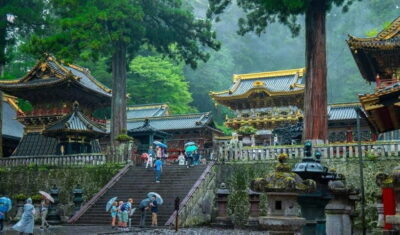
Ieyasu’s rule began the Edo period, which lasted from 1603 to 1867. That era shaped Japan’s political order and helped Edo, now Tokyo, grow into the country’s great capital. Toshogu is not a plain wooden shrine. Its buildings are heavily decorated, with bright colors, detailed carvings, gates, and layers of visual detail.
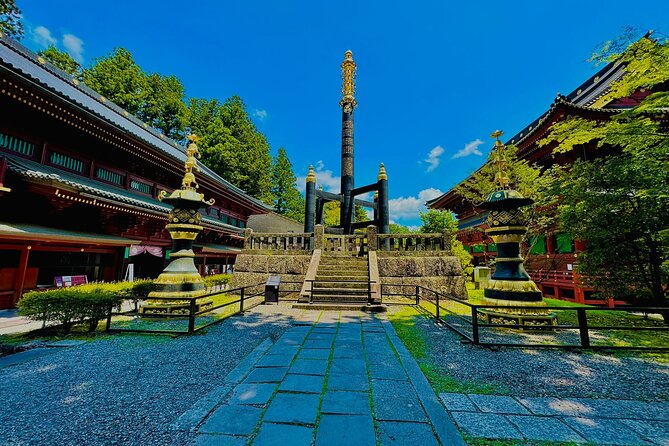
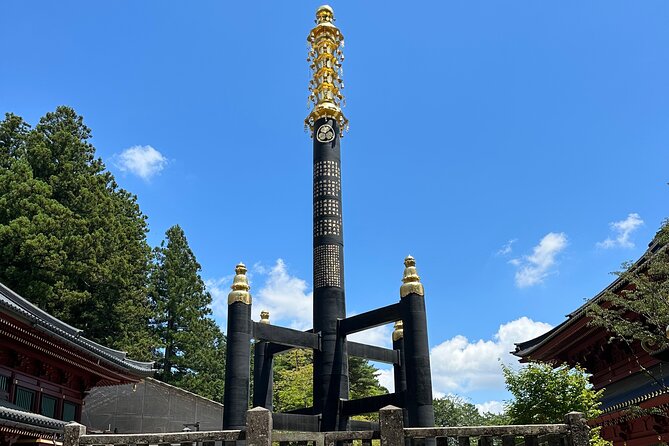
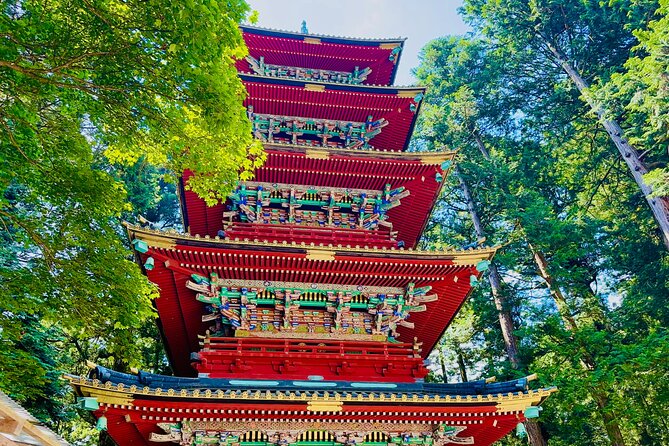
The shrine belongs to the UNESCO World Heritage site called the Shrines and Temples of Nikko. That designation is useful context, but the place works best when you pay attention to the details in front of you: carved animals, elaborate entrances, the famous Sleeping Cat carving, and the tall pagoda.
The pagoda reaches about 36 meters. The route also brings you near both Shinto and Buddhist sites, reflecting the way these traditions once shared sacred ground in Japan. You can move between the main points fairly easily because they are close together, but the complex still demands walking and attention.
Admission to Toshogu is not included. The supplied pricing information lists the entrance at about $10 per person. Check the current amount at booking, since entrance prices can change.
Rinno-ji Temple and the three gilded figures
Rinno-ji adds a quieter and more overtly Buddhist counterpoint to Toshogu. The temple was founded in 766 by the monk Shodo Shonin, who introduced Buddhism to the Nikko area.
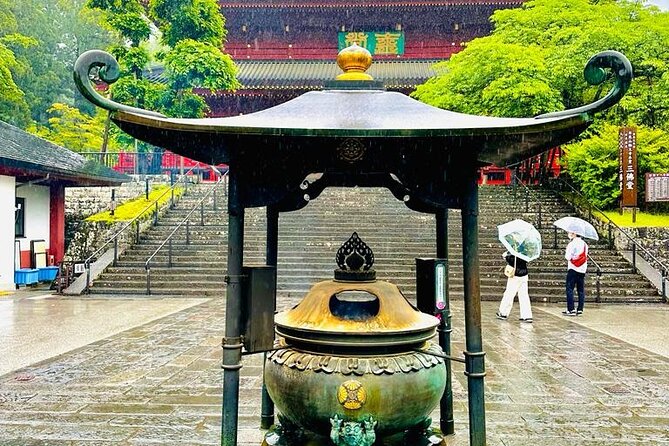
Your scheduled visit lasts about one hour. The main hall, Sanbutsudo, is one of the area’s largest wooden buildings. Inside are three large gilded figures representing Buddhist forms of Nikko’s three mountain deities: Amida Nyorai, Senju Kannon, and Bato Kannon.
This stop gives you a chance to shift from carved gates and political history to religious imagery. The figures are the reason to enter, while the temple complex helps explain why Nikko became such an important sacred center.
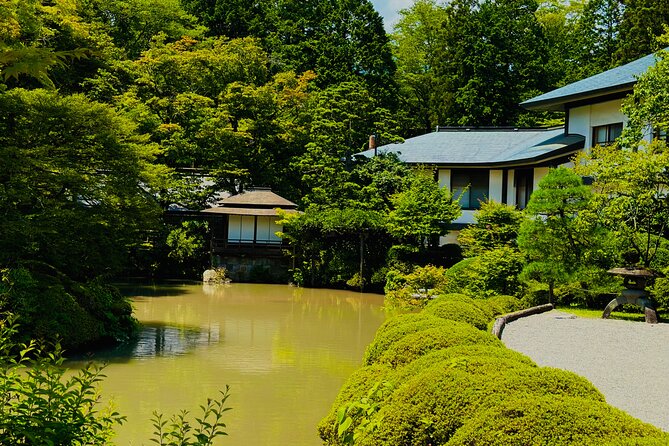
Behind the main hall is Shoyo-en, a traditional Japanese garden. The garden uses ponds, rocks, and carefully arranged plants to create a calm setting. The itinerary also refers to the Taiyu-in Mausoleum, another important part of Nikko’s religious and Tokugawa story, though the precise amount of time available for each section depends on the day’s traffic and timing.
Rinno-ji admission is extra. The supplied information gives a combined figure of about $7 per person for Rinno-ji Temple, the old-era garden, and the Rinno-ji museum. Confirm how the current ticket is structured before you go.
The Toshogu museum for a closer look at the shogun’s world
The Nikko Toshogu Museum, also called the Toshogu Treasure Museum, takes about 30 minutes. That is not long, but it can be a useful stop after seeing the shrine buildings themselves.
The collection includes samurai armor, swords, and personal belongings connected with Tokugawa Ieyasu. The objects give you a more direct look at the political and military world behind the shrine’s grand appearance.
I would treat this as an optional depth stop rather than the main event. If you are fascinated by samurai history, the museum helps make Ieyasu feel like a real historical figure rather than simply a name attached to a shrine. If you prefer gardens and architecture, the outdoor complex will probably hold your attention longer.
The museum admission is not included. The schedule allows about 30 minutes, so you should not expect a long museum visit. It is best suited to a short, focused look at the objects and the Edo-period setting they represent.
Same city, a completely different kind of day:
- Mt Fuji and Hakone 1-Day Bus Tour Return by Bullet Train
★ 5.0 · 26,383 reviews - 1-Day Tokyo Bus Tour
★ 5.0 · 14,250 reviews - Tokyo: TOKYO SKYTREE® Admission ticket
★ 4.5 · 11,192 reviews - Tokyo: teamLab Planets TOKYO Digital Art Museum Entry Ticket
★ 4.6 · 9,779 reviews
Nikko Botanical Garden and a pause among traditional plantings
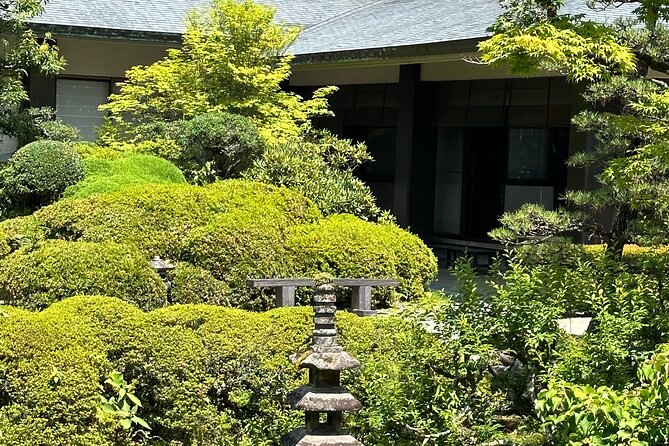
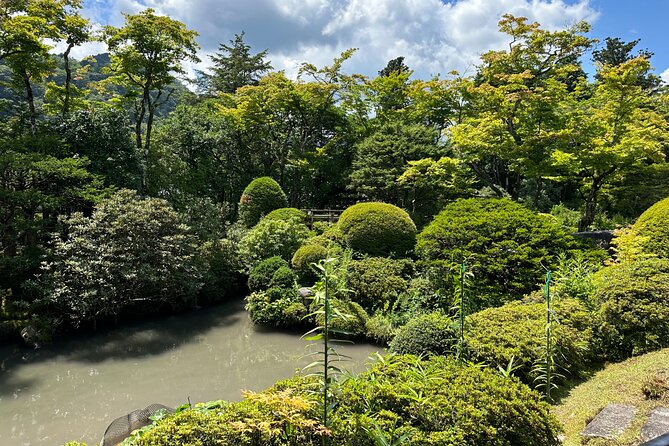
The Nikko Botanical Garden is scheduled for another 30 minutes. The supplied description also connects this garden with the Tokugawa-era setting around Rinno-ji, and highlights traditional Japanese design, ponds, rocks, and carefully maintained vegetation.
This is a useful change of pace after the ornate shrine and temple interiors. You get a chance to slow down and look at the arrangement of the grounds rather than follow gates, halls, and religious statues.
The stop may appeal most to you if gardens are part of your reason for visiting Japan. At only 30 minutes, it is a compact visit rather than a long botanical tour. The garden admission is listed among the extra costs, along with the Rinno-ji area and museum at about $7 per person in the provided pricing.
Because the day includes several stops, you should ask the driver how much flexibility exists here. The route is planned, which is helpful, but a planned route can also mean less time for a favorite stop.
Shinkyo Bridge, Nikko’s red entrance marker
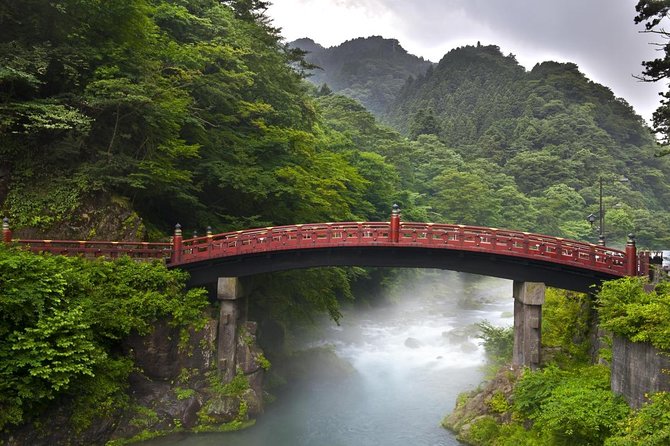
Shinkyo Bridge is one of the quickest stops, with about 30 minutes allotted. Its red form makes it easy to recognize, and its position at the entrance to Nikko’s shrines and temples gives it real historical importance.
The bridge belongs technically to Futarasan Shrine. The current structure dates to 1636, during the Tokugawa period, although a bridge occupied this crossing much earlier. Until 1973, the general public could not cross it. Renovation work in the late 1990s and early 2000s restored it for visitors.
The tour allows you to see the bridge without paying an entrance fee. The supplied details note that walking across and back can involve a fee, so the free stop appears to be for viewing rather than necessarily crossing. Ask the driver if crossing is part of your plan and what the current fee is.
This is a good photography stop and a helpful way to understand Nikko’s layout. It is not a full sightseeing session, so do not expect to spend half an hour studying every detail of the bridge.
Kegon Falls and Lake Chuzenji bring the mountain scenery
The final major section takes you to Kegon Falls and Lake Chuzenji. About two hours are allocated here, making it the longest nature stop of the day.
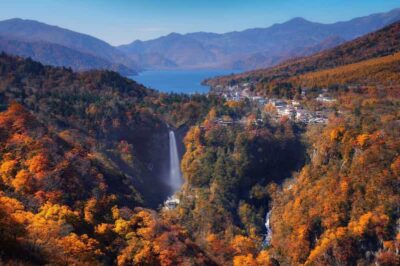
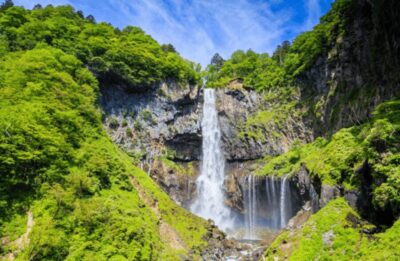
Kegon Falls drops almost 100 meters. Its height and setting make it one of Japan’s best-known waterfalls. An elevator installed in 1930 takes you closer to the falls for a more direct view. The supplied tour details list the stop as free, but the elevator may involve its own admission, so confirm that cost before using it.
This is where the private vehicle becomes especially useful. You are not simply visiting the central shrine district. The route continues to the mountain area around Lake Chuzenji, where the scenery changes sharply from carved religious buildings to open water and a dramatic waterfall.
Lake Chuzenji is described as peaceful and beautiful, with Chuzenji Shrine nearby. Allow yourself time to look beyond the waterfall. The lake is not just a second photo stop. It gives the day breathing room after several indoor and architectural sights.
A major consideration is weather. The supplied information does not promise clear views, and waterfalls and mountain lakes are naturally affected by conditions. You should keep expectations flexible. The route still offers a strong contrast between Nikko’s sacred buildings and its natural setting, even if visibility is not perfect.
What the $500 group price really means
The price is $500 per group of up to five people, not $500 per person. For five people, that works out to $100 each before admissions and food. For two people, the effective price is $250 each, so the value depends heavily on group size.
Included costs cover the air-conditioned vehicle, private transport, fuel surcharge, parking fees, and onboard hotspot. Those inclusions remove several small expenses that can add up during a long day.
You still pay for lunch or brunch and the listed entrance tickets. The supplied figures put Toshogu at about $10 per person and the Rinno-ji, old-era garden, and museum grouping at about $7 per person. Treat those as guide prices, not guarantees of current pricing.
For a group of four or five, I think the private format can make good sense. You are paying for door-to-door convenience, a dedicated vehicle, and a route that links central Nikko with Kegon Falls and Lake Chuzenji. For one or two people, public transport may cost less, but it will require more planning and may offer less control over the day.
Lunch is not included, though one account specifically associates driver Rana with finding a pleasant restaurant and providing water and snacks. That is a useful practical detail, but you should not treat a particular restaurant or snack service as guaranteed.
Who should book this Nikko day trip
I would consider this tour for:
- Families or small groups who want a private vehicle.
- First-time visitors who do not want to plan Nikko’s connections.
- People who want both UNESCO-listed religious sites and Kegon Falls.
- Anyone who values a driver’s help with timing, parking, and lunch.
- Groups of four or five, who receive the strongest per-person value.
I would hesitate if you want a slow temple-focused day, a specialist guide at every sight, or a low-cost excursion. The information confirms private transportation and driver support, but it does not clearly promise a formally licensed specialist guide or detailed commentary at every stop.
The day is also not designed around a single theme. You will see samurai history, Shinto architecture, Buddhist art, a museum, a garden, an old bridge, a waterfall, and a lake. That variety is the appeal, but it also means you will sample each place rather than spend a full day in one.
Practical details before you reserve
Confirmation arrives at booking, and a mobile ticket is offered. The activity begins and ends at Tokyo Station, while pickup is also listed as available. Confirm the exact meeting instructions because a central station is large and the supplied address alone may not identify the precise curbside point.
Most people can participate, and service animals are allowed. The experience is private, meaning only your own group takes part. It is also near public transportation, though the point of booking is to avoid relying on public transport for the Nikko route itself.
The cancellation policy is simple: cancel at least 24 hours before the local start time for a full refund. Cancellations or changes made within 24 hours are not accepted for a refund.
The provider is Sato. Hiroyuki Sato is named in the supplied material, while Rana is the driver specifically associated with the warmest practical service details. Driver assignment should be confirmed rather than assumed.
Should you book it?
Book this tour if you want to see Toshogu Shrine and Kegon Falls in one day without managing Nikko’s transport yourself. The private vehicle, parking, fuel, and small-group format give the $500 price its value, particularly when four or five people share it.
Think twice if you are traveling alone, watching every dollar, or hoping for an unhurried study of each temple. You will need to pay for lunch and several admissions, and the 12-hour schedule covers a lot of ground.
For a small group based in Tokyo, this is a practical way to reach Nikko’s most important sights, with enough variety to make the long day worthwhile.
FAQ
How long does the Nikko tour last?
The tour lasts approximately 12 hours.
Where does the tour start?
The stated meeting point is Tokyo Station, at 1 Chome-9 Marunouchi, Chiyoda City, Tokyo 100-0005, Japan.
Where does the tour end?
The activity ends back at the meeting point.
Is pickup offered?
Yes, pickup is listed as an available feature. Confirm the exact pickup arrangement when booking because Tokyo Station is also the stated meeting point.
Is this a private tour?
Yes. Only your group participates in the activity.
How many people can join?
The $500 price covers one group of up to five people.
Is transportation included?
Yes. The tour includes private transportation in an air-conditioned vehicle, along with fuel surcharge and parking fees.
Is Wi-Fi available in the vehicle?
An onboard hotspot is included.
Are entrance fees included?
No. Toshogu Shrine, Rinno-ji Temple, the old-era garden, and the Rinno-ji museum have separate admission costs. The supplied guide prices are about $10 per person for Toshogu and $7 per person for the Rinno-ji, garden, and museum grouping.
Is lunch included?
No. Lunch and brunch are not included.
Can I cancel for a full refund?
Yes, if you cancel at least 24 hours before the experience start time. Cancellations and changes made less than 24 hours before the start are not accepted for a refund.
More 1-Day Tours in Tokyo
- Mt Fuji & Hakone Cruise, Drum Show Bullet Train 1 Day from Tokyo
★ 4.0 · 7,413 reviews - Tokyo Disneyland 1-Day Passport
★ 4.6 · 2,512 reviews - Tokyo Customized Private Tour (Must See Places in 1 Day)
★ 5.0 · 1,499 reviews - Tokyo Customized Private Tour: See Top Attractions in 1 Day
★ 5.0 · 1,351 reviews
Just added around Tokyo
- Private Memorable Tokyo Tour with English Speaking Driver★ 5.0 · 30 reviews
- Private Tokyo Custom Full-Day Tour by Chartered Vehicle★ 5.0 · 16 reviews
- Private Sightseeing to Mt Fuji and Hakone with English Driver★ 5.0 · 51 reviews
- Tokyo Photography Masterclass – Private Photography Lesson★ 5.0 · 25 reviews
- 4 Day Tour – Mount. Fuji, Tokyo, Hakone, Kamakura and Yokohama★ 5.0 · 19 reviews
- Private Mt. Fuji Day Trip from Tokyo with English-Speaking Driver★ 5.0 · 33 reviews
- Private Unforgettable Mt Fuji Tour with English Speaking Driver★ 5.0 · 142 reviews
- Private Tokyo Food Tour – A Journey Through Time Through Food★ 5.0 · 36 reviews
Nikko Day Trips, compared.
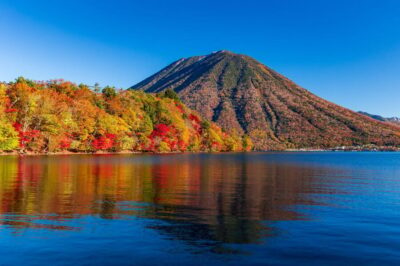
Nikko Toshogu Shrine and Kegon Waterfall Tour
Read our review →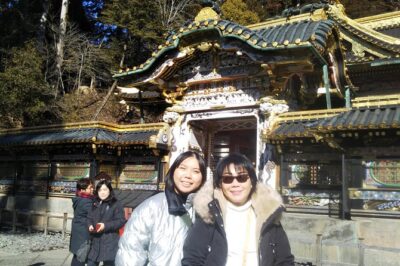
Nikko Full-Day Private Tour with Government-Licensed Guide
Read our review →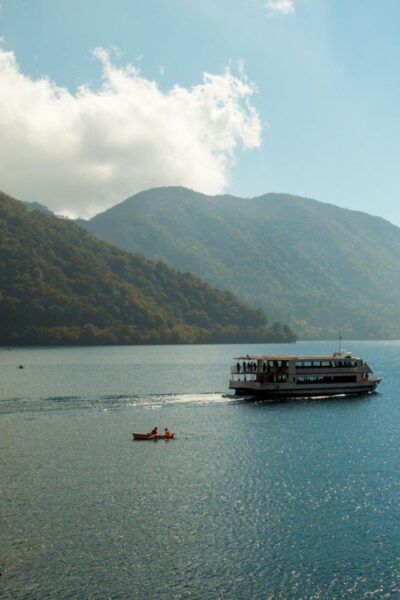
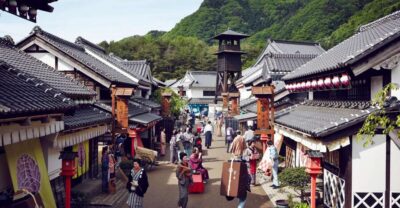
Edo Wonderland Edomura Cultural Theme Park Ticket
Read our review →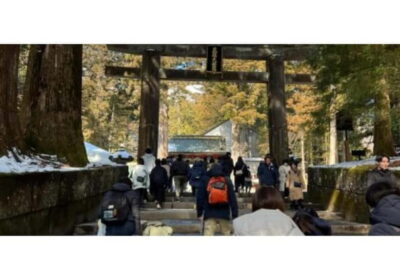
Browse the lists this tour appears in