REVIEW · TOKYO TOURS
Kintsugi Experience: Art of Golden Joinery in Tokyo
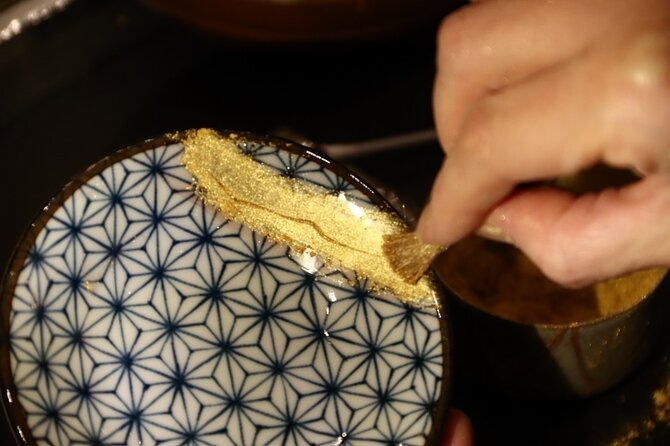
Kintsugi turns a cracked ceramic plate into something worth keeping, using lacquer mixed with gold to highlight the break rather than hide it. This one-hour workshop in Tokyo’s Minami-Aoyama neighborhood gives you a hands-on introduction to both the craft and the Japanese idea that damage can become part of an object’s beauty.
I like two things right away: you make a real souvenir, rather than simply watch a demonstration, and the lesson works well for complete beginners. The instructors explain each step clearly, offer patient help, and use video examples when useful.
The main drawback is the firm booking policy. This experience is non-refundable and cannot be changed, even if you choose the wrong date, so check your plans carefully before paying.
In This Review
- Key points to know before you book
- What makes this Tokyo kintsugi class worthwhile
- Arriving in Minami-Aoyama and finding the studio
- Getting dressed for the craft
- The one-hour lesson, step by step
- The souvenir you take home
- What the price means at $59.69
- Why the cultural explanation matters
- Who will enjoy this workshop most
- Practical cautions before booking
- Is this kintsugi experience worth booking?
- FAQ
- How long does the kintsugi experience last?
- Where does the activity take place?
- What do I repair during the class?
- Can I take my finished plate home?
- Is equipment included?
- Can children under six participate?
- Can I cancel or change my booking?
Key points to know before you book
- Repair a studio-supplied ceramic plate: You do not bring your own pottery, but you take home the plate you work on.
- Meet Master Taku at the 11:00am class: The owner and master artisan may lead this session, with staff assisting participants.
- Learn the idea behind kintsugi: The lesson covers Japanese aesthetics, wabi-sabi, and the belief that repaired damage becomes part of an object’s story.
- Wear a samue while you work: The traditional craftsperson’s garment adds a pleasant touch to the workshop.
- Plan for about one hour: This is a compact cultural activity that fits neatly between sightseeing stops in Tokyo.
- Check the age and cancellation rules: Children under six cannot enter the atelier, and the booking is non-refundable.
What makes this Tokyo kintsugi class worthwhile
Kintsugi is often described simply as repairing broken pottery with gold. That is true, but it misses the most interesting part. The visible repair is not treated as an embarrassment or something to conceal. It becomes part of the object’s life.
That idea gives this workshop more weight than a standard craft souvenir activity. You are not just painting a plate or assembling a factory-made keepsake. You are learning a traditional Japanese approach to wear, damage, and renewal, then applying the basic technique yourself.
The class is designed for beginners. You do not need art training, pottery experience, or Japanese-language ability. The instructor guides you through the process, and the equipment, plate, and other supplies are provided.
At the end, you leave with a repaired ceramic item. It may not look like a museum piece, and that is part of the charm. It is your first attempt, shaped by your own hand, and it carries a better memory than a souvenir picked up in an airport shop.
Other Tokyo days people book alongside this one:
- Mt Fuji and Hakone 1-Day Bus Tour Return by Bullet Train
★ 5.0 · 26,383 reviews - 1-Day Tokyo Bus Tour
★ 5.0 · 14,250 reviews - Tokyo: TOKYO SKYTREE® Admission ticket
★ 4.5 · 11,192 reviews
Arriving in Minami-Aoyama and finding the studio
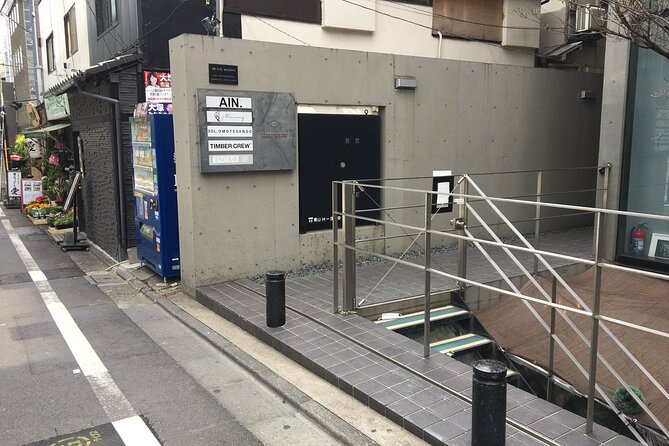
You make your own way to TNCA Minami-Aoyama Studio at 3-chome-8-2 Minamiaoyama, in Minato City. The area is centrally located and near public transportation, though you should allow time to find the entrance.
This is one place where a little preparation helps. One participant found the studio difficult to locate and arrived only six minutes before the class. The instructor did not acknowledge them immediately, while an assistant helped settle the situation. That appears to be an isolated complaint in an otherwise very positive record, but it offers sound advice: do not cut your arrival too close.
Arriving early gives you time to get your bearings, locate the atelier, and settle in before the lesson begins. The activity returns to the same meeting point, so you do not need to arrange a second pickup or work out a separate end location.
There is no hotel pickup or drop-off. Food and drinks are also not included, though the short duration makes this easy to fit around a meal or coffee stop elsewhere in the neighborhood.
Getting dressed for the craft
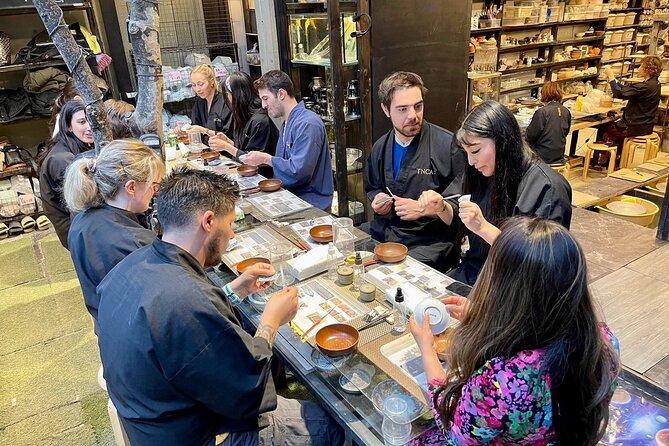
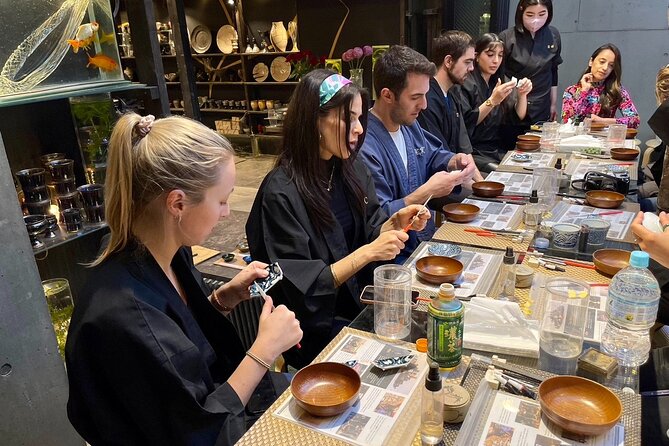
Once the class begins, you put on a samue, a traditional Japanese garment associated with craftspeople and manual work. It is a small detail, but it changes the mood of the activity. Instead of sitting in ordinary sightseeing clothes for a quick demonstration, you are prepared to work at the bench.
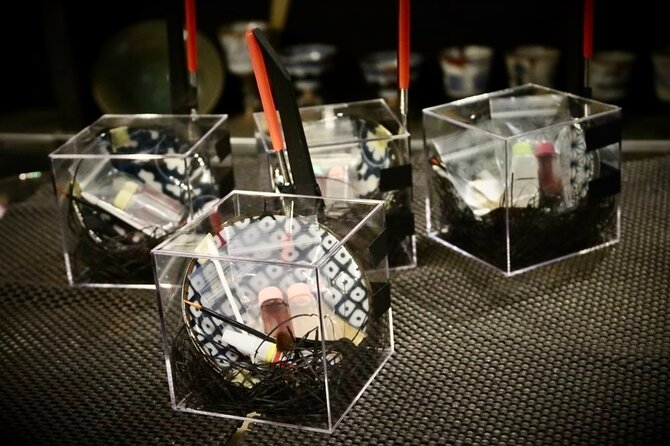
The studio supplies the necessary equipment and the ceramic plate. Personal pottery is not allowed, so do not arrive hoping to repair a favorite mug or a plate from home. That rule may disappoint you if you already have a treasured broken object, but it makes sense for a short beginner class. The studio can control the size, condition, and safety of each piece.
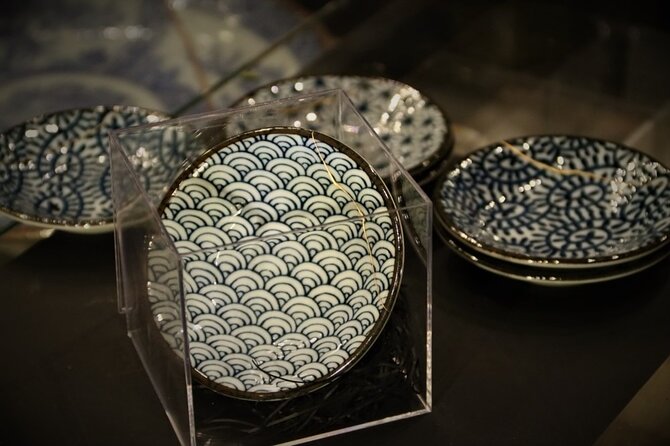
Your plate becomes the project for the entire lesson. You work on one traditional pottery item and bring it home afterward. The end product is not merely a sample supplied by the studio. You have a hand in creating the visible repair.
The one-hour lesson, step by step
The session lasts about one hour. That is enough time to understand the basic method and complete a small piece, but not enough time for a long, advanced restoration project.
The instructor first explains what kintsugi is and why it developed as a Japanese craft. You learn about the view that breakage and repair form part of an object’s history. The lesson also introduces Japanese aesthetics and the related idea of wabi-sabi, which finds value in imperfection and change.
Then comes the practical work. The instructor demonstrates the process, and clear directions help you copy each step. Video examples may also be used, which is useful when you are trying to follow a delicate technique with your hands rather than just listen to an explanation.
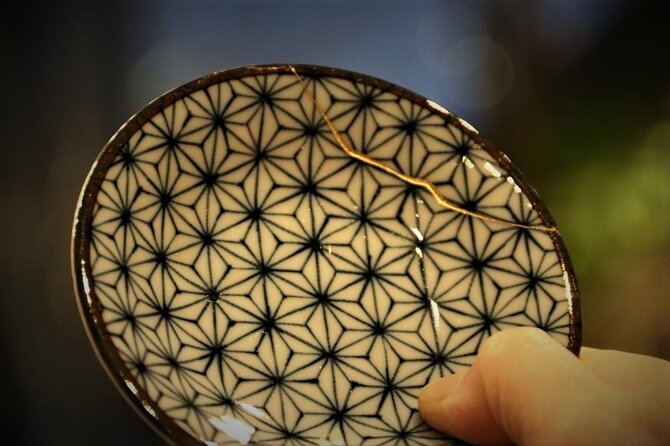
The gold effect comes from lacquer mixed with gold. You use it to emphasize the repaired line across the ceramic. The result is meant to be seen, not hidden. You may find the activity surprisingly calming because it asks you to slow down and concentrate on a small task.
The teacher and assistants move around the group to offer help. Several aspects of the class receive especially strong praise: patient instruction, personal attention, clear explanations, and encouragement without taking over the work. That balance matters. You want guidance when your line goes astray, but you also want the finished plate to feel like yours.
At the 11:00am class, you may meet Master Taku. He is described as friendly and encouraging, and the staff assist with the practical side of the lesson. The class can include international participants, and the instructor is able to teach in English. The studio is small and intimate, which helps keep the demonstration visible and makes it easier to ask questions.
The experience is described as capped at no more than 10 participants in the main class description. The additional information gives a maximum of 20 for the activity, so the precise group size may depend on the session. Either way, this is intended to be a guided studio workshop rather than a large lecture.
Same city, a completely different kind of day:
- Tokyo: teamLab Planets TOKYO Digital Art Museum Entry Ticket
★ 4.6 · 9,779 reviews - Mt Fuji & Hakone Cruise, Drum Show Bullet Train 1 Day from Tokyo
★ 4.0 · 7,413 reviews - Tokyo: Shinjuku Food Tour (13 Dishes at 4 Local Eateries)
★ 5.0 · 6,603 reviews - Tokyo Mt Fuji 5th St & Hakone Cruise Bus Tour w/Bullet Train
★ 4.4 · 5,024 reviews
The souvenir you take home
The repaired plate is included in the price, along with the lesson, equipment, taxes, fees, and handling charges. That makes the souvenir a central part of the value rather than an optional extra.
You also get a useful story to attach to it. A purchased plate can remind you of Tokyo, but a plate you repaired yourself recalls the quiet concentration of the lesson, the first attempt at working with gold lacquer, and the idea that flaws can add meaning.
Packing matters when you carry ceramics home. The studio has thought about how participants transport their pieces, and one especially useful detail is that the finished pottery is packaged for travel. Still, you should handle it with care once it is in your luggage.
Do not expect the plate to be ready for every household use. The supplied information explains that you take the item home, but it does not promise that it is food-safe, dishwasher-safe, or suitable for regular kitchen use. Treat it as a handmade keepsake unless the instructor gives you different care instructions.
What the price means at $59.69
At $59.69 per person, this is not the cheapest one-hour activity in Tokyo. You are paying more than you would for a casual museum visit or a quick souvenir purchase.
The value comes from the combination of instruction, materials, studio access, cultural context, and the piece you take home. The class supplies a plate and all the needed equipment, so you do not have to buy tools or source a broken ceramic item. You also receive direct help from an instructor instead of trying to learn the process from a short video.
I think the price makes the most sense for people who value small, creative experiences. If you want a major sightseeing attraction or a long workshop with several finished objects, this is too short. If you want a focused activity that fits into a Tokyo day and leaves you with something personal, the cost is easier to justify.
Group discounts may be available, which could help if you are booking for a couple, family group, or friends traveling together. Children under six cannot enter the atelier for safety reasons, so families should check the age of every participant before booking.
Why the cultural explanation matters
The class would be less memorable if it only taught the mechanics of applying gold lacquer. The discussion of kintsugi philosophy gives the handwork a reason.
You begin to see why a repaired object can carry more meaning than an untouched one. The plate records a break, but it also records an effort to restore it. That theme fits naturally with Japanese ideas about impermanence, simplicity, and the beauty of things that show their age.
The lesson also gives you a small window into traditional Japanese crafts. You are not receiving a full history of ceramics or a professional-level restoration course, but you get enough cultural context to understand what you are doing and why the finished line is meant to remain visible.
I particularly like that the activity does not demand artistic confidence. The point is not to produce identical perfect plates. Your line may be uneven. Your gold may spread differently from someone else’s. Those variations become part of the first attempt, which suits the subject nicely.
Who will enjoy this workshop most
This experience is a strong match for couples, friends, solo visitors, and families with children six and older who enjoy making things together. It also suits people who regularly seek creative workshops while traveling.
You will probably enjoy it if you like ceramics, Japanese design, craft traditions, or quiet hands-on activities. It works well for people who want a break from temples, department stores, and crowded streets. The lesson gives you an hour of concentrated work without requiring a full day away from Tokyo.
It is also a good choice for a rainy morning or an afternoon when you want something indoors. The studio setting and supplied materials mean you do not need special preparation beyond arriving on time.
You may want to skip it if you dislike guided craft activities, expect to repair a personal heirloom, or prefer a broad sightseeing tour. The class focuses on one plate and one basic introduction. It is not a professional certification course, and it does not promise that you will be able to restore every broken object at home afterward.
Practical cautions before booking
The cancellation policy deserves serious attention. This experience is non-refundable and cannot be changed for any reason. If you book the wrong date or time, the amount paid will not be returned, so check your calendar and meeting details before confirming.
Confirmation is sent within 48 hours of booking, subject to availability. The activity requires a minimum number of participants. If the provider cancels because that minimum is not met, you can receive a full refund or choose another date or experience.
You should also plan your route in advance. The studio is near public transportation, but the address may not be instantly obvious once you reach Minami-Aoyama. Arrive early rather than rushing through nearby streets with the class start time approaching.
The experience is suitable for most people, but children under six cannot enter the atelier because of the establishment’s safety rules. The activity ends at the starting point, and all transport to and from the studio is your responsibility.
Is this kintsugi experience worth booking?
I would book this class if you want a personal Tokyo memory and enjoy learning by doing. The strongest features are the patient instruction, the cultural explanation, the chance to meet Master Taku at the 11:00am session, and the plate you repair and take home.
The one-hour format is both a strength and a limit. It fits neatly into a busy itinerary, but it offers only a beginner’s taste of kintsugi. At $59.69, the value depends on how much you care about the process and the handmade souvenir.
Book it when your schedule is firm, arrive early, and think of the finished plate as a meaningful keepsake rather than a flawless piece of professional pottery. For a compact and thoughtful Japanese craft experience, this is a well-priced choice for the right kind of visitor.
FAQ
How long does the kintsugi experience last?
The lesson lasts approximately one hour.
Where does the activity take place?
It takes place at TNCA Minami-Aoyama Studio, 3-chome-8-2 Minamiaoyama, Minato City, Tokyo 107-0062, Japan.
What do I repair during the class?
The studio provides a ceramic plate for you to repair. Personal items are not allowed.
Can I take my finished plate home?
Yes. The plate you use during the lesson is included and can be taken home afterward.
Is equipment included?
Yes. The lesson includes the necessary equipment, the supplied plate, lesson fees, and all taxes, fees, and handling charges.
Can children under six participate?
No. Children under six cannot enter the atelier because of the establishment’s safety rules.
Can I cancel or change my booking?
No. The experience is non-refundable and cannot be changed for any reason. If the provider cancels because the minimum number of participants is not met, you will be offered another date or experience, or a full refund.
Just added around Tokyo
- Tokyo: Customizable Private Guided Walking Tour★ 4.5 · 129 reviews
- Private Harajuku Omotesando Architecture Tour★ 4.9 · 18 reviews
- Tokyo: Guided Helicopter Ride★ 4.9 · 24 reviews
- Tokyo: Guided Walking Tour of Tsukiji Market with Lunch★ 4.4 · 24 reviews
- Tokyo: Private Personalized Local Food Tour★ 4.5 · 101 reviews
- Tokyo GINZA: KONPARU Japanese Cabaret Show with Drink★ 4.8 · 38 reviews
- Tokyo: Guided Walking Tour of Tsukiji Market with Breakfast★ 4.4 · 134 reviews
- Tokyo: Gotokuji Cat Temple, Shinjuku Cat Cafe & 3D Cat Tour★ 4.9 · 38 reviews
Tokyo Tours, compared.

Mt Fuji and Hakone 1-Day Bus Tour Return by Bullet Train
Read our review →


teamLab Planets TOKYO Digital Art Museum Entry Ticket
Read our review →
Mt Fuji & Hakone Cruise, Drum Show Bullet Train 1 Day from Tokyo
Read our review →
Shinjuku Food Tour (13 Dishes at 4 Local Eateries)
Read our review →
Tokyo Mt Fuji 5th St & Hakone Cruise Bus Tour w/Bullet Train
Read our review →