
REVIEW · PRIVATE GUIDED TOURS WITH DRIVER
Kawagoe 4hr Private Tour with Licensed Guide (Kawagoe Dep)
Kawagoe gives you old Japan without sending you far from Tokyo. In about 30 minutes by train, you reach a former castle town filled with dark warehouse buildings, temple grounds, a working bell tower, and small places to eat. This private tour lets you choose two or three sights instead of racing through every stop.
I like the custom itinerary, especially if you already know you want Kitain Temple, Hikawa Shrine, or the castle palace. I also like having a licensed local guide, since Kawagoe’s Shinto customs, Buddhist sites, and Edo-era buildings make more sense with context.
The catch is simple: four hours goes quickly, and this is a walking tour with no private vehicle. Buses and taxis may be sparse, so you need comfortable shoes and a realistic list of priorities.
In This Review
- Key points to know before booking
- Why Kawagoe makes a smart half-day from Tokyo
- How the four-hour private format works
- Toki no Kane, Kawagoe’s timekeeper
- Koedo Yokocho for a practical food stop
- The warehouse district and Kawagoe Kurazukuri Museum
- Kawagoe Castle Naka no Mon and Honmaru Palace
- Hikawa Shrine and Kitain Temple
- Kawagoe City Museum and Matsuri Kaikan
- Kawagoe Onsen, a very different final stop
- What the guide adds to the experience
- Is $107.78 per person a fair price?
- Who should book this Kawagoe tour?
- Final call: a smart guided introduction to Little Edo
- FAQ
- How long is the Kawagoe private tour?
- How many sights can I visit?
- Is transportation included?
- Is lunch included?
- Are entrance fees included?
- Can I cancel for a full refund?
Key points to know before booking
- Choose two or three sights: The long list of possible stops is a menu, not a promise that you will visit them all.
- Walk from a Kawagoe meeting point: Pickup is on foot within a designated area, and transportation costs are extra.
- See Little Edo with local context: Kawagoe’s warehouse streets, bell tower, shrines, temples, and castle remains tell different parts of the city’s story.
- Guides can adjust the pace: Guides such as Masa, Show, Isao, and Yusuke have helped visitors focus on history, shopping, photography, and mobility needs.
- Budget for admission and food: The guide is included, but entrance fees, lunch, local transport, and personal purchases are not.
- Allow time for walking: The tour suits most people, but heat, distance between sights, and museum closing days can affect the plan.
Why Kawagoe makes a smart half-day from Tokyo
Kawagoe was a major castle town during the Edo period, when Tokyo was known as Edo. Its old name, Ko-edo, means Little Edo, a fitting label for a city where historic merchant buildings still line the streets.
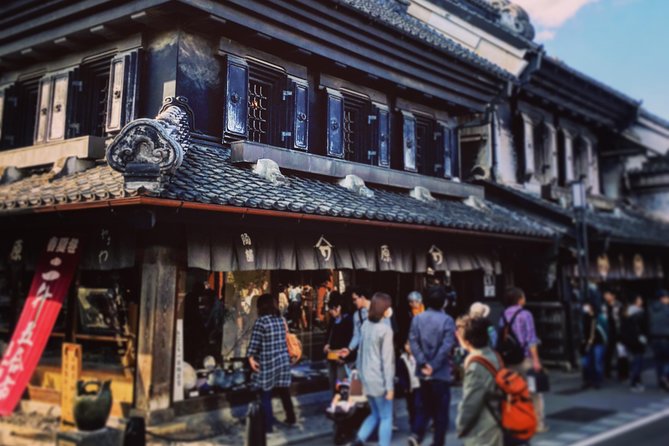
The appeal is not one giant monument. It is the combination of small details: black plaster warehouse walls, tiled roofs, old shopfronts, temple statues, local sweets, and the sound of the Toki no Kane bell. You get a more grounded view of Japan than you might find in a polished sightseeing district.
The train ride from central Tokyo takes about 30 minutes, according to the tour information. That makes Kawagoe a useful choice when you want to leave Tokyo for a few hours but do not want to commit to a full-day trip.
A private guide matters here because the sights are spread through town and serve different purposes. A shrine is not simply another temple, a castle remnant is not the same as a museum, and the warehouse street is more than a photo stop. Your guide can connect the pieces and help you avoid spending half the tour on places that do not match your interests.
More private guided tours with driver in Japan:
- Tokyo 6hr Private Tour with Government-Licensed Guide
★ 5.0 · 3,902 reviews - Tokyo 4hr Private Tour with Government-Licensed Guide
★ 5.0 · 1,394 reviews - Kyoto 6hr Private Tour with Government-Licensed Guide
★ 5.0 · 1,369 reviews
How the four-hour private format works
You meet your guide on foot in the designated Kawagoe area. The tour includes a licensed English-speaking local guide, but not a private vehicle. You pay separately for trains, buses, taxis, admissions, meals, and shopping.
The main choice comes before the tour. You select your must-see places from the available list, then create a plan around two or three sites. That wording matters. The itinerary names ten possible stops, but four hours is not enough to properly visit all ten, especially when you include walking and time for photos.
This format works best if you tell the operator what you care about. You might build a history-heavy plan around the castle palace, Kawagoe City Museum, and Kitain. A first visit could combine the bell tower, warehouse district, and Hikawa Shrine. A food-focused outing might use Koedo Yokocho as one of the main stops, though lunch is not included.
Private touring also gives you room to adjust. One guide, Show, helped a couple make time for shopping. Isao assisted a visitor using a wheelchair and adjusted the outing to make the route easier. Those examples do not guarantee a fully accessible route, but they do suggest that you should discuss mobility needs and priorities before the day begins.
Toki no Kane, Kawagoe’s timekeeper
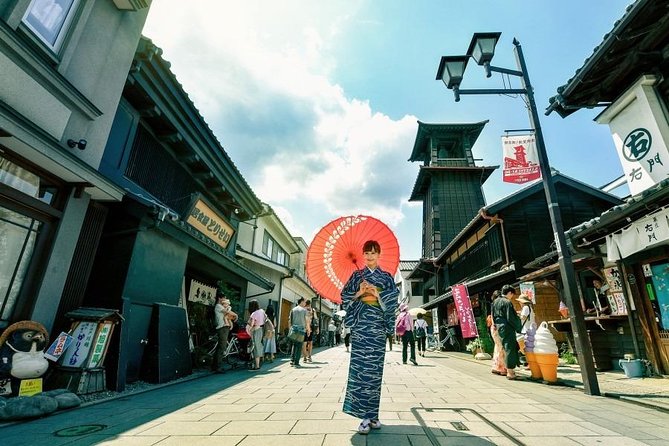
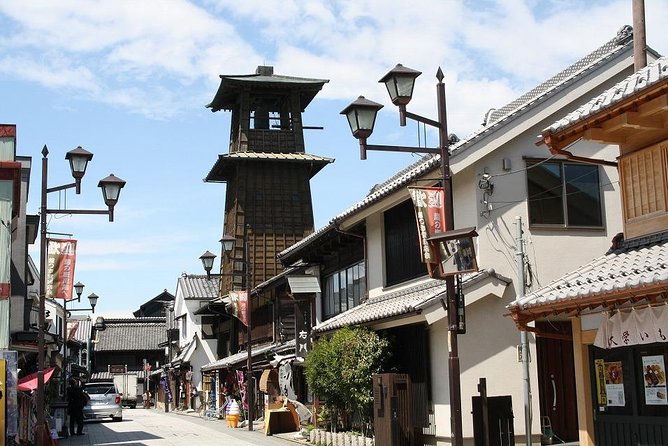
Toki no Kane is the quickest stop on the suggested route, listed at about five minutes. Do not mistake the short timing for a lack of importance. This wooden bell tower is one of Kawagoe’s best-known symbols.
In the Edo period, people did not rely on wristwatches or phone alerts. The bell helped mark the hours for the town. It still rings at set times, including 6 a.m., noon, and 3 p.m., according to the tour details.
You will likely spend more time looking at the surrounding streets than at the tower itself. The bell gives you a useful starting point for understanding Kawagoe as a working merchant town rather than a collection of isolated attractions.
The drawback is that five minutes will not allow much interpretation unless your guide keeps the stop focused. Choose it when you want a classic Kawagoe image and a brief lesson in daily life during the Edo period.
Koedo Yokocho for a practical food stop
Koedo Yokocho is a warehouse-style building with restaurants serving Japanese dishes such as kamameshi and ramen. Kamameshi is a rice dish with meat and vegetables served in a small pot, making it a distinctly local-style meal rather than a quick snack.
The building also has a free rest area. That can be useful during a walking tour, especially if you are traveling with older relatives or need a short pause between historic sites.
Because lunch is not included, you control both the cost and the timing. You can eat here, browse the food options, or use the stop simply as a break. Tell your guide in advance if a meal matters to you, since a 30-minute visit may be too short for a relaxed lunch depending on the restaurant and crowd.
I would choose Koedo Yokocho for a group with mixed interests. Someone can focus on food while another person takes a breather. If your main goal is historic architecture, though, you may prefer to spend your limited time on the old streets themselves.
A few more Japan trips to weigh up
- Private Tour to Mt. Fuji and Hakone (Fully Licenced Operator)
★ 5.0 · 1,910 reviews - Fushimi Inari Hidden Hiking Tour (Private Option Available)
★ 5.0 · 1,750 reviews - Private Kyoto Tour with a Local, Highlights & Hidden Gems, Personalised
★ 5.0 · 1,543 reviews - Tokyo Customized Private Tour (Must See Places in 1 Day)
★ 5.0 · 1,499 reviews
The warehouse district and Kawagoe Kurazukuri Museum
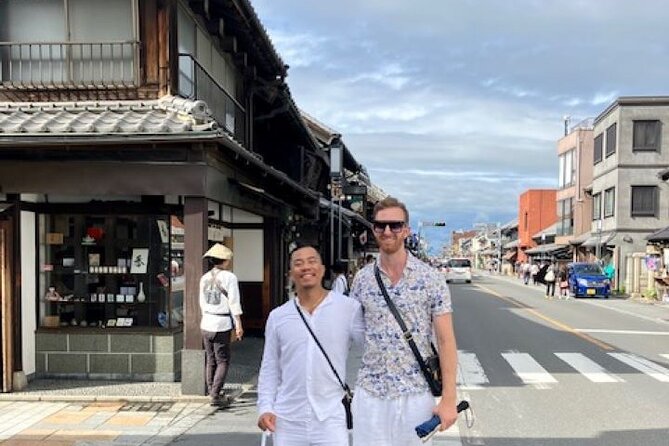
Kawagoe’s warehouse buildings are among its most recognizable features. These thick, dark structures once helped merchants protect goods from fire and other risks. Their appearance gives the old commercial district its Little Edo character.
The Kawagoe Kurazukuri Museum offers a closer look at this building tradition. The suggested visit lasts about 30 minutes, and admission is not included. That extra ticket is worth considering if you want more than exterior photographs.
I like this stop because it explains why Kawagoe looks different from many Japanese towns. You are not only seeing an attractive street. You are learning how commerce, fire prevention, and town planning shaped the buildings around you.
The museum may not suit you if you prefer open-air sightseeing and shopping. Four hours is short, so ask yourself if you want an interior visit or if your guide’s explanation along the street will be enough.
Kawagoe Castle Naka no Mon and Honmaru Palace
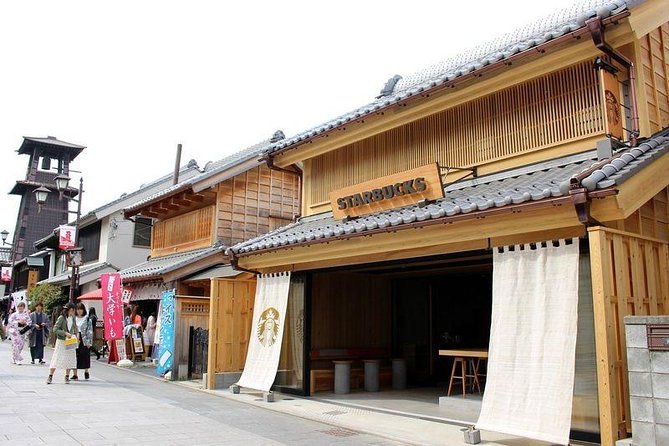
Kawagoe was built around Kawagoe Castle, though most of the original castle no longer survives. The Naka no Mon remain preserves the entrance area and a few rooms, with displays that help you picture the people and clothing of the period.
Kawagoejyo Honmaru Palace gives you another look at the castle complex. Japanese castles are popular because their surviving rooms and layouts offer a direct link to political and military life. Here, the value comes from what remains and from understanding what has disappeared.
Both sites are listed as roughly 30-minute visits, and admission is not included. If you are especially interested in Japanese history, choose one or both over a less focused sightseeing stop. If you want a broad first look at Kawagoe, pairing one castle site with a shrine or temple may create a better balance.
Be careful with scheduling. The tour information does not promise that every museum or interior will be open every day. One guide apologized after museums were closed on a Monday, so you should confirm opening days before fixing your must-see list.
Hikawa Shrine and Kitain Temple
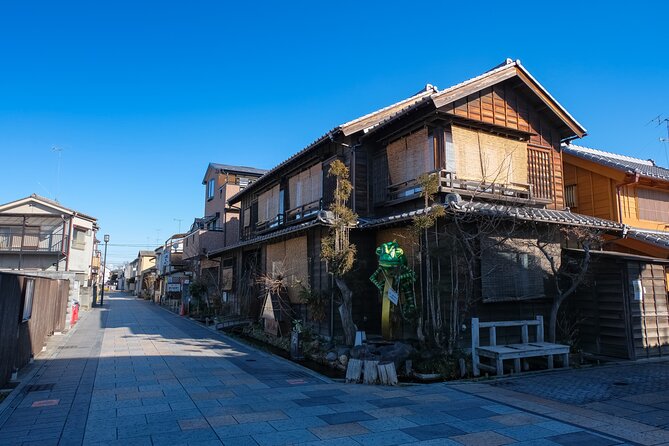
Hikawa Shrine is associated with love and good relationships. Its Enmusubi dama, described as a lucky love stone, is one reason the shrine attracts people looking for relationship blessings. Even if romance is not your concern, the shrine gives you a chance to see Shinto customs in a setting tied to local life.
A guide can explain the difference between visiting a Shinto shrine and a Buddhist temple, including the cultural meaning behind what you see. That kind of explanation was particularly useful to visitors who wanted to learn about Shinto and Kawagoe’s past rather than simply take photographs.
Kitain is the stronger choice for Buddhist art and temple atmosphere. The temple has stood for about 1,200 years, and its grounds include a Buddha and statues representing 500 disciples. The scale and age make it one of the most memorable stops on the route.
If you have only four hours, choosing both Hikawa Shrine and Kitain gives you a helpful religious contrast. You will spend less time on museums and castle buildings, but you will see two places with very different traditions.
Kawagoe City Museum and Matsuri Kaikan
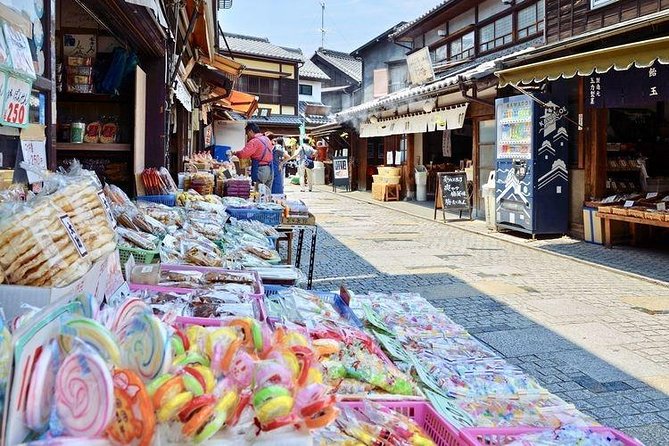
Kawagoe City Museum introduces the city’s past through exhibits and displays. Its exterior also fits the city’s old character, and the museum helps explain why Kawagoe earned its Little Edo nickname.
Kawagoe Matsuri Kaikan focuses on local festival culture. Japan has many regional festivals, and Kawagoe’s own event traditions are an important part of the city’s identity. This is a good choice if you want to understand how residents celebrate, not only how merchants and samurai once lived.
Both museums require an admission fee. You should also check their opening days before the tour, particularly if you are visiting on a Monday.
I would not choose both museums unless you prefer indoor exhibits and have already seen the main streets. For a first visit, one museum paired with Kitain, Hikawa Shrine, or the warehouse district will give you more variety.
Kawagoe Onsen, a very different final stop
Kawagoe Onsen offers natural hot spring bathing with several wood and stone baths. It is the least traditional sightseeing option on the list, but it may be exactly what you want after walking through town.
Admission is not included, and a proper onsen visit generally needs more time than a quick photo stop. The suggested timing is 30 minutes, so ask your guide if that is enough for the experience you have in mind.
I would select Kawagoe Onsen only if relaxation matters more to you than another historic building. It is also a poor choice if you want to pack several cultural sites into the same four-hour window.
What the guide adds to the experience
The guide is the main reason to choose this tour over exploring Kawagoe alone. A map can show you where the bell tower and temples are, but it cannot easily explain why a warehouse has its particular construction or how Shinto and Buddhism differ in practice.
The government-issued National Government Licensed Guide Interpreter certification requires strong knowledge of Japanese culture and history. That does not mean every guide will teach in the same way, but it gives you a useful standard when choosing a private tour.
Several guide names appear in the tour’s feedback: Masa, Show, Isao, and Yusuke. Masa was described as personable and professional. Show adjusted the plan for shopping. Isao made a wheelchair outing easier. Yusuke was praised for explaining the historic town and taking care to cover the key sights.
You may not receive one of these specific guides, so do not book based on a guaranteed personality match. Still, the pattern is encouraging: the strongest part of this experience is the guide’s ability to explain, adjust, and keep the outing personal.
Is $107.78 per person a fair price?
At $107.78 per person, this is not the cheapest way to walk around Kawagoe. You can visit the town independently for the cost of transportation and any admission tickets.
The value improves when you are traveling with people who want different things. A private guide can help one person shop, another study history, and another manage the walking pace without forcing the whole group into a fixed schedule.
The price also makes more sense for first-time visitors who want context. Kawagoe’s sights are close enough to visit independently, but the meaning behind them is not always obvious. A good guide helps you spend four hours with purpose instead of wandering between disconnected stops.
Keep extra money ready for entrance fees, lunch, trains or buses, and personal purchases. The guide’s admission fees are covered only for sights listed under the tour’s included attractions, while your own admissions are not included. Ask for a cost estimate if you plan several paid museums or the onsen.
The tour is booked, on average, 64 days ahead. That suggests you should reserve early if your dates are fixed, particularly during busy travel periods. Free cancellation is available up to 24 hours before the start time. Changes or cancellations inside that window are not refunded.
Who should book this Kawagoe tour?
I would recommend it to first-time visitors who want a clear introduction to Kawagoe without joining a large group. It also suits families and couples who want to set the pace and choose sights that match their interests.
History fans should pick Kitain, one of the castle sites, and a museum. People interested in religion can combine Hikawa Shrine and Kitain. Food lovers should reserve time for Koedo Yokocho, while anyone wanting a slower day might consider Kawagoe Onsen.
You should think twice if you dislike walking, need a vehicle between stops, or expect to visit every place on the ten-stop list. This is a walking tour, pickup is on foot, and the four-hour limit calls for firm choices.
Most people can participate, and service animals are allowed. If you use a wheelchair or have mobility concerns, contact the operator before booking. One guide successfully helped with a wheelchair, but the tour does not promise a fully accessible route.
Final call: a smart guided introduction to Little Edo
Book this tour if you want Kawagoe explained as a living town, not just photographed as an old street. The best plan is usually two or three contrasting stops: perhaps Toki no Kane and the warehouse district, then Kitain or Hikawa Shrine.
At $107.78 per person, the tour earns its price through private attention and local interpretation rather than transportation or included tickets. It is especially useful when you want help with history, customs, shopping, or mobility.
Skip it if you are comfortable planning your own route and prefer to spend the day at your own pace. Kawagoe is accessible enough to explore independently. But if you want four focused hours, an adjustable plan, and a licensed guide who can make the city’s details easier to understand, this is a strong way to see Little Edo.
FAQ
How long is the Kawagoe private tour?
The tour lasts approximately four hours.
How many sights can I visit?
The tour includes a customizable plan built around two or three sites selected from the available attractions.
Is transportation included?
No. Transportation fees are not included, and the tour does not provide a private vehicle. You meet the guide on foot within the designated Kawagoe area.
Is lunch included?
No. Lunch and other personal expenses are separate. Koedo Yokocho is one possible place to eat Japanese dishes such as kamameshi and ramen.
Are entrance fees included?
Your entrance fees are not included. Guide entry fees are covered only for sights listed under the included attractions.
Can I cancel for a full refund?
Yes. You can cancel at least 24 hours before the experience start time for a full refund. Cancellations or changes made less than 24 hours before the start time are not accepted for a refund.
Just added around Japan
- Private Memorable Tokyo Tour with English Speaking Driver★ 5.0 · 30 reviews
- Private Tokyo Custom Full-Day Tour by Chartered Vehicle★ 5.0 · 16 reviews
- Private Sightseeing to Mt Fuji and Hakone with English Driver★ 5.0 · 51 reviews
- Tokyo Photography Masterclass – Private Photography Lesson★ 5.0 · 25 reviews
- Private Mt. Fuji Day Trip from Tokyo with English-Speaking Driver★ 5.0 · 33 reviews
- 4 Day Tour – Mount. Fuji, Tokyo, Hakone, Kamakura and Yokohama★ 5.0 · 19 reviews
- Private Tokyo Custom Half-Day Tour by Chartered Vehicle★ 4.5 · 13 reviews
- Private Unforgettable Mt Fuji Tour with English Speaking Driver★ 5.0 · 142 reviews
Private Guided Tours with Driver, compared.
Tokyo 4hr Private Tour with Government-Licensed Guide
Read our review →
Kyoto 6hr Private Tour with Government-Licensed Guide
Read our review →
Hiroshima / Miyajima Full-day Private Tour with Government Licensed Guide
Read our review →
Kyoto 4hr Private Tour with Government-Licensed Guide
Read our review →
Mt. Fuji Day Trip from Tokyo with English Speaking Driver Guide
Read our review →
Hiroshima City 4hr Private Walking Tour with Licensed Guide
Read our review →Browse the lists this tour appears in