REVIEW · TOKYO TOURS
Home made Ramen you made from scratch!!
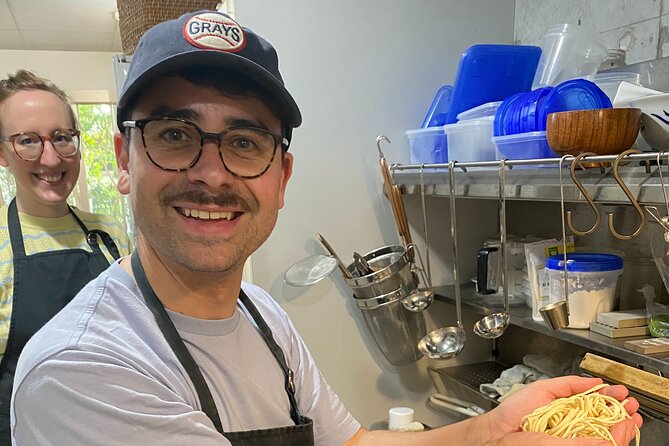
Making noodles by hand is the heart of this Tokyo cooking class. Hideki, who worked in a ramen restaurant for about 10 years, guides you through the soup, noodles, toppings, and gyoza in his home studio. I like the small groups of up to four and the fact that you eat a full lunch made during class.
I also like the take-home recipe booklet, which turns a pleasant afternoon into a skill you can use after Japan. The main drawback is price: at $115 per person, this costs much more than a bowl of ramen, though you are paying for instruction, ingredients, lunch, and a private-style setting.
In This Review
- Key points
- Why this Shinagawa ramen class feels different
- Finding the studio in Minamishinagawa
- Starting with dashi, the base of the bowl
- Mixing and making the ramen noodles
- Preparing nitamago and chashu
- Folding gyoza alongside the ramen
- A private, friendly pace with Hideki
- Is $115 a fair price in Tokyo?
- Who should book this experience?
- Timing, booking, and cancellation details
- My take: book it if you want skills, not just lunch
- FAQ
- Where does the ramen cooking class take place?
- How long does the experience last?
- How many people can join the class?
- What food will I learn to prepare?
- Is lunch included?
- Are drinks included in the price?
- Is the studio near public transportation?
- Does the class end at the meeting point?
- Can I cancel for a full refund?
Key points
- Former ramen chef as your host: Hideki brings about 10 years of restaurant experience to the lesson.
- Ramen made from scratch: You learn the noodles, dashi, boiled egg, and chashu rather than simply assembling toppings.
- Gyoza is part of lunch: The class includes hands-on dumpling preparation as well as ramen.
- Very small group: The maximum is four people, creating plenty of room for questions and direct help.
- Useful location: The studio is in Minamishinagawa, with access toward Ginza, Shibuya, Shinjuku, Shinagawa, and Haneda Airport.
- Recipes to take home: Hideki provides written instructions, making it easier to repeat the meal in your own kitchen.
Why this Shinagawa ramen class feels different
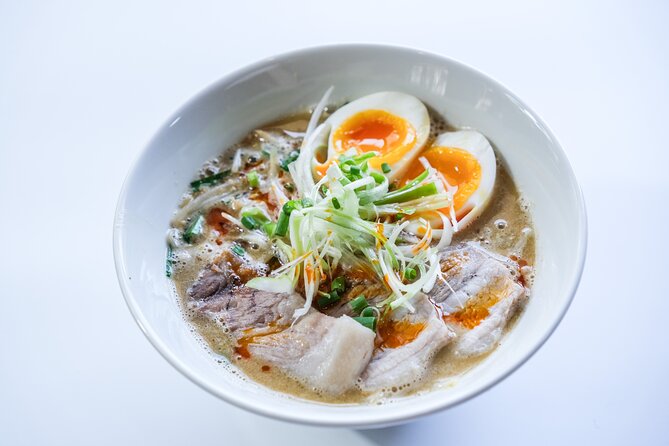
Many Japanese food lessons show you how to prepare a familiar dish. This one takes you through the parts that are easy to overlook when you order ramen at a restaurant: the stock, noodles, toppings, and timing.
The class is hosted by Hideki at Hideki Ramen Cooking Studio in Minamishinagawa. The setting is a home rather than a large commercial kitchen, and the group limit is four people. That matters because ramen has several moving parts. You can ask questions, watch the cooking closely, and get help before a small mistake becomes a soggy noodle or overcooked topping.
Hideki’s restaurant background gives the class a practical edge. You are not only following a recipe. You are learning how the components fit together and why the final cooking stage needs attention. One piece of feedback describes the pace as gentle at first, then faster as cooking comes together. That is a useful warning: the relaxed early prep eventually gives way to a busy finish.
The meal is included, so your work ends with lunch. Alcohol and soft drinks cost extra, but you do not need to buy a separate meal afterward.
Other Tokyo days people book alongside this one:
- Mt Fuji and Hakone 1-Day Bus Tour Return by Bullet Train
★ 5.0 · 26,383 reviews - 1-Day Tokyo Bus Tour
★ 5.0 · 14,250 reviews - Tokyo: TOKYO SKYTREE® Admission ticket
★ 4.5 · 11,192 reviews
Finding the studio in Minamishinagawa
The meeting point is Hideki Ramen Cooking Studio, at 6-chōme-15-3 Minamishinagawa, Shinagawa City, Tokyo 140-0004. The studio is near public transportation, and Hideki has met participants at the train station and walked with them to his home for the lesson.
That station assistance can be especially useful if you are unfamiliar with Tokyo’s rail system. One participant had trouble finding the right route and was able to stay in contact with Hideki through WhatsApp while running late. Still, do not treat that as a reason to arrive casually. Tokyo’s train system is efficient but can be confusing, and the class is built around a set cooking schedule.
The location works well for several different itineraries. You can reach it from the Shinagawa area, and it is also positioned conveniently for plans involving Ginza, Shibuya, Shinjuku, or Haneda International Airport. If you are staying in one of those areas, check the route and allow extra time for transfers and station exits.
The class begins and ends at the same meeting point. That makes it easy to plan the rest of your day, but it also means you should not book it as a one-way activity toward another neighborhood.
Starting with dashi, the base of the bowl
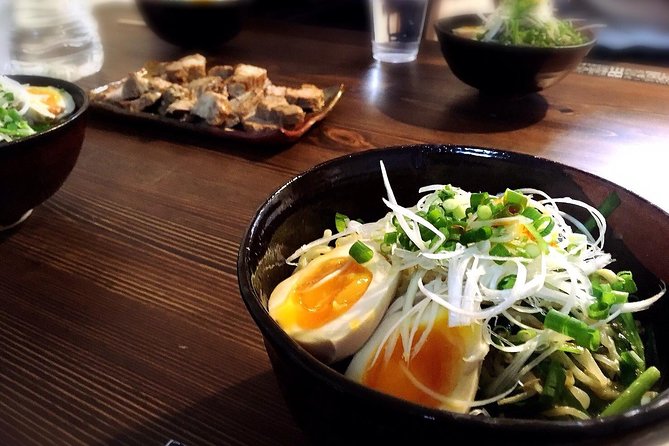
The first major lesson is dashi, the soup stock that gives Japanese cooking much of its depth. Here, you prepare the stock rather than opening a container of premade broth and moving straight to toppings.
This is one of the most useful parts of the class for home cooks. Ramen can look simple in a bowl, but its character comes from several layers working together. Learning the stock gives you a better sense of how the final flavor is built.
You should expect practical tips as you work. The information provided for the class does not specify every ingredient or exact recipe, so do not assume you will learn every regional style of ramen. The clear focus is homemade ramen from scratch, with Hideki explaining the process as you go.
The small group helps here. With only four people at most, you have a better chance to see what Hideki is doing and ask why a step matters. In a large demonstration, the stock could be the least memorable part. In this format, it is part of your own meal.
Mixing and making the ramen noodles
The noodles are prepared from scratch, not simply taken from a packet. That is a major reason to choose this class if you want more than a quick food demonstration.
Making noodles also adds a hands-on element that you cannot get from ordering ramen in a shop. You see how much work sits behind the finished bowl, and you gain a recipe you can try at home. The lesson is not presented as a professional certification, but it gives you a real starting point for repeating the dish.
This is also where the class may suit confident cooks better than people seeking a completely passive activity. You need to follow instructions, keep track of several steps, and stay engaged. Hideki’s role is to guide and correct you, not to do everything while you watch.
The recipe booklet is a helpful touch. It gives you something concrete to take home instead of relying on memory after a three-hour lesson. One participant used Hideki’s recipe again at home, which suggests the instruction is meant to be practical rather than merely decorative.
Same city, a completely different kind of day:
- Tokyo: teamLab Planets TOKYO Digital Art Museum Entry Ticket
★ 4.6 · 9,779 reviews - Mt Fuji & Hakone Cruise, Drum Show Bullet Train 1 Day from Tokyo
★ 4.0 · 7,413 reviews - Tokyo: Shinjuku Food Tour (13 Dishes at 4 Local Eateries)
★ 5.0 · 6,603 reviews - Tokyo Mt Fuji 5th St & Hakone Cruise Bus Tour w/Bullet Train
★ 4.4 · 5,024 reviews
Preparing nitamago and chashu
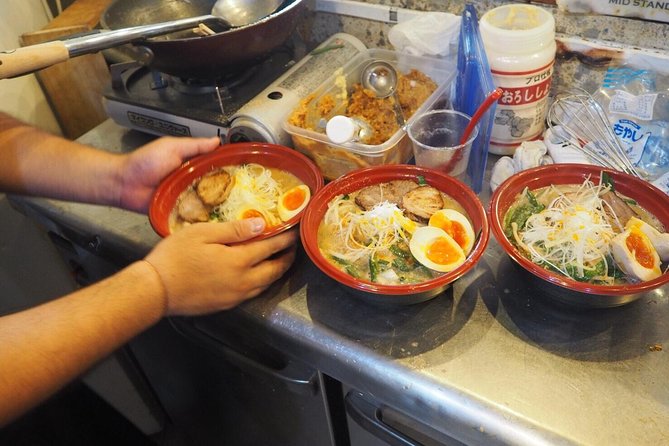
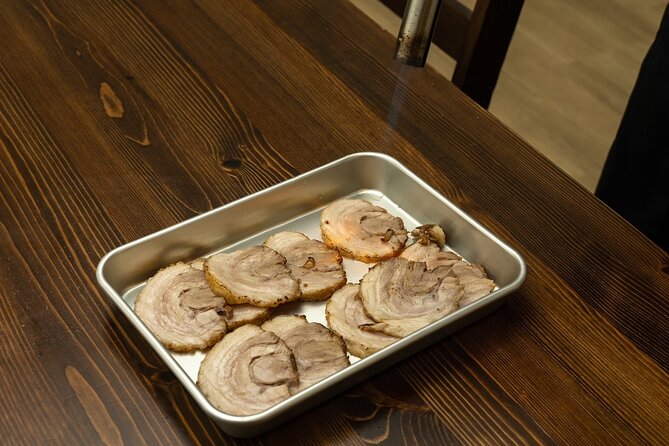
The toppings receive their own attention. You learn to prepare nitamago, the ramen-style boiled egg, and chashu, the boiled pork commonly served with ramen.
These two ingredients are small, but they change the finished bowl. Nitamago adds a familiar ramen touch, while chashu provides the substantial topping that turns soup and noodles into a meal. Learning them in the same session helps you understand how a restaurant-style bowl is assembled.
Timing matters. Eggs and pork are not simply added at the last minute, so this part of the class connects with the later cooking rush. You may find that the early preparation feels calm, while the final stages require faster work. Hideki takes control of the last cooking steps when needed, which is useful if you are still learning how the timing works.
That balance is sensible. You get hands-on practice, but the meal is not left to chance. Since lunch is the ramen you have made, Hideki’s assistance helps protect the result without removing your role in the process.
Folding gyoza alongside the ramen
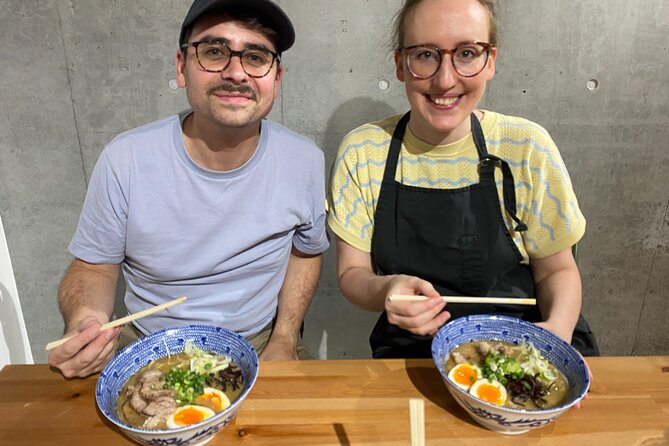
Gyoza dumplings are included in the cooking class, giving you a second Japanese dish to prepare. This makes the $115 cost easier to assess because the session is not limited to one pot of noodles.
Gyoza also changes the rhythm of the class. You move from stock and noodle preparation to shaping and cooking dumplings. The work is social and tactile, especially in a group of two to four, and it gives you a useful skill for home meals.
The class information does not specify the filling or the exact folding method, so you should not book it expecting a particular regional gyoza style. What you can expect is instruction in making dumplings to serve with the ramen.
The final meal combines both dishes. That is more satisfying than preparing separate samples and leaving hungry. It also gives you a better idea of how ramen and gyoza work together as a typical Japanese meal.
A private, friendly pace with Hideki
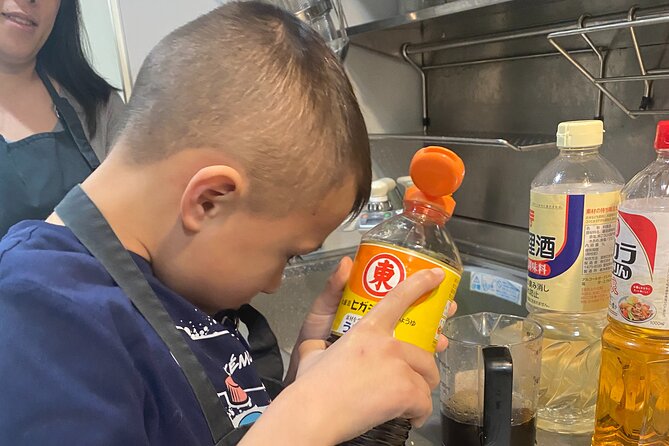
The strongest reason to choose this experience is the host. Hideki’s restaurant background matters, but so does his teaching style. The available details describe him as patient, friendly, welcoming, and willing to walk participants from the station.
Those traits are important in a cooking class. Ramen has unfamiliar steps, and a rushed or distant instructor could make the session stressful. Hideki’s small-group format allows him to explain each stage and help with the final cooking.
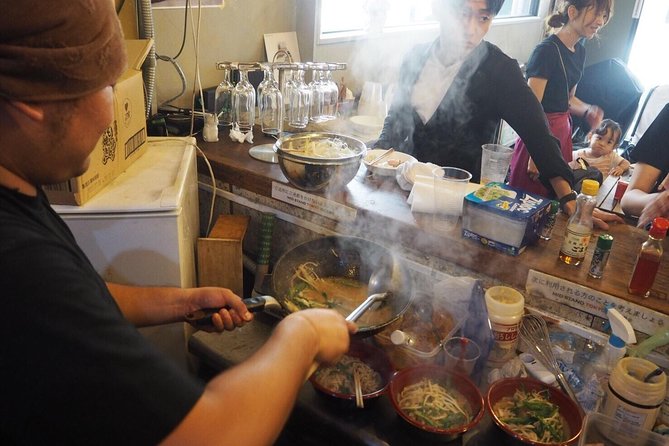
The home setting has both a benefit and a tradeoff. It can feel personal and informal, and it gives you a closer look at how the food is prepared. It is not the polished atmosphere of a purpose-built culinary school, so you should choose this for direct instruction and local contact rather than for a sleek studio production.
The class is also a good fit for couples, families, or friends who want to cook together. With a maximum of four people, the experience can feel almost private when your party is small. Group discounts are available, so check the current booking terms if you are arranging a larger eligible party, while remembering that the class itself is capped at four participants.
Is $115 a fair price in Tokyo?
At $115 per person, this is not a budget lunch. You can buy ramen in Tokyo for a fraction of that cost, and you should be clear about what you are paying for.
You are paying for roughly three hours of instruction, a former ramen restaurant worker as your host, ingredients for ramen and gyoza, lunch, a small group, and written recipes to use later. The value is strongest if you want to learn a repeatable process rather than simply eat a famous Japanese dish.
I would also compare it with the price of a larger cooking school. A four-person maximum gives Hideki time to answer questions and watch your technique. If you prefer quiet observation, the hands-on format may feel like more than you need. If you enjoy cooking and want to recreate the meal at home, the recipe booklet and direct guidance make the fee more reasonable.
Alcohol and soft drinks are not included and cost extra. Plan on paying separately if you want them, though the included ramen and gyoza provide the main meal.
Who should book this experience?
I would recommend this class to people who enjoy food preparation as much as eating. It is especially well suited to:
- Couples or friends who want a small, social activity.
- Home cooks curious about ramen stock and noodles.
- People who want a recipe to use after returning home.
- Visitors staying near Shinagawa or planning time around Haneda.
- Anyone who prefers a local home setting to a large cooking school.
Families may also like the dumpling and noodle work, but the supplied details do not state a minimum age or child policy. Confirm that before booking with young children.
This is less suitable if you want a quick tasting, a restaurant meal with no work, or a class focused on many different Japanese dishes. The session stays centered on ramen, with gyoza as the companion dish.
Timing, booking, and cancellation details
The experience lasts about three hours. It is booked an average of seven days ahead, so reserve early if your Tokyo schedule is tight. Confirmation arrives within 48 hours of booking, subject to availability.
Mobile tickets are supported, and the activity is near public transportation. The meeting point and end point are the same, at the Minamishinagawa studio.
Free cancellation is available when you cancel at least 24 hours before the local start time. A cancellation made inside that 24-hour window is not refundable, and changes during that period are not accepted. This is worth noting if you are coordinating a flight, since the studio is convenient for Haneda but the class itself does not end at the airport.
My take: book it if you want skills, not just lunch
I would book this experience if homemade ramen sounds as appealing as eating ramen. Hideki’s restaurant background, small group, station help, hands-on noodles, dashi, nitamago, chashu, and gyoza make it a focused food lesson with a proper meal at the end.
The price is the main question. At $115, it only makes sense if you value the instruction and recipe booklet, not just the bowl. For a visitor who wants a personal introduction to ramen and hopes to cook it again at home, this is a strong choice. For someone counting every meal cost or looking for a simple restaurant lunch, spend the money on several bowls elsewhere and skip the class.
FAQ
Where does the ramen cooking class take place?
The class takes place at Hideki Ramen Cooking Studio, 6-chōme-15-3 Minamishinagawa, Shinagawa City, Tokyo 140-0004, Japan.
How long does the experience last?
The cooking class lasts approximately three hours.
How many people can join the class?
The maximum group size is four people.
What food will I learn to prepare?
You will learn to make ramen from scratch and prepare gyoza dumplings. The lesson also covers dashi, nitamago, and chashu.
Is lunch included?
Yes. Lunch is the ramen you make during the class.
Are drinks included in the price?
No. Alcoholic beverages and soft drinks cost extra.
Is the studio near public transportation?
Yes. The studio is near public transportation, and Hideki has escorted participants from the train station to his home studio.
Does the class end at the meeting point?
Yes. The activity ends back at the same meeting point where it begins.
Can I cancel for a full refund?
Yes, if you cancel at least 24 hours before the experience start time. Cancellations made less than 24 hours in advance are not refunded, and changes during that period are not accepted.
Just added around Tokyo
- Private Memorable Tokyo Tour with English Speaking Driver★ 5.0 · 30 reviews
- Private Tokyo Custom Full-Day Tour by Chartered Vehicle★ 5.0 · 16 reviews
- Private Sightseeing to Mt Fuji and Hakone with English Driver★ 5.0 · 51 reviews
- Tokyo Photography Masterclass – Private Photography Lesson★ 5.0 · 25 reviews
- Private Mt. Fuji Day Trip from Tokyo with English-Speaking Driver★ 5.0 · 33 reviews
- 4 Day Tour – Mount. Fuji, Tokyo, Hakone, Kamakura and Yokohama★ 5.0 · 19 reviews
- Private Unforgettable Mt Fuji Tour with English Speaking Driver★ 5.0 · 142 reviews
- Private Tokyo Food Tour – A Journey Through Time Through Food★ 5.0 · 36 reviews
Tokyo Tours, compared.

Mt Fuji and Hakone 1-Day Bus Tour Return by Bullet Train
Read our review →

teamLab Planets TOKYO Digital Art Museum Entry Ticket
Read our review →
Mt Fuji & Hakone Cruise, Drum Show Bullet Train 1 Day from Tokyo
Read our review →
Shinjuku Food Tour (13 Dishes at 4 Local Eateries)
Read our review →
Tokyo Mt Fuji 5th St & Hakone Cruise Bus Tour w/Bullet Train
Read our review →