REVIEW · TOKYO TOURS
From Asakusa: Old Tokyo, Temples, Gardens and Pop Culture
Tokyo changes character block by block on this four-hour East Tokyo walk. You begin beside Senso-ji in Asakusa, pass through the food stalls and market grit of Ueno and Okachimachi, enter Akihabara’s anime and electronics world, and finish among the ponds and paths of Koishikawa Korakuen. It is a smart way to see several sides of the city without spending the day on trains.
I like the clear historical thread, from Japan’s old Buddhist center and early subway link to today’s pop-culture capital. I also like that standard admissions and local train rides are covered, while the group is capped at eight people. The main consideration is pace: five areas in four hours means brief visits, and food, drinks, and Tokyo National Museum admission cost extra.
In This Review
- Key points to know before you book
- Why this East Tokyo route works
- Starting around Asakusa and Senso-ji
- Ueno and Okachimachi, Tokyo without the polish
- Akihabara and the city’s electric imagination
- Koishikawa Korakuen, a quiet finish to a loud city
- Guides, group size, and the human side of the walk
- What $68 includes, and where extra costs appear
- Pace, comfort, and who should book
- My verdict: book it for range and context
- FAQ
- How long does the Tokyo walking tour last?
- Where does the tour meet?
- Which Tokyo areas does the tour visit?
- Is Senso-ji Temple included?
- Is Tokyo National Museum admission included?
- Are local train rides included?
- Is food included?
- What language is the tour offered in?
- How large is the group?
- Is the tour wheelchair accessible?
- What should I bring?
- Can I cancel for a full refund?
Key points to know before you book
- Senso-ji gives the tour its cultural anchor: You get a guided look at one of Tokyo’s best-known Buddhist temples, not just a quick photo stop.
- Ueno and Okachimachi feel practical and local: Their market streets offer a sharper contrast to polished department-store Tokyo.
- Akihabara explains modern Tokyo through pop culture: Expect electronics, anime, manga, games, and a street scene that can feel wonderfully strange.
- Koishikawa Korakuen supplies quiet relief: The Edo-era garden gives you ponds, seasonal color, and a pause from city traffic.
- The small group matters: With no more than eight participants, it should be easier to ask questions and keep the walk personal.
- The price includes useful basics: At $68 per person, standard admissions and local train rides are included, though meals and optional museum entry are not.
Why this East Tokyo route works
Many Tokyo tours stay in one district. This one works differently. It uses several nearby parts of the eastern city to show how Tokyo grew, adapted, and changed its public face.
You start with religion and traditional streets. Then you move through a hard-working market district, a pop-culture center, and a formal garden created for an earlier age. The value is not only in seeing famous places. It is in comparing them.
I like tours that give you a way to read a city. Here, Asakusa helps explain old Tokyo. Ueno and Okachimachi show the everyday commercial side. Akihabara shows how technology and entertainment shaped a newer identity. Koishikawa Korakuen brings the pace back down.
The route is listed as a private Tokyo tour, but the activity details also describe a small group limited to eight people. For booking purposes, treat it as a small-group experience and confirm the exact arrangement if you specifically want a private guide for only your party.
Other Tokyo days people book alongside this one:
- Mt Fuji and Hakone 1-Day Bus Tour Return by Bullet Train
★ 5.0 · 26,383 reviews - 1-Day Tokyo Bus Tour
★ 5.0 · 14,250 reviews - Tokyo: TOKYO SKYTREE® Admission ticket
★ 4.5 · 11,192 reviews
Starting around Asakusa and Senso-ji
The meeting point is Kamiya Bar in Asakusa, near 1-chome-1-1 Asakusa. This is a useful starting place because Asakusa is one of the easiest Tokyo districts to understand on foot. It has a strong visual identity, and the guide can explain what you are seeing before the crowds and shop signs become a blur.
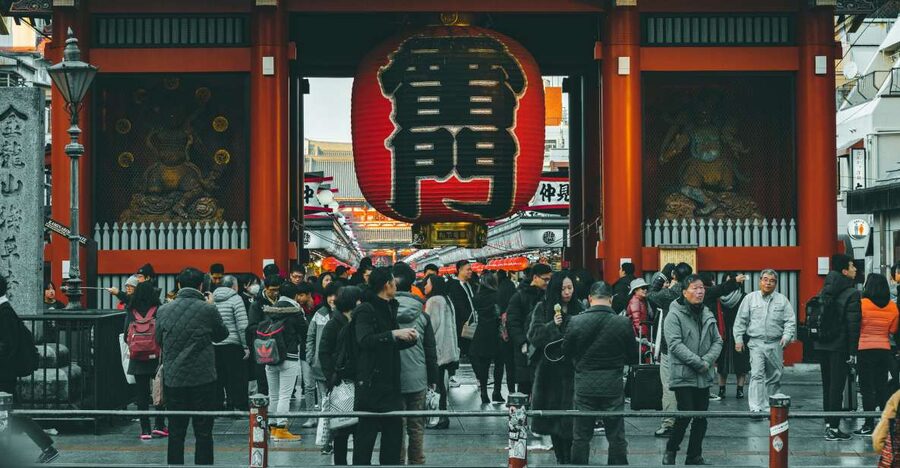
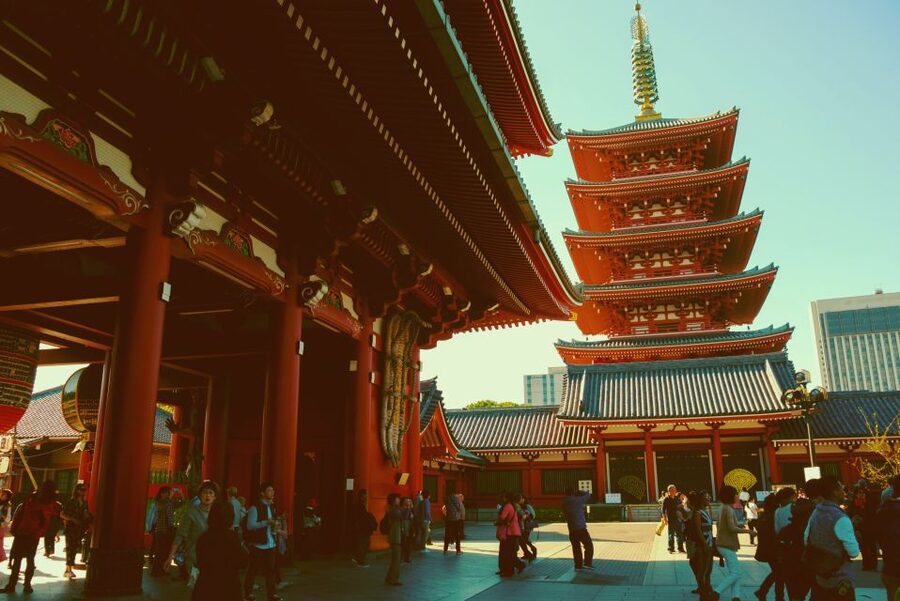
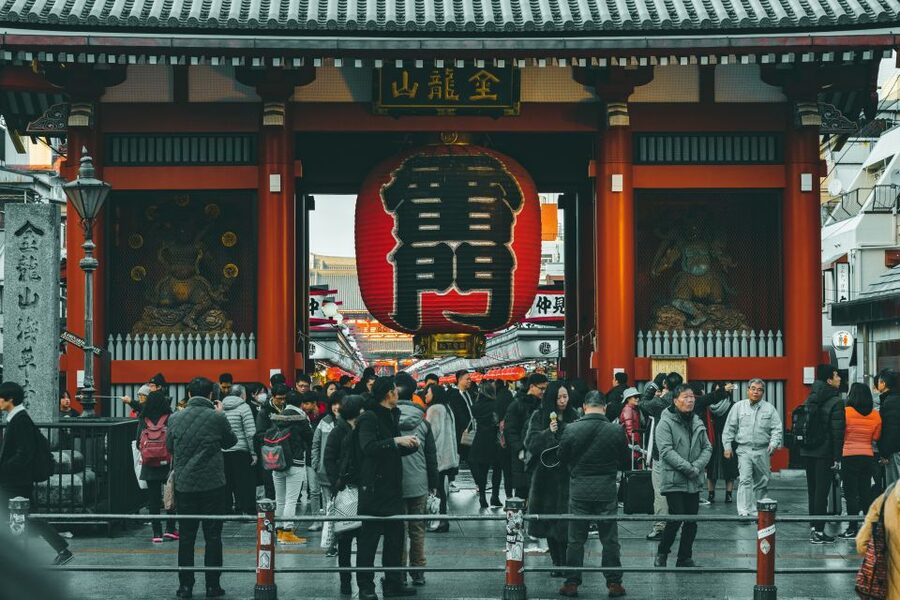
The Asakusa portion lasts about 45 minutes, followed by around 15 minutes focused on Senso-ji Temple. That gives you time to look beyond the main gate and take in how the temple fits into the wider neighborhood.
Senso-ji is an early Buddhist temple in Japan and the central cultural stop of this part of the walk. A guide can add the details that are easy to miss when you visit alone, including the temple’s place in Asakusa’s development and the meaning behind the buildings and approach.
Nakamise-dori, the shopping street leading toward the temple, adds a more commercial note. It is lined with traditional-style goods, snacks, and souvenirs. You should expect a busy pedestrian setting, so this is not the place for a quiet, slow stroll. It is useful for seeing how worship, shopping, and tourism have shared the same street for generations.
The tour also connects Asakusa with the start of modern urban transport. The subway route between Asakusa and Ueno was the first subway in Asia. That small fact gives the next part of the tour more meaning: you are not simply changing districts, you are following an early link in Tokyo’s modern growth.
Ueno and Okachimachi, Tokyo without the polish
Ueno receives about 25 minutes, and Okachimachi another 25 minutes. That is enough for an overview, not an extended market crawl. You will want to keep your eyes open and listen closely, since these stops are about atmosphere and context as much as individual sights.
Ueno is known for museums, cherry blossoms, and its large park area. The tour does not include admission to the Tokyo National Museum, so you will not automatically get time inside that institution. If you want to visit it, entry is an extra cost and you should discuss how it fits with the four-hour schedule.
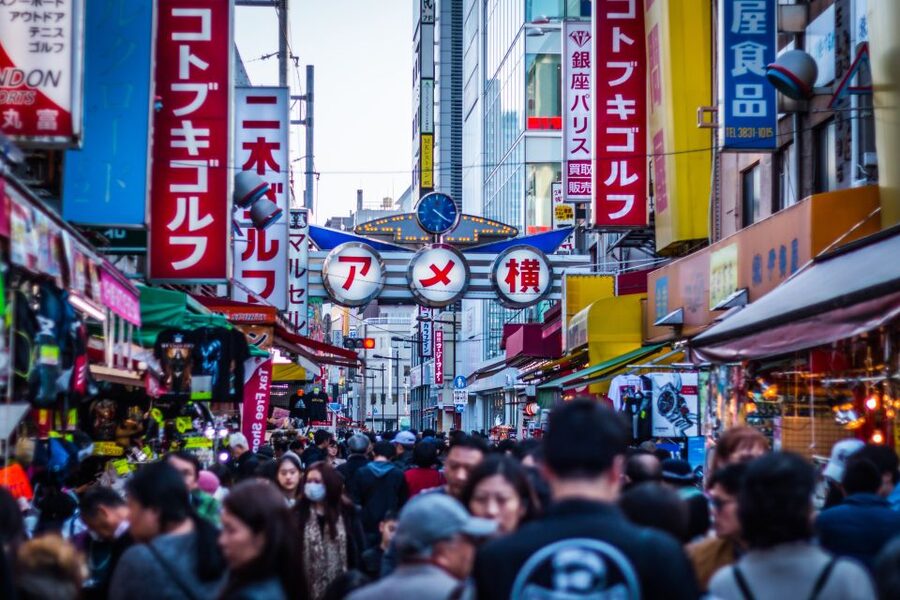
The stronger focus here is the street life around Ueno and Okachimachi. For generations, vendors and small shops have sold food and goods in this part of Tokyo. Ameya-Yokocho, commonly called Ameyoko, is especially useful for understanding the district’s direct, practical character.
This is not a quiet boutique quarter. You might find food counters, small retailers, market displays, and shops packed close together. The appeal is its everyday energy. It feels less controlled than a major shopping mall and less designed for visitors who want everything neat and predictable.
I like this stop because it keeps the tour from becoming a parade of famous landmarks. You see a working commercial neighborhood, where the city’s history is expressed through trade and street activity. The drawback is that 50 minutes split between Ueno and Okachimachi will not allow much shopping. Think of it as a guided introduction.
Akihabara and the city’s electric imagination
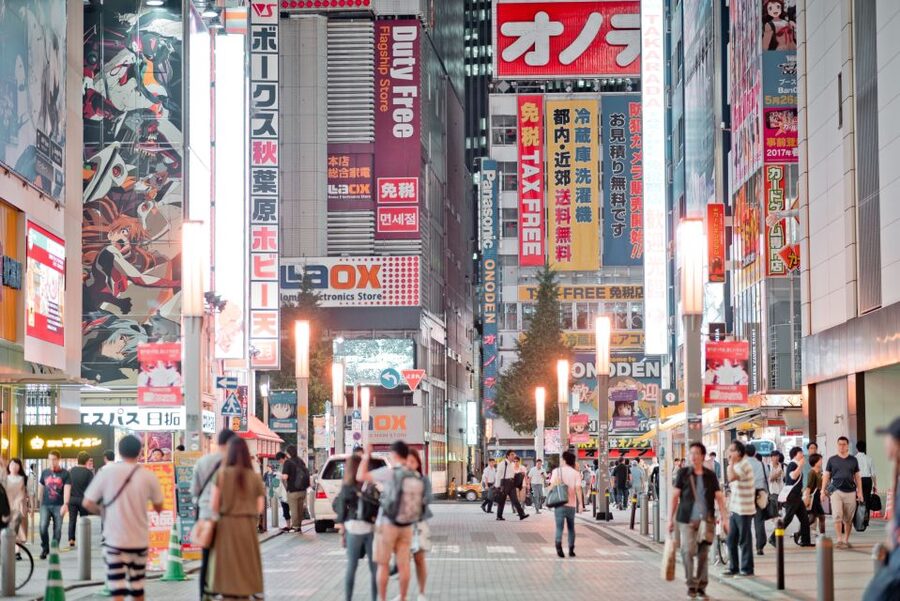
Akihabara is the tour’s sharpest change of mood. Known as Electric Town, it has been associated with electronics since before the Second World War. Over time, it became a major center for anime, manga, gaming, and other parts of Japanese pop culture.
The stop lasts about 45 minutes. You will see neon-lit streets and shops linked to electronics and entertainment. The guide’s role is especially useful here because Akihabara can be difficult to interpret from the outside. A row of colorful signs may look like pure spectacle, but the district’s identity grew from a long relationship with technology.
This is also where the tour explains otaku culture, a term used for intense enthusiasm for anime, manga, games, and related interests. The area can feel like daily life has borrowed its design from an animated world. Cosplayers may appear on the streets, and the boundary between advertising, performance, shopping, and fantasy can seem pleasantly blurred.
I would not book this tour expecting a long shopping session in Akihabara. Forty-five minutes goes quickly, especially if you stop for photos or want to browse a large store. The benefit is the wider explanation: you see how Tokyo’s postwar electronics identity developed into one of the world’s most recognizable pop-culture districts.
Families may enjoy this section, particularly if children like games or animation. One guide, Takee, was praised for keeping children engaged and even adding origami and a pub stop. Those extras are not listed as guaranteed parts of the tour, so treat them as possible guide-led touches, not promised inclusions.
Same city, a completely different kind of day:
- Tokyo: teamLab Planets TOKYO Digital Art Museum Entry Ticket
★ 4.6 · 9,779 reviews - Mt Fuji & Hakone Cruise, Drum Show Bullet Train 1 Day from Tokyo
★ 4.0 · 7,413 reviews - Tokyo: Shinjuku Food Tour (13 Dishes at 4 Local Eateries)
★ 5.0 · 6,603 reviews - Tokyo Mt Fuji 5th St & Hakone Cruise Bus Tour w/Bullet Train
★ 4.4 · 5,024 reviews
Koishikawa Korakuen, a quiet finish to a loud city
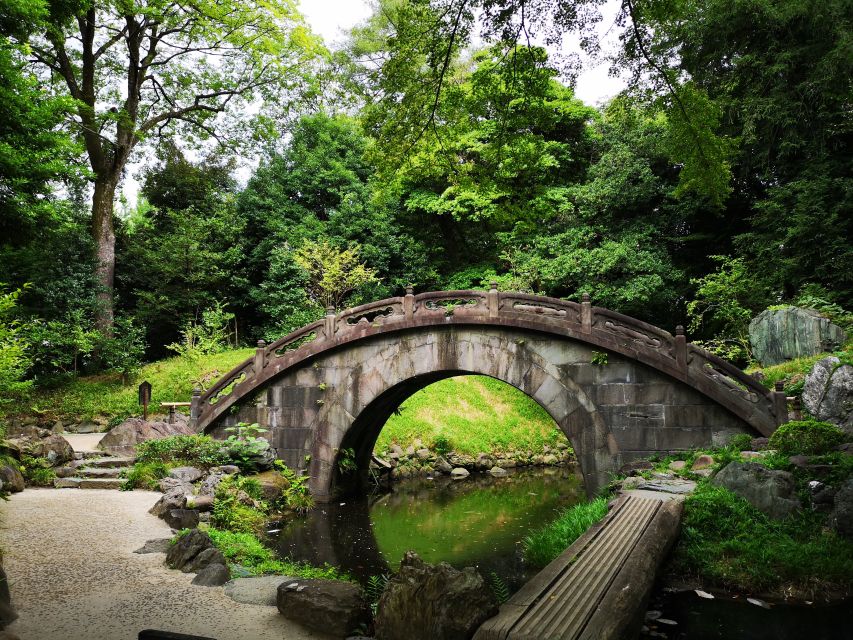
Koishikawa Korakuen gives the route its needed pause. The garden receives about 45 minutes, including guided sightseeing and scenic views along the way.
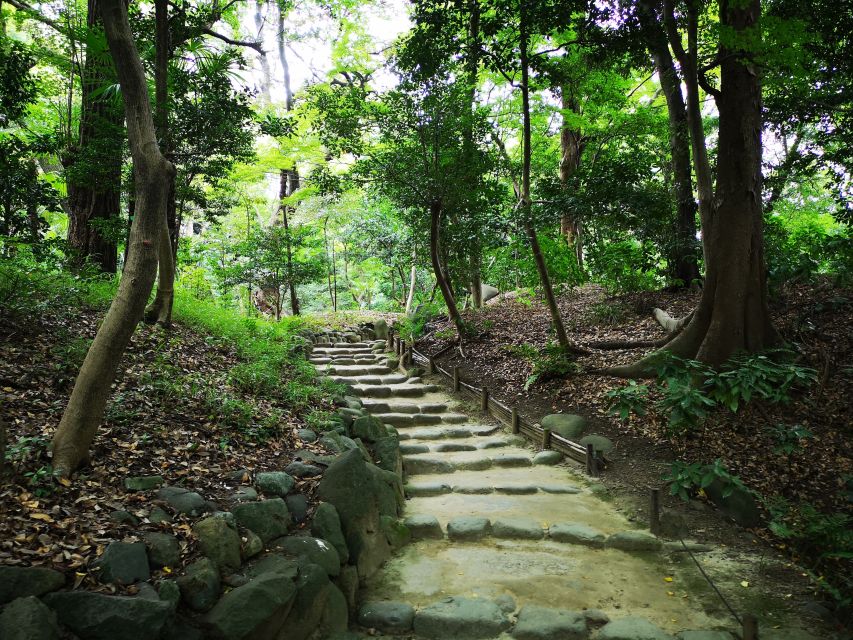
Created in the Edo period, the garden offers a very different idea of Tokyo. Instead of tight shopfronts and bright signs, you get winding paths, ponds, carefully framed views, and seasonal scenery. Spring brings cherry blossoms, while autumn brings red and gold foliage. The garden is not just a pleasant green space. It shows how older Japanese design used borrowed views, water, hills, and changing seasons to create a sense of distance inside a city.
I like ending with this stop because it helps you process the route. Asakusa showed a historic temple district. Okachimachi showed trade and street commerce. Akihabara showed technology and modern fantasy. Koishikawa Korakuen reminds you that Tokyo has always made room for beauty and controlled calm, even as the city grew around it.
The supplied route details place Koishikawa Korakuen before Akihabara, while the written overview describes Akihabara first and the garden as the final stop. The actual order may depend on the day’s route and guide. If the garden ending matters to you, confirm the sequence before booking.
Guides, group size, and the human side of the walk
The experience is led in English and the group is limited to eight people. That size is a real advantage in Asakusa and Ameyoko, where crowded sidewalks can make a larger group awkward. It should also give you a better chance to ask about customs, local history, or the odd detail that catches your attention.
Several guides have received especially warm praise. Taka was described as attentive and full of information about Asakusa. Toru was remembered as kind, available, and more like an experienced travel companion than someone simply reciting facts. Michelle has been described as professional, friendly, and fluent in Italian as well as English. Takee was noted for making the experience fun for children.
Guides can shape this tour more than the route itself. The stops are strong, but they cover a lot of ground in a short time. A clear guide helps you understand why each neighborhood matters instead of leaving you with a stack of disconnected photos.
The listed tour language is English. Michelle’s Italian ability is a useful detail if she is assigned to your departure, but it is not presented as a standard Italian-language option.
What $68 includes, and where extra costs appear
At $68 per person, the tour offers fair value if you want structure and interpretation across several districts. Standard admissions and local train rides are included, which removes two common small costs and keeps the group moving.
The price does not include food or drinks. That matters in Ueno and Okachimachi, where you may see plenty of tempting food but will not have a meal built into the tour. Bring a little extra money if you want to buy snacks or drinks, but do not count on a formal lunch break within the four-hour schedule.
Tokyo National Museum admission is also separate. The museum can easily require more time than this tour allows, so it is best treated as an optional addition before or after the walk, not part of the core experience.
The biggest value is the guide’s explanation. If you already know Asakusa, Ueno, Akihabara, and Koishikawa Korakuen well, $68 may feel less necessary. If this is your first time in East Tokyo, the combination of transport, admissions, route planning, and live commentary makes the price easier to justify.
Pace, comfort, and who should book
Wear comfortable shoes. This is a walking tour with several neighborhood changes, and even the local train rides do not remove the need to walk between stops.
The tour is listed as wheelchair accessible, which is important for anyone checking access in advance. Still, Tokyo streets and crowded market areas can be demanding, so you should confirm the exact route conditions with the provider if you have specific mobility needs.
I would recommend this experience to first-time visitors who want more than one famous district in a morning or afternoon. It also suits families, curious shoppers, pop-culture fans, and anyone who wants a basic explanation of how old and new Tokyo fit together.
You may want another option if your priority is a long temple visit, serious museum time, a full market meal, or extended shopping in Akihabara. The tour gives you range, not depth at every stop.
My verdict: book it for range and context
I would book this tour if I wanted a fast but meaningful introduction to East Tokyo. The best feature is the contrast: Senso-ji’s religious setting, Okachimachi’s market streets, Akihabara’s electronics and anime culture, and Koishikawa Korakuen’s Edo-era garden all appear within one compact outing.
The guides seem to be the strongest part of the experience, with Taka, Toru, Takee, and Michelle each bringing a personal touch. Just keep your expectations realistic. Four hours is enough to understand the connections, but not enough to explore every shop, museum, temple hall, or garden path at length.
Book it if you value a clear story, a small group, included local transport, and a guide who can make Tokyo’s changes easier to understand. Skip it if you prefer to move slowly and stay in one neighborhood for the whole day.
FAQ
How long does the Tokyo walking tour last?
The tour lasts four hours.
Where does the tour meet?
The meeting point is Kamiya Bar in Asakusa.
Which Tokyo areas does the tour visit?
The route covers Asakusa, Senso-ji Temple, Ueno, Okachimachi, Koishikawa Korakuen, and Akihabara.
Is Senso-ji Temple included?
Yes. The tour includes a guided visit and sightseeing at Senso-ji Temple.
Is Tokyo National Museum admission included?
No. Admission to the Tokyo National Museum is not included if you choose to visit.
Are local train rides included?
Yes. Standard local train rides used during the tour are included.
Is food included?
No. Food and drinks are not included.
What language is the tour offered in?
The listed tour language is English.
How large is the group?
The activity is limited to eight participants.
Is the tour wheelchair accessible?
Yes. The activity is listed as wheelchair accessible.
What should I bring?
Bring comfortable shoes for the walking portions of the tour.
Can I cancel for a full refund?
Yes. You can cancel up to 24 hours in advance for a full refund.
Just added around Tokyo
- Tokyo: Customizable Private Guided Walking Tour★ 4.5 · 129 reviews
- Private Harajuku Omotesando Architecture Tour★ 4.9 · 18 reviews
- Tokyo: Guided Helicopter Ride★ 4.9 · 24 reviews
- Tokyo: Guided Walking Tour of Tsukiji Market with Lunch★ 4.4 · 24 reviews
- Tokyo: Private Personalized Local Food Tour★ 4.5 · 101 reviews
- Tokyo GINZA: KONPARU Japanese Cabaret Show with Drink★ 4.8 · 38 reviews
- Tokyo: Guided Walking Tour of Tsukiji Market with Breakfast★ 4.4 · 134 reviews
- Tokyo: Gotokuji Cat Temple, Shinjuku Cat Cafe & 3D Cat Tour★ 4.9 · 38 reviews
Tokyo Tours, compared.
Mt Fuji and Hakone 1-Day Bus Tour Return by Bullet Train
Read our review →

teamLab Planets TOKYO Digital Art Museum Entry Ticket
Read our review →
Mt Fuji & Hakone Cruise, Drum Show Bullet Train 1 Day from Tokyo
Read our review →
Shinjuku Food Tour (13 Dishes at 4 Local Eateries)
Read our review →
Tokyo Mt Fuji 5th St & Hakone Cruise Bus Tour w/Bullet Train
Read our review →