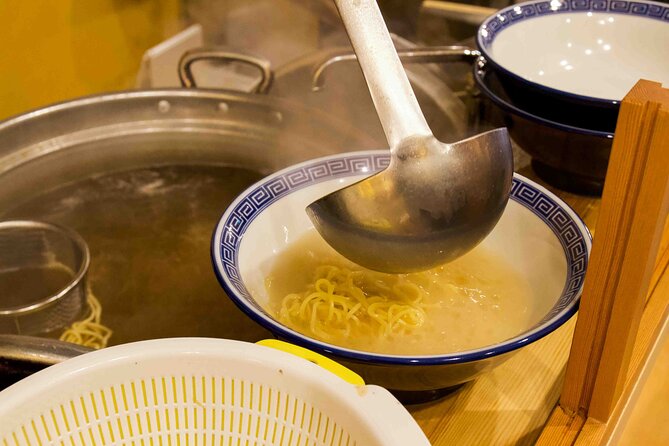
REVIEW · TOKYO TOURS
Exclusive Ramen Kitchen Experience
An award-winning ramen kitchen is the setting here, not a classroom made to look like one. You get a close look at how a working shop prepares its noodles, ingredients, and bowls, then take part in two distinctly physical skills: temomi, massaging the noodles, and tebo, shaking off their cooking water.
I like the small maximum of six people, which should give you room to watch the cook and ask questions. I also like the honest format: the broth takes about 10 hours to make, so this is a shortened kitchen experience rather than a make-everything-from-scratch cooking course. The main consideration is the one-hour length, and the ramen contains chicken, pork, and fish, so it will not suit vegetarians, vegans, or anyone avoiding those ingredients.
In This Review
- Key points at a glance
- Inside an actual Tokyo ramen kitchen
- Learning the parts behind the bowl
- Temomi: massaging the ramen noodles
- Tebo: shaking the noodles properly
- Building and eating your Tokyo ramen
- Why the one-hour format can work
- Group size, location, and the meeting point
- Is $78.38 a fair price?
- Who should book this experience?
- Booking, cancellation, and practical planning
- Should you book it?
- FAQ
- How long does the ramen kitchen experience last?
- Where does the experience start?
- Where does the experience end?
- Why is Nakameguro Koukashita mentioned?
- How many people can join?
- Is the experience near public transportation?
- Do I make the ramen broth from scratch?
- What ramen techniques will I practice?
- Does the ramen contain meat or fish?
- Can I cancel for a full refund?
Key points at a glance
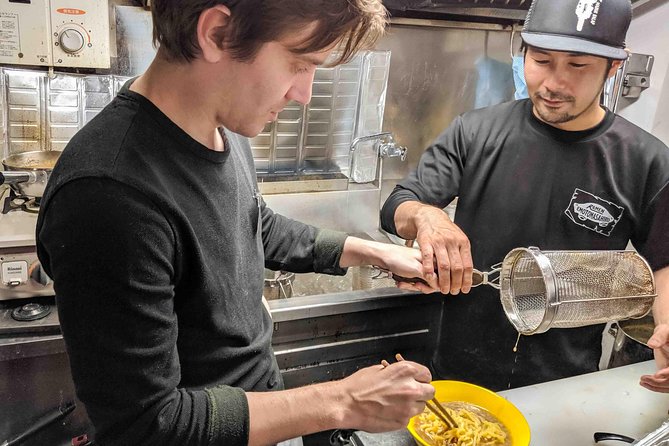
- Work inside a real award-winning ramen shop: You get access to an operating kitchen rather than a standard demonstration room.
- Practice temomi and tebo: Massage the noodles, then shake away excess water with the traditional wire basket technique.
- Build your own bowl: Add your preferred toppings after the noodle work and eat the ramen you prepared.
- Learn what each ingredient does: The cook explains the ingredients, their purpose, and where they come from.
- Small group, short schedule: The experience lasts about one hour and accepts no more than six people.
- Check the meeting details carefully: The information names 2-chōme-12-6 Nezu as the start point, while Nakameguro Koukashita also appears in the schedule.
Inside an actual Tokyo ramen kitchen
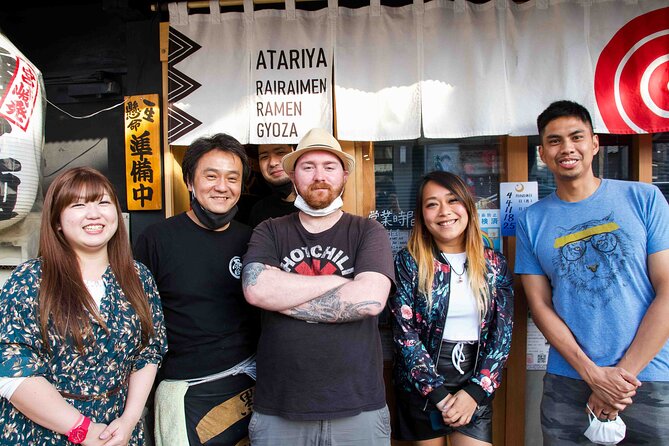
The appeal begins with the setting. Tokyo has plenty of cooking classes, but this experience gives you access to a real ramen shop that has won several awards. That changes the feel of the hour. You are not only learning a recipe. You are seeing the tools, movements, preparation steps, and tight rhythm that make a ramen counter work.
The shop has offered access that is normally not available. For you, that means the focus is on the kitchen itself and the way ramen is assembled in a professional setting. You can take in the sounds and sights around you while the cook explains how the dish comes together.
That setting also helps explain what you are not doing. You will not prepare every component from raw ingredients. A proper broth alone takes around 10 hours, and the experience avoids making you wait through the long simmering stages. Instead, you join the parts that can be taught and completed during a one-hour visit.
I see that as a sensible trade. If you want a full culinary course, this will feel too brief. If you want a practical look behind the scenes, followed by a bowl of ramen you helped prepare, the format makes good use of your time.
Other Tokyo days people book alongside this one:
- Mt Fuji and Hakone 1-Day Bus Tour Return by Bullet Train
★ 5.0 · 26,383 reviews - 1-Day Tokyo Bus Tour
★ 5.0 · 14,250 reviews - Tokyo: TOKYO SKYTREE® Admission ticket
★ 4.5 · 11,192 reviews
Learning the parts behind the bowl
Before you handle the noodles, the cook explains the preparation and the ingredients. The information provided for the experience does not give a full ingredient list or name a particular ramen style beyond Tokyo ramen, so you should expect an introduction to the components used in that shop rather than a fixed lecture with a published syllabus.
The useful part is the focus on purpose. You learn what the ingredients do and where they come from, not just what they are called. That matters with ramen, since the final taste depends on the relationship between broth, noodles, toppings, and seasoning.
The cook also answers questions about recipes and the place of ramen in Japanese cuisine. If you are curious about why a shop prepares its noodles in a certain way, this is the moment to ask. The tone is described as kind and helpful, which should make the session approachable even if you have little cooking experience.
The class is led by multiple guides, so a specific guide is not guaranteed. No guide names are provided, and the experience provider is Tokyo Ramen Tours. If you want to ask about a particular cook or language arrangement, contact the provider before booking rather than assuming the same person leads every session.
Temomi: massaging the ramen noodles
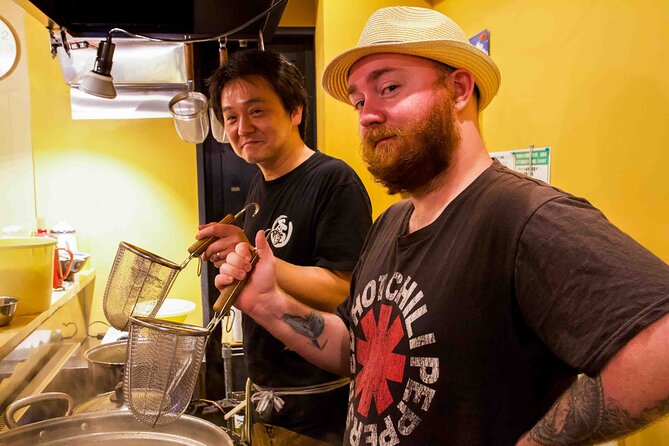
The first hands-on skill is temomi, or massaging the noodles. This is one of the more distinctive parts of the activity because it gives you direct contact with the noodle texture before cooking.
The point is not simply to handle the dough for fun. The motion helps you understand that ramen noodles are prepared with care and technique. Your hands become a better teaching tool than a long explanation, since you can feel how the noodles respond as you work them.
You should expect the cook to guide you through the process. The supplied details do not specify how long each participant spends on temomi or whether the noodles are made entirely on site, so do not book this expecting a complete noodle-making course from flour and water onward. The experience promises the technique, not a full recipe workshop.
For many people, this will be the most memorable part of the hour. It is an active step that connects you to the food before it reaches the bowl, and it gives the experience more substance than simply watching a chef cook.
Tebo: shaking the noodles properly
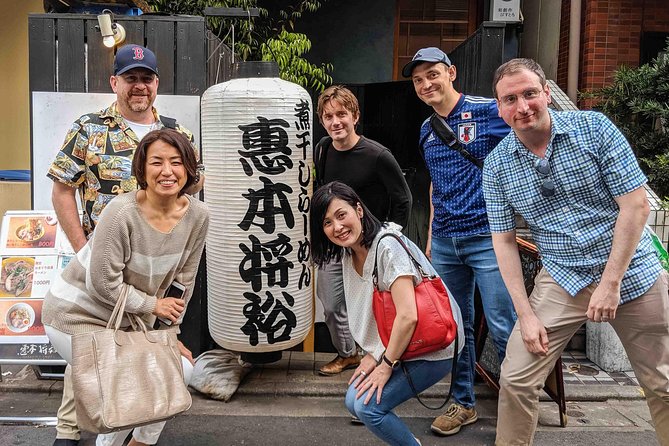
Next comes tebo, the technique of shaking water from cooked noodles with a wire basket. This quick movement is familiar to anyone who has watched ramen being prepared at a busy counter, but it is different when you try it yourself.
You will get a feel for the timing and control needed to remove excess water without mishandling the noodles. It is a small action, yet it affects the finished bowl. Too much water can weaken the soup, while careless handling can affect the noodles themselves.
The activity does not promise that you will master professional speed in one session. That is not a problem. The value is in trying the movement under the direction of a ramen cook and seeing how a routine step fits into the larger preparation process.
I would especially recommend paying attention here if you enjoy food technique. Tebo is the kind of detail you may notice in a restaurant but rarely get to practice.
Same city, a completely different kind of day:
- Tokyo: teamLab Planets TOKYO Digital Art Museum Entry Ticket
★ 4.6 · 9,779 reviews - Mt Fuji & Hakone Cruise, Drum Show Bullet Train 1 Day from Tokyo
★ 4.0 · 7,413 reviews - Tokyo: Shinjuku Food Tour (13 Dishes at 4 Local Eateries)
★ 5.0 · 6,603 reviews - Tokyo Mt Fuji 5th St & Hakone Cruise Bus Tour w/Bullet Train
★ 4.4 · 5,024 reviews
Building and eating your Tokyo ramen
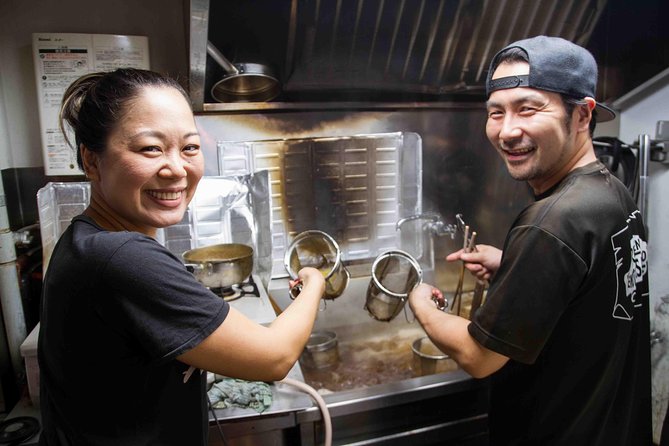
After the noodle work and preparation lesson, you add your preferred toppings and assemble your bowl. The experience ends with the best possible reward for a short cooking session: you eat your own ramen.
The toppings give you some choice, though the available details do not list the specific options or quantities. You should think of this as guided assembly, not an open-ended menu where you design an entirely different dish.
The ramen served contains chicken, pork, and fish. This is important enough to check before booking. The warning rules out the experience for vegetarians and vegans, and it may also matter if you avoid one of those ingredients for religious, dietary, or allergy reasons. No substitution policy is provided, so ask Tokyo Ramen Tours directly if you have a serious food restriction.
The meal is described as delicious and filling, and the overall format gives you a clear payoff within the hour. You learn a few techniques, hear about the food, and sit down with a finished bowl. It is not a long meal or a multi-course tasting, but it should work well as a focused food stop in a Tokyo day.
Why the one-hour format can work
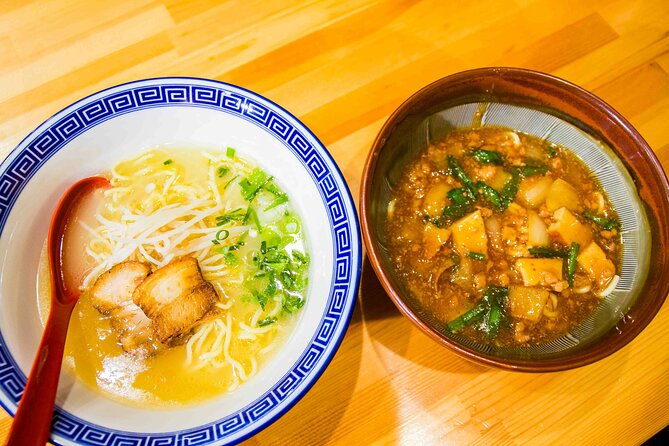
At roughly one hour, this is easy to fit between other plans. You do not need to give up half a day, and the cooking steps are chosen so you can take part without waiting for broth or other slow components.
That short format also keeps the activity focused. You get the shop setting, ingredient explanation, noodle work, water-shaking practice, toppings, and lunch or a substantial snack. There is little room for wandering off topic, which suits you if you prefer an active demonstration to a long culinary seminar.
The limitation is depth. You will not leave with a complete ramen recipe covering every stage, since much of the preparation has already been done. You may also want more time if you are especially interested in broth-making, noodle formulas, or the business side of running a ramen shop.
I would treat the hour as a kitchen visit with hands-on preparation, not as a professional cooking lesson. That distinction helps set the right expectations and makes the price easier to judge.
Group size, location, and the meeting point
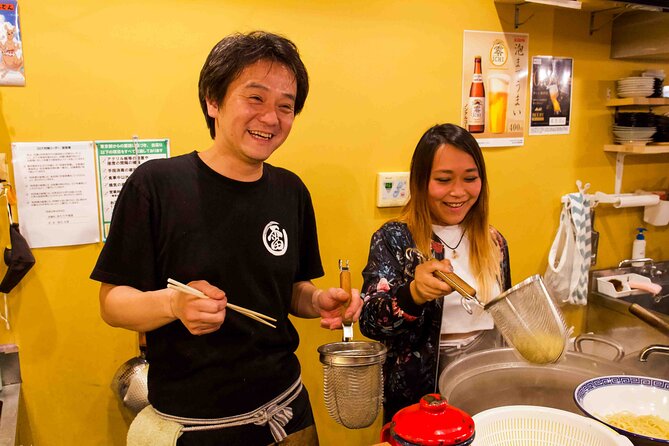
The group is limited to six people. That is a useful size for this type of activity because everyone should have a better chance to see the demonstrations, handle the noodles, and ask questions than in a large food tour.
The experience is near public transportation, but the supplied location information needs a careful check. The start point is listed as 2-chōme-12-6 Nezu, Bunkyo City, Tokyo 113-0031, Japan. The schedule also names Nakameguro Koukashita as Stop 1, while the activity ends back at the meeting point.
Those place names are not interchangeable, so confirm the exact meeting location and the route before the day of your booking. This is especially important in Tokyo, where a wrong assumption about the neighborhood can cost you valuable time. The activity is mobile ticketed, and confirmation is sent at booking, so keep those details available on your phone.
No hotel pickup or transportation between locations is listed. Plan to make your own way to the start point using public transportation and allow extra time for finding the entrance.
Is $78.38 a fair price?
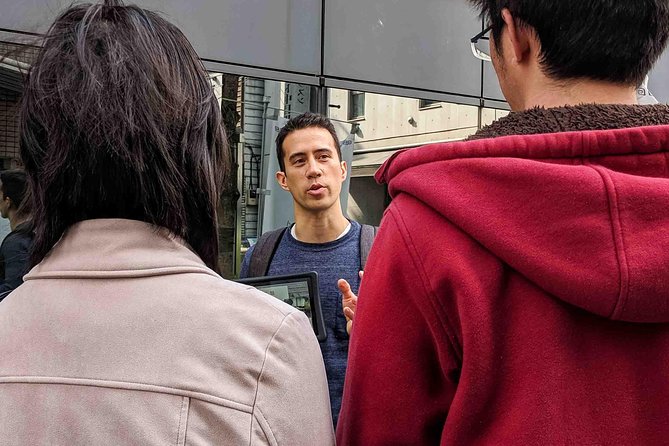
At $78.38 per person, this is more expensive than simply buying a bowl of ramen. You are paying for access to a normally restricted professional kitchen, instruction from ramen cooks, hands-on noodle techniques, and the finished meal.
The value depends on what you want from the visit. If your goal is only to eat Tokyo ramen cheaply, spend the money at a shop and order a bowl. If you want context, personal instruction, and a chance to handle the noodles yourself, the price is more defensible.
The maximum group of six improves the value. A large group could make the experience feel like a stage show, but this format should give you closer access to the cook. The one-hour duration keeps the cost from taking over your day, though it also means you should not expect the depth of a full-day cooking class.
I would call it a worthwhile splurge for a ramen fan, a first-time visitor who wants a food activity with local context, or anyone who enjoys seeing how a professional kitchen operates. It is less suitable if you measure value by the amount of food alone.
Who should book this experience?
You should consider it if you want to learn through your hands rather than only listen to a guide. The temomi and tebo steps make the visit active, while the explanation of ingredients and ramen’s role in Japanese cuisine adds useful background.
It also suits couples, families with older children, and small groups of friends who want a compact Tokyo activity. The six-person limit makes it easier to stay involved, although the supplied information does not state a minimum age, so families should confirm that point before booking.
Food-focused visitors will get the most from it, especially people who have already eaten ramen in Japan and want to understand what happens behind the counter. You do not need to be an experienced cook, since the process is guided and shortened.
You should skip it if you need a vegetarian, vegan, or fish-free meal, unless the provider confirms an acceptable alternative. You should also skip it if your main aim is to learn broth-making from scratch. That is specifically outside the practical scope of this one-hour format.
Booking, cancellation, and practical planning
The experience is often reserved about 16 days ahead, so booking early is sensible if your Tokyo dates are fixed. The rating is 4.9 from 13 ratings, with a 100 percent recommendation record, which suggests a strong response so far, though the sample is small.
You can cancel for a full refund up to 24 hours before the local start time. Changes or cancellations inside that window are not accepted for a refund. The activity also requires a minimum number of people, and if the provider cancels because that minimum is not reached, you will be offered another date or experience, or receive a full refund.
Keep your confirmation handy, check the exact start point, and arrive with enough time to find the shop. Since the activity ends at the meeting point, you can plan your next stop from there once the ramen is finished.
Should you book it?
Book the Exclusive Ramen Kitchen Experience if you want a short, hands-on look at professional ramen preparation and you are happy with a prepared broth rather than a full recipe class. The strongest reasons are the small group, the unusual kitchen access, and the chance to practice temomi and tebo before eating your own bowl.
Do not book it for a vegetarian meal, a long cooking workshop, or a bargain lunch. At $78.38, it earns its price through access and instruction, not quantity. Confirm the Nezu and Nakameguro location details before paying, then reserve ahead if this is a must-do food stop in Tokyo.
FAQ
How long does the ramen kitchen experience last?
The experience lasts approximately one hour.
Where does the experience start?
The start point is listed as 2-chōme-12-6 Nezu, Bunkyo City, Tokyo 113-0031, Japan.
Where does the experience end?
The activity ends back at the meeting point.
Why is Nakameguro Koukashita mentioned?
Nakameguro Koukashita is listed as Stop 1 in the schedule. Because the start information separately gives a Nezu address, confirm the exact meeting location with Tokyo Ramen Tours.
How many people can join?
The maximum group size is six people.
Is the experience near public transportation?
Yes. The activity information says it is near public transportation.
Do I make the ramen broth from scratch?
No. This is a shortened experience, and the broth is prepared in advance because it takes about 10 hours to make.
What ramen techniques will I practice?
You will practice temomi, which means massaging the noodles, and tebo, which involves shaking water from the noodles.
Does the ramen contain meat or fish?
Yes. The ramen contains chicken, pork, and fish.
Can I cancel for a full refund?
Yes. You can cancel at least 24 hours before the local start time for a full refund. Cancellations or changes made less than 24 hours before the start are not refunded or accepted.
Just added around Tokyo
- Private Memorable Tokyo Tour with English Speaking Driver★ 5.0 · 30 reviews
- Private Tokyo Custom Full-Day Tour by Chartered Vehicle★ 5.0 · 16 reviews
- Private Sightseeing to Mt Fuji and Hakone with English Driver★ 5.0 · 51 reviews
- Tokyo Photography Masterclass – Private Photography Lesson★ 5.0 · 25 reviews
- Private Mt. Fuji Day Trip from Tokyo with English-Speaking Driver★ 5.0 · 33 reviews
- 4 Day Tour – Mount. Fuji, Tokyo, Hakone, Kamakura and Yokohama★ 5.0 · 19 reviews
- Private Unforgettable Mt Fuji Tour with English Speaking Driver★ 5.0 · 142 reviews
- Private Tokyo Food Tour – A Journey Through Time Through Food★ 5.0 · 36 reviews
Tokyo Tours, compared.

Mt Fuji and Hakone 1-Day Bus Tour Return by Bullet Train
Read our review →


teamLab Planets TOKYO Digital Art Museum Entry Ticket
Read our review →
Mt Fuji & Hakone Cruise, Drum Show Bullet Train 1 Day from Tokyo
Read our review →
Shinjuku Food Tour (13 Dishes at 4 Local Eateries)
Read our review →
Tokyo Mt Fuji 5th St & Hakone Cruise Bus Tour w/Bullet Train
Read our review →